Tag: transgender

  • In Elliott Page’s Defence: Not So Fast Shapiro

    In Elliott Page’s Defence: Not So Fast Shapiro

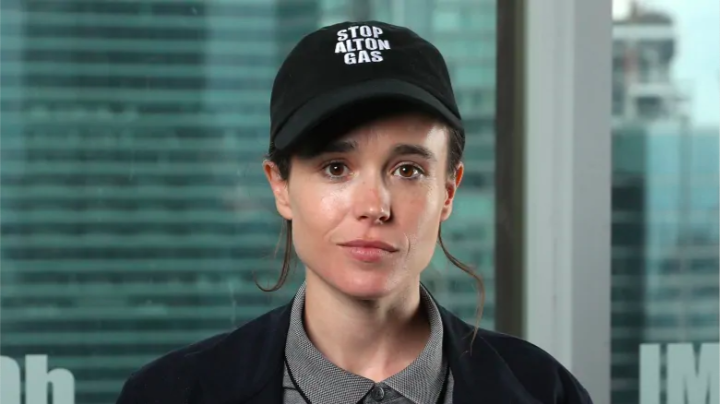
    Ben Shapiro announced on December 2nd in a video, that Elliot Page’s choice to identify as a man “conveys zero information”, and that Page’s audience, as media consumers, are being forced to hear nonsense. I believe that Elliot Page’s choice can be interpreted charitably as something meaningful and Shapiro’s assessment is wrong. Elliot’s announcement conveys important information because it is meaningful to both the transgender community and in the context of his personal life. If we as Page’s audience are willing as listeners to admit that gender dysphoria is real and that mental acts of self-identification exist, we will realize how important Page’s statement is.

    We understand from the context that Elliot is making an announcement of some sort. This means that the nonsense Shapiro claims, if it exists, is to be found in what it means to be transgender and whether it is possible to refer to oneself as transgender. Shapiro believes Page gave an announcement, so his beef with the announcement lies in what the announcement states. A traditional way to think of meaning is that it must point to ‘something’. Meaning must have a reference. I don’t think this is the best way to describe meaning, but I think it will satisfy to prove against Shapiro’s issue.

    When describing the content of the announcement as nonsense, Shapiro misses Page’s constant mental battle over the years, which grants meaning to being transgender. Before being fully out as transgender, Page has had many instances where they evaluated their behaviour as better fitting one gender or another. He had times where he affirmed that his actions at some given moment were either the behaviour of a different gender from what they were at birth. Basically, Page, and all transgender individuals, evaluated their overall behaviour as a gender other than the one they are presently.

    To evaluate oneself as being a different gender can present itself as gender dysphoria, which has been shown in research to exist at the brain level. However, the evaluation of one’s gender does not need to be such a negative experience, as gender dysphoria typically is. Moments of self-affirmation can in fact be aspirational (Overall, 2009). Instead of being negative, evaluations can be gradual recognitions of ‘yes, this is who I am’ which happens over many years. If done long enough, frequently enough, and willingly enough, these recognitions can yield a change in self-identification. Shapiro forgets these moments and focuses too much on the single instant where Page makes his announcement.

    Due to Shapiro’s error, Elliot’s announcement is well-founded on repeated instances of affirmative mental activity over many years. Recent scientific research supports that it is possible to perform the mental act I have described, and in fact that it is necessary to do so to be transgender. Research shows that there is a distinction between gender and sex-at-birth identification and that gender identity involves “the ongoing perception of one’s own body” (Tacikowski et al., 2020). It must have been the case that a transgender person, prior to announcing their transition, had many instances described above. This is what Ben is missing and so it strikes him as nonsense.

    The issue I have covered is whether it is possible to identify as transgender without uttering nonsense and whether being transgender is nonsense. I think it is clear that the longer duration of a confused individual’s mental activity and the following scientific results, being transgender can be granted the meaning that is needed and deserved.

    Additional and Paper References

    Bettcher, Talia, “Feminist Perspectives on Trans Issues”, The Stanford Encyclopedia of Philosophy (Fall 2020 Edition), Edward N. Zalta (ed.), URL = <https://plato.stanford.edu/archives/fall2020/entries/feminism-trans/>.

    Overall, Christine, 2004, “Transsexualism and ‘transracialism’”, Social Philosophy Today, 20 (3): 184 and 185.

    Tacikowski, J. Fust, H. H. Ehrsson, Fluidity of gender identity induced by illusory bodysex change. Sci Rep, 10, 14385 (2020).

  • Coming out: My Story


    Coming out is hard regardless of whether it be relates to your gender identity or sexual orientation. On February 20th 2018, I finally accepted my sexual orientation as a bisexual individual. This was the part of a multi-year process filled with confusion, pain, and also excitement.

    In grade eight, I was a happy young hockey player without a care in the world – besides a naive dream of making it to the National Hockey League. It had been a rough year, and I had been the subject of bullying and hazing among my team mates. One of the many slurs I was subjected to was “gay” and team mates often made jokes about me liking men and wanting to join them in the shower. Then one day things escalated drastically – before practice I was sexually assaulted by a team mate. It happened again on another occasion, and I went into a depressive whirlwind before I finally broke down to my parents one night. I am super thankful I had them as supports, but the event left me hurt, isolated, and confused. I did not enjoy what happened, but it opened my eyes to the possibility that some individuals liked the opposite sex, a notion that was foreign to me in the conservative town I called home.

    I arrived at Acadia in a fresh environment free from my past connections and was free to create my own story. At Acadia, I could reinvent myself, or perhaps even find out who I truly was. On one of my first days here I met a transitioning trans gender individual who I eyed suspiciously. Today I am proud to call this individual a friend and am thankful for the exposure and advocacy they have gave to the LGBTQ+ community. Soon enough, I too began to question my identity, specifically regarding whether I was sexually attracted to both men and women; or in other words, bisexual.

    The “gay” name calling greeted me at Acadia, and I was told time and time again that there was no way I could be straight because: 1) I was too nice 2) I dressed nice and did my hair and 3) I only hung out with girls. These were actual stereotypes I was met with, and I think its crazy that in 2014 (and today)  people feel the need to label others. These labels made me confused because they were all true, but I wasn’t too sure about how I felt about men. For one, I was girl crazy, and had had a girlfriend all through high school. I could admit a guy was attractive because the majority of my friends were girls, and as such I had to hear about their crushes. Sure, I was also nice, but wasn’t that how you’re supposed to be? I may have dressed nice and did my hair, but I did this for me – not anyone else. How was this even relevant? Was I really different than other guys? The internal struggle of wondering how I felt, if it was okay to be gay, and how others saw me followed me throughout first year.

    In second year, another break through occurred as I met an amazing man, friend, and mentor – who happened to be gay. This mentor taught me that not only was it okay to be gay, but it didn’t need to be confusing. He told me that figuring out your sexual identity should be about you and requires no timeline or approval from others. Your happiness alone is the most important thing, and the opinions of others do not matter. This individual took the time to listen to my stories and perspectives and was open about his experience which I found very reassuring. I was also exposed to a significant amount of gay and bi culture during this time, and I began to think that perhaps I was bi after all. I had a great relationship at the start this year, and I joked about my sexuality with this girl, but I couldn’t quite admit to her how I felt. I wish I had.

    Fast forward to the present year, and I finally began to accept who I am. I’m lucky to have many LGBTQ+ friends and their courage and strength helped inspire me and guide me. After I became single I finally was able to force myself out my comfort zone, and I am proud to say that I have accepted who I am. It hasn’t been easy as I faced judgment from some peers, was questioned on social media, and even woke to a message stating “bi isn’t something you come out as”, but this just emphasizes the importance of sharing my story and advocating for LGBTQ+ rights. I am very fortunate to have supportive family and friends. For anyone who is currently questioning either their gender or sexual identity, I promise that it will be okay, and I wish you all the best in your journey. If you take the time to figure how you feel, and are confident, and focus on you then things will fall into place. We are lucky to attend a great school with a supportive environment. I too am here for you and am always available to talk. Thank you for reading my story, and remember – love is love!

Betzillo positions itself as a versatile gaming hub where structured bonuses and adaptive gameplay mechanics support both short sessions and extended play.

Built with a focus on innovation, Spinbit integrates modern casino architecture with rapid transactions, appealing to players who value speed and digital efficiency.

Ripper Casino emphasizes bold entertainment through high-impact slot titles and competitive promotions crafted for risk-oriented players.

A friendly interface and stable performance define Ricky Casino, offering a casual yet reliable environment for a wide spectrum of gaming preferences.

King Billy Casino channels classic casino spirit into a modern platform, delivering recognizable themes supported by contemporary reward systems.

Immersive visuals and layered slot mechanics are at the core of Dragonslots, creating a narrative-driven casino experience.

Lukki Casino appeals to players seeking direct access and minimal friction, focusing on fast loading times and intuitive controls.

Casinonic provides a structured and dependable gaming framework, blending modern slots with transparent operational standards.