Tag: trump

  • A Beginners Guide to Trump’s Impeachment

    A Beginners Guide to Trump’s Impeachment

    Donald Trump, President of the United States of America, has been in the news attached to the word ‘impeachment’ for the past few months. However, as much as Trump’s impeachment has been discussed by the media, many remain confused by the impeachment, the allegations, the terms used and the constant changes taking place. 

    In order to help readers who are confused regarding the topic, The Athenaeum presents ‘A Beginner’s Guide to Trump’s Impeachment’:

    What caused the impeachment inquiry?

    The impeachment inquiry was announced on September 24th by Nancy Pelosi, a Democratic Party politician currently serving as Speaker of the House of Representatives. This impeachment inquiry is a direct result of the Trump-Ukraine scandal that came to light in September 2019.

    The Trump-Ukraine scandal surfaced after an intelligence officer, who we now know is a CIA Officer, filed a whistleblower complaint to the inspector general detailing Donald Trump’s alleged wrong-doings. This intelligence officer is known within the impeachment as the whistleblower which is a term for individuals who expose illegal and unethical information within an organization.

    In the official complaint, the whistleblower claimed that on July 25th, 2019 a phone call occurred between President Trump and the Ukrainian President Volodymyr Zelenskyy where Trump “sought to pressure the Ukrainian leader to take actions to help the President’s 2020 re-election bid”.

    The whistleblower goes on to discuss how Trump wanted Ukraine to investigate potential opponent Joseph Biden and son Hunter Biden, assist in uncovering that allegations of Russian interference in the 2016 Presidential election originated in Ukraine, and locate and turn over the servers used by the Democratic National Committee which were reported to have been penetrated by Russian hackers in 2016. The whistleblower additionally alleged that efforts were made to restrict access to records relating to this call.

    The report was sat on for a month when Director of National Intelligence Joseph Maguire advised that the complaint was not of urgent concern. By mid-September, the existence of the report was leaked, causing mass controversy.

    In the days that followed Pelosi’s announcement of impeachment inquiry, the White House released both the whistleblower’s report and the official White House record of the Trump-Zelenskyy phone call to the public. Since the release of documents, more information has been demanded and either given or not given. The details can be found in detailed timelines.

    What is being investigated in the inquiry?

    The goal of the impeachment inquiry is to understand the events that took place around the July phone call with Zelenskyy and Trump’s as well as the possibility of subsequent abuse of power.

    The House Intelligence Committee chair Adam Schiff is leading the impeachment inquiry and has given the public the main questions he plans to investigate:

    1. Did President Trump seek aid from a foreign country to help him in a U.S Presidential election again?
    2. Was the meeting with President Trump, which Ukraine desperately sought, being conditioned on Ukraine’s willingness to launch investigations for Trump?
    3. Did Ukraine have reason to believe that the military aid they desperately needed was being withheld due to these investigative conditions?
    4. Have any of the facts been covered up regarding President Trump’s conduct?

    How does impeachment work?

    Impeachment starts with the inquiry. Although announced by Nancy Pelosi, a resolution for the impeachment inquiry must be formalized by the House of Representatives. 

    On October 31st, 2019 with a vote of 232 to 192, a resolution for the impeachment inquiry was approved by the House of Representatives. This resolution, which was formalized, details how the impeachment inquiry will function going forward.

    From this point, the House of Representatives will call on witnesses and gather evidence of Trump’s wrong-doings. They have already begun to do so, and evidence released can be seen in timelines of the impeachment.

    The impeachment inquiry will move to a vote in the House of Representatives and if Trump is impeached the process will continue; however if Trump is not impeached the process ends.

    The Senate would then hold a trial on whether to impeach the president, before moving to a vote. If Trump is convicted, he will be removed from office and Mike Pence will become president.

    Will Trump be impeached?

    At this point, it is impossible to know for sure whether Trump will be impeached or not. Democrats do hold a majority in the House of Representatives and evidence so far has pointed towards a likelihood of impeachment, but new evidence is turning up every day, making predictions difficult.

    The Senate does hold the power in the actual impeachment, it will take 67 senators to convict Trump. As there are 53 (out of 100) Republican senators right now and based on the assumption all Democrat senators will vote yes, 20 Republican senators will need to vote yes in order for Trump to be impeached. It will be interesting to watch Senators’ reactions to the impeachment’s on-goings in the House of Representatives.

    How does this affect the 2020 election?

    If impeached Trump will be banned from running in the 2020 Presidential Election. This would mean a new Republican candidate would take his place.

    Surprisingly, as shown in an article from the New York Times, the impeachment is not a major concern for the Democrats hoping to be the candidate in the 2020 election. The article describes how campaign topics have surrounded health care, the economy, and most importantly how they are going to beat Trump in the election.

    Questions regarding the impeachment have rarely been asked at campaign events and it seems like the impeachment and election are viewed as separate matters to both Democrats and the public at this time.

    What can we take from the impeachment?

    Between the whistleblower’s complaint and the evidence that has risen since Pelosi’s announcement of the impeachment inquiry, it has become evident that it is easier than citizens may expect for wrong-doings to occur at high levels of government. 

    The U.S is a country known for being democratic and fair. There isn’t the kind of government corruption seen in some other countries around the world; however, this impeachment inquiry shows that government corruption can happen anywhere, even in democratic countries such as the U.S., U.K. or Canada.

    This is not a concept that is new either, both Andrew Johnson and Bill Clinton were impeached due to violations during their respective presidencies. It is easy for the public to be fooled by a government official who ends up using their power wrongfully, and it may not be the last. 

    This impeachment is a reminder for voters to vote wisely in the 2020 Presidential Election, remembering that any candidate is capable of abusing their position.

  • People over Policy

    People over Policy

    At its core, public policy is supposed to the serve greater good, and no political party or ideology has a monopoly on good or bad ideas. Many politicians are elected and strive to do the best they can, while others seek only to better themselves. Every aspect of politics has positives and negatives, but two key elements, the policies and the politicians, define the outcome. I have often debated with myself and others about which is more important, the policies being advocated or those doing the actual advocating. Despite the conflict in my head, I can feel the truth in my gut that those we elect to represent us are more important than the policies themselves.

    While policy is important, and the goals set in a piece legislation are not something to be ignored, the overall principles largely do not change. What is important are the details of individual pieces of policy and legislation, that are often decided through negotiation and compromise between politicians. Politicians who serve the constituents and their principles, or at least try to make the best decision in a situation with only bad options, will serve their constituents and nations well, even if every choice they make is not the right one. On the other hand, politicians only looking towards the next election, while likely not destroying the country will still weaken it, and leave a widening partisan and moral gap in the governance of our society.

    I am someone who, generally speaking, leans from a moderate to a progressive viewpoint on politics. I would far rather have an honest, honourable, moral conservative or socialist in office than someone who holds my exact views but is morally and politically corrupt. It is as simple as knowing that, while the politician who does not share my values is less likely to pursue or implement policies that favour my political leanings, a politician with integrity beyond the parameters of party policy can be trusted to uphold democratic norms and maintain the public interest above all else. Meanwhile, I may love the policies that the immoral candidate stands for but I can neither trust that politician, once in office, to implement those policies or to maintain the basic democratic principles which make up the foundation of citizens’ faith in the integrity of government.

    A perfect example of why it is more important to vote based on who is running than on what their exact ideology is, is the incumbent President of the United States, Donald Trump. Despite evidence of corruption and his lack of a moral compass, Trump ultimately won the election because conservative voters in the United States decided to vote based on the policies they believed he would implement over his apparent fitness (or lack thereof) for office. The consequences of this choice based on stated policy versus apparent integrity of the candidate are that the world is under threat from Trump’s erratic behaviour and many crisis or potential crisis are going unsolved. Furthermore, burdened by the corruption and incompetence and corruption he has failed to pass a significant portion of the legislation he promised his voters, whether it is health care reform, a massive jobs program, the construction of the border wall, or the backfiring of his trade war.

    The flip side of this is seen in Trump’s predecessor, President Barack Obama. Obama was elected because of who he was and the change his evident integrity, intelligence, and optimism represented. Because of his positive character qualities, he was able to provide competent management for the world's most powerful economy during the worst economic crisis since the Great Depression. He was able to make changes to healthcare, foreign policy, and the economy, even when, for most of his time in office, the opposition controlled the legislative branch of the United States and actively worked to thwart many of his measures .

    Politicians and policy are both essential factors to consider when casting your ballot.

    However, despite the importance of policy, it is far more important to consider the quality of the people for whom we cast our votes above every detail of the policies they support.

    Jonah Van Driesum is a third year Politics student and the Vice-President Programming of the Acadia Politics Students’ Association

  • Trump Recognizes Jerusalem as Israeli Capital

    Trump Recognizes Jerusalem as Israeli Capital

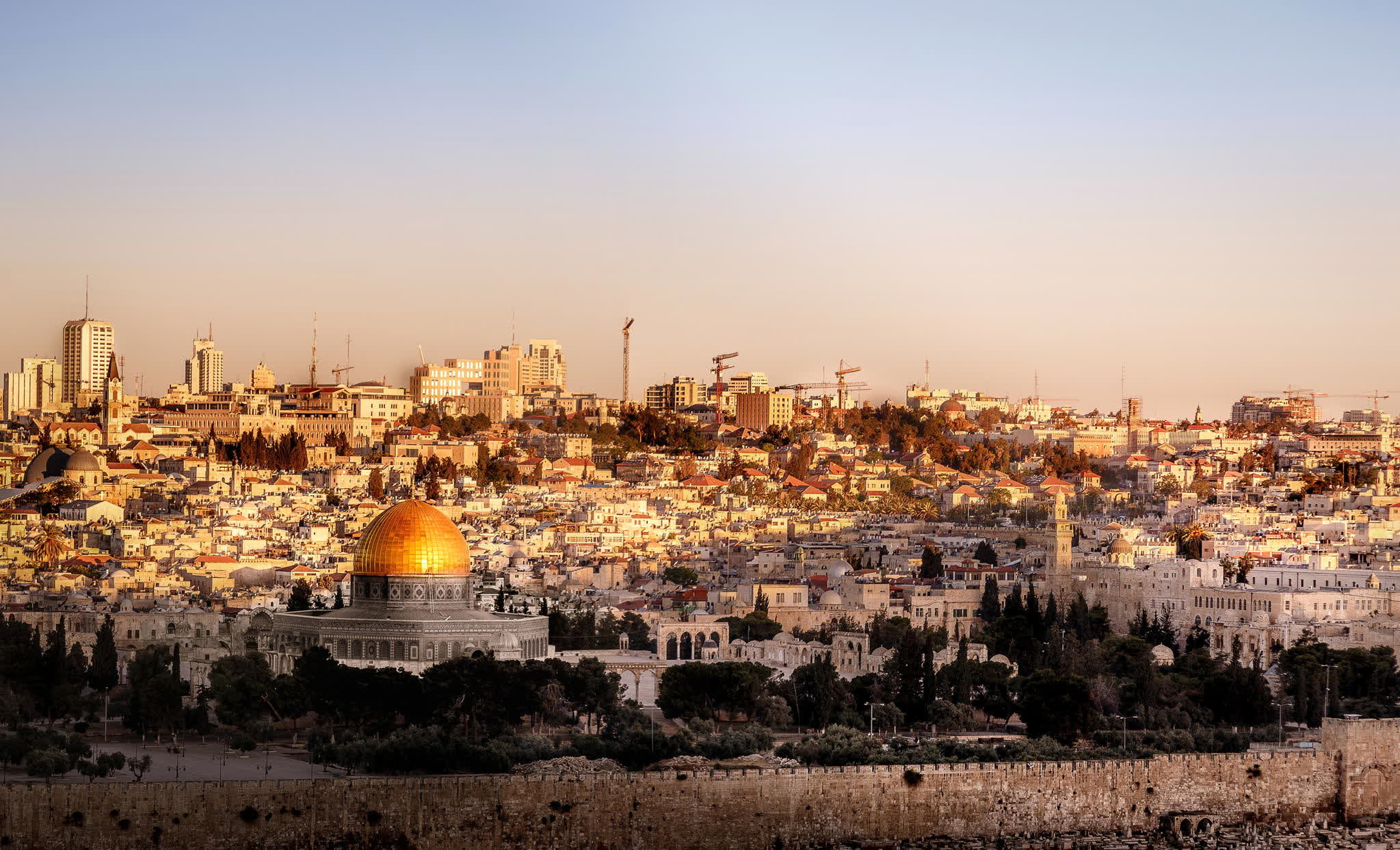
    President Trump, in a move widely condemned by the international community, has announced that the United States will officially recognize Jerusalem as the capital of Israel. This decision has been met with a wave of disapproval from adversaries and allies across the globe.  

    Trump has approved the move of the US embassy from Tel Aviv to Jerusalem, which makes the United States the first country to officially recognize Jerusalem as Israel’s capital.  

    Jerusalem is a city with a long history of conflict, running all the way back to the Crusades nearly a millennium ago. Currently, Israel is the only country that recognizes Jerusalem as its official capital, as it occupies the western half of the city. All foreign embassies are currently in Tel Aviv.  

    East Jerusalem is the major point of contention for many amongst the international community. Israel annexed the eastern half of the city from Jordan in the 1967 Six-Day War. In 1993, as part of the Oslo Peace Accords, the final status of the city was meant to be discussed later.  

    Palestinian representatives have told the BBC that the changes to US policy of Jerusalem spell a “kiss of death” for the two-state solution peace process.  

    Some worry that the American recognition of Jerusalem as the Israeli capital could validate Israeli settlements in the West Bank, which some have said violate international law as they are in Palestinian territory. This would also compromise America’s position as an honest and fair peace broker. 

    The United Nations has reiterated its position that to achieve lasting peace in the region, a two-state solution is necessary, with East Jerusalem as the Palestinian capital, and the city declared an international city under jurisdiction of the UN. East Jerusalem is home to 330,000 Palestinians, as well as some of the most sensitive sites in Christianity, Islam, and Judaism.  

    Israeli reaction has been positive. Prime Minister Benjamin Netanyahu has said that “[Israel’s] historical national identity is receiving important expressions everyday”, as he and President Trump have a better relationship than his predecessor, former President Barack Obama.  

    In a speech outlining the shift in American policy, President Trump noted “We cannot solve our problems by making the same failed assumptions and repeating the same failed strategies of the past”. No timetable has been set for the move.  

    Canadian policy has not changed as its embassy will stay in Tel Aviv. The Canadian government’s policy on Jerusalem has not changed either, noting that the city’s status can only be determined as part of the peace process.

    Countries and organizations around the world have expressed concern about the move, including Palestine, Turkey, Saudi Arabia, the Arab League, Iran, Jordan, the Vatican, the European Union, Russia, the United Kingdom, China, and Lebanon.  

  • Trump Bump? Not Quite

    For a lot of us it’s too early to think about summer. Classes are nearing their end and things are winding down. But for Grade 12 students across the world the time has come to get ready for university. For nearly a thousand students, this summer will be about finding mini-fridges, packing their winter gear, and booking flights and busses so they can all descend upon Acadia come late August for the matriculation of the Class of 2021.

    Last year saw enrolment increase by 25% for new, incoming full-time undergraduate students in September of 2016, making Acadia one of only two universities in Atlantic Canada to post a significant gain in full-time undergraduate enrolment. This 25% boost was accompanied by a 1.5% increase in international students and a 2% increase of overall full-time undergraduate enrolment, with total full-time enrollment almost 1.8% higher than it was in 2015. According to President Ray Ivany, this is “an extraordinary result and represents the highest first-year enrolment since the start of the Ontario double cohort in 2003” in a statement published on the Acadia University website in October of 2016.

    Acadia was clearly benefitting from its increased emphasis on recruiting and playing to its strengths as a small, liberal arts school, no doubt aided by the formal establishment of the Maple League of Universities in late 2016. Recruitment efforts in Western Canada to rural Nova Scotia to Sri Lanka and Jordan have clearly paid off.

    There were many, however, who anticipated that our university population would continue to grow from south of the border, as the election of Donald Trump surprised much of the world and sent applications flying towards Canadian universities. Global News reported in late November 2016 that because of this ‘Trump Bump’ American applicants to the University of Toronto were up 59% compared to the same time in 2015, while McGill’s overall applications after the election up 30% from November 18th 2016 compared to the same time a year earlier. At the time, Global news reported that American applications to Acadia were up 76% from from the same time last year.

    This began to make students at Acadia talk. What kind of school would we become? How could we cope with more students? Where could we even put them? How would our professors handle the surge of new students? Would we lose our reputation as a small school dedicated first and foremost to students?

    Needless to say, Acadia is staying true to its founding principles: a small school built on equality and fairness, dedicated first and foremost to its students. Although applications may be up, according to Vice President Enrollment and Student Services Susan Mesheau, “Acadia is seeing a 46% increase in applications from [the United States] compared to this time last year, however, the real numbers are not large – 57 applications this year versus 39 last year at this time”.

    This comes at a time when Acadia is looking to increase the percentage of international students from 10% to 15%, potentially altering the makeup of the student body at large. It is equally interesting to note that this discussion is taking place just as Acadia is trying to find creative ways of increasing revenue, such as increasing tuition on certain programs that are equipment intensive, such as environmental science or biology, to offset costs and bring debts under control. An increase in the international student body paying more for programs that cost more at Acadia would mean more financial certainty for the school, an arguable bonus.

    The suspected ‘Trump Bump’ will undoubtedly change many universities around Canada. It will be hard to have the same impact at Acadia, as it has been predominantly inhabited by Eastern Canadians. The ‘Acadia at a Glance’ page on the university website states that nearly 63% of Acadia’s population is from Eastern Canada. Central Canada is next, comprising 16%, international students at 10%, followed by Western Canada at 9%, and students from the United States at 2%. It will be interesting to see how this changes things.

  • First American Presidential Debate 2016

    The first US presidential debate took place on Monday evening of September 26th, 2016, featuring a much anticipated and polarized pair of candidates, Donald Trump and Hilary Clinton. Being the first time that Trump and Clinton have taken the stage together in this type of setting, the debate revealed the presidential nominees’ ability to address today’s issues, how they differ from one another, and how their philosophies appear to add up. Both candidates bring a lot to the table. Between taxation, trade, and foreign policy especially, there is a lot to be said about their differences.

    In brief, Clinton advocates a more or less traditional and neoliberal view of these affairs: tax the rich, enhance and facilitate free trade arrangements, maintain strong ties with our allies, and always engage in diplomacy at first instance. Secretary Clinton views the importance of building the middle class, with much of her policy aligning with this outlook. Her education and experience in the political sphere should warrant her much credibility for her plans, being very careful of the political implications of the POTUS’ actions on the national and international level and not suggesting any radical policies that could potentially compromise any number of political or economic institutions.

    Trump sees things differently. Straying from convention, Trump proposes not to tax the upper class, rather provide tax cuts for purposes of encouraging corporate reinvestment in technology, growth and employment. On the trade front, scrap free trade agreements and start taxing foreign entities for trading with the US. And for those who wish to move and produce in China to then sell back to America, they will experience heavy penalization. His stance on foreign policy also possesses an interesting economic perspective: to engage with and support our allies is important, but relationships within organizations like NATO need to be equal, and nations need to provide equal funding toward global efforts. In short: our money is ours, not yours, and we will not be pulling any dead weight anymore.

    Both candidates possess different but valid outlooks on America’s future. It should be granted that Trump does have an understanding in the workings of business, economic imperatives, and the world from a capitalist’s eyeview. Many people find him appealing in this way. For one, the assumption that big business will necessarily reinvest their capital in growth is not ridiculous: in competitive environments it is in fact an imperative to a certain extent. Indeed he is right. Hilary Clinton is also right, however, in the sure bet: tax the wealthy more to ensure services and programs are provided to the public.

    Trump also places heavy emphasis on America making better deals and earning their fair share, which illustrates the thin line that Trump ultimately walks on between the economic and the political. The United States sits near the top of the global economic and political pyramid, but to build a strong global leadership role depends on maintaining and strengthening relationships between states, whether through trade or diplomacy alike. What Trump may ignore in international relations is the major influence that the political sphere can have on a nations economic well-being. Relationships matter. In light of Trump’s views emphasizing the US as the main priority between tax, trade, and foreign policy, his contention on the standing economic relationships between global partners make his foreign policy focus seem merely ‘domestic’.

    Hilary Clinton makes it clear to international partners during the debate that the word of the US is good. Under a Clinton administration, global relationships will be maintained, and the focus will not only be on growing America’s core middle class, but assisting their international partners as well. It is hard to criticize one for this double standard, especially considering where the US fits into the global scene, and it takes much consideration for policy goals to strike a balance between the two.

    However, the American public have been seeing things differently. It seems that post-debate polls indicate no clear winner, many claiming Clinton was the stronger debater, others indicating Trump was the winner. Even after such a determinative event like this, the nation is still divided.


  • An American in Turkey:  A Cyclist’s Take on Donald Trump and His Views On Muslims

    An American in Turkey: A Cyclist’s Take on Donald Trump and His Views On Muslims

    Donald J. Trump is calling for a total and complete shutdown of Muslims entering the United States.”

    That was a quote Trump himself read out loud at a rally in South Carolina. And when Barack Obama chose not to attend US Supreme Court Justice Antonin Scalia’s funeral, Trump tweeted: “I wonder if President Obama would have attended the funeral of Justice Scalia if it were held in a Mosque?” But he’s gone a step further: he’s also called for a scorched earth strategy towards the Middle East, bombing civilians and targeting terrorists’ families.

    I find comments like these troubling. They show a complete lack of respect towards Muslims, a group of people I have interacted with, shared food with, and have come to greatly admire.

    ***

    Over the years, I’ve heard this story a few times: my parents had taken me out to San Antonio Rancho Park in the Santa Cruz mountains, and a stranger approached them and said, tongue-in-cheek: “There’s something wrong with that kid. He’s laughing too much.” That has always been my proudest moment. But sadly, the laughter would come to a halt. We left Sunnyvale, California and moved to Ottawa, Ontario. For nine years, I attended the same school. Its system and people did not work for me. I came to believe I had no control over my own destiny, and that I was not the commander of my own ship. In California, I had never stepped away from the spotlight. In Ottawa, I came to lurk in the corners.

    From my time in Ottawa until the end of my 25th year of existence, I moped about from one city to another, from one job to another, and from one clusterfuck to another. And as the years dragged on, I felt ever more a knotted, twisted feeling inside my stomach, my mind, and my soul. In this time period, I can not point to any accomplishments, whether socially, romantically, academically, or employment-wise. I dropped the ball everywhere I went. I awoke each day certain there was a tomorrow, and I goofed off in all senses of the word like there was a tomorrow.

    That time period ended with a year long stint teaching English in Taiwan, which was without doubt the lowest extended point in my life. I worked at a cram school, and I was a complete train wreck. I had unkempt, knotted hair down to my shoulders that I let cover my face. I let people trample all over me like a doormat. In my final two weeks, a co-worker took me aside and succinctly summed up my time at work: “Ian, you’ve been here a year, and everyone hates you. Even I stay away from you.” Obviously, there were a few odd exceptions, but no more than I could count on two hands. I have thought about that berating everyday since it happened. I let down far too many people in my life who had invested in me, who had stuck their neck out for me. You do no one a favour, particularly yourself, by not standing in the spotlight.

    From my time in Taiwan, there were only two other moments worth mentioning: booking my flight back home and a scooter accident. The scooter accident happened on a backcountry road in Dayuan. From what I was told through broken English, I had torn a muscle in my foot. I was furious. The week before the accident, I had summited Taiwan’s highest peak, and in a rare moment of inspiration, I opted to cycle the length of New Zealand. That bum foot wrecked havoc on that plan. But under the surgery lights, I vowed that if I ever walked again, I would do something much more challenging than cycling across New Zealand.

    After some consideration, I settled on cycling the length of Turkey. I wanted to see a Muslim country because my motherland, America, had been at war with Islam since 9/11. To me this trip was non-negotiable: Either I follow through on this idea or I signal to myself and the world that I would just call it quits on my life. I had decided to jump off a cliff after the cycling if I couldn’t see myself fitting into society.

    So to Turkey I went, and there, in Istanbul, a few months after my surgery, I lugged an enormous cardboard box, one morning at dawn, that contained my bicycle and two duffel bags across the harbour front of Yeşilköy to a ferry that would eventually take me to Yalova, the starting spot of a 6,500 km solo trip that would see me cycle 3,500 km through the western half of Turkey and 3,000 km through the Balkans and the Germanic region of the Alps.

    The first seven weeks of this trip was the most stressful period I have ever experienced. With the exception of one past job, this was the only time in my entire life, at 25, no less, where I was applying myself, and seeing something through. Before that, I always moped through the day certain my actions would have no impact on the direction of my life. While cycling, I felt almost no physical pain in those initial seven weeks, but my mind was stretched beyond anything I had ever felt reasonable or thought possible. In short, sometime not too far after grade 4, I stalled, and now, cycling along highways and country roads in Turkey, I was trying to catch up to where I should be.

    There were a million stresses. A constant language barrier. Night in and night out, I had no idea where I would sleep. I only slept roadside in my tent or at strangers’ places who had invited me in when I happened to cycle by them. I would spend hours repairing the simplest of bicycle fixes and I had no idea where I was because I never purchased a map. There were a plethora of noises and strangers at night that would prevent me from sleeping more than four hours straight. The elements were beating me – the cold, the rain, the heat, and hail. And all the while, with the exception of the odd off day, I was cycling between 100 and 150 kilometers daily.

    The trip was full of unforeseen variables. One night, wild dogs would wake me up; the next, the stench from a pile of poo I accidentally pitched my tent on. But through it all, there was one constant: a friendly Turk always looking to help me out. Three or four times, a bicycle mechanic repaired my bicycle for free. Maybe twice a week, a Turk would flag me down and host me for the night. Free food was a daily occurrence. And I was served tea upwards of seven times a day.

    At times I’d stop for a few days, and in Yalova, I came to know one man’s family particularly well. His name was Soner. I met Soner’s friend in my first hour of cycling. I was unsure where I could cross the highway. He eagerly gave me guidance, and I cycled off. A day later; however, I found myself back in Yalova, since I needed to go to Istanbul to buy new bicycle panniers. Again, by complete chance, I bumped into Soner’s friend on the street, and he said his friend would be happy to host me. I spent two nights at Soner’s, sleeping in his auto work shop.

    Seven weeks later, on a Saturday, I woke up in Iznik, on the floor of a local pottery artist’s shop. Her mother put on a feast of a breakfast for me. Later that day, I headed over to Yalova to crash at Soner’s again. When I arrived, we parked my bicycle in his store, and he brought me up to his flat for a bath. Then, his family and I gathered around his television and watched Germany play Ghana to a 2-2 tie in the Brazilian World Cup. That day was my 26th birthday. Neither the artist nor Soner ever found out it was my birthday. It was just another day for me cycling across Turkey.

    The next day, Soner gathered his family, 30 plus people, and we drove off to the beach. I spent the day eating barbeque and playing in water. Our favorite game was to impersonate Cristiano Ronaldo while doing diving headers in the Mediterranean waters. We had a lot of fun. A few days later, I left for Bulgaria.

    When I came to Turkey, I had only one goal: to see something through. But somewhere between when I started my trip in Yalova and cycled those wretched 3,500 km, I left a lot of anxiety, fears, stress, tension, and doubt on the sides of the roads I cycled. And I have become addicted to cycling because cycling came to remind me that life is self-powered, that I am the commander of my own ship. But what helped me through the ride was the support I received from the locals. This is the point I wanted to emphasize, and it’s why I am greatly saddened by Trump’s vitriolic comments towards Muslims. There’s a thing or two to like about Trump, in particular he lacks our era’s suffocating political correctness and his emphasis on highlighting globalization’s detrimental impact on all but a few niche segments of society. But with regard to his views on Muslims, he’s crossed a line and entered into the territory of Nazism.

    As Trump continues to dominate the news cycle and positions himself to become the Republican nominee, I wanted you to know that: this nasty image that Donald presents of all Muslims being terrorists who hate Westerners is far from what I experienced. Less than two years ago, I was cycling across Turkey just attempting to get my life to inch forward. Very unintentionally, I came to be the man I always wanted to be – that kid that someone facetiously pointed out and said there was something wrong with because he was laughing too much. And a lot of that had to do with those construction workers in Orhangazi, Turkey who let me sleep at their worksite and brought me breakfast the next morning. That was my first night on the road.

  • The Donald

    There’s a political comic strip from the 80s called Bloom County. My parents used to have a collection of these strips which I used to read in elementary school, not understanding them at all. In one subplot, Donald Trump fell off a boat and went into a coma, and the doctors transplanted his brain into the body of a demented, humanoid cat that had once run for president. I liked this part of the comic because I knew who Trump was: you could see his name on his towers as you drove into Manhattan, which I occasionally did. He was prolific. I never watched The Apprentice, but I knew about his hair and his ability to be an asshole. The entrepreneurs in my family read his biography and embraced a “you gotta respect the guy” attitude. He was a celebrity force to be reckoned with.

    Given what Trump is up to at the moment, that comic seems like a scrambled prophesy, and I honestly don’t think I’d be surprised if his brain eventually ended up in a cat. It’s hard, at this point, to say anything original or poignant about his campaign to become president of a major world power. There is no joke to be made that’s more extreme than the alarming, farcical idea of him become the POTUS, so we can all just sit back in shock and wonder how seriously we should be taking him, or, rather, how seriously we should be taking the contingency that supports him. In the same way that Republicans were threatening to flee to Canada after Obama was elected for a second term (ha), my Democrat friends are now tweeting about claiming refugee status in Canada if Trump gets elected, and though none of that has or will realistically happen, it’s reflective of a calm panic over what people feel to be a high-stakes situation. I guess many Canadians felt that same nervousness when it came time to try to kick out Harper. Some of my relatives who live the American Midwest and whose communities have no practical use for leftist policy (or so they feel), genuinely believe that life under the Great Dictator Obama is horrible – the same hell liberals fear living under Trump. It’s all somewhat relative.

    So there are the questions of “what should we be worried about?” and then “what should we do about it?” Both of these queries we can only answer tentatively. One can look at Trump and see narcissistic, fascist tendencies in everything he does and make comparisons to Nazism and mock him and dismiss him and so on. It’s almost certain he won’t win the Republican nomination, so we needn’t really be worried about that (knock on the wood), but we can take seriously the fact that he has a following cheering on his racist, sexist, viciously false rhetoric and discrediting all media that calls him out on it. What we should respond to – rather than the antics of Trump – is the fact that our political conditions have allowed for Trump to be Trump.

    Jeb Bush, also vying for the Republican nomination, was recently asked whether, given the opportunity, he would go back in time and kill newborn Hitler. “Hell yeah!” he replied, enthusiastically imagining time travel and the murder of a mustached infant. One would think that the right-wing Bible-devotee would not publically endorse King Herod-esque problem solving methods. Biblically, killing a lot of babies was not an effective way of stopping the will of God; in the same sense, preemptively getting rid of Hitler would not have rid the world of his brand of evil, and pressuring Donald Trump into giving up would not change the minds of his masses of supporters. Practically speaking, you cannot kill dangerous ideas with guns. Philosophically speaking, perhaps, we should strive to not even make the attempt, as those ideas live insides the heads of people.

    As there is no simple route to getting rid of ideas we don’t like – or their figureheads – we must beg patience of ourselves and constantly reevaluate. In asking ourselves “how do we fix the Trump situation?” we also ask “how do we, as a society, progress in the direction that is best for us?” That is the question. We’re armed with some traditional methods – education, democracy, free expression – with which to go about problem-solving. As our frustration/desire to spit on Trump grows, we must remember that he isn’t really the problem. The best we can do is breathe, not get angry, not be afraid, and speak intelligently to each other (and listen in turn). There is no point in cynical resignation. And you, Canadians: when the media cruelly bombards you with images of Trump’s sinister face and disturbing toupee, take comfort in remembering that your Head of State’s hair is really, really good. That’s got to count for something.

Betzillo positions itself as a versatile gaming hub where structured bonuses and adaptive gameplay mechanics support both short sessions and extended play.

Built with a focus on innovation, Spinbit integrates modern casino architecture with rapid transactions, appealing to players who value speed and digital efficiency.

Ripper Casino emphasizes bold entertainment through high-impact slot titles and competitive promotions crafted for risk-oriented players.

A friendly interface and stable performance define Ricky Casino, offering a casual yet reliable environment for a wide spectrum of gaming preferences.

King Billy Casino channels classic casino spirit into a modern platform, delivering recognizable themes supported by contemporary reward systems.

Immersive visuals and layered slot mechanics are at the core of Dragonslots, creating a narrative-driven casino experience.

Lukki Casino appeals to players seeking direct access and minimal friction, focusing on fast loading times and intuitive controls.

Casinonic provides a structured and dependable gaming framework, blending modern slots with transparent operational standards.