Tag: waste

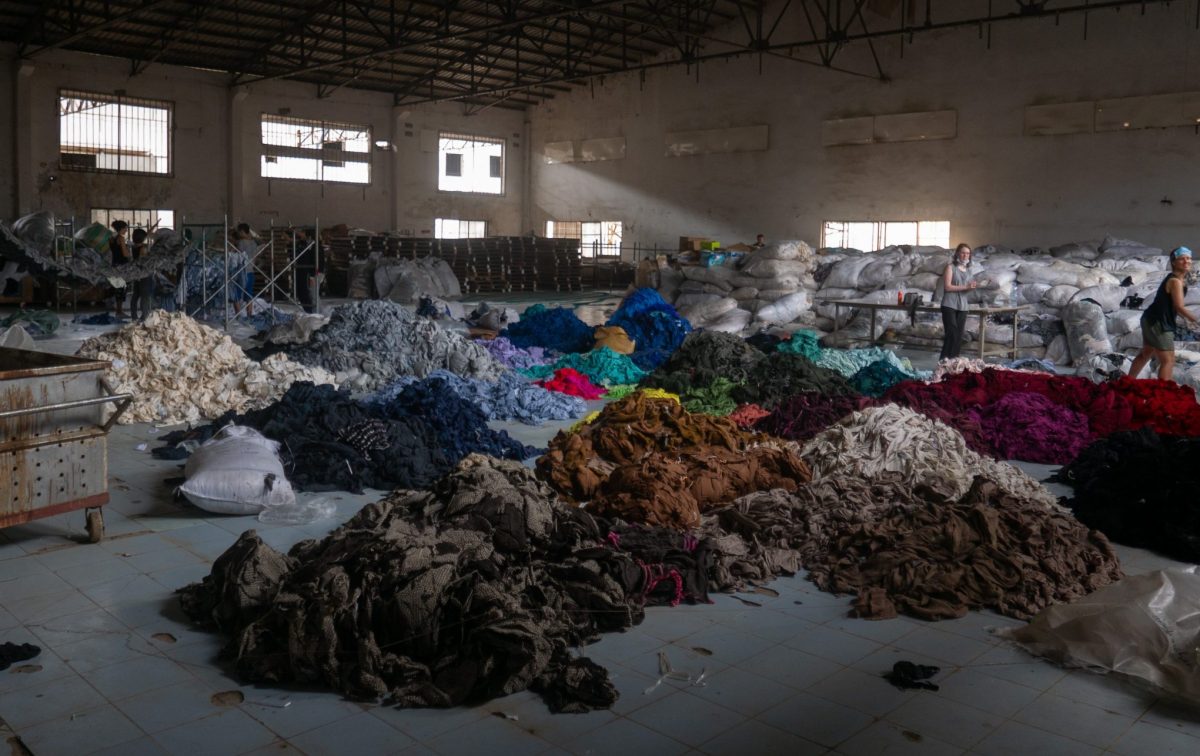
  • Clothing Companies are Destroying and Trashing Unsold Merchandise

    Clothing Companies are Destroying and Trashing Unsold Merchandise

    Imagine a system where you destroy leftover goods instead of distributing them to those in need. Now, open your eyes and look around you; look at all your favourite stores, and probably the shoes on your feet right now. The majority of these companies contribute to wasteful and neglectful practices. 

    In August 2020, the Canadian Alliance to End Homelessness (CAEH) conducted a survey suggesting that 5 percent of Canadians have been homeless themselves, while another 31 percent know someone who has been homeless. Moreover, one in seven Canadians say they live in a place that does not meet their needs but cannot afford to move elsewhere. Additionally, one in six Canadians cannot afford to buy new clothes and good-quality groceries. 

    Canadians across the country are experiencing deprivation due to lack of funds, and while this is an entirely different social issue on its own, we cannot be destroying perfectly good quality clothing that would tremendously help those who are struggling financially. However, the problem continues, usually hidden by corporations and avoided by people who are unwilling to address the problem. 

    Unfortunately, burning or cutting unsold clothing is fashion’s best kept secret, and although luxury brands like British Burberry admitted to destroying $36.8 million worth of its own merchandise, many other brands participate. Even Canadian favourites, like Winners and Marshalls, refused to comment in an interview with Global News when asked if the company destroys their products before throwing them away. Louis Vuitton and Nike are also major contributors to the issue, and H&M burned 60 tons worth of new and unsold clothes between 2013 and 2018. Also, whistleblowers have addressed that these practices also take place at Urban Outfitters, Walmart, Eddie Bauer, Michael Kors and Victoria Secret. 

    In the same article from Global News, a former employee of Carter’s Inc. was interviewed about her horrifying discoveries as a retail manager in the clothing industry. Patricia said, “You have to make sure and it’s part of the policy to ensure the product cannot be used if someone were to find it in the garbage.” 

    If someone is looking in the garbage, they could probably benefit from clothing, and the cruelest part of this policy is that, in theory, if a person finds needed clothing in the garbage or in the streets, it is damaged beyond the point of use. The policies do not just apply to specific clothing items, they apply to all merchandise … including shoes and winter coats.

    The World Resources Institute says that it takes 2,700 liters of water to make one cotton shirt. 2,700 liters of water is approximately how much water one person will drink in the span of two and a half years. On the other hand, while polyester clothing uses less water, the HuffPost says polyester production released 1.5 trillion pounds of greenhouse gases in 2015. 

    If withholding new clothing from those in need isn’t enough, the fashion industry is one of the world’s worst polluters, so all this pollution is for nothing if a significant amount of the products being made are just being shredded, burned or ripped beyond repair. 

    Furthermore, forcing employees, most of them making minimum wage, to cut up and throw away perfectly good clothes, shoes and coats is cruel, especially when you consider the dismal statistics indicating that one in six Canadians struggle to afford new clothes and good-quality groceries. 

    While many companies in the last year or two have begun to develop more environmentally friendly ways of making their clothing and recycling their fabrics, the fashion industry was still one of the top contributors to pollution in 2020 and continues to be in 2021. While there are some companies who have changed their policy and stopped destroying unsold items, it was an action only sparked by customers boycotting and the threat of bankruptcy. Also, many companies have hidden these practices from the public for decades, so don’t be so quick to applaud businesses like H&M for advertising their updated policies.

    Note: This article is part of our Winter 2021 Print Edition that focuses on both issues and the good in the current state of the world. Look across campus for a paper copy of this edition!

  • Are You Feeding a Bag Monster?

    Are You Feeding a Bag Monster?

    Are You Feeding a Bag Monster?


    Ok, you’re probably wondering what on earth I’m talking about when I say, “feeding a bag monster”, right? Well before you exclaim, “I can barely feed myself on my student budget and schedule, let alone feed someone else!” let me explain.

    You know those disposable plastic shopping bags you get from the grocery store and other stores? Although they may seem convenient, if you get plastic bags every time you go to the store, they begin to add up, and add up, and can grow into menacing, problematic creatures – Bag Monsters!

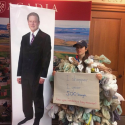
    Recently, a Bag Monster was wandering around Wolfville and the Acadia campus. That Bag Monster was composed of 500 bags, which represents the approximate annual consumption of single-use disposable bags by North Americans![i] 1 shopper, 1 year, 500 bags – now that’s pretty scary! However, perhaps even more concerning, is that many of us will never notice that we are feeding Bag Monsters unless we keep all of our single-use plastic bags for an entire year. Instead, we only see small Bag Monsters stuffed under the kitchen sink, in our garbage, floating on the sides of the street… But regardless of whether we know it or not, every time we use plastic bags, we are feeding Bag Monsters in our community and contributing to a global Bag Monster invasion!


    Bag Monsters are wreaking havoc in Wolfville, in North America, and around the world. In the Annapolis Valley, Valley Waste Resource Management receives about 2,700 tonnes of plastic film each year, which includes shopping bags and other plastic packaging. The vast majority of these plastic bags are unnecessary and could have been avoided by using reusable bags. Instead, 1,000,000 kg of clean plastic film and another 1,000,000 kg of soiled plastic film end up in the landfill annually in the Valley, while only about 680,000 kg of plastic film are recycled, and this has significant costs, both environmental and economic.[ii]

    Worldwide, a trillion single-use plastic bags are used each year, with nearly 2 million used each minute, unleashing a continuous stream of bag monsters into our environment.[iii] To illustrate the scale of this problem: if all Americans (and only Americans) tied their annual consumption of plastic bags together in a giant chain, this chain would wrap around the equator about 1,330 times! [iv] Bag Monsters are quite literally strangling our Earth, especially since the majority of plastic bags aren’t recycled, so Bag Monsters end up forming in our landfills, on the sides of roads, in rivers and oceans, and along shorelines. These Bag Monsters are practically eternal, taking at least 1,000 years to break down, and even then they don’t biodegrade but instead only fragment into small pieces over time. Marine and land animals often ingest these plastic particles, and birds and turtles are frequently found with stomachs full of plastic, including recent studies that have found plastics in the majority of marine bird stomachs.[v] This is an increasing problem as the trillions of tons of plastic particles in the oceans increase each year and never biodegrade.[vi] More so, large Bag Monsters that have not been fragmented can entangle marine species, suffocating and cutting them, and plastic bags have been identified as the most harmful items to marine animals of the vast multitudes of large plastics in our oceans.[vii]

    Additionally, the production of plastic bags requires petroleum to create the plastic and act as an energy source during the manufacturing process. Therefore, the continued demand for disposable plastic bags encourages the extraction of fossil fuels, contributing to greenhouse gas emissions and using up valuable finite resources only to dispose of the bags soon afterwards. The Bag Monsters we create are sucking energy from our societies. In fact, the amount of energy required to make just 12 plastic bags could drive a car for a mile (or 1.6 km)! How far could you drive with the plastic bags you have used this year?

    Bag Monsters are the frightening result of our dependency on, and excessive consumption of, plastic. In fact, Bag Monsters are not just made of single-use shopping bags, but can form from all types of excessive plastic bags and packaging. These Bag Monsters just keep growing the more we use plastic bags… soon they will take over, with detrimental consequences for the planet. How many Bag Monsters are there in your house, in your community?

    It is evident that Bag Monsters are a huge problem, so what can we do about it? Well, a healthy and sustainable future free of these monsters is possible, we just all have to take a few easy steps to fight back against the Bag Monster invasion of our communities and the Earth.

    Simple tips to combat Bag Monsters:

    • Use reusable shopping bags! They don’t cost much and will last a long time. Keep them in a handy place near the door so you don’t forget when leaving the house.
    • If you forget a reusable bag…
      • Just say “no” to a plastic bag and hand-carry your things out of the store
      • If necessary, try to use as few plastic bags as possible to carry your stuff
    • Recycle your plastic shopping bags. Place all bags into one bag and tie closed, then put into your blue bag (#2 for containers).
    • Reuse existing plastic bags.
    • Buy fewer products that come in plastic bags or packaging.
    • Buy in bulk when possible, and bring your own containers (e.g. new or reused mason jars) to avoid using plastic bags.
    • Educate others about the Bag Monster problem, and encourage them to take action!


    [i] Suzuki, D. (2012, January 10). Stop Being a Bag Lady (or Bag Guy). Retrieved from http://www.huffingtonpost.ca/david-suzuki/plasticbagban_b_1725998.html?utm_hp_ref=ca-plastic-bag-ban; Keller, A. (2011, September 28). What is a Bag Monster? Retrieved from http://www.bagmonster.com/2011/09/what-is-a-bag-monster.html

    [ii] Valley Waste Resource Management.

    Estimated costs to recycle and landfill plastic film is ~$250,000 for  the Annapolis Valley per year).

    [iii] Earth Policy Institute. (2014, October). Plastic Bags Fact Sheet. Retrieved from http://www.earth-policy.org/images/uploads/press_room/Plastic_Bags.pdf

    [iv] Earth Policy Institute, 2014.

    [v] Xanthos, D., & Walker, T. R. (2017, May 15). International policies to reduce plastic marine pollution from single-use plastics (plastic bags and microbeads): A review. Marine Pollution Bulletin, 118 (1–2), 17-26. Retrieved from https://doi.org/10.1016/j.marpolbul.2017.02.048; Suzuki, 2012.

    [vi] Xanthos & Walker, 2017.

    [vii] Xanthos & Walker, 2017.

Betzillo positions itself as a versatile gaming hub where structured bonuses and adaptive gameplay mechanics support both short sessions and extended play.

Built with a focus on innovation, Spinbit integrates modern casino architecture with rapid transactions, appealing to players who value speed and digital efficiency.

Ripper Casino emphasizes bold entertainment through high-impact slot titles and competitive promotions crafted for risk-oriented players.

A friendly interface and stable performance define Ricky Casino, offering a casual yet reliable environment for a wide spectrum of gaming preferences.

King Billy Casino channels classic casino spirit into a modern platform, delivering recognizable themes supported by contemporary reward systems.

Immersive visuals and layered slot mechanics are at the core of Dragonslots, creating a narrative-driven casino experience.

Lukki Casino appeals to players seeking direct access and minimal friction, focusing on fast loading times and intuitive controls.

Casinonic provides a structured and dependable gaming framework, blending modern slots with transparent operational standards.