Tag: water

  • Water traced on Moon: Another Achievement by NASA

    Water traced on Moon: Another Achievement by NASA

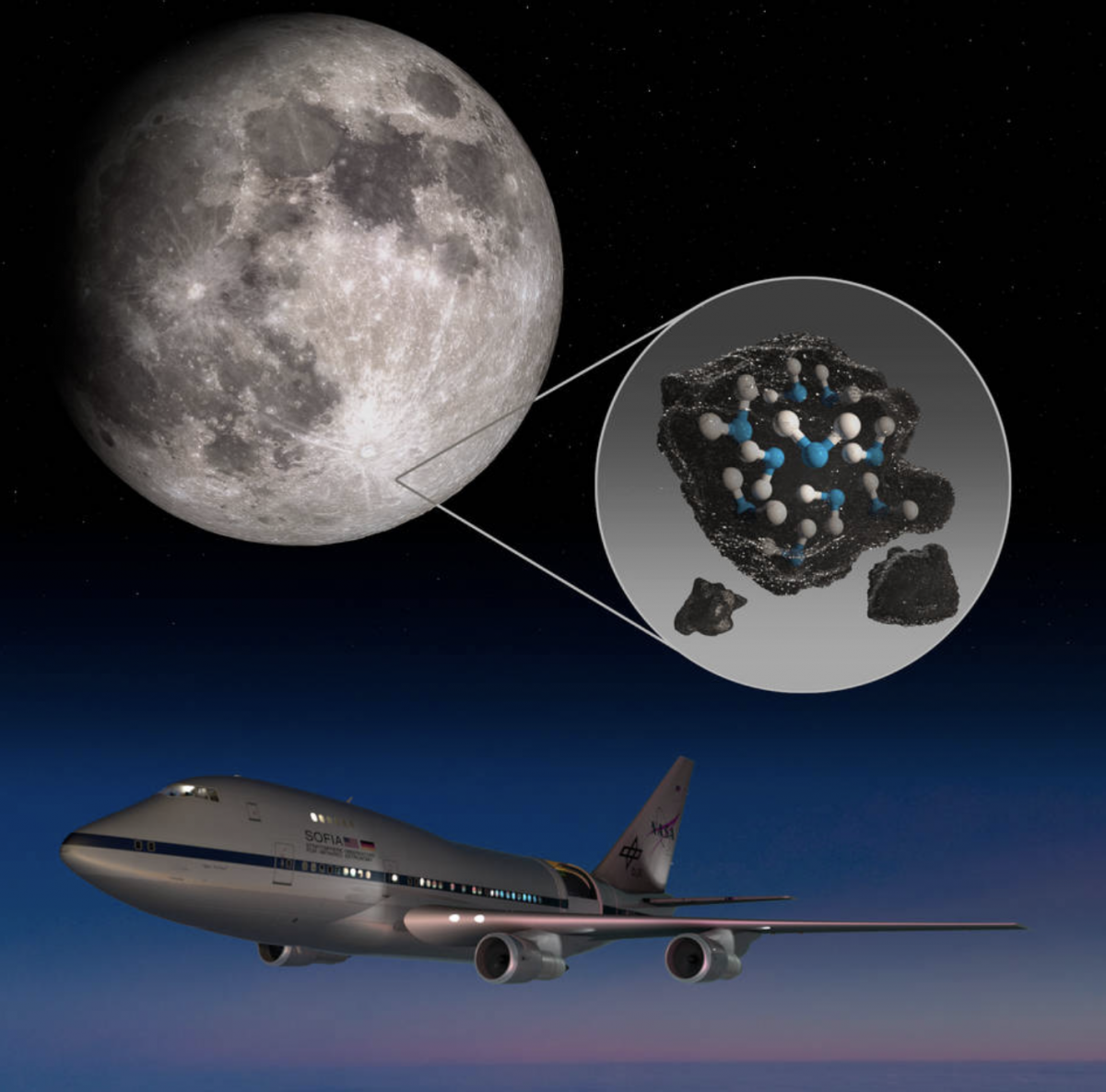
    For a long time, the moon has been thought of as waterless, though recently, numerous researchers have discovered water in some parts of the moon. New observations by the SOFIA telescope and Lunar Reconnaissance Orbiter by NASA reveal traces of water in some small dark craters as well as sun-baked lunar soil. Earlier large shadowed craters were thought to be a significant source of water storage.

     This discovery has proved itself to be a milestone in the mission to discover possible life on the Moon. SOFIA is a very innovative and unique approach by NASA in the field of lunar science. SOFIA- Stratospheric Observatory for Infrared Astronomy, is a modified Boeing 747SP jet which gives its telescope, which is 2.7 meter, a view above 99% of the atmosphere’s obstructive water vapor which helps in more precise observations.
    NASA’s SOFIA confirmed the presence of water on the sunlit surface of the Moon.
    Water molecules were detected on the Clavius Crater located on the southern hemisphere of the Moon, which is one of the largest craters visible from the Earth. Previous research and missions towards the Moon have revealed hydrogen molecules but some were not able to spot the difference between water (H 2 O) and hydroxyl (OH) since hydroxyl is a close chemical relative of water. The data from the location (Clavius Crater) has revealed the presence of a water concentration equivalent to 12-ounces of water trapped in a cubic meter of lunar soil which is
    spread throughout the lunar surface.

    The observations on the 10-minute span focused merely on the region in the southern hemisphere of the moon since it is the largest crater (Clavius) which revealed a very strong emission of infrared rays with a wavelength of six microns. The area warmed by the Sun was reemitting the absorbed radiation exactly how water (H 2 O) would.

    The researchers who led the project at NASA, also said that they aren’t familiar with any other material on the Moon that can emit single feature rays at 6 microns other than water. It is thought that the water might be stored in either the naturally occurring volcanic glass or is that it is between microscopic grains of rock dusk, in which case it suggests that it is getting shielded from the extreme conditions on the Moon’s surface, that is, high temperature and vacuum conditions. This would allow water to persistently exist, though there are no further answers to how water came to be there in the first place. The assumption is that water could have formed by the free oxygen and hydrogen which are liberated from the lunar rocks by the impact of the micrometeorites.
    Earlier in 1969, observations by astronomers G.R. Hunt and J.W. Salisbury, show how much they focused on the characterization of minerals on the lunar surface instead of water, despite noticing the spectral emission, not realizing their huge discovery.

    Now the Astronomers and scientists are planning to map the vast lunar surface in order to get some answers to questions concerning the characterization of the behavior of water, a variation of water behavior across the lunar surface in accordance with specific days, latitude, etc., source of water, etc. There are also some doubts within this discovery that this might also be just weak bonding of solar wind hydrogen with oxygen at the surface of grains of silicate glasses and minerals in the regolith as per Jack Schmitt who is a geologist and member of Apollo 17’s crew
    who are the last astronauts to have walked on the moon.

  • Chinese Officials Lose Control Over Tiangong-1 Space Station

    Chinese Officials Lose Control Over Tiangong-1 Space Station

    The Chinese space station, “Tiangong-1”, is headed towards Earth. Chinese officials have also revealed that they currently have no clue where the space station is going to crash, but have predicted that it is to occur sometime in 2017. The craft is approximately the size of a bus (a length of about 34 feet and width of 11 feet), weighing 8.5 tonnes. It will most likely re-enter our atmosphere in small pieces.

    The Tiangong-1, which translates to “heavenly palace”, was originally launched in 2011 as an attempt to practice and carry out experiments relating to living in space and docking procedures with other space crafts. It was only built and intended for two year missions. Only recently, on September 14th 2016, did Wu Ping, the deputy director of China’s manned space engineering program, reveal that they had lost contact with the space craft back in March of 2016. Reasons why China’s space program have lost contact with Tiangong-1 currently remain unclear. While most unmanned space crafts burn and break apart upon entering the Earth’s atmosphere, this is usually closely monitored and highly controlled.

    Unfortunately, having lost all contact with the satellite, the Chinese space agency has very little influence over when and where it will crash. As of September 23rd, Tiangong-1 was orbiting above the Earth at approximately 370 kilometers. It has been losing just over 100 meters a day from both the Earth’s gravitational pull and atmospheric drag. By November 13th, the station will be roughly 364.9 kilometers above the Earth, having lost over 5,100 meters.

    When satellites reach the end of their intended lifespan, there are two options to dispose of them. The first is blasting it even further into the icy depths of space where it will never be seen again. The second option consists of slowing down the satellite using the last of its fuel so it can fall out of orbit and burn up in the atmosphere. While smaller satellites disintegrate upon entering the atmosphere at thousands of miles an hour, bigger crafts, i.e. Tiangong-1, may survive and are usually redirected to an area in the South Pacific Ocean known as the “spacecraft cemetery”. The cemetery is the safest place for satellites to crash because it is the point farthest away from any piece of land.

    So where will the space station crash? Nobody is able to know or even roughly estimate the site of impact at this time. Even when satellites reenter our atmosphere under controlled descents, no one is able to predict exactly where it’s going to crash due to factors like the descent angle, how much of the craft is left to burn, and if there are multiple fragments. Taking into account all these factors, means that the craft could crash practically anywhere on Earth.

    Despite all of this, officials claim that there is only a small chance that the satellite will hit a populated area. This is partially due to the fact that Tiangong-1 is hollow, which will cause it to burn up upon re-entry. Additionally, most of Earth’s surface (71%) is covered in water, with population density being a specific area on land, lessening the chance of the satellite posing any danger. However, that is only an estimate, and the only way to know for sure will be to watch the skies sometime in 2017.

  • #BanTheBottle Advocating For Cleaner Water

    The first water bottle was installed in London, England, in 1859. A political and technical accomplishment, it introduced clean, free, and accessible drinking water to the public. Bottled water was considered low-class because it was only used by workers in buildings and factories that could not afford plumbing. The public perception of bottled and public water was about to change drastically. In 1977, European Perrier created a New York based marketing campaign, selling their product as chic, upscale and lifestyle-defining. Their success inspired domestic beverage producers to launch their own marketing campaigns. Domestic producers could not claim classy European roots, so they created doubt in the safety of local water. Calistoga Mountain Spring water explicitly asked: “how can you be sure your water is safe? … unfortunately you can’t.”

    Simultaneously, the pressure from environmental activists pushed the government to create the 1974 Safe Drinking Water Act. Public water was now safer than ever as limits to dumping and a standard of contamination were introduced. However, the public perception of the quality of local water decreased. Residents now had increased interactions with warnings and possible risks of drinking the local water because the act mandated immediate notification of contamination. Between 1973 and 1988, the share of Americans who said they were extremely concerned about tap-water pollution had more than doubled. Bottled water sales were on the rise. The global industry, valued at USD $100 billion in 2015, is a huge marketing accomplishment.

    Recent concern about BPA found in plastic water bottles corresponds with David Suzuki’s sentiment that the chemicals found in the plastic packaging may be more harmful than anything found in the tap. Aside from potential health risks from the packaging, you are really paying for the same water at up to 3,000 times what you pay for purification through your taxes. Coca Cola’s Dasani bottles water from municipal sources in Calgary and Brampton. Pepsi’s Aquafina gets its water from Vancouver and Mississauga.

    If tap water is not trusted there is also not trust in drinking fountains. Reducing the number of water fountains or their maintenance becomes a way for municipalities to lower their budgets without raising public concern. The disappearance of water fountains makes it harder for the public to access clean and free drinking-water.

    Bottled water is a manifestation of water privatization. It creates a system in which people are increasingly responsible for their ability to buy potable water. The industry’s main concern is not for the health of the town’s residents from which they co-op their supply of water. The industry is based on profit-seeking and not the fulfillment of human rights. In 2004, Nestlé’s Poland Spring continued to truck water out of Fryeburg Maine during a drought where residents had to boil water due to a pump water failure. As a reminder, Flint Michigan still does not have clean water. The national guard distributes cases of Nestlé’s Ice Mountain 100 percent natural spring water to the residents. Nestlé receives $13 million in tax breaks from the state as an incentive to locate their plant in Michigan. The company only pays a small permitting fee to the state and the lease of a private landowner to access the water. Flint residents are still paying some of the highest water bills in the country for their poisoned water while the Nestlé bottling plant takes water out of an underground aquifer 120 miles away. Pumping large quantities of water can deplete underground aquifers that supply water to local communities and aquatic wildlife habitats. Companies like Nestlé also take millions of litres a day from Ontario wells on which residents rely. At the same time, there is a growing threat of water scarcity in Canada. Twenty percent of municipalities have faced shortages in recent years.

    If we do not trust our water, our response should not be to rely on bottled water shipped half-way across the world or pumped from our back yards. We should demand that the federal government address concerns about drinking-water quality, as is their responsibility. At Acadia, there is a lack of filtered water fountains in residences, the Student Union Building, and some of the older academic and administrative buildings on campus. Water bottles are being sold on campus again after earlier opposition. It is a shame to pay for a resource to which we have a fundamental right to access in its most healthy and free form.


  • Water Protection in Canada: Examining the Reactive Nature of Environmental Protection Legislation

    My thesis is on the reactive nature of environmental protection legislation in Canada. Specifically examining how water protection only occurs after a human health tragedy.

    There are only a handful of topics that most Canadians can agree on. These topics give Canada recognition around the world, as well as connect Canadians across the country. One of these topics is a love of the outdoors. Canadians dominate winter sport, relish the warm summers and take time to get out and stay outside. The environment is home to the sports, activities and wildlife that make people proud to be Canadian. After all it is the second largest country in the world and is credited for having a disproportionate amount of the world’s fresh water resources. If the Canadian public loves the environment so much why is there so little legislation protecting it?

    Canadians are lucky in regards to freshwater, as there is an abundance of fresh easily accessible water – or is there? Canada is frequently cited as the country with the largest volume of fresh water in the world, yet it actually only has approximately 6% of the global annual supply of renewable water (Bakker, 2006). Despite this, Canadians themselves believe that they are water rich. As such, Canadians are one of the biggest water consumers per capita worldwide (Bakker, 2006).
    Since Canadians use so much water in their daily lives, they care about protecting this resource. In 2004, 97% of Canadians agreed that a national water strategy is needed and that water is a basic human right (Bakker, 2006). Although this is something Canadian citizens feel passionate about, this is not reflected in Canadian legislation. Canada does not have a national drinking water strategy. At a federal level, there is a Canadian Drinking Water Quality Guideline outlining the acceptable drinking water practices, but it is non-binding and therefore not enforceable.

    The 2014-15 Report on Plans and Priorities gives detail to the budget and human resources of many of the different programs operated under the Ministry of the Environment. This plan outlines the cuts to twenty positions and a reduction in budget from $91 196 857 to $88 013 012 over two years in water specific programs alone (Environment and Climate Change Canada, 2014). On a federal level, Canada as a whole does not have comprehensive protection of water and water resources. With a reduced human and financial capacity this will likely get worse as water programs at the federal level cannot continue to operate at the same ability nor can they expand.
    Water protection can be achieved through provincial legislation but that means only a fraction of water in Canada gets protected. Water knows no boundaries, meaning that water has the ability to flow without discrimination. If the Northwest Territories had the best, most effective and enforced water legislation, they still would not control the condition of the water that flows into their territorial jurisdiction from Alberta, British Columbia and Saskatchewan.

    If the public has demonstrated their want for increased water protection but nothing has been done, what is the motivation for creating environmental protection legislation specifically in regards to water? The answer is a human health tragedy. When a human health tragedy occurs and drinking water is the source of ill health, policy is created to prevent repetition of human health problems. The two case studies I have selected and explained in chapters three and four illustrate this very phenomenon. After human health was put in jeopardy and public drinking water was found to be contaminated, an array of environmental legislation was created to ensure the safety of drinking water and the health of the consumers.

    My second chapter gives background information on the Canadian federal system and the divisions of power with regards to the environment. It also talks about the disconnect between human health and the environment, how they are valued, treated, and protected. This chapter also explains exactly who is responsible for providing safe drinking water.

    Chapter three zooms in on the first case study, Walkerton Ontario. It looks at what happened in 2000 and why. As a result of the drinking water contamination, Justice O’Connor preformed an inquiry where recommendations were made to improve the condition of drinking water in Walkerton and throughout the province.

    Chapter four is the second case study, focusing on North Battleford Saskatchewan. Again an inquiry was launched and Justice Laing made recommendations for the improvement of water quality in North Battleford and Saskatchewan as a whole.

    Recommendations in both cases will be further explored to understand what changes have actually been made to improve drinking water quality in Walkerton, North Battleford and their respective provinces.

    Finally the conclusion will look at what all of this means. It will analyse the data presented in the previous chapters and bring it all together. Answering what do these case studies demonstrate, what is the point of the research, what happens next, and what steps Canada needs to take to improve its drinking water quality.

Betzillo positions itself as a versatile gaming hub where structured bonuses and adaptive gameplay mechanics support both short sessions and extended play.

Built with a focus on innovation, Spinbit integrates modern casino architecture with rapid transactions, appealing to players who value speed and digital efficiency.

Ripper Casino emphasizes bold entertainment through high-impact slot titles and competitive promotions crafted for risk-oriented players.

A friendly interface and stable performance define Ricky Casino, offering a casual yet reliable environment for a wide spectrum of gaming preferences.

King Billy Casino channels classic casino spirit into a modern platform, delivering recognizable themes supported by contemporary reward systems.

Immersive visuals and layered slot mechanics are at the core of Dragonslots, creating a narrative-driven casino experience.

Lukki Casino appeals to players seeking direct access and minimal friction, focusing on fast loading times and intuitive controls.

Casinonic provides a structured and dependable gaming framework, blending modern slots with transparent operational standards.