I have a confession to make. I am not ashamed, nor am I going to hide it. I am in a cult…the spin cult. That’s right, this summer I donned a sports bra and leggings, said my prayers (cardio and I do not get along most of the time), and entered into the bright lights, thumping music and happy gaze of the spin studio. By the time that sweaty, grueling fifty minutes was up, I stumbled out of the studio, dazed, dripping in sweat, and like a woman possessed, immediately pulled out my phone and registered for another class a couple days later.
It was several weeks later at the spin studio when I overheard a conversation from two girls who were waiting for the same class that I was. Part of the spin class is a weight track of nonstop upper body exercises for the duration of one or two songs, where you could choose from two, three, four, or five-pound weights for that track or tracks. The instructor had encouraged the class to go up in weight because the weight track that day was shorter. The girls were discussing what weights to use.
“I might go up to four…maybe five…” one girl, in a black sports bra, mused.
“I’m going to stay at two or three.” Her friend, in a pink sports bra, was firm.
“Oh, why?” Black Sports Bra asked.
“I don’t want to get bulky.” Pink Sports Bra shrugged. “I just want to be toned.”
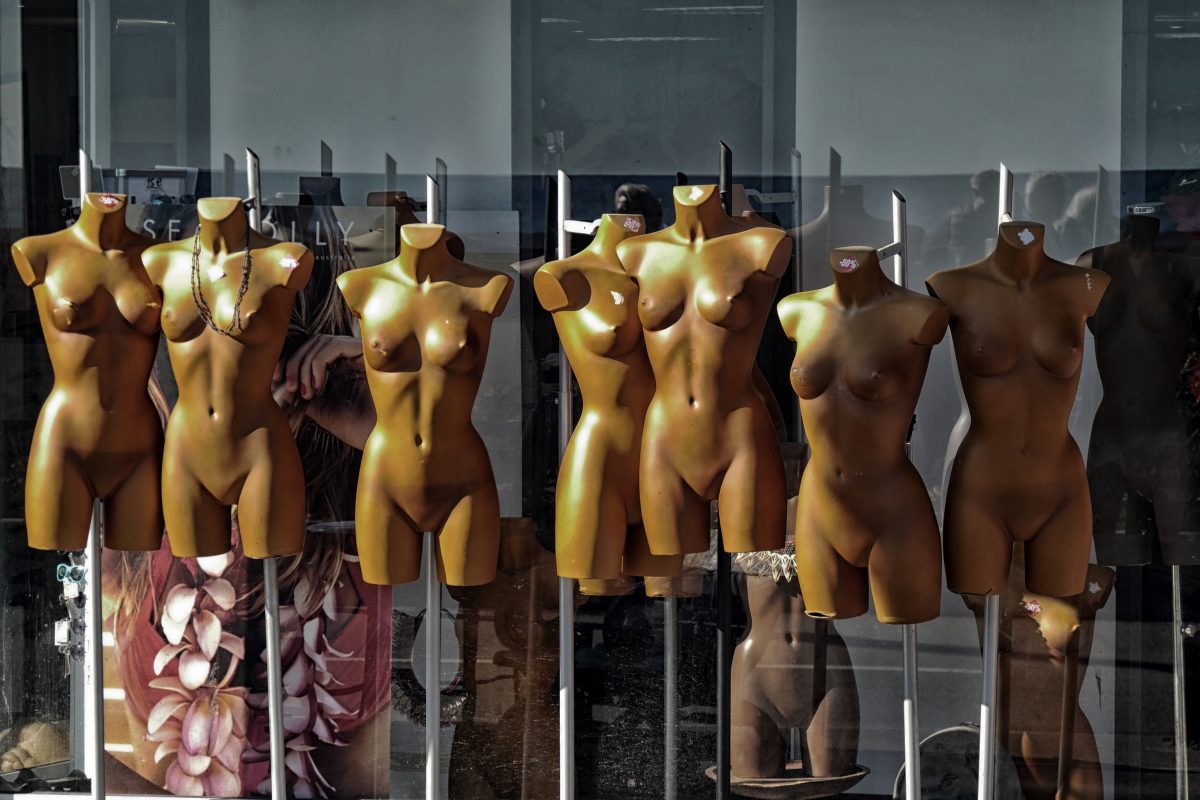
Though she was the catalyst for this article, Pink Sports Bra is not alone, nor is she unique in stating this. Women everywhere are flocking to gyms in the pursuit of being ‘toned’, but never ‘big’ or ‘bulky’. Lucky for them, the fitness industry is only too willing to comply with this demand: this century’s latest edition of the ‘perfect body’. So, what do you need to be ‘toned’? The first ingredient is cardio. Lots of it. And one company has tapped so far into this need that it has become a piece of popular culture in its own right.
SoulCycle seems to have initiated a takeover of the fitness industry in the US, and has recently begun an expansion into Canada. If endorphins (that feel-good hormone that you get from exercise) are a drug, then SoulCycle has the stuff to fulfill your junkie needs, and they have the numbers to prove it. According to the company, their classes welcome 50,000 riders every day. A drop-in class in one of these brightly colored cardio fantasy lands will set you back $30. When you do the math, that means SoulCycle brings in roughly 1.5 million dollars weekly (adjusted for the fact that monthly and yearly passes bring the cost of a single class down somewhat). This is their class revenue only, not counting their clothing line with Lululemon and their in-house brands of fitness accessories. SoulCycle is entirely cardio-based, and cardio is widely acknowledged to be the best way to burn fat (read: be ‘toned’).
What is the next step to building that much-discussed, ‘toned’ physique? A gym, of course. And not just a gym, but a gym experience. Because, did you even go to the gym if you didn’t take a selfie in a spotless mirror mounted in an aesthetic changeroom? Hence, the rise of the luxury gym.
Equinox is SoulCycle’s parent company, and purchasing a gym membership at this luxury chain will set you back $165 monthly. A membership includes a fitness assessment, a personal training session, spa treatments, a discount at the gym store, filtered water stations, eucalyptus scented towels, steam rooms, saunas, Kiehl’s body products to use in the changerooms, coat check, locker rental, access to the Kid’s Club for daycare, and birthday discounts. Why do I bring up Equinox in particular? Because many gyms are striving to be the next Equinox. This past summer, GoodLife gyms upped their membership prices to the annoyance of many. An anonymous employee told me that this decision was made to change GoodLife’s image in relation to the demographic that it caters to. In terms of marketing, this is not all that surprising given that dirt-cheap gyms have become somewhat a joke (consider how Planet Fitness is viewed among the internet-dwelling public).
What also makes Equinox famous is its endorphin-inducing group fitness classes. These classes also are known for their fat-blasting abilities, with some women commuting far from their places of living to Equinox for their classes, as the gym is based in large cities. The creators of these classes are becoming celebrities in their own right online, with enthusiastic followers who sometimes live nowhere near that instructor’s particular gym (Equinox New York instructor Gina DiNapoli, creator of Jabs with Gina, boasts 17,000 followers on Instagram).
Speaking of Instagram, the social media app has also become a breeding ground for the fitness industry. Because, what happens when you can’t afford or can’t go to the gym (I’m looking at you, broke students)?
The most popular fitness app in the Apple App Store was born on Instagram, and is a women’s app. The Sweat App is the brainchild of Australian fitness guru Kayla Itsines, who’s Instagram page is full of images of healthy meals, exercise videos, and selfies of Kayla herself, an enthusiastic woman (who somehow boasts prominent abs even after giving birth this year) whose every move is fawned over by her 11.8 million followers.
The Sweat App is interesting because it taps into another commonly held belief about being ‘toned’: weights and dumbbells equal big and bulky, i.e. not good. So, you take out the weights. This is the gateway into another huge sub-category of the women’s fitness industry: at-home workouts. The Sweat App began with Itsines’s famous BBG (Bikini Body Guide) workout, 28-minute workouts that are done at home with minimal equipment. The Australian isn’t the only one to pick up on this trend. The self-proclaimed ‘Instagram queen of home workouts’, @BrittneBabe, has a loyal following of 1.6 million, who lap up her cardio-intensive, body weight routines with little to no equipment (a recent post by her gave an enthusiastic demonstration of a workout where the only equipment requirement was a pair of socks). Actress Jennifer Garner recently happily endorsed the Instagram-famous personal trainer who ‘toned’ her for her action film Peppermint, Simone De La Rue, who runs a dance-based gym in Los Angeles without a weight in sight.
I will admit to going to the spin studio this summer with the hopes of shedding a bit of stubborn body fat, though I love my body for what it is and what its accomplished in the two years since I embraced fitness. I have no regrets in wanting to lose a few pounds, because I knew that with or without that five pounds, I was still healthy. The classes were fun and definitely effective. But the classes also introduced me to the dark side of the women’s fitness industry (through no fault of the studio’s). In the waiting room prior to class beginning, I can’t tell you how many times I heard about women and girls doing X amount of classes per week to erase a weekend of ‘bad’ eating, sometimes even two or three classes a day. More on overeating later, though. Through my un-ashamed eavesdropping, I realized that these women were punishing themselves in pursuit of the ideal body that the women’s fitness industry, and Instagram, have embraced tenfold. Miss Perfect Body has minimal to no body fat, no sagging skin in sight (hence the word ‘toned’), but likewise has little muscle definition, with the exception of her butt, which she achieved through resistance band exercises (again, no weights). Her stomach is flat, with a bit of ab poking through (but never a six pack), and she is able to ditch shirts with ease. And the women’s fitness industry is only too happy to take your money and help you get to her, no matter how difficult or even impossible it actually is to achieve that kind of body.
The conclusion that I came to at the end of this past summer was that this industry is largely built on fear, if you didn’t pick up on my sarcastic summary of this industry. Specifically, fear of falsities.
The women that flock to cardio-based fitness classes to punish themselves for eating more than a bite of pizza are afraid of food. But, gaining muscle and weight is actually harder than diet companies would have you believe. To gain muscle, it is a matter of being in a caloric surplus, that is, consuming more calories than you burn. Many people that seek to enter a so-called ‘bulk phase’ abandon cardio altogether during the phase. The women that avoid any dumbbell over five pounds are afraid of building muscle, and looking manly (the generally accepted truth is that one would need to increase their weights virtually every other week to gain muscle, in addition to being in a caloric surplus). Large size, even if it is healthy muscle, has become the enemy, ironic for an industry that somehow manages to preach both ‘balance’ and ‘control’.
Oddly, I don’t really blame women for these fears they have. These are the messages that are being put out there by any number of so-called authorities. The models who grace billboards and ads are not muscular, and are widely touted to be beautiful. Weight loss programs take a hardline approach based on restriction, and the idea that you as the participant are an uncontrollable food monster that has to be told what to do, or, like a petulant child, you’ll misbehave. This mindset has only gained prominence as of late, coincidentally (or not) growing alongside social media. What is especially disturbing is how these fears have gradually seeped down the age groups. We often forget that we are being watched by younger generations, and not only watched, but imitated. I admit, when I embarked on a mission to locate some studies to support my claim that this industry is based on some horrifying ideas and goals, I thought that I had a pretty good idea of how nauseating it all was. Unfortunately, I was wrong, and I admit to having gotten up from my desk to take a break from it all. However, this only emphasizes to me the importance of reporting these statistics.
The comparison between over-exercising, destructive eating behaviors, self-consciousness and social media may seem like an odd comparison to make, but when you think about it, it’s actually not odd at all. In 2008, two years before Instagram launched, the Journal of the American Dietetic Association published the results of a study conducted among 300 participants, 105 men and 1181 women of college age. Among the women, the most prominent desire identified was the desire to lose weight. 13% reported being currently on a diet, with women being far more likely than men to have tried a variety of diets, such as Weight Watchers. Of that 13%, only 17% reported being satisfied with the results of the diet.
This was in 2008. By 2015, when Instagram was five years old, the National Eating Disorder Association that the average age for a woman to become concerned for her weight was 6 years old. According to them, the best-known environmental contributor to this was the sociocultural idea of thinness, followed by a high risk for girls whose mothers were overly concerned with their weight. The connection between self-consciousness about weight and exercise cannot be understated even if you tried. The same association estimates that 90-95% of eating disorder victims have a gym membership, and roughly 80% of these individuals were prone to excessive exercise in their efforts to lose weight. Of gym-goers in general, it is estimated that 42% over-exercise. In adolescents, it has been reported that 57% of girls engage in crash dieting, fasting, self-induced vomiting, diet pills, or laxatives (weight loss teas). Even amongst non-overweight girls, 1/3 reported being or having been on a diet.
Instagram is estimated to have 1 billion active users, more than 100 million of these in North America. The app is especially popular with the age demographic of people between 18 and 29 years old. 41% of Instagram’s user base is under 24 years old (statistics concerning Instagram’s usage among minors, other than the acknowledged fact that its popular in that group, are hard to find and likely inaccurate). Is it a coincidence that the age at which women become concerned with their bodies is dropping, whilst Instagram and social media only grow in popularity? As the saying goes, coincidence? I THINK NOT.
So, I’ll leave you with a final conclusion: Instagram became the authority on fitness as quality information became less accessible (though I am not saying that every influencer espouses bad information). These days, anyone with a following (which, by the way, you can buy) is seen to have some sort of credibility. More importantly, it is far easier to locate a fitness influencer in under two minutes than it is to find quality research. Moreover, how do you tell if an article contains quality research? How long would that take?
Ironically, quality information and long-lasting health choices share a cliché: anything worth having is not easy to get. Take the time to find good information, rather than taking two minutes to enter your credit card information in an order form for diet tea or sign up for a program that promises huge results with little time input. Unfortunately, the internet doesn’t have a quality control board. As is usually the case, if a program promises results or ‘research’ reports results that sound good to be true, it probably is. But likewise, do not be governed by fears, because if something sounds too scary to be true, like gaining a pound on one piece of pizza, it probably is as well.
If you or someone else is experiencing an eating disorder, there is help available. Call the National Eating Disorder Information Centre, toll-free, at 1-866-633-4220.