Tag: Acadia University Art Gallery

  • The Acadia Art Gallery: Interview

    The Acadia Art Gallery: Interview

    The Acadia Art Gallery opened in 1978, providing both students and public alike the opportunity to indulge in their artistic side. I recently had the opportunity to interview Hunter Gillis, who works for the gallery, and asked him a few questions about his role, the new exhibit currently on display and more.

    Q: What can you tell us about the new exhibit?

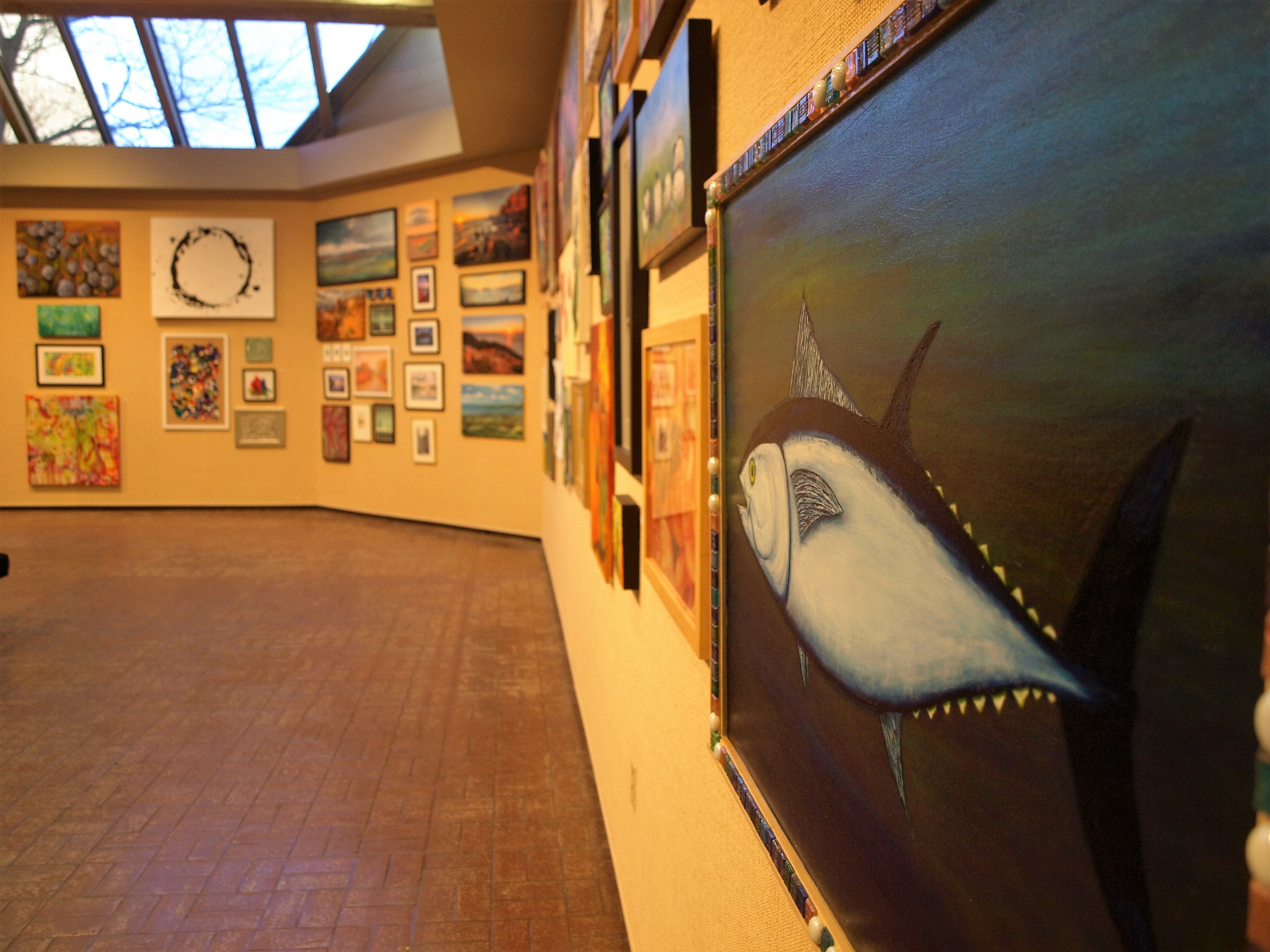
    A: This is the 26th time that the Acadia University Art Gallery has opened itself to submissions from Acadia students, alumni, faculty and members of our community. The Annual Acadia Art Exhibition is an important event that celebrates creativity in our community. It provides a public forum to explore both the work of new and established artists. The exhibit contains a wide range of artwork that not only allows visitors to view works from the community, but also the creative talent and expression that the members of our community possess.

    Q: What is your role at the gallery?

    A: I typically have two main tasks. I act as a liaison between the gallery and the public. I answer any questions that people have on the exhibit and ensure that the gallery is well kept and that the essential tasks for the day to day operations are complete when I leave. I also focus on social media, which entails Twitter, Instagram and other social media accounts that the gallery has.

    Q: What is your favourite thing about working at the gallery?

    A: Getting a chance to meet members of the community. I would consider myself to be a people person and I enjoy hearing someone’s perspective of the work on display or their own personal stories.

    Q: Why do you think art is important?

    A: I think art is an important part of our development as humans and an essential element of empowering the hearts of people. Artists can strengthen the will of the people and inspire them to act through revolutionary ideas and powerful imagery. Artists have the unique power of being able to move people to action, thus signifying their cultural and political contribution and importance.

    Q: Do you wish more students would get more involved with the arts? How would you achieve this?

    A: Yes, but finding an answer on how to achieve this is a difficult task. I think part of the issue is how neoliberalism has affected the university. Universities as we know them today promote STEM fields over liberal arts, and encourages instructors to teach students for future employment, rather than toward broad and informed citizenship. I am not entirely sure exactly how we can rectify the situation we find ourselves in.

    Q: When is the gallery open?

    A: We are closed on Monday and Tuesday, open Wednesday: 12-7pm and Thursday to Sunday: 12-4pm.

    Q: What is your favourite piece/exhibit so far?

    A: It’s hard to pick just one piece, I have a few that I love, but my favourite is by the artist Gus Rhodes, titled “The Creative Impulse, for $35 an hour, Imitating the Idea of a Zen Master, to make a pretty picture, to try and make some money, to pay a couple of bills,” (and yes that’s the name of the piece). It is number 88 in the exhibit.
  • Critical Incident

    Critical Incident

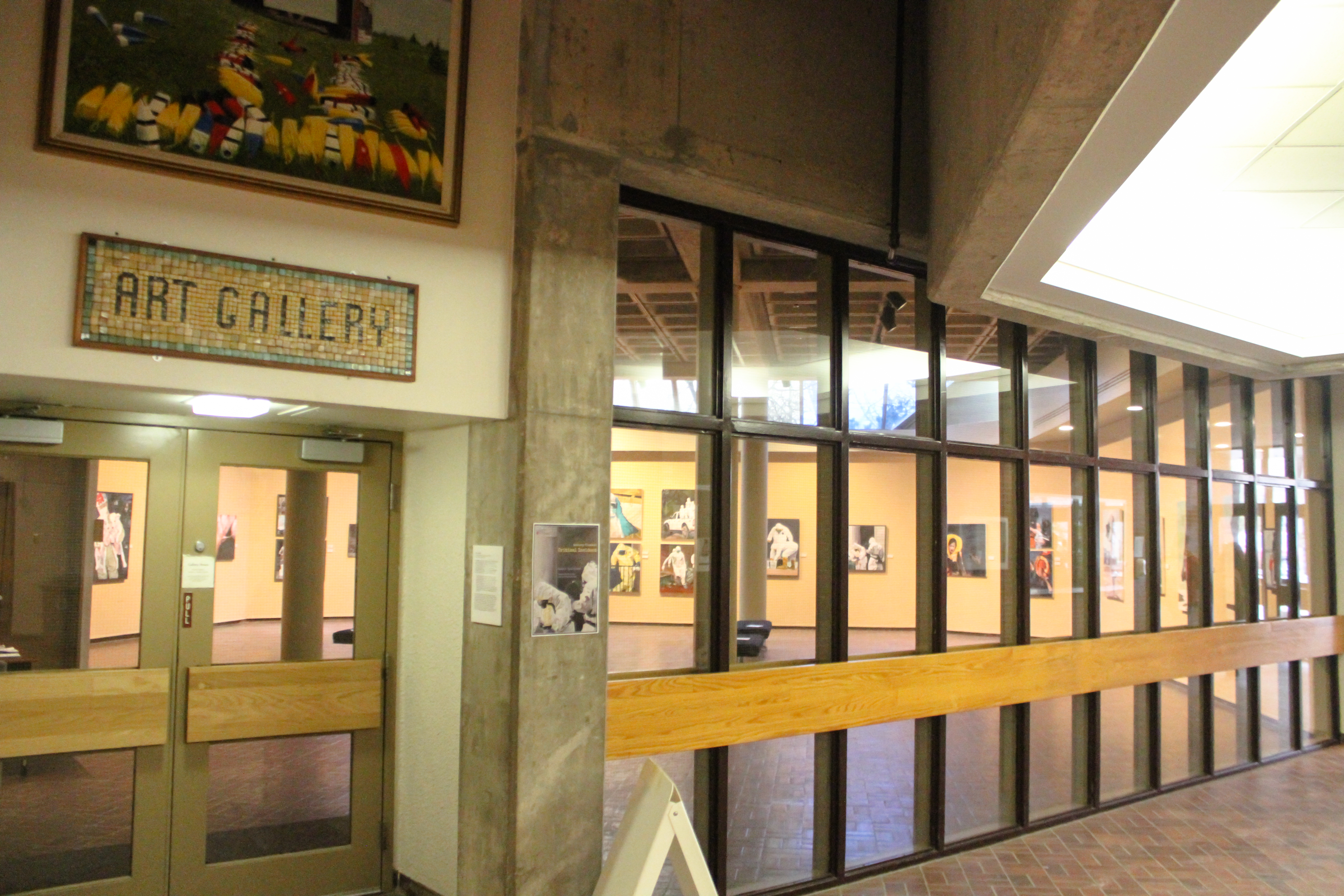
    The Acadia University Art Gallery’s latest installation Anthony Clementi: Critical Incident, explores world crisis through powerful and real images translated into paintings. Clementi’s work not only highlights issues, but seeks to display, using techniques and styles inspired by the old masters. He captures the beauty and hope that can be found even within a crisis.

    Throughout the exhibition the works take the visitor on a journey through the world and to an assortment of recent incidents of crisis spanning environmental disaster, disease epidemics, and the on-going refugee crisis. A particularly interesting aspect of his work is his selection of images that include what he calls “optimistic objects.” One might think that a plastic bag or a medical mask would fade into the background of an image, but Clementi’s work highlights these objects and uses them as symbols of optimism.

    Objects play roles of varying important in our everyday lives. Many objects go on existing without us ever recognizing how useful and important they are, but others are revered and they take on meaning outside of their practical uses, physical existence, and purpose. There are objects that act as a connection to the past or to other people, some that make us feel something, or that remind us of someone special, there are objects to symbolize love, happiness, celebration, and sadness. Objects, whether we realize it or not, have an immense hold on human lives and their importance is infinite.

    Clementi’s use of images that feature every day objects being used in times of crisis emphasizes the power and symbolism of objects we see as everyday (read: unimportant), and in some cases, objects we see as trash.

    Arguably the most striking objects in his works are plastic bags, which are especially visible in the section of the exhibition centered on the Syrian refugee crisis. The bags aren’t just being used in a temporary capacity in these images; instead they’re being clutched in the hands of people who have lost all but the contents of their plastic bags. The bags are certainly optimistic images; they indicate that the people so brilliantly captured in these images have hope that one day they will find safety and comfort, and that until then they will carry what they have. Without hope, these people would have no use for these bags; they would have no interest in keeping anything if they did not believe that they would survive to see a better life.

    Perhaps more powerfully, the bags act as optimistic objects by making the people in the paintings relatable. We all know what it feels like to hold a plastic bag in our hands. We all understand the object, and somehow that offers a connection to these people. The bags offer a glimpse into the impact of crisis on human beings who have the same fundamental needs as those of us living in a relatively stable and privileged world. There is nothing more optimistic than humans making connections with one another, and humans empathizing because it is human connection and empathy that lead people to demand change.


    Anthony Clementi: Critical Incident can be viewed at the Acadia University Art Gallery (Beverige Arts Centre, 10 Highland Ave.) until April 21, 2016.


  • ‘Art is…’ The 25th Annual Acadia Art Exhibition

    ‘Art is…’ The 25th Annual Acadia Art Exhibition

    Art gallery - Mahmoud Istanbouli (2)

    Cards that read “Art is…” line the entrance of the Acadia University Art Gallery, with answers scrawled in colourful markers. The answers on these cards range from bold statements like “my life” to carefully drawn images, all created with the hope of defining exactly what “art” means. The beauty of art is that it means something entirely different to each person. Whether it be an expression of emotion, a pursuit of technical aesthetic perfection, or a statement on society, art is an outlet and a passion shared by many. The question of what art truly is has no definite answer, and perhaps this is what makes art so intriguing and captivating.

    The 25th Annual Acadia Art Exhibition, which runs until February 26, 2016 offers a quiet answer to what “art is” through its stunning collection of art pieces. The exhibition, composed of sculptures, paintings, mixed media works, and more, becomes a work of art in itself: a collective statement of inclusion and belonging. As a response to what “art is,” the gallery offers the answer “community” through the diversity of the works on display.

    For the past 25 years the gallery has opened itself to submissions from Acadia students, alumni, faculty, and community members. The wide range of art displayed allows visitors to view not only the talents of those living around them, but also allows artists to express their thoughts in a public forum. A strong community is built by fostering a sense of safety to share ideas, and as a result you come to better understand the people within your community.

    250 visitors attended the opening of the gallery, which clearly indicates that the exhibit invokes a strong sense of community. People of many ages and backgrounds attended the opening and were able to meet the artists to discuss their works. The sense of community displayed at the opening continues to be seen, as community members from every walk take time to visit the gallery and provide their own answers to what “art is.”

    The sense of community created by the exhibition is striking and beautiful. It not only shows the strength of the local community, but also art’s power of bringing people together. Art allows people to connect to each other on a deeper level, in a way they may not have without the medium. The beauty of the Acadia Art Exhibition is that it provides a space for the community to connect through these works and to each other. Museums and galleries are important centres for connection to not only objects and works of art, but to the broader world and to others. The Acadia University Art Gallery is certainly an example of such a centre.

    To participate and provide your response on what “Art is…” visit the Acadia University Art Gallery in the Beveridge Arts Centre (10 Highland Ave.), open Tuesday to Sunday 12:00-4:00pm.

  • The REDress Project

    The REDress Project

    Did you know that Acadia University has an Art Gallery in the Beveridge Arts Center (BAC)? If you have not yet heard of the gallery or if you have not been there, I fully encourage you to visit and take advantage of its exhibitions and programming.

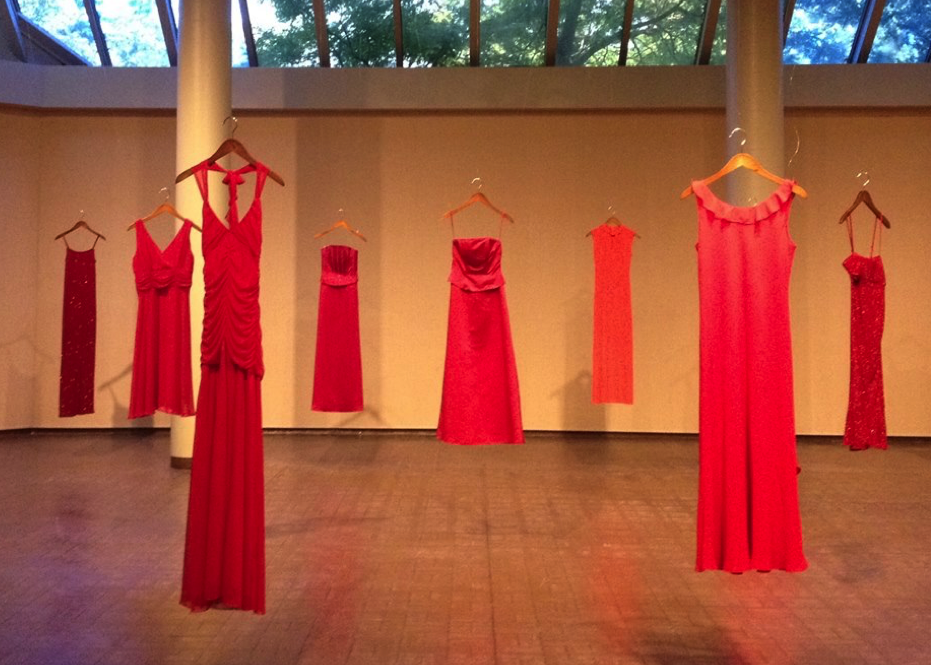
    Currently on display is The REDress Project by First Nations Artist Jaime Black. This captivating exhibit is aimed at bringing awareness to the issue of missing and murdered Aboriginal women in Canada. Jaime Black started this exhibit in Winnipeg and has since travelled throughout West and Central Canada, making appearances at a number of universities. This is, however, the first time REDress Project has made its way out east, now on display at the Acadia University Art Gallery until November 29th.

    As artist Jaime Black describes, “Through my ongoing installation, The REDress Project, I have placed the absence of the body as central to the work. This work involves empty red dresses installed ‘floating’ in public space as a spectral reminder of the hundreds of murdered or disappeared Aboriginal women across Canada. This installation piece attempts to situate the Indigenous female body as a contested entity and the specific target of colonial violence while reclaiming space for Indigenous female bodies.”

    Not only are red dresses hung in the gallery space, but there are also dresses located outside the BAC, hanging in the trees. Many students and visitors who have walked passed the Art Gallery are pulled in by the eeriness and emptiness that the dresses convey, while others are drawn simply by curiosity of the dresses themselves. One visitor described her experience in the exhibit as “a sad dance” as she walked around the dresses. The REDress Project can be overwhelming, as it deals with a very difficult topic, but it allows the viewer to contemplate the issue in an encouraging environment.

    Though many visitors have commented on the effectiveness of the red dresses that hang outside the BAC on the trees, it seems that a few others did not feel the same. Within only a few days of the exhibit being up, two dresses have been stolen from the trees and another was torn apart. This has been very sad, not just because of the destruction of the work, but the fact that the dresses symbolize missing/murdered women’s bodies. We encourage anyone who knows anything about the disappearance to bring information to the Acadia University Art Gallery. If you are in possession of one of these dresses, we ask that you bring it to the Gallery (no questions asked). These dresses were collected by the artist Jaime Black to help the public explore the issue of missing and murdered Aboriginal women, and as students of Acadia University we must do our best to make sure this issue/exhibit is respected.

    I would personally like to thank the anonymous donation of three new red dresses, which hung on the trees outside the BAC. This act of kindness was greatly appreciated, as it lifted both the spirits of those working in the Art Gallery and those involved in this exhibition.

    If you have not taken a look at the exhibit The REDress Project yet, I encourage you to come and enjoy! The Acadia University Art Gallery is open from Tuesday – Sunday 12-4pm (till 7pm on Thursdays).

Betzillo positions itself as a versatile gaming hub where structured bonuses and adaptive gameplay mechanics support both short sessions and extended play.

Built with a focus on innovation, Spinbit integrates modern casino architecture with rapid transactions, appealing to players who value speed and digital efficiency.

Ripper Casino emphasizes bold entertainment through high-impact slot titles and competitive promotions crafted for risk-oriented players.

A friendly interface and stable performance define Ricky Casino, offering a casual yet reliable environment for a wide spectrum of gaming preferences.

King Billy Casino channels classic casino spirit into a modern platform, delivering recognizable themes supported by contemporary reward systems.

Immersive visuals and layered slot mechanics are at the core of Dragonslots, creating a narrative-driven casino experience.

Lukki Casino appeals to players seeking direct access and minimal friction, focusing on fast loading times and intuitive controls.

Casinonic provides a structured and dependable gaming framework, blending modern slots with transparent operational standards.