Tag: Arts

  • The Value of the Liberal Arts

    The Value of the Liberal Arts

    Constantly given tailwind is the notion that the liberal arts are breeding a generation of radical college students. It is an idea that has old roots, taking its modern form when Bill Buckley wrote God and Man at Yale in 1951.

    To be clear, I am not lobbying that there are equal-parts progressive and conservative in the academy or even that the asymmetry is not growing. In fact, it is an almost-innate observation that our professors lean predominantly left. But since Buckley penned that piece, conservatives are still outnumbered and yet the world did not come to the doomsday forecast of their crisis thinking. Regardless of your political orientation, to discover if these criticisms have merit you must ground your views in what the arts actually provide.

    Arts does not teach you what to think, it teaches you how. In ten years’, time, you are wrong to think that I will remember anything other than how to misuse the term ‘actor’ and some scattered lines from Rene Descartes. But what I will remember is the how question. Whether you are critiquing Adam Smith or Karl Marx, reading Shakespeare or Rushdie, using realist or postcolonial theories, the content to which you’re exposed tells you the world is more complicated than you once saw. The arts are showing you this mess and telling you to embrace it.

    It is true that part of that mess are areas like gender, race, class, and violence, and more often than not, your readings will point you in that direction. But very rarely are these ever shown to be the be-all and end-all of politics. Rather they are shown to offer knowledge just like the state, war, or the international market offers knowledge. There is nothing inherently progressive about this, and if you care about intellectual honesty like so many of these critics purportedly do, your work needs to value these areas.

    I am not arguing that change is not needed. Debates can and should be had to ensure that an arts degree engages with a plurality of content that maximally exposes nuance in the world. There are also legitimate grievances if students find it more dependable to write according to a professor’s politics. That being said, this is a far cry from a mass indoctrination brought by the arts, if it were even possible.


    Aodhan Murphy is graduating with a BA in Politics

  • Q&A with Charts Café

    Q&A with Charts Café

    Last week, we sat down with Jesse Van Gestel, owner of Wolfville’s newest café “Charts” to get to know him and his café a little better. Off the beaten path, Charts Café is a travel-inspired, casual, professional and intimate gathering spot for the Wolfville community.


    What would you like to tell someone who has never been to Charts Café before?

    Well, first of all, we make all of our food in house. This includes all of the baked goods, the bread, the soups, sandwiches and salads. So, any bread that you have here at charts was baked that morning. The coffee and espresso we serve is from North Mountain Coffee – a small coffee roasting business in Berwick, NS. It is local, taste great and aligns with our strong value of using as much local ingredients as possible. For the espresso based drinks, our shots are timed and our milk is temped to ensure consistency and high quality every time. Lastly, our staff is always eager to engage with the community and loves chatting with our customers – we are always happy to modify any order to suit the customer’s needs to our best ability.

    What brings you to Wolfville, and what is your favorite thing about Wolfville?

    I have known of Wolfville for quite some time as my parents have been living here for 9 years and my mother is from the valley. I personally grew up overseas and travelled quite frequently in my youth. I graduated from St. Francis Xavier with a bachelor’s degree in Business, however my brother and sister both graduated from Acadia. I had always wanted to own a small business, so when the space was available, it was the perfect opportunity to try – I would be close to my family and in a town I was familiar with. Honestly, I did not picture myself settling down in a small town initially, however, I am very happy with the decision and am constantly surprised at how cultured and interesting Wolfville is. My favorite thing would have to be the university atmosphere adding lively hood to the place, and all of the festivals that occur yearly like Devour, Soup Fest, Deep Roots etc.


    What makes Charts different from the other Cafés in Wolfville?

    Well, we always strive for high quality in everything we do – as I have said before we have specific times and temperatures to adhere to when preparing drinks. Also, all of our meals are traceable as they are all made here in our kitchen. I would have to say the space definitely stands out as unique – there is plenty of open space, tall ceilings and natural light, making it a comfortable spot for people to study or unwind. We work hard to provide a dual atmosphere to the space – casual and professional. We have hosted business meetings and many other professional gatherings, but have also flipped the space for coffee houses and open mics. Lastly, much of the meals are quite healthy, with usually more than one vegetarian or vegan option, and our breakfasts are freshly cooked upon ordering with real eggs and real cheese.

    What are your favorite menu items?

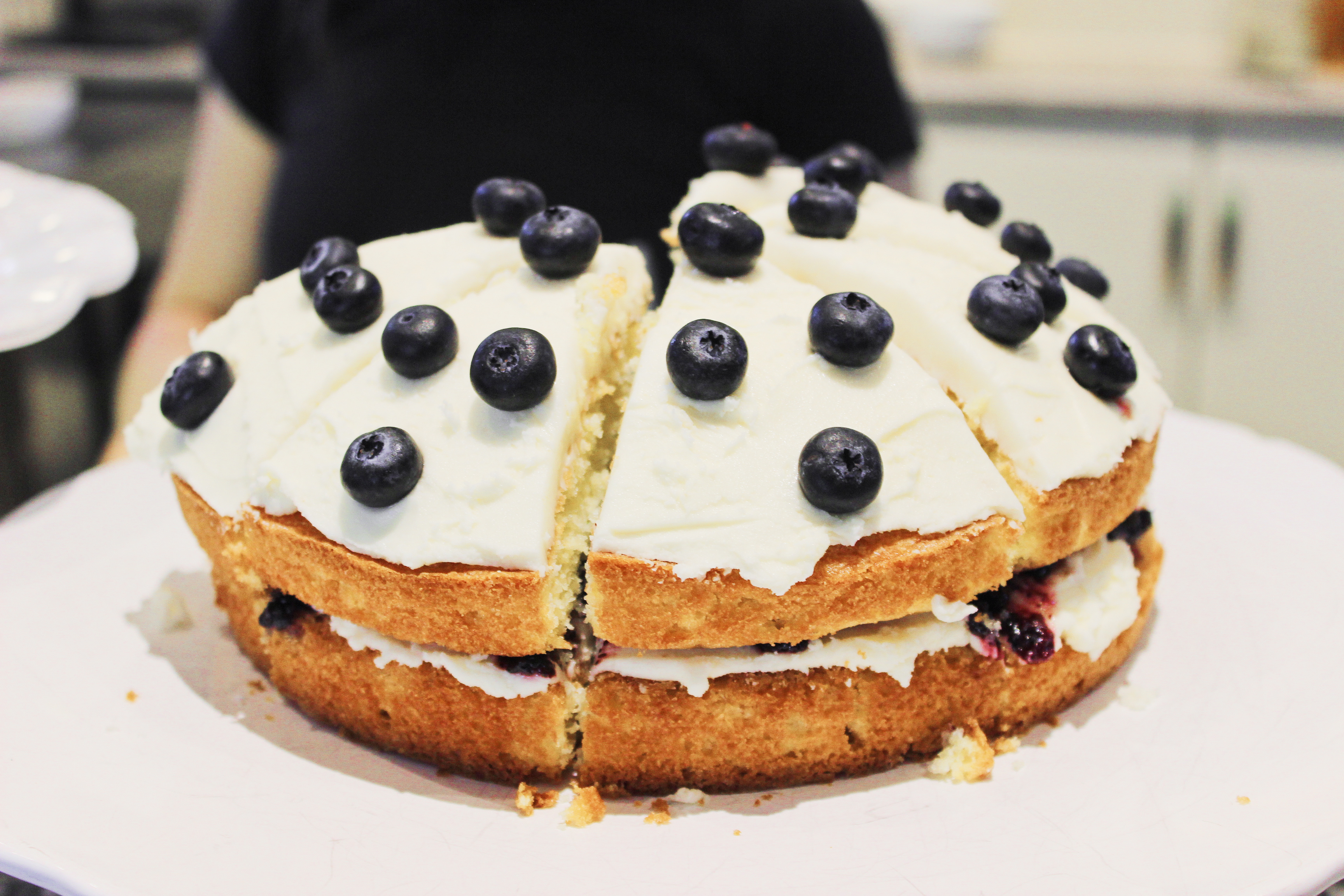
    Concerning drinks, I would have to say my go-to is an Americano. It is universal, a step up from a regular coffee, and goes with essentially everything. For lunch, my favorite would be our Roast Beef sandwich paired with our Jamaican Chicken soup – full size of course. For desserts, well that sponge cake topped with fresh blueberries and buttercream is looking pretty good right about now.

    How do the students at Acadia fit in with Charts Café?

    I think that Charts makes a great study spot or casual hangout space for the students at Acadia. We have many students come in and do their work, and the open space we have keeps the atmosphere calm – it’s a nice change from being crammed in a library. We also see students coming in on the weekends for breakfast – it can be a good spot for a breakfast date or to catch up with some friends. The students here bring a lot of diversity and culture into the café which I very much enjoy – people from all over the world come to Acadia and it is neat to pair that sort of demographic to our travel-inspired café. It also allows us to have people of all ages come to the café, making our space unique and diverse. Lastly, the majority of our staff are students at Acadia, or young people from the area – Acadia students are always so easy to work with and hire because by being a student at Acadia, we can always assume the individual is intelligent and confident.

    Any other comments?

    Our café hours are every day from 8-5pm, and we look forward to you stopping in and adding your hometown to our world map! You can ask our staff for a pin to make your mark in our café!

    Jordan Mahaney is a fourth year Biology student and Production Manager of The Athenaeum

  • Subjective and Objective Marking: A Cross-Faculty Perspective

    For thousands of years now, people have debated about the concept of what it means to be objectively “right” or “wrong”. Despite this unsettled issue, much of the life of a university student is reliant on whether whoever is marking your work thinks you’re right or not. For certain faculties, deciding what is right and wrong in terms of marking can be easily decided based on information given in lectures or written in textbooks- if the student can remember the processes or information given and can apply that during an assessment, the student will receive a mark reflective of that. Simply put- if you are right, you get the marks, and if you are wrong, you do not. The information that you are expected to know or apply is usually outlined and discussed during class time or through homework and is typically year level appropriate. This makes sense. In certain other faculties, the marking is more or less based on the preferences of whoever is marking your work.

    I won’t go so far as to say that if your professor dislikes you that you will receive a bad mark on every assignment, but I will go so far as to say that if the professor doesn’t like your writing style, you very well might get a bad mark on every assignment. The way that assessments are marked is widely subjective and varies between professors, adding a level of difficulty as an art student who strives for “good” marks. While there is no clear “right” or “wrong” in a paper – aside from obvious structural necessities like a well-devised thesis statement and proper formatting – professors and TAs have plenty of works to compare a student’s writing to. While objective faculties such as Sciences and Business are typically marked based on the retaining of level-appropriate information, it is my experience that papers and assignments submitted by university level Arts students are graded in comparison to professional authors or to the marking professor’s writing ability. Not to say that this is the professor’s fault- it is a natural default in the critique of writing at any level to expect a piece of writing to meet certain expectations based on your personal preference of what you decide is “good” writing. While a student who is generally considered a “good” writer will often receive a “good” mark, it is usually a small mystery as to where the actual numerical value of a mark for a paper comes from.

    Another issue related to this subjectivity is the question of what a “good” is mark in terms of a paper- while most students in the Arts faculty would agree that anywhere between 80% and 85% on a paper is a success, I’m sure most would also agree that receiving a mark any higher than an 85% is effectively impossible from most professors. If a Biology student remembers all of the information necessary for a test, they will receive full marks- if an English student writes a level appropriate paper following all of the guidelines given by their specific professor, it is almost certain that they would not receive a 100% on that paper. As a student studying both English and Biology with close friends in Business and Kinesiology, it is easy for me to compare marking methods between faculties- so I guess I’ll leave you with this: is a Science student’s 100% equivalent to an Arts student’s 85%?

  • An Arts Degree

    “You’re an arts major?” *eyebrows raised to hairline. * An arts major’s monthly, if not weekly, response to their choice of education. Anyone taking History, English, Sociology, Classics, or Political Science etc. has at least once in their lifetime of being a university student experienced the “look”. We all know this look, subtle disapproving, being eyed like we are insane – as if our choice of major is not important. “Don’t you know people who take science degrees get paid better and find jobs faster? What can you even do with an arts degree without being a teacher?” First:  what’s wrong with being a teacher? Second, sorry our passions aren’t to your approval and lastly, we will succeed. WE WILL SUCCEED. The world needs arts majors just as much as they need science or math or business.

    Saying that arts degrees are easy is some pretty serious BS. Would you find it easy to be writing multiple thousand words essays at once well having to do daily readings that take several hours? The familiarity with the text required can often mean that you need to do these readings more than once. Take history majors for example. They need to memorize dates, names, places and understand the relevance of the text. Living your life at the library constantly typing away is not unique to arts, however, it is essential for survival and not just for prosperity.

    So, for all future arts students, don’t be shy! Broadcast your major, ignore those looks. Arts degrees may not be as popular, but that doesn’t mean that they don’t take you places, lead you to good jobs, jobs that you love and will support you. After all, whether the rest world knows it or not, arts majors are needed to keep this world turning just as much as other degrees.

    If I would go back in time and give my pre-university self some advice about university schoolwork I sure would have a few things to say. Sadly, since we all know time machines have not been invented yet, ill settle for helping out future students (C.S. Lewis did regard the arts as “the best time machine we have”, just saying!).

    To my first year friends: DO NOT LEAVE READINGS TO BEFORE BED! You will never ever absorb what they are saying, let alone finish them. Sometimes it happens, understandable, but my advice is to not make a routine out of it. While your friends may be swamped with labs and it appears that you have this free time out of class – this isn’t true. Designate time slots and treat them solely for “reading” time.  Secondly, don’t be afraid of the library. All of first year I avoided it at all costs thinking it was a scary place to be. Now it’s a place I go to be social, see my friends, while “doing work”. My last piece of advice would be to back up every important piece of writing you have on something like iCloud. Arts majors type a lot of essays and assignments over the course of a semester. Just this week my laptop got soaked thanks to my water bottle and I thought I had lost three assignments that I had done. It felt like the end of the word. So people, please back up your things.

    All degrees were made equal. If you study what you love, that’s what matters!

  • Anne Don’t Call Me Shirley

    Anne Don’t Call Me Shirley

    Fair warning before you dive into this review, as it contains significant spoilers! As some of you may know, CBC recently released the first two episodes of an Anne of Green Gables reboot in collaboration with the almighty Netflix. Having grown up in the Maritimes, my parents read the books to us as kids, and my sister and I spent our summers on Prince Edward Island, roaming Cavendish in the classic straw hats with red braids that can be found in every grocery store and tourist shop on the island. To say I’m an avid fan would be an understatement.

    When I heard of this new take on the original, I was skeptical at first. It’s hard to imagine that anything could come close to the 1985 mini-series starring Megan Follows and Jonathan Crombie as Anne and Gilbert (although that was notably also a CBC special). The thing I was most concerned about upon hearing about this series was the one thing that seemed to capture the interest of others online: the series was to be adapted by prominent Breaking Bad writer, Moira Walley-Beckett. I was concerned that, having worked on more popular big-budget productions, Beckett would botch this project by overreaching for the aspects that draw people to the original story in the first place – it’s not about the drama and the action, it’s about the subtle interplay between the characters and their respective personalities.

    Once the premier rolled around, I’ll admit that I was pleasantly surprised. I laughed, I cried, and I felt a generally unexpected sense of nostalgia. Episode two of the series, however, was a complete and utter disappointment, unfortunately proving that my gut-instinct was right on the money. I understand the inclination for Beckett to veer off-script from time to time (after all, she has eight episodes to fill – although, arguably, there’s more than enough original material to do that). But overall, I felt like FAR too many dramatic liberties were taken in this episode, which subtracted from the things I love about the original story rather than complimenting them. So far, I’ve been watching the series with a complete newcomer to the story, who was also hooked by the first episode and then disappointed by the second; and he doesn’t even have a point of comparison.

    As previously mentioned, I didn’t come to this show seeking a Hollywood drama. I came as a life-long Montgomery fan, English major, fellow Nova Scotian redhead, and feminist. I came hoping for an updated but authentic-feeling retelling of one of my favourite literary heroines of all time, but sadly, this series already feels like a major sell-out. Rather than pandering to a new generation of potential Anne fans, I wish it had maintained its original integrity, as the majority of the audience, I’m sure, are faithful fans already. Personally, I left the last episode feeling slightly hoodwinked. I had been somewhat nervously anticipating this series for months, but I was drawn in by the beautiful pilot episode, which I will admit, was the perfect balance of old and new. However after that phenomenal introduction, I spent a week salivating for the next instalment only for the writer to flip the switch completely. To put it in plain terms, episode two felt like a cheap Montgomery fan-fiction. Every single character was out of character, the plot line was tedious and convoluted, and Beckett was just too darn heavy-handed with the changes.

    Firstly, Anne’s incessant crying is vexing, to say the least. While I appreciate that Beckett wants to include more of Anne’s back-story as having come from an abusive orphanage situation, the Anne I know and love is optimistic and cheerful in the face of adversity, and her unbreakable spirit affects everybody she meets. This new PTSD version of Anne is so distrustful and emotionally disturbed that it almost contradicts the glimpses of original, cheerful-Anne that are peppered throughout in a lame attempt to maintain some vague connection with the story’s roots.

    Furthermore, episode two almost entirely revolves around an excruciatingly long waiting period in which both Anne and Matthew make an entire round trip to and from Halifax, which I’m sure would have taken MUCH longer in the early 1900’s than was depicted on the show. This bizarre addition to the story comes as a result of Marilla having sent Anne away after losing her broach; an extreme reaction that is not true to the original plot line and feels very uncharacteristic of Montgomery’s writing for any long-time fans who might be watching. During this strange misadventure, not only does Matthew get hit by a moving carriage (a completely unnecessary and dramatic addition) but Marilla spends the whole episode sobbing, only to return to her cold, unemotional self the moment Anne arrives home in one piece. To add insult to injury, Marilla doesn’t even apologize or admit that it was all her fault that Anne was mistakenly sent away until nearly the end of the episode, and only because she feels bad that Anne doesn’t trust her anymore. This comes as starkly uncharacteristic for Marilla, who despite her cold outward appearance, is normally the first to admit her wrongdoings.

    Another point of particular annoyance was the bullying scene at the church picnic near the conclusion of the episode, in which Anne arrives at her first social event only for the town children to circle her, merrily singing something along the lines of ‘haha, you have no parents.’ This scene was not only entirely ridiculous and unrealistic, but COME ON Beckett, we get it; Anne’s annoying, she’s an orphan, and nobody likes her, now stop shoving it down our throats.

    Finally, I would like to address the nauseatingly sappy ‘happy family’ scene at the very end of the episode in which Matthew and Marilla convince Anne to change her last name to Cuthbert, also contrary to the original story. This choice of ending essentially drove the last nail into the coffin in terms of my continued commitment to this series. The entire reason that Anne appeals to me as a literary heroine is her inner strength and independence as a young female character, who manages to break through the tough exterior of the men and women around her, changing them for the better. I feel strongly that choosing to have her sign her identity away is somehow in violation of this, as she’s meant to prove herself, not conform to the expectations of others.

    All in all, I may watch episode three just to confirm whether Beckett chose to continue in this way of altering the story or whether, like the pilot, she does, in fact, revert to a more authentic interpretation. But, to quote Anne directly, “Mrs. Lynde says, ‘Blessed are they who expect nothing for they shall not be disappointed.’ But I think it would be worse to expect nothing than to be disappointed.”


  • Production Notes: DJ Khaled’s “Major Key”

    “Major Key” is DJ Khaled’s ninth studio album, and the first DJ Khaled album that I haven’t rolled my eyes and turned off within the initial period of listening.


    There’s a lot of interesting things happening in this album…. No, really. This album’s production is on point: The loudness of the percussion rivals Dr.Dre’s “2001, The Chronic”, the autotune isn’t abused, and the album actually has theme, rather than just a slew of club bangers. Which is 500% more than I would ever expect from the living meme himself.


    The third track on the album, “Nas Album Done” features Nas (duh), with Khaled, and Cool & Dre on production. If you’re a fan of Lauryn Hill (you should be), then you’ll love this track. The pitched-up sample of “Fu-gee-la” isn’t abused at all—surprisingly. Hill’s voice mixed with the 808 bass and stuttering hi-hats works so well that I’m inclined to feel that I traveled to another dimension where The Fugees were a Chicago drill group.

    The DJ Khaled ad-lib alert starts in the intro of the track (“Classic shit”, “timeless”, “iconic”), but once

    you realize that Khaled is talking about the much-respected Nas, and not himself for once, you realize these adlibs aren’t the most corny thing in the world. In fact, they actually compliment the instrumental, along with Nas’ lyrical murder.


    Another highlight is “Holy Key”, featuring Big Sean, Kendrick, and Betty Wright. The instrumental begins with the main horn sample under enough DAW effects to make it sound like an excerpt from a post-rock album. This quickly transitions into the main base of the beat.

    The cymbal crashes from the original sample are adopted to keep the high intensity of the track moving. The beat repeats every 2 bars, you would think that it becomes monotonous rather quickly. It doesn’t. The horn/synth line is catchy enough to warrant repeated listens, and the track remains extremely dense with a busy sample, sliding 808’s, and panned choir voices. The hook of this track is the type you don’t want to sing along with, because your voice will never match the powerful pipes of 70’s soul star Betty Wright. This was done well enough to make me think that this wasn’t just recorded in a booth. Surprisingly, DJ Khaled’s voice is also in here, and actually works as an aid to this unforgettable track.


    Other key tracks include: Jermaine’s Interlude, Work for It, Don’t Ever Play Yourself.


    DJ Khaled has heavy involvement on almost every track on this album, compared to his last album that he was only involved on a handful of tracks. This album surely surpasses his previous efforts, but does this mean that Khaled actually has some studio chops? Eh, maybe. I can at the very least say that the next Khaled album will have me listening, even if it is only for the memes.

  • The Art of Failure: Winning @ Losing


    The art of failure is not like most other mediums. Those who have talent for it find it accidentally. They decide to write for the Ath and end up face planting on their keyboard, and still try to hand all those pages of the letter “u” to their editor. They buy rust buckets without knowing they need car insurance or registration for the hunk of junk they just drove home. They are wholly inebriated before an early morning meeting with their advisor. Rightfully you ask :“why is this art?”

    The point of art is to enrich the human experience—to feel something that someone else created. I don’t believe that failures are entirely at the fault of people experiencing them. As such, I conclude that failure is a kind of reverse performance art. As it happens, you are opened to new ideas, experiences, and emotions. The power that failure has to elicit these feelings is beyond any other medium. Your failures stick with you far beyond your emotional attachments; to your favorite music, show, movie, or any other medium of art. Failures are turning points; they usher in growth, and catalyze change. As such: failures must be art.

    Today we live in a postmodern world. Postmodernism is built around the key idea that no idea, no media, no art – is inherently more valuable than any other. It’s the ultimate equalizer for the human condition. Once you see your life as an art, you can easily make the claim under postmodernism that the time you totally botched the multiple choice section has the same inherent value as the entirety of the results when you do a Google image search for “funny images”. Subjective value rules in a postmodern society. This article doesn’t have value because its published, it has value because you’ve read it, connected with it, you gave it value, and that is all it has.

    As you begin to see your failures as an art your life changes. You see yourself less as the director and more as the audience. Which is what you really are. You have some control, but you’re calling in requests, you aren’t the disc jockey. This shouldn’t be a reason to let off the effort you put in, because goddamn it you want to hear ‘Everybody’ by the Backstreet Boys and you can goddamn request it. If it happens: you didn’t make it happen, if it doesn’t: you didn’t fail to make it happen. Your part is limited to the request; the result is far from your hands. All you can do is grab life by the collar and yell into the abyss: “This is what I want, you bastard!”

    So the next time you nearly trip on those stairs that are the wrong size for you to comfortably take two at a time, the next time you hit “reply-all”, and the next time you think you fucked up beyond all repair. Take a second, lean back in your chair, and probably fall off it (because it’s just one of those days), and think about this article. About how you aren’t even sure if it makes sense, about what kind of idiot doesn’t know about car insurance. Then think to yourself: “Well shit, at least I’m not THAT bad.”

  • Aesthetic: And Where to Find It


    One of the terms you familiarize yourself with when you begin to decorate your own house is ‘aesthetic’. I have yet to make out a coherent idea of what it means for a living space to be aesthetic. Scouring Pinterest until my eyes glazed over left me even more aimless in imbibing the Nirvana-esque harmony that only living in such an environment could provide; however, I do think that I have a weak grasp of the guiding principles that can make your living space aesthetically pleasing.


    1. I) Throw everything out! Including yourself

    If there’s anything minimalism has taught me, it’s an irrational urge to get rid of any clutter that passes my vision. There is an interesting dichotomy between the things you should get rid of in your home and the things you shouldn’t: you should keep objects that are visually unappealing and inconvenient to move, in order to achieve a look that is in direct contrast to what a ‘cultured’ or ‘normal’ person is accustomed. What do those louts know about comfort anyway? An ardent minimalist refuses to take the opinion of any plebeian that refuses to sleep on a bed made from pallets and crushed milk packages. An uncluttered space is an uncluttered mind. Believe me: you’ll never miss the color wheel once you decide to permanently switch to a monochrome color palette.


    1. II) Be practical! (unless being practical is unaesthetic)

    There are many changes that can be made around your home to increase practicality and functionality. Take your refrigerator for example: it’s big, it’s bulky, and the thing manages to take up an obscene amount of space in a room that could be used for other activities. Is this really a price worth paying to keep your Cheetos cold? Of course not! Rip its doors off, and put it in your bathroom. Boom! Instant second bathtub!


    III) ABC: Always Be Cleaning

    Let us assume that you have created the perfect aesthetic for your home. Your primary goal should be to sacrifice any shred of dignity you have (even after hollowing out your refrigerator to make a bathtub) and spend the rest of your miserable life cleaning the space! Aesthetic demands complete subservience to the state (or the idea of a ‘clean’ house)


    At this point, there may be an idea developing in your head of what “aesthetic” is. Well, you should completely erase it from your memory. As Pinterest explains it: aesthetic is supposed to be evanescent and nondescript. An aesthetic mind should be filled with blurs of pallets, string lights, vinyl players, and potted plants whizzing rhythmically to the tune of a pothead banging Djembes in a Swedish Post-Punk Fusion band. If you know and understand that orange and blue are opposites in the color wheel, you’re a lost cause. You might as well settle into a life of culture and comfort in conforming peasantry.


    But at the end of the day, decorate your house the way you want to. Don’t go scouring Pinterest or Instagram for inspiration. Don’t spend your time creating someone else’s vision; live in your own one.

  • What Drives You?

    What Drives You?

    What Drives You?

    A thirty-five year old bus tumbles down the tarmac of the Trans-Canada highway, travelling through time at a slippery one-hundred and five kilometres an hour. The bus rounds a bend, and then another, and before you know it the sound of the bus’s six-stroke diesel engine is as rhythmic as the beat of your own pulpy heart. This bus is lethargic and worrisome and bored. It has experienced this route too many times and it can’t take much more of this shit.

    The life of a bus is one of revision and complication. Flat tires, sore axels, frame pains, and finally, a slow, creaking, rusting death. Sometimes it is broken up and crushed spiritually and physically in yards of steel, and is then made into other newer, shinier, yet still miserably ancient shells. The lifespan of a bus in North America is approximately 84.7 years for females, and 83.14 years for males. Reproduction is never an issue because there are always newer, sleeker, more physique-worthy auto-mobiles ready for a life of abuse. Nobody ever sees them at birth. Salted, oiled, burned, rebuilt and recycled.

    The hopes and dreams of a two-tonne carriage don’t matter to “normal” people. They climb aboard at the most absurd hours of the day, they smoke, they drink, and they vomit on the feet of the bus. They consume drugs and they feed on the energy that this modern day horse-and-carriage provides them. Needles, rubbers, shoes, garbage, sorrow: these are the things people leave on the bus. And these things affect the energy of the bus that these people feed off of.

    Treat a bus well and it will treat you in kind. It wishes for companionship that will never arrive, for love that is a distant façade over the sand dunes. Treat it badly and it will growl and snarl like a wolf trapped between the hunter and the nest. Its conductor will treat you like the garbage that you are and will ultimately fire you out of the doors at a speed faster than it can possibly travel. It will break down, it will cry. And it will destroy. Sit still, be calm, complacent, cool, and you and the bus will get along swimmingly. It will shower you with quiet compliments, ask you about your hair and your family and your hopes for a cleaner future.

    It will ask you trivial things and important things, about yourself, about your spouse. It will treat you like a shy accomplice as it transports you thousands of kilometres through the snaking tunnels of asphalt that were built for your grandparents Prime Ministers. Admirable in action, accommodating in stature. There is no music playing on the bus’s burnt out speakers. Bring your own. The television hasn’t worked since the Soviet Bloc.

    Foreign and familiar. What more do you want?

Betzillo positions itself as a versatile gaming hub where structured bonuses and adaptive gameplay mechanics support both short sessions and extended play.

Built with a focus on innovation, Spinbit integrates modern casino architecture with rapid transactions, appealing to players who value speed and digital efficiency.

Ripper Casino emphasizes bold entertainment through high-impact slot titles and competitive promotions crafted for risk-oriented players.

A friendly interface and stable performance define Ricky Casino, offering a casual yet reliable environment for a wide spectrum of gaming preferences.

King Billy Casino channels classic casino spirit into a modern platform, delivering recognizable themes supported by contemporary reward systems.

Immersive visuals and layered slot mechanics are at the core of Dragonslots, creating a narrative-driven casino experience.

Lukki Casino appeals to players seeking direct access and minimal friction, focusing on fast loading times and intuitive controls.

Casinonic provides a structured and dependable gaming framework, blending modern slots with transparent operational standards.