Plastic pollution is a major environmental stressor for marine life and is both long-lasting and near-ubiquitous in ocean ecosystems due to anthropogenic activity. Since the 1950s, when mass production of plastic products began, plastic debris has accumulated significantly in coastal, open ocean, and terrestrial environments. The effects of macroplastic (> 5 mm diameter) debris on marine life are well known as they cause entanglement and choking. Large plastic debris, however, degrades into smaller pieces known as microplastics (<1 mm diameter), small enough for ingestion by a wide range of marine organisms.The effects of microplastic ingestion on marine life remains poorly understood. Overall the objective of my Honours research, with co-supervisors, Dr. Laura Ferguson and Dr. Glenys Gibson (Biology Department), is to explore how microplastics affect marine life and specifically, to determine if ingested microplastics change the structure of exposed tissues.
We used Carcinus maenas (Green Crabs) as a model organism to investigate the effects of microplastics on the tissues of the hepatopancreas, a digestive organ at risk of exposure to pollution associated with food. Green crabs are scavengers, which exposes them to microplastic debris, and also contributes to their being a very aggressive, invasive species on Nova Scotia shores. We used histochemistry to visualize potential tissue-level effects of microplastic ingestion. Crabs were exposed to polystyrene microbeads (5 μm diameter) in aquaria water and in food at low concentrations that are typical of water samples of the mid-Atlantic Ocean (1-2 particles/ m3) and at higher concentrations typical of coastal areas (approx. 100 particles/ m3). Controls included field-sampled crabs and crabs cultured in the lab without polystyrene exposure.
This study is part of a larger project that also looked for effects of microplastics on the bivalve mollusc, Mytilus ediulis (Blue Mussels). Blue Mussels (yes- the same species that are so tasty steamed with a little butter and lemon) are filter feeders and thus are at high risk of microplastic exposure. We also sampled haemolymph, a tissue that like your blood, contains immune cells, and took DNA samples to look for how microplastic uptake potentially changes the microbiome (i.e. the community of microbes in a particular environment such as those that live on and in our bodies).
We exposed crabs to microplastics for six-weeks, compared the tissue structure of microplastic exposed crabs to controls, and used different stains (Periodic-acid Schiff-Alcian Blue, Giemsa, Hematoxylin & Eosin, and Nile Blue A) to analyse changes in the exposed tissues. We found several cell types in the hepatopancreas including R cells that function as absorptive and storage of glycogen and calcium, B cells that secrete digestive enzymes, and F cells that are darkly-staining precusors to B cells.
Statistical analysis indicated that the abundance of R cells increased in response to the high exposure to microplastics, but that gut structure was not affected by growing the crabs in the lab. These data suggest that levels of microplastics found in some coastal areas do affect structure of exposed tissues (R cells) in these wide-spread scavengers.
Additional research is required to investigate the uptake, transfer, and accumulation of microplastics on tissues, the immune system, and the microbiome of marine organisms exposed to many types of microplastics in order to better understand the effects of microplastic pollution, a growing global problem. Overall, whether or not you enjoy eating seafood, the influx of plastics in the marine ecosystems and their impacts on animal health is something for us all to chew on.
Marine ecosystems are difficult areas to investigate due to their vast ranges, but as a result of technological advancements, our understanding of ocean life including understudied marine microbial diversity is constantly improving. Marine fungi contribute to nutrient cycling as they are major decomposers of organic matter in coastal and marine environments. They reproduce and grow on woody and herbaceous substrates containing chemically recalcitrant lignin and cellulose. Lignicolous marine fungi produce enzymes such as cellulases, laccases, xylanases and peroxidases which decompose woody material.
Some species possessing these enzymes can also degrade complex hydrocarbons, making them of interest for bioremediation of environmental contaminants. Considering 40% of the world’s oil travels by water during the production process, exposing marine and coastal environments to accidental spills, marine fungi have been of particular interest in recent years for their potential use in the bioremediation of crude oil spills in marine ecosystems.
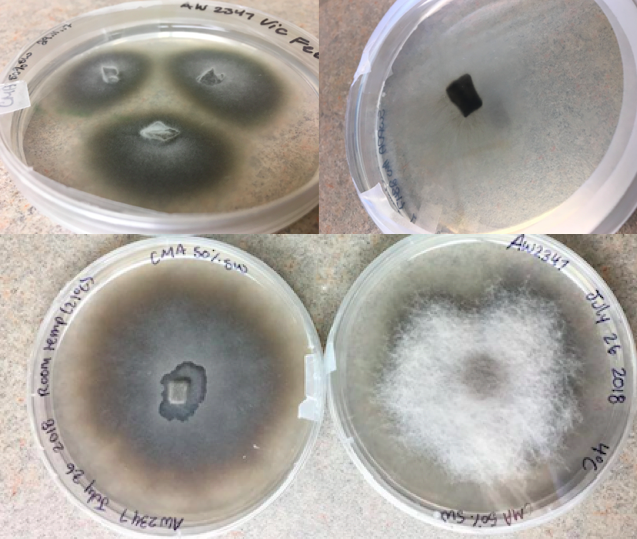
In 2017, the Walker lab at Acadia University isolated a new species of Lulworthia, an obligate marine ascomycete fungus, from recently exposed intertidal wood from Apple River, Nova Scotia. There are currently 13 accepted species of fungi in the genus Lulworthia worldwide. Seemingly the largest genus of the marine ascomycetes, these fungi are often recorded as “Lulworthia sp.” as they frequently cannot be distinguished using long-established morphological techniques. Lulworthia atlantica, a closely related species isolated from submerged wood on the North coast of Portugal, was described in 2017. Using the same methodology, I genetically characterized a new species from the Bay of Fundy using rDNA as well as macro- and micromorphology. Phylogenetic trees were constructed for 3 rDNA gene regions, providing genetic evidence that it is a new species of marine fungus, provisionally named Lulworthia fundyense. The fungus grew faster at warmer temperatures, but sexual spores were not observed in culture, nor in wood block incubations at 4°C or 21°C. Asexual spores were observed and measured after 7-8 months, and I am currently describing this new species. Obligate marine fungi are understudied organisms and many do not sporulate in laboratory settings or only after prolonged incubation periods.
This lack of knowledge on conditions that induce ascomata (fruiting body) production has greatly hindered experimental studies. Previous studies have shown that perithecia formation in Lulworthia sp. generally occurs after 100 to 200 days on submerged wood in environments where water temperatures are below 5°C. As sexual reproduction of L. nom. prov. fundyense was not observed after more than 300 days in our study, this fungus was either not grown in adequate sporulation conditions, or it is slower growing than previously discovered marine species.
To acquire further knowledge on marine fungi, the development of new culturing techniques is required to induce sporulation to better understand novel species. This new fungus is now being tested for its ability to degrade crude oil. If L. fundyense is able to eliminate crude oil residues in the ocean, and we can optimize its growth, this could be an important environmental advancement in oil spill remediation and oceanic health.
The issue of hydrocarbon contamination is significant as an estimated 3.5 million tonnes of petroleum hydrocarbons are introduced into marine ecosystems each year, negatively affecting the invertebrates, birds, mammals, and plants that inhabit these areas. This project emphasized the ecological importance of fungi and the need for further research on these organisms within each of Nova Scotia’s coasts, to identify biotechnological potential and develop new strategies to reduce marine pollution.
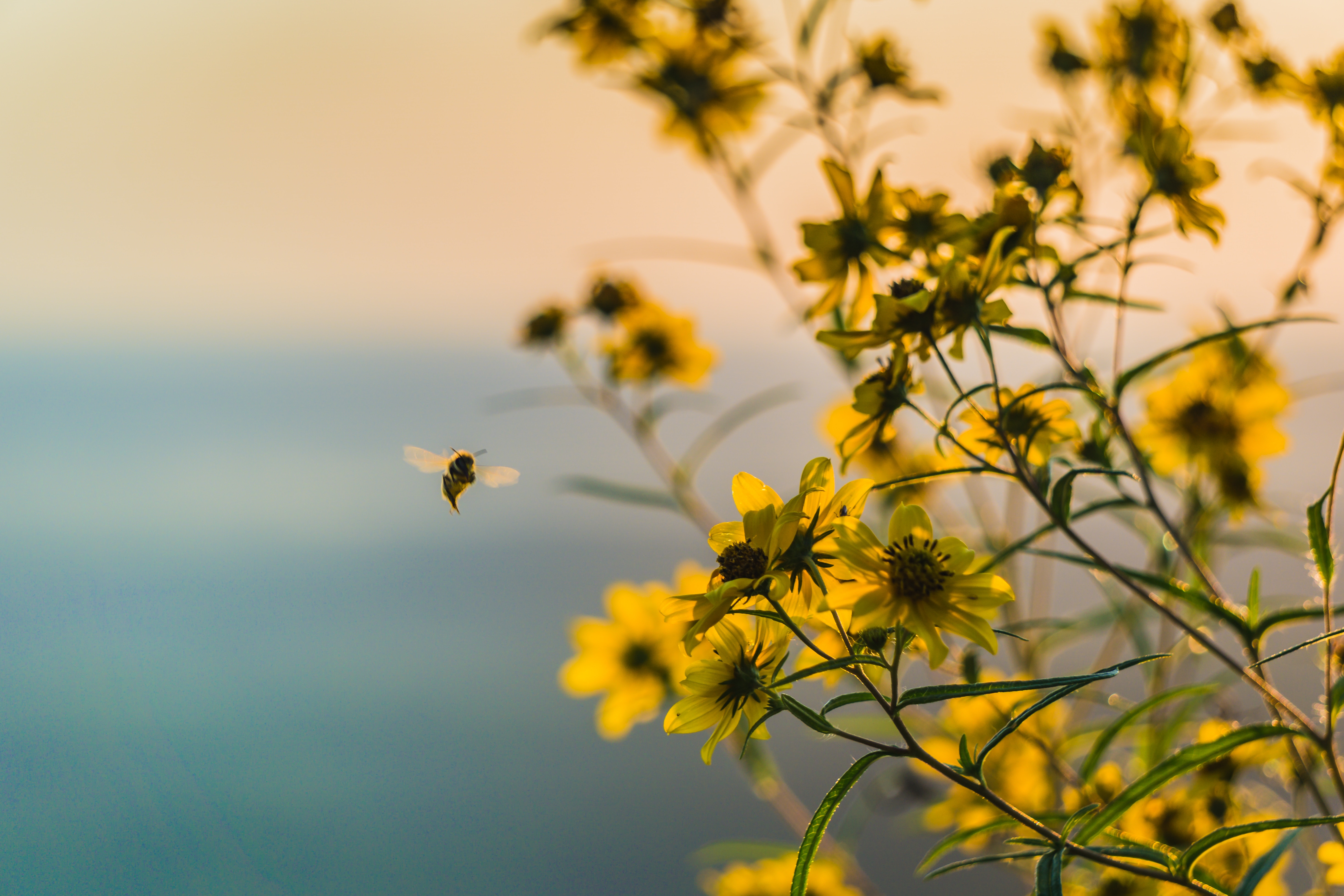
Honey bees (Apis mellifera L.) are the most agriculturally beneficial eusocial insects for crop pollination. Chemical communication is critical in maintaining colony structure and activity, which may be exploited by some parasites. Varroa destructor (Anderson and Trueman) (hereafter Varroa) is regarded as one of the biggest threats to apiculture, blamed for annual colony mortalities of over 30%. My research tests whether previously identified odourants affect Varroa behaviour and investigating those that elicit minimal response in honey bees. Volatile collection involving in- and ex-situ techniques is being used to identify individual compounds and sensitivity of live Varroa through gas chromatography-mass spectrometry and gas chromatography-electrotarsal detection, respectively. Furthermore, volatile components confirmed as Varroa-active will be investigated for behavioral valence through behavioural assays and electro-tarsograms. In addition, this study will compare methods for in-situ capture of hive odours. Results from this research can then be applied to colony-wide testing of active odourants in developing effective alternative methods for Varroa control as well as developing methods for future research exploring chemical ecology of social insects.
Although known for containing some tasty edible species, the fascinating Kingdom Fungi also play crucial ecological roles in our environment. Most notable is their role as decomposers, as they can degrade wood much more efficiently than other organisms like bacteria. Fungal tissues are easier to digest than plant tissues, so fungi are critically important in making energy locked away in tough plant material like wood available to the rest of the food web. Fungi also play a very important role as predators of animals such as insects. Many insect-attacking species even seem to influence their targets’ minds, causing them to fly or crawl up to high branches and leaves, and sticking to their undersides so spores released by the fungi are more likely to be caught by winds. An example of a species that predates on other organisms is the oyster mushroom. Prized as an edible, this mushroom traps and consumes microscopic roundworms as a source of nitrogen! However, most mushroom species are not known to predate animals, and instead get most of their nutrients by decomposing plants.
Winter is just around the corner, but a surprising number of mushroom species can still be found this late in the year. Identifying mushrooms can seem daunting, as there are hundreds of species in Nova Scotia, but if you know what traits to look for and have the right book in hand, it can be done! This guide will cover 11 commonly encountered seasonal mushroom species, describing the structural features that are important for identification should you come across them in the woods.
Gilled mushrooms
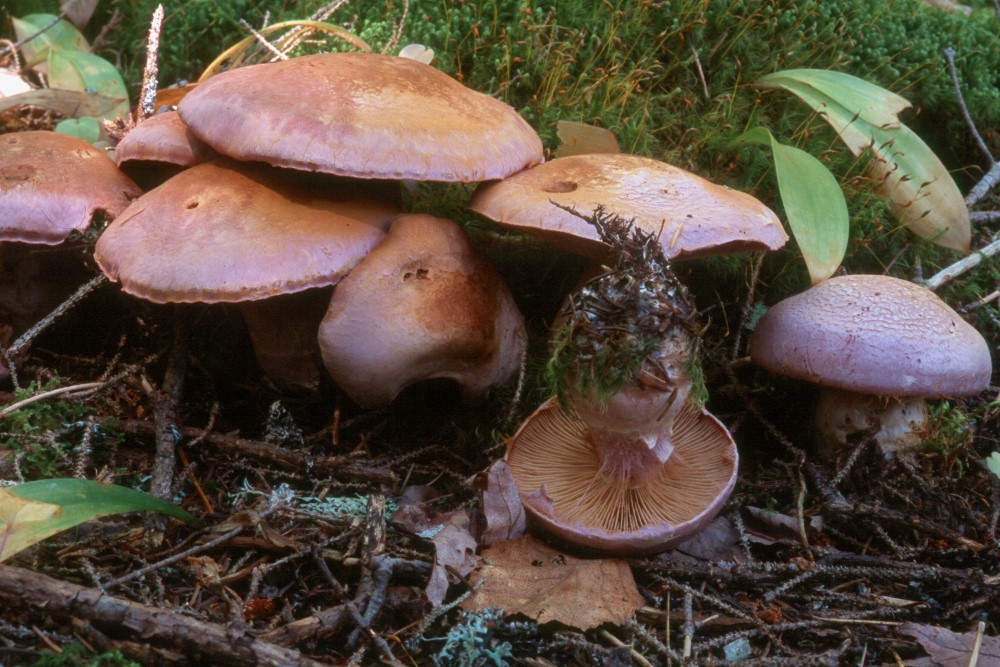
Probably the most familiar type of mushrooms are those with gills underneath the cap, such as Cortinarius traganus:
Cortinarius traganus
This mushroom is very commonly found late in the season and is identified by its striking purplish hues and brown gills, as well as its thick stem which widens to a bulb at the base. Younger specimens may also have a webby mesh over the gills called a cortina, which is pictured in the image above. This species forms a mutually beneficial partnership with conifer trees referred to as a mycorrhiza, where the fungus provides nutrients to the plant in exchange for a portion of the sugars the plant derives from photosynthesis. In general, mushrooms are very good at obtaining nutrients from soil, where they produce very fine root-like structures called hyphae. These are much finer than plant roots and allow for more efficient nutrient uptake. Cortinarius traganus are not edible.
Coprinus comatus
Coprinus comatus, also known as the shaggy mane, is a frequent sight in lawns and mulch. This species is often white when young, with a long, bell-shaped cap. As they get older, the mushrooms release enzymes that effectively digest the mushrooms themselves, resulting in what looks like black ink. Several species in this group show this liquifying behavior and are together known as inky caps. These are considered edible but contain a toxin which reacts with alcohol up to a week after consumption. This can cause unpleasant symptoms such as vomiting, so eating this type of mushroom is not recommended.
Amanita bisporigera
Another white mushroom commonly found this time of year is Amanita bisporigera, also known as the Destroying Angel. As the name suggests, they are deadly poisonous. They are identified by their tall stem with a bulbous base, a ring around the middle of the stem, and a round cap when young that expands to become flat with age. Like Cortinarius traganus mentioned above, this species is mycorrhizal with oak trees, so they will only be found in forests where this tree is present.
Connopus acervatus
Connopus acervatus can be found growing on rotting conifer wood. Unlike the other species covered so far, this species forms dense clusters of mushrooms with reddish-brown caps up to the size of a toonie that become lighter towards the edge. The stem is long and slender with slightly pinkish hues. This species is not known to be edible.
Pored mushrooms
Suillus cavipes
Some mushrooms don’t have gills at all, and instead have pores underneath their caps, such as Suillus cavipes. The fuzzy reddish-purple to brown cap, and pale-yellow pore surface help distinguish this species from other pored mushrooms. It only grows with larch trees, and sometimes several meters away from the host tree. Because of this, it is easy to overlook its tree associate. This species is not known to be edible.
Fomitopsis pinicola
Fomitopsis pinicola, also known as the red banded polypore, is a very common sight in coniferous and mixed forests where it can be found decomposing dead trees. Mushrooms in this group are called polypores or bracket fungi, which form a sort of disk off the side of a piece of wood, allowing the spores produced on the underside to fall out and blow away with the wind. Unlike the other mushrooms covered so far, which may have shorter life spans, this type of mushroom grows and produces spores over the course of many years. This species has a woody texture and is thus only edible to the adventurous (not tasty!).
Toothed mushrooms
Hydnum repandum
Hydnum repandum, or Hedgehog mushroom, gets its common name from the teeth underneath the cap. This mushroom is identified by its brown to orange cap and whitish stem. It forms a mycorrhizal relationship with conifer trees and likes to grow in wet seepage areas with dense moss cover. It is a prized edible with a mild taste.
Jelly fungi
Pseudohydnum gelatinosum
Pseudohydnum gelatinosum looks superficially similar to the Hedgehog mushroom because of its teeth but is actually only very distantly related. It is one of the jelly fungi, a group whose name is unsurprisingly derived from their gelatinous texture. The teeth of this mushroom are generally grey to white and translucent, while the cap can range from pale grey to brown. This species can be found growing on rotting conifer wood on the forest floor. Jelly fungi are not valued as edibles.
Dacrymyces chrysospermus
Dacrymyces chrysospermus, also known as ‘Witches’ Butter’, is a very common sight throughout the year. This species does not form a cap and stem, but rather it looks like a mass of bright yellow or orange folds growing on the surface of dead and rotting wood.
Puffballs
Calvatia gigantea
Another type of mushroom is the puffball, which is usually round, with the spores being produced on the inside. While many mushrooms often rely on wind to disperse their spores, puffballs need to be disturbed in some way, such as being squashed by animals, in order for their spores to shoot out in a cloud of smoke. A common late season puffball is Calvatia gigantea, which can grow in lawns to enormous sizes, often up to 50 cm or more in diameter, and contain trillions of spores when mature. This species is white on the outside and white on the inside when young, but the interior turns brown with maturity. They are edible while they are still white inside. A related species, Calvatia cyathiformis, looks similar when young, but
is rougher and its outer surface turns brown with age.
Sac fungi
Leotia lubrica
Leotia lubrica, also known as ‘Jelly Babies’, are a member of a group called sac fungi that are about as closely related to other mushrooms as humans are to earthworms. Species in this group are usually microscopic, but a few species have grown to a conspicuous size. Jelly babies are identified by their yellow stalks supporting a wrinkled, brown head that may take on greenish colours. They are not known to be toxic but supposedly have little flavour.
To delve further into the world of mushrooms, a good field guide is critical. George Barron’s Mushrooms of Ontario and Eastern Canada is a great place to start, available in Wolfville at the Box of Delights bookstore on Main St. The website mushroomexpert.com is an invaluable free resource covering over 1000 North American mushroom species, but it is generally more technical than a field guide. Not only is collecting and identifying mushrooms a lot of fun, but there are likely many species that have yet to be discovered in Nova Scotia. The next time you go for a walk through the woods, you might just find something new!
Thanks to Dr. David Malloch for giving his permission to use some of his photographs. To learn more about fungi, consider taking Dr Allison Walker’s BIOL3663 Mycology course at Acadia (follow her @FungalDreamTeam) and check out blomidonnaturalists.ca or nsmycologicalsociety.org for information on mushroom walks in the province.
Bruce Malloch is completing is MSc. in Biology with Dr. Allison Walker researching the succession of decomposers in salt marshes. His project looks at the idea that the decomposition of a plant species is a complex process involving many species that are functionally unique. Some may decompose leaves and shoots, others roots. Some may be decomposers of freshly killed grasses while others will decompose older material. His research is focused on determining which fungal species are present in the Wolfville marsh, and how these communities change over the course of a year.
Acadia’s Biology Research Gong Show recently took place on October 23rd, where professors gave short PowerPoint presentations outlining their current research projects. Research gong shows are a great way for students to learn about the research being conducted within their department, and opportunities to get involved in. If the presenter goes over the 3-minute time limit, they are interrupted with the ring of a gong (or the hammering of wooden spoons against a frying pan). Biology and non-biology students alike may be interested in the wide variety of research projects underway at Acadia:
Dr. Todd Smith started off the show by introducing his research on parasites. His work is currently focused on studying the relationship between malaria parasites and their hosts. His lab investigates the co-evolution of parasites that target mosquitoes, frogs, and snakes, with a specific interest in host immune responses. Dr. Smith is currently teaching BIOL 2053 (Microbial Biodiversity), BIOL 3123 (Parasitology) and BIOL 3583 (Eukaryotic Microbiology).
Next up was Dr. Glenys Gibson, whose research revolves around evolutionary development. Her lab is focused on marine invertebrates and the influence of environmental factors on their development. Her work includes analyzing the effects of microplastics on tissue growth – research that is undeniably pertinent, as we observe an increase in the amount of plastic present in the natural environment. Dr. Gibson is currently teaching BIOL 3153 (Principles of Development), BIOL 3163 (Comparative Embryology), and BIOL 3423 (Histology 1).
If you’re a biology student at Acadia, you’re likely already familiar with Dr. Allison Walker’s passion for fungi. She and Acadia’s Fungal Dream Team are currently looking at marine fungi, with many projects on the go, including the restoration of native species in salt marshes, the role of endophytes (organisms that live between plant cells) in algae and seagrass, and the potential uses of fungi, such as the suppression of pathogens. Dr. Walker is currently teaching BIOL 1123 (Organisms & Their Environment II), BIOL 3663 (Introductory Mycology) and BIOL 2043 (Biodiversity of Plants and Algae).
We’re all too familiar with stress, but Dr. Russell Easy’s research delves deeper into stress and how it affects animals. His lab uses technology like Polymerase Chain Reaction to investigate DNA and proteins, with the goal of identifying biomarkers of stress. The Easy lab looks at a variety of animals, including fish, deer, frogs, and sea stars. Dr. Easy is also the coordinator of the Biology Honours program, and teaches BIOL 2013 (Cell & Molecular Biology), BIOL 3613 (Principles of Genetics), BIOL 3623 (Molecular Genetics & Genomics) and well as the Natural History Field Course on Bon Portage Island, which is an immersive field course offered during the summer.
If beetles and moths fascinate you, Dr. Kirk Hiller’s research will too! Dr. Hillier’s lab investigates olfactory neuroscience in insects, such as the evolution of pheromone communication between moths. Other projects revolve around conservation and agriculture, including the development of sustainable chemicals for pest management. Dr. Hillier currently teaches BIOL 3883 (Chemical Ecology) and BIOL 4443 (Comparative Animal Physiology)
Those interested in a career in immunology or medicine will want to know about Dr. Melanie Coombs’ research. Dr. Coombs is currently working to demonstrate that some natural products may actually kill metastatic cancer cells. Her lab is currently investigating PZ-DHA, a compound that has been shown to kill breast cancer cells, and looking whether it also has the ability to kill other cancers, such as colon cancer. Dr. Coombs currently teaches BIOL 2053 (Microbial Biodiversity), BIOL 3553 (Immunology), BIOL 3573 (Applied and Environmental Microbiology), and BIOL 4353 (Pathogenic Microbiology).
Marine biology is the domain of Dr. Trevor Avery’s lab, with focus on animal residency and biodiversity. Research in his lab involves finding and tagging fish, frogs, and squid; then examining their population dynamics and demographics. The human dimension is also explored in his lab, as his team often conducts social surveys and collaborates with the community. Dr. Avery teaches BIOL 2563 (Marine Biology), BIOL 4113 (Fish Biology & Fisheries Science), and BIOL 4253 (Applied Statistical Modeling). Dr. Avery is also a fan of statistics and teaches a course for the Math department: MATH 2223/2243 (Statistics for Life Sciences).
Several professors are on sabbatical and were unable to attend the show, but their Honours students stepped up and gave the 3-minute presentations in their place:
Evolutionary biologist Dr. Don Stewart uses DNA sequencing to explore the molecular evolution of organisms. His team studies the genetics and habitats of animals such as black bears, while also investigating the interesting phenomenon of doubly uniparental inheritance: most animals inherit their mitochondrial genes only from their mother, but some bivalves (like mussels) can get them from their father too.
Dr. Dave Shutler’s team studies the birds and the bees (and the coyotes). A lot of field work is involved, as his lab observes the parental investment and predation of birds, the diseases of bees, and the ecology of coyotes.
Dr. Brian Wilson researches neuroendocrinology, and supervises projects on physiological properties of strokes, while studying the hormone relaxin and its ability to reduce resulting tissue damage. Another project looks at the endocannibinoid system, through which THC affects the brain, a research area that is certain to grow with the recent legalization marijuana.
Plant biologist Dr. Rodger Evans studies floral evolutionary characteristics, as well as plant relationships. One of his current lab projects involves examining the influence of moths on plant development.
As demonstrated by the gong show, Acadia’s biology department is home to many significant research projects. The research outlined here is only a portion of all that is being conducted at the school, so students are likely to find a topic they’ll want to get involved with.
Those familiar with Nova Scotia’s seemingly endless stretches of highway are likely accustomed to the sight of roadkill. But now, Acadia Master’s candidate Stephanie White is researching a way to make our roads safer for both the animals that cross them and the drivers who want to avoid hitting them.
Wildlife fencing and wildlife underpasses/overpasses are common sights in many European countries and along the West Coast of Canada and the United States, where the frequency of large mammal crossings make them a more pressing safety precaution than in other parts of the world. In Atlantic Canada, the vast majority of wildlife road crossing preventative technologies are found in New Brunswick due to the high number of moose and deer in the region.
Nova Scotia, however, may also benefit from the addition of such safety measures, as to date, there are only two known underpasses in the entire province designed for wild animals to cross highways safely. There are other underpasses scattered throughout the province, but they see regular ATV usage which makes them not much more wildlife-friendly than the highways they intersect. The other two wildlife underpasses, which have a metal bar to prevent their use by ATVs, are located at the Cobequid Pass and in Antigonish. Before Stephanie White’s research, neither had been studied to determine what animals used them and whether it would be worthwhile for more to be built.
The government-funded project started in May 2015 with thirty-four trail cameras set up around the Antigonish underpass, which was situated at a highway undergoing construction. This underpass contained both an aqueous and terrestrial component and was designed for small to medium sized animals. A total of 300 000 photos were taken and analyzed. Variables such as the addition of wildlife fencing around the underpass and the usefulness of an atrium to allow light into the underpass were measured. While the study is still ongoing and the huge quantities of trail camera pictures are still being analyzed, promising findings are emerging.
These findings conclude that the terrestrial component is most often used by hares and porcupines, but since the addition of wildlife fencing on the side of the highway, an average of one black bear a week has been observed crossing the underpass. The aquatic component sees animals such as musk rats, wild minks, beavers and families of ducks crossing it. The findings of ducklings using the underpass have especially exciting implications for road accident prevention as many drivers are tempted to stop or swerve when they see a trail of ducklings following their mother across a highway.
While this project is still ongoing, it indicates so far that investment in wildlife fencing and wildlife underpass construction could reduce the number of small and medium sized animals crossing Nova Scotia’s highways. This could significantly improve the safety of Nova Scotia’s animals and drivers along the many kilometers of highway running the length of the province.
Beginning with adventurous spelunkers and culminating with the discovery of a distant ancestor, the Homo naledi story is one of luck, skill, and perseverance. When Steven Tucker and Rick Hunter entered the Rising Star cave in South Africa two years ago, they were looking to explore new paths and maybe go where none had gone before. Instead, they found a path that likely hadn’t been trodden by human feet in hundreds of thousands of years. While moving out of shot for a photo to be taken, Steven happened across a fissure that extended downwards into the yet unknown. Following this thin chute, a times narrower than eight inches, the two discovered a chamber with an astonishing surprise. Fossils, numbering in the thousands, littered the floor. The two were aware of a scientist in Johannesburg wanting people to keep an eye open for fossils in this “Cradle of Humankind.” The rush was on to secure the site before it could be disturbed. The next step was an excavation. But a site this difficult to access required a peculiar set of attributes: slim individuals with scientific credentials, caving experience, who had no fear of tight quarters. Six young women were recruited, becoming palaeontologist Lee Berger’s “underground astronauts.” Working in teams of three pulling two-hour shifts, they collected 400 bones off the surface before beginning the careful excavation of the cave floor. Fifteen individuals have been excavated so far. With 1200 bones removed from the chamber and many more remaining to be uncovered, the discovery has been made and the interpretation can begin. Familiar yet alien, these fossils are a peculiar combination of modern and archaic characters. Tooth traits and skull qualities varied from modern to very primitive, but the rest of the body was more divided. From the pelvis up, primitive characteristics win out. Present were apish shoulders geared for trees, flared hipbones harking back to before Australopithecus, and curved fingers for a life among trees. From the modern pelvic base down to feet nearly identical to our own, Homo naledi seems to have evolved beyond its time. The remains were described as “weird as hell,” by paleoanthropologist Fred Grine of the State University of New York at Stony Brook. Two things in particular stand out about Homo naledi – the complete lack of other animal bones and plant debris within the chamber where it was found, and the possibility of dozens of individuals within layers upon layers of cave sediment. The huge number of bones in the cave were likely not from a single placement event. Purposeful, repeated placement suggests intentional burial – suggesting Homo naledi were an intelligent, capable, habitual species, despite their brain cases roughly half the size of ours. For more information on the Homo naledi discovery, check the National Geographic website, numerous scientific websites, or talk to your history professor.
Another interesting skeletal story right on the tail of the Homo naledi discovery comes from beneath the roots of a 215-year-old tree that recently fell victim to a violent storm near the town of Collooney, in the northwestern part of Ireland. The 17-20 year old man found within the root system of the tumbled tree is believed to have suffered a violent fate. Though given a proper Christian burial, his 1000 year old body had suffered knife wounds on his hands and ribs during the early medieval period (1030-1200CE).
Betzillo positions itself as a versatile gaming hub where structured bonuses and adaptive gameplay mechanics support both short sessions and extended play.
Built with a focus on innovation, Spinbit integrates modern casino architecture with rapid transactions, appealing to players who value speed and digital efficiency.
Ripper Casino emphasizes bold entertainment through high-impact slot titles and competitive promotions crafted for risk-oriented players.
A friendly interface and stable performance define Ricky Casino, offering a casual yet reliable environment for a wide spectrum of gaming preferences.
King Billy Casino channels classic casino spirit into a modern platform, delivering recognizable themes supported by contemporary reward systems.
Immersive visuals and layered slot mechanics are at the core of Dragonslots, creating a narrative-driven casino experience.
Lukki Casino appeals to players seeking direct access and minimal friction, focusing on fast loading times and intuitive controls.
Casinonic provides a structured and dependable gaming framework, blending modern slots with transparent operational standards.