
Tag: Black History Month

  • Black History and Diversity at Acadia

    Black History and Diversity at Acadia

    Now that Black History Month is officially upon us, it’s time that we hear conversations on the importance of diversity. It makes sense considering Black voices are at its loudest during this time of year. We take a lot of pride in our people, our history, and our communities all while engaging in conversations about how we still have lots of work to do.

    It’s a lot of Black people’s favourite time of year because it calls for action on diversity and inclusiveness. On top of that, people have no choice but to hear all our accomplishments we’ve done for the country because according to the public education system there is no room to fit them into the curriculum. This month makes many of us feel special, heard, and appreciated.

    These feelings are something that society only puts aside for this month. For the rest of the 337 days of the year (336 during leap year) we have to actively fight and justify our existence, why we deserve the same opportunities as our White peers, and overcome barriers that have been placed by institutions for generations. With all that said, Black History Month is the perfect opportunity to call for action on being more diverse. This begs the question: what does it mean to be diverse?

    Often times, when people hear the word “diversity” they often do not go beyond the surface. For them it’s the colour they see, the gender in front of them, the way people express themselves. For me, it goes beyond the surface. It’s the struggles people go through, the things they’ve overcome, the barriers that are in place, and the mindset that many have.

    For example, the “Black experience” is not the same for every single Black person. Some of us had opportunities to excel and were able to receive the supports needed to get us where we are today and others weren’t that fortunate. Unfortunately, this often prevents them from reaching their full potential. The same could be said for any ethnic group and minority group.

    What I am getting at that here is that diversity goes beyond the surface and it is important to recognize that. It means nothing to have a “Black face” on a poster to show diversity if we don’t acknowledge the experiences that comes with it. The issue with Acadia isn’t the lack of diversity on campus. We all knew what we were getting ourselves into after we decided to stay after our first year here. The issue with Acadia is not only to say we’re something we’re not (meaning diverse) but also, the lack of supports and understanding of people’s experiences based on the lack of diversity. This campus has so much potential to be an inclusive place regardless of the lack of visible diversity that’s on campus, but right now it’s lacking.

    I bet you’re wondering what can we do to make it more diverse. Well, we can start by acknowledging that we all experience things differently. To understand to go beyond the melanin (whatever physical feature that makes us different) and think to ourselves “what can we do to make everyone feel at home?” Each person has different needs based on their personal experiences. We can become better supports to one another and stop asking people to speak on behalf of their race or what they physically represent. White people never speak on behalf of their entire group so there is no reason why everyone else needs to speak on behalf of theirs.

    It is good and healthy to ask people their opinions on different matters and world events but remember that it is their opinion and their interpretation. So although their thoughts and opinions may be similar to others they still do not speak on behalf of everyone in said group. Lastly, remember that it is okay and healthy to disagree and debate with others but what is not okay is to dismiss others people’s experiences. For example, it is completely fine if you don’t believe that Acadia has a race issue on campus based on what YOU saw within campus but what is not okay is to dismiss people when they share their stories of race related issues they experienced on campus.

    In short, what I’m trying to say is that next time you look at an Acadia poster, or see something within the community that seems “diverse”, look beyond the photo. What do you see? What is this photo trying to represent? Remember that we represent something beyond our physical features. I am more than a biracial woman. I represent my Christian faith, my control I have over my depression, the obstacles of being from a low income family, and many more things all while being a biracial woman. If people were to see me in a poster I would hope they see more than the colour of my skin and my gender. I would hope they would see me and think “she has a story” because reality is that we all have a story and that we all represent so much more than our physical features because reality is that we are all diverse. So while representation truly does matter remember that it simply goes beyond what we can see with the naked eye.
  • Recognizing African Heritage Month

    Recognizing African Heritage Month

    Dear Members of the Acadia Community,

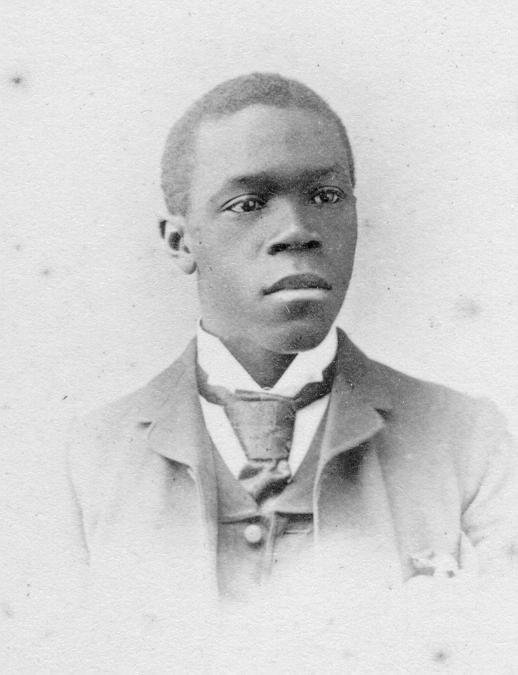
    Today we mark the first day of African Heritage Month in Nova Scotia. Acadia University has a long tradition of educating people from all backgrounds, including those of African descent. The Rev. Dr. Edwin Howard Borden from Truro, NS who was the first person of African descent to graduate from Acadia with his Bachelor of Arts in 1892 and then his Master of Arts in 1896, is believed to be one of the earliest persons of African descent to graduate from any college or university in Canada. Since then, Acadia’s alumni of African descent have turned exceptional student careers into successful careers in every aspect of business, politics, public service, and spiritual leadership in almost every country on the planet for more than 125 years. The role Acadia played in educating some of Nova Scotia’s most influential civil rights leaders of the 20th Century is described in the large outdoor exhibit near University Hall that is dedicated to W.P. Oliver (’34) and forms part of the Mathieu DaCosta African Heritage Trail located in Southwestern Nova Scotia. Despite this proud Acadia tradition that is rooted in the Baptist heritage of our university, we know that for the majority of Nova Scotians of African descent, the opportunity to attend university simply did not exist. Today, we are seeking ways to remove those barriers but we have much more to do.

    The 2019 provincial theme for African Heritage Month is “Our History is Your History” and, to quote from the provincial website, “.…… recognizes the unique story of African Nova Scotians and how this story is interwoven throughout the past, present and future of all Nova Scotians. The theme reminds us that when we all acknowledge and understand the truths of our shared history through awareness, cooperation, dialogue and learning, we will be able to facilitate positive change in Nova Scotia”. In order to ensure that Acadia steps up and does its part, I will be issuing an announcement later today that will outline some new initiatives to increase support for all students of African descent at Acadia.

    These initiatives include the establishment of a Black Students Advisor and a Black Students Working Group, both of which have long been recommendations of the Black Students Association at Acadia. Recognizing the needs of students of African descent as distinct from the needs of other students is a well-established practice in post-secondary education and we are, frankly, behind the curve at Acadia when it comes to supporting our students of African descent. Acadia’s history in attracting students of African descent from here in Nova Scotia as well as from nations around the world provides us with the imperative to do a better job of not only supporting students of African heritage, but promoting and celebrating their achievements internally and externally. We also need to find the means to make our campus more diverse and to attract faculty and staff who reflect our community at large. It is a big task, but it won’t be completed if we don’t take concrete action right now.

    Acadia’s Black Students’ Association has a number of events planned throughout African Heritage Month and I encourage all members of the Acadia community to take in one or more of those events. I want to thank our students of African descent for being so active and persuasive in making their arguments, and for making such amazing contributions to the life and voices of Acadia. Also, on February 9th in War Memorial Gymnasium between the men’s and women’s basketball games, Acadia and the Valley African Nova Scotian Development Association will hold their 10th annual event honouring Acadia’s past and present student-athletes of African descent.

    During African Heritage Month the African Heritage flag will fly above University Hall, as we join together to celebrate our students and colleagues of African descent, and pledge to make Acadia a more inclusive and supportive community.

    Thank you for taking the time to read this message, and I look forward to the great work that will be done by the Black Student Advisor and the new Working Group.

    With very best wishes,

    Peter

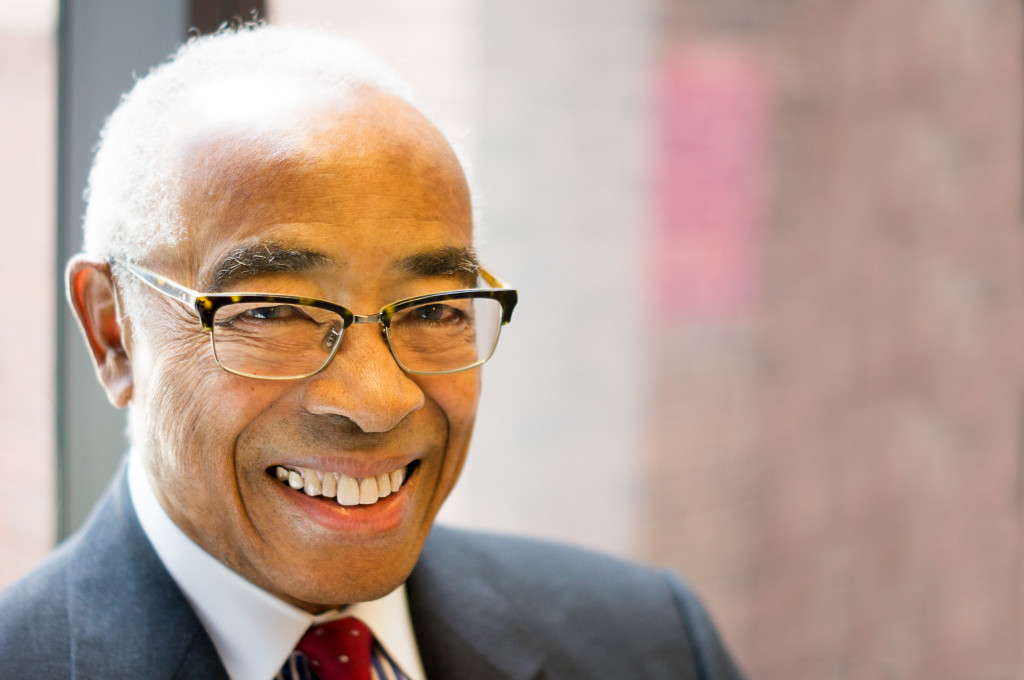
  • Senator Donald Oliver ‘60: We Still Need a Black History Month

    Senator Donald Oliver ‘60: We Still Need a Black History Month

    Some valley thoughts on Black History month.

    Black History Month in Canada has had some recent powerful successes. There’s a growing, greater understanding and appreciation of the intrinsic value of Black contributions, in science, business, education, music, sports, and public policy throughout our nation.

    These advances in heightening the awareness in our country to the contributions of African Canadians is perhaps best understood by our secondary school children who, during Black History Month, are now reading, writing essays, and immersing themselves in research and history about our Black heroes. Interestingly, their parents are being educated and sensitized at the same time by osmosis. This new awakening and enlightenment stretches right across the country.

    But, happiness will be the day when we no longer need “Black History Month,” a period in the annual calendar, to highlight and celebrate the contributions of African Canadians to building this Nation.

    But, unhappily, we still need it in 2019 because in virtually every branch of the corridors of power in Canada, Blacks are expressly excluded and often completely absent. This is because some of our coveted principles of equality, fair play and inclusion have been supplanted by the white majority and often substituted by overt racism wherein the principle of the equal worth of human beings is sacrificed.

    The result is that the ugly sting of racism still keeps the driving forces of most Canadian enterprises virtually white. I invite you to look at the lack of Diversity and colour in the upper echelons and powerful ranks of institutions like our Armed Forces, our superior Courts, our largest financial institutions; our universities, (ie. Chancellors, Presidents, vice-Presidents, Deans), our senior bureaucracies in Ottawa and the provinces, etc.

    All of this denial of the mosaic of Canada in the face of thousands of eminently qualified African Canadians who have the advanced education, multiple language skills, managerial experience and training, and possess a strong desire to do the job. But, sadly, they cannot get through the glass ceiling. They can only dream and aspire to what they know they are capable of, and they must live with the knowledge that their contributions would make for a stronger and better Canada.

    So we still need a “Black History Month” in 2019, more than 186 years after the British Parliament abolished Slavery In the Empire.

    When I was summoned to and arrived at the Senate of Canada in Ottawa in 1990, I was astounded to learn that Diversity was like a foreign, unknown concept in parliamentary institutions such as the Senate, the House of Commons and the Library of Parliament. There was no inclusion, Diversity or fairness in the workplace. In the early 1980’s I had been an advisor to the President of the Treasury Board on the employment of visible minorities in the public service and there were other groups promoting employment justice for the other three groups, the Disabled, Aboriginals and Women.

    So, on arrival in Ottawa, I immediately set about meeting with the leaders of all the parliamentary institutions strongly encouraging them to adopt the business case for Diversity. That means inclusive workplaces that respect differences and value the diverse qualities that their employees bring to their work such as gender, religion, age, sex, language, ethnicity, social status, etc. These institutions and companies know this is good for successful business. My efforts had some modest success because in the annual report of 2008, the Clerk of the Senate, Paul Bélisle reported on the results of his efforts with the Senate Administration showing 11% representation of visible minorities. There was previously a period of four years where not one visible minority was either hired or promoted.

    And what about my home town, Wolfville, where Acadia University is king? Do we need Black History Month here? Sadly, yes. Acadia has changed since I enrolled in the Fall of 1956. Notwithstanding its strong Baptist traditions, students, faculty and friends in Wolfville have told me that Acadia University has not been spared the ignominy of racism that has existed in the past, and, unless checked immediately by the introduction of the Business Case for Diversity, it will spread throughout many departments.

    So now is the time to promote inclusion and advocate respect for difference, before the problem worsens.

    It works. It really works. Trust me.

    By Honorable Dr. Donald H. Oliver QC, Acadia BA (Hons History) 1960, LLB, DCL.

  • Opinion: Black History Month

    Opinion: Black History Month

    Various countries, worldwide, have dedicated the month of February to celebrating blackness. Though such countries refer to such celebrations as different things, I prefer to use the term Black History Month.

    In Canada, February is known as African Heritage Month and although every black individual’s ancestry could be traced to a specific country(s) in Africa, not every black individual identifies with their African roots. The African diaspora has lead black people living in different places to create their own cultures. They were forcefully taken away from their homeland, to a foreign land, and although people tried to retain the culture of their homeland, the diversity of the cultures present, lead to the creation of new cultures instead.

    The African diaspora, the reason why a month has been dedicated to celebrating blackness, is a result of slavery. Calling it African Heritage Month, in my opinion, ignores the reason behind its inception. Black History Month is a chance to celebrate the diversity of black culture. Most individuals believe that being black is a personality trait or characteristic. Black History month is a time to remind individuals that although blackness is a part of identity, it is not the only thing that defines an individual.

    Nendelmwa Gofwan is a Politics and Sociology major in third year and is a member of the Black Student Association at Acadia.

Betzillo positions itself as a versatile gaming hub where structured bonuses and adaptive gameplay mechanics support both short sessions and extended play.

Built with a focus on innovation, Spinbit integrates modern casino architecture with rapid transactions, appealing to players who value speed and digital efficiency.

Ripper Casino emphasizes bold entertainment through high-impact slot titles and competitive promotions crafted for risk-oriented players.

A friendly interface and stable performance define Ricky Casino, offering a casual yet reliable environment for a wide spectrum of gaming preferences.

King Billy Casino channels classic casino spirit into a modern platform, delivering recognizable themes supported by contemporary reward systems.

Immersive visuals and layered slot mechanics are at the core of Dragonslots, creating a narrative-driven casino experience.

Lukki Casino appeals to players seeking direct access and minimal friction, focusing on fast loading times and intuitive controls.

Casinonic provides a structured and dependable gaming framework, blending modern slots with transparent operational standards.