
Hello, I’m Aaron Majid. I’m a third-year at Acadia with a focus on Politics. I’ve been lucky enough to have been at Acadia for three full years, entering my fourth and final year next year. I came to Acadia knowing no one, but sure enough, this University made me feel at home. I look to give back to my University and be a resource to those already attending and those arriving, which is why I’m running for one of two Councillor positions. I’ve always enjoyed helping others and getting to know the people I share a place with, as well as taking leadership roles in my community, and as Councillor, I look forward to working with my team, peers, faculty, and the people of Wolfville, making sure that we ALL enjoy the short time we are lucky enough to share together and that everyone’s voices are heard and considered.
Tag: election
Is Trump finally gone?
Although Joe Biden has been declared president-elect of the United States of America multiple times over the past few weeks, Donald Trump and his administration still continue to contest the results of the election. To be clear, there is no evidence whatsoever that any wide-spread voter fraud took place, with the Department of Homeland Security issuing a statement that this was perhaps “the most secure election in US history.” However, that doesn’t prevent a large portion of the US from insisting that Donald Trump is the rightful president. That said, is there really any way for Trump to still be sworn in? And if so, how likely is that possibility?
As of right now, swing states such as Pennsylvania and Michigan are ratifying their results, and getting ready to send their electors to the electoral college. Trump has fought this effort at every turn, throwing the entire weight of his influence and legal team at these states in hopes of disrupting the process, but so far to little avail. Every legal challenge thrown at the states so far has been immediately dismissed by the courts due to an overwhelming lack of any real evidence of voter fraud. But even if Trump was winning recounts and legal battles, Biden’s lead is so large that the amount of votes that would have to be overturned to affect the result is insurmountable. So, what is Trump’s goal? What is the point of all this? His objective it seems is not to overturn votes so much as it is to create chaos and uncertainty to cast sufficient doubt on the election proceedings in order to send it to the state legislatures. There is a provision in American law that would enable Republican-controlled state legislatures to overturn election results in their state if there is no definitive choice made by the time the electoral college votes. However, since many key states have already ratified their results, there no longer seems to be much of a path to victory for Trump through this channel.
After failing to overturn the results in individual states, Trump will no doubt attempt to affect things at a national level. Although there is speculation about possible ways to send the decision to the house of representatives, it is highly unlikely that this could be accomplished without significant legal uncertainty surrounding the decision of the electoral college. However, if the decision did somehow get to the house of representatives, that could bode poorly. Since each state would get a vote instead of each representative, the vote would lean very far to the right. This is currently the only remotely legal path to victory for Donald Trump, and an extremely unlikely one at that.
The very last option for Trump, discussed more as an intangible fear than a real alternative, is a coup. This would involve Trump rallying his support with the heavily armed militias across the country to take the government by force. This would no doubt spark widespread panic and plunge the nation into civil war, but would depend largely on the military’s response. If they act quickly to shut down any insurgencies and remove Trump from power, then little harm will come of it. But if for some reason they continue to heed Trump as the commander-in-chief, then democracy in the United States will have come to an end. Altogether, this is an extremely unlikely scenario and should be taken with a grain of salt.
To conclude, Trump is running out of options to overturn the election as doors continue to close for him. But even if he does manage to cast enough doubt upon the results of the election that a president is not named in time, his term ends on January 20th regardless of what he does. And as Joe Biden recently said, “…the United States government is perfectly capable of escorting trespassers out of the White House.” Be that as it may, Trump’s inability to accept the results of the election could have real and disastrous effects on the smooth transition of power. This could hinder Biden’s ability to hit the ground running, and cost the president-elect valuable time and money. Taking the state of the pandemic in America into consideration, Donald Trump’s petulance will ultimately end up costing many American citizens their lives.
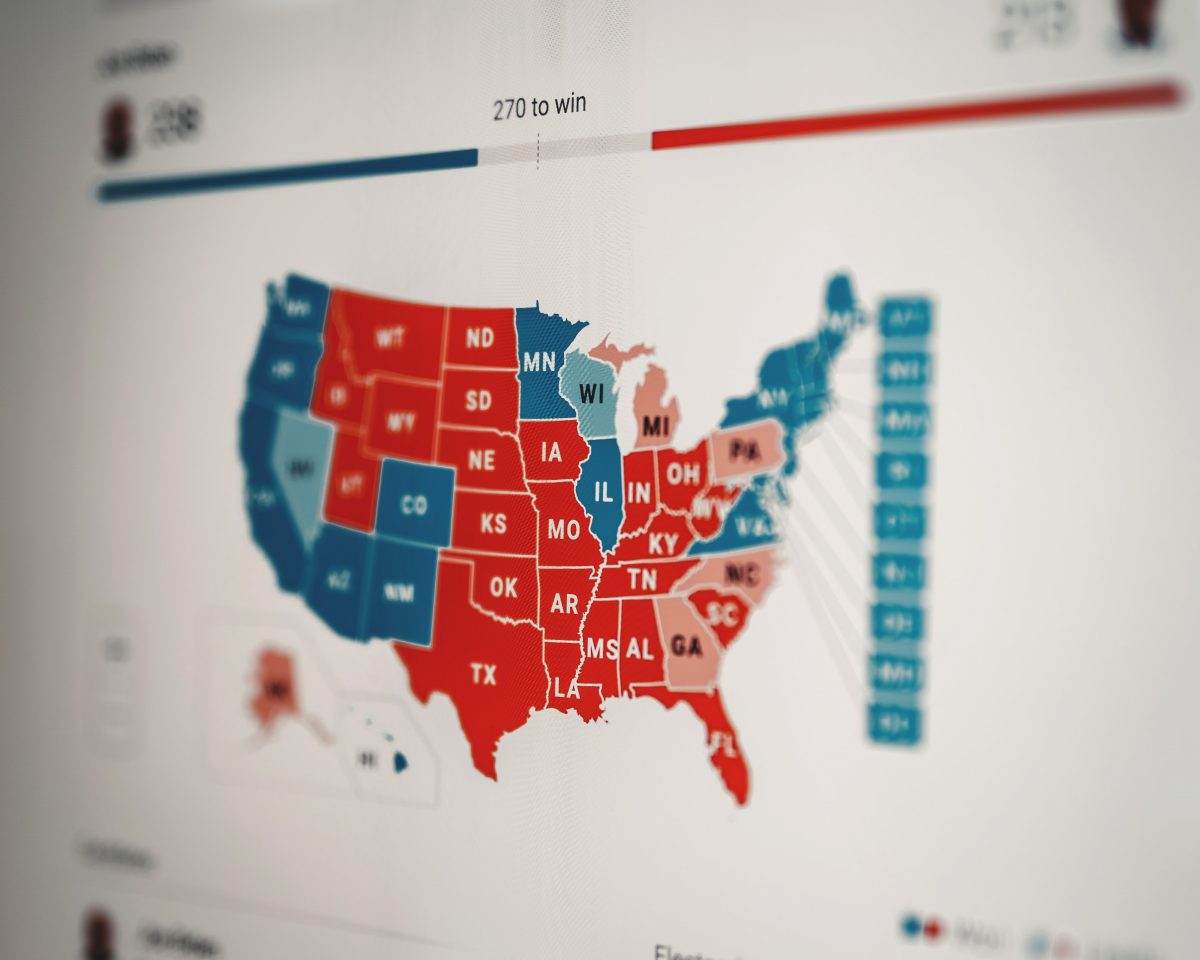
Biden won, why should we care?
On Saturday, November 7th, Joe Biden was named the 46th president-elect of the United States of America. And while there are still uncertainties concerning the peaceful transition of power, many countries breathed a sigh of relief at the announcement. Because of America’s position of influence on the international stage, the policies of a given administration affect not just America, but the whole world. This effect is magnified for Canada due to its geographical proximity to and economic reliance on the United States. Here are some realities about what a Biden administration could mean for Canada:
Climate – This one goes for the world as a whole. As one of the largest contributors to climate change in the world, US policy on clean energy and reducing carbon emissions has a direct impact on the fight against climate change. For the past four years, the Trump administration has been rolling back many of the USA’s environmental regulations. So much so in fact that Biden ran partially on a campaign to double down on environmentally-focused policy. The extent of what can really be accomplished with a republican-controlled senate aside, this is a victory for the climate and the world.
Economics – Biden’s victory could be a double-edged sword for Canada when it comes to the economy. In a general sense, republican administrations have run on boosting the American economy and, by extension, the Canadian economy. However, in light of the current pandemic, both economies are in shambles at the moment. This means that more tangible effects on the Canadian economy can be found in specific issues and the administration’s stance on them. On one hand, Biden will lift the steel and aluminium tariffs that Trump has placed on Canada, and won’t hold them over the Canadian Government like Trump has. But Biden also opposes the Keystone XL pipeline that would run from Alberta to the states, the absence of which would be detrimental to the Canadian economy, especially that of Alberta.
International relations – From immigration to national defence, the US has always had a close Alliance with Canada due to their geographical proximity. Trump’s time in office has called the unshakable nature of that relationship into question. Biden has run in part on his knowledge of international relations and desire to reinstate America to its former position on the world stage. A Biden administration will not only serve to strengthen the relationships between North American countries from a defence perspective, but it will also undo much of the damage Trump has done to the immigration process. And while this last policy is aimed mainly at refugees and immigrants from developing nations, it would make life much easier for Canadians working or living in America.
In short, a Biden administration will be very beneficial to Canada and the world from an environmental standpoint. And it will also serve to restore the strong relationship between the US and Canada on an international scale.
Student Life Impacting Community of Wolfville
As Acadia students continue to settle into the “new normal” at university, so do the residents of Wolfville as the students return to school… and to parties. The usual back-to-school parties this year are affecting residents of Wolfville, perhaps more than any previous years, due to new COVID-19 regulations, which are drawing students to gatherings off-campus. However, this raises more concerns than that of noise complaints.
In recent weeks, multiple students have been charged with liquor act tickets and parking tickets along with the noise bylaw tickets. However, the most concerning threat to the community is the large parties that are taking place during this global pandemic. Students hosting large parties are being fined under the Emergency Management Act, because they are not respecting the COVID-19 regulations that state that when social distancing is possible, people can gather in groups up to 50, and where it is not, in groups up to 10.
On the other hand, the majority of the Acadia students are taking the virus seriously and responsibly. A handful of students acting out should not affect the general opinion of students, of which the majority are active volunteers in the community and respectful neighbours. Brendan MacNeil, president of the Acadia Students Union, said in an interview with CBC that he, “thinks it’s unfair to the degree that students have been ubiquitously convicted of all being, you know, disrespectful and unconcerned and apathetic community members. I believe that there are only a very small minority of students that that would apply to”. However, everyone must be responsible for holding others accountable for their actions and the effects they have on not only the residents of Wolfville but the overall reputation of the student body and Acadia University as a whole.
In an effort to further educate students on the severity of the virus, the current mayor of Wolfville, Jeff Cantwell, addressed the matter in a very personable way during the month of September. He approached off-campus students by going door-to-door and having a reverent as well as dutiful conversation with them at their doorstep. While reactions varied, most students were impressed with the way that the mayor addressed the matter, Cantwell says in an interview with CBC.
Cantwell is approaching the end of his term, and the election for a new mayor is amongst us. Unfortunately, information has silently surfaced which suggests a dialogue about a disturbing way to end student partying antics. A very credible source, who wishes to remain anonymous for privacy reasons, has agreed to share a partial quote from a citizen of Wolfville who openly supports Wendy Donovan, a candidate for mayor in the election.
“Perhaps, we could plant borders of barberry bushes along the borders of residential properties that students use as thoroughfares”, said the supporter.
Barberry plants (scientific name: Berberis or Berberis vulgaris) are not only an invasive species, but they also have a significant tick presence, may cause diarrhea and vomiting if ingested, as well as having spiky thorns that can irritate skin and cause inflammation (Schmidt, Richard J. Ph.D., Botanical Dermatology Database.). Barberry plants are toxic to humans and invasive, yet one of Wendy Donovan’s supporters has suggested planting bundles of them in Wolfville, fully aware that students will more than likely be walking through them.
While it is incredibly important for students to be respectful neighbours and be aware of their parties and choices they make that affect the community, students trust that their leaders will also be protecting them. Cantwell succeeded in this when he had respectful and open conversations face to face with students about the impact of their party. The majority of students are responsible for parties, social-distancing, noise and property, however, there is still improvement needed among the few students who occasionally take it too far. This can be accomplished with the help of residents, the town, and Acadia staff and students – not by planting poisonous plants around Wolfville.


It Is Okay to Not Vote (Please Actually Read This Before You Annihilate Me)
This past Saturday was the last day to vote in the Nova Scotian municipal elections. By now, cities, towns, and districts will have their news mayors and councilors. I want to make it very clear that I do think that municipal politics are important. But I also think we need to stop guilting people for exercising their right to not vote.
Okay, please hear me out. I am very active in politics and have been since I was a teenager. I’ve voted in several municipal and federal elections, sometimes choosing to spoil my ballot. It is a privilege to be able to choose to not engage with politics. However, voting is not the only way to engage in politics. In fact, it might be one of the least meaningful ways to do so. As I have grown up, I have found the push to vote from various channels increasingly frustrating. I find that most folks who push others to vote, cite the following reasons: it’s your civic duty/democracy, every vote matters, and it seems lazy not to! Here’s why I think those reasons are unfair and dismissive:
1) Democracy/Civic Duty
I’d say this is the number one reason that people use to push others to vote. People fought for our right to vote, people of colour, and women (especially Black and Indigenous women) were denied the right to vote. Keeping this in mind, you should have the freedom to choose to not vote. Looking at the upcoming U.S. presidential election, the common narrative is to “choose the lesser of two evils”. I’m not sure about you but being forced to choose between two alleged rapist war criminals to run one of the most powerful countries in the world doesn’t really sound very democratic to me. The wise Geralt of Rivera from Netflix’s The Witcher says: “Evil is evil. Lesser, greater, middling, it makes no difference. If I’m to choose between one evil and another, I’d rather not choose at all”. Why should you be forced to vote for someone that goes against everything you stand for? Of course, there are other parties you can vote for but people who choose to do that are often met with sentiments like: “a vote for a third party/write-in is a vote for the enemy!”. Those ideas are the antithesis of a democracy. I don’t think it’s fair to fault people for refusing to participate in the very system they want to dismantle.
2) Every Vote Matters
Sure, statistically, every vote cast “counts”. Sometimes electoral races can come down to the nitty-gritty and a mere handful of votes can make the decision. That is, if you’re even able to vote in the first place. Blatant instances of voter suppression have existed since electoral races came into existence, and with time they have not slowed down. Racial gerrymandering (the deliberate redrawing of district lines to serve specific interests), voter intimidation (despite it being illegal, mayoral candidate of Halifax Matt Whitman showed up to the polls in full Whitman 2020 gear. That’s the guy who is obsessed with the genocidal Edward Cornwallis), and technology issues are all instances of voter suppression that still happen. Less than a month ago, students at Mount Allison university in New Brunswick were turned away at the polls, even though it was their right to vote. If you are homeless, it is not easy to vote. You need specific identification that proves your identity that you simply might not have or you need someone to vouch for you that can prove their identity. In some states, folks with a criminal record or currently serving prison time may not be permitted to vote. Black people (especially Black women) in the United States historically show up and show out to every midterm and presidential election, yet they are still being killed in the streets by police officers who are time and time again acquitted for murder. When people say that “every vote counts”, I can’t help but think that it really translates to “only specific people’s votes count”.
3) It Seems Lazy Not To!
Really? After everything I’ve written about the obstacles to vote and the ethics of voting, do you think people who exercise their right to abstain from voting are lazy and disengaged? Although there are commendable efforts to make polling stations more accessible, there is clearly still work to be done.
I mentioned at the beginning of this article that it is a privilege to have the option to not be engaged in politics and there are other ways to do this besides voting. You can donate to organizations, help with supply runs for water and land defenders, march and protest, educate your family and friends on important social and political issues, be an ally for oppressed groups, and so much more. There is power outside of just the ballot box.


Why Your Vote Matters + a Debrief of the Major Political Parties
October 21st, 2019 is a very important day for Canadians all over the country, it is our federal election. The party voted in will be the government in power for the next four years. It is our chance as citizens to voice our beliefs and vote for whatever party we feel represents us best.
Many students around campus may not realize why they are continually encouraged to vote in the upcoming election. They may be asking themselves “does my vote really matter?”. The answer to that question is YES. Your vote is your voice and although there are reasons why people may not want to vote, there are also so many reasons why you should.
“What is the point of voting when I already know how my riding will vote?”
The biggest reason why Canadians tend to not vote is that they feel powerless as a single individual and assume that the riding they are voting in will inevitably vote for a specific party. It is important to remember that your riding may continually result in one outcome because the majority of the people voting in that riding voted for that specific party. This ‘inevitability’ can be changed with your vote. If everyone who thinks as you do chooses not to vote because of a consistent outcome, then, of course, things won’t change. However, if all these people, including you, decided to vote and share their voices then the party that the majority voted for in your riding may change. Don’t be deterred by your riding’s past. New people can vote every single year and it has been four years since the last federal election.
Our school has partnered with the ‘Get Out the Vote Campaign’ in order to encourage Acadia students to vote. Their website goes over where and when you can vote on campus as well as what you need to bring in order to vote at the polling stations. Additionally, you can pledge your vote on their homepage. Doing so allows the campaign to gain an understanding of how many students from each university plan on voting. Acadia University is also competing against the other schools in Nova Scotia to see who gains the most pledges.
Many students on campus have not been exposed to some of the parties or their campaigns yet. In order for those people to gain a full understanding of each party and their promises, a summary of all four major parties in Canada are listed below:
Conservative Party of Canada
In 2003 when the Progressive Conservative Party merged with the Canadian Reform Conservative Alliance Party, the Conservative Party of Canada was born, technically making it Canada’s newest party. This party in the words of their own mission statement primarily, “stand for sovereignty and a strong national defense; open federalism and national unity; free enterprise and individual achievement”.
The head of their party, since May 27th, 2017, is Andrew Scheer. He has previously been an elected Conservative Member of Parliament (MP) from 2004 up until he was elected head of the Conservative Party. During his time in office, Scheer was elected Speaker of the House of Commons and served as Official Opposition House Leader. Scheer is currently running on his vision: “where taxes are low, government is limited, opportunity is unlimited, freedom is shared, and people are put before government!”
Upon reaching out to Kings-Hants Conservative representative Martha Maquarrie, to ask her a few questions regarding her party and platform, The Athenaeum received no response.
Liberal Party of Canada
As Canada’s oldest political party, the Liberal Party of Canada is the current governing party. While this party can be traced back far in history, the principles of the party have always been based on the ideas of liberalism including individual freedom for present and future generations, a just society, political freedom, religious freedom, national unity, equality of opportunity, cultural diversity, bilingualism, and multilateralism. Modernly the liberals are a party that is not only fiscally responsible but socially progressive.
The party’s current Leader is Justin Trudeau who has been the party leader since 2013 and the Prime Minister of Canada since 2015. Since taking office in 2015, Trudeau has completed some of the major promises he ran on in 2015 such as the legalization of marijuana. Trudeau has many ideas for Canada if re-elected and when asked why Canadians should vote for him? He replied that Canadians “are dreamers, innovators, builders. We know that in Canada, better is always possible. And we deserve a government that knows that too.”
Kings-Hants Liberal Representative Kody Blois sat down with The Athenaeum last week and gave us some insight into the Liberal party and their platform. This enlightening interview with Blois will be shared next week and will be available on The Athenaeum website then for those interested.
Canada’s New Democratic Party (NDP)
Canada’s New Democratic Party was originally a socialist party, that went under the name of the Cooperative Commonwealth Federation (CCF), whose goal was to democratically get rid of the capitalist system and instead rely on a government-planned economy. Since then the NDP have moved in a more moderate direction with the goal of implementing social democracy with a mixed economy. Now, this party is considered quite similar to the Liberals in terms of their beliefs but are slightly more aggressive regarding their positions on topics such as non-interventionist foreign policy and higher taxation for the wealthier individuals.
Jagmeet Singh has been the head of the NDP since October 1st, 2017 and served as a Member of the Provincial Parliament (MPP) for the Ontario New Democratic Party from 2011 – 2017. Only four years after working as an MPP, Singh became the deputy leader of the Ontario NDP and is the first non-christian person from a minority group to lead a party through a major election. Singh has previously said about his party, “The defining feature of the NDP – of every New Democrat – is that we are not only offended by inequality, we put everything we have into fighting it.”
The Green Party of Canada
Originally the Green Party of Canada was a one-issue party, only looking to raise awareness about the environment. When former leader Jim Harris took over the party in 2003, the Greens expanded from their one-issue ideals and began to market themselves as a center-left party. Since then the Greens have been slowly gaining popularity as they loudly voice their support for participatory democracy, nonviolence, social justice, sustainability, respect for diversity and ecological wisdom.
Elizabeth May, current leader since 2006, was the Green Party’s first elected Member of Parliament. A frequent volunteer and protester, May received a degree in law and immediately began working on behalf of consumer, poverty and environmental groups. Since becoming MP in 2011 May has received many titles by her fellow MPs: Parliamentarian of the Year 2012, Hardest Working MP 2013, and Best Orator 2014. Additionally, Hill Times recognized her as the Hardest Working MP, Best Constituency MP, and Best Public Speaker in both 2013 and 2014. As the climate crisis becomes more apparent to citizens around the world today May states: “I hold a vision of this blue-green planet, safe and in balance… we are emerging to a new reality. We are ready to make the next leap – as momentous as abolishing slavery or giving women the vote.”
Now that you are familiar with the basics of each party, you can go to this website which shows each parties’ platforms regarding important public policies, such as healthcare and education, for this upcoming election.


SRC Decoded: What You missed March 5th
The Students’ Representative Council (SRC) is a council composed of a body of students elected by their peers, who are in charge of running the Acadia Students’ Union. The Council meets bi-weekly on Tuesdays at 5:15 PM in the Beveridge Forum which is located off of the Michener Lounge in the old Students’ Union Building (SUB). Every meeting is open to the public and students are encouraged to attend the meetings to learn more about the decisions being made on their behalf.
On March 5th Council met to discuss the financial update as of March 4th, Ad-Hoc Committee’s March report, Amendments to the Athenaeum Constitution, and House Council Committee. Sacha Russo presented Council with the general election re-cap long with an outline for the upcoming special election. In addition, the Council received numerous project proposals from members regarding various activities that will be held around campus.
Financial Update
Jared Craig, VP Finance and Operations, presented council with the ASU’s most recent financial update as of March 4th. Most services are performing at an expected average net income loss such as the Information Desk and Union Market, however, two areas took a much greater than anticipated loss in this update. Perkin’s net income loss came in around $15,220 which is $12,372 more than Perkin’s was expected to lose. Additionally, bar services only profited $19,847 during this past period which was a significant hit compared to the estimated profit of $59,404 that was expected. Craig attributes some of the bar’s loss to the fact that the bar can’t get enough people there on Saturdays and reached out to the Council in a request that they brainstorm ideas to increase the bars net income. Overall, Craig believes that the ASU is doing average financially with a total net income loss of $4,450 and is pleased with most of the ASU’s services.
Ad-hoc Committee Report
As per requirement the Ad-hoc Committee, which was established in order to respond and propose changes to the new bylaws, must give an interim report of their progress as of the first Council meeting in March. Molly Anderson, SRC and bylaw committee chairperson, presented Council with a report update updating them on the work that has been done within the Ad-hoc committee to address the concerns of students about the newly implemented bylaw 3 regarding impeachment and referendum. Through research, the committee has discovered variety across institutions regarding the procedures of impeachment and referendum. There have been student members appointed the the committee and Anderson believes that wider consultations will begin within the coming weeks. Anderson stressed that the committee is aware of the time constraints and will be meeting o a regular basis to accomplish what is needed.
Amendments to The Athenaeum Constitution
Council discussed the recommended suggested amendments (2019-03-04) to the current Operating Procedure 11 of The Athenaeum Constitution. It is recommended that all hired personnel of The Athenaeum ‘shall attend all required meetings of The Athenaeum unless excused by the Editor-in-Chief or Managing Editor’. There were no questions nor arguments to the proposed changes which will be voted upon in the next meeting.
House Council Hiring Committee
Applications have been distributed for the 2019-2020 house council positions Kyle Vandertoorn, VP Student Life, announced at the meeting. Vandertoorn is hoping to do interviews on Sunday, March 17th (St. Patrick’s Day) and requested two people from the Council help to conduct the interviews on that day. All candidates will be brought to the SUB and the interview will be an interactive group one, in order for the hiring committee to acknowledge the candidates potential and talents. Vandertoorn emphasized that it was an amazing experience to have, and the Council then voted on the two volunteered members that will join her.
Election News
Sacha Russo was present at the recent SRC meeting in order to provide the Council with a recapitulation of the 2019 General Election and Winter By-Election, as well as to discuss the upcoming special election. Regarding the past election, all positions were open and a total of 23 candidates were running in both elections. There were four acclaimed positions, one withdrawal and one disqualification. The election followed Russo’s timeline which was proposed in January and commenced with the results first being distributed to the candidates and then the general student body. There was also a total of seven complaints concerned with campaign violations against three candidates that triggered two Elections Committee meetings during this election.
Regarding the upcoming Special Election for the 2019-2020 school year, Russo explained that the VP Finance and Operations position was not filled by a candidate in the past election and it is required a student fill this role before May 1st, 2019. The nomination period will open March 5th and close March 8th with an All-Candidates meeting taking place in the Michener Lounge at 5pm. There will be the usual candidate’s debate along with candidates written statements being published in The Ath. Voting Period will last from March 14th to March 19th and the results will be distributed in an all students email shortly after voting concludes.
Project Proposals
There were several projects proposed by council members in the recent meeting. The first project proposed was from Katie Winters, Arts Senator. Winter proposed a Culture Show that will take place in the Mackeen Room sometime in late March/early April. The Culture show carries the same premise of a traditional talent show and emphasis’ encouraging students of all cultures to perform. Winters believes this event will allow students to celebrate the variety of talent and diversity we have at Acadia.
Jared Craig, VP Finance and Operations proposed an event that will focus on the financial considerations for students before and after university. Partnering with Investors group, there will be a presentation on budgeting along with a question period for any lost or confused students. Craig is currently unsure of when this will take place but wants students to have the resources required to make financially stable choices.
The third proposal came from Councillors Christopher Vanderburgh and Jonah Van Driesum. The two proposed an open discussion regarding the state of politics in Canada at the various levels of government. The discussion will take place April 1st at 7:30pm in the KCIC Auditorium featuring engagement from students and professors on campus. Vanderburgh and Driesum will be the moderators of this discussion and hope it will provide an ‘analysis of what politics in Canada might look like in the near future’.
Mackenzie Jarvin, incoming VP Academic and External and Dahlia Chahine, Student Board of Governors Representative proposed a mock LSAT and MCAT which will be provided by Princeton Review. The LSAT is currently scheduled for March 20th 4:30pm-8:30pm (4h) in BAC 132 but Jarvin and Chahine are thinking about changing it to the following Sunday instead. The MCAT will take place March 23rd 9:30am-5:00pm (7.5h) in BAC 132. Both tests will be proctored by Jarvin and Chahine and scantrons will be sent off to get marked.
Rylie Moscato is a first year English student and columnist for The Athenaeum


Kyle Vandertoorn wins race for ASU President
Kyle Vandertoorn has won the race for ASU President.
She won with 48.4% of the ballot for a total of 726 votes. In a statement provided to The Athenaeum, noted that her major commitments are to “improve student life on all fronts through advocating for enhanced and increased student services, by supporting a diverse and opportunistic ASU, and ensuring a transparent, engaged, and communicative SRC. I aim to work in strengthening the community that we share here by prioritizing student needs and representing our students effectively.”
Voter turnout was approximately 39.5%, with 1564 students voting online.
Kyle will start her term on May 1.
SRC Decoded: What You Missed January 15th
The Students’ Representative Council (SRC) is a council composed of a body of students elected by their peers, who are in charge of running the Acadia Students’ Union. The Council meets bi-weekly on Tuesdays at 5:15 PM in the Beveridge Forum which is located off of the Michener Lounge in the old Students’ Union Building (SUB). Every meeting is open to the public and students are encouraged to attend the meetings to learn more about the decisions being made on their behalf.
On January 15th Council met to discuss the upcoming general and by-election, Acadia University tuition increase, and the resignation of Alyssa Hall. Mackenzie Branch, VP Academic and External, informed Council of the University Senate’s decision to change the GPA grading system as well as changes to the upcoming academic calendars. Numerous announcements were also made by George Philp, ASU President.
Upcoming General and By-elections
Sacha Russo, Chief Returning Officer, has called both a general and by-election. Based on Bylaw 3 which discusses SRC elections, positions that will be elected in the general election include: President, Vice President Academic & External, Vice President Events & Promotions, Vice President Finance & Operations, Vice President Student Life, and other non-executive positions. The nomination period will take place between January 22nd and February 1st with a mandatory all-candidates meeting on the following Monday. The voting period will last from February 10th – February 14th. There will be multiple polling stations set up around campus with the results sent out shortly after by email.
Acadia University Tuition Increase
The majority of today’s meeting was spent on a discussion regarding Acadia’s proposed tuition increase. As per the tuition consultation agreement between Acadia University and the ASU, a schedule of fees for the 2019/20 fiscal year must be sent from the University to the SRC where the fees will be discussed and sent back to the University.
The University is proposing a domestic and international tuition increase by 2-3%, most fees will stay at their current level. The income that goes towards the university from tuition will remain at 54% with the tuition increase in effect. The increase in tuition will go towards the Music Therapy practicum and English as a Second Language program. President George Philp noted that it is unlikely that the University will back off of the 2-3% tuition increase. President Philp noted he would like to see the University’s Equity Officer position increased from a two-day role to a three day a week job, an African Descent Student Advisor be hired, another person to be hired in Acadia Residence life, a full time position for a health and wellness educator, and probation fees to be waived from this tuition increase. Philp proposed that the SRC will support the 2-3% increase given that the University completes 3 of their 6 demands in the upcoming 2019-2020 fiscal year. The motion was unanimously accepted by Council.
Councillor Resignation
On January 10th Councillor Alyssa Hall announced her resignation effective immediately. The SRC briefly discussed Hall’s resignation and unanimously agreed to accept the resignation. An election, discussed earlier, has already been called in order to fill her position.
University Senate Updates
VP Academic and External Mackenzie Branch announced to Council that the University Senate has announced that the timetable has now been planned out on a four-year planning process. Students can now view the yearly schedules up to four years in advance. Last semester, a survey was sent out to the student body questioning what kind of fall study break students prefer. Based on the survey a reading week that does not fall on thanksgiving Monday or Remembrance Day will be included in each fall semester shown on the four-year timetables.
The Senate also decided to change the grading system from a 4.0 GPA system to a 4.3 GPA system in effect for the 2019/20 fiscal year. The grades previously earned by students will not change to suit the new 4.3 GPA system and students who have grades under the 4.0 and 4.3 systems will be averaged regarding cumulative GPA at the end of their four/five years. Institutions receiving students’ transcripts will be made aware of the discrepancy.
Announcements
President George Philp announced that an election panel will be taking place Wednesday January 16th from 5:00-6:00pm. It will be Q&A based where students will have an opportunity to ask current SRC members questions about their positions. Students are encouraged to come, participate and learn more.
Club Extravaganza Round 2 will take place a week from today on January 22nd 4:00-7:00pm. Club Extravaganza is recommended for any incoming or returning students looking to join a new club or find a hobby on the main level of the SUB.
The Campaign for mental health will be outside the Vaughan Memorial Library from January 30th – February 1st 10:00am-4:00pm every day. The campaign is to promote equal mental health support and will take place on 20 campuses across this country.
Rylie Moscato is a first year English student and Columnist for The Athenaeum


2020: It’s going to be odd, long, and painful
At this moment we are just over a year away from the Iowa Democratic Caucus, the first electoral battleground to see who will be the main opponent to Donald Trump in the 2020 election. If recent polls are to be believed then Joe Biden, Bernie Sanders, and Beto O’Rourke are the frontrunners with other candidates such as Elizabeth Warren, Kamala Harris, Amy Klobuchar, Cory Booker, and Sherrod Brown showing some potential. This is in large part because they have a significant level of name recognition or have had a recent moment in the spotlight. While each of these candidates are significant political figures, many of which have been in the national spotlight for quite some time or have other significant baggage.
In a political landscape that has been upended by the election of Donald Trump, dozens of potential candidates are trying to see if they can mount a viable campaign. In a crowded field of candidates, a breakthrough moment is more than likely to occur. In that instance, on January 21st 2021, it’s probable that a new President will be sworn into office who no one will have heard of until the start of this campaign. It’s easy to go back to Presidents such as Abraham Lincoln, Jimmy Carter, Bill Clinton and Barack Obama, all candidates who burst into the national stage at a time when the United States was calling for change.
Recent data shows Democratic voters and Americans across the board are looking for a newcomer to the national stage to lead the country. A poll of Democratic voters showed that the highest level of enthusiasm for a candidate was an unnamed candidate who was new to that voter. That isn’t to say voters are looking for a candidate who is more flash than substance. Despite the significant electoral problems Democrats faced in off-year elections during the 2009 to 2016 period, that weakened the field of potential national candidates for Democrats.
There are a significant number of Democratic Governors who were elected in swing states. Very few have heard of Governor’s such as Steve Bullock of Montana, John Hickenlooper of Colorado, Jay Inslee of Washington, or Gina Raimondo of Rhode Island but all are considering bids for the White House. Each has governing experience but with the potential to jolt onto the national scene with the ability to claim success and an outsiders status. It is also a distinct possibility that a mayor of a large city, such as Eric Garcetti of California or Julian Castro of San Antonio, could argue their record governing these cities (both larger than many states) qualifies them for the Presidency.
Nearly everyone who enters this race has a fighting chance to be the winner. If a candidate is bold and lucky enough to match the moment, they are on the path to be President.
The 2020 election has already started, just more than two years before Inauguration Day. It will likely be amongst the most divisive campaigns in American Political history. At the end of it all, Donald Trump could still be standing, or someone none of us has ever heard of could become the most powerful person in the world. My advice, expect the unexpected. Oh, and if you’re interested my top bets for the Democratic nomination are:
- Beto O’ Rourke
- Kamala Harris
- Joe Biden
- Elizabeth Warren
- Bernie Sanders
My personal favourites are:
- Beto O’ Rourke
- Eric Garcetti
- Julian Castro
- Elizabeth Warren
- Steve Bullock
Jonah Van Driesum is a third year Politics student and the VP Programming of Acadia Politics Students’ Association

Acadia Student Elected in 2018 Municipal Election
After a long and contentious election campaign, Acadia student Oliver Jacob has been elected as a Councillor in the Township of McNab/Braeside for the upcoming term (2018-2022) alongside Councillors Heather Lang and Scott Brum, Deputy Mayor Brian Armsden and Mayor Tom Peckett.
Elected at the age of 20, Jacob has become one of the youngest Municipal Councillors in the history of McNab/Braeside and one of the youngest municipal politicians in Ontario today.
Running on a platform of positive politics and building a better community, Jacob was elected with 1212 votes with an estimated turnout of 42%. His election platform included an primary emphasis on community engagement through the implementation of a Community Engagement Strategy and the addition of a Community Development Officer to the staff roster.
“This election has been one of the most rewarding experiences of my life” said Jacob, “There is no doubt that the next four years will be a challenge; however, it will also be our greatest opportunity to build the stronger McNab/Braeside community that we all deserve – together”.
Jacob previously served as a Member of the Ontario Minister of Education’s Student Advisory Council (MSAC), the inaugural Co-Chair of the Renfrew County Youth Network, and the 2017/2018 Chairperson of the Acadia Students’ Union.
Jacob will take office on December 1st, 2018 and will serve until November 15th, 2022.
Colin Mitchell is a fourth year (Honours) Politics student and Editor in Chief of The Athenaeum.

George Philp wins race for ASU President
George Philp has won the race for ASU President.
He won with 67% of the ballot for a total of 934 votes. In a statement provided to The Athenaeum, George noted that his major commitments are to “enhance the services that all of us as students depend on – to ensure the academic, social, and personal success of the student body. My focus throughout the year ahead will be on you – improving the social and medical supports that we depend on, promoting the environmental sustainability of the ASU and university, enhancing the food security of the student body, and ensuring that the Executive team is listening and responding to you.”
Voter turnout was approximately 35%, with approximately 1400 students voting online.
George will start his term on May 1.

Councillor: Alyssa Hall
New year same Councillor! My name is Alyssa Hall, I am currently a councillor for the Acadia Students’ Union and I am beyond excited to be running again to continue with this position next year! Next year will be the 4th and final year as a finance major at Acadia and I want to make it the best year yet. My main goals for next year will be: breaking the silence around university sex culture, accessibility (mental and physical), bringing a positive light to mental health issues and finding more effective ways to reach the student body as a whole. Feel free to email me at [email protected]

Councillor: Chris Vanderburgh
My name is Chris Vanderburgh and I’m a fourth year politics major seeking the position of councillor on the Acadia Students’ Union next year. My overarching goal for my position next year will be to better inform the student body about the mental health resources available to them as well as the various clubs, teams, and associations. During my time here at Acadia I have found that the way to get the most out of your experience is to get involved and I’ll be taking that sentiment with me into the role as councillor. Entrepreneurship at Acadia is also something I’m passionate about. As a small business owner, I’ll be seeking ways to showcase and advance the activities and aspirations of student entrepreneurs. I’m very much looking forward to working with both past and present members of the ASU to ensure that we can make the ASU work harder for students.

Councillor: Dana Lawless
Hello,
My name is Dana Lawless, I am a 2nd year Music student here at Acadia University and I am currently the President of Seminary House. Once I got a taste for working in leadership roles, I wanted to move onto even more exciting things. I am running for one of the councilor positions for the academic year 2018-2019. I am a very leadership oriented, interpersonal, and enthusiastic person. I love to collaborate amongst teams of people as I am always open to hear new ideas and contribute some, which is why I feel I would be a great candidate for this ASU position. Some of the visions I have for Acadia university is to create a safe, more inclusive space amongst the entire student body, to come up with ways to make campus more sustainable and organize events/projects that will take place on campus that will benefit the students.