Tag: federal politics

  • Why Your Vote Matters + a Debrief of the Major Political Parties

    Why Your Vote Matters + a Debrief of the Major Political Parties

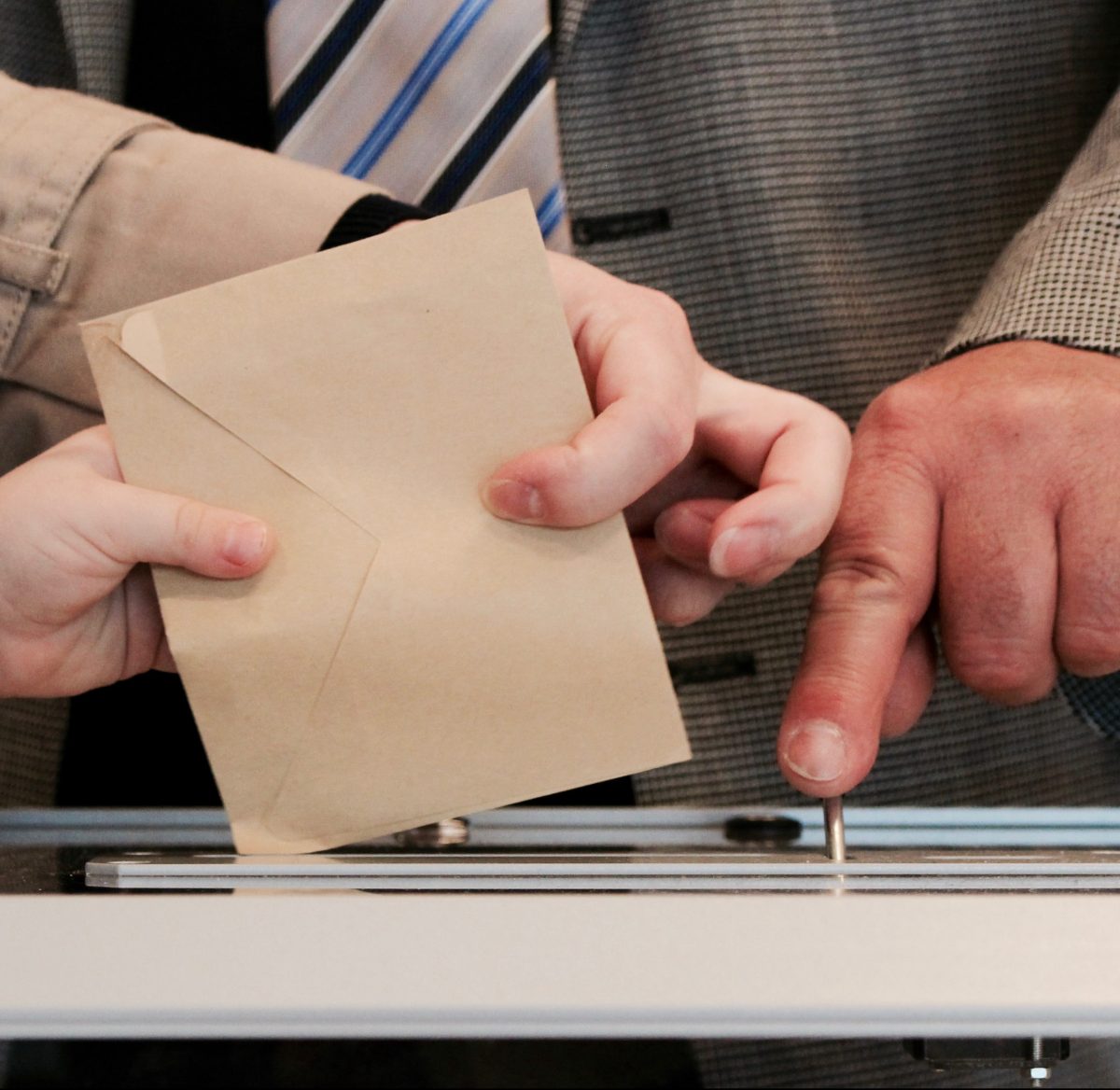
    October 21st, 2019 is a very important day for Canadians all over the country, it is our federal election. The party voted in will be the government in power for the next four years. It is our chance as citizens to voice our beliefs and vote for whatever party we feel represents us best.

    Many students around campus may not realize why they are continually encouraged to vote in the upcoming election. They may be asking themselves “does my vote really matter?”. The answer to that question is YES. Your vote is your voice and although there are reasons why people may not want to vote, there are also so many reasons why you should.

    “What is the point of voting when I already know how my riding will vote?”

    The biggest reason why Canadians tend to not vote is that they feel powerless as a single individual and assume that the riding they are voting in will inevitably vote for a specific party. It is important to remember that your riding may continually result in one outcome because the majority of the people voting in that riding voted for that specific party. This ‘inevitability’ can be changed with your vote. If everyone who thinks as you do chooses not to vote because of a consistent outcome, then, of course, things won’t change. However, if all these people, including you, decided to vote and share their voices then the party that the majority voted for in your riding may change. Don’t be deterred by your riding’s past. New people can vote every single year and it has been four years since the last federal election.

    Our school has partnered with the ‘Get Out the Vote Campaign’ in order to encourage Acadia students to vote. Their website goes over where and when you can vote on campus as well as what you need to bring in order to vote at the polling stations. Additionally, you can pledge your vote on their homepage. Doing so allows the campaign to gain an understanding of how many students from each university plan on voting. Acadia University is also competing against the other schools in Nova Scotia to see who gains the most pledges.

    Many students on campus have not been exposed to some of the parties or their campaigns yet. In order for those people to gain a full understanding of each party and their promises, a summary of all four major parties in Canada are listed below:

    Conservative Party of Canada

    In 2003 when the Progressive Conservative Party merged with the Canadian Reform Conservative Alliance Party, the Conservative Party of Canada was born, technically making it Canada’s newest party. This party in the words of their own mission statement primarily, “stand for sovereignty and a strong national defense; open federalism and national unity; free enterprise and individual achievement”.

    The head of their party, since May 27th, 2017, is Andrew Scheer. He has previously been an elected Conservative Member of Parliament (MP) from 2004 up until he was elected head of the Conservative Party. During his time in office, Scheer was elected Speaker of the House of Commons and served as Official Opposition House Leader. Scheer is currently running on his vision: “where taxes are low, government is limited, opportunity is unlimited, freedom is shared, and people are put before government!”

    Upon reaching out to Kings-Hants Conservative representative Martha Maquarrie, to ask her a few questions regarding her party and platform, The Athenaeum received no response.

    Liberal Party of Canada

    As Canada’s oldest political party, the Liberal Party of Canada is the current governing party. While this party can be traced back far in history, the principles of the party have always been based on the ideas of liberalism including individual freedom for present and future generations, a just society, political freedom, religious freedom, national unity, equality of opportunity, cultural diversity, bilingualism, and multilateralism. Modernly the liberals are a party that is not only fiscally responsible but socially progressive.

    The party’s current Leader is Justin Trudeau who has been the party leader since 2013 and the Prime Minister of Canada since 2015. Since taking office in 2015, Trudeau has completed some of the major promises he ran on in 2015 such as the legalization of marijuana. Trudeau has many ideas for Canada if re-elected and when asked why Canadians should vote for him? He replied that Canadians “are dreamers, innovators, builders. We know that in Canada, better is always possible. And we deserve a government that knows that too.”

    Kings-Hants Liberal Representative Kody Blois sat down with The Athenaeum last week and gave us some insight into the Liberal party and their platform. This enlightening interview with Blois will be shared next week and will be available on The Athenaeum website then for those interested.

    Canada’s New Democratic Party (NDP)

    Canada’s New Democratic Party was originally a socialist party, that went under the name of the Cooperative Commonwealth Federation (CCF), whose goal was to democratically get rid of the capitalist system and instead rely on a government-planned economy. Since then the NDP have moved in a more moderate direction with the goal of implementing social democracy with a mixed economy. Now, this party is considered quite similar to the Liberals in terms of their beliefs but are slightly more aggressive regarding their positions on topics such as non-interventionist foreign policy and higher taxation for the wealthier individuals.

    Jagmeet Singh has been the head of the NDP since October 1st, 2017 and served as a Member of the Provincial Parliament (MPP) for the Ontario New Democratic Party from 2011 – 2017. Only four years after working as an MPP, Singh became the deputy leader of the Ontario NDP and is the first non-christian person from a minority group to lead a party through a major election. Singh has previously said about his party, “The defining feature of the NDP – of every New Democrat – is that we are not only offended by inequality, we put everything we have into fighting it.”

    The Green Party of Canada

    Originally the Green Party of Canada was a one-issue party, only looking to raise awareness about the environment. When former leader Jim Harris took over the party in 2003, the Greens expanded from their one-issue ideals and began to market themselves as a center-left party. Since then the Greens have been slowly gaining popularity as they loudly voice their support for participatory democracy, nonviolence, social justice, sustainability, respect for diversity and ecological wisdom.

    Elizabeth May, current leader since 2006, was the Green Party’s first elected Member of Parliament. A frequent volunteer and protester, May received a degree in law and immediately began working on behalf of consumer, poverty and environmental groups. Since becoming MP in 2011 May has received many titles by her fellow MPs: Parliamentarian of the Year 2012, Hardest Working MP 2013, and Best Orator 2014. Additionally, Hill Times recognized her as the Hardest Working MP, Best Constituency MP, and Best Public Speaker in both 2013 and 2014. As the climate crisis becomes more apparent to citizens around the world today May states: “I hold a vision of this blue-green planet, safe and in balance… we are emerging to a new reality. We are ready to make the next leap – as momentous as abolishing slavery or giving women the vote.”

    Now that you are familiar with the basics of each party, you can go to this website which shows each parties’ platforms regarding important public policies, such as healthcare and education, for this upcoming election.
  • A Win on All Fronts

    A Win on All Fronts

    Maxime Bernier’s departure from the Conservative Party of Canada comes as no great surprise. Many Conservatives are worried this means a weaker party overall. I’ve heard numbers as large as ten percent of the Conservative Party base will support Bernier over their own party. However, I believe Bernier’s departure is a win for all parties in Canada, including his own. Here’s why it’s a win for everyone. 

    Liberals: Unsurprisingly, the Liberals win the most. The Conservative Party–with the exception of Jack Layton’s NDPs– is the only party capable of really challenging the Liberals in the upcoming election. Bernier’s departure must have certainly raised a few glasses as it almost guarantees Trudeau will see another term as Prime Minister. However, the Liberals must be aware that Bernier took a large majority of the far right vote. For the Liberals, this likely means that the Conservatives will shift slightly towards the centre. This could be an issue since that’s the voter the Liberals are trying to secure.

    NDP: Leader Jagmeet Singh can rest easy knowing he now only has to content with one major party to get elected as the NDP’s first Prime Minister. Additionally, this now means that the Liberal government now needs to defend from two major fronts.

    Conservatives: The Conservatives likely suffered the biggest blow with Bernier’s departure however it’s not all bad. Shear, whose leadership was questioned by some Mad Max supporters, now is the king of his own castle. In other words, he no longer has to worry about division within the party and the constant undermining of his authority as party leader. While this certainly will hurt when looking for votes it means that the party can focus on issues party members are passionate about. The result? A more united party overall, and policy that focuses more specifically on conservative issues.

    Bernier supporters: Free market enthusiasts can be rest assured that they now have a political party who wishes to pursue the glories of the open and free-market.  Additionally, parties seeking to secure an election will have to in some way address the economic values of Bernier’s supporters.It’s a win for everybody.

    Kyle Thompson-Clement is a fifth year Politics student and Opinions Editor of The Athenaeum

  • In Defense of a Centrist

    In Defense of a Centrist

    I am a centrist. For many in the world of politics that means I am apparently an unprincipled flip flopper who will go wherever the political winds take me. For them, my want to find a reasonable compromise is something dirty. I am writing this to call ‘bullshit’. Being centrist, the want to find a desirable outcome for all involved, is how empires are built. The world, including Canada, seeks the common ground, where we can work together, rather than tear each other apart. The strength of centrism can be proven in the three pillars: public policy, economic issues, international issues and social issues in both the proven success of the middle ground and the failure of extremes. 


    To spend or not to spend. That is the argument of the left and the right. That you either need to throw money at every problem or turn off the tap and let everything die. With Centrists, the plan is to invest. If we can improve something we put time, effort and resources into it and if it is a boondoggle we get rid of it. You see this in the success in thoughtful, moderate leaders. Internationally, Barack Obama brought the United States out of the worst economic crisis since the great depression, nationally, Justin Trudeau’s investments have produced the strongest economic growth in Canada in 20 years and locally, Stephen McNeil has put Nova Scotia into a solid financial standing over more than a decade of mismanagement under the Conservatives and NDP. Centrist policies and principles work, producing stability and confidence. 


    In the last 60 years, the global state has dramatically changed. Nuclear states have emerged, the borders of the world have been thrown into flux and the invention of the internet has made the world more connected than ever. The reactionaries on both side of the political spectrum would have you fear every twitch that changed the global balance but centrists have found the formula to lasting peace. Non-interventionists would have you believe that we need to cut ourselves off from the world, make sure no one can come into our borders, or in other words: making sure that you stay on your side of the wall. If we went with their way we would fall into chaos and the rest of the world would continue. On the flip side, there are those who want to cut nations off from one another and over exert their control, creating foes rather than friends. As a moderate, I have seen the success of seeking change through dialogue, finding accommodations that promote cooperation, prosperity, and peace. We find the proof in the Iran Nuclear Deal, the NAFTA agreement and the Paris Climate Accord. Ending conflict with words rather than bricks that would be thrown or used to build walls. 


    Finally, we come the numerous problems that plague the fabric of our social infrastructure and our mortality. We on both sides of the political spectrum hurl insults at each other rather than offer solutions. The societal wrongs that we faced are viewed as a weapon in the political blame game rather than challenges to overcome. Centrists have been able to largely duck the mud being thrown. We work hard for the necessary changes, building a foundation to grow rather than trying to fix everything in one big swing of a sledgehammer. It is probably the thing that makes centrist so unloved sometimes, because we offer reality and hard work rather than the quick fix. In the battle for civil rights, marriage equality and more we see that the ultimate victory was not won over night but in hard, incremental steps because society is often unready for a big leap. It can be the harder and the more frustrating route but is the right one. 


    Left, right, tradition or change there always seems to be a balance somewhere that moves us forward but also closer together. We must respect each other, but be bold enough to make new strides. It is the imperfect perfection of moderation, the only proven method of progress and stability and it is why, despite the naysayers, I am sticking by it. 


  • Budget 2016: A Growing Concern

    With all the salacious news stories covering the United States’ elections, it is easy to forget that the Minister of Finance, Bill Morneau, has presented his first federal budget – the first of the new Liberal mandate. A federal budget is a complicated piece of governmental policy, but is an effective way for governing parties to translate their ideology into public policy. Each budget is hundreds of pages long, and covers numerous issues. I will glance over the most prominent points of this budget for students, but more important than those individual pieces is the politics behind it all.

    In their press release, The Canadian Alliance of Student Associations (CASA) highlighted the positives and negatives of the Liberal budget as it pertains to student issues. On the positive side, the Liberals have increased the maximum Canada Student Grant amount for low and middle-income families by 50%, increased the Repayment Assistance Plan income threshold to $25,000, and increased work integrating learning opportunities for greater employment outcomes. However, according to CASA, the budget fails to address the increasing financial need of graduate students, and while it does invest $8.4 billion for Indigenous peoples, the budget does not explicitly remove the 2% cap on annual increases to the Post-Secondary Student Support Program for First Nations students.

    What is really troublesome with the Federal Budget is the deficit that the Liberals are projecting. As everyone knows, the Liberals broke the mould during the federal elections, when they promised a $10 billion deficit for the next three years instead of pledging to balance the budget as every other political party had pledged to do. The deficit was pitched as a means of stimulating the economy with targeted spending on things like green and social infrastructure, and the Liberals added an additional promise of returning to balanced budgets by the end of their mandate. Voters overwhelmingly accepted their pitch, as a Liberal majority government was projected after all of Atlantic Canada went red. The Liberal’s infrastructure spending came through, however the promise for a modest deficit did not.

    Instead of a $10 billion deficit, the Liberals are projecting a $29.4 billion deficit for 2016-17. Additionally, while the Liberals had promised to return to a balanced budget by the end of their mandate, they are now projecting a $14.3 billion deficit for 2020-21, with no stated plan to return to a balanced budget. The budget has been praised by some for being the most progressive federal budget ever seen, and many have recognized that the projected deficit of $29.4 billion is a consequence of the Liberals efforts to keep their many progressive campaign promises, after they were given the lack-lustre books by the outgoing Conservatives.

    However, during the campaign, then-Prime Minister Stephen Harper openly mocked Trudeau’s promise to run three modest deficits, and former Conservative Finance Minister, Joe Oliver, recently said the most difficult yet important skill in drafting a budget is the ability to set priorities. The Liberal deficit could be seen as an inability to set clear priorities and be fiscally responsible. Whether a $29.4 billion deficit is still a modest, or even a necessary one, the inability to set more clear priorities and stick to the promised $10 billion deficit allows the Tories to paint the Liberals as reckless and irresponsible spenders. With their overwhelming majority in Parliament, the budget will pass without issue. The only actual opposition will be rhetoric, since neither the NDP nor the Conservatives have the numbers to vote it down. What the budget needs, though, is follow-through. If the deficits are manageable, and help grow the economy, the Liberals win. However, if the deficits continue to grow and add to the national debt throughout the Liberal mandate, then a reactionary wave of new conservatism may rise as a result.

    I would like to reject the notion that the only political decisions that affect students are PSE related. The economy affects us all, and students are not immune to its ups and downs. Before we are students, we are Canadians, and we should care about the political decisions that are being made, not just decisions about education. Student issues are important, but students should be politically literate on all issues so we may have a more responsive political system. I would argue that it is beholden of us all to have some sort of opinion on the Liberal deficit – positive or negative – because federal spending affects everyone in one way or another.

Betzillo positions itself as a versatile gaming hub where structured bonuses and adaptive gameplay mechanics support both short sessions and extended play.

Built with a focus on innovation, Spinbit integrates modern casino architecture with rapid transactions, appealing to players who value speed and digital efficiency.

Ripper Casino emphasizes bold entertainment through high-impact slot titles and competitive promotions crafted for risk-oriented players.

A friendly interface and stable performance define Ricky Casino, offering a casual yet reliable environment for a wide spectrum of gaming preferences.

King Billy Casino channels classic casino spirit into a modern platform, delivering recognizable themes supported by contemporary reward systems.

Immersive visuals and layered slot mechanics are at the core of Dragonslots, creating a narrative-driven casino experience.

Lukki Casino appeals to players seeking direct access and minimal friction, focusing on fast loading times and intuitive controls.

Casinonic provides a structured and dependable gaming framework, blending modern slots with transparent operational standards.