Tag: identity

  • My Glasses

    My Glasses

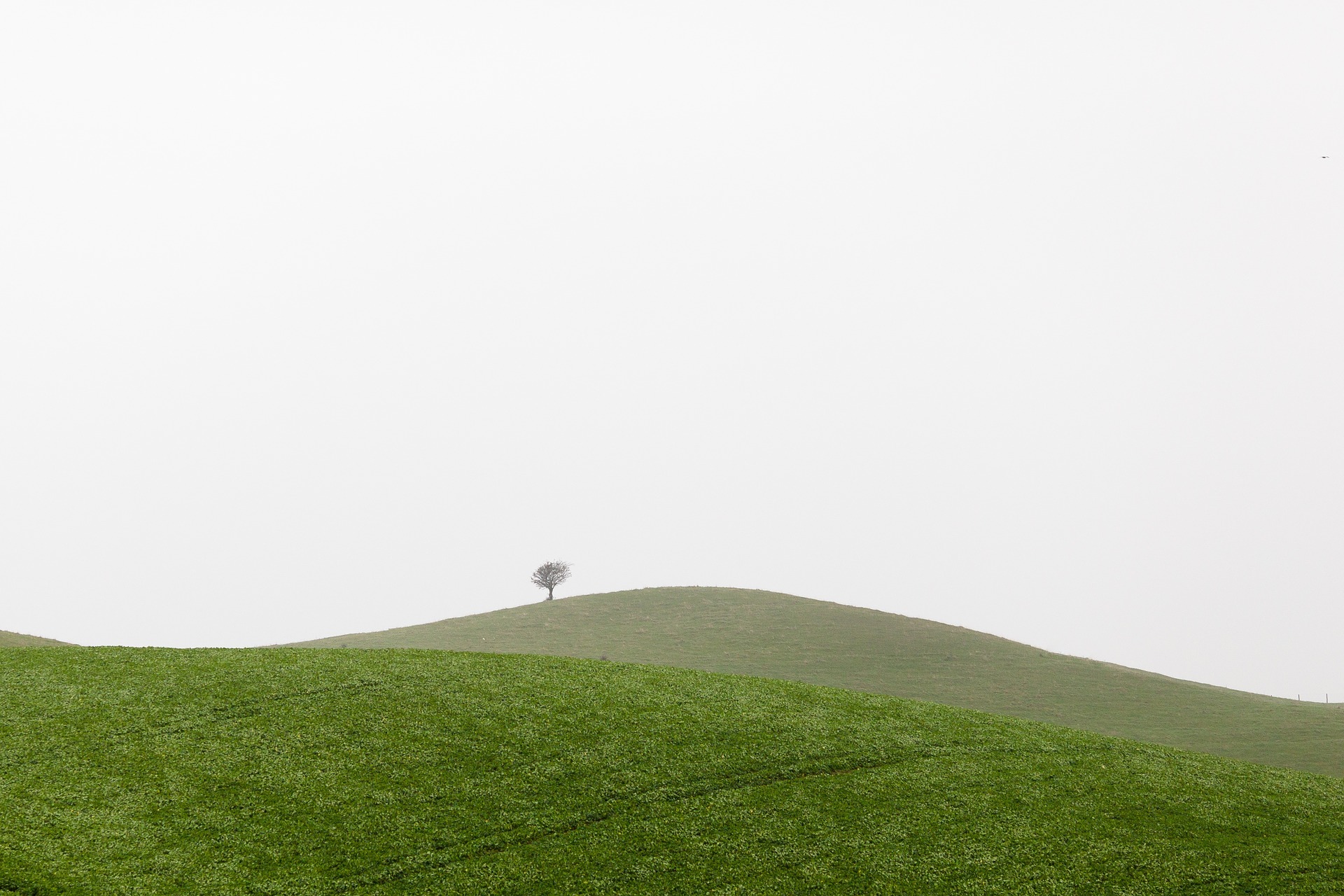
    Photo by Anne Nygård on Unsplash


    I’m taking a moment to remove these glasses I wear because currently I do not need them to see what I see, but I wonder if you do?

    What makes a person human?

    What entitles them to certain treatment?

    What entitles them to the refusal of your acknowledgement?

    Life on its own has value. I do not need to be a king for you to see my value. I do not need to come from a country with resources for you to acknowledge my value. I do not need to have the same skin tone as you to deserve your recognition. I do not need to think the same way as you, to enjoy the same rights as you.

    I should receive your recognition simply because you can see me for what I am: a person, a complex human being, just like you.

    Cut me and I will bleed the same way you do.

    Hurt me, and I will cry just like you.

    Hurt my loved one, and I will pursue you the same way you would pursue me had I done the same.

    It’s human nature to seek justice. I’m not perfect, but neither are you. I’m not a saint, but I want to do good. I’m in pain, but I want to forgive. I’m not much of a talker, but I want to listen to you.

    The question is, do you know this?

    A long time ago, you came, and saw value in my land. You saw value in my people as a whole, but not as individuals. You came to use me as a means to your own end.

    I was never perfect, we were never perfect, but we were a people, with our own values and way of life.

    How dare you treat us as anything less. Some people believed in your ideologies, some people believed in your prosperous and fruitful nature.

    Some people believed in the wealth you brought, but some had questions that made you uncomfortable and unwilling to answer.

    Some people saw you as different. Some saw you as dangerous, but you were still a person. You were a person, a part of a people that chose to use me and my people as a means to an end. And in doing so, you denied me the value of my life.

    Let’s fast-forward to this “progressive” period of time we live in. You are still the same, you are still doing to me, what you did before. And will you continue to do this in the future?

    The perceived differences between you and I are no longer just skin deep.

    You still deny me, us, they, the right to be human. The right to be ourselves, to express our individuality.

    The right to give ourselves our own definitions, but we’re too concerned with what you see in us. I want to be free, but I find myself searching for that freedom in you. Why?

    Why am I like this?

    Is it because we know of the system you have established that makes you the center of attention?

    Is it because some people are still waiting for your apology?

    Or is it because I’m still waiting for you to acknowledge me as a person?

    Look at me and tell me what you see.

    Do you see your history? Are you ashamed of it? Or are you scared of it?

    Are you scared because the road to freedom and recovery is not as easy as you first thought?

    Can you stomach the transgressions that you committed, are committing and will commit simply because you cannot see you in me?

    Or do you not see anything wrong in your past? In my past? In their past?

    Some people want blood for the blood they shed at your hands.

    Some people want monetary compensation for the damage you brought.

    But at the root of it all, we want you to see us for who we are: humans, people, individuals.

    We have value, just because we exist.

    You can’t erase us, no matter how hard you try.

    You can’t forget us, even when you choose to turn a blind eye or give a cold shoulder.

    I am not part of your background, nor am I part of my own.

    I am the centre of my story, an undeniable feature in yours.

    A past written in pen, that you cannot erase.

    A future not yet set in stone but a presence that will continue to remain.

    I am all the people that have died at your hands, are dying at your hands and will die at your hands simply because you refuse to see them not as people, but as objects to be used for your convenience.

    I am the tears of many that cry at night because they don’t know what else to do.

    But I am also the flame of hope you will never snuff out, no matter how hard you try.

    I am also still an individual, I am me. Can’t you see?

    I care for my people as whole, I care for that person as an individual that you refuse to acknowledge.

    I care for my nation, just as much as you care for yours.

    The only difference is that I see you as a person. I value you simply because you are alive. I do not wish to take that away from you. So why do you think that I am not entitled to the same?

    Maybe the first question I should have asked is do you value yourself?

    Do you see your worth?

    Do you see at all?

    Or should I give you my glasses?


    Ruvimbo Z. Chipazi is a 3rd year Psychology student and the Art & Culture Editor for the Athenaeum 

     

  • Apart of the Eh Team: Are you Canadian or are you just passive aggressive?

    Apart of the Eh Team: Are you Canadian or are you just passive aggressive?

    “I mean, sometimes…. I even apologize when people bump into me”.


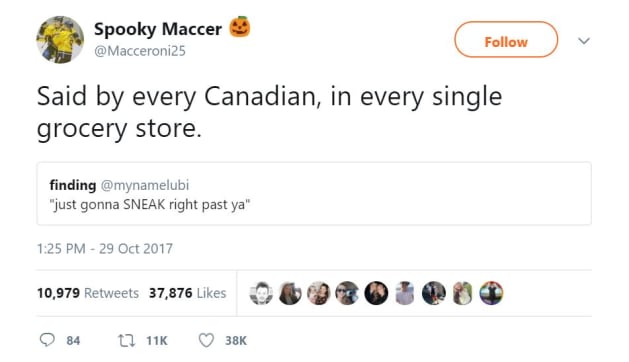
    If I had a loonie for every time that I have overheard a Canadian throw this anecdote in the face of any non-Canadian, then I would be as rich as the Weston family and have enough dough to start my own bread cartel. It is usually said in a matter-of-fact- tone, as if this process has just dawned on them. In a tone that sounds something like: geeeee whiz, you know what I do along with thousands of other Canadians that I just realized?! I say sorry all the time! Isn’t that just the most precious thing that you have ever heard in your life? Awww, please give me all of your love and admiration via Canadian Tire money. Give me all of da love.


    What is missing from the context here is the conversation that one may have with oneself, a co-worker, a confidant, or possibly the cashier passing you your sacred double-double that occurs when someone does not offer an apology back for said “bump”. The “Can you believe that?” moment is not a part of the public or global conscious at all. The realization that they are not going to receive an apology from the person will outrage you. Or, that a stranger will have the audacity not to return your unsolicited friendly smile.  See ya, nope. Please be nicer to me even though you owe me nothing as being a complete stranger. The way to break a Canadian’s heart is not to say “Well I’m not sorry” or don’t say anything at all. Ever.


    There, it’s out there in the world. I guess I am the Canadian whistle-blower on politeness (or would it be called a bear bell for us?).  Contrary to popular belief, it does happen all the time, this outrage of lack of polite reciprocation. But don’t tell the Americans this. We might lose our “nice” status. I think we might just be full of pent up anger that we don’t get as much attention as our neighbors south of the border – so we hide behind this nice guy façade. We are all tiny angry men on the inside.

    We are assuming the nature of the Canadian with this stereotype. Which is great for the Canadians, and I really should not be complaining. But, self-reflection, and the self-poke is what most Canadians are addicted to. Look at how much we love Letterkenny! That show is addictive! We love the self-reflection. We love that show because television is never about us, and when it is, usually things start to get weird after a couple episodes. It’s just the one time that it didn’t get weird. I mean we can thank the CBC for that and the original content on Canada. I love Murdoch Mysteries but America seems to know how to do a period piece better than we do from time to time, every time.


    So why don’t we execute some hypothetical self-reflection. I feel like the most Canadian thing to do is start arguing that we really aren’t that nice.  I am predicting that if we weren’t so passive aggressive with our apologies, and started saying “Well I mean we really aren’t all that nice but it’s a nice rep to have” then the narrative would go something like:

    American bumps into Canadian co-worker as they both walk into the office kitchen.

    “Oops, sorry there bahud!”, says the Canadian.

    “Oh, you crazy Canadians always saying sorry!”

    “Sorry!”, the Canuck says laughing with a small single-eye twitch as a small piece of their maple flavored soul floats away into the ether as they know what is going to be said next.

    “Did you just apologize for saying sorry!?”, the American asks. “That’s too good!”. The Canadian gives up.

    “I can’t change who I am Bill, and if you can’t accept that I am a passive individual who can’t cope with their constant lack of identity and feels intimidated by the patriotism of Americans, then you can just leave me alone. I just can’t lie and live like this anymore, eh. I only played hockey for a year. I think Tim’s tastes like burnt unfulfilled dreams. I have no idea why you can’t name one province, and for some reason that makes me want to take all of your pets hostage until you can name all of them.  I want to be an asshole to Karen 87% of the time, but I don’t because I don’t have enough confidence to, and I am culturally required to be kind to people to their face so that I can travel and not be confused with your nationality. Personally, I think she over feeds her cats and she nods to Fox News way too much for my comfort, and…”, he utters one more fatal time

    “…sorry that’s just how I feel”. His head then explodes and fairies on Zambonis come in and clean up his remains and apologize for the inconvenience of their existence.


    Right, ok so there is no way out. Nevermind.
    I guess what I am trying to say here is sorry. Sorry for being so passive aggressive. Sorry to other nice countries who don’t get their fair due in politeness. Sorry to the international students who must listen to this garbage all the time about how nice we all are supposed to be. I am so sorry that Americans will never take us seriously. But the best we can do is just ride this pony into the stormy sunset. Cheers.


    Also just going to leave this right here:

  • Opinion: Black History Month

    Opinion: Black History Month

    Various countries, worldwide, have dedicated the month of February to celebrating blackness. Though such countries refer to such celebrations as different things, I prefer to use the term Black History Month.

    In Canada, February is known as African Heritage Month and although every black individual’s ancestry could be traced to a specific country(s) in Africa, not every black individual identifies with their African roots. The African diaspora has lead black people living in different places to create their own cultures. They were forcefully taken away from their homeland, to a foreign land, and although people tried to retain the culture of their homeland, the diversity of the cultures present, lead to the creation of new cultures instead.

    The African diaspora, the reason why a month has been dedicated to celebrating blackness, is a result of slavery. Calling it African Heritage Month, in my opinion, ignores the reason behind its inception. Black History Month is a chance to celebrate the diversity of black culture. Most individuals believe that being black is a personality trait or characteristic. Black History month is a time to remind individuals that although blackness is a part of identity, it is not the only thing that defines an individual.

    Nendelmwa Gofwan is a Politics and Sociology major in third year and is a member of the Black Student Association at Acadia.

  • A Space for Aces in the Media

    A Space for Aces in the Media

    Content warning: aphobia, sexual coercion. 

     It’s no secret that representation of the LGBTQ+ in mainstream media often varies from non-existent, or inaccurate, to problematic and damaging. While it may not seem like a huge deal in comparison to the countless other injustices the community faces, representation in the media matters. Being able to see part of one’s identity in the media can help to alleviate feelings of isolation and being different. Individuals may also more easily identify and come to terms with their orientation when they see it reflected in those they admire on screen. 

    To find their identities represented, LGBTQ+ individuals will often have to leave the pop media and go to niche comics, books, and online videos. For example, in the recent revitalization of the Archie comics, fan favourite Jughead, was recently revealed to be asexual (and likely aromantic). However, even these niche areas aren’t safe from the film industry’s erasure: during the new television adaptation of the comics, Jughead is shown to no longer be adverse to romance, and the show’s creators say that he is not asexual, despite the outcry from the asexual community.  

    While one could fill many encyclopaedias on the topic of LGBTQ+ representation in the media, I’m going to be focusing on examples of asexual representation that have stood out as particularly problematic.  

     Asexuality 101 

     Asexuality is an orientation characterized by a lack of sexual attraction that, like all sexualities, exists on a spectrum. In other words, some people identify as grey-asexual and may feel sexual attraction on rare occasions, while others identify as demisexual, cupiosexual and more. Now for chapter two on asexuality: there are many ways to experience attraction. This means that someone who is asexual may be panromantic (romantically attracted to all genders), heteroromantic, homoromantic, aromantic (no romantic attraction), or any other orientation. The final lesson on asexuality is that while a lot of individuals who are asexual aren’t interested in sex, there are also many who still physically or emotionally enjoy it and have a high libido. 

    (To learn more visit the Asexual Visibility and Education Network’s website, or stop by the Peer Support Centre in the SUB.) 

     Alright, now that the basics of asexuality are covered, let’s look a bit at how asexuality is shown in mainstream media on the rare occasion it’s there at all. Often, when there are asexual characters in shows, their sexuality is dismissed, mocked, seen as a medical condition, or invalidated through consistent pressure for sex. How about we take some time now to look at some examples of these characters on screen? 

     BBC’s Sherlock 

     One of the first examples of asexuality that people often point to in the media is Sherlock Holmes of the popular BBC show Sherlock. While many fans believe that he is asexual and aromantic, Steven Moffat, a writer and producer for the show, has said that Sherlock is not asexual and that he doesn’t date so he can stay focused on his work. Moffat then goes as far as saying that it wouldn’t be fun if he were asexual because there wouldn’t be any tension. While it may not seem like a big deal, this mentality is seen throughout the film industry making it hard for those who are asexual to receive the benefits that come with seeing your orientation represented on television, which are benefits that cisgender and heteroromantic/sexual people experience daily. Besides, if the only thing that makes a character entertaining is their degree of sexual attraction, maybe it’s time to look at adding a bit more personality into the mix. 

     House M.D. 

     Another place that asexuality has come into the limelight was on the medical drama House M.D. When two patients come into the hospital for a clinic appointment, Dr. House learns that they are asexual, and quickly sets out to prove that there is a medical reason for the couple’s orientation. By the end of the episode, House finds a tumour in the husband’s brain that is suppressing his libido (libido is often separate from sexual attraction) and learns that the wife was lying about her sex drive to make her husband happy. The main issue here is that this story implies that asexuality is a medical symptom or condition that needs to be fixed, a message frequently sent to the asexual community. This reinforces the misconception that asexuality is not natural and that there is something wrong with an asexual person. This can be emotionally damaging, isolating, and for some it can make visiting misinformed medical practitioners a more nerve-wracking experience than it already is. 

     The Big Bang Theory 

     In the TV sitcom The Big Bang Theory, Sheldon Cooper is often believed to be asexual and likely aromantic, something that is regularly used as a running joke. In later seasons, however, some darker undertones begin to emerge within his relationship. Sheldon eventually finds himself in a romantic, but non-physical relationship with a fellow scientist named Amy. For a while, it was refreshing to see an asexual, and possibly aromantic character in a relationship that worked for them. Unfortunately, as the show progressed, Amy made regular sexual advances towards Sheldon, something he regularly ignored or said he was not interested in. After several seasons of consistent pressure from Amy and Sheldon’s friends for him to sleep with her, he eventually does. While they may show this relationship in a light manner, it is important to be aware that pressure to perform sexual acts, coercion, and sexual assault in an attempt to ‘fix’ the person’s asexuality are serious problems within the asexual community. Subtle messages on shows such as this add to a culture that often views sex as being something that is an obligatory part of a relationship regardless of one’s comfort zone and preferences.  

     So What? 

     All of these examples from mainstream media are part of the reason why having asexual and aromantic characters in healthy romantic, sexual, and platonic relationships are so important. It means telling those who are struggling to come to terms with their identity that they are not broken, their identities are valid, and they are worthy of healthy and supportive relationships. When television shows and individuals shrug off the importance of having asexual characters like Jughead, that’s more than just a decision to make the character more ‘interesting’. That choice has real world consequences and perpetuates the misconceptions and dangerous ideas about asexuality that are shown in the media. I for one say it’s high time that we start demanding better representation in the media, not only for asexual individuals but for all underrepresented and marginalized groups. After all, doesn’t everyone want to see themselves reflected in the hero on the screen? 

  • Over the Hills

    Over the Hills

    “Olkinyei in Maasai” is the name of a shrubby tree that grows behind the Mara plains, a place so beautiful and fast that it feels like the end of the world. I stand on a property that my parents told me would be my new home. Looking around, I see beautiful green rolling hills. I feel the strong wind swaying and I admire the way the sun bounces off the hills. Olkinyei is the place I feel most content, because you don’t have to maintain your identity – there is only freedom.

    “Who am I?” Every person asks themselves this question, but what if there was a place where you could be whoever you want to be? Olkinyei is the one place that you don’t feel bound or subjected to the identity that you spend your whole life developing, but rather you create a new one. The last three years I have tried to figure out my identity, but at Olkinyei I have the freedom to create my own. I dream of being great, having a family, and dying with a legacy.

    One of my teachers asked me to define freedom. It took me a long time to answer the question, but I believe that freedom is the ability to change your identity. To most people, changing your identity means that you have to move somewhere new, but to me Olkinyei is the ultimate escape. In 2008, Kenya suffered post-election violence. Of the four who were chosen to be charged on crimes against humanity, two are now the top leaders of the nation. Recently, I wondered where they find their ultimate escape. Where do they go to remind themselves who they truly are? Many people are not as privileged as I am. Some are too poor to change their status, others are so imprisoned by their identity that they have lost who they truly are. Olkinyei is a place that I can lay in the grass and stare at the clouds mindlessly. A place I call home.

    Who am I truly? I am an independent young woman who strives to be a better person by doing the small things in life. I strive to love like a mother loves a child, to work hard like my heroes, and enjoy each day. Olkinyei provides a wonderful escape from reality. What are we without our identity? Olkinyei has helped me realize that I can be content anywhere in the world, as long as I am able to dream. I will have to find myself another place to call home, another place my heart will feel content.

Betzillo positions itself as a versatile gaming hub where structured bonuses and adaptive gameplay mechanics support both short sessions and extended play.

Built with a focus on innovation, Spinbit integrates modern casino architecture with rapid transactions, appealing to players who value speed and digital efficiency.

Ripper Casino emphasizes bold entertainment through high-impact slot titles and competitive promotions crafted for risk-oriented players.

A friendly interface and stable performance define Ricky Casino, offering a casual yet reliable environment for a wide spectrum of gaming preferences.

King Billy Casino channels classic casino spirit into a modern platform, delivering recognizable themes supported by contemporary reward systems.

Immersive visuals and layered slot mechanics are at the core of Dragonslots, creating a narrative-driven casino experience.

Lukki Casino appeals to players seeking direct access and minimal friction, focusing on fast loading times and intuitive controls.

Casinonic provides a structured and dependable gaming framework, blending modern slots with transparent operational standards.