
Tag: interview

  • Sugar is Nice for the Right Price: An Interview with a Sugar Baby

    Sugar is Nice for the Right Price: An Interview with a Sugar Baby

    A few days before this interview took place, I was complaining to a friend about my current financial situation as students so often do. But instead of joining in, as students so often do, she turned to me and instead said “You could always be a sugar baby. Worked for me”. I had questions. Questions that she has agreed to answer and let the good people of Acadia read.  

    For reference:
    SB=Sugar Baby
    SD= Sugar Daddy
    Sugar Bowl=Sugaring lifestyle
    STA=short term arrangement
     

    I know you’re a little nervous about this interview. Just know that it is completely anonymous, and you are under no obligation to answer anything you feel uncomfortable with. First, tell me why you felt compelled to do this interview with me.  

    I mean, when I shared with you that I’m sugar baby I did it because I know you’re a very accepting person. So, for one, I feel comfortable with you. But I also thought it would be a good way to clear up some stereotypes of what a sugar baby is and what they do. I’m not like ashamed of it.

    Thank-you! Yeah, no judgements on my end. So why do the interview anonymously then if you’re unashamed? I know that sounds like I’m attacking your motives, but I’m definitely not. Just want to get the entire picture. 

    Oh, for sure, no worries. Honestly, I just don’t want my professors or employer to find out. I can take criticism from peers, but when stuff like this starts becoming an issue in other parts of your life like with school or your job, it really isn’t worth it. I want to be evaluated on my work ethic, not my uh other work ethic. That was a weird way of putting it, but you get it right? There are stereotypes that come with being an SB, and I don’t want those stereotypes popping up at my job or in class. 

    Yeah, there are definitely some negative connotations associated with the sugaring community. Let’s chat a bit about the most popular one being that people would think you are essentially a prostitute.  

    Okay well I don’t think of myself that way, but I can understand why people would. I’m not here to argue about why I would or wouldn’t be considered one because once people hear the words sugar baby, they have already made up their minds. Nothing I say will change that, and it really isn’t any of my business what other people think of me. All I can do is say what I need to say and not dwell on it. And what I have to say is that sex work is valid as long as it is safe and a consensual situation. With that being said, I actually haven’t had sex with my SD.  

    Would you mind elaborating on what you do with him? 

    Yeah, we go on dates and just hang out a lot. We meet for drinks, dinner, plays, whatever we are in the mood for that day. He recently surprised me with concert tickets. We have fun together, and I am in no way obligated to sleep with him. The topic of sex hasn’t even come up. It’s been 4 months of just seeing each other. 

    What you just described to me sounds like what I do with my friends. Would that be a fair comparison? 

    Absolutely. Only, I get paid for it. Don’t get me wrong, there are many arrangements out there where there is sex involved. It would be dumb to think there isn’t. But for me, and a lot of others, it’s just platonic.  

    Speaking of getting paid, do you mind sharing how much you typically make from being a sugar baby? 

    That depends on how many times I’m able to see him. We both have busy schedules, but we try to make time at least twice a month. So, on those months I’m making around $500. If I see him more often, I get more money.  

    Wow, that’s pretty good money for just spending time with somebody.  

    Oh, I know girls who are making thousands a month. 

    Is the money what attracted you to the sugar bowl? 

    Yes, and no. I don’t need to tell you what life for a poor student is like. Of course money was the reason. I have bills to pay, loans to pay, and sometimes I like to buy groceries. I was getting by, but I was working 40 hours a week at 2 part-time jobs while also doing 6 classes. It was shit. Absolute shit. I could either do well in school or have enough money to get by, but not both because it was too much to juggle. Then I found out about being a sugar baby, and it felt like the best solution for me. I was able to quit one of my jobs and now I have more time to focus on school. Let’s be real, who wouldn’t want to get paid for just hanging out with somebody? I think a lot of people would. They just won’t because of the stereotypes. 

    Let’s talk about the no. You said “yes, and no” to the question of whether money lead you to becoming a sugar baby.

    Well money was the first thing on my mind, but I also liked the idea of socializing with a man knowing that sex isn’t an issue. No strings, no pressure. He wants to spend time with me obviously, because he is paying me for my company. It’s weird though because I have to always remember that there is a line between friendship and business, you know? Plus, he actually likes to do fun things. All anyone ever does here is get drunk, go to The Vil or wherever, hook up with each other, and repeat. It’s sad. And boring. It’s expensive. This way I can get out of Wolfville and do fun things, meet interesting people, and I’m not breaking my bank to do it. 

    Do you ever feel shallow for just hanging out with somebody for their money? 

    I used to, when we first started. But then I reminded myself that this is a consensual arrangement. I’m not like, leading him or anything like that. He wants to spend money on me. It’s a business arrangement. I’m providing him with a service he needs, and I’m getting compensated for it. It is what it is. 

    I’m going to repeat something I heard recently, and I would love your honest reaction. You cannot be a feminist and be an SB. 

    Yeah, I call bullshit. Who is anyone to tell me what I am and what I can’t be? My body, my life. I am a sugar baby and, yes, I am a feminist. Just because I get paid for what everyone does on a daily basis means I’m not? So dumb. If anything, it’s unfeminist to say that I can’t be a feminist for choosing what to do with my life, finances, and body.  

    I guess an argument supporting that you can’t be a feminist comes from the idea that you are participating in a culture that perpetuates the sale, sexualization, and oppression of women. What do you think about this? 

    I’m not being sexualized, and I’m sure as hell not being oppressed in the arrangement. I don’t think a lot of people realize that I’m the one calling the shots here. I get to choose what I’m comfortable with and when to walk away. I’m not trapped. I’m not being used. And there are tons of males who are sugar babies, so that argument doesn’t even make sense. As for the sale of women, technically we’re all for sale. We all get paid for something, there’s something about each of us that has been sold, and it isn’t gender specific, you know? Some people sell their manual labour, some people sell their music, some people sell clothes, whatever. I’m doing the same thing, only I’m selling my companionship. Take it how you want, I really don’t care. Doesn’t change the fact that I’m making money and paying my bills just like everyone else.  

    Is that how you spend your SB money? On bills? 

    Yep. As soon as he pays me, I go through my list of bills: rent, WiFi, power, phone, loans. If I have anything left over, groceries. After that, whatever I do with the rest of my money is my business. What’s nice about my arrangement though is that I get paid on top of what he gives me. So sometimes he’ll give me a gift of buying my groceries for the week, and then I still get the same amount of pay. It really takes some stress away. 

    Besides myself, do any of your friends or family know what you do? 

    I’ve told a few people, and I usually get the same kind of reaction. Shock, a little bit of a lecture, and then either acceptance or straight up verbal attacks. I’ve learned to not tell people anymore. It’s funny because if my friends ask where I go all the time I just say that I’m dating somebody. Then they ask where I got my new clothes or whatever, and I say that the guy I’m dating bought it for me. They’re like “oh wow so lucky, I wish a guy would buy me things”. But then if I were to say that he also pays me to spend time with him, all of a sudden things change and I get a lecture about my safety or some shit. 

    Have you ever been concerned about safety? 

    No, not at all. If I ever feel uncomfortable at any point before actually meeting the guy, I bail. If I ever get weird vibes at all, I bail. I went through what you could call an interview process with at least 7 men before finding one who vibed with what I wanted out of this.  

    I mean, obviously you’re safe but you have to admit that there is a risk with this kind of thing. 

    Oh, absolutely. 100%. I’m not saying it isn’t dangerous, because it is. I’ve heard some horror stories from other women for sure. But if you really think about it, is it any less dangerous than online dating in general? Tinder maybe? Same thing, I’m just getting paid. 

    Fair enough. Is there anything else you would like the readers of The Ath to know? 

    Sure. I’m not on social assistance, I do in fact have a real job, and no I’m not spending all my money on drugs. This is an STA so I can get through my undergrad without being homeless.  

    Are these some of the judgements you’ve been met with? 

    People end up thinking of me the same exact way Hollywood thinks of prostitutes but trust me, I’m fine. People are quick to judge, but at the end of the day I’m paying off my line of credit while they’re giving me dirty looks. It’s whatever. They think I don’t have self-respect but the funny thing about self-respect is that it is a personal thing and no one can define it for me but me. 

    And on that note, I would like to thank-you sincerely for doing this interview with me. What do you think the Acadia community response will be to this interview? 

    Some will love it, some will hate it, some will think it’s stupid. I bet a lot of readers will look up some Sugar websites though.  

  • Fog Off

    Nolan: Hello Alex, thank you for joining me today. Would you mind telling us a little about yourself?

    Alex: Thank you for taking the time to talk to me. I am a third-year sociology honours student, and I am a Brand Ambassador for Fog Off Clothing Company. I am a proud Maritimer, and I find it hard to describe myself on the spot [laughs].

    Nolan: Good thing I know a thing or two about you. Can you tell us more about Fog Off?

    Alex: Fog Off is an Atlantic Canadian clothing brand that started in 2014. Fog Off donates ten percent of their sales to the Mental Health Association and/or Mental Health Foundation in each province. They are not just using their brand to create discussion and change surrounding mental health, but their goal is also to give back to the cause.

    Nolan: How long have you been a Brand Ambassador for Fog Off?

    Alex: I have been an Ambassador since February.

    Nolan: Good for you. Do you mind elaborating on the company’s mission statement?

    Alex: Sure. Fog Off is trying to send a message that everyone can relate to. We all have mental health, and we all struggle with our mental health at some point in our lives. Fog Off defines this as a ‘Mental Fog,’ which may include stress, depression, anxiety, bullying, sickness, addiction – you name it. If we are not struggling, we know someone who is. The goal is to spread the message that ‘no one has to walk along a foggy path alone, but also that fog eventually lifts’.

    Nolan: This sounds like a wonderful cause. How can we get involved or help contribute?

    Alex: Well, I believe that a major part that everyone can help with is creating discussion. I will say that overall, Acadia students are doing well in this respect. Sharing individual stories with each other is a major part of that discussion, and you can always share your experiences anonymously if you are uncomfortable speaking your mind. Fog Off Clothing donates ten percent of their sales to mental health initiatives, and I strongly suggest checking out their website to see their products online, or at their partner store Psudio.

    Nolan: That sounds wonderful. What is the website address, and what type of products are available for purchase?

    Alex: The website is www.fogoffclothing.com, and they have everything from anchor bracelets, to doggy bandanas, sweaters, t-shirts, car decals, toques, and lots of other awesome products. On their website, they also have a link to the story behind the brand, and the associations, foundations, and societies that they support. Also, if you make a purchase online, you can receive 10% off your purchase by using my promo code: Pulchny001.

    Nolan: Would you mind sharing your experiences with mental health and why you wanted to get involved with Fog Off?

    Alex: Sure, when I was younger I never understood the concept of mental health. I thought that you only had mental health if it was something that you struggled with. As I was growing up, I watched my sister go through some tough times with her mental health, and it made me weary of talking about my own. I was afraid that if I was open about it, I would be labelled and people would treat me as such. I still find labels hard to deal with which is why I got used to bottling up my emotions. Now that I understand the concept of mental health better, although it is still difficult to talk about my feelings, I can now discuss them with a handful of my peers. When I heard that Fog Off Clothing was in search of Brand Ambassadors, I jumped at the chance. Acting as a Brand Ambassador has provided me with a medium to discuss mental health and help end the stigma surrounding it. The opportunity also provides me with the chance to meet people who are open to discussing mental health and their experiences may be similar to my own. If they have different stories it broadens my perspective on the topic. The Ambassadors are all extremely supportive of each other, which makes it a great community.

    Nolan: Thank you for sharing that. I too used to have a misunderstanding, if you will, of the concept of mental health. I too realize now that mental health impacts us all, and that labels can be discouraging to some. What advice do you have for anyone who finds it difficult to discuss their mental health, and struggles with the concept of mental health labels?

    Alex: It is hard to give advice on mental health in a general sense, but I will say that it is important to find someone who you can be open with. It took me a long time to find somebody who I was able to discuss my struggles with. Labels are tricky because sometimes they help people find who they are and how to deal with a situation, and other times it may create a larger self-struggle. For myself, I know that I have anxiety, but I also know we all have differing levels of anxiety. To be physically labelled as having anxiety would make it more difficult to cope with it. It would be like introducing myself as ‘Hello, I am anxiety’. Take any label with a grain of salt because you are the only one who can implement your label. You are who you want to be. If someone puts a label on you, you can choose to say: ‘I am not that label, but thank you – I am human. I may experience the label, but I am not the label’.

    Nolan: Thank you for sharing. I have battled labels, and previously written an article discussing my opinion on the matter, and it is refreshing to have a perspective from the other side. I find labels empowering, and I am glad that the readers can hear someone else’s story on the matter. Is there anything more you would like to share?

    Alex: Just one more thing, on the topic of sharing your experiences and what you are going through: we have some great resources on campus including the Mental Health Society, counselling services, and the Acadia Women’s Center, and I am certain that although they may be strangers, they are here to listen and support you. Sometimes, it feels better to talk to a stranger.

    Nolan: Thank you again for sharing your story.

    Alex: It was great to have the opportunity to share my story and talk about an amazing clothing company.

  • The Acadia Art Gallery: Interview

    The Acadia Art Gallery: Interview

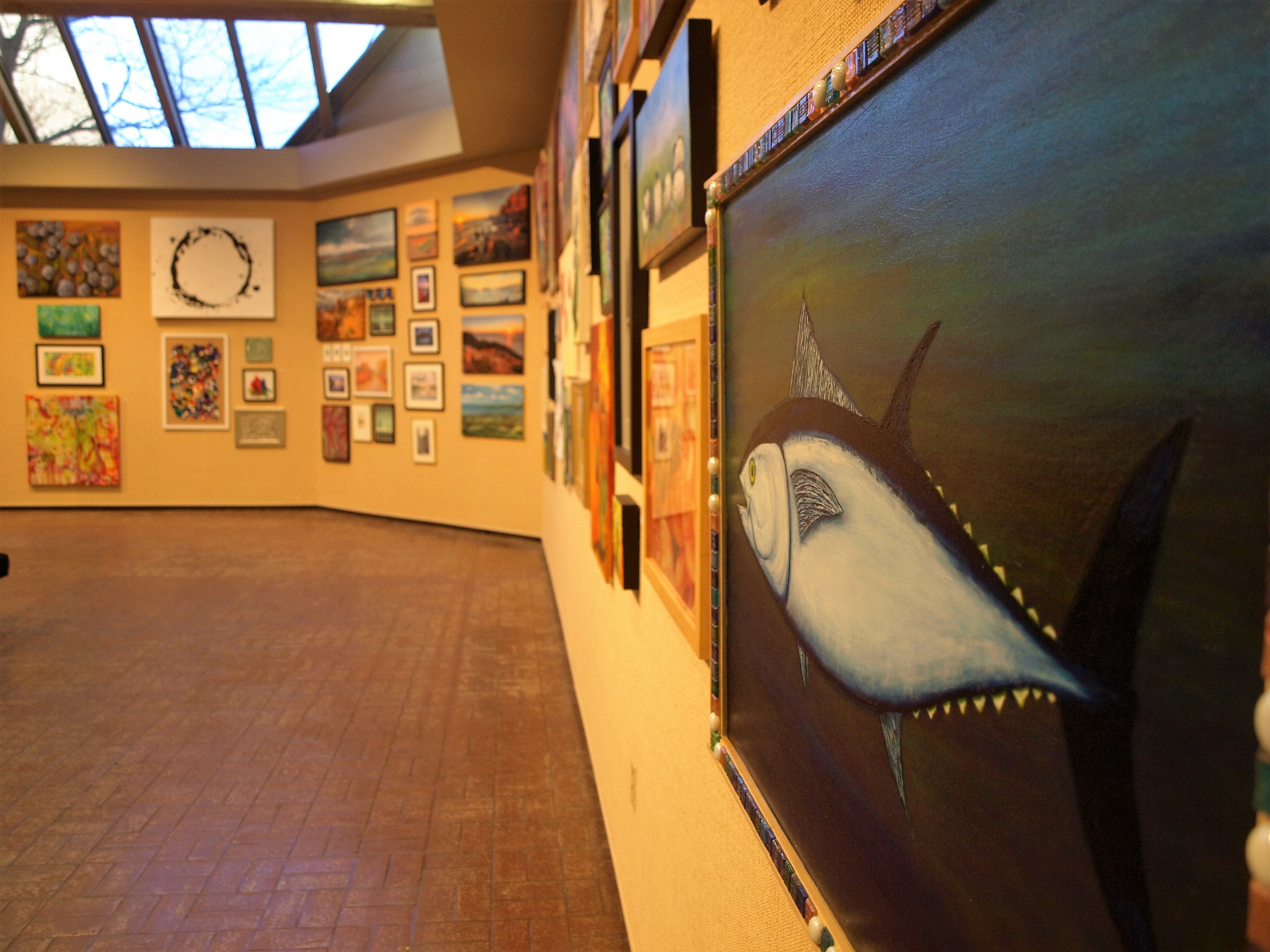
    The Acadia Art Gallery opened in 1978, providing both students and public alike the opportunity to indulge in their artistic side. I recently had the opportunity to interview Hunter Gillis, who works for the gallery, and asked him a few questions about his role, the new exhibit currently on display and more.

    Q: What can you tell us about the new exhibit?

    A: This is the 26th time that the Acadia University Art Gallery has opened itself to submissions from Acadia students, alumni, faculty and members of our community. The Annual Acadia Art Exhibition is an important event that celebrates creativity in our community. It provides a public forum to explore both the work of new and established artists. The exhibit contains a wide range of artwork that not only allows visitors to view works from the community, but also the creative talent and expression that the members of our community possess.

    Q: What is your role at the gallery?

    A: I typically have two main tasks. I act as a liaison between the gallery and the public. I answer any questions that people have on the exhibit and ensure that the gallery is well kept and that the essential tasks for the day to day operations are complete when I leave. I also focus on social media, which entails Twitter, Instagram and other social media accounts that the gallery has.

    Q: What is your favourite thing about working at the gallery?

    A: Getting a chance to meet members of the community. I would consider myself to be a people person and I enjoy hearing someone’s perspective of the work on display or their own personal stories.

    Q: Why do you think art is important?

    A: I think art is an important part of our development as humans and an essential element of empowering the hearts of people. Artists can strengthen the will of the people and inspire them to act through revolutionary ideas and powerful imagery. Artists have the unique power of being able to move people to action, thus signifying their cultural and political contribution and importance.

    Q: Do you wish more students would get more involved with the arts? How would you achieve this?

    A: Yes, but finding an answer on how to achieve this is a difficult task. I think part of the issue is how neoliberalism has affected the university. Universities as we know them today promote STEM fields over liberal arts, and encourages instructors to teach students for future employment, rather than toward broad and informed citizenship. I am not entirely sure exactly how we can rectify the situation we find ourselves in.

    Q: When is the gallery open?

    A: We are closed on Monday and Tuesday, open Wednesday: 12-7pm and Thursday to Sunday: 12-4pm.

    Q: What is your favourite piece/exhibit so far?

    A: It’s hard to pick just one piece, I have a few that I love, but my favourite is by the artist Gus Rhodes, titled “The Creative Impulse, for $35 an hour, Imitating the Idea of a Zen Master, to make a pretty picture, to try and make some money, to pay a couple of bills,” (and yes that’s the name of the piece). It is number 88 in the exhibit.

  • Social Media in an Age of Awareness

    “Why use Social Media? Marketing is no longer about the stuff that you make, but about the stories you tell.” – Seth Godin

    Karen* (name changed), sat at her computer scrolling through her Facebook feed and watching Netflix when she started to see a similarity between the pixelated world of her favourite TV Show, and the pixelated world of her Facebook feed. She began to question how real social media is, and how much of it is a self-directed version of our own TV shows.  When talking with Karen, she says:

    “I first started using Facebook in 2010. I remember this very specifically because it was the first time my mother told me that she thought I was responsible enough to handle myself with social media. I was thrilled, of course, because it meant sharing and connecting with friends. We used Facebook as a sort of photo hub, posting pictures of our daily shenanigans and tagging one another. I came to use Facebook as an interactive photo album. This, of course, and the games. Now that I’m in university, Facebook remained an important tool to help me communicate with my old high school friends. I now live far from home, so the possibility of communication that Facebook offered was very important for me. However, over time I realized that Facebook was becoming less and less about photo sharing and playing games with friends. As I grew older, I like to think that I gained more perspective and maturity. I no longer had the time to partake in games like Farmville. I noticed something problematic from the get go, specifically with the games.”

    “The majority of online and mobile games are now heavily time-based, requiring you to wait extended periods of time before you can make your next move. But of course, there are ways around this. You can pay money to buy turns. As a fifteen year old in 2010, I didn’t exactly have much to spend on these games and quickly became disinterested. That was one aspect of Facebook that quickly turned me off. I’ve noticed that my Facebook feed as progressively become littered with advertisements. I suppose I shouldn’t be surprised. Facebook is just another business that relies on ad revenue in order to generate profit. But in my opinion, it only ads to the clutter, to the noise of social media. I see more advertisements and click bait links than I do of the latest happenings of my friends. And what I’ve noticed is that even contributions from my friends are ill thought out and only adds to the clutter. Facebook, in my opinion, is just a messy stream of consciousness that I’m drowning in. From people telling me to click on a link because it will somehow save animals to the latest Buzzfeed survey on which Disney princess I am, Facebook has become a hub of uneducated, ill researched, and quite frankly unimportant content. People change their profile picture selfies frequently, desperately fishing for more likes, for more online validation. People post more pictures of themselves partying, in what I have noticed has become a repetitive stencil of duck lips, hands on hips, “laughing” at each other candidly as the picture is taken.”

    “These kinds of pictures eventually become duplicates of one another, nothing to contribute, lacking substance and meaning. They become another “look at me and how happy I am with my life.” A boast. But what I wonder is if these are truly genuine feelings. I have to admit, though, that these images of partying lifestyles and all smiles had me questioning my own confidence and place in life. Why were all my friends so happy? All the time? Wearing new clothing that I could never afford, with time that I never seemed to have. One of the reasons I stepped away from Facebook was because it started to have a negative impact on my life. I started comparing myself against everyone else, increasingly getting frustrated with what little I had in comparison to what they flaunted. I found that Facebook was becoming toxic. I began to unfollow many people, feeling that they did not contribute to conversations and reflection. In the end, I just had to leave. I didn’t want to be a part of a network that made me feel like I wasn’t aspiring to be my best.”

    “Now, perhaps this was on me. My confidence issues are clearly my own, people would say. I shouldn’t blame others for how I feel. But it’s hard to feel good about yourself when people openly flaunt their excess on social media. I put off leaving from Facebook because I thought, “What if somebody needs to contact me?” I realized that if people really did care, they’d call or text me. I didn’t need to give the occasional like to photos to remind people that I was alive. And that was when I realized that Facebook was no longer the social media that I had once believed it to be. There was nothing social about it anymore. My decision to leave Facebook lasted almost a year, and I’m glad I took the time away. It gave me time to reflect on what I truly wanted without comparing my success to somebody else’s. Taking the time away helped me recognize truly who my friends were, and those who didn’t even notice my absence.”

    Perhaps leaving was for the best. We are a generation that is engaging with social media and the implications of dealing with it, for the first time in history. Only time will tell how to changes our self perceptions, and the way that we perceive others.

  • The First Acadia Environmental Film Festival a Success, Say Student Co-founders

    The First Acadia Environmental Film Festival a Success, Say Student Co-founders

    This past November, Acadia students Robin Lawson and Raymond Wieser developed an entirely new event on the Acadia campus and in Nova Scotia: the Acadia Environmental Film Festival. The festival was a project towards completion of a fourth-year Environmental and Sustainability Studies (ESST) course.

    The Acadia Environmental Film Festival ran from November 3-13th, featuring six films in total. Each film was followed by a reflective discussion between the audience and guest panelists. What began initially as a plan to screen films for students evolved into a project involving a number of members and organizations within the community. Wieser and Lawson were able to meet for an interview to discuss their thoughts about the festival, as well as broader topics regarding the environmental crisis.

    Why did you decide to create and produce an environmental film festival?

    Lawson: Raymond is extremely passionate about film. I’m more passionate about environmental education.

    Wieser: We decided to combine the two, and then we took it a step further and added  discussion to that, with community members or people in [environmental] fields.

    Lawson: Showing movies is great, but allowing people to expand on their own ideas gives them a place to learn more. We couldn’t be as effective in educating [the audience] if we didn’t have a meaningful discussion afterwards.

    Wieser: If you have someone in the field locally come to talk, then they can give a local perspective on what’s happening.

    To put it bluntly, why do you care about issues pertaining to the environmental crisis?

    Wieser: First of all, I’m in ESST, but it has mainly to do with the way I grew up as a child. I’ve actually never lived in a city, nor a town. I’m from the middle of nowhere, in the forest! My elementary school was a Waldorf School, which had a huge focus on Mother Earth and the planet, so that had a huge influence as well.

    Lawson: From a very early age I’ve understood the connection between people and nature. Another reason I care about environmental issues is because they impact human lives, and I love people. People aren’t going to exist if they don’t have an environment that can support them. We need to start supporting our environment so it can continue support us. It’s a symbiotic relationship that a lot of people forget.

    What goals were you trying to achieve through the festival?

    Wieser: Our main goal was to educate students on environmental issues through film. Movies are played on campus all the time but rarely is there a time to discuss them, and rarely are they environmental-based films.

    Lawson: It was a way to build further connections between Acadia and the community.

    Wieser: For example, people throw things in garbage cans and recycling bins everyday but they don’t really know who deals with it, so I think having [a panelist] from Valley Waste come and talk was really good because it gave people an idea what happens to their waste.

    What was a highlight of the festival for each of you?

    Lawson: Actually, the film that didn’t end up happening, Billions in Change. We were competing with the Bob Rae [lecture] and a few other things happening around Wolfville, so we didn’t end up having an audience, but we had a panelist, Richard Zurawski. He’s an amazing man. So we had him and an Acadia professor, Leo Elshof, who’s another amazing environmental activist and educator. They’re really good friends, so they just ended up sitting with us and talked to us about the state of the world and the education system. It made me think about some things that are connected that I’d never [realized] were connected. That was the highlight for me.

    Wieser: The highlight for me would probably be either that same night, or working with Fundy Film on the first night [on the screening of] This Changes Everything. They’re a really cool organization and they bring a lot of really cool things to Wolfville. They work with TIFF so getting to work with them was like, “Yes!”

    Lawson: Susan and Bill [of Fundy Film] are a really, really amazing couple too. They’re wonderfully inspiring people and were supportive of us and excited about what we were doing.

    What is the most pertinent environmental issue that the films portrayed?

    Wieser: [All of the issues] are very pertinent, but the most important one is water.

    Lawson: Yes, water and the health of our oceans. Which relates to a lot! Because it’s such a broad issue, and everything else reaches out to it, like energy production, food…

    Wieser: Bottled water.

    Lawson: Every environmental issue goes back to it.

    Wieser: If we were going to isolate one film that is important for people to see today, I would say Billions in Change. Even though no one came to see it, it’s the most important because it deals with what is currently being done. It’s dealing with a group of people who are working all around the world in different scientific communities, [and it deals with] what they’re doing now to help the environmental crisis.

    Do you hope that other students will pick up from where you left off?

    Wieser: I hope so! I mean, that was the point with our film festival. We also ordered more films that we couldn’t show because they weren’t in the library already. We ordered more for the library to have for the future.

    Lawson: It would be great to see somebody pick this up and continue on to make it an annual thing. And have it grow, maybe it would get as big as Devour! Which was another event we were competing with! That was one of the points of the project, as we’re graduating, to leave a legacy at Acadia. To leave something behind. It would be really nice if people were to continue.

  • Axemen Alumni Coming Home

    Axemen Alumni Coming Home

    The Acadia Sports Hall of Fame is pleased to induct former athletes who left their mark on the Acadia University athletics program. Induction ceremonies will take place Saturday, October 17th, honouring those from various teams. I had the opportunity to interview the 1994 All-Canadian football star, Larry Jusdanis. After breaking numerous records at Acadia, Jusdanis played professionally in the Canadian Football League (CFL). He was drafted by the B.C. Lions and then traded to the Hamilton Tiger Cats, which brought him back to his home town. He was the first Canadian quarterback to start a CFL game in 25 years. Beyond football, Jusdanis applied his love of athletics to business as the founder and owner of the successful strength and conditioning training business, Sports Specific Training (S.S.T.).
    How does it make you feel to be inducted into Acadia’s Sports Hall of Fame? Well, I was obviously very honoured and it was the same week I was invited to be inducted into my high school. Again, I was extremely honoured to be chosen by a great school, along with a great bunch of athletes.
    Were you recruited by other universities to play football and if so, what made you choose Acadia?
    I went to Central Florida first, and then I lost my scholarship due to an injury. Nick Richards, Dan Laramaee, and Eric Cederberg were the guys I met on my recruiting trip to Acadia when I came back from Florida. Plenty of other schools recruited me, but I fell in love with Acadia! When you were a student playing football at Acadia, what was a typical day like for you? I went to class just like you would normally. Most of my classes were early in the morning. After I’d go to my room to work, workout, go to football practice, and then go to my room again at around eight o’clock to finish homework.
    I’m sure it was a challenge balancing varsity football, academics, and a social life. How did you manage?
    My good coach, Sonny Wolfe, told me that “there were three things you could do in university: you could party, go to school, and play football. You can only do two out of the three well.” I believed you could do all average. Have fun – because university is meant to be a fun experience – you can balance it all with sufficient time management. University is not that hard if you attend class and apply effort you will succeed, you will be fine.
    How did playing football at Acadia inspire you and shape the rest of your life; and what life lessons did you learn while playing Acadia football?
    I don’t think I would specifically say “Acadia football,” just football in general. In my opinion, football is the best team sport in which anyone could ever get involved. In football, you’re on the field working with twelve guys in a unit and you can’t let that unit of yours down. It’s the same when you are working with business people in the community. It’s also similar to individuals in the military: if you’re carrying your unit and you let someone down, someone dies. Football instills in you a lot of different and great characteristics; such as, discipline, time management, working together, and coping. Maybe you don’t agree with someone, but you have to work through it as a team to make the situation better. Football is probably the best sport there is for teaching life skills. To be honest, if you asked numerous people in the work force who played at least high school, if not college football, they would agree with me.
    Is there anything else special about your time at Acadia that you would like to share?
    Acadia is a great place. It’s a great university, because not only are the professors great, but the small teacher to student is small and the classroom environment is amazing. When you go to university you go to get an education, but you also need to have an exceptional experience and Acadia does offer that. I remember the beautiful summers in Wolfville, and the perfect small town effect that makes it such a great place to live. Every student should enjoy their time at Acadia. I cherish that I made life-long friends during my time there. To this day, I’m close friends with fellow football teammates Grant Davy, Lee Barette, Dave Stefnitz, and Mike  Balint. All of us being inducted into the Hall of Fame have been friends for a long time, and it’s like a family reunion. You create a special bond when you play not only football, but any kind of sport.
  • Tidal Series: An Interview with Dr. Paul Stephenson

    Tidal Series: An Interview with Dr. Paul Stephenson

    Dr. Paul Stephenson is a professor in the department of Mathematics and Statistics at Acadia University and the president of the Striped Bass Association. He is in his second year as president, having served on the executive for around five years. As an angler, he has fished striped bass recreationally all over the province, from the Bay of Fundy to Cape Breton. Recently, the Striped Bass Association has released a document to the press highlighting their concerns and opinions on the development of tidal energy in the Bay of Fundy, published in response to the planned installation of the two 2-MW turbines in the Minas Passage by Cape Sharp Tidal. Dr. Stephenson encourages anyone who is interested or would like to voice their concerns to visit the Striped Bass Association’s website, where they can join as a member completely free of charge. The press release can also be found at the organization’s website: http://stripedbassassociation.ca/home.html.

    Kody Crowell: So starting off, you would say that tidal energy and angling are issues you care very much about?

    Paul Stephenson: Yes, very much so, and I think that it’s an issue that crosses international boundaries. Right now, there are about seven thousand striped bass anglers in Nova Scotia, and it’s about a nine million dollar industry in terms of gear, bait and so on. This number pales to the North-Eastern United States where there’s about four million fishermen, all contributing to a multi-billion dollar industry. Trust me, right now this isn’t an issue with our American neighbours, but it will be if it ever went commercial and put hundreds of turbines out there.

    KC: Why do you think others, including students in Nova Scotia should care about this as well?

    PS: Well, there are a lot of students I have seen out there, and I have even given some of them bait when they ran out of their own [laughs]. I think there is a whole generation of students who come out here and fish for striped bass, and I think that it’s certainly of interest to local students from Nova Scotia and New Brunswick. I was actually talking to a student the other day who has come here to specifically study striped bass because he does striped bass fishing in his home in New Brunswick. So as the fishing has caught on, it’s become a lot more popular, and that’s why this issue is so important. And not just for striped bass enthusiasts. I mean, from a conservation standpoint, it would be a shame to lose any of these fish. To trade that resource for another resource would be a real shame.

    KC: So the press release. It’s quite detailed. How many people worked on it?

    PS: Eleven. It was the Striped Bass Executive that actually put it together, and we went through many iterations trying to figure out what exactly we wanted to stress and things like that. The individuals range from academics like myself, and Dr. Trevor Avery [an ichthyologist of Acadia’s Bio Dept], of course. A number of masters students at Acadia who do striped bass research, and some commercial and recreational fisherman are on our executive as well, some of which are self-employed. We wanted to cover a lot of bases. There have been a lot of press releases and statements on tidal energy, and we wanted to highlight the shortcomings of those reports, in particular, the threats posed to striped bass.

    KC: Do you think the press release captures the message you were trying to get across?

    PS: I think so, yes. The message here being that more research has to be done on striped bass before we could possibly think of commercial development of tidal energy. It would have to be proven to be safe. We would have to be comfortable with the monitoring at the site and know that these results were reliable, and that we could be confident that striped bass wouldn’t be at risk from this development.

    KC: Speaking of monitoring, your report mentions that you believe that F.A.S.T., the Fundy Advanced Sensory Technology, to be inadequate.

    PS: Yeah, it’s completely untested. If you recall the previous time one of these devices was installed it lasted for a very short period of time. The monitoring equipment failed almost immediately. So what we would have preferred was that this equipment was tested much earlier – years even – before the turbines were deployed, so that we could be confident that the monitoring devices could stand up to the punishment they get out there. In particular in the winter, where it’s just been proven by research from Dr. Anna Redden and her group from Acadia that striped bass are out there all year round.

    KC: Yes, you mentioned that you would like to see more winter monitoring.

    PS: In the winter when the water is close to freezing, it’s been shown that the fish are going to be in a reduced metabolic state and are probably passively moving with the tides. So models that are being proposed where striped bass are able to detect and avoid – we just simply don’t buy that. What we’re really worried about is that those fish will, in fact, not be able to avoid the turbines and will just be passively passing through them without monitoring. I mean before, nobody even knew that the striped bass were out there in the winter. The thought was that they didn’t have those anti-freeze proteins that other fish have that allow them to stay in the Bay for the whole year and that they had to move into fresh water to avoid freezing to death. Well now, it turns out that there’s a resident population that is out there all year round. We also have a problem with the monitoring in that it’s the developers themselves doing all the near-field monitoring.

    KC: So do you think that in some ways the project is being rushed?

    PS: Well, I think we would definitely like more consultation with citizens and groups like our own. A lot of commercial and other types of fishermen are very skeptical of the whole consultation process in general, and believe that their interests are not really being heard. Under no circumstances do they see the Fundy Ocean Research Centre for Energy or Nova Scotia Power ever pulling the turbines out of there if it was working and producing power. There doesn’t seem to be any regulations in place to limit deployment or pull the turbines out if, say, the monitoring fails.

    KC: In some ways, the only way to test the turbines is to actually put them in the water.

    PS: True. And in an ideal scenario, we would want the monitoring equipment to be proven first by sitting out there for a few years, and only then deploy the turbines. Right now, striped bass are actually assessed as endangered by COSEWIC (Committee on the Status of Endangered Wildlife in Canada). Why they are endangered is a result of spawning habitat loss. Currently, there is only one river system where they spawn – the Shubenacadie river system. The reason that they have been reduced to one spawning river is because they can no longer spawn at the Annapolis River, which became the case following the construction of the causeway and the turbine down there. So currently, there has not been any detectable spawning going on. What has certainly been going on down there, and is well-documented by Acadia researchers, are instances of fish mortality, in particular but certainly not limited to striped bass. There is no question that the turbine there kills striped bass, and this is part of the problem we have. Striped bass are endangered primarily because of the development of tidal energy in Nova Scotia. This is why tidal energy has such a bad reputation with the angling community – that was a world class fishing destination on the Annapolis river, and now it no longer exists. What we would like to see is that thing removed, so that the river could be restored to its natural state.

    KC: So if a turbine is placed down in the Minas Passage or wherever, I suppose in some ways there would have to be a compromise. I mean, if one turbine is placed down there and one or two fish are killed a year as a result, compared to if ten were put down there….

    PS: Exactly. You could scale it up as high as you want in terms of fish mortality. I don’t think there’s any biologist who thinks that putting hundreds of these things out there isn’t going to affect the ecosystem in a drastic way as far as fish are concerned. I mean, we don’t even know what the population actually is. So how can we know whether we’re doing any harm to the population? What we would really like, and we understand that this is a difficult problem, is some way of determining whether or not a turbine-fish interaction resulted in mortality. I just received a message moments ago about an open house they are holding on the turbines. The very first line mentions the word “safe” and “reliable.” Safety has not been demonstrated, neither has reliability. The last one of these things, which was smaller, lasted only a matter of days. How can you categorize that as reliable? I think that there’s a lot of propoganda around this, on both sides of the issue, and personally, I don’t know if I would ever support the project, but I think that I would be less adamant about it as I am now.

    KC: So you would say that you do not support tidal energy?

    PS: Until such time that it is proven to be effective and safe, and that they can prove that fish can detect and avoid the turbines. I have a friend who is a commercial fisherman who seriously doubts the argument claiming these fish would avoid the turbines. I mean, fish don’t do a very good job of avoiding weirs or nets. I once had it described to me that the striped bass would ride around the turbines much like some insect caught in the wind passing over your vehicle. Well, maybe, but there’s still an awful lot of them that hit your windshield.


Betzillo positions itself as a versatile gaming hub where structured bonuses and adaptive gameplay mechanics support both short sessions and extended play.

Built with a focus on innovation, Spinbit integrates modern casino architecture with rapid transactions, appealing to players who value speed and digital efficiency.

Ripper Casino emphasizes bold entertainment through high-impact slot titles and competitive promotions crafted for risk-oriented players.

A friendly interface and stable performance define Ricky Casino, offering a casual yet reliable environment for a wide spectrum of gaming preferences.

King Billy Casino channels classic casino spirit into a modern platform, delivering recognizable themes supported by contemporary reward systems.

Immersive visuals and layered slot mechanics are at the core of Dragonslots, creating a narrative-driven casino experience.

Lukki Casino appeals to players seeking direct access and minimal friction, focusing on fast loading times and intuitive controls.

Casinonic provides a structured and dependable gaming framework, blending modern slots with transparent operational standards.