
Tag: opinion

  • How much longer do we have to wait for a Meningitis B Vaccine?

    Meningitis B has been on the mind of many Nova Scotians recently. There have been several outbreaks in universities across the province, which have led to the unfortunate fatalities of three different students: 19-year-old Kai Matthews at Acadia, 18-year-old Maria Gaynor at Dalhousie, and a confirmed case at Saint Mary’s University which led to death, but there has been no confirmation of that student’s identity. Despite these tragedies, meningitis B is still not covered by Nova Scotia’s public vaccination program. Why is meningitis B not considered a problem by Nova Scotia Public Health? Vaccines are available, but their price is $300, which is too much for most students already struggling with the cost-of-living crisis.

    The vaccinations that public school students receive in grade 7 cover multiple forms of meningitis, but not meningitis B. What makes university students especially at risk is the fact that a lot of students live very close to each other in dorms. In cities like Halifax, students have been priced out of the housing market, forcing them onto dorm spaces. These students’ needs should not be ignored, especially after the incredible sacrifices students have made during the COVID-19 pandemic. Our health needs deserve attention, especially when members of our community are dying. This crisis needs to be addressed by the Nova Scotia government. Meningitis B acts quickly; Kai Matthew passed away only 30 hours after first contracting a fever. It is also preventable with a vaccine. Why does Public Health still refuse to allow students full access to that vaccination? This crisis is urgent and they should not deny or downplay its severity.

    After the death of Maria Gaynor, Nova Scotia Public Health failed to notify students living, sleeping, and eating nearby of the dangerous illness. The school not only failed to promptly notify students of Maria’s death, but they also completely failed to notify students of a meningitis case being investigated on the third floor of their dorm. This put even more students at risk. If Maria and her friends had known about the case, Maria’s sudden illness would have been a major red flag. Maria could have possibly gotten help if Nova Scotia Public Health had notified the Dalhousie public that meningitis was inside the dorm and had taken appropriate steps to look after those affected.

    To Nova Scotia Public Health, please stop offering condolences and include meningitis B on the list of publicly funded vaccines. For more information concerning meningitis B in Nova Scotia, visit https://bforkai.com/

  • Systemic Grade Inflation at Acadia

    Systemic Grade Inflation at Acadia

    On October 7, 2020, the Acadia Senate officially adopted a new, more generous scale for converting academic percentages to letter grades. It will take effect on July 1. The previous official scale converted percentages of 87-93 to a grade of ‘A’ and percentages of 94-100 to ‘A+’. The newly adopted scale converts 85-89 to ‘A’ and 90-100 to ‘A+’. So as of July 1, it will suddenly become somewhat easier to earn an ‘A’ at Acadia and much easier to earn an ‘A+’. How fair is that to the thousands of Acadia students who earned all their grades under the harder scale?

    A retired professor recently told me that he had never awarded a course grade of ‘A+’ in his multiple decades of teaching here. Much to my surprise, he said that no student had ever performed at a level that he would have judged to be 94 percent or better. So no ‘A+’ course grades ever came from him. But if ‘A+’ had started at 90 percent, then who knows how many of those grades he would have awarded?

    In addition, the Senate recently changed the GPA scale used at Acadia. The previous scale converted a grade of ‘A+’ to a GPA of 4.00. The new one converts it to a GPA of 4.33. So just a couple of years ago, students who earned a percentage of 90 in all their courses would receive an ‘A’ in those courses and a GPA of 4.00. As of July 1, the same level of performance will give them all grades of ‘A+’ and a GPA of 4.33.

    Likewise, students who earned a percentage of 85 in all their courses just two years ago would receive a grade of ‘A–’ in those courses and a GPA of 3.67. As of July 1, the same level of performance will give them an ‘A’ in every course and a GPA of 4.00. They will have done work no better than the work of previous students. It will only look as if they did.

    I know I will have to keep all of this in mind when I compare students enrolled today with those who graduated just two years ago – the sort of comparison that professors are often asked to include in letters of recommendation, for instance. The gap between appearance and reality at Acadia seems to be widening, and we will need to take measures to compensate for it.

  • Apart of the Eh Team: Are you Canadian or are you just passive aggressive?

    Apart of the Eh Team: Are you Canadian or are you just passive aggressive?

    “I mean, sometimes…. I even apologize when people bump into me”.


    If I had a loonie for every time that I have overheard a Canadian throw this anecdote in the face of any non-Canadian, then I would be as rich as the Weston family and have enough dough to start my own bread cartel. It is usually said in a matter-of-fact- tone, as if this process has just dawned on them. In a tone that sounds something like: geeeee whiz, you know what I do along with thousands of other Canadians that I just realized?! I say sorry all the time! Isn’t that just the most precious thing that you have ever heard in your life? Awww, please give me all of your love and admiration via Canadian Tire money. Give me all of da love.


    What is missing from the context here is the conversation that one may have with oneself, a co-worker, a confidant, or possibly the cashier passing you your sacred double-double that occurs when someone does not offer an apology back for said “bump”. The “Can you believe that?” moment is not a part of the public or global conscious at all. The realization that they are not going to receive an apology from the person will outrage you. Or, that a stranger will have the audacity not to return your unsolicited friendly smile.  See ya, nope. Please be nicer to me even though you owe me nothing as being a complete stranger. The way to break a Canadian’s heart is not to say “Well I’m not sorry” or don’t say anything at all. Ever.


    There, it’s out there in the world. I guess I am the Canadian whistle-blower on politeness (or would it be called a bear bell for us?).  Contrary to popular belief, it does happen all the time, this outrage of lack of polite reciprocation. But don’t tell the Americans this. We might lose our “nice” status. I think we might just be full of pent up anger that we don’t get as much attention as our neighbors south of the border – so we hide behind this nice guy façade. We are all tiny angry men on the inside.

    We are assuming the nature of the Canadian with this stereotype. Which is great for the Canadians, and I really should not be complaining. But, self-reflection, and the self-poke is what most Canadians are addicted to. Look at how much we love Letterkenny! That show is addictive! We love the self-reflection. We love that show because television is never about us, and when it is, usually things start to get weird after a couple episodes. It’s just the one time that it didn’t get weird. I mean we can thank the CBC for that and the original content on Canada. I love Murdoch Mysteries but America seems to know how to do a period piece better than we do from time to time, every time.


    So why don’t we execute some hypothetical self-reflection. I feel like the most Canadian thing to do is start arguing that we really aren’t that nice.  I am predicting that if we weren’t so passive aggressive with our apologies, and started saying “Well I mean we really aren’t all that nice but it’s a nice rep to have” then the narrative would go something like:

    American bumps into Canadian co-worker as they both walk into the office kitchen.

    “Oops, sorry there bahud!”, says the Canadian.

    “Oh, you crazy Canadians always saying sorry!”

    “Sorry!”, the Canuck says laughing with a small single-eye twitch as a small piece of their maple flavored soul floats away into the ether as they know what is going to be said next.

    “Did you just apologize for saying sorry!?”, the American asks. “That’s too good!”. The Canadian gives up.

    “I can’t change who I am Bill, and if you can’t accept that I am a passive individual who can’t cope with their constant lack of identity and feels intimidated by the patriotism of Americans, then you can just leave me alone. I just can’t lie and live like this anymore, eh. I only played hockey for a year. I think Tim’s tastes like burnt unfulfilled dreams. I have no idea why you can’t name one province, and for some reason that makes me want to take all of your pets hostage until you can name all of them.  I want to be an asshole to Karen 87% of the time, but I don’t because I don’t have enough confidence to, and I am culturally required to be kind to people to their face so that I can travel and not be confused with your nationality. Personally, I think she over feeds her cats and she nods to Fox News way too much for my comfort, and…”, he utters one more fatal time

    “…sorry that’s just how I feel”. His head then explodes and fairies on Zambonis come in and clean up his remains and apologize for the inconvenience of their existence.


    Right, ok so there is no way out. Nevermind.
    I guess what I am trying to say here is sorry. Sorry for being so passive aggressive. Sorry to other nice countries who don’t get their fair due in politeness. Sorry to the international students who must listen to this garbage all the time about how nice we all are supposed to be. I am so sorry that Americans will never take us seriously. But the best we can do is just ride this pony into the stormy sunset. Cheers.


    Also just going to leave this right here:

  • White Privilege Strikes Again!!

    White Privilege Strikes Again!!

    I was furious after reading the article on President Dr. George Barton Cutten, but not for the reasons outlined in the Athenaeum.  Before I unleash my pent-up fury, I will start by congratulating the Athenaeum staff and writers for an interesting, well-researched and provocative article. Rather than dispute the facts presented, I want to highlight what I feel are the intentions behind why this article was written.

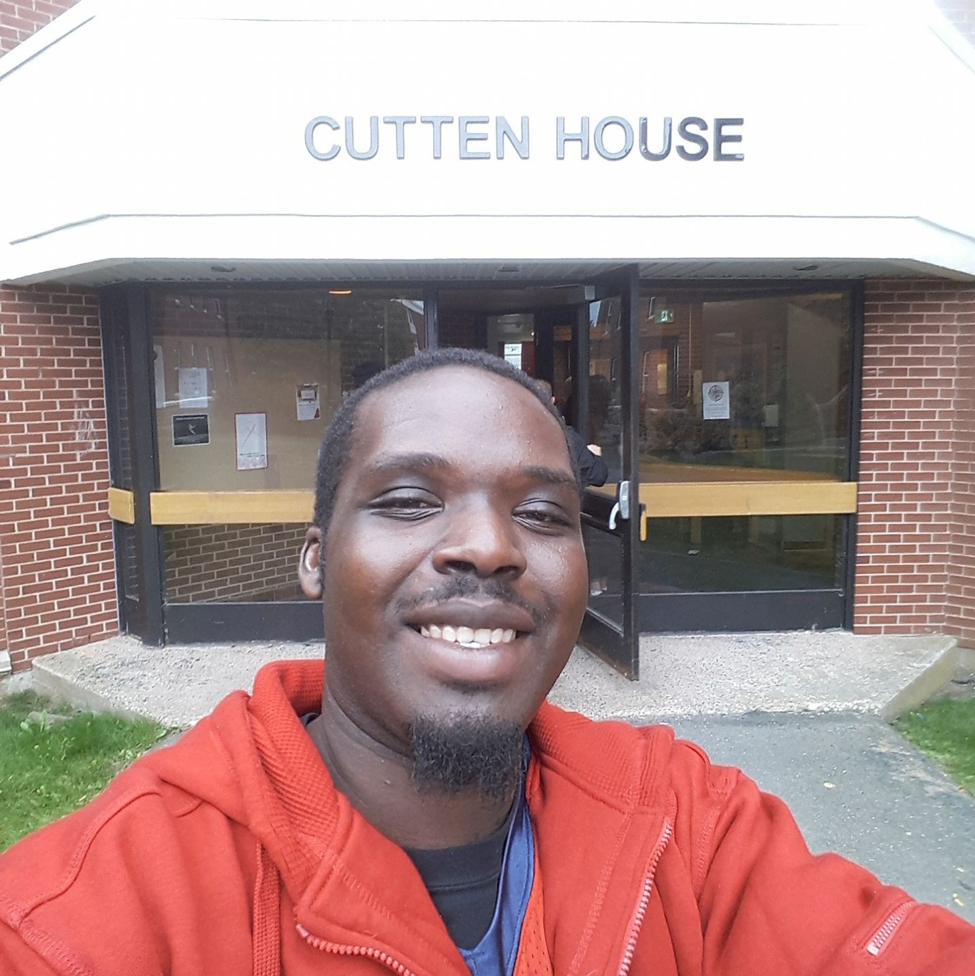
    When I think of Acadia University, I associate the name Cutten with Cutten House, and the (now discontinued) epic Slutten Cutten parties.  Cutten House is the community/residence where I was first exposed to Canadian culture as a foreigner, and the place where I essentially entered manhood. Attending Homecoming 2017 was particularly amazing; since it was the first time I got to see the old girl since the residence closed Spring 2008. You can imagine the fury then when I read this article’s calls to have the building’s name changed!!

    Dr. Cutten’s achievements and shortcomings are clearly listed in the article, but his legacy is not why I have a beef. The article itself was written, in my opinion, as a basic expository piece. It was clearly evident that the writers did not have a personal stake in or a passionate reaction to the statements quoted from Dr. Cutten’s speech. It is not my place to speak for everyone, but as a person of colour and an Acadia Alumnus from the Bahamas, I am both mature enough to accept that ignorance exists in the world and grateful enough that times have changed enough to allow me to attend such a great institution. In fact, when I posted the ink to this article on my Facebook wall, several of my fellow POC Acadia Alumni found it ironic that Cutten House is where most of the international students end up.

    The question remains, then, ‘Why was this article written?’. Keeping my biases in mind, I viewed it as non-persons of colour hijacking a social justice issue from over 50 years ago, in order to test the extent of their influence. This critique may seem harsh, but with all of the research and attention to detail associated with this article, it seems like a glaring oversight not to include the opinions of actual Cutten House residents, or black and the international community on campus as a whole. No mention was made of any previous outrage to his statements or challenge. Was this article just written to get attention?

    I say leave Cutten House alone. The name is a part of the legacy of the building, even if we do not want to celebrate every part of his legacy as a man. The article is gaining traction as an interesting talking point both online and on campus, mission accomplished.  But if you actually want to know the opinion of this black, foreign ex-Cutten resident, I personally don’t care. When I think of Cutten, I think of elevator Twister, lobby talent shows, and courtyard shenanigans. Not some dead guy whose words and opinions died with him. Just my opinion!!

    Axemen Pride Has No Equal

    Elgarnet Rahming II, B.Sc.

    Acadia Class of 2011

  • Subjective and Objective Marking: A Cross-Faculty Perspective

    For thousands of years now, people have debated about the concept of what it means to be objectively “right” or “wrong”. Despite this unsettled issue, much of the life of a university student is reliant on whether whoever is marking your work thinks you’re right or not. For certain faculties, deciding what is right and wrong in terms of marking can be easily decided based on information given in lectures or written in textbooks- if the student can remember the processes or information given and can apply that during an assessment, the student will receive a mark reflective of that. Simply put- if you are right, you get the marks, and if you are wrong, you do not. The information that you are expected to know or apply is usually outlined and discussed during class time or through homework and is typically year level appropriate. This makes sense. In certain other faculties, the marking is more or less based on the preferences of whoever is marking your work.

    I won’t go so far as to say that if your professor dislikes you that you will receive a bad mark on every assignment, but I will go so far as to say that if the professor doesn’t like your writing style, you very well might get a bad mark on every assignment. The way that assessments are marked is widely subjective and varies between professors, adding a level of difficulty as an art student who strives for “good” marks. While there is no clear “right” or “wrong” in a paper – aside from obvious structural necessities like a well-devised thesis statement and proper formatting – professors and TAs have plenty of works to compare a student’s writing to. While objective faculties such as Sciences and Business are typically marked based on the retaining of level-appropriate information, it is my experience that papers and assignments submitted by university level Arts students are graded in comparison to professional authors or to the marking professor’s writing ability. Not to say that this is the professor’s fault- it is a natural default in the critique of writing at any level to expect a piece of writing to meet certain expectations based on your personal preference of what you decide is “good” writing. While a student who is generally considered a “good” writer will often receive a “good” mark, it is usually a small mystery as to where the actual numerical value of a mark for a paper comes from.

    Another issue related to this subjectivity is the question of what a “good” is mark in terms of a paper- while most students in the Arts faculty would agree that anywhere between 80% and 85% on a paper is a success, I’m sure most would also agree that receiving a mark any higher than an 85% is effectively impossible from most professors. If a Biology student remembers all of the information necessary for a test, they will receive full marks- if an English student writes a level appropriate paper following all of the guidelines given by their specific professor, it is almost certain that they would not receive a 100% on that paper. As a student studying both English and Biology with close friends in Business and Kinesiology, it is easy for me to compare marking methods between faculties- so I guess I’ll leave you with this: is a Science student’s 100% equivalent to an Arts student’s 85%?

  • The Emancipation of the NARP

    Yes, you have read that correctly. It’s something you may have said aloud, but never read in text –nevertheless it is a part of campus culture. Or maybe this is your introduction to the topic. NARP, non-athletic-regular-person. A term often applied to those who do not participate on a varsity or club team at Acadia, a concept which I am sure is prevalent on other campuses. Full disclosure: I am considered to be a NARP.

    This is a term that I would like to take back! Turn it into one of those, “I-can-call-me-that-but-you-can’t-call-me-that” situations. Sort of in the same vein of, I can make fun of my family, but don’t even think about talking bad about my mama. This term holds a negative connotation, of course, because who wants to be called a “regular person” (unless you are very odd like myself, and “normal” would in fact be a promotion in society)? But, I would like to argue that there is a silver lining for those who feel they are on the fringes of adoration due to the lack of their hand-eye coordination.

    To all of you non-athletic angsty almost-adults – take this as an opportunity for indulging your ironic side. If that isn’t hipster bait, I don’t know what is. Stick it to the man, man. Imagine all the buttons you could wear on your retro jacket: “I peaked in high school”, “Badminton MVP 2014”, “Ur Fav NARP”, “Benchwarmer”, “Intermural CHAMP” or “Not a Scrub, But Got Scratched” and “I’ll come to all of your games”. By acknowledging the difference, instead of wallowing in it, I think there is a great opportunity for some counterculture and self-deprecation in the healthiest sense. Instead of succumbing and contributing to the dichotomy between the two groups, remember that both groups are made up of strong individuals. Therefore, I believe there may be a small need for people to get over themselves, and add just a dose of reflection perhaps.

    No, you may not have the abs of a god, but are you healthy? Do you exercise regularly? I’m sure you enjoy sports in some regard. Then, who says you are not athletic or deserve self-worth? So, you don’t have an institution that recognizes your athletic ability, but you should be thankful for any good health that you may possess. Yes, you may be intimidated by the awesome swag that athletes possess (jackets, shirts, etc.), but haven’t they earned it? I don’t have to balance an insane schedule, which is upheld only so that I can physically exert myself. Ew, no thank you, blah. So, don’t fall completely to the folly of material possessions (such as varsity swag) and their status.

    But, if you desire to play the status game why not make your own NARP uniform? Glasses that fall apart, your slept in department sweater, and… YOUR NEW BUTTONS! It is all just a question of confidence in your self-identity. So why not express yourself in an organization which already exists, or create your own? Or, you just do you. Whatever that means, and don’t worry so about your perceived value.  Don’t sweat it, leave the sweating to the athletes.

    At Acadia, we have the first overall rate per capita of Academic All-Canadian Athletes in the country. WOAH! The accomplishment of student athletes is the accomplishment of all Acadia students, one for all Axemen and Axewomen. It’s all about school pride, right? So, find an outlet which you can take pride in, ya NARP. Don’t let the athlete and NARP relationship become a rigid binary, and remember that both groups are made up of great people. Complex people that are multidimensional.  Combat this and become a part of a team of your own, whatever that may be: photography, social change, clubs, or write for the paper (please)! Forge your own identity.

    P.S. I do somewhat foster a theory deep down that the Kinesiology Department could possibly be the secret police of Acadia. Kinesiology… Kine…K.I.N.E = Knowledge In NARP Extinction. I don’t know, I am just putting it out there, in case you never hear from me again.

  • Small Pond Syndrome

    Small Pond Syndrome

    Why did you come to Acadia? I’m sure for multiple little reasons: the beautiful campus, the regional reputation, athletics, location, scholarships, or you’re just a big fan of mud sliding. Whatever you’re into man.

    But it’s just that, it’s the little reason. I argue that being a small institution is one of our greatest assets not just inside the classroom but outside as well. Outside the classroom, meaning socially playing nice with the other kids on the playground, fosters an awareness for mutual respect.

    My interactions outside of the classroom have led me to collect this extremely sophisticated and completely scientifically based analysis of our small school population before attending Acadia. Broadly speaking students usually fit around three points on the continuum on the confidence scale regarding making friends going into this university.

    The first being you were a big deal in high school, came here with your buddies, and felt like you need to add one or two more people to the roster of your sick childhood squad. Acadia can offer you this convenient reality. Or, you may know people from playing local sports, or attended the same high school, but you are by no means close with anyone and are eager to meet lots of new faces. Finally, of course there is a population of students who don’t know a soul and making friends seems like a massive undertaking. This may be because you’re an international student, out of province, or you just like to keep to yourself.

    Whatever your perspective is, Acadia can be a fresh start for you, and can act as an equalizer. The first few weeks of your first year can be very hard and this shouldn’t be glossed over yet, you will find it’s much harder to isolate yourself then you may think. I am getting acquainted with new friends already this year and I am going into the second month of my third year. Due to the small size, students can become more intimate with more people because you are frequently being put into situations with the same population of people. It’s a wonderful attribute of Acadia no matter where you began on the social continuum.

    My roommate once chatted with someone at Shopper’s Drugmart standing in front of the chip aisle because she felt familiar enough with him. She always saw him at the library in the past and this was enough of a reason to critique chips together. They were both very perplexed at which chips make the best storm chips, which is the best PC brand chip flavor, and the classic conundrum of regular versus wavy cut chips etc. Classic chip struggles.  Just seeing the chip guy enough before said chip-run created a basis for a friendly conversation. I truly believe that Acadia/Wolfville are on the short-list of university towns where that is socially acceptable.

    What we should remember is that although a friendly place, Acadia is a small pond. No no.  More like one of those fancy infinity pools that look off onto the ocean that really only exist on MTV’s “Cribs”, Oprah’s house, and affordable resorts. It has this small, rigidly defined population. Yet, it has a full vista view which alludes to opportunity commonly known as “the real world” and referred to as “adulthood”.

    What about all the people I have successfully or unsuccessfully hit on? How often will I see them at this friendly, small school? You will see them what seems like everywhere (especially when you stink of Subway in the lib in between classes).

    Here is a fun and simple equation you can do in your head: think of all the people you have either professed your love to, made out with, danced with at the vil and/or axe, stared too long at the library at, directed their naked butt to your bathroom, had full blown your-mum-and-dad-know-what-I-look-like-in-real-life relationships with, gone to coffee with, had a deep heart to heart after class with, or had an inexplicable crush on. Whatever experience you have or have not had. Then divide that by 6.46 km2. After you divide those awkward times by space (the square kilometers of Wolfville) you have your very own unique and customized answer! You are now a certified love physicist! Congrats.

    Now, what do you do with that number? Be nice to each and everyone one of them no matter what the result of the situation is. You could be coworkers, neighbors, have all the same classes, or just like eating breakfast at the same time every day if you eat at Wheelock.

    Laugh at their jokes, always say hi, and give them that follow back on insta. I can’t say that I always live by my own advice but I try my best. Shit, right when I was writing this I just avoided eye contact with someone while sitting in the BAC café I KID YOU NOT. Do what I say not what I do! You never know what may come of the situation. Inclusion is always the answer.  This of course also includes other acquaintances or individuals who you have not made a fool yourself of on a romantic level with.  It means be nice and remember everyone’s name that you have learned.

    It may seem as though this town may seem suffocating at times. But what is really happening when you run into people is that you are reminded that each of them have feelings which you should respect.  No man is an island and everyone loves to be remembered. The small population is truly a good exercise in pushing yourself to treat others with respect. This lesson learned outside of class is one that is invaluable for the future and is served on a warm platter to us from yours truly, Acadia University. Right, so remember when you are heading to the swim-up bar in the infinity pool at Oprah’s house, give a polite hello and nod to all that are in there with you over these four+ years.

  • Selling a Sustainable Future: What Individuals Could Create

    Selling a Sustainable Future: What Individuals Could Create

    Fear, facts, and the seemingly uncontrollable big picture will not motivate individuals to make a change for sustainability. Climate change has positioned the global community at a turning point and there are only two ways to go: continue business as usual to crash and burn or make the challenging changes and sacrifices for a prosperous future of the generations to follow. Both options do not sound ideal. Business as usual may lead to wars, economic uncertainty or prosperity, but at what cost? Lifestyle sacrifices for the potential future of generations to follow also does not sound appealing. It is important for optimist activists to sell change with positive and beneficial lens.

    The average middle class North American family may not be the first to jump on board with the idea of replacing their home heating with solar power or redesigning suburbia to introduce more public transportation, in order to reduce environmental impact. The average middle-class family may be more attracted to the idea of lowering their heating bills and shorting their commute to work. Understanding the market you are trying to convince is key in selling sustainability.  Climate change facts no longer change the actions of individuals. In North America’s consumer culture, it is important to adjust the consumer world so that it benefits climate change action. Marketing the benefits of sustainable home design, public transportation, community design, trading currency and community collaboration will be key in moving towards a more sustainable future.

    Imagine a community where neighbours come together for meals regularly. Imagine a community where people from all walks of life don’t feel isolated because it a social norm to check-in and ask people how others are doing. Imagine a community where kids run from house to house playing with kids of all ages and there is trust that, as a community, all members will keep an key on the children. Imagine a community where food is grown locally and equally dispersed, where children don’t go to school hungry. Imagine a community where mothers don’t have to work three jobs to support their kids because their neighbours are willing to help provide for each other, as the community supports strength is in numbers. The foundation value of community is support. Working together allows communities to reach further than working apart.

    A sustainable future is attractive and aligns with core human values, such as connection, success, and stability. A community that has created meaning and appreciation of what they have, will natural also protect the environment that surrounds it. Sell the sustainable future individuals can imagine accomplishing, make it possible. Living sustainably together is the future each citizen can create, climate change action activist must sell it, promote it and live it, then others will follow. Show the generations to follow what sustainable communities can be, then watch as the value of sustainability transitions from an unrealistic ideal of “delusional activists” to a valued and supported mindset.

  • My First Cheaton Cup Experience

    Recently transferring to Acadia from Western, I was clueless about the tradition of Cheaton Cup. I had never heard of it, but all my friends swore it would be the best time of my undergrad. Hesitant, and to be honest a little intimidated, I decided to join the crowd and see what all the fuss is about.

    Step One: make a shirt. This was a stressful process since, being from a different University, I had no allegiance to either Chipman or Eaton. I did, however, have friends in both houses. After hearing why each person thought their house was the best, I decided to make two shirts and hit up both parties. That was mistake number one. I was criticized for this and was even called a traitor (even though that was impossible because I never supported either house before). Even though I was playfully harassed for this, I still went ahead with my plan.

    Step Two: party time. Every student who participates in Cheaton Cup swears that one party is better than the other, depending on which house they are faithful to. Sorry Acadia, but both parties were pretty much the same sans a few minor details. Without going into too many details about the two separate parties (because honestly, I won’t hear the end of it), let me just say that I did enjoy both. At first. But then people started getting sloppy. I have never seen so many inebriated people in one place before, and I fail to see the appeal in it. You couldn’t hear yourself think, couldn’t hear your friends talking to you, people bumping into you, drinks spilling all over you, and I swear every 30 seconds I heard people asking others for a “dart”. The basics of the house parties are as follows: drink as much as you can in a short amount of time and stand around in a barely audible space full of vomit and smoke. I suppose some may find this fun, but I really couldn’t understand it. Perhaps it’s that famous Atlantic drinking culture I’ve been hearing so much about? Or maybe that scene just isn’t my cup of tea. Either way, my Cheaton experience wasn’t impressive.

    Step Three: the game. Okay, I must admit; the game was ridiculously fun. I was surprised to see that not as many people showed up to the game compared to the number of people I saw in the morning, but I assume the majority were just too drunk to either care or get to the arena. That aside, the game was full of energy and it got me amped. The players were determined, the crowd was enthusiastic, and emotions were running high. At the end of the game, I was a little surprised to see how many emotions there were. I saw tears of joy, tears of sadness, expressions of anger, giant smiles, and heard cussing out of rage, but also cussing out of excitement. I know school spirit is infectious, and rivalries bring these emotions out in people, but I couldn’t help but think: “this is just an intermural game. It isn’t that big of a deal”. I was wrong, friends. I apologize. Cheaton Cup is the Stanley Cup of Acadia. Remember when I said that I didn’t see the appeal? Well, I do now. Cheaton Cup is a day where students can come together and celebrate their pride, teams, and Acadia family. I just didn’t get it because I haven’t been here long enough to establish any of these things.

    I want to take this opportunity to apologize to anyone who was at the other end of one of my snarky comments about Cheaton Cup being a waste of time, energy, and money. Just because it wasn’t necessarily my idea of a good time, does not mean I can come to Acadia and shit all over it. Tradition is important, bonding is important, and celebrating is important no matter what it is that we are celebrating. Oh and for those who are wondering: yes, I made my decision by the end of the day, and that was Chipman.

  • Things That Should Have Been Curbed in 2016

    Things That Should Have Been Curbed in 2016


    1) The notion that “White Privilege” is offensive and racist towards White People.

    Racism, cultural appropriation, and discrimination have been a hot-button issue throughout history. With the rise of social media platforms, along with the recent election of Donald Trump, there is a plethora of conversation online (and in print) about the hateful rhetoric that seems to be plaguing today’s society. Unfortunately, when people feel that their privilege is being threatened, they enter an automatic defense mode. It is often presented in such a manner where the defendant makes claims of innocence, justifying their feelings of discomfort by exclaiming that they are not guilty of racism, and that if their race is being questioned, that they are automatically being discriminated against. White privilege is not racist; it is not offensive in any way. It is a method of explaining the favorable treatment that white people often receive. There are no systems of oppression designed against white people. Thinking that reverse racism exists is what perpetuates the notion of white privilege further into the foundations of our society. It is a mechanism that is used to validate the comfortable position white people hold in society. Validating your own comfortable position by attacking a marginalized group (by saying white privilege is offensive, racist etc.) is a subtle way of invalidating and shutting down any group who’s LIVED EXPERIENCE has ever been one of systemic oppression. In extension, these feelings can often be described as “white fragility,” a state in which minimum amounts of racial stress becomes intolerable, triggering outward displays of emotion, such as anger, and behaviours such as argumentation. Yeah, this definitely could have been left behind in 2016.

    2) That any Indigenous culture should just “get over” colonization.

    Really? This one amazes me every time I hear it. Let us take a brief moment to recall Canadian History because we are not innocent in the ways or racism and cultural oppression. Residential schools were opened in conjunction with the Catholic and Protestant Churches and the government. Their aim was to remove any form of Indigenous culture from Indigenous children by forcefully removing them from their homes, placing them in schools where they would be taught Western values. As such, a cultural genocide was committed. Often, when hearing the word “genocide,” events such as the Holocaust, Bosnian, and Rwandan genocides. That is because Canada has attempted to repress its history. The horrors of the Residential schools did not end until 1996. Yes, most of us were living when the last school shut its doors. During their time in the Residential schools, Indigenous children were beaten, sexually assaulted, and mentally abused by their instructors. Often, these traumas were difficult to cope with. A stigma surrounds Indigenous peoples in Canada. Many people chose to believe that status cards, funding, government aid, and the Truth and Reconciliation Committee should all be abolished. They question why we should continue to apologize, and why we should continue to work towards mending our relationship with Indigenous peoples. What does it take to get over something like this? How could you possibly put a numerical value on an apology, how can you, a white person, get to dictate the appropriate measures for reconciliation after a cultural genocide has been committed? When you say these things, you act as though you assume the role of the oppressed, you may think you understand their oppression, but you simply do not. I know I do not understand, I never could. However, it is important to listen, to engage in conversation, and to be respectful of what you cannot understand. Please read the above statement about white privilege and then rethink your questions and sweeping generalizations about Indigenous peoples and Indigenous culture.

    3) “She was asking for it”- REALLY?

    For God sakes. How is this type of conversation STILL taking place? Did we not learn after Jian Ghomeshi and Brock Allen-Turner? I simply do not understand. The legal process further victimizes rape victims. Belittlement and slut-shaming occur in the courtroom in order to find loopholes in the victim’s statement. By asking her, “did you say no?” you are questioning her pain and her experience. By asking her, “how much did you drink?” you are assuming that all drunk women are ‘asking for it’, by asking her “what were you wearing” or “how many men have you slept with in the past”, you are slut-shaming her. Although there are false reports of rape, the treatment of victims in the courtroom is inexcusable. This is the reason that rape and sexual assault are so underreported. This process favours the accused, often bringing into play irrelevant aspects of his character, his achievements, and what he strives for in life. However, this does not take into account aspects of the victim’s character, her (or his) achievements in life, and how what she/he had strived for may feel as though it has become so out of reach. It’s simple, folks. If you can’t say no, you can’t say yes. There is no in-between; there is no grey area. There is yes, and there is no. Stop blaming the victim. Stop validating your need for supremacy. Stop questioning the pain of others, instead, start regarding it.

    4) Feelings of self-doubt, as brought on by Instagram and other forms of Social Media.

    I am guilty of this. Most people are guilty of this. It is so easy to feel self-doubt, and it is so easy to think that your value decreases based on the perceived notion of “perfection” in the others who you see on social media. In the last 10 years, we have “networking” apps explode. The original purpose of these apps was to stay in touch with your friends, to be able to connect with people you haven’t seen in a long time and to keep others updated on what is going on in your own life. However, it feels as though there has been a shift in the dynamic, a change in the way we behave on the Internet. Often, all we see is the picture. We believe that everybody’s lives are perfect and full of happiness based on how they display themselves on social media. Getting the “perfect picture” and pairing it with a “fire” caption that will get you over 300 likes is often a goal of most people. I know I am not innocent. There have been multiple occasions where I have found myself thinking, “if I went to the gym more maybe I would look like her and then I would be as happy as she appears.” I know this is wrong. After a conversation with one of my roommates, I found out that she was feeling the same way. She talked to me about how miserable looking at Instagram makes her. It caused her to question her own happiness by constantly comparing it to other girls’ social media pages. So, she slowly began to stop looking as much. As did I. I’ll leave this point here: everybody has their issues, but we have been conditioned to try and keep our problems to yourself. A picture is just that: a picture. You see what the poster wants you to see, just remember that your self-worth should not be determined by a like or how the world views your Instagram page.

    5) Islamophobia.

    Islam is a religion of peace. Often, people do not believe this when it is brought up in conversation. The first time I heard this was in my 11th grade world religion class. Our teacher told us that Islam was the closest religion to Christianity. She was right. It is not Islam you are afraid of, it is the “otherness.” The sense that you see something different, and that you are uncomfortable within a realm of your own privilege is what sets you off. This rhetoric gained prominence after 9/11. We were scared of them. They were scared of us. Although I am not an expert in Islamic studies, I know many men and women from the Arab world who identify as Muslims, and I can honestly say that they are much nicer than many other people I know. If we remove the concept of the “other,” perhaps we will all be able to see each other as we are: human.

  • Response to “Sha…Really?” by Christopher Vanderburgh nee The Athenaeum 79.5

    In an article published in The Athenaeum last month, Christopher Vanderburgh launched a sweeping attack on shari’a, or Islamic law, linking it to everything from “backwards thinking” and sexism to beatings, rape, and beheadings. It’s a provocative piece. Unfortunately, it is also one that will leave its readers with a highly misleading impression of Islamic law.

    The truth about Islamic law is that for the most part, it’s incredibly boring. Forget about those beatings and beheadings for a moment. Most of the shari’a is about proper religious practice, like what to eat, how to pray, or when to fast. Drawing on the Qur’an and the example set by the Prophet Muhammad, its main purpose is to set guidelines for how to be a good Muslim. Take the example of personal hygiene. Should a Muslim wash before prayer? If so, what parts of the body? How did the Prophet do it? What did he do when there was no water nearby? What if there is water, but it’s not very clean? What if you’ve cleaned yourself, but then someone sneezes on you before you can start your prayers, and you feel like you should wash a second time but the service is about to start? Believe it or not, there’s a book for that.

    For the vast majority of Muslims today, this is what Islamic law means: instructions for how to be a good Muslim and to live your faith out loud. That doesn’t mean that things like beheadings and stonings don’t ever happen (they do), but they are very uncommon and overwhelmingly occur in just four or five countries. That’s definitely four or five too many, but they in no way represent the meaning of shari’a for the world’s 1.6 billion Muslims.

    There’s more: in addition to being boring, Islamic law is also incredibly diverse. Without any “pope” or supreme religious leader, there are as many versions of the shari’a as there are individual Muslims. Unlike with Roman Catholic canon law or the Canadian criminal code, there is no authoritative book of Islamic law that Muslims can consult. Instead, it’s a body of law driven by individual scholars and judges, each of whom has his or her own opinion about how Muslims should live their lives. Opinions of the most popular and respected scholars have the most authority, but it’s an authority derived mainly from public consensus.

    In a lot of ways, Islamic law is like Wikipedia, where anyone can add their two cents, but only the most knowledgeable and well-sourced opinions will stick around for long. Except with Islamic law, there are many competing Wikipedias, each with its own readers, entries, editors, and experts. The whole thing is a vast, contradictory mess – which is precisely what makes sweeping generalizations about shari’a impossible.

    Unfortunately, all of this complexity tends to get lost in our current climate of Islamophobia and anti-Muslim bigotry. There’s a lot of bad information out there, especially on the internet. For example, Vanderburgh claims that forty-five percent of American Muslims disapprove of homosexuality. I wish that number were lower! But according to a 2015 survey, Muslims in the USA are fairly mainstream in their views about LGBTQ+ issues, and are actually more accepting of homosexuality (45% approve) than are many other groups, like Evangelical Christians (36%), Mormons (36%), and Jehovah’s Witnesses (16%). Moreover, Muslims and Christians in America support same-sex marriage in roughly equal numbers. I doubt things are very different in Canada. So why do only Muslims get singled out for special suspicion?

    Similar myths exist about Muslims overseas as well. One popular claim on Facebook right now is that Muslim refugees have caused a rape crisis in Sweden (they haven’t). Another myth is that Muslims don’t believe in democracy (it varies, but most do). On some issues, Muslims actually rank much better than non-Muslims do. For example, Canadians and Americans are much more likely to support military attacks on civilians than are people in the Middle East – probably because most Canadians and Americans, unlike Middle Easterners, never need to think of themselves as being on the receiving end of a military attack. What does it say about Canadian culture that so many us support attacking civilians? We’ll never know, because questions about the link between Canadian culture and violence are hardly ever asked. Unlike with Islam.

    I don’t want to sugarcoat things. In many parts of the world, terrible acts of brutality get carried out in the name of shari’a. And there really are elements of Islamic law that conflict with liberal norms like gender equality and religious tolerance. But that’s not the reality for the vast majority of Muslims worldwide, and it’s certainly not the reality for Muslims living here in Canada. On the other hand, Islamophobia is a reality in Canada, as we were all reminded by this month’s tragic events in Quebec City. That’s why we always need to be on our guard: against fear, against sensationalism, and against those who want to turn a blind eye.

    Jeffrey Sachs teaches in the Department of Politics. He has a PhD in Islamic Studies from McGill University. 


  • Academic Dismissal

    I promised myself a few years ago that I would write this article before I left Acadia, and now I’m finally in my last semester ever (hopefully!), so here it goes. Dear student body of friends and strangers, I present to you my biggest and most embarrassing secret. It’s something so deeply and personally disturbing that I’ve told very few people – not even my parents. Are you ready? I flunked out. I know I’m not the first nor the last person to ever fail university, but for me, receiving that letter of academic dismissal in the mail was a gut-wrenching conclusion to a particularly dismal string of events. I’m writing this article partially to relieve some of the weight of this secret I’ve been carrying around for three years now, but mostly as a precautionary tale for any readers who might find themselves in a similar situation.

    In the spring of 2009, I was eagerly anticipating my high school graduation and less eagerly anticipating the next big life hurtle ahead of me: post-secondary education. I actually enjoyed school. I was a good student with good grades, and I participated in a wide breadth of extra-curricular activities. When it came time to make some big decisions about what to do next, like many of my peers, seventeen-year-old me applied to a variety of universities. I didn’t particularly have an end goal in mind career-wise, I just knew that I was smart and capable given my academic success to that point, and so going off to university seemed non-negotiable. I assumed I would just launch myself into school and figure things out on the way, because what seventeen-year-old knows exactly what they want to do for the rest of their lives anyway? As I had achieved well-rounded grades in both arts and sciences, my high school counselor strongly urged me to apply for science programs “to open windows to the future,” and I knew I liked people, so I chose psychology. I was accepted to all of the schools I applied to, so I chose Acadia based on reputation. Sound familiar so far?

    The slow crash-and-burn began upon arrival. I was thrust into introductory biology, statistics, research and design, and all the other fun necessities of a science degree in psych. Possibly due to my lack of end goal and mostly due to my complete disinterest in any of these things, I was strong out of the gate but quickly fell far behind. It seemed that my plan to jump right in and swim until I reached the finish line was flawed. A pivotal moment that I can remember from my second year of school is laying on the floor of my friend’s room in Chipman with a group of people talking about their life aspirations beyond university, and suddenly realizing my own impending identity crisis. Who am I and what do I want to do?! I hardly recognized myself, failing courses and wondering what the point of any of it was. In high school I was just forced to take everything, my life had a regimented structure, and I identified myself by my extra-curriculars. I was a band kid and that somehow summed up the rest. Now I was nobody, and I was going nowhere.

    Obviously the news that I was failing school didn’t exactly fly with my parents when I came home for Christmas that year. To be precise, they called me a “disappointment”… that was pretty difficult to hear. After many hours of talking and sobbing profusely with my mom, we decided that maybe I should switch majors. In retrospect, taking a step back from university to figure my life out would have been a prime choice at this point in the story, but that’s not what I did. I returned to school as an English major and began fast-tracking my way through the English program, cramming every vital course I’d missed into a 3 year plan in order to graduate by 2014. Switching to English was a breath of fresh air. I still didn’t know what I was going to do with it, but I had always enjoyed reading and writing as a kid, and I found the course content much more in line with my interests. The department and the class sizes were also way smaller than anything I had seen thus far. I made friends incredibly quickly, got to know everyone in all of my classes, and all of my profs knew me by name. It was like night and day.

    From then on my marks improved and I was generally happy to be working on something I was both good at and enjoyed, but then in the spring of 2013 I got some unexpected news. My uncle had received a sudden diagnosis of terminal cancer. Following this news, my grandmother was also diagnosed with cancer. My family spent that summer in a state of somber anticipation. We spent four months saying goodbye. That somebody who had a family and a career and all the things they had ever dreamed of and worked towards could suddenly cease to exist in the midst of it all was nearly impossible for me to comprehend. It made everything seem pointless. In the fall of 2013, as I was beginning what should have been my graduating year of university, not only did my long-term relationship fall apart, but I lost two people to cancer in little over a month. Not wanting to burden my aching family with the profound impact this experience was having on my outlook on life, I kept it to myself. I stopped going to class, not because I wanted to but because I simply couldn’t seem to summon the strength or will power. I laid in bed and I watched the seasons change from fall to winter. I ignored my phone and my friends. I just stayed in bed. Christmas was extremely sad that year and further strengthened my resolve not to tell my parents I was sinking, because I could tell that they were barely coping as well.

    That spring I got my letter of academic dismissal, as expected, and I put it in a drawer. I didn’t even open it for a long time because I couldn’t look at it without feeling sick to my stomach. I told my parents (and anyone else who inquired) that I was burnt out and that I wanted to take some time away from school. I didn’t tell them I got kicked out. I couldn’t bear to admit that I had failed them after everything they had been through already. I spent two long years working a minimum wage job in food service, hating the monotony of my days and contemplating my next move. Finally, last spring, I reached a boiling point in my stagnant life and reapplied to Acadia to finish what I had started … and here I am.

    I wanted to write this article for anyone who might be feeling as unsure about their future as I did. In the leap from high school to university it seemed like everyone around you knew exactly where they’d head in life, and if you’re like me, you probably followed the masses hoping you would figure it out too. You probably didn’t let on that you were feeling a little lost and overwhelmed. I also wanted to write this article for anyone who feels like they’re carrying an impossible weight on their shoulders. I need you to know that you’re not alone, and that school isn’t everything, even if it feels like it is. I need you to recognize when you’re sinking and yelling for a lifeline, regardless of the size of the burden you’re trying to shoulder alone. I wish more than anything that somebody had reassured me that it was okay to take a step back and reevaluate my goals. I might have been more successful, for instance, if I’d taken some time after high school to really think about what I wanted to do before diving aimlessly into university because I felt like I had to. I pounded away at this degree for the sole purpose of having a degree. I did it because I thought it was what I had to do to validate my life, but at the risk of sounding cliché, I forgot that life is about finding happiness.

    We’re taught that successful people just bite the bullet and go to university, get a good job, and live happily ever after. I’m sure that’s true for many, many people, but sometimes life gets in the way. Sometimes you don’t know why you’re doing something, and you need to figure out what you want before you proceed. So this is for all the people facing academic penalties at the end of this year. Your story isn’t over, your worth isn’t based on your degree, and your life isn’t a total loss. You got here because you’re smart and capable, and you’ll figure out what makes you happy eventually. Maybe it involves university, but maybe it doesn’t. Either way, there is absolutely no shame in taking time away to figure it out. I am now twenty five years old and finishing my bachelors degree, eight years after I first started here. We’re not all on the same time line, and it’s not a race to the finish line, because there is no finish line. Most importantly, none of us know how much time we have on this planet, so whatever you do, do it for you.

  • Are Millennials Too Sensitive?

    There once was a boy who was told that everyone that should be nice to everyone and that if they were not kind, they were bad people. He then grew up to find that’s not how the world works.

    As a society adapts, the mindset of the people within it change. This is also true in the change of a generation. They have learnt from the mistakes and triumphs of previous generation and use this information to change and base their lives upon. The education around them adapts to these new changes and shapes children. With the increase in mental health warning and bullying campaigns, are they really being shaped to deal with the rest of the world, or is it that the world has not yet to accept the changes that the new generation is bring? I believe that the new generations are not taught to be prepared for what the world will throw at them. They are only told that people will change and that they should not have to face the problems that occur in the world.

    In my political science class, we were discussing our upcoming presentations for our research assignments. Our TA requested that if we are planning on showing any “graphic images” we get them checked prior to putting them into our visual for our assignment. This is a ridiculous sign of how sheltered this generation is: we know violent things are happening around the world but we play a blind eye to them. Not showing these images does not make them go away and does not solve the problems that they are causing them.

    Now bullying is a topic that has only been under scrutiny for the past 20 years. It is now viewed as a national epidemic instead of a common fact of life. The young generations are now beginning to expect that everyone in life will be nice to them and if they are not there are a bully. But that is not how it works in life. You will be put down by people for making a mistake at work or for bumping into someone on the street. People will talk about you behind your back. You cannot change that. If anything, you should be taught to how ignore these comment and fight back, compared to just reporting them to the principal. You can’t report your boss in the future for yelling at you, so learn how to take criticism.

    Previous generations have been built and thrived upon the “tough love” method. People would discipline their child to a certain extent, be that verbally or physically. But now, parents are actually being arrested for spanking their children with actual reasons. The school system does not tell the students the difference between abuse and discipline so they grow up with the belief that this is wrong and that their parents are not good people.

    It is a generation under the veil of ignorance – they all imagine the world to be perfect, where everything happens their way. If things are happening outside of their community to other people it doesn’t matter. All that matters is what happens to them and that they are happy. When things that they don’t like occur, they don’t know how to handle it. They have been so shelter from the sadness and violence of the world, they when they get a large dose of if, it leads people to believe they have a mental illness.

    Now the thing about mental illness is that it is something that is very real, many people are suffering from it. The statistics show that the rate of people who report suffering from depression have increased by 6% over just this year. Now I am not saying that these people’s claims are false, but the rate shows that the recent generation cannot handle the pressure that society has put upon them because they were not trained to handle stress. They were only told that the things that cause them stress are not right.

    When any topics concerning race, sexuality, politics, or gender come into play, they become extremely agitated. They are brought up to think about living in a world when everyone should think the same way. But that is not how the world works. People have different opinions and are entitled to have those opinions, why must people be put down for not conforming to what views their society has. These generations have been told they everything should go their way, so when it doesn’t of course they don’t do how to handle it. Is it true that millennials and Gen Zs are overly sensitive? Yes it is. But who can blame them when they grow up in an environment like this one.

  • Sha… Really?

    This article should come with a trigger warning. Beheadings, stoning, lashings, and everything else that comes with living in a Muslim majority country, where do these things come from? Under Islam and Sharia law countless people suffer at the hands of hard-line Islamist regimes. These things promoted by Islam are wrong. I am not saying that I hold the belief that Islam is wrong, but many do, and I thought it was about time somebody started talking about it. Those who practice Islam constitute the second largest religion in the world with most Muslims living in North Africa and the Middle East.

    There are an estimated 1.6 billion Muslims world wide. The problem with Islam seems not to be that the religion itself is violent it is Sharia law, a law system based on the Quran, that is most harmful. Under Sharia law smoking, drinking, pre-marital sex, extra-marital sex, renouncing Islam, theft, accusations of crime with out witnesses, homosexuality and murder are illegal. The punishments for committing these “crimes” under Sharia law include but are not limited to: Beheading, crucifixion, stoning, amputation of the hands or feet, and flogging. What is perhaps most surprising is how easy it is to commit an offence that would result in beheading, almost any of the crimes under Sharia could carry with them a sentence of beheading. And perhaps my least favourite aspect of Sharia is that these punishments are to be carried out in public. You may be asking yourself how much support the Sharia legal system has amongst Muslims. The answer is a lot. Forty-two percent of Russian Muslims think that Sharia should be the law in Russia. Malaysia, Thailand and, Indonesia have support that ranges from seventy-two to eighty-six percent.

    Some may say that the opinions in these countries are extreme however forty-five percent of American Muslims think that homosexuality should be discouraged by society. In Muslim majority countries, the state itself has often adopted the principles of Hudud, which are the punishments for transgressions against Sharia. Countries in which Sharia law is the predominant legal system are widespread, ranging from Saudi Arabia to Mauritania. It has been said that most countries prefer other forms of punishment rather than those prescribed by Sharia however, on December 12th of this year, Global News published an article that described the punishment for a Saudi woman who posted a picture of herself wearing a dress on Instagram for her crimes she was sentenced to imprisonment and lashings. What is most disturbing about the article is that many men tweeted that the punishment should be much worse and that she “would be lucky if all she got was a beheading”.

    Beheadings as a method of executions are quite common in the kingdom of Saudi Arabia with one hundred fifty-seven people having been beheaded in the country in 2015 this is the highest number of beheadings in nearly two decades. sixty-three of those beheadings were for non-lethal offences. In Afghanistan that number is at more than four hundred individuals that are currently under sentence of death. This is compared to 28 people who were put to death by lethal injection in the United States in 2015. Before you judge my writing too harshly I would ask you to consider the ramifications of Sharia law on life here in Wolfville. Let’s use the average Saturday night out as an example. You’re getting ready to head to the Vil and you decide to stop by your friends for a couple drinks before the bar, you head out and end up taking some fine young man or woman home with you. You wake up the next morning expecting to nurse your hangover, when instead there is an angry mob outside your home enraged that you were intoxicated and had pre-marital sex.

    These people are prepared to behead you, and the person you took home. You are then dragged to the steps of University Hall where your head is then removed, likely hacked off at the neck, from your body as hundreds of on-lookers relishes in your final moments on this planet because you had a couple drinks. This is the reality for many in Muslim majority countries. It seems to me that there is a great deal of fear in academia and in western news agencies to blame this barbarity on Islam. This should not be the case at all. These types of situations and punishments are a direct result of Islam and the legal system that it carries with it. I would challenge anyone to name a religion that sees these things as crimes and would suggest the same punishments for it. Or perhaps another religion that issues fatwas which are spontaneous religious decrees. Christianity? No. Judaism? No. Catholicism? No. I understand that marriage, divorce, exchange of property and many other legal actions are the result of thousands of years of evolution of the Judeo-Christian system. Christianity does generally frown upon homosexuality however no large sect of Christianity is suggesting that we kill anyone over it. Catholicism has historically been the poster child for intolerance in modern day religion however under Pope Francis the Catholic church has become far more progressive than anyone ever thought possible. Pope Francis was quick to come to the defence of the Islamic faith saying that to associate it with violence is wrong and that many religious groups have sects of violent people.

    While this is true it seems as though the principles and decrees of Sharia under Islam directly result in backwards thinking and violence against women. Let me be perfectly clear about this, I do not blame Muslims or the entire religion of Islam for the suffering experienced under Sharia. Rather, I would blame hard-line Muslim extremists in Muslim majority countries. Does the religion of Islam promote Sharia law? Absolutely it does. Can we as a society say that there are parts of many religions that do not belong in mainstream society? Certainly we can. But there is no sect of any religion that I know of that treats women, members of the LGBTQ community, and many others in the way that Islam does. You may call me wrong but the numbers on this issue don’t lie. Sharia has no place in modern society.

    http://www.pewresearch.org/fact-tank/2016/07/22/muslims-and-islam-key-findings-in-the-u-sand-around-the-world/

    https://www.deathpenaltyworldwide.org/country-search-post.cfm?country=Afghanistan

    http://www.deathpenaltyinfo.org/crimes-punishable-death-penalty


  • Unpopular Opinion: Controversial Team Names Aren’t All That Controversial

    The controversy of team names has been a hot topic in the world of sports as of late, and all the attention being brought to the topic has me thinking: are these team names controversial, or are activists just bringing it up to create controversy? Before you gasp in disbelief and accuse me of supporting cultural appropriation, just hear me out.

    Think of other team names that aren’t considered controversial. The mascot of a team usually represents something fierce and unstoppable. Panthers, Eagles, Lions, and the list goes on. If a team isn’t named after an animal, it’s named after something that pays respect and homage to the team’s city, country, or background. This is where we get mascots such as the Maple Leafs or the Oilers. So, isn’t it possible that, like these team names, the “controversial” ones are also used to pay tribute to the Indigenous people? In my opinion, having teams such as the Cleveland Indians and the Kansas City Chiefs remind people of America’s roots. These names aren’t meant to be racist. These names are meant to pay tribute to the strength, excellence, and determination of the Native peoples.

    At the end of the day, people are offended by anything and everything. Environmentalists will take issues with the Edmonton Oilers, tall people might take issue with the San Francisco Giants, and perhaps people are offended with the Boston Celtics because of the Irish. If we are going to insist that sports teams change their names to be less controversial, then it should be consistent. Not just for the sports teams with Indigenous based names.

    Don’t get me wrong, I’m not stubborn in my opinion. I can understand why some people will take offense to these names. But I do not feel like the actions being taken are progressive in any way. It has been reported that many people have boycotted sporting events, reporters refuse to say the name of the teams on broadcast, and merchandise is being destroyed. So, my question is this: why is the team being punished for the name? They did not name themselves. These actions are directly effecting the players, and that isn’t right or fair. There must be a better way to voice your discontent.

    Alternatively, maybe those who are offended should see it from a different perspective and accept that team names honour their namesake. The logos and mascots themselves is an entirely different story, and I could see why that may be taken offensively. However, the team names and their mascots are different matters and should be treated as such. Keep this in mind the next time you decided to hop on the bandwagon and protest something you didn’t care about a year ago.

Betzillo positions itself as a versatile gaming hub where structured bonuses and adaptive gameplay mechanics support both short sessions and extended play.

Built with a focus on innovation, Spinbit integrates modern casino architecture with rapid transactions, appealing to players who value speed and digital efficiency.

Ripper Casino emphasizes bold entertainment through high-impact slot titles and competitive promotions crafted for risk-oriented players.

A friendly interface and stable performance define Ricky Casino, offering a casual yet reliable environment for a wide spectrum of gaming preferences.

King Billy Casino channels classic casino spirit into a modern platform, delivering recognizable themes supported by contemporary reward systems.

Immersive visuals and layered slot mechanics are at the core of Dragonslots, creating a narrative-driven casino experience.

Lukki Casino appeals to players seeking direct access and minimal friction, focusing on fast loading times and intuitive controls.

Casinonic provides a structured and dependable gaming framework, blending modern slots with transparent operational standards.