
Tag: Opinions article

  • Is Gender Abstract?

    Is Gender Abstract?

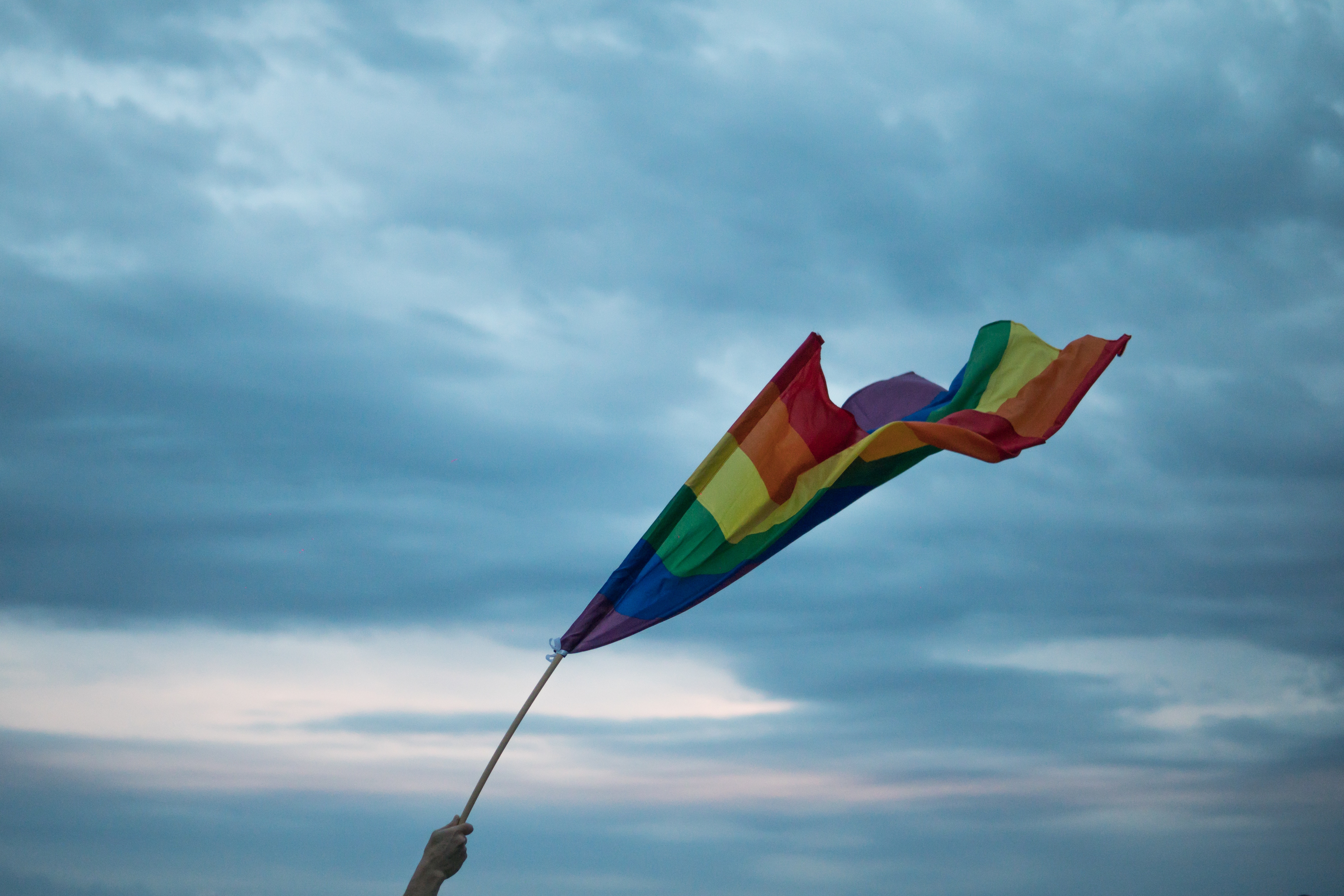
            Coming to the closing months of 2017, the topic of gender has become one discussed regularly. Singers, writers, actors, and anyone with a blog or Twitter have been allowing the gender spectrum to finally be allowed to step into the lime light. What exactly is gender? Does it even really exist? Or is this a concept that has expired? These questions have recently begun to nibble on the minds of more and more people. Even though gender has been discussed, written about, or heard in music, there is still very little education on this topic.

           To begin, there is a question that is still being ignored. A question as simple as “what are your pronouns?”.  As humans, we have conscious and subconscious thoughts. When meeting someone new or passing anyone on the street we consciously notice that they are tall or wearing green. Subconsciously we rack our brains and scan the person for signs of what gender we want to apply to them. Usually the only two genders we think of are male and female. The subconscious takes the conscious thoughts and tries its hardest to fit those “signs” into a gender puzzle. Playing the gender game is risky as there is little talked about the gender spectrum. There are many more gender identities than boy and girl. In fact, there is a wide wonderful range of identities and expression, this is why asking for someone’s pronouns is very important. Slowly but surely, the act of asking for pronouns when introducing yourself is becoming an everyday question, going hand in hand with asking for someone’s name.

            Somehow, asking “what are your pronouns” slipped into the category of an awkward conversation, but honestly, there’s absolutely nothing abnormal about it. For older generations, it may come as a shock and I’ve even come across people who didn’t know what a pronoun was. Immediately after a quick explanation the realization flooded their faces. Pronouns are something we are taught in school during English classes but are never really applied to real life. Through education and spreading awareness about the importance of asking for someone’s pronouns I believe the sentiment will become learned and automatic, at least there is hope.

           The greatest danger of not asking for pronouns is that it could cause someone to feel incredibly uncomfortable or upset. By assuming gender and using the pronouns he or she for someone who “looks like” a male or female can create major dysphoria (a feeling of unease or unhappiness pertaining to someone’s body, voice, and other factors that make them uncomfortable with their body), anger, and sadness. As well, there are many more pronouns then just he/him or she/her. The use of the singular they/them, and others such as ze, sie, hir, ey and so many more are used by countless people identifying under the transgender and non-binary umbrellas. All of these terms are loose and may be unknown, though the Internet is in your favour for research on these topics.

             With all of the information that is now provided and the activism that is happening all over the world, awareness is slowly being brought to the forefront regarding the LGBT+ community, especially around gender, and things are starting to change. “Millennials may be called the “gender-fluid generation” (Sophie Saint Thomas, Refinery 29). A larger percentage of the population identifies as transgender or non-binary than ever before.

             Labels and definitions aren’t usually something that people go actively seeking but as for the definitions of what is being discussed, the Webster definition of gender fluid is; “…: of, relating to, or being a person whose gender identity is not fixed…”. The debate over the difference of transgender vs. non-binary is ongoing. In many cases, people believe there is really no difference as they are both umbrella terms which cover the entire spectrum. Others believe that being non-binary means “genderless” or simply out of the gender binary and transgender is when you do not identify with the gender associated around your birth sex. People like Prince, David Bowie, Steven Tyler and more current celebrities such as Ruby Rose, and Amandla Stenberg have always, and are, demonstrating androgyny and gender-fluidity in pop culture. Even with these celebrities pushing the gender spectrum into the open, the education that is given to people needs an extreme improvement.

        Education of the LGBT+ community in schools is basically non-existent, that is why young people turn to the internet for answers. Clubs like Gay Straight Alliances, Genders and Sexualities Alliance or Pride Clubs exist in some middle and high schools but usually do not receive the same amount of interest as other clubs. These GSAs try their best to educate their peers and teachers with assemblies or celebrating things like “Coming Out Day” or “Day of Silence” where they promote the actions that must be taken to end the violence and inequality for the LGBT+ community. Health talks should be openly discussing not only sexuality but also gender identity and expression. English classes should be reading novels with gender non-conforming characters or politics classes focusing on these minorities in society and the politics that surround them. By beginning to hand out this information to teenagers and young adults, we hope that our generation will be able to continue the change that is being made with larger numbers of not only people identifying with the community, but with allies too. To be an ally you do not have to be any letter of LGBT, you only have to support the community full-heartedly. Spreading education, going to pride parades, or voting for the people in power who will actually help with the issues facing the LGBT community are all examples of what you can do to help.

           Simple, everyday things you can do to start change are things like asking someone’s pronouns and giving your own when meeting someone, or correcting people if they misgender someone who goes by another pronoun. Ask questions respectfully and offer answers to those willing to listen. So, to answer the question of what gender is, it’s completely up to you. You choose who you are and what you like to wear or present as. Your identity is your own and anything is possible, there are no rules to gender. We can all make change and take strides towards equality and awareness to this loving community by simply being ourselves and taking pride in who we are.

  • Social Inertia and Why Masuma Khan Did Nothing Wrong

    Social Inertia and Why Masuma Khan Did Nothing Wrong

    “… I must confess that over the past few years I have been gravely disappointed by the white moderate I have almost reached the regrettable conclusion that the Negro’s great stumbling block in his stride toward freedom is not the White Citizen’s Counciler or the Ku Klux Klanner, but the white moderate, who is more devoted to ‘order’ than to justice; who prefers a negative peace which is the absence of tension to a positive peace which is the presence of justice…”

    These were the words of Martin Luther King Jr., speaking from Birmingham jail in 1963. He addressed the existence of an important obstacle to social progress: the moderates of the cultural majority that wish to slow change to a comfortable pace; it is to impose order at the cost of justice. Whenever one attempts to defy or challenge unjust convention, one is met with the powerful inertia of the institutions and actors whose interests are served by maintaining the status quo – or who simply fear change.

    The Dalhousie student leader Masuma Khan encountered the white moderate this year, in her attempt to do her part in promoting racial justice. As a Dalhousie Student Union (DSU) executive, Khan introduced a motion committing to boycott Canada Day celebrations on campus. The motion passed, but the Nova Scotia Young Progressive Conservatives (NSYPC) complained about the motion on Facebook. Khan responded in a very inflammatory manner, for which Dalhousie unconstitutionally attempted to discipline her, based on a formal complaint filed by a fellow student, Michael Smith. Recently, Dal. decided not to go through with the disciplinary process, instead opting for a campus dialogue on freedom of expression.

    There are many complex and nebulous issues involving everything from race to freedom of expression which need to be examined. I do not arrive at clear answers that will satisfy most of you, but what is clear is this: the worst Masuma Khan has done is caused damaged feelings in her remarks; though, the necessary march towards a more equitable society that directly confronts deep-seated racial issues is a small price to pay. As I attempt to show, the NSYPC, Smith, and Dalhousie have essentially served as the white moderates Khan has had to fight. You may disagree with much of what I write, but I encourage you to voice that disagreement. Honest discourse among people of different political backgrounds is the only way to ensure only the best ideas come to fruition, furthering our march towards the Ideal Society – whatever that may be.

    To begin, it is important to delineate the position that the DSU has endorsed, namely Canada being a country born of colonialism, should not be celebrated every year as that would be an affirmation of the colonialism it was founded on, which involved (and still involves to a certain extent) the theft of land, disenfranchisement and cultural genocide of indigenous peoples. Dalhousie and Acadia University are in unceded Mi’kmaq territory. We have a long way to go, so Canada’s birthday is not a time to celebrate.

    But perhaps Canada Day does not celebrate Canada, per se, with all its dark history and current problems of accommodating indigenous minorities, from whose ancestors Europeans stole. Perhaps Canada Day celebrates the good parts of Canada, like the Charter of Rights and Freedoms. Thus, Canada Day is not a celebration of racism and oppression. But one cannot celebrate something by selective memory and consideration only of the positive properties something possesses. That is absurd. It’s like the Americans with southern heritage who celebrate the Confederacy. “But it’s not about racism; it’s about celebrating my heritage!” But your heritage involves racism – slavery, in fact — and you cannot escape that. So instead of celebrating, you should learn from the mistakes and evil of your ancestors and be a better person. This is painful and uncomfortable, but the world is a dark place; humans have done terrible things, and we should not forget that if we are to avoid these things in the future. If Canada Day is to be a celebration of only the good parts, make that explicit, and don’t call it “Canada Day”. Call it “What Canada Does Right Day”.

    The political and philosophical issues of Canada Day aside, many people are still upset when Canada Day is boycotted. Canada Day celebrates part of their identity, the nation they’re citizens of, or at least the nation they’ve chosen to work or study in.  Therefore, boycotting it feels to them like a condemnation of themselves. In a way, it actually is. Canada cannot do anything wrong without Canadians allowing it. We have the ultimate authority over our elected representatives, who make the decisions and have the power to ameliorate the situation minorities are presented with. We are thus collectively responsible for what our government does. The government does not have power over every aspect of everyone’s lives in our country, but for everything else, our society has some impact, which is mediated by our personal decisions. Canadians are responsible for all the good and bad, the freedom and oppression. Thus, it does indeed make sense for Canadians to be upset when people criticize our nation, but the proper response is not to simply whine about the criticism.

    On June 30, that is what the NSYPC did with a Facebook post, saying that Khan’s Canada Day motion was “disappointing.” We need to improve our nation, and universities especially should be providing critique, not “… instilling pride in our country” and avoid “attacking Canada”, as this political organization has suggested. That is preposterous and antithetical to the academic freedom and diversity of opinion that I am sure they would advocate for where conservative issues at stake, which explains some of the frustration in Masuma Khan’s response on Facebook.

    Though her post has since been deleted and I was unable to reach her for comment, she did write “At this point, fuck you all […] white fragility can kiss my ass. Your white tears aren’t sacred, this land is.” She concluded with the following poignant hashtags: “#unlearn150, #whitefragilitycankissmyass and #yourwhitetearsarentsacredthislandis” The profanity seems excessive, but not when you have the full context of the situation. Khan had reason to be extremely upset. She faced such strong opposition to anti-oppressive gesture. Though, as a white person myself, I can see why white students like Michael Smith, who submitted a formal complaint against Khan, could interpret these statements as racist and offensive. They are indeed prima facie racist. If one replaced “white” with “black”, it would be easy to see how black students would be offended. Of course, the statements would then be totally incoherent. White tears refer to frivolous complaints, whereas black tears refer to legitimate grievances. White fragility is a sociological phenomenon, but black fragility is not. White fragility is the condition of being excessively sensitive to racial tension, owing to a privileged status as a cultural majority, insulated from issues of race. White fragility is something minorities often have to confront whenever they discuss racial justice issues that implicate whites. To Khan, the NSYPC’s response to her Canada Day motion was an instance of white fragility.

    In a supreme bit of irony, Michael Smith wrote an op-ed for the National Post, published on July 10th, decrying Khan’s Facebook post and her Canada Day motion. Not only did he feel the need to ensure she was disciplined for her public views on race relations, but he also needed to complain about it in a newspaper. If this is not an instance of white fragility, I don’t know what is. Does he at least bring up good points in his piece? Is he charitable to her point of view? Not really.

    To him, Canada is a great country. “Canada is a welcoming country. We are blessed to be one of the most tolerant and multicultural nations in the world, where all individuals are free to pursue their dreams, regardless of their backgrounds.” Thus, “Canada Day is not oppressive, and those who celebrate it are not oppressors—Canada Day celebrates Canadians’ freedom from oppression.”

    This is a view I have addressed above. Pointing to her position as a student representative, he argues “… she has a responsibility to represent and respect all students, even those who hold views that differ from her own.” This seems reasonable, until you realize it means she cannot hold any public position on any issue, nor introduce any motion, for fear of not representing or respecting the view of some particular student, like Smith. This is a terribly high standard that no one could possibly meet without becoming totally ineffectual.

    Smith does not address white fragility, instead fixating on the notion of unlearning the narrative of Canada 150, presumably because it’s easier to attack. To him, this is concept of unlearning is “Orwellian”. Universities are for learning, not unlearning! In point of fact, unlearning is often an important part of learning. Growing up, we are constantly taught falsehoods that university professors need to help us overwrite, whether it be historical narratives or how human memory functions or even the metaphysics of free will. Smith does not seem to understand this, but he brings up another, actually interesting point in his piece. The DSU censored certain opposing views of their Canada Day motion on their Facebook page, referring to “racist and triggering” comments. This is unfortunate and perhaps wrong, but it is difficult to seriously consider Smith’s complaint, given the fact that he subjected Khan to possible disciplinary action for her own speech, and there are many dissenting views still openly expressed on the DSU’s page, such as: “DSU, your [sic] reaching cringe levels of SJWness” and “Dalhousie Student Union You ‘people’ are a fucking joke.” Smith also criticizes Khan for allegedly “laughing” and “smirking” at a dissenting councilmember during the meeting in which the Canada Day motion was introduced. This is proof that Khan is human, but not exactly an indictable offence that cannot be dismissed off-hand.

    Finally, in a shocking display of either intellectual laziness or dishonesty by a graduate student of history at Dalhousie, Smith uses his interpretation of what the Native Council of Nova Scotia (NCNS) stands for as a shield. He points to their call for unity and working together to eliminate disadvantage. He says “DSU’s divisive actions and rhetoric are diametrically opposed to such reconciliatory efforts.” In other words, natives need to fight for their rights without offending white people, otherwise we can’t work together. But that’s ludicrous and an unjust, impossible ideal. On the NCNS website, there are plenty of claims that Smith, I’m sure, would find “divisive.” On their page “Our Plight,” the NCNS says “The attempt to ‘put the Indian in his place’ forced relocation and dispossession from traditional ancestral homelands, and the attempt to ‘wean the Indian from his lands and resources’ remain the guiding theme of Indian Policy in Canada to this very day.”

    “These Government actions, schemes with singular purpose, carry forward and still remain the cornerstone of Canadian Indian Policy and Indian Administrative Measures codified in Canadian legislation as the Indian Act. This policy of a by-gone era remains the greatest source of human rights violations, shame, calamity and ongoing concern both within and outside of Canada. This policy is now drawing international notice, and forms a basis for United Nations fact finding missions to Canada and countless Court challenges by Aboriginal peoples.”

    Smith surely would have been upset about these statements, had he bothered to do more research as to the NCNS’s full position on native affairs. But I do not think he actually cares to, given his view that “Canada is a welcoming country. We are blessed to be one of the most tolerant and multicultural nations in the world, where all individuals are free to pursue their dreams, regardless of their backgrounds.” If Khan did anything wrong at all, it was to incur the wrath of individuals like Smith.

    But of course, while Smith had the ability to get an op-ep published, his formal complaint would have meant nothing, were it not for Dalhousie. According to Khan, it addressed the complaint by offering an informal resolution process, asking her to write a reflexive essay and undergo counselling, implying her position was obviously untenable and worthy of mental health treatment.

    This is obviously absurd, unhelpful, counterproductive, as it treats Khan like a child, not an adult-aged political actor. She obviously refused to comply, leading to a formal process. Fortunately, this ultimately incurred the ire of Dalhousie senators and law professors, unhappy with the de facto suppression of free speech. The lawyer Nasha Nijhawan also chose to represent Khan pro bono in challenging the disciplinary action. On October 25th, the university finally decided to back down, opting for a campus dialogue on freedom of expression instead, thus far excluding Khan. In the end, Dalhousie and Smith failed to silence her, only amplifying her voice. And it is safe to say the NSYPC has had little impact. Perhaps sometimes the inertia of the status quo unintentionally serves as the impetus for activism.

    Nevertheless, there is a sociopolitical force faced by activists who wish to bring about some change, a force propounded by people and institutions who are either conservative in some fashion and believe any change must not offend them or who have simply subscribed to the doctrine of gradualism. This doctrine asserts that the status quo is generally great; people who disagree are largely aberrations or idealistic children. Things aren’t perfect right now, but we cannot change too quickly. Allowing people to endure injustice is somehow better than the risk of some chaos. Presumably, conservatives like Smith and the NSYPC do believe in improving the lot of natives, but they apparently believe it has to be done without offending their sensibilities.

    As an activist politician, Khan is inconvenient to the gradualists and de facto conservatives. Reflexively, they attempted to silence her in their own ways. This backfired and started a national discussion of the issues, which I have humbly attempted to partake in. Writing from the traditional land of the Mi’kmaq Nation, I say this: Masuma Khan did nothing wrong, aside from causing discomfort. But discomfort is not inherently bad. In fact, it is often good. Very little social progress is ever made while people are perfectly comfortable. Had Khan not made her comment, we would not be having this discussion, and important issues would have gone largely ignored. Despite the three forces of the status quo I have discussed, Khan persists.

    To her, I say white fragility can kiss my ass too.

    Michael Smith’s op-ed: http://nationalpost.com/opinion/michael-smith-dalhousie-student-unions-ban-on-canada-day-celebrations-was-shameful

    The Nova Scotia Young Progressive Conservatives Facebook post: https://www.facebook.com/permalink.php?story_fbid=1933216870290439&id=1637758323169630

    Dalhousie Student Union “Unlearn 150” Facebook Post: https://www.facebook.com/dalstudentunion/photos/pb.40582581617.-2207520000.1499364126./10154335655046618/?type=3&theater

  • The Emancipation of the NARP

    Yes, you have read that correctly. It’s something you may have said aloud, but never read in text –nevertheless it is a part of campus culture. Or maybe this is your introduction to the topic. NARP, non-athletic-regular-person. A term often applied to those who do not participate on a varsity or club team at Acadia, a concept which I am sure is prevalent on other campuses. Full disclosure: I am considered to be a NARP.

    This is a term that I would like to take back! Turn it into one of those, “I-can-call-me-that-but-you-can’t-call-me-that” situations. Sort of in the same vein of, I can make fun of my family, but don’t even think about talking bad about my mama. This term holds a negative connotation, of course, because who wants to be called a “regular person” (unless you are very odd like myself, and “normal” would in fact be a promotion in society)? But, I would like to argue that there is a silver lining for those who feel they are on the fringes of adoration due to the lack of their hand-eye coordination.

    To all of you non-athletic angsty almost-adults – take this as an opportunity for indulging your ironic side. If that isn’t hipster bait, I don’t know what is. Stick it to the man, man. Imagine all the buttons you could wear on your retro jacket: “I peaked in high school”, “Badminton MVP 2014”, “Ur Fav NARP”, “Benchwarmer”, “Intermural CHAMP” or “Not a Scrub, But Got Scratched” and “I’ll come to all of your games”. By acknowledging the difference, instead of wallowing in it, I think there is a great opportunity for some counterculture and self-deprecation in the healthiest sense. Instead of succumbing and contributing to the dichotomy between the two groups, remember that both groups are made up of strong individuals. Therefore, I believe there may be a small need for people to get over themselves, and add just a dose of reflection perhaps.

    No, you may not have the abs of a god, but are you healthy? Do you exercise regularly? I’m sure you enjoy sports in some regard. Then, who says you are not athletic or deserve self-worth? So, you don’t have an institution that recognizes your athletic ability, but you should be thankful for any good health that you may possess. Yes, you may be intimidated by the awesome swag that athletes possess (jackets, shirts, etc.), but haven’t they earned it? I don’t have to balance an insane schedule, which is upheld only so that I can physically exert myself. Ew, no thank you, blah. So, don’t fall completely to the folly of material possessions (such as varsity swag) and their status.

    But, if you desire to play the status game why not make your own NARP uniform? Glasses that fall apart, your slept in department sweater, and… YOUR NEW BUTTONS! It is all just a question of confidence in your self-identity. So why not express yourself in an organization which already exists, or create your own? Or, you just do you. Whatever that means, and don’t worry so about your perceived value.  Don’t sweat it, leave the sweating to the athletes.

    At Acadia, we have the first overall rate per capita of Academic All-Canadian Athletes in the country. WOAH! The accomplishment of student athletes is the accomplishment of all Acadia students, one for all Axemen and Axewomen. It’s all about school pride, right? So, find an outlet which you can take pride in, ya NARP. Don’t let the athlete and NARP relationship become a rigid binary, and remember that both groups are made up of great people. Complex people that are multidimensional.  Combat this and become a part of a team of your own, whatever that may be: photography, social change, clubs, or write for the paper (please)! Forge your own identity.

    P.S. I do somewhat foster a theory deep down that the Kinesiology Department could possibly be the secret police of Acadia. Kinesiology… Kine…K.I.N.E = Knowledge In NARP Extinction. I don’t know, I am just putting it out there, in case you never hear from me again.

  • Selling a Sustainable Future: What Individuals Could Create

    Selling a Sustainable Future: What Individuals Could Create

    Fear, facts, and the seemingly uncontrollable big picture will not motivate individuals to make a change for sustainability. Climate change has positioned the global community at a turning point and there are only two ways to go: continue business as usual to crash and burn or make the challenging changes and sacrifices for a prosperous future of the generations to follow. Both options do not sound ideal. Business as usual may lead to wars, economic uncertainty or prosperity, but at what cost? Lifestyle sacrifices for the potential future of generations to follow also does not sound appealing. It is important for optimist activists to sell change with positive and beneficial lens.

    The average middle class North American family may not be the first to jump on board with the idea of replacing their home heating with solar power or redesigning suburbia to introduce more public transportation, in order to reduce environmental impact. The average middle-class family may be more attracted to the idea of lowering their heating bills and shorting their commute to work. Understanding the market you are trying to convince is key in selling sustainability.  Climate change facts no longer change the actions of individuals. In North America’s consumer culture, it is important to adjust the consumer world so that it benefits climate change action. Marketing the benefits of sustainable home design, public transportation, community design, trading currency and community collaboration will be key in moving towards a more sustainable future.

    Imagine a community where neighbours come together for meals regularly. Imagine a community where people from all walks of life don’t feel isolated because it a social norm to check-in and ask people how others are doing. Imagine a community where kids run from house to house playing with kids of all ages and there is trust that, as a community, all members will keep an key on the children. Imagine a community where food is grown locally and equally dispersed, where children don’t go to school hungry. Imagine a community where mothers don’t have to work three jobs to support their kids because their neighbours are willing to help provide for each other, as the community supports strength is in numbers. The foundation value of community is support. Working together allows communities to reach further than working apart.

    A sustainable future is attractive and aligns with core human values, such as connection, success, and stability. A community that has created meaning and appreciation of what they have, will natural also protect the environment that surrounds it. Sell the sustainable future individuals can imagine accomplishing, make it possible. Living sustainably together is the future each citizen can create, climate change action activist must sell it, promote it and live it, then others will follow. Show the generations to follow what sustainable communities can be, then watch as the value of sustainability transitions from an unrealistic ideal of “delusional activists” to a valued and supported mindset.

  • Girls and Sex: An Overview of how Peggy Orenstein Navigates a Complicated Landscape

    Girls and Sex: An Overview of how Peggy Orenstein Navigates a Complicated Landscape

    Some of us grew up in semi-liberal or liberal households. Some of us grew up in conservative households. At one point or another, our parents would openly discuss the harms of drug and substance abuse, the negative consequences of consuming alcohol before 19 (or 18, in some cases), and why it is important to always follow the rules. As I continued to get older, I became more aware of the generation gap between my parents and I. This gap between mothers and daughters, and mothers and fathers has become even more evident as I see my parents’ friends struggling to make their way through the adolescent years of their teenage daughters. Even in the age of the “helicopter parent” there is a continued stigma and discomfort around the notion that their daughters have the potential to have a sex life. The same notion is not met with the same level of discomfort when their son’s sex lives are the topic of discussion.

    At this point, it is safe to say that blaming girls’ clothing for boys’ sexual drive is counterproductive. However, we must first look inward at the ways in which girls’ clothing is marketed in comparison to boys. Orenstein writes about the methods that are used to market girls’ clothing. It is evident that boys’ clothing isn’t centered on the idea that they should bare their bellies and wear short-shorts when they dress, so why is this marketing tactic targeting girls from a young age? If we dig deeper by using Orenstein’s study as a framework, we may be able to see a correlation of self-objectification. Orenstein offers a strong definition of self-objectification: the pressure on young women to reduce their worth to their bodies and to see those bodies as a collection of parts that exist for others’ pleasure; to continuously monitor their appearance; to perform rather than to feel sensually. Could the marketing tactics of young girls’ clothing be subconsciously objectifying them? Could it be leading them towards a road of lower self-esteem and doubt? Perhaps it is the lack of conversation surrounding female sexuality on behalf of the parents, who often perpetuate the stigma from a young age that it is okay to follow media and gender norms by going along with fashion trends that sexualize the female body, but having conversations about how to engage in sexual activity safely is out of the question.

    However, the stigma around young women’s dress is more likely to have damaging effects. It begins with the media normalizing how young girls are supposed to dress, what toys they are supposed to play with, and what shows they are supposed to be watching. By submitting to these cultural norms, their experience is shaped to fit a particular model. Parent’s discomfort with the teenage sex drive is actually more harmful for young girls’ self esteem, further creating a more difficult landscape for these girls to navigate.

    Orenstein conducted an interview with 71 young women. In this series of interviews, she asked questions about the girls views on sexual conduct, what they hoped to get out of their sexual encounters, and how the level of discomfort they felt when talking about these experiences with family or their peers. The results were alarming. The general consensus was that their friends became an audience to be sought after and maintained, that their engagement in the sexual experience was not for their own pleasure, but more so for the purpose of fulfilling their partner’s “needs” before their own, and so that they would have stories to share with their friends to not come off as “prudish.” Not only is this behavior harmful to girls’ self-worth, but it can also be related to mental health issues. Orenstein describes this phenomenon as “using your experience to create an image of yourself.” Essentially, the more experience you gain sexually (even if it is not for your own enjoyment), your social status will be higher.

    Let’s shift into a discussion about the negative consequences of social media. It is a game, and one that you need to play correctly in order to be “accepted” by your peers. Orenstein uses Sarah* as an example. She talks about a girl in her high school who continuously posted selfies. It was the general consensus that she either had no friends or was completely self-absorbed. It was never thought that, perhaps, this girl just enjoyed posting pictures of herself. The impacts of social media use have severe impacts on girls (and boys) well-being. Are selfies empowering or oppressive? Are they used to control girls and constrict them within a particular social norm, or are they a useful tool for expression and exclusion? When we are faced with these discussions there is rarely a strait and narrow path to follow, it perpetuates the ideology that there is a difficult landscape to navigate when it comes to teenage girls and sex.

    Why is it called a blow “job”? The expectations for women’s bodies just continue to perpetuate a pre-existing notion of the misogynistic roles they are expected to fill in society: subordinate. Just before the Bill Clinton scandal in the White House, a 1994 survey in America revealed that just over 50% of women had never performed fellatio on a partner. In 2014, these numbers have alarmingly increased. A story in the New York Times declared that sixth-graders were now more inclined to treat fellatio “like a handshake with the mouth.” Has this practice been normalized because of the ever-growing presence of social media? Or is this stemming from the need to form an image of oneself, one that favors the female’s role in sex because it is increasingly being viewed as “normal.”

    Sexually active teenage girls are often referred to as “sluts.” Sexually active teenage males are often referred to as “players.” It is extremely evident that this is a problem. Normalizing and gendering sexual behavior in teenagers is not only dangerous for their physical well-being, but also their mental well-being. Stigmatizing a normal practice (don’t turn your noses up, we are all human and puberty is a confusing, hormone-ridden, emotional roller coaster) to favor one gender over the other is not only wrong, but goes deeper to perpetuate gender roles in society as a whole. It targets women to be submissive, to be ashamed of their bodies and their desires, and calls them to question their characters for having a sex drive as a teenager. The media has sensationalized the idea of casual sex, yet targets and shames women who engage in this practice. The sexualized nature of the media not only encourages young women to call their self-worth to question, but it also perpetuates particular ideals about virginity, their role in the sexual landscape, and how they should go about the complex terrain of the “hookup culture.”

    I am not a mother. I have no experience with parenting and I do not know how to care for someone who is entirely dependent on me. I write this article as an opinion piece, based off of my own experiences and the study conducted by Peggy Orenstein. If I may suggest one thing, it is that we call to question preexisting norms about teenage girls. I suggest that we become more open to discussion with these young women, who will someday be the future. I call all parents to step outside of their comfort zones and talk openly about sex with their children, which is a conversation I never had with my own parents (comfortably). This is a difficult landscape to navigate, with a variety of different factors influencing behaviors, interactions, and personal decisions. Opening up the floor to a more inclusive, non-gendered conversation about sex is what we may need in order to help maintain teenage girls self-esteem, let them know their worth, and ensure that any decision they make regarding their bodies is just that, their own.

    For reference, please pick up a copy of Peggy Orenstein’s work.

    Peggy Orenstein, “Girls and Sex: Navigating a Complicated Landscape”, (New York: Harper-Collins, 2016): 1-236.

Betzillo positions itself as a versatile gaming hub where structured bonuses and adaptive gameplay mechanics support both short sessions and extended play.

Built with a focus on innovation, Spinbit integrates modern casino architecture with rapid transactions, appealing to players who value speed and digital efficiency.

Ripper Casino emphasizes bold entertainment through high-impact slot titles and competitive promotions crafted for risk-oriented players.

A friendly interface and stable performance define Ricky Casino, offering a casual yet reliable environment for a wide spectrum of gaming preferences.

King Billy Casino channels classic casino spirit into a modern platform, delivering recognizable themes supported by contemporary reward systems.

Immersive visuals and layered slot mechanics are at the core of Dragonslots, creating a narrative-driven casino experience.

Lukki Casino appeals to players seeking direct access and minimal friction, focusing on fast loading times and intuitive controls.

Casinonic provides a structured and dependable gaming framework, blending modern slots with transparent operational standards.