
Tag: referendum

  • SRC Decoded: What You Missed April 2nd

    SRC Decoded: What You Missed April 2nd

    The Students’ Representative Council (SRC) is a council composed of a body of students elected by their peers, who are in charge of running the Acadia Students’ Union. The Council meets bi-weekly on Tuesdays at 5:15 PM in the Beveridge Forum which is located off of the Michener Lounge in the old Students’ Union Building (SUB). Every meeting is open to the public and students are encouraged to attend the meetings to learn more about the decisions being made on their behalf.

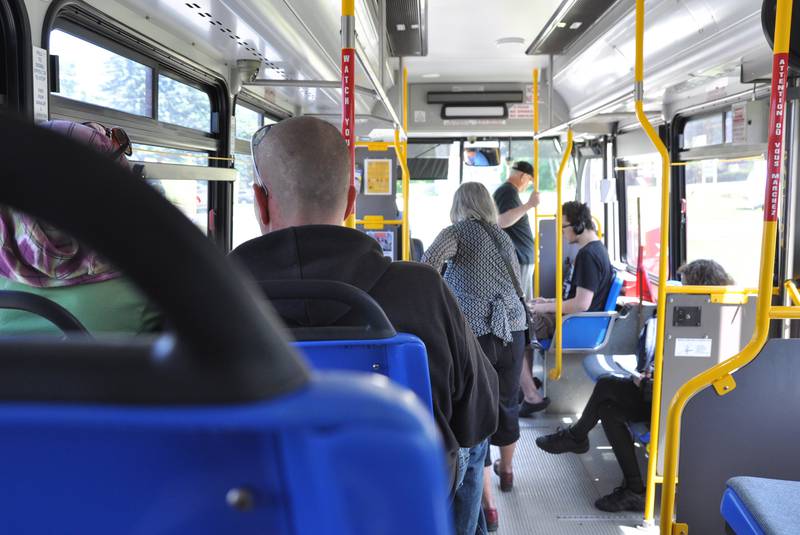
    On April 2nd the council met to vote on multiple motions, including the Kings Transit University Bus Pass (Upass) Agreement and referendum question. George Philp, ASU President, presented news from the Board of Governors along with a federal budget update from The Government of Canada. Additionally, the Special Election Exit report was also scheduled to be discussed this evening and the meeting was graced with significant audience turnout.

    Kings Transit University Bus Pass Agreement

    The meeting began with the objective of voting on the Kings Transit UPass Agreement (MOU) that was proposed to council two weeks ago. Sebastian Farkas, Councillor, kicked off the discussion with the expression of some concerns regarding the MOU to the council and suggested that instead of the Upass being mandatory, an opt-out would be a significant addition to the agreement. Councillor Jonah van Driesum supported Farkas’ proposal, adding that the $180 dollar fee may be too much for some students to pay. In response to both Farkas and van Driesum, Meg Hodges, an elected Councillor for the Municipality of Kings and Board Chair for King’s Transit Authority, announced that Kings Transit has discussed the addition of an opt-out but the goal is to not increase the fee past $180 and adding an opt-out would cause the price to rise for students who do not opt-out.

    Dahlia Chahine, Student Board of Governors Representative, expressed the concern that if the Upass wins a majority vote in a referendum, then there may be a backlash from the 80% of the student population that typically doesn’t vote during by-elections. ASU President George Philp responded to this concerning by stating that the last by-election dealing with a matter similar to this (Axe renovations) had a significant uptake in voter participation due to the subject matter of the vote differing from normal elections. While Philp cannot predict the turnout for a Upass vote, the Axe renovation vote does provide some insight into a potential case.

    The conversation regarding the MOU continued for a few minutes before leading into the vote. Ten members of council voted to pass the MOU with two members voting against, resulting in the Kings Transit Upass Agreement being passed and the Upass moving to a referendum in the fall.

    Kings Transit University Bus Pass Referendum Question

    Directly following the conclusion of the vote on the Kings Transit University Bus Pass Agreement, the council began to discuss the referendum question that will be presented to students voting in the fall. Amar Randhawa, Professional Studies Senator, suggested it would be a great idea to add the $180 fee to the actual referendum question. This would change the question from “Do you support the implementation of a mandatory Bus Pass (“UPass”) Program, which includes the following terms?”, to “Do you support the implementation of a mandatory fee of $180 to pay for a Bus Pass (UPass) Program”. Some members from the gallery rebutted Randhawa’s suggestion, stating that the proposed new question seems slightly slanted towards the Upass being a negative idea. The table then discussed how they could potentially change the question to include the $180 fee in a different way. There were many suggestions from the council regarding stressing the mandatory fee and the best way to do so.

    Eventually the motion to leave the referendum question as is was presented to the council with eight members voting to pass the referendum question as is and four members voting against.

    New Business

    All of the notice of motions from last week were scheduled in the agenda to be voted upon during this SRC meeting. The council voted unanimously to accept the changes made to both the Operating Procedure #3: Policy Development and the Student Organization Registration Procedure. The council also voted unanimously to pass the Student Organization Funding and Services Procedure which is a new policy determining how student organizations apply for funding and what funding they are deemed eligible for.

    Board of Governors

    Philp announced to the council that they are required to appoint one executive member and one non-executive member from the in-coming SRC to be representatives on the Board of Governors. Philp nominated Yoram Schroll, incoming VP Finance and Operations, to the council as the executive representative due to the fact Schroll has expressed interest to Kyle Vandertoorn, incoming President. Philp noted to the council that traditionally the executive representative is the VP Finance and Operation because the Board of Governors typically discusses a lot of financial aspects in their meetings. Additionally, Schroll is an international student and will add some international representation to the Board of Governors. The motion to appoint him was presented to the council and passed unanimously.

    Nicole Kirkpatrick, incoming Science Senator, has also expressed interest to Vandertoorn and was nominated to be the non-executive representative on the Board of Governors. Philp explained that Kirkpatrick will be in Wolfville over the summer which is important as the Board of Governors first meeting of the fiscal year takes place during the summer. It would be an additional Bonus, Philp added, if the Board of Governors had more female representation on their board. The motion to appoint her was presented to the council and passed unanimously.

    Special Election Exit Report

    The Special Election Exit Report was due to be accepted by cancel today but Philp proposed the motion to table the report in order for council members to have more time to look over it. The council unanimously voted to table the report until next week.

    Federal Budget

    On March 19, 2019, the Federal Government of Canada released its 2019 budget which Philp presented to the council during this meeting. Philp announced that student researchers will benefit from new master’s and doctoral level scholarship awards from the federal government, as well as the addition of an extended paternal leave if necessary. The federal government is set to invest $630 million over 5 years towards work-integrated learning programs such as co-ops and internships. It is estimated that this investment will create 84,000 new work opportunities for students. Additionally, the federal government plans on helping students with disabilities who often require specialized equipment to assist them in their studies and the grant provided to help cover these costs is being raised from $8,000 to $20,000 a year.

    Rylie Moscato is a first year English student and incoming News Editor of The Athenaeum

  • SRC Decoded: What You Missed November 20th

    SRC Decoded: What You Missed November 20th

    The Students’ Representative Council (SRC) is the body of students who are elected by their peers to run the Acadia Students’ Union. Council meets bi-weekly on Tuesdays at 5:15 PM in the Beveridge Forum which is located off of the Michener Lounge in the Students’ Union Building (SUB). All of their meetings are open to the public and students are encouraged to attend to learn more about their representatives and the decisions that are being made on their behalf.

    Mayor of Wolfville Speaks to Council

    Mayor Jeff Cantwell had a brief discussion with Council, primarily to acknowledge the difficulty of conducting of a by-law review and to acknowledge the hard work put in by ASU President, George Philp, along with the rest of the SRC. Cantwell mentioned the current petition in favour of implementing a Kings Transit U-Pass, which would provide students with unlimited use of enhanced Kings Transit services for $20 per month per student. With this suggestion, ASU President George Philp laughed and stated that “it never goes away”. Cantwell concluded his talk by encouraging everyone to contact the Town of Wolfville and Town Council Members with any comments, questions and/or concerns. He also shared that the Town has a wide variety of staff and programming that can provide quick and easy answers for students and community members alike.

    Students Nova Scotia

    Tristan Bray, Executive Director of Students Nova Scotia, and Makenzie Branch, VP Academic and External and one of Acadia’s representatives to SNS, shared information Founded in 2003, Students Nova Scotia is a member-driven non-profit organization that represents over 20,000 students across the province. The organization aims to identify and research student issues, come up with solutions, and lobby the provincial government to seek better learning environments and supports for post-secondary students across the province. Their four main pillars are accessibility, affordability, quality, and student voice and these values guide the organization throughout its decision-making process. The current priorities of the organization including student financial aid, health care for international students, sexual violence prevention and promotion, increased mental health supports, and increased student employment opportunities.

    Project Proposals

    With the semester coming to a close, several council members brought forward their project proposals to be accepted by council. The first was from VP Finance and Operations, Jared Craig, who proposed a financial literacy event that will teach students about budgeting, credit card use, student loans, debt, etc. This will be taking place on Thursday, November 22, 2018 at 5:00 PM in the Michener Lounge and will be facilitated by representatives from Enactus Acadia.

    The second proposal was by Theology Senator, Zachary Goldsmith, who proposed the promotion of Chapel Lunch on Wednesday, November 21st, 2018, which takes place from 11:30 AM-12:15 PM the Acadia Divinity College.

    Student Board of Governors Representative Dahlia Chahine proposed a semester re-cap, which will go over the main events that have taken place so far this year. It will be a document which will be circulated around to students, to be completed by the end of the semester.

    Councillor Alyssa Hall proposed putting condom containers in the bathrooms of The Axe, which will run for a two-week trial period.

    Arts Senator Katie Winters and Councillor Sebastian Farkas are planning a career building event primarily directed towards Arts students. There will be professionals available to review cover letters and resumes, help with interview preparation skills and take professional headshots for participants. It will take place on Monday, November 26th, 2018 from 4:30 PM to 6:00 PM in BAC 138.

    Professional Studies Senator Amar Randhawa proposed a student meet-and-greet at the Axe Bar & Grill on either November 26th or 27th, 2018 from 5:00 PM to 7:00 PM. The goal is to allows students from all faculties to build relationships with one another.

    Science Senator Mackenzie Jarvin will be bringing in therapy dogs from St. John’s Ambulance. It will be taking place on December 3rd in the MacKeen Room, from 4:30 PM to 7:30PM.

    Sustainability Officer Hannah Machat will be organizing a workshop involving “The Tare Shop,” which is a waste free shop in Halifax, NS. Kate Peppler, owner of the shop, will be present at the event, and the goal is to teach students about plastic free initiatives that focus on a waste-free holiday season.  It will be taking place on December 1st, 2018 from 2:00 PM to 4:00 PM at the Wolfville Farmers Market or the SUB.

    Equity Officer, Kate Hamre, will be showing “The Hunting Ground”, a sexual violence film series, followed by a discussion period. It will take place in the KCIC Auditorium on November 26th, 2018 at 6:00 PM.

    All events will be promoted through Acadia Students Union social media with location and dates/times to be confirmed in the near future.

    By-Law Overview

    The majority of the meeting consisted of discussion with ASU lawyer, Tom MacEwen, about the current By-Law Review and the draft by-laws. For a full overview of the proposed changes, check out the ASU website.

    For the most part, MacEwen provided his rationale behind each change in the proposed by-laws. Discussion ensued with several Members of Council expressing their displeasure with proposed changes that remove the petition process for referenda and impeachment of Council members by their constituents. MacEwen stated that the decision was made to prohibit the potential logistical issues that may come with vague referenda questions. An example that was given was the Kings Transit U-Pass Program, which, if passed, will require the Acadia Students’ Union to set up a new student fee, collect fees from students and remit these fees to Kings Transit.

    Councillor Chris Vanderburgh contested the removal of the process stating, “you don’t set up a framework for democracy because it is easy, you do it because it is right.” Students who attended the meeting, Ruvimbo Chipazi and Kyle Thompson-Clement (Arts and Culture and Opinions Editors of The Athenaeum, respectively) also raised concerns with this decision. Chipazi pointed out that, even though most Council members are elected, only roughly 35% of the student body votes, so the Council may not reflect the true wishes of the student body. Thompson-Clement stated the possibility of a future Council being complicit, thereby reducing the opportunity for impeachment. MacEwen raised the point that if enough students are willing to get together to complete the process of impeachment by petition, it is likely that they should be able to convince at least one Council member to bring it forward instead. The discussion concluded with ASU President George Philp motioning to send this issue to the ASU Governance Committee to review and consult with students.

    Council adjourned without completing the entire overview of all by-laws, which will continue on Tuesday, December 4th, 2018 at 5:15 PM. The proposed bylaws will be considered for adoption at this same meeting after being introduced on notice of motion at this meeting.

    Ailish Bergin is a second year Politics student and Columnist for The Athenaeum.

  • Should They Take my Political Rights? Yes or No?

    Should They Take my Political Rights? Yes or No?

    Look, I wouldn’t blatantly say it’s a power grab. But, at the same time, I can’t say it’s not. It’s either a power-grab or the people who we’ve elected to represent us don’t understand how centralizing power strips Acadia students of political agency.  All the buzz around the Acadia Students’ Union (ASU) is surrounding their proposed amendments to the bylaws. By and large I’m fine with the majority of these changes.

    However, the proposed changes to By-law 4, specifically that “the proposal would allow only Council-initiated referenda” are out of touch with the ASU’s mandate which “advocates for the rights of the students of Acadia within our university, within the Wolfville and Valley communities, and to the provincial and federal governments.” Instead, the proposed changes would require students to submit a question to the SRC first and require them to vote in favour of posing the referendum question to the student body. In English, this means that students would have no way of having their desires voted on by the student body at large if Council didn’t approve.

    Let’s play out a fictitious scenario to describe how big of a power move this is. Don’t like fair trade coffee on campus? Do you think at least half of the students on campus agree with you? As it currently stands, a student who answered yes to one or both of those questions could circulate a paper petition to collect enough signatures to trigger what’s called a referendum question. Essentially, this means that at some point the ASU will put this question to a vote for the student body to decide whether they agree with the petition or not. In the case that the majority of students vote yes, the ASU would have to attempt to realize whatever result comes from the referendum. The process of having student-initiated referendum questions allows students to participate more directly in student politics.

    “Now, Kyle, you sit here telling me that removing this ability from the hands of students may not be a big deal since the ASU is supposed to serve us anyway. Why, then, is submitting the question to them first such a big deal? Surely, our council cares about students and will do what’s in students’ best interest.” While well-intentioned, this sentiment assumes that the ASU both knows exactly what the student body wants at all times (this is very hard to do, even at a small institution), and more importantly it suggests that the ASU will always work with students rather than against them.

    Remember that fair trade coffee example? Well, after the proposed changes, a student would not be able to trigger a referendum question with a petition without the approval of the ASU. Here’s the thing though: there is no guarantee that the ASU will recognize the petition as an important student issue. Accordingly, the ASU could basically say “you know what, we don’t really want to ask this question because we don’t think it’s our responsibility.” They could choose to completely ignore the wishes of students who have collected enough support over an issue simply because they don’t want to.

    I don’t think words could describe how dangerous the precedent set by these changes is. Limiting students’ abilities to access the SRC (which is already confusing and tough to navigate as a student) is dramatically out of step with ASU values. It makes no sense for a student union that claims to be advocating for student rights  to continue to support proposed amendments that at best limit students’ ability to access the ASU, and at worst set the precedent for the ASU to limit students’ political power, and consolidate it within their own ranks.

    After repeated requests for comment, I was able to sit down on the record for an interview with ASU Councillor Christopher Vanderburgh. Christopher immediately made it clear that “he was there solely in his capacity as a Councillor within the students’ union, and that any of the proceeding statements are not endorsed by the students’ union.” Christopher believes “it’s important for students to hear observations from those who are well-acquainted with ASU procedures regarding the proposed Bylaw changes; specifically Bylaw 4.” He adds that “a referendum is a yes or no question that is proposed when we vote. As an example: should fair trade coffee be sold on campus? Yes or no?” Based on this answer- since the ASU’s mandate is to serve students- they would have to execute policy to fulfill the desires of students.

    When asked if he thinks the ability for students to submit petitions could actually see meaningful change on campus he said “[the ability for students to petition for referendum questions] is an excellent tool for students to ensure that their goals are being met by the union.” When asked for a real-world example of this, Christopher mentioned a referendum question that was added to the ballot which asked if students would accept additional students fees every year to support the renovation of the Axe Lounge. However, he notes that “that question was brought forward by the union itself.” Nonetheless, a referendum was used to gauge student support for something that affects a large portion of the student body.

    When asked about the proposed change to Bylaw 4 and what this means for student accessibility to the union Christopher stated ”you wouldn’t lose your ability to have a referendum. What you would lose, is your ability as a student to have a petition signed by the required amount of signatures … to initiate a referendum question. Instead, students would have to bring this petition forward in front of a general meeting of council.” He continued to explain “what makes that more difficult, whether or a referendum would happen (to his understanding), it would have to be at the behest of the ASU.”

    Further, he explains that “if you want to see a big change at Acadia, and you want to see the ASU get behind it in a big way, that is how you operationalize it.” Finally, Christopher gave the following warning: “Make no mistake, this is damaging to the union, and this is damaging to the way students operate within the union.” He continued to explain “the ASU brought up a number of concerns, regarding how the Bylaw stands now. The theory is if a student wanted to do something drastically difficult, and they got the petition through and the referendum passed [student votes totalled a majority] the ASU would have to support the results regardless of what it is.”

    Christopher continued to explain “if students were able to successfully collect signatures on a petition, and if the following referendum results yielded a majority, IT IS THE ASU’s JOB TO DO THAT”. Further, he notes that ‘this is the case regardless of the logistical challenges that come with that responsibility.” Christopher concluded that “he thinks the ASU does a lot for students … and that he believes the ASU has put a lot of work into amending the bylaws.” But he adds that he thinks “proposed changes to Bylaw 4 are damaging to student rights within the framework of the union, and they are damaging to the democratic processes within it.” 

    When governments, unions, or businesses limit power to only a few sources it drastically increases the ability for such regulations to be abused. This especially happens with older traditions, or procedures that are deemed as morally good or the way it’s always been. If this isn’t a power-grab from the ASU, they are seriously naive and complacent of the danger such amendments would have for the democratic structure/processes of the ASU.

    Kyle Thompson-Clement is a fifth year politics major, the Opinions Editor of The Athenaeum, and Vice-President of the Acadia Model United Nations Association.

  • Editorial: Bylaw Revisions are Undemocratic

    Editorial: Bylaw Revisions are Undemocratic

    The Acadia Students’ Union recently released the revised bylaws to be voted upon in the next few weeks. These come after last year’s General Election which nearly caused a constitutional crisis and led to the resignation of the Chief Returning Officer. There is no doubt that the bylaws needed to be overhauled to ensure the stability of the Union and to ensure that the ASU lives up to its mission statement– serving its members through effective representation and communication, offering innovative services to enhance the student experience at Acadia.

    Revisions to these bylaws have come after the Students’ Representative Council (SRC) approved a $10,000 payment from the Wellness Fund to the ASU lawyer Tom MacEwan to assist in the redrafting. Numerous consultations occurred in the last academic year and during this academic year to provide students the opportunity to voice their concerns.

    The changes include:

    Three non-executive positions– the Student Board of Governors Representative and two Councillors- have been axed while the number of Executive positions has stayed the same. These positions had been considered redundant by some, but the proposed structure would give the Executive a greater share of the SRC to influence votes and major decisions.

    Students can no longer initiate referenda by petition under the new bylaws. Only referenda approved by the SRC can be put on the ballot rather than those initiated by the students they represent. Under the current bylaws students can initiate referenda with a petition holding signatures from 10% of the student body. Even under federal law a petition can be presented in the House of Commons if it has 500 signatures. In the UK 100,000 signatures are necessary for a debate by Parliament.

    An international student representative is still missing. Despite the fact that almost 15% of Acadia is composed of international students there is still no formal representative on SRC to represent them. The Diversity and Inclusion Representative is a step in the right direction, but a dedicated international student representative is still necessary.

    The SUB Renewal Committee is gone. Last year’s SRC passed a resolution that created a standing committee with the task of ensuring that the renewal of the Students’ Union Building is directed by students for students. The new bylaws propose to axe the committee, presumably leaving the power to decide how the building is shaped in the hands of the Executive or to the university and their donors.

    Powers of the Chief Returning Officer to conduct independent elections are reduced. In their stead, an Elections Committee composed of Council members has more authority than in previous years. In a perfect world the Chief Returning Officer would have the authority to conduct elections independent of the SRC to ensure that current members of Council do not sway decisions to ensure their friends win. We understand the need for a committee to exist, since the CRO cannot do it by themselves, but an ASU committee with interested Council members is problematic.

    Union Media has no power to endorse candidates or positions. The principle of a free and independent press is one that is not practiced during election periods within the ASU. The Athenaeum has no power to endorse candidates with sensible policies nor sides in referenda that could influence the course of the ASU for years to come. In fact, we are one of the only student newspapers in Canada to not have the power to endorse our own positions during election times. We are instead bound by the ASU to solely report the happenings of the election period but not share our voice during the election.

    Constituents cannot impeach their representatives. This was a feature of the former bylaws where students could impeach their representatives if first 35% of their constituents were present. It could then go to another meeting where the students present, assuming they get the requisite signatures necessary and a two-thirds majority, could impeach their representative. This exercise of direct democracy has precedent- Vice Presidents of the ASU were impeached in the early 2000s by their constituents.

    We believe the most recent bylaw changes are undemocratic and run contrary to the ASU’s mission statement- serving its members through effective representation and communication. Perhaps a smaller Council is better, but without addressing key democratic deficits the problems of representation will continue to grow. Power should not be concentrated at the hands of the Executive by virtue of a lack of opposition. Shutting students out of the process to get referenda on the ballot is directly contrary to the ASU’s mission of effective representation.

    International students do not benefit from these bylaw revisions. If constituting 15% of the population of the university does not entitle international students to adequate representation within student government, there are more serious questions to ask about who these bylaws were rewritten for. Even though the Acadia 2025 Task Force identified the SUB as a key element of Acadia’s growth, the ASU proposed to revoke the committee. The reimagining of our home must be kept in students’ hands, and the student-centric focus of the SUB Renewal Committee ensures that. After all, what was the point of fighting for a statement of autonomy if students aren’t going to exercise it?

    If the ASU claims to uphold the values of integrity, excellence, respect, community spirit, and the tradition upon which it was founded, it must address these problems as soon as possible. We have faith in our representatives to make positive change on behalf of the students they represent. Let us hope they act on it.

  • Opinion: Support the UPass

    Opinion: Support the UPass

    Photo credit: Sara Ericsson, Kings County News

    My name is Meg, and I’m a first year Politics student at Acadia. Maybe you have seen me around campus lately, paper petition in hand; wild sparks of hope in my eyes? I’ve spent my first semester talking to my classmates and wondering what life would be like for us all if we had better access to public transportation.  All of this wondering has left me with this dream that Acadia students and Kings Transit could collaborate to make our world a better place through a UPass.

    I’m no fool. I’ve done my research and I know that this was offered before. Looking at the previous offer, I’m not surprised that it failed.  Talking with Kings Transit, I see that they have learned from their past proposal and understand that Acadia students are financially prudent, educated consumers, who aren’t interested in a service that doesn’t work for them. They took the comments from the last UPass attempt and worked to improve their service.  That’s the cool thing about Kings Transit; they are adaptable and agile as an organization.  Because of comments from Acadia students, each bus has free wifi and real-time, live-tracking route information through the DoubleMap app, which is free for anyone to download.  If Acadia students are willing to join and create a UPass for the school, Kings Transit has created an amazing offer for us, and every time I read the details my mind is blown a little more.

    So, what’s the offer?

    You need later service hours in the evening?  You’ve got it Acadia.  With the collective purchase of the bus pass, Kings Transit will be able to extend service hours until midnight on a newly created route for Acadia students between Wolfville, Port Williams, Kentville, and New Minas.

    You want to be able to ride the bus on Sunday?  You’ve got it Acadia.  Kings Transit would be able to provide a Sunday service on the aforementioned route, with an increased frequency to every half-hour.

    You want to travel to Halifax more often, and more affordably? You’ve got it Acadia.  Kings Transit will create a weekly shuttle to Halifax for Acadia students, leaving campus Friday night and returning on Sunday afternoon.

    Kings Transit would be able to provide these extended services alongside unlimited access to the current services for the low rate of $180 per student, payable at the start of each school year.  That works out to $20 per month.  The going rate of a round-trip ticket to Halifax is over $40.  Not only would the student population have more independence and mobility, but also this pass would pay for itself with infrequent use alone.

    If you like the sound of this, I’m currently collecting signatures on my petition to have the Acadia Students’ Union facilitate a referendum vote in February and I would be thrilled if you would sign.  If you really like the sound of this, please come and vote YES to a student UPass, and tell your friends too!  If you’d like to chat transit, or campaigning, or just get a beer, please email me at [email protected] and lets get this party started!

    Meg Hodges is a first year Politics student and a Municipal Councillor for the County of Kings

Betzillo positions itself as a versatile gaming hub where structured bonuses and adaptive gameplay mechanics support both short sessions and extended play.

Built with a focus on innovation, Spinbit integrates modern casino architecture with rapid transactions, appealing to players who value speed and digital efficiency.

Ripper Casino emphasizes bold entertainment through high-impact slot titles and competitive promotions crafted for risk-oriented players.

A friendly interface and stable performance define Ricky Casino, offering a casual yet reliable environment for a wide spectrum of gaming preferences.

King Billy Casino channels classic casino spirit into a modern platform, delivering recognizable themes supported by contemporary reward systems.

Immersive visuals and layered slot mechanics are at the core of Dragonslots, creating a narrative-driven casino experience.

Lukki Casino appeals to players seeking direct access and minimal friction, focusing on fast loading times and intuitive controls.

Casinonic provides a structured and dependable gaming framework, blending modern slots with transparent operational standards.