Tag: Acadia

  • Co-op Students: The Forgotten Party in the ASU Election

    Co-op Students: The Forgotten Party in the ASU Election

    Since I arrived at Acadia in the fall of 2014, I have had the privilege of voting in the Acadia Student’s Union General Election. I have always been a proud supporter of the ASU, and all that they provide to Acadia students. When election time rolls around, I read the candidates platforms, attend the candidates’ debate, and eventually cast my vote for who I feel will best represent me for the following academic year.

    This year was no different, despite being on a Co-op work term in Saint John, New Brunswick. I was ecstatic when the ASU live streamed the candidates debate, as I thought it was such an amazing way to give those who could not attend, including students currently on exchange or in co-op, a chance to be present at the debate. Throughout the month of January, I spoke with many of my friends who are running for positions in the ASU, read their platforms on their Facebook pages, and became educated on the issues that they care about. When the day came to log onto Acadia Central and cast my vote, I felt that I was well educated on many of the issues brought up, and I knew who was receiving my vote. When I went to log on, I was greeted with a message under “ASU General Election: “there are no questions for you to answer.”

    I was confused by this post, so I reached out to many of my other friends to see if they too were having this technical glitch. My friend who is also on a co-op term reached out to me to say that the message I was getting wasn’t a mistake, Co-op students are not eligible to vote in the ASU election. I was incredibly confused. I didn’t understand why I wasn’t eligible to vote, as I was always told that I was still considered an Acadia student while on a Co-op work term. After all, I pay $800 in Co-op fees for the semester, and am working towards a university credit. I decided to reach out to the Chief Returning Officer of the ASU to discuss the issue, and voice my concern over not being allowed to vote.

    Shortly after, I received a reply. I was told that because Co-op students don’t pay winter fees to the Student’s Union, they are ineligible to vote. A brief apology was given, and I was told to reach out the Student Representative Council when I returned to Acadia in September. I was slightly baffled, so I went onto the ASU constitution to understand what she meant.

    The ASU Constitution states that only Ordinary and Associate members are eligible to vote in the ASU General Election. An Associate member is defined as:

    Associate members, who shall be all students who are registered at Acadia University as part-time students and have paid the prevailing membership fee for part-time student. Associate members defined: Any student registered in fewer than 3 courses.

    So to clarify, if you are taking fewer than three Acadia courses, you are considered a part-time student, and as long as you pay your ASU membership fee, you are eligible to vote in the election. I then went on to see what the ASU fee for part-time students is. Financial services states that part-time students are required to pay $10.30 per 3H course taken at Acadia as a membership fee. With this conclusion, the $86.45 that I had paid in the fall semester to be part of the Students Union makes me less eligible to vote in an ASU election than the minimum $10.30 paid by part time students, because I had paid that due in a semester where the general election had not taken place.

    One of the things about the Co-op program at Acadia that I am most thankful for is how it allows you to leave and develop as a professional in a working environment, while still holding close ties with the Acadia community and the wonderful resources that come with it. Co-op students are so tightly connected with Acadia while away, with many even taking additional courses through the university. By neglecting to include Co-op students as eligible members able to vote in the ASU election, they are seriously forgetting an important part of our small but close-knit community. Co-op students represent nearly every faculty at Acadia, and bring an important voice to the ASU. In addition, if a Co-op student is on a winter work term, more than likely they are currently third year students. They know the candidates well, and have experienced Acadia alongside them for many years. Most importantly, moving into their graduating year, they are directly affected by all of the decisions made by the ASU. By not allowing them to vote, they are taking away the opportunity for them to have their voices heard, and have a say in what really matters.

    Every student, whether part time, full time, Co-op, or on exchange, deserves to have their voice heard in the ASU election. I love Acadia, and I truly care about the student body chosen to govern over it. I look forward to bringing this issue forward to the SRC in the 2017/2018 school year, and working to have this issue resolved.

  • Have Hope for 2017

    Sitting down at the dinner table with my family I faced an awkward conversation. It started with griping about the state of the world: America, Europe, crisis after pandemic after crash. It was a depressing start to a conversation, to say the least. The picture that was painted was one resembling the worst of the first Mad Max film, or the beginnings of Roland Emmerich’s 2012: undesirable and unnecessary.

    After some thinking, I chimed into the conversation. Yes, I wasn’t going to lie, things did look bad. There were a lot of things that were beyond the scope of positivity. But after the dinner was over I stopped and asked my parents: why did they think things were so bad? Their answers were different in their wording but the general message was the same: things were changing and they were changing in a direction they didn’t like.

    It’s undeniable that the world is changing. Former reality TV star Donald Trump is now President of the United States, the UK is (trying to begin the process of) leaving the European Union, Syria is falling back under the control of Bashar Al-Assad, and the Islamic State is branching out around the world, with attacks occurring everywhere from Christmas markets in Berlin to bazaars in Turkey and malls in the United States. It’s a different world, and it’s one that doesn’t have the prettiest face. By a lot of metrics, the world is sliding back into a reality eerily reminiscent of the 1930s, with fascism, racism, and neo-Nazism on the rise and tensions erupting around the world. This all came to the boiling point in 2016, a year we’re all very glad is over.

    Denying that the world is facing a challenging new reality is arrogant and irresponsible. To say that everything is going to be fine and dandy is dangerously naïve. But it doesn’t warrant being pessimistic about the future.

    2016 will be a year that will be long analyzed by historians of the future. We lost countless stars, from David Bowie to Prince and Carrie Fisher, we saw the worst of humanity in Aleppo, and we saw hate take precedence over love through xenophobia and racism. Needless to say, it was a year that will live in infamy.

    But it doesn’t warrant despair. In the face of adversity, the worst thing one can do is curl up in a ball and refuse to believe that anything they do can change things. Even the littlest of things, from throwing your coffee cup in the recycling or telling somebody they look good today, makes a difference. It may be small and but it is not insignificant. Maya Angelou once said “people will forget what you did, but people will never forget how you made them feel”. In the face of an uncertain future it makes all the difference to be there for one another.

    As much as those around us may want to pessimistic about 2016, there were just as many reasons to be optimistic. The Colombian government signed an agreement with the FARC, ending a decades long conflict that had killed thousands. Tiger numbers around the world were on the rise for the first time in 100 years. A solar powered airplane flew across the Pacific Ocean. World hunger has reached its lowest point in 25 years. People pouring buckets of ice over their heads raised enough money to help isolate the gene that causes the disease. When you look back over the bigger events, last year wasn’t so bad.

    It’s impressive how far we’ve come in the past year. The Paris Agreement has been signed, and even though there are plenty of climate change skeptics and outright deniers in high office, the ball has begun rolling towards a greener future. We’ve seen compassion in Canada, with our own Prime Minister personally greeting refugees fleeing war and utter devastation. Love him or hate him, it takes someone with genuine character to take ownership of an issue and face the fruits of their labour head-on. Even here at Acadia, our first year population has grown by 25%. New blood and new minds are being welcomed into Wolfville, a stark contrast from the previous year’s intake.

    I have hope for 2017. There are elections coming up around the world where candidates are basing their campaigns on an ‘us vs. them’ message, fearmongering and hatemongering. But while there are those candidates, there are just as many promoting what makes democracy worth fighting for: peace, compassion, tolerance, justice, and love. The fight for a free and fair society isn’t an easy or bloodless one. Relationships are ruined, reputations are soured, and feelings are hurt. But if you truly believe in something worth fighting for, stand up for it.

    There will always be headlines that strike fear into our hearts. There will always be those who preach hate and practice malice. There will always be those who believe that the impossible is exactly that- impossible. And yet there will always be those tiny instances of human compassion that amount to something greater. There will always be those who preach love and practice tolerance. There will always be those who believe that the impossible is exactly the opposite- possible.

    Let’s not despair for 2017. Let’s go out and make it a good one.

  • The Feminist Killjoy: Misconceptions

    My journey with feminism has been long and complicated and has most definitely evolved over the years. Looking back, it is abundantly clear that my parents raised me and my two sisters to be little feminists pretty much straight out of the womb. However, it took me quite some time to accept the label myself and to begin to engage with feminism as a political movement. That being said, self-identifying as a feminist is tricky. By this, I mean that along with accepting and embracing this label of feminist, or being a feminist, you are faced with the plethora of negative connotations that come with that label. I learned about the negative connotations behind the feminist label even before I truly began to understand the purpose and importance of feminism. The first time I was called a feminist was in a class discussion in high school when it was used as some kind of insult

    Somewhere, somehow along the way, being a feminist in people’s minds became synonymous with being a “man-hater”. This, I am telling you right now, is absolute complete and total bullshit. Now, I will gladly accept the label of an angry feminist because honestly, I am angry. A lot of the issues that the feminist movement is fighting against make me really fucking angry. Such issues range from my person (and ongoing) experience of being cat-called when I’m walking outside at night, to the fact that the current President of the United States was elected even though it was blatantly clear he has no concept of what sexual consent is and bragged openly about sexually assaulting women. Now, because those things make me really fucking angry, does that mean I hate men? No! Absolutely not.

    Here’s the thing, yeah those things make me angry but I also am educated enough on feminism to recognize that to direct my anger at individuals (read: individual men) for those actions is misguided. So, while I may in the moment yell obscenities at the guy cat-calling me from his car, I know that my anger is really with the systemic socialization of our society that teaches people that yelling at people while they’re walking alone at night is okay.

    The point of feminism is not to hate on men. Feminist scholar bell hooks said it best when she articulated the aim of feminism when she wrote that “feminism is a movement to end sexism, sexist exploitation, and oppression”. All of us in society have been socialized to accept sexist oppression, including men. Feminism is not an us vs. them battle, it is not women vs. men. It took me years to unlearn all the harmful sexist behaviors I had been taught my whole life, and I am still not there yet. There are ways I’m sure I myself still reproduce sexist oppression. Yet, through my understanding of feminism I have been able to grow as a human being and have learned how to treat other human beings better, both women and men. When you call feminism “man-hating”, you’re completely missing the point of feminism. You are reducing the sexist oppression that negatively affects everyone, regardless of gender identity – and the anger that comes with living under such a system – down to an individual level. To suggest that feminism is man-hating, it suggests that feminists are just angry, or that feminists simply do not like men. This ignores everything feminism is actually fighting against and instead just perpetuates the system of sexist oppression.

    At the end of the day, feminism is a movement that is working towards making the lives of others (and ourselves) better. Yes negative connotations and stereotypes of feminism unfortunately continue to exist. And yes, I will admit that these stereotypes initially made me hesitant to claim the label myself. However, once I realized that anybody who thinks me labelling myself as someone who cares about equality and the well-being of others makes me crazy is not somebody I want in my life, I got over it. So yes, hello, here I am, an angry (not man-hating) feminist. To anybody who knows me well, you’re already aware of this. To anybody who doesn’t – now you know.


  • Acadia Global Brigades is a Farce: Leave it to Professionals

    Humans are inherently selfish. The only reason students volunteer is to have something nice to look at on their résumés in the hopes that future employers will think that they are well-rounded individuals and should be hired. That statement alone is enough to trigger emotions of outrage, I understand. But allow me a few minutes out of your day to explain to you that volunteering with such groups as the Acadia Global Brigades is an absolute farce. It provides doe-eyed naïve students that opportunity to take a profile picture to shape an altruistic image of themselves while leaving those in need ever-searching for actual solutions.

    Let me pose to you a question: if you’re sick and in need of some life-saving injection, do you want a student administering that shot for you? Do you want a student giving you advice about your nutrition? Do you want a student building your homes? The answer is no. You want an actual doctor giving you medical attention. You want fully-trained nutritionists giving you advice. You want actual labour-skilled workers building your home. By participating with the Acadia Global Brigades or similar voluntourist groups, you are effectively treating the people seeking assistance as guinea pigs for your own “training.” These are students, unlicensed and not yet professionally capable to give assistance. In fact, if a student remained here in Canada to conduct the same actions, they would be charged with fraud. The fact that the Brigades takes place in Honduras makes everything okay though. It’s far away and so are the consequences. Who are you to play doctor with actual human lives?

    The email I received advertising the Brigades asked me if I wanted to “get involved during [my] university experience.” Key word: experience. The Brigades is being pitched to me, to students, as an experience. Experience like going on a vacation, experience like going to a concert. Don’t try to pitch it to me that I’m going to be single-handedly responsible for improving “quality of life, resolve global health and economic disparities and work collaboratively with community members to work towards an equal world all while respecting local culture.” If you wanted to respect local culture, you should not be involved in perpetuating Western forms of “development.” It was the West who defined what it meant to be in poverty. It was the West who pursued to change the standards of other countries to match their own interests. Let the people of Honduras find there own ground-up solutions. Who are you to come in and dictate what the people need?

    Do you ever think about the impact that you’re leaving behind when the voluntour is all said and done? You take a few pictures with local community members, with the ever-smiling kids. If you get a picture with a foreign child who’s all laughs and carefree, that earns you over one hundred likes of Facebook. Good for you. Push that social media agenda and half-assed attempt to tugging at people’s heart strings. You want to look like a good person, so go on the voluntour. Go ahead and build bonds with those kids. Play with them, sing with them, show them that you care. And when every thing is all said and done, you can go ahead and abandon them. Abandon them and go home to Canada, looking upon lovely pictures to remember them by. Leave them to their shoddily built houses made by 18 to 22-year olds with no building experience.

    So, no. I don’t want to partake in this supposedly “amazing experience.” I don’t want to “find that out on [my] own.” I am aware of my actions, domestically and internationally. If you’ve thought about joining the Acadia Global Brigades, I suggest you read the book Damned Nations by Samantha Nutt, MD. Educate yourself before you unwittingly place somebody else at more risk then they already were. It would suck to find out that the house you built for a Honduran family came crashing down on them because it was poorly constructed. It would suck to be on the receiving end of a needle, being prodded like cattle. It would suck to make friends with a foreigner only for them to leave and not give so much as a second thought to how you were doing. Repairing schools and homes may make you feel great, but it may do more harm than good. Having good intentions doesn’t always lead to a good outcome.

    The Acadia Global Brigades is a farce. Leave it to the professionals.


  • No Regrets: Why I Am Leaving University

    Most of our time is spent in school, and we have yet to make any real choices in life. During my second year at Acadia I began to doubt what it was that I wanted to get out of my education and had no idea what I wanted to do for a career, so I decided to take a year off for the 2015-2016 term. The year I spent working at home was interesting, and I guess you could call it a learning experience. I knew for sure that I didn’t want to work at a menial minimum-wage job forever, and it gave me initiative to come back this fall. But upon my return, I found that it was a challenge to fit back into student life. At first, I thought that it was Acadia and my friends that had changed and moved on without me. But then I realized it was me who had changed.

    One of my professors called university a bubble, and I absolutely agree with him. Many of us are bubbled off and separated from the real world here, especially while living in residence with no real knowledge of what it’s like to pay bills or to have true independence in general. I think that this realization is what has driven me to drop out after this semester. Don’t get me wrong, I’m not telling you to drop out and play video games at your parent’s house for the rest of your life. What I mean is this: university just isn’t meant for everyone. For most of us, our bachelor’s degree is the first step in attaining a career,. But what do you do when you can’t even get a job in your field after graduating? What do you do when you realize that you’ll need multiple degrees and specializations to have a decent enough career to be able to afford having a family later on? I applaud the people who strive to do this because their dream and their goal is to go into education, to have a Masters or PhD, but when it’s a necessity to be a successful human being, it becomes an overbearing weight on your shoulders.

    Education is absolutely important in our society, but there is a stigma around higher education and I think it’s time for it to go. If someone had asked me in twelfth grade if I was going to community college or university, I wouldn’t have hesitated in saying university. I was given the impression that if you’re smart, then you need to go to university. But that notion is complete bullshit. People learn in different ways, and from my time at Acadia I’ve learned a lot of great and interesting things. However, I haven’t learned anything that I feel will benefit me that greatly later in the work force. I don’t feel like I’ve been prepared for any job at all, and it’s been two and a half years. If nothing else, that was my sign that university just isn’t working for me. Also, from what I see around me, people in our generation who have gone to community college are more successful now than the ones who have graduated with their Bachelors; they all have jobs in their field while those that have gone to university are working at Starbucks. For me this just isn’t worth it, especially when the price for a semester at university is the price for a year at a college.

    Again, by asserting all of this I am not trying to say that university isn’t worth doing and graduating from. What I am suggesting is that it is not the only way to get a decent education. I am trying to give you insight from a position that is not commonly heard from for the students who are unsure of what they’re doing. For those of you who may be on the fence about whether it is the right place for you, or if you’re only doing it because it is what you feel you are expected to do, you should put the same effort in any decision about leaving school as you did to get into your program. To elaborate, don’t spontaneously decide to leave because you’re scared or homesick. It should be something that you weigh heavily upon. You should not take your education lightly. As Nelson Mandela said, “education is the most powerful weapon which you can use to change the world.”

  • Recap: Mental Health Fair at Acadia

    On Friday November 25th, the Acadia Players Association hosted a Mental Health Fair in Fountain Commons. Through the funds that were donated the previous year from the Athlete Auction held at the Axe Lounge, the committee organized an afternoon of guest speakers and visitors, who collectively helped to raise awareness towards Mental Health on Acadia’s Campus. This event was meant to bring together all students at Acadia so that they could unwind for an afternoon whether that meant making Christmas ornaments with the Clayground, learning drumming techniques, meditating, or even play with Timbit, a dog from the St. John’s Therapeutic Dog program.

    To start off the event, our Athletic Director Kevin Dickie started off the speaker portion, but not only reflecting on what the day would look like, but what the purpose of this day was. In an intimate setting, speaking to around 60 people, all of our speakers were able to emphasize the importance of mental health awareness.

    We were fortunate enough to have a guest speaker from Bell Aliant who works with Bell Let’s Talk. Jessie Bower is an individual who is living with a mental illness. Her inspirational speech left everyone in silence as she reflected on her personal story, growing up and being diagnosed as having a mental illness. It was amazing to see not only how intently people listened to her story, but also how many people took the opportunity to speak to her one on one, either asking about their own lives or asking on behalf of a friend.

    To end the speaker portion of the event, Erica McGill from the Acadia Support Center on campus, came to talk to the students about the prevalence of Mental Health on campus, as well as the resources that are available.  She also spent some time in the down time portion of the afternoon, speaking to students one on one.It was extremely rewarding walking around seeing students learn about the facilities on campus, cuddle Timbit the dog, make posters about what mental health means to them and so much more. It was incredible to see how students really came together to listen about the issue, learn about how together we can work through it, and just in general have a fun afternoon. I myself participated in the meditation classes and played with Timbit!  The reality of mental health is that in some way or another, every single person is impacted by it. Whether it is with someone personally, a friend, or a family member. By recognizing how prevalent mental illness is, it is important to recognize that it’s not a negative identifier. It should not have this negative stigmatization, as it is not an uncommon trait. Something interesting that was established during the speaker portion of the event was that today, we focus so much on our physical health, ensuring that our bodies are healthy and properly functioning. Why is it that we don’t place the same emphasis on our mental health? Through personal experience, I have learned that if I am not placing enough importance on my mental health, physically I am unable to be my best. Its okay to not be okay, what is not okay is being too scared or embarrassed to try and find a solution. This was the first time this event was held at Acadia, and the hope is it will carry on for years to come.

    It was extremely rewarding walking around seeing students learn about the facilities on campus, cuddle Timbit the dog, make posters about what mental health means to them and so much more. It was incredible to see how students really came together to listen about the issue, learn about how together we can work through it, and just in general have a fun afternoon. I myself participated in the meditation classes and played with Timbit!  The reality of mental health is that in some way or another, every single person is impacted by it. Whether it is with someone personally, a friend, or a family member. By recognizing how prevalent mental illness is, it is important to recognize that it’s not a negative identifier. It should not have this negative stigmatization, as it is not an uncommon trait. Something interesting that was established during the speaker portion of the event was that today, we focus so much on our physical health, ensuring that our bodies are healthy and properly functioning. Why is it that we don’t place the same emphasis on our mental health? Through personal experience, I have learned that if I am not placing enough importance on my mental health, physically I am unable to be my best. Its okay to not be okay, what is not okay is being too scared or embarrassed to try and find a solution. This was the first time this event was held at Acadia, and the hope is it will carry on for years to come.

  • Acadia Helping Refugees Association

    Acadia Helping Refugees Association started in the Spring of 2016, when the Syrian Refugee crisis was everywhere in the mass media. A group of individuals got together who were trying to make as much of a difference as they could. After watching a short BBC documentary on the horrific state of Syria, we grouped together and started to plan events around fundraising money for the refugee families in the Annapolis Valley. As well as providing awareness on Acadia campus, and around the community, about the current situation and the new families joining our community.

    Over the year we raised enough money to send the children of the refugee families to summer soccer camps. Allowing them to progress their English, as well social connections. Our goals this year are to raise money to either do the same thing or to get the family jobs within the community. One set back we have is finding jobs for the parents of the families since the government only gives them enough resources and money for the first year, in February they need to find work to support their household needs. One obstacle of finding jobs is the lack of English the parents know. Due to not being in school socializing and speaking English, the parents have a tougher time picking up the language. Although they can speak ok, they cook wonderfully and sometimes have a booth set up on Wednesday nights from 4:00-7:00 at the Wolfville Farmers market. We are looking to collaborate with other groups for fundraising events as well as reaching out into the community for more community support and awareness for the families. We have word that more families are coming to New Minas as well as the Annapolis Valley in the near future.

    We are also looking to raise more awareness and acceptance in our town of the issues surrounding the crisis. Awareness is one of the key elements we are going to focus on. The media portrays refugees in a certain light and we want to actively provide the factual information to make sure individuals do not get caught up in what is being falsely portrayed.We have a Facebook page called ‘Acadia Helping Refugee Association Events’ where we post the events we are doing weekly. Some of these events included are, selling popcorn at

    We have a Facebook page called ‘Acadia Helping Refugee Association Events’ where we post the events we are doing weekly. Some of these events included are, selling popcorn at JustUs! as well as doing movie nights at the KCIC located on the Acadia University campus. We are looking to host a dinner night, with the Syrian families cooking, and 100% of the proceeds go towards them in the New Year as well as many more community involved events.

  • There Are Consequences to Your Actions

    There Are Consequences to Your Actions

    [This article was written by Josh Sampson, an Acadia University student charged with mischief during a September 2016 house party which grew out of control. This article was written as a part of his reparations for this conviction.]


    Early September marks the beginning of a new school year for students at Acadia University. For many upper year students it can also mark the start of new off-campus living arrangements. Although living off-campus for the first time is exciting, there are a couple things you need to know when preparing to live on your own for the first time. The most important pieces of advice I can give students is to be aware of your surroundings and be courteous to your neighbors. Unfortunately, I learned these lessons the hard way.

    On September 12th 2015, my five roommates and I decided to throw a party to celebrate being reunited after a long summer apart from each other. We originally invited approximately 50 people. The party began to spiral out of control after word of the celebration spread on multiple social media platforms. By the end of the night the party was exceptionally large. There were over 250 people scattered throughout our house, adjacent properties, and onto a busy street. Police arrived after receiving multiple noise complaints from our neighbors. Several of the attendees were charged with public intoxication, before we were told that we had to shut the party down. To my roommates and I, we didn’t think this night was any different from the previous parties we had hosted.

    This feeling changed three months later when three of my roommates received fines under the Excessive Noise Prevention By-law totaling $1,058. This by-law was recently updated due to the ongoing noise complaints in the Wolfville area. For first time offenders the fine is $352.50, but can increase up to $1157.50 for repeat offenders. Many students can relate to the fact that it would be very hard to pay these fines on a strict student budget. Looking back, I would have done whatever I could to pay the fine, because my punishment was much worse. I was charged with mischief, which is defined by the Criminal Code of Canada as anyone who willingly:

    1. Destroys or damages property
    1. Renders property dangerous, useless, inoperative or ineffective
    1. Obstructs, interrupts or interferes with the lawful use, enjoyment or operation of property
    1. Obstructs, interrupts or interferes with any person in the lawful use, enjoyment or operation of property

    As an individual who has never had any run-ins with the police before this incident, it was frightening to know that this was all caused by my roommates and I deciding to host a party that got out of control. It was even more frightening to know that I could potentially have a criminal record during the most important years of my life. After researching the effect of having a criminal record, the information I found was shocking. A criminal conviction, or even a discharge where you’re found guilty but not convicted, could restrict your ability to travel abroad. This means that some countries, including the United States, could refuse you entry. Additionally, a criminal record could prevent you from obtaining a job in a chosen field. Many professional bodies require that their employees be of “good character” and may reject applicants convicted of certain crimes. These consequences would have a profound effect on a recently graduated students looking start a careers in their respective fields. To determine whether you receive a criminal record or not, you must first go through the criminal justice process. This includes finding a lawyer, having your mug shot taken, getting finger printed, and showing up to multiple court dates. As you read my story you might think that you have never heard of something like this happening. The truth is that stories such as mine are going to become more prevalent as the town of Wolfville ramps up their efforts to control the disconnect between students and full time residents.

    By telling my story and explaining the consequences of my actions I hope to prevent Acadia’s off-campus students from making similar mistakes. The key to preventing being issued a monetary fine or charged with a summary offence is to be conscious and realistic. Remember, we are not only students, but also Wolfville residents and we want to maintain and preserve relationships within the community. Although students are only part-time residents of Wolfville, for many people it is their home. It is the place they choose to start families, raise children, or enjoy retirement. Students must learn to respect their neighbors because it is just as much their town, as it is ours. Please talk to your neighbours before having a party and be reasonable with noise levels. For further information regarding the Excessive Noise Prevention Bylaw, feel free to visit the Acadia Students’ Union website or the Acadia Off Campus Students Facebook page.

  • Connection Through Photography

    Photographers can capture some of the most gripping moments in life with just a simple picture. Photographs intrigue us, entice us, beg us to peer in and know more. Famous wedding photographer Fer Juaristi describes photographs as, “what matters is making pictures that make people feel and react to them”. Photographers can capture an entirety of a memory, a moment, an instant, all in one picture. They can capture joy, sadness, love, despair, lust, anger, fear and so much more. Portraits capture humanity in perhaps the most humane way.

    Humanity is defined by Merriam-Webster Dictionary as “the quality or state of being human”. It is in that humanity—the quality of being human which connects us. Sharing with each other the base qualities which make us human connects us. It is humanity that brings people together.

    Humans of Acadia is attempting to capture a variety of different feelings and emotions. We attempt to capture the clear impactful moments within a conversation to share ‘humanness’ across campus. It is those relatable, significant, moments, that hit us in the most profound ways. We speak to memories. The flood of emotion, of experience. Sharing the experiences, humour, lessons, stories of any one person. Through a conversation we capture those stories to share with the online world. The stories posted are just a simple piece of the person but they illustrate the essence of what has impacted that person.

    The ability for digital story-telling arise through the use the online sources, such Facebook. Humans of Acadia allows us to share the humanity throughout campus in the most piercing way. The stories can make us laugh, make us cry, make us burn with rage or all at the same time. By using an online medium sharing is not restricted to a human to human interaction. Human’s of Acadia it has the ability to be shared through computers, phones, tablets, and other online devices. These devices have been thought to be separating us in so many ways. Humans of Acadia attempted to challenge the divide. We use that which is arguable disconnecting us from reality to connect our Acadia community through our devices.

  • Grad School Problems

    As I walked out of the sixth office I had been in that day, it finally dawned on me that I had spent the past five hours on a wild goose chase. Everyone I met kept passing me onto the next person with relatively limited knowledge of what that person actually did. Well, there’s five hours I will never get back and, in hindsight, would have much rather spent doing pretty much anything else than running around from building to building trying to find someone, anyone, who could help me with my application to law school.


    Now look, I get it. I’m a 20-year-old University student who should be able to figure out a simple application form by himself, but a little help tends to go a long way with these kinds of things. I wasn’t looking for someone to hold my hand every step of the way, but I would assume that there would be someone at Acadia who could help me out should I have some difficulty. Well, it turns out that person does not exist.


    I remember just three short years ago I was in the same position I am now: jumping from Website to Website trying to figure out where I wanted to apply to school. With the overwhelming amount of programs, schools, majors, and everything else, there was a University advisor at the high school to help each student comb through the weeds and figure out the right program for them. So, being an educational institution, why is it that Acadia doesn’t have a grad school advisor? This has never made sense to me.


    The amount of opportunities for students to find jobs straight out of University is enormous. We have Co-op programs, internships, job fairs and so many other great relationships with employers to find our students jobs right out of school, but what about the students who want to further their education at a graduate level? Sure, we have a grad school fair, but if we have no idea what we are looking for, what good does that do? It’s like going to the grocery store without a list; you walk through the aisles blindly trying to remember everything you need to make the meal, only to get home and realize you’ve forgot the key ingredient.


    After already complaining for hundreds of words, I should shed some positive light on this situation. Every person I visited during my hunt for a graduate school advisor wanted to help me. Each and every one of the six people I was directed to genuinely cared about helping me. The problem was that helping me apply to law school wasn’t included in any of their job descriptions or competencies. Despite his or her best wishes and efforts to pass me on to the right person, there was no right person to be passed on to.


    I had set aside time to sit down with someone regarding my applications early in the year so I could ensure I would be ready when it came time to apply. Now I sit with a week left until applications are due wondering whether I have done everything right and whether I am even applying to the right programs. That’s not a very reassuring feeling for a student whose lifelong goal has been to go to law school.


    Yesterday I spent six hours filling out applications and completed a grand total of zero. I probably spent half of that time simply trying to figure out the which programs apply to me. Our high schools have figured out that students need some guidance when it comes to finding the right school for them, so why has Acadia not yet figured out this simple fact? If I want to sit down with someone and ask one simple question about my application, I have to make an appointment at Dalhousie and spend half a day there for something that would take a whole seven minutes if I could sit down with somebody at my own school. Why is it that I am paying thousands of dollars in tuition and other fees at a school that isn’t even equipped to help me get where I want to ultimately go. My own school, which I’ve loved for the past three years is hanging me out to dry when I need it the most.


    All in all, I’m not asking for a babysitter or someone to complete these applications for me. What I’m asking for is what my high school gave me when I needed it: peace of mind. As I sit here two weeks before applications are due, a little help would go a long way. Writing for the news paper, taking a full course load, writing an honours thesis, taking law school admissions tests and trying to apply to a graduate program can be overwhelming at times, but being sent to six different offices to be told six different things and ultimately find out that there’s no one to help you takes the cake. I am not as upset about not having anyone to help, as I am the fact that everyone seems to think that we do have that person. It’s time for Acadia to step up and realize that not every student wants to go into the workforce right away. Just because we have a select few graduate programs doesn’t mean that students that want to pursue further education want to go into these programs nor should they get less help than those who want to work. If Acadia wants us to become “lifelong learners” as their mission statement explicitly states, they should be providing us with the means to be able to do so.

  • The Acadia Aesthetic: An Age of Mass Generalizations and Subjugations

    The Acadia Aesthetic: An Age of Mass Generalizations and Subjugations

    Before I proceed, I will begin by stating that I am not, and never will be, a varsity athlete. I will never be a mathematician, I will never be a concert pianist, I will never be a surgeon. I will never be a lot of things; however, I will be an academic. The last four years at Acadia have coerced me into a new way of understanding the world. In the words of a very influential and intelligent professor from the Politics department, “our aim is to teach you to you to think about the way you think.” So here I am, thinking about the way I think, and thinking about the way others think. I will proceed without any biases, and it is my hope that by the end of this article, students at Acadia will understand the importance of the phrase, “never judge a book by its cover”.

    As I was just recently told by a second year student from Chipman House, the first thing the majority of people notice when they meet you is how “hot” you are. “Hot” is an interesting mark of a person. What, aesthetically, constitutes being “hot”? I was walking to the BAC the other day with five layers on, and I was on fire. Unfortunately, I do not believe that was the definition he was aiming for. After having a discussion with this student, who will remain nameless, I began to understand how he could resonate with this sentiment. We are all part of a generation who reduces and subjugates one another down to singular stereotypes based on our physical appearances. It is rather easy to meet someone for the first time and decide what type of character they possess based on the way that they physically present themselves. However, after the thrills of binge-drinking and acting like a degenerate started to wear away for me, I began to ask myself: what constitutes being more than the sum of your parts? Was it your physical appearance, or would it be the fullness of your heart and the content of your brain? I had decided upon the latter.

    When I began my degree in 2013, I was majoring in Kinesiology. Those of you who know me personally may laugh at the thought of me in any kind of “Kine” class; however, from that experience I had learned that I was not in the right place, and that it is more than okay to go against the grain for the sake of fulfilling yourself academically. In my Foundations of Kinesiology class, I found myself looking around the room and wondering what each person sitting in Huggins 010 was like and, more specifically, if they were more than the sum of their parts. It would have been extremely easy for me to see a plethora of football players at the front of the class and think, “no substance”. I could have assumed all of the soccer players were kissing ass because some of their coaches were involved in the Kinesiology department. It would have been easy for me to look at the hockey players and develop cynicism towards them on the preconceived notion that they are favored above everyone. As I said before, it is extremely easy to form opinions on other people based on their outward appearance, what they do, and what classification they fall under, an example of the Acadia Aesthetic. However, I had made a very great attempt to keep my thought processes from falling under this jurisdiction. As difficult as it was to not judge, maintaining peace of mind and letting each individual form their own opinion of themselves for me has proved to be rather useful in situations such as this one.

    During my short yet sweet time in Kinesiology, I made friendships that I value greatly, ones that I still have to this day. A lot of the friendships that I had made were with varsity athletes. In the Athenaeum edition 79.1, an article titled “Non-Varsity Blues” was published under the Sports & Wellness section. This article was presented in a very generalized manner, and although the intention to generate discussion was present, it was deemed by some as highly inarticulate. In short, the article discussed the anonymous author’s, issues with varsity athletes and their relations towards the rest of the university campus. Some of the major issues Anonymous had with varsity athletes included, but were not limited to: their personal locker rooms, free team clothing, free tutors, financial assistance, and blatant favoritism. Normally, I would have turned a blind eye to such an article, as it would have just been an opinion generated by somebody who was angry because they assumed weren’t getting their fair share of the university pie. However, I am unable to hold my tongue in regards to the comments made relating to the blatant favoritism of athletes based on their physical attributes.

    Although the value people place on physical attributes is extremely high in contemporary society, it is very difficult to accept that type of favoritism in university. Varsity athletes, more often than not, are very fit. From the information I have gathered from neighbors, friends, and classmates who have been a part of a varsity sport, they spend an average of 2-4 hours per day either on their respective playing field or in the gym practicing their sport of choice. Typically, their physical appearance is not a natural characteristic, but rather the product of hard work and dedication. To achieve this attribute requires time, dedication, and patience. Although Anonymous carefully constructed a generalization about varsity athletes, he failed to recognize that in doing so, he was discrediting athletes who are heavily involved in extracurriculars that enrich campus life and the community. Programs such as S.M.I.L.E. and KinderSkills bring in a wide range of athletes. Each varsity team has different focuses on issues that they bring light to; some of these include Bell Lets Talk, Get Real, and Alzheimer’s awareness. Their involvement and ability to participate in these programs is not predicated on the foundations of their physical appearances.

    Our generation is faced with the task of navigating a complicated landscape. Our values are generated from outward images that we see on the Internet, and more often than not, we have a very difficult time explicitly stating our opinions out of fear that they will go against the grain. This aim of this article was not to attack Anonymous, but to shed light on the crisis our generation is faced with. We must begin looking at humans as just that: human. By looking at a person as more than the sum of their parts, we are able to make deeper intellectual connections, ones that are built upon the content of a person’s heart or the intellect they present. The mark of a person’s character in university, and the real world, should not be decided based on their outward appearance. It is important for us to remember that looks do not last forever, and that there really is true value in not judging a book by it’s cover (or in this case, an athlete).

  • What You Missed at Acadia

    What You Missed at Acadia

    Though campus turns into a ghost town all summer, haunted by the few students with the tenacity to stick out another couple classes, Acadia still remains. Indeed, all sorts of exciting things have gone on over the last four months. In case you haven’t been keeping up here is a quick recap of Acadia’s summer news:


    • Seminary House was named one of Canada’s most beautiful residences by Huffington Post. Sixteen residences across Canada were featured in this ranking including our historic Seminary House. As the oldest residence building in Canada it is hard to ignore its undeniable charm!


    • The Rotary Club of Wolfville named Ray Ivany, our beloved president, a Paul Harris Fellow. This award is given to a person who embodies the principles of The Rotary Club. Paul Harris founded this club in 1905 as an organization of leaders around the world to promote humanitarian service, peace and good will and the recipients of this award embody these characteristics. As a tireless leader not only at Acadia but also across Nova Scotia (as seen in positions such as former president of NSCC, chairman of Nova Scotia Research and Innovation Trust, and much more), Ray Ivany certainly earned this title.


    • Environment and Climate Change Minister Catherine Mckenna praised Acadia’s environmental research. She visited the KCIC and the Harriet Irving Botanical Gardens in early August with Treasury Board President Scott Brison and Acadia President Ray Ivany. She praised the important research that undergrad and masters students are undertaking at the school and highlighted the impact it will have on climate change and the changing biodiversity we are experiencing all over the world including in the Bay of Fundy and the Minas Basin. Way to go Acadia researchers!


    • Acadia offered English classes for new immigrants this summer. With an influx of immigrants to the Valley this past year from countries such as Syria and Somalia, summer schools started instructing English in order to help our new neighbors get their bearings in their new home. There were thirty volunteers working with forty students, varying from children to adults. In addition to offering linguistic support, the classes prepared children for the Canadian classroom environment they would be experiencing in September and offered a sense of community to newcomers in this tumultuous time.

    This is just a highlight of some of the exciting things that happened in the hallowed halls of Acadia this summer. If you know of any exciting Acadia news, contact the Athenaeum to share the excitement!


  • The Rise of Cheaton Cup

    The Rise of Cheaton Cup

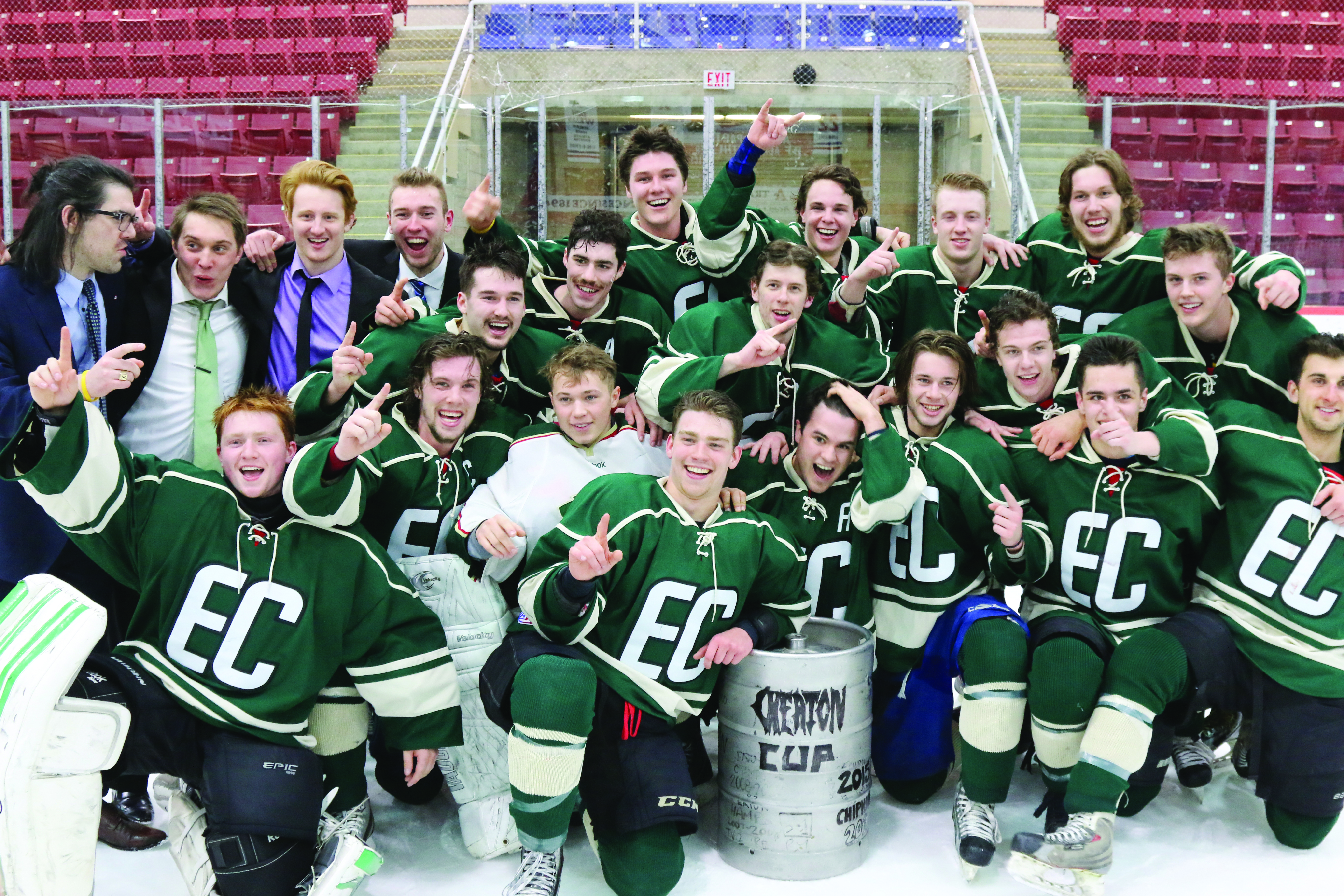
    This year marks the twentieth anniversary of the ever-so controversial tradition of Cheaton Cup. This annual hockey game expresses the rivalry between two campus residences, Eaton and Chipman. Many people choose to remember this day as one to forget; long-lasting parties, front lawns stained with solo cups, swinging fists over shirt colors, the list goes on. What people don’t remember is the history of the game, the school spirit, the precautions we take to ensure student safety and most importantly, the charitable donations which this game collects year after year. Just as in life, those who want to concentrate on the negatives will always be able to find them. Hopefully, we can look past the few bad apples who bring these negatives too light and focus on the countless positive outcomes of this timeless tradition.

    Since the beginning of time there has been a rivalry between Eaton and Chipman. The on-campus antics which took place between these two houses we’re in good spirits, but commonly taken too far. Out of character for nineteen-year-old boys? I’d say no. Twenty-years ago we we’re at the point where guys would just walk twenty steps to the opposing house just to vandalize it. There would be fights between groups of guys in opposing houses due to a combination of ego and liquid courage. What a poor excuse for house pride, simply stupid. In order to channel this energy a hockey game was proposed. One game, each house handpicks their best team, leave it all on the ice kind of mentality. This game was started by Steve Hassapis who, at the time, was head of both houses. Steve is now the Coordinator of Student Community Development and handles the non-academic judicial process. Most students probably just know him as the guy you do not want to get a letter from. After a conversation with Steve I was able to put in perspective of how far this event has come. The very first game, Cheaton Cup 1996, was a pleasant disaster. With a grand total of three authoritative figures, two referees and an overwhelming amount of students. It ended in an on-ice team brawl which carried through to the crowd, absolute chaos. On a positive note, the event was able to generate around $1000 which went towards feeding those in need, in Wolfiville, in its very first year.

    Since then the transformation has been unbelievable. Incidents at the game itself have diminished entirely. The crowd has been limited to solely Acadia students, and others who personally request to attend. Students stream in from either side of town to support their chosen residence anticipating a good, old-fashion hockey game. The arena is littered with rent-a-cops, yellow jackets, events staff, organizers and representatives from the chosen charities (L’Arche and the SMILE program.) too ensure a safe and controlled event. There have been multiple provisions which have been put in place to promote the positive, healthy environment which the game initially intended.

    We recently had representatives from our Student Union, Ted Higa and Jess Boone, give a presentation outlining four helpful hints for Cheaton-day participants. The ASU is offering free food, half an hour before the game because as many people forget, lack-of-food hurts in drinking situations. It’s a lesson we are trying to teach without the need for experiencing it. Another tip was outlining the pace of the day. Too often we see people get overly excited because they’ve got a beer in their hand before noon and their mother still in another province. The day is not a sprint. It is not a marathon. It is a jog at your own pace, for however long you feel like stretching your legs. The third tip was one which I believe is unbelievably important, and commonly overlooked. We need to watch out for one another. Over-consumption is sketched into the human DNA, and it will happen to those who aren’t careful. So, be a good friend, or a good neighbor at least. If you see someone over-the-top pissed, take them home. Regardless if they admit it at the time, it will be appreciated. Ted and Jess also warned students of the consequences which unfortunately happen time after time again during Cheaton cup. The fines for underage drinking, open liquor, drunk tank experiences and others. In conclusion, they are all expensive and two-hundred percent never worth it. Be smart.

    After looking at all of these ways in which we, the students, can make this an enjoyable, safe and memorable event – you still may be asking yourself, why? I’m going to give my personal reason, hoping that you will appreciate the first hand benefits charitable donations can give. The Sensory Motor Instructional Leadership Experience Program is a free, predominantly student-run organization. A vast amount of their funding every year comes from Cheaton cup. Last year it generated nearly $5000 dollars to split between itself and L’Arche Homefires, a community of homes helping people with disabilities. This year was the first time I became involved in the S.M.I.L.E program as a volunteer. I was fortunate enough to be partnered with my new friend Owen. Owen has cerebral palsy, and has very restricted fine motor movements. During our first day, we were unable to go swimming so we spent the morning in the Snoezelen Room. To my disappointment we had a limited amount of games that he could play.  We got out an ancient, homemade ramp, eight bowling pins, and an assortment of spheres, one bowling ball, one tennis ball and a soccer ball. We took turns rolling the balls down the ramp and celebrating wildly every time we were able to knock some pins down. You knew it was a good throw when you saw Owen’s face light up before the ball even left the ramp. But, the ramp has decayed from its years of service in the SMILE games room, giving us difficulty during every roll. The balls were either deflated or warped. As far as pins go, I guess all eight of them we’re simply perfect. We bowled happily for about twenty minutes, we didn’t even give him the opportunity to get a strike.

    This year, the Twentieth Anniversary of this great hockey game, we hope to generate more money for these local causes. So when we think about this day, let’s try not to focus on the negatives. Forget the parties, the early wakeup, and the trash the next day. Think about where this has come from, what it has become and why we do it. Myself, along with many other students believe that Cheaton Cup is more than just what it is rumored to be. This is an annual opportunity; an opportunity to bond with one another, an opportunity to show our town some maturity, an opportunity to continue this well-intentioned tradition, and for myself – an opportunity to show Owen what a strike feels like. So let’s take advantage of this opportunity and make this year another success and keep Cheaton Cup alive for years to come.

  • Faculty of Arts Interviewing Candidates for SOCI/WGS Tenure-track Position

    The Faculty of Arts is undergoing a hiring process for the first of two tenure-track positions. The first position is a cross-appointment for an Assistant Professor in Sociology and Women’s and Gender Studies. Three candidates are being interviewed for this position. The first two candidates are Dr. Vannina Sztainbok and Dr. Claudine Bonner, each of whom have delivered their research talks last week. Dr. Poulter, Coordinator of Women’s and Gender Studies, has confirmed that following the interview of the third candidate, the hiring committee will convene very quickly to make a decision.

    Dr. Vannina Sztainbok delivered her research talk at Acadia on January 18th, speaking about her book “Black Femininity in Uruguay: The Conventillo, the Carnival Vedette and the Laundress.” Dr. Sztainbok’s research lends fascinating insight to the fetishization of African-Uruguyan women’s bodies, drawing from a range of gender, race, and social literature as well as psychoanalysis. Dr. Sztainbok is currently based in Toronto, but expressed interest in teaching and doing research in Nova Scotia due to the province’s African-Canadian history, particularly Africville.

    Dr. Claudine Bonner delivered a research talk on January 21st. Dr. Bonner is an Assistant Professor at Acadia; she teaches a number of sociology courses, as well as a WGS course this year on Women of the African Diaspora. Dr. Bonner spoke on the topic “‘Our Island Home’ – Early 20th Century Race & Labour Migration to Cape Breton, NS.” In the early twentieth century, there was a substantial amount of Caribbean migration to Cape Breton Island, Nova Scotia. Dr. Bonner explores the reasons behind Caribbean migration using Diaspora Theory, Critical Race Theory, Intersectionality, Black Feminist Thought, and Black Masculinity theories, actively uncovering a history of Cape Breton and migration that is not well-known.

    The third candidate will deliver a research talk and meet with students on January 26th or 27th. Contact Dr. Poulter for information if you are interested in meeting the third candidate.

    Hiring two tenure-track professors in the field of Sociology and Women’s and Gender Studies signifies an acknowledgement of the importance of WGS theories in university settings. The research areas of the first two candidates signifies that greater academic emphasis on intersectionality at Acadia will soon be taking place.

  • Acadia Archives: Acadia and the War

    Acadia Archives: Acadia and the War

    I currently work as a Research Assistant in the Acadia Archives, working on Wendy Robicheau’s sabbatical project entitled “Acadia and the War.” The goal of this project is to investigate how Acadia students and faculty responded to the First World War, and to share their stories. Acadia has a very rich history, and the wartime spirit on campus becomes abundantly clear through sources like the Athenaeum issues during the conflict. Dr. Cutten, to whom Cutten House owes its name, was Acadia’s President at the time as well as a Recruitment Officer. His efforts to encourage students to enlist, and to document their stories following the war, provide the archives with many lists of students, and in several cases, descriptions of their service. From these war records, our search began.

    Initially, I began investigating the 14 Nursing Sisters to leave Acadia for Casualty Clearing Stations, and Stationary Hospitals. Although the list was short, the search for women in the archival record is always strained at best. Of the 14 who served, two died
    during the war. Jessie B. Jaggard, a matron at Lemnos in Gallipoli who died during service in 1916, and Adruenna, or “Addie” Allen Tupper, a Nursing Sister who had succumbed to illness. For those on our list who served as VADs, little more than their names are known to us. Although we now know that many of Acadia’s Nursing Sisters were recognized for their deeds, as some were lauded by fellow nurses in their records and others were mentioned in dispatches for bravery. Cora Peters Archibald, for example, had served as a Dietician for the 3rd Canadian General Hospital in Etaples, France. She is mentioned in the hospital’s ‘War Diary’ for her knowledge of nutrition, and her task to maximize the calories afforded all patients and staff given the hospital’s limited food supply. She would later return to Acadia to found the Department of Home Economics.

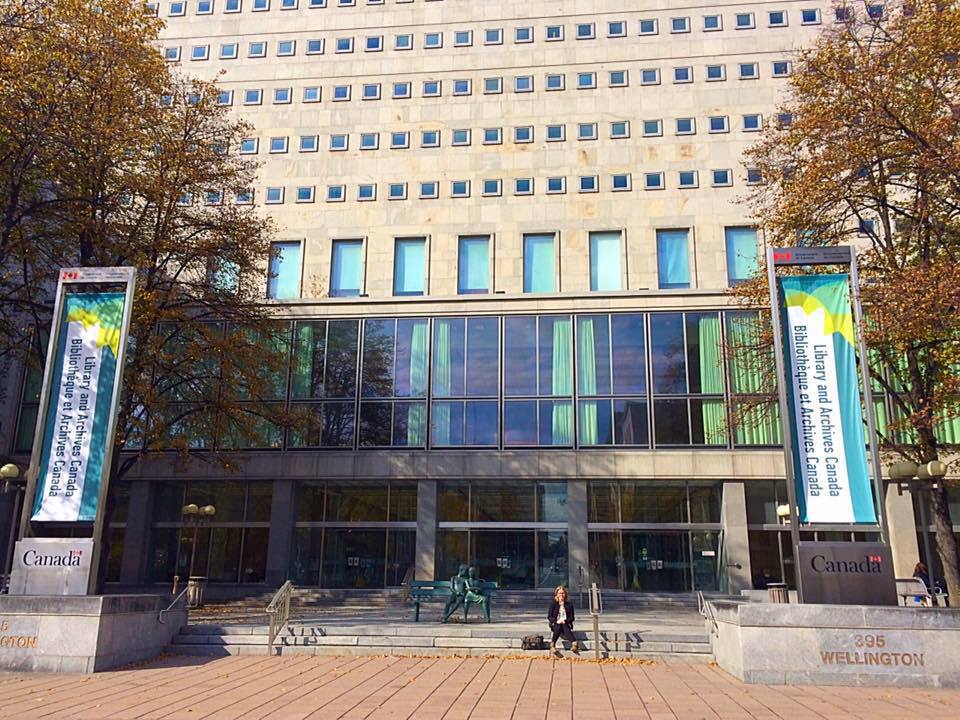
    After a few months of searching for their stories, we travelled to Ottawa to consult files on our Acadia men and women at Library and Archives Canada. For my part, the trip involved photographing medical and war records for our nurses, as well as hospital administrative documents. Everything was photographed from the 1917 Christmas dinner menu, to hospital blueprints. The variety of sources available to us made their stories even more vivid, and oddly present. We also attended museums and museum archives to aid our search, and the reality of the project began to feel much more tangible. Using archival sources we were able to investigate the lives of individuals whose names would otherwise be lost to the tragedy of the Great War.

    Our project has certainly developed since then, and in November we were given the opportunity to give an Open Acadia talk to students and community members. We presented our research as if we were a Recruitment Officer and a Matron seeking volunteers for the ongoing war effort, before returning to 2015 to discuss the nature of our study. Since then, we have continued our research, and are currently developing an online database whereby Acadia students who served during the war may be identified, alongside all service information available to us. Our goal is to bring Acadia’s wartime legacy to the present day, in a format that is widely available. Working in the Archives has certainly changed the way I view local history, and I consider it a privilege to have studied the many stories of Acadia’s own soldiers and medical staff. The more researchdone, the more you begin to feel the gap of a hundred years begin to close, with more questions revealing themselves along the way.

Betzillo positions itself as a versatile gaming hub where structured bonuses and adaptive gameplay mechanics support both short sessions and extended play.

Built with a focus on innovation, Spinbit integrates modern casino architecture with rapid transactions, appealing to players who value speed and digital efficiency.

Ripper Casino emphasizes bold entertainment through high-impact slot titles and competitive promotions crafted for risk-oriented players.

A friendly interface and stable performance define Ricky Casino, offering a casual yet reliable environment for a wide spectrum of gaming preferences.

King Billy Casino channels classic casino spirit into a modern platform, delivering recognizable themes supported by contemporary reward systems.

Immersive visuals and layered slot mechanics are at the core of Dragonslots, creating a narrative-driven casino experience.

Lukki Casino appeals to players seeking direct access and minimal friction, focusing on fast loading times and intuitive controls.

Casinonic provides a structured and dependable gaming framework, blending modern slots with transparent operational standards.