On Sunday February 14th, the Acadia Musical Theatre Society went to the Wolfville Nursing home to perform for residents at dinner time. Two society members travelled to four different dining rooms and entertained staff and residents. The Society had held a raffle and awarded one lucky winner with a Valentine’s Day Serenade by third year violin major Allison Stewart. The group raised funds of over $100 and was given the freedom to choose a Serenade destination by the winner of the draw, who was unable to obtain their prize in person. “It was really a nice thing to do, I think the residents really enjoyed it” quoting President Hope Latta, who also founded the Society in August of 2015. “It’s important for Acadia students to give back to the community, and it’s especially fun to do so through Musical Theater. Going to places like nursing homes is a great way to contribute and it’s a pretty fun thing to do. Once you’ve gone once, it’s the sort of thing that you’d want to do again and again. Staff members can be a great audience, so it’s a great way to perform without the commitment of doing a show.” The concept of playing at a nursing home is inspirational because it provides students with an application of the things that they are learning to do. It’s important to spend time interacting with people who watch you perform because it can provide valuable insight and give you more practice with the concept of audience interaction. Such skills also further development in other fields of study, such as theatre and communication. Being able to access such easy ways to perform is a gift, and it shouldn’t be taken for granted, especially when it is so loved by both parties that are performing. Being able to share the things you learn provides a foundational appreciation for your craft, and it also enriches the experience of being a student overall. Having those sorts of experiences are also good for developing a critique eye for audience response. Often times there is an alienation between the audience and the entertainers where students perform for an audience that they can’t see due to formal lighting. This distance makes it harder for people to grasp the atmosphere in the room that they are performing to. It’s a special skill to be able to play off the audience and to take their energy into account when making choices on stage. These sorts of opportunities are great for strengthening receptive skills, as well as for providing extra experiences in performing. Being able to see your skill make somebody else happy is something that provides extra motivation to keep going through with the program you are in, especially if you are in the arts. It can be a really fun thing to do, and it makes studying a little bit easier. Acadia Musical Theatre is proud to be able to connect Acadia Students to the community at large, and they encourage members to perform where they can. They also provide information on local productions and mini performance opportunities. Funding from the event will also go towards bringing in education workshops in the realm of theatre. To find out more check out their Facebook page and group and email them at [email protected].
Tag: Acadia

#FlowersOfChange: Amber Amour Redefines Women’s Body Hair Through Social Media

Photo Credit: Aidan Tobias A small but revolutionary movement is spreading on Instagram. #FlowersOfChange is a photo series that was started by Amber Amour, an activist and artist who, prior to Flowers of Change, began the artistic campaign Stop Rape, Educate. The #FlowersOfChange series was born in conjunction with #StopRapeEducate and has been gaining ground on social media among women who feel comfortable posting photos of themselves that show their body hair. They are explaining their choice to refrain from shaving and how their body hair “speaks” to them and to the world.

Photo Credit: Aidan Tobias Amour, in various Instagram posts where her body hair shows, describes her choice to shave or not to shave has absolutely nothing to do with anyone else’s perception of her body. She describes the choice as a form of self-love. “No one can take this sunshine away from me,” she wrote under one of these posts (instagram.com/ambertheactivist).
Equating flowers with women’s body hair breaks down the perception that body hair is equated with masculinity. There is a common societal perception that men with more body hair are more masculine, and men with less or very little body hair are effeminate; women with body hair are perceived as masculine, butch, hippies, etc. Labels are inherently associated with the amount of body hair one has naturally or by choice.
This is not to say that all women who shave are complicit in their own oppression in the context of patriarchal heteronormativity. Both women and men choose to remove their body hair for various reasons, including comfort, sport, athletic affiliation, personal or partner preference, aesthetic, and so on. Unfortunately, labels such as the examples given above are often implicitly associated with appearance.
To gain deeper insight into #FlowersOfChange, I reached out to Amber Amour with a few questions about the photo series.
RH: What inspired you to start the series #FlowersOfChange?
AA: It’s an interesting story, actually. I started #FlowersOfChange after being sexually assaulted in Cape Town. When the story went viral, I got victim-blaming comments from men and women around the world. One girl commented on my picture saying something like, “You put yourself in that situation [to be sexually assaulted]. You should have known better. Life is not all flowers and armpit hair!” Despite her rudeness, that comment made me laugh and I found the concept of “flowers and armpit hair” terribly cute. I decided to kick-off the campaign by taking photos flaunting my body hair while posing next to flowers. I later renamed the movement Flowers of Change because if we all change what we think about body hair, we can change the world by revolutionizing the love we have for our bodies.
RH: What societal implications/effects are present for women who choose not to shave?
AA: Women who let [their hair] grow should be prepared to face staring and funny looks from strangers and rude comments from peers. It’s not all bad, though. Eventually that will roll off. Whoever decides to rock their body hair should do it for herself despite what anyone says. Women who let their body hair grow should know that not everyone is going to understand. Don’t let their ignorance dictate what you do or how you feel.

Photo Credit: Aidan Tobias RH: What is the response like on Instagram?
AA: The response is mixed. For one, I noticed that my photos showing my body hair got more likes than any of my other pictures, which was a sign that people were paying attention to it, at least. Some of the comments can be harsh but I’ve learned to ignore them because I feel so grounded with myself and so complete with my body hair that nothing anyone can say would make me feel ashamed of it. You can’t make me feel bad about something I’m incredibly proud of.
RH: In what ways does #FlowersOfChange relate to your campaign, #StopRapeEducate?
AA: They relate to each other in the way that both movements allow women to grow, to love, and to express themselves freely without fear. When women feel supported, loved, and healed from within, the whole world prospers.
RH: Do you feel social media is the most effective platform to inspire social change, or is social media part of a broader movement?
AA: Social media is a part of a broader movement. It’s just one aspect of things. We can preach all day behind our screens but if action is never taken, the world never changes. We should use social media to speak our minds and educate people just as much we should take steps toward building the world we dream of outside of the virtual world.


Arts Faculty Feature – Jeff Torbert
Jeff Torbert is a Halifax based guitar-guru and instant-harmony-provider who has performed at a variety of venues, from bars and churches to the grand stage of the Rebecca Cohn with Rich Aucoin and Symphony Nova Scotia. To supplement the “20 bucks for gas” provided at these shows, he shares his knowledge and experience with the music students of Dalhousie and Acadia University. He primarily teaches guitar lessons, but also leads courses focused on the virtue of actively engaging in listening and playing music. As part of the curriculum shift that the Acadia School of Music is enacting for next year, he has created an interdisciplinary course on improvising and the creative process.
My personal experience with Torbert has been overwhelmingly positive. I have had him as a professor for Musicianship Lab (now “Playing and Hearing Music”), as well as the opportunity to play with him in ORO Orkestra last semester. In both contexts, his energy was vibrant and constructive – he consistently wears excellent sweaters and an award-winning smile.
As a professor, his positivity radiates into the classroom and helps students cope with the overwhelming nature of a career in music. In his courses he pushes students to engage with their ears and to develop personal relationships with the sounds around them. He is known for starting his classes with a therapeutic “active listening” activity where students are asked to be silent and open their ears to stretch their sphere of listening. He encourages expansion of the perimeters of what you can hear, pushing you to listen beyond the room to the rest of the building and outside. An additional challenge is to hear the various sounds with an open mind and to separate them from any previous associations that you have.
We often forget to consider that our professors are also working professionals. The members of the music faculty at Acadia have a plethora of projects outside of the School of Music. As mentioned previously, Jeff performs frequently around Halifax, but he also writes and records his own experimental jazz/pop infused music. In 2009, Jeff released “This Weather Honest,” an album nominated for multiple awards including Best Jazz Recording in the 2010 ECMAs. The musical setting is a jazz sextet, but Torbert provides a fresh angle using pop and groove influences. He takes it one step further in his 2011 album “Urban Poultry and Other Hopes,” (also nominated for Best Jazz recording in 2013) where the music is tied together more conceptually creating an overarching theme. Currently, Jeff is writing a whole new set of material to play when he travels to Europe this spring to tour with his co-experimenters.
Fun Faculty Feature Facts:
Jeff Torbert loves Björk and has a passion for root vegetables, especially beets. He makes his own sunset-coloured juice and special salad dressings.
Quickly Quilled Quote:
“Even outside of music, we’re all improvising all the time within this societal structure called life – whenever we talk, walk, think. Might as well appreciate it! And after that, why not strengthen it?” – Jeff Torbert
Students Saying Some Stuff:
“Jeff is a fantastic person and teacher. He’s enthusiastic and passionate about what he does and it’s obvious that he wants every one of his students to reach for their fullest potential both musically and personally.” – Mia Clow
“One thing I’ve always liked about Jeff is his ability to give new perspective to things. Jeff can offer a lot of different approaches to both musical and non-musical situations.” – Tevon Tynes
Coworker Comment:
“Jeff Torbert is a treasure – a calm, capable, and kind colleague. He asks a lot of his students and they benefit from the challenge. Acadia is lucky to have him.” – Nic D’Amato


ASU By-Election Candidate Platforms
Presidential Candidate
Suzanne Gray


“Hello Acadia students!
My name is Suzanne Gray and I am running for the position of President for the Acadia Students’ Union.
A little bit about myself: I am a 4th year business student with a major in French. I am from Hubley, NS but call beautiful Wolfville my home. During my Acadia experience I have been heavily involved with the ASU and held various leadership positions. I know the ASU inside out and I love working for students!
A little bit about my platform: It consists of action items that will benefit students in the short and long term.
- Develop Sexual Health initiatives, similar to the work I have done with alcohol harm reduction, alongside Student Services
- Work with the Office of the Chair to improve succession planning
- “Clean up” internal governance and ensure that the constitution is current and responsive to any challenge that may arise
- Work towards making the ASU Students’ Centre completely accessible and work with the University for accessibility in all campus buildings
- Bring the Axe Lounge renovation project to referendum so you, the students, can provide direction
- Create a long-term agreement with the Associated Alumni of Acadia University which will benefit us as students and future alumni
With my passion and experience, I believe I can effectively manage the Executive Leadership Team to serve the students to the best of their ability. Let’s finish 2015/2016 off strong!
On November 12 & 13 vote Suzanne Gray as your President. Experience you can count on!”
Vice-President Communications Candidates
Bethany Dickey


Hi everyone! My name is Bethany Dickey and I’m in my fourth year at Acadia studying business. I’ve been extremely involved in the Acadia community since I started school here, and for my last year I’d love to be your Vice President of Communications. I want to make sure that everyone is always up to date and has all the correct information on ASU events, without overloading you with information! I have a lot of experience with communications; I was the Co-President of Enactus Acadia for two years which required me to act with all of our VP’s, Project Managers and stay in constant contact with all members. I was also the President of the Acadia Children’s Wish Society and I am on the Board of Directors for the Acadia Entrepreneurship Centre. As a business student, I feel very qualified to professionally interact with the town and maintain good relations, and oversee the operations of clubs within the ASU. I pride myself on my organizational skills and time management abilities and know I could do a great job balancing all the roles of VP Communications.
In all aspects of my life I’ve utilized communication skills to the fullest; I’ve travelled to 19 countries over the past 3 years learning new languages. If you have any questions about my experience or my platform, don’t hesitate to reach out via email or social media! I’d love to chat about anything from Acadia to travelling!
Ted Higa


This lovely photo recollects memories of my time as a Resident Assistant in Cutten House during 2014/15 academic years. “How are you an RA?” people would truthfully joke. With an avid and outgoing social life, mixed with a crammed baseball schedule, balancing academics, all while providing the largest residents on campus with the support of an RA. Even I sometimes wonder how I was an RA!
It was a challenge, a challenge that involved sacrifices, critical thinking and lots of communication.
Utilizing leadership skills acquired through team experience with the Acadia Axemen, time management obtained through the business program and my extroverted personality to my strengths, I was able to connect with 300+ students in our building that was listed as the 9th best residencies in Canadian schooling by the Huffington Post.
Throwing a Taco dinner for 60 residents, jumping straight into my second duty round without a break because I spent the whole two hours conversing with residents, and guiding new and returning residents in a safer and smarter direction for campus living. It’s truly an amazing experience, one that I would recommended to anyone who wants to progress their maturity and responsibility throughout their time in university.
I learned a valuable lesson in my year as an RA- communication is key. We are a unique school, with diverse opinions. Communication isn’t just talking- it’s listening.
My name is Ted Higa, I am running for VP Communication and, I am on your side.


A Few Words for Ray Ivany
It isn’t often that an Opinions Editor sits down to pen a positive letter about a figure of influence. At the same time, I find it wholly fitting and necessary to express these words of support to the president of our university, Ray Ivany. Many of you may have met him in your first week here on the lawns behind University Hall, or have seen him speaking on stage at the Matriculation Ceremony – I know because I was one of those students. I remember the first thing I noticed about him: his firm handshake, his welcoming smile. He was polite and cordial – it never once seemed like he was forced to be there, shaking the sweaty hands of hundreds of teen-aged undergraduates. It must have been awful. But in fact, he appeared to be enjoying himself.
I was actually lucky to talk to him after that, during one of my labs in second year. My professor decided it would be a good idea to email the entire student body of Acadia urging them to come and listen to us describe our lacklustre final projects. A few professors from other science departments showed up, a few friends here and there, and then surprisingly, the president of Acadia University walked through the door. He moved from station to station, finally coming to me, and after listening to my presentation with a keen interest as I fumbled along and minced my words and stuttered with incoherence, I talked to him briefly about my summer research, he shook my hand and then continued on his way. He visited every student in the room. And when he left, he raised his hand and said good-bye, and everyone else in the room stopped talking and turned and waved good-bye back, like a group of comrades bidding farewell to their commander-in-chief.
I recount this tale because I find it odd that I remember it so well. Over my tenure here at Acadia, I have heard many stories of presidents past, from professors and archival librarians alike. And while they are not stories of disdian, they never quite speak of Ivany in the same regard, and it is my perception that many people hold some sort of agreed-upon respect for Ivany. In fact, why shouldn’t we? It was our president who helped transform the face of community colleges in Nova Scotia, it was our president who urged Nova Scotians to take control of their future, and it was our president who was named 2015 Person of the Year by the Halifax Chamber of Commerce. I believe that it is something to be proud about when the president of our school takes an active role in the public well-being of the province. I hope that we will continue to see his good work for years to come. It is this editor’s opinion that as Nova Scotians – as Canadians, we deserve no less. So on behalf of the Athenaeum staff and the entire student body of Acadia University: I wish for the speedy recovery and continued health of our president, Ray Ivany.

The Acadia Student Success Project: Helping Students Make the Most of Their First Year
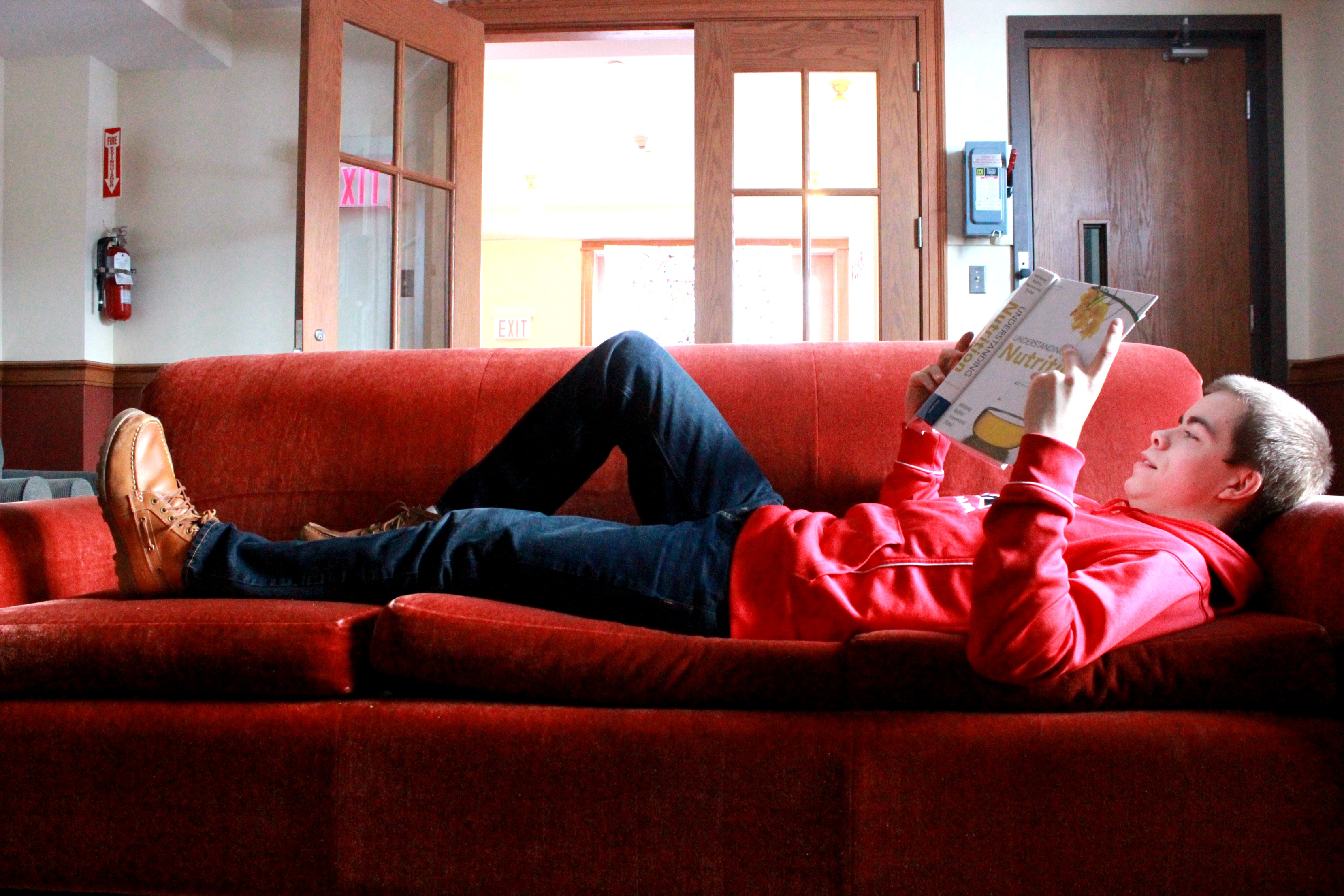
When students start their university education, they expect to do at least as well as they had in high school and to graduate with a degree in four years. Unfortunately, some students find the transition to university so challenging that they end up not graduating or taking a lot longer than they had intended. A large-scale research project underway at Acadia is aimed at ultimately increasing students’ academic success by looking at ways that university students can be supported in their education.
Academic performance clearly predicts whether students will remain at university. As such, it is important to identify early on which students would benefit from extra academic support and to identify which types of academic support are effective and helpful for students. Too often, support is offered to students only after they have begun to struggle academically. The Student Success Project is focused on identifying students who may face academic difficulties before problems emerge.
One seemingly obvious factor that affects academic success, but that has received very little study, is students’ experiences with learning to read when they were in elementary school. Reading skills have a large impact on the ability to understand and complete coursework. Increasing numbers of students entering university have experienced considerable difficulty learning to read, and may find the type of reading in university even more challenging. Students may be able to overcome their reading difficulties by using effective learning, studying, and reading strategies. Support services (such as academic advising, tutoring, and writing support) may also help students so that they are more likely to complete their university degrees.
The Partnership for Student Success was formed between multiple academic and student services organizations based on a common goal of fostering success in undergraduate students. Led by Dr. Hélène Deacon from Dalhousie University, this Social Sciences and Humanities Research Council- funded partnership unites researchers and professionals at Acadia, Dalhousie, Mount Saint Vincent University, and the University of Alberta. The goal of the Partnership is to support under-identified and under-serviced postsecondary students. Through the Partnership for Student Success, Acadia has launched the Student Success Project. This project is geared toward assessing whether students who had difficulty learning to read are having academic difficulties in university. Also of interest is whether encouraging students to take advantage of available university services can help them overcome these challenges. The study’s overall goal is the early identification of students who are at risk for academic difficulties, as well as the provision of remedial support through effective strategy use.
The Student Success Project at Acadia is aimed at promoting academic success in first-year undergraduates by assessing the link between historical reading challenges, learning/studying/reading strategies, help-seeking behaviour, and academic performance. The study that is being conducted this year by Dr. Sonya Major and Adria Markovich, is a replication of a prior study that was completed two years ago at Acadia.
Two years ago, Dr. Major’s research team found that students who reported a history of reading difficulties had on average lower GPAs than students with no history of reading difficulties. Furthermore, stronger readers endorsed the use of more learning, studying, and reading strategies than did the students with a history of reading difficulties. Perhaps not surprisingly, for both groups of students, the use of learning and study skills was associated with higher first-year GPA. Of these skills, time management was found to be especially important for students with a history of reading difficulties. The study also assessed the role of help-seeking from parents, peers, professors, and TAs. Interestingly, Dr. Major’s lab found that for students with a history of reading difficulties, seeking help from peers was associated with more motivation, less anxiety, and higher GPA. For the students who had not experienced reading challenges, seeking help from professors was associated with more self-testing, while seeking help from parents was associated with less use of test strategies, less motivation, and lower GPA.
The results from this first study at Acadia uncovered such promising findings that Dr. Major’s lab is replicating the study to gain information on this year’s incoming class of undergraduate students. This past September, all first-year undergraduates at Acadia were invited to complete an online survey in exchange for $15 Axe Cash. An overwhelming 43% – almost half – of the incoming class responded to the survey, sharing their experiences with reading, learning, and studying, and gave permission for the team to track their academic record while at Acadia. Dr. Major’s lab would like to extend a heartfelt thanks to everyone who took the time to complete the survey.
With such a high rate of student participation, the team has been able to collect valuable information that provides insight into the link between reading challenges, strategy use, help-seeking behaviour, and academic performance. Ultimately, this information can be used to guide future support services in order to give students the best chance of completing their university degrees and succeeding academically.


Tidal Series: Welcome
“Tide goes in, tide goes out.” Thus spoke the brilliant Bill O’Reilly on an interview segment of his show in January, 2011 on Fox TV. Although the original context was surrounding the existence of God, the quote aptly describes one of the many allures of tidal energy – the constancy, the certainty. We can predict the motion of the tides tomorrow, and we can predict them for the next 100 years (assuming humanity doesn’t blow up the moon before then). Why, then, has it not been accomplished yet? The answer to this question rests on several factors. The effects on fish and other marine life in the Bay of Fundy are of particular interest, as are the economic and social outcomes. There is also the question of efficiency and reliability, not to mention any unforeseen consequences we may encounter.
The problems surrounding tidal energy are numerous, and it is the purpose of this tidal series to illuminate some of those problems. Faculty members across campus have pledged to share their opinions on Nova Scotia’s role in harnessing the tides. These opinions will be featured each issue, and will be backed by their knowledge and/or any research they have accomplished with the goal of answering the basic question: should Nova Scotia pursue tidal energy? Again, this is not a trivial question. It is the hope of this editor that by the end of the year, the students of Acadia University will be able to come to a rounded decision, by means of their own assessment, using the evidence provided within these pages. I urge you to read on and educate yourself on this topic, balancing the benefits and drawbacks with a fair, critical, and honest mind.

The Evangeline Court Music Collective
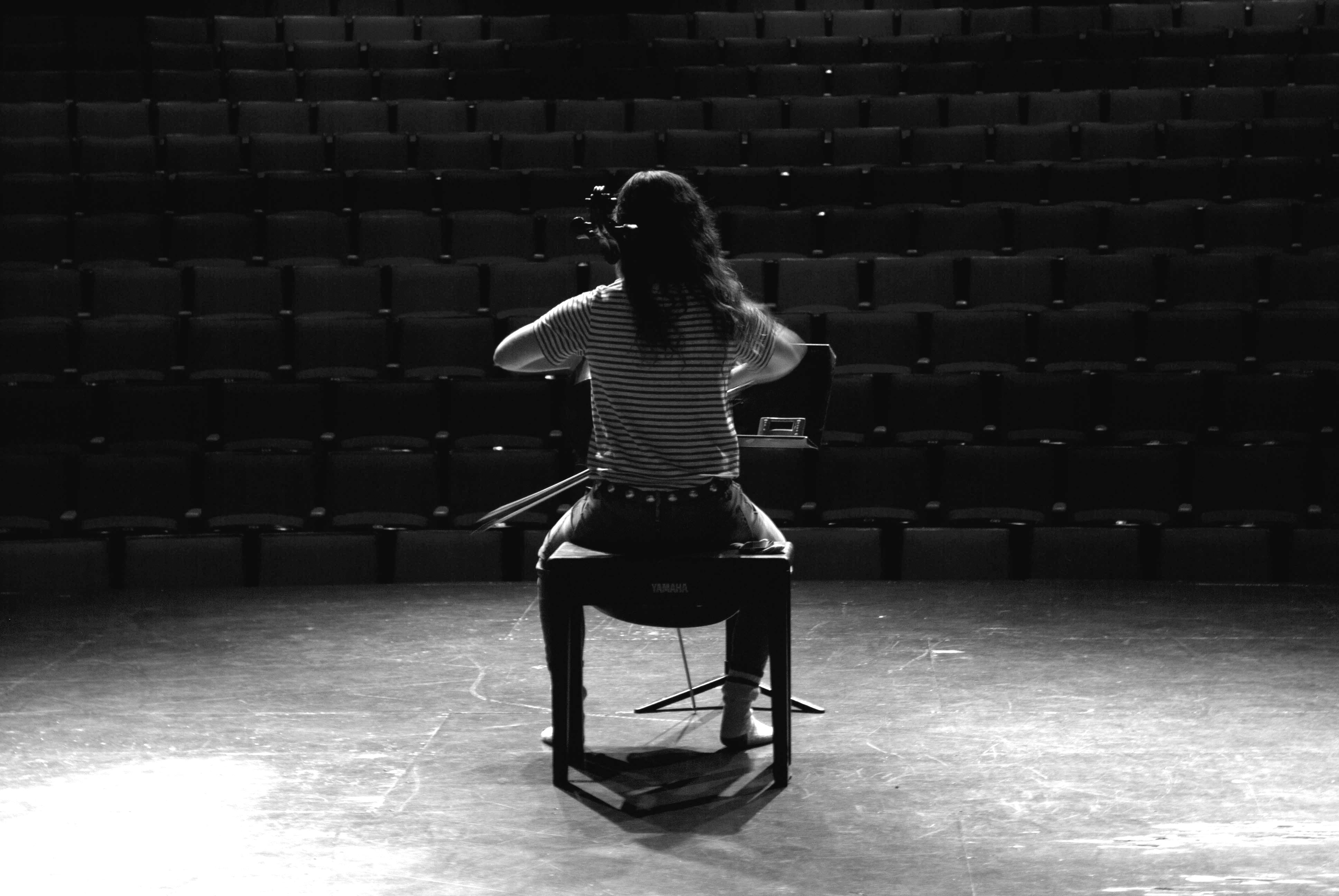
If you are interested in being a part of creative things involving contemporary classical music and ways of connecting music to other mediums of art, this collective is something you should be a part of. If you are excited to see new music concerts, attend coffee-house style events with string quartets, and in general support upcoming artists on campus, watch out for posters and updates online! Join the Facebook group (named: Evangeline Court Musician’s Collective) for the dates of meetings and events – we will be scheduling our introductory meeting within the next couple weeks.
Typically, the collective meets every two weeks to share ideas, new works, and discuss ideas for events. This provides an opportunity for creators to gain insight and constructive criticism on the things they’re working on, and allows other members to get an idea of what their peers are focusing on. Additionally, through group discussion we decide what kind of events to put on – we are open to ANY new idea. We would like to put on different events than what is already happening around town, so that we can discover new ways of sharing and experiencing art with the public. Among activities we could put on for this year:
- A concert in the woods (weather permitting)
- A concert featuring the world premiere of “Uncharted Worlds” our first collaborative work for String Quintet
- An open recital/social for performers, composers, fans, and friends to relax, share ideas, and consume coffee and cookies
- A collaborative event with visual and/or literary arts
What makes the ECMC different than a regular musical ensemble is the open-ended nature of ideas, and the focus on reaching out to other artistic disciplines. The group is intentionally separate from the academia of the School of Music so that the projects and events are shaped by the individuals in the collective, and the nature of the art itself. The School of Music tends to stay within its own four walls, and breaking from this allows us to branch out and meet artists of other fields in this area. This gives members an opportunity to hear another perspective on art as a whole, and to create something larger than themselves with the help of others in the community.
Our Mission Statement: The Evangeline Court Music Collective (ECMC) supports the coming together and communication between music creators and performers collaborating outside of an academic setting in order to promote interdisciplinary artistic innovation. ECMC supports musicians interested in new music (based around contemporary classical), those invested in expanding their compositional, performance, and collaborative abilities in a welcoming and open-minded environment. We strive to interact often with the broader artistic community, regardless of medium.
Our Goals: To bring together musicians outside of our academic environment, but in an organized setting with set aims, meetings, and projects. Run by the students, for the students.


