Tag: government

  • How much longer do we have to wait for a Meningitis B Vaccine?

    Meningitis B has been on the mind of many Nova Scotians recently. There have been several outbreaks in universities across the province, which have led to the unfortunate fatalities of three different students: 19-year-old Kai Matthews at Acadia, 18-year-old Maria Gaynor at Dalhousie, and a confirmed case at Saint Mary’s University which led to death, but there has been no confirmation of that student’s identity. Despite these tragedies, meningitis B is still not covered by Nova Scotia’s public vaccination program. Why is meningitis B not considered a problem by Nova Scotia Public Health? Vaccines are available, but their price is $300, which is too much for most students already struggling with the cost-of-living crisis.

    The vaccinations that public school students receive in grade 7 cover multiple forms of meningitis, but not meningitis B. What makes university students especially at risk is the fact that a lot of students live very close to each other in dorms. In cities like Halifax, students have been priced out of the housing market, forcing them onto dorm spaces. These students’ needs should not be ignored, especially after the incredible sacrifices students have made during the COVID-19 pandemic. Our health needs deserve attention, especially when members of our community are dying. This crisis needs to be addressed by the Nova Scotia government. Meningitis B acts quickly; Kai Matthew passed away only 30 hours after first contracting a fever. It is also preventable with a vaccine. Why does Public Health still refuse to allow students full access to that vaccination? This crisis is urgent and they should not deny or downplay its severity.

    After the death of Maria Gaynor, Nova Scotia Public Health failed to notify students living, sleeping, and eating nearby of the dangerous illness. The school not only failed to promptly notify students of Maria’s death, but they also completely failed to notify students of a meningitis case being investigated on the third floor of their dorm. This put even more students at risk. If Maria and her friends had known about the case, Maria’s sudden illness would have been a major red flag. Maria could have possibly gotten help if Nova Scotia Public Health had notified the Dalhousie public that meningitis was inside the dorm and had taken appropriate steps to look after those affected.

    To Nova Scotia Public Health, please stop offering condolences and include meningitis B on the list of publicly funded vaccines. For more information concerning meningitis B in Nova Scotia, visit https://bforkai.com/

  • Canada 2020: New Government, New Year

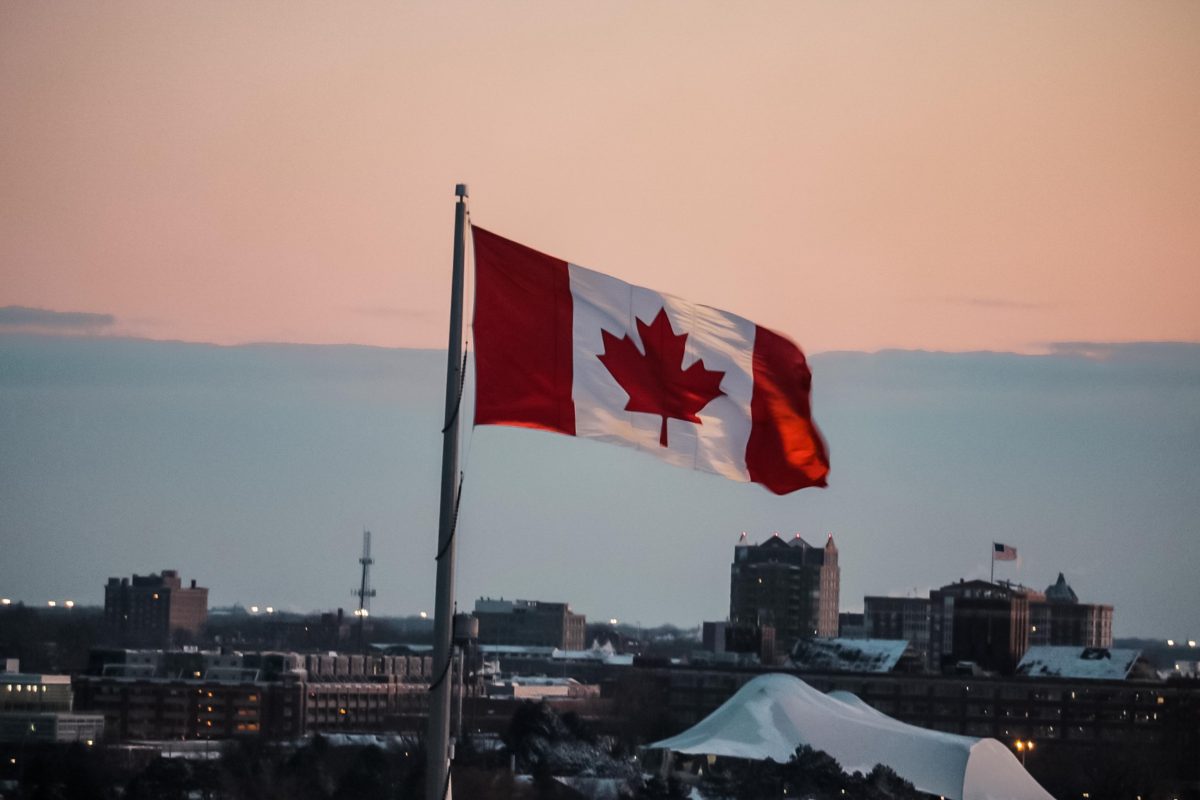
    Canada 2020: New Government, New Year

    It has been almost three months since the Liberal Party, led by Justin Trudeau, was voted in for a second term, this time as a minority government. Although it has only been a few months, Prime Minister (PM) Justin Trudeau and his party have already been making many decisions and changes. So, what exactly can you expect from the liberals in 2020? 

    Treading Carefully

    Justin Trudeau and his party may have won the 2019 Federal Election, but they did so by a slim margin. The Conservatives won the popular vote and many other parties gained support that was previously directed towards the liberals. This outcome means that Trudeau will spend 2020 and the next four years thinking more carefully about his future decisions. 

    If Trudeau wants the liberals to continue to be in power, his choices must be managed with care. Already we have seen Trudeau take almost a month to form his government compared to the fourteen days he took in 2015. The extra time demonstrates Trudeau’s recognition that he must make smart choices that benefit all of Canada and not simply a select few.

    The Western Divide

    The liberal’s victory drove a wedge between Canada’s west and east. The western provinces, primarily Saskatchewan and Alberta, expressed concern that their problems were not going to be addressed by the liberal party. Justin Trudeau has promised to do what he can to understand the frustrations of the people in the west and respond in the best ways possible.

    Based on his promises, in 2020 Justin Trudeau will work towards making Canada united again from coast to coast to coast. The first step made towards this unification took place when Trudeau unveiled his cabinet, which consisted of Jonathan Wilkinson as Environment Minister and Chrystia Freeland as Intergovernmental Affairs Minister and Deputy Prime Minister. While neither Wilkinson or Freeland represent ridings in Alberta or Saskatchewan, both ministers were raised in the west and Trudeau hopes that they will be able to respond effectively to some of the west’s major concerns.

    Jason Kenney, Alberta’s Premier in a statement said, “With no ministers from Alberta, I hope that ministers with portfolios of especially urgent interest to our province will listen to Albertans, take our concerns seriously, and work constructively with the Alberta government to address them”.

    Although Trudeau made the first step regarding recognizing the west, 2020 will be the year that determines whether the gap between the west and east closes or continues to grow.

    Climate Change

    One of the factors that played heavily into the 2019 Federal Election and many parties’ platforms was the crisis of climate change at hand. Back in June, the Liberal government proposed a ban on single-use plastics to come into widespread effect in early 2021. If the ban is to take place officially, much of 2020 will be dedicated to finding alternatives to single-use plastics and slowly initiating the changes.

    A number of municipalities have already put this ban in effect. In Devon, Alberta stores in the community are no longer allowed to distribute single-use plastic retail bags as of January 1st, 2020. Many cities in British Columbia have jumped on this initiative such as Surrey, Kamloops, Nanaimo, Salmon Arm, Saanich, Tofino and Victoria. 

    Trudeau has made progress in the past towards reducing the countries carbon emissions and it can be expected that in 2020 he will continue his efforts to make Canada greener.

    Wireless Price Cuts

    Part of the Liberal’s re-election platform was the promise to reduce wireless bills by 25%. Wireless bills are an issue that concerns the majority of Canadian’s and this promise seems to be taking precedence in 2020.

    Minister of Innovation, Science and Industry Navdeep Bains announced to The Canadian Press that these price cuts will take place within two years starting in December 2019. Already prices have dropped between 27-28% from 2016 to 2018 and the liberals plan on furthering that reduction even more. Bains reported that the liberals made a commitment and plan to uphold it in the coming year.

    Many details surrounding how the liberals will achieve this 25% decrease have not been released yet but with the new initiative in place, Canadians should expect details to arrive soon.

    Campaign Promises

    There are many promises made by parties during the campaign period and it is hard to predict which ones will be tackled in the upcoming year. With budgets being decided, the liberals should begin to work on a number of promises in the upcoming year but since we are still unsure, these are merely some important matters the party will be predicted to deal with within 2020.

    With the west, climate change and wireless price cuts in mind, it will be interesting to see what the Liberal Party accomplishes or what mistakes they make this year.

  • A Beginners Guide to Trump’s Impeachment

    A Beginners Guide to Trump’s Impeachment

    Donald Trump, President of the United States of America, has been in the news attached to the word ‘impeachment’ for the past few months. However, as much as Trump’s impeachment has been discussed by the media, many remain confused by the impeachment, the allegations, the terms used and the constant changes taking place. 

    In order to help readers who are confused regarding the topic, The Athenaeum presents ‘A Beginner’s Guide to Trump’s Impeachment’:

    What caused the impeachment inquiry?

    The impeachment inquiry was announced on September 24th by Nancy Pelosi, a Democratic Party politician currently serving as Speaker of the House of Representatives. This impeachment inquiry is a direct result of the Trump-Ukraine scandal that came to light in September 2019.

    The Trump-Ukraine scandal surfaced after an intelligence officer, who we now know is a CIA Officer, filed a whistleblower complaint to the inspector general detailing Donald Trump’s alleged wrong-doings. This intelligence officer is known within the impeachment as the whistleblower which is a term for individuals who expose illegal and unethical information within an organization.

    In the official complaint, the whistleblower claimed that on July 25th, 2019 a phone call occurred between President Trump and the Ukrainian President Volodymyr Zelenskyy where Trump “sought to pressure the Ukrainian leader to take actions to help the President’s 2020 re-election bid”.

    The whistleblower goes on to discuss how Trump wanted Ukraine to investigate potential opponent Joseph Biden and son Hunter Biden, assist in uncovering that allegations of Russian interference in the 2016 Presidential election originated in Ukraine, and locate and turn over the servers used by the Democratic National Committee which were reported to have been penetrated by Russian hackers in 2016. The whistleblower additionally alleged that efforts were made to restrict access to records relating to this call.

    The report was sat on for a month when Director of National Intelligence Joseph Maguire advised that the complaint was not of urgent concern. By mid-September, the existence of the report was leaked, causing mass controversy.

    In the days that followed Pelosi’s announcement of impeachment inquiry, the White House released both the whistleblower’s report and the official White House record of the Trump-Zelenskyy phone call to the public. Since the release of documents, more information has been demanded and either given or not given. The details can be found in detailed timelines.

    What is being investigated in the inquiry?

    The goal of the impeachment inquiry is to understand the events that took place around the July phone call with Zelenskyy and Trump’s as well as the possibility of subsequent abuse of power.

    The House Intelligence Committee chair Adam Schiff is leading the impeachment inquiry and has given the public the main questions he plans to investigate:

    1. Did President Trump seek aid from a foreign country to help him in a U.S Presidential election again?
    2. Was the meeting with President Trump, which Ukraine desperately sought, being conditioned on Ukraine’s willingness to launch investigations for Trump?
    3. Did Ukraine have reason to believe that the military aid they desperately needed was being withheld due to these investigative conditions?
    4. Have any of the facts been covered up regarding President Trump’s conduct?

    How does impeachment work?

    Impeachment starts with the inquiry. Although announced by Nancy Pelosi, a resolution for the impeachment inquiry must be formalized by the House of Representatives. 

    On October 31st, 2019 with a vote of 232 to 192, a resolution for the impeachment inquiry was approved by the House of Representatives. This resolution, which was formalized, details how the impeachment inquiry will function going forward.

    From this point, the House of Representatives will call on witnesses and gather evidence of Trump’s wrong-doings. They have already begun to do so, and evidence released can be seen in timelines of the impeachment.

    The impeachment inquiry will move to a vote in the House of Representatives and if Trump is impeached the process will continue; however if Trump is not impeached the process ends.

    The Senate would then hold a trial on whether to impeach the president, before moving to a vote. If Trump is convicted, he will be removed from office and Mike Pence will become president.

    Will Trump be impeached?

    At this point, it is impossible to know for sure whether Trump will be impeached or not. Democrats do hold a majority in the House of Representatives and evidence so far has pointed towards a likelihood of impeachment, but new evidence is turning up every day, making predictions difficult.

    The Senate does hold the power in the actual impeachment, it will take 67 senators to convict Trump. As there are 53 (out of 100) Republican senators right now and based on the assumption all Democrat senators will vote yes, 20 Republican senators will need to vote yes in order for Trump to be impeached. It will be interesting to watch Senators’ reactions to the impeachment’s on-goings in the House of Representatives.

    How does this affect the 2020 election?

    If impeached Trump will be banned from running in the 2020 Presidential Election. This would mean a new Republican candidate would take his place.

    Surprisingly, as shown in an article from the New York Times, the impeachment is not a major concern for the Democrats hoping to be the candidate in the 2020 election. The article describes how campaign topics have surrounded health care, the economy, and most importantly how they are going to beat Trump in the election.

    Questions regarding the impeachment have rarely been asked at campaign events and it seems like the impeachment and election are viewed as separate matters to both Democrats and the public at this time.

    What can we take from the impeachment?

    Between the whistleblower’s complaint and the evidence that has risen since Pelosi’s announcement of the impeachment inquiry, it has become evident that it is easier than citizens may expect for wrong-doings to occur at high levels of government. 

    The U.S is a country known for being democratic and fair. There isn’t the kind of government corruption seen in some other countries around the world; however, this impeachment inquiry shows that government corruption can happen anywhere, even in democratic countries such as the U.S., U.K. or Canada.

    This is not a concept that is new either, both Andrew Johnson and Bill Clinton were impeached due to violations during their respective presidencies. It is easy for the public to be fooled by a government official who ends up using their power wrongfully, and it may not be the last. 

    This impeachment is a reminder for voters to vote wisely in the 2020 Presidential Election, remembering that any candidate is capable of abusing their position.

  • Opinion: I believe in Nova Scotia. You should too.

    Opinion: I believe in Nova Scotia. You should too.

    This article was published in Issue 79.1 of The Athenaeum.

    Several months ago, I met a guy. Initially, I didn’t think it was worth my time to talk to him, but at the insistence of a good friend I sat down and chatted with this guy about his work. For the past year he had dedicated much of his life to We are NS, a Facebook and Instagram page he had started to showcase what Nova Scotia was really about. When we talked he spoke with such passion and ferocity that he could have been there for hours.

    But it was one sentence that truly grabbed me. He told me how “the landscape of Nova Scotia inspired creativity”.

    That got me thinking.

    As one of the founding provinces of Confederation, Nova Scotia has always played a smaller but important role in Canada. From a mighty shipbuilding and fishing economy to booming natural resources, Nova Scotia has had a front row seat to the changing demands of the global market. The ups and downs of the global economy are as unpredictable as the weather, but their effects can be equally destructive. Atlantic Canada has been hit particularly hard by the latest series of slumps and outmigration is at an all-time high, depriving the province of $1.2 billion annually, but this is not a cause for despair.

    This is a wakeup call. Like Madonna or David Bowie, this province has the opportunity to reinvent itself in a big way.

    Let me first profess that I am by no means an economics expert nor a native Nova Scotian. The latter aside, I have fallen in love with this province. It’s impossible for me not to smile when I walk through Wolfville in the fall and see the beautiful colours, or hike Cape Split and feel the cool wind, or sip on a glass of Luckett wine as the sun sets in front of me. I can’t get enough of this province because it exudes beauty.

    Currently the province is between a rock and a hard place. Outmigration deprives the province of nearly 1300 people between the age of 20-29 every year. Why? Most of you know the answer. They don’t see a reason to stay.

    According to an article in The Chronicle Herald “eliminating net migration over the past 10 years could have generated over half a billion dollars in additional provincial revenue”. Even recent university graduates could have contributed over a billion dollars to the provincial economy, had they chosen to stay.

    The opportunities are here. There is more than ample room to expand our horizons and bring Nova Scotia to North American and global prominence. In today’s world we cannot content ourselves with being a small hideaway on the Atlantic. We have to assert ourselves and push to new heights with new ways of thinking.

    I turn now to California. The Golden State is considered the gem of the American economy, with a GDP the size of Spain. Needless to say it’s a big state. The higher education institutions of the region, specifically Stanford University, pushed the state to the cusp of an economic boom in the mid 1970s.

    Frederick Terman, son of distinguished psychologist Lewis Terman, saw how at MIT the faculty actively researched and maintained contact with industry through constant interaction and putting students in corporations through co-ops or internships. He brought these ideas to Stanford while serving as Dean of the university from 1955-1965 and helped sow the seeds for the birth of Silicon Valley.

    It was this contact between universities, corporations, and government that allowed for the prospering of Silicon Valley. Each recognized the importance of one another in achieving its ultimate ends. Universities wanted more money to do things with, so they invested by putting students in corporations through co-ops and internships. Corporations wanted more workers and to churn more profits, so they brought in more and more students to solidify their workforce. The government wanted to grow its economy and achieve a higher standard of living, so it invested more into universities to enroll students. The cycle comes full circle.

    Nova Scotia is the province best suited for this to happen. The release of the Ivany Report in 2014 provided the impetus for change. The province has 10 universities and NSCC, which has 13 campuses, all for a population of less than a million people.  That only reinforces how ripe for growth our province is.

    We’re already going in the right direction. Universities across the province are building off their strengths. Acadia has the Centre for Rural Innovation, the Atlantic Wine Institute, the Tidal Energy Institute, and the Institute for Data Analytics, in addition to Launchbox, providing funds for student-entrepreneurs. Dalhousie is responsible for 98% of all industry sponsored research in the province, working with companies like BlueLight Analytics and Atlantic Motor Labs to strengthen its ties to marine biology and ocean science sectors. Cape Breton University has the Uhma Institute of Technology (UIT) Startup Immersion Program, which teaches students for six months regarding successful entrepreneurship in order to bolster the business climate of the island.

    It’s clear that the time for change is upon us. Change isn’t always popular, nor fun or easy. But it is necessary. This province will continue to be a crucial part of Canada and an even more important player in an increasingly globalized world.

    We’re currently taking steps in the right direction, with grassroot startups making their debut across the province. East Coast Lifestyle serves as the paradigm in the quest for Nova Scotian entrepreneurs. We’ve proven that we can do it. All of the necessary tools for growth and expansion are in front of us and the roadmap is there.

    I believe in Nova Scotia.

    You should too.

  • Budget 2016: A Growing Concern

    With all the salacious news stories covering the United States’ elections, it is easy to forget that the Minister of Finance, Bill Morneau, has presented his first federal budget – the first of the new Liberal mandate. A federal budget is a complicated piece of governmental policy, but is an effective way for governing parties to translate their ideology into public policy. Each budget is hundreds of pages long, and covers numerous issues. I will glance over the most prominent points of this budget for students, but more important than those individual pieces is the politics behind it all.

    In their press release, The Canadian Alliance of Student Associations (CASA) highlighted the positives and negatives of the Liberal budget as it pertains to student issues. On the positive side, the Liberals have increased the maximum Canada Student Grant amount for low and middle-income families by 50%, increased the Repayment Assistance Plan income threshold to $25,000, and increased work integrating learning opportunities for greater employment outcomes. However, according to CASA, the budget fails to address the increasing financial need of graduate students, and while it does invest $8.4 billion for Indigenous peoples, the budget does not explicitly remove the 2% cap on annual increases to the Post-Secondary Student Support Program for First Nations students.

    What is really troublesome with the Federal Budget is the deficit that the Liberals are projecting. As everyone knows, the Liberals broke the mould during the federal elections, when they promised a $10 billion deficit for the next three years instead of pledging to balance the budget as every other political party had pledged to do. The deficit was pitched as a means of stimulating the economy with targeted spending on things like green and social infrastructure, and the Liberals added an additional promise of returning to balanced budgets by the end of their mandate. Voters overwhelmingly accepted their pitch, as a Liberal majority government was projected after all of Atlantic Canada went red. The Liberal’s infrastructure spending came through, however the promise for a modest deficit did not.

    Instead of a $10 billion deficit, the Liberals are projecting a $29.4 billion deficit for 2016-17. Additionally, while the Liberals had promised to return to a balanced budget by the end of their mandate, they are now projecting a $14.3 billion deficit for 2020-21, with no stated plan to return to a balanced budget. The budget has been praised by some for being the most progressive federal budget ever seen, and many have recognized that the projected deficit of $29.4 billion is a consequence of the Liberals efforts to keep their many progressive campaign promises, after they were given the lack-lustre books by the outgoing Conservatives.

    However, during the campaign, then-Prime Minister Stephen Harper openly mocked Trudeau’s promise to run three modest deficits, and former Conservative Finance Minister, Joe Oliver, recently said the most difficult yet important skill in drafting a budget is the ability to set priorities. The Liberal deficit could be seen as an inability to set clear priorities and be fiscally responsible. Whether a $29.4 billion deficit is still a modest, or even a necessary one, the inability to set more clear priorities and stick to the promised $10 billion deficit allows the Tories to paint the Liberals as reckless and irresponsible spenders. With their overwhelming majority in Parliament, the budget will pass without issue. The only actual opposition will be rhetoric, since neither the NDP nor the Conservatives have the numbers to vote it down. What the budget needs, though, is follow-through. If the deficits are manageable, and help grow the economy, the Liberals win. However, if the deficits continue to grow and add to the national debt throughout the Liberal mandate, then a reactionary wave of new conservatism may rise as a result.

    I would like to reject the notion that the only political decisions that affect students are PSE related. The economy affects us all, and students are not immune to its ups and downs. Before we are students, we are Canadians, and we should care about the political decisions that are being made, not just decisions about education. Student issues are important, but students should be politically literate on all issues so we may have a more responsive political system. I would argue that it is beholden of us all to have some sort of opinion on the Liberal deficit – positive or negative – because federal spending affects everyone in one way or another.

Betzillo positions itself as a versatile gaming hub where structured bonuses and adaptive gameplay mechanics support both short sessions and extended play.

Built with a focus on innovation, Spinbit integrates modern casino architecture with rapid transactions, appealing to players who value speed and digital efficiency.

Ripper Casino emphasizes bold entertainment through high-impact slot titles and competitive promotions crafted for risk-oriented players.

A friendly interface and stable performance define Ricky Casino, offering a casual yet reliable environment for a wide spectrum of gaming preferences.

King Billy Casino channels classic casino spirit into a modern platform, delivering recognizable themes supported by contemporary reward systems.

Immersive visuals and layered slot mechanics are at the core of Dragonslots, creating a narrative-driven casino experience.

Lukki Casino appeals to players seeking direct access and minimal friction, focusing on fast loading times and intuitive controls.

Casinonic provides a structured and dependable gaming framework, blending modern slots with transparent operational standards.