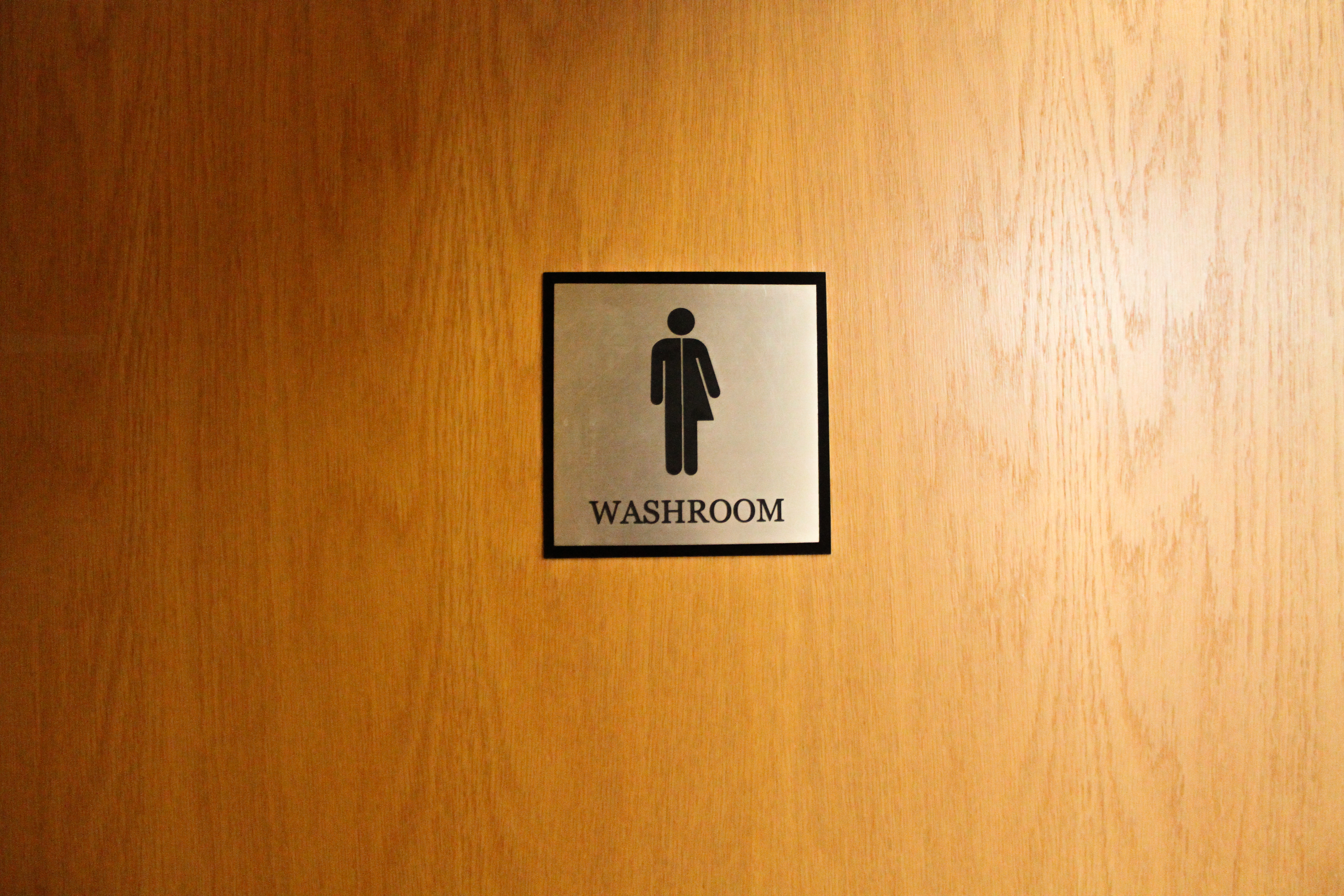
Tag: ID

  • Identifying Pronouns

    Identifying Pronouns

    “I walked to meal hall with him today.”

    “I met her at the dance yesterday.”

    “Jerry? I saw them in first class.”

    Now, there’s a chance that the first two sentences look proper to you, but the third one doesn’t seem right. You might think that I’ve mixed up the amount of people that were being talked about. After all, Jerry is only one person, right?

    Welcome to the wide world of pronouns! People who identify outside of the gender binary, as a mix of genders, lacking gender, or just refuse gender altogether, have become more visible in Western society in recent decades. Of course, many of you have heard of Caitlyn Jenner, Laverne Cox, and Chaz Bono. You might even know some friends who are transgender.

    Transgender is actually an umbrella term. It covers anyone who feels their gender identity and the gender assigned to them at birth (commonly from examination of the baby’s genitals) are not necessarily the same on a consistent basis. Some people who have intersex conditions may also use a new pronoun that you may not have previously heard. With the greater mainstream acceptance of people transitioning from male to female or female to male has come a push to more broadly recognize other gender identities.

    Genderqueer, genderfluid, agender, neutrois/neutral/neuter, trigender, genderf*ck are more recently emerging identities asking for their bit of respect. With these identities comes new terms to be able to refer to people who don’t feel that the traditional “he” or “she” is correct.

    One of the most common pronouns in use is “they” as a singular. You’ll hear it argued quite frequently that “they” is not acceptable grammatically because it is plural so can’t be used to refer to a singular third person. Oxford English Dictionary does accept this use of “they”. English is an ever-evolving language and its purpose is to serve our need to communicate accurately to each other.

    In Sweden just July of last year, the Swedish Academy (the institute responsible for choosing the winner of the Nobel Prize in Literature each year) announced that they would be including a gender neutral pronoun in their official glossary. While Swedish style manuals still treat the gender neutral pronoun as a neologism, this means that the Swedish language has evolved and agreed to add a new personal pronoun by taking the “structure” of the established gendered pronouns (han which means “he” and hon which means “her”) and using the “middle” of gender neutral det and gender common den (both translated to the equivalent of English “it”) to come to the end result of hen, a term used to avoid identifying gender and for people who identify as transgender, a third gender, or rejecting the division of male/female gender roles.

    Other pronouns that are being used are ones such as xe/xem, ze/zir, per/per and ve/ver. With the new various pronouns coming in to use, it can be very confusing for people who haven’t had the need to think outside of the binary previously. We all grow up learning the use of she/her and he/him. It seemed incredibly easy as a child to pick up new words and their correct usage. That’s because it is. We’re optimized to learn language best at around age 5. Learning new words and their uses becomes much harder as an adult. No one expects you to be perfect, but the effort means a lot to those who use different pronouns. On that note, if you screw up and use the wrong pronoun, a quick “Oh, I’m sorry” followed by usage of the correct pronoun is the best way to go.

    The argument has been made before that these “new” genders are made up, that the people who espouse them just want to feel special. If you look outside of the Western sphere of influence (and even within it, but outside the white, European influence), there are several cultures that accept and name more than two identities. The Blackfoot Confederacy recognizes those assigned female at birth (also known as AFAB) who occupy a gender role different than male or female. The Dominican Republic has an intersex condition so common that they have differentiated a unique gender for them, the guevedoche. Pre-colonial Incas in Peru had the quariwarmi. The Bugis people of Indonesia recognize five unique genders.

    We could be missing out on the most amazing friendship or partnership we could ever find in our lives. Would you be willing to give that up over the frustration of learning a new set of pronouns for a person?

    Need a crash course on how to decline these new nouns for proper use? Here’s a few websites to try:

    https://lgbt.wisc.edu/documents/LGBTCC-Gender_pronoun_guide.pdf

    http://anagnori.tumblr.com/post/75752291700/a-non-binary-persons-guide-to-invented-pronouns

    https://en.wikipedia.org/wiki/Gender-specific_and_gender-neutral_pronouns#Pronouns_and_LGBT_persons

    It may take some time to get used to the idea, but introducing yourself with your name and pronouns such as “Hi, my name is Taylor. My pronouns are they or he. What are your name and pronouns?” is an easy, non-invasive way to introduce the idea that you are open to respecting your new friends.

  • The Missing Letters: Beyond LGBTQI+

    The Missing Letters: Beyond LGBTQI+

    By now, most people who will be reading this article will have heard of the acronym, “LGBT.” This stands for, “Lesbian, Gay, Bisexual and Transgender”. Sometimes, in combination with other letters, such as “LGBTQ” or “LGBTI”. However, this not an inclusive list of sexualities or gender identities by any means of the imagination. The longest list I have come across thus far is twelve letters long (LGBTQQI2SPAA), and is still not inclusive. This is part of the reason for the push towards new acronyms such as GSD or GS(O)M (Gender and Sexual Diversities or Gender and Sexual Orientation Minorities, respectively).

    But what do the other letters mean when you start to get into the longer acronym? Lesbian, gay, bisexual, transgender and….. What? This is a quick rundown of the acronym above, but is by no means an exhaustive list.

    “Lesbian” and “gay” as most people know them, indicate that a person is homosexual (which means that they are attracted to people of the same gender). Boys who like boys, girls who like girls. Fairly straight forward.

    The term, “bisexual” also has a few different definitions. It shows that a person is attracted to the same gender and also a different one, and can also be used to describe people who are attracted to two genders or more. This terms is sometimes used interchangeably with the term, “pansexual”.

    The term, “transgender”, is a large umbrella term. It includes anyone whose gender and sex assigned at birth (typically as being a male or female according to your genitals) do not necessarily match on a constant basis. This can include people who are male-to-female or female-to-male binary trans* people (though some reject the MtF and FtM labels as they have always been men/women), people who are gender fluid (experiencing different genders at different times), people who are agender (experiencing no gender), people who are androgynous (experiencing a mixture of male and female genders), and many others.

    The letter, “Q” is often added to the end of the acronym and can stand for either Queer or Questioning. Queer is a term becoming reclaimed by the sexuality and gender communities. Often used to denote “not straight” or “not cis” (gender and sex assigned at birth match). It’s not always a strictly defined term in relation to who one loves or is interested in. Questioning is used as a catch all for people, appropriately, questioning their gender identity or their sexuality. It is an invitation to a community you may not be sure you’re a part of yet, but it gives you a space of your own to figure out yourself and where you will fit.

    The letter, “I” is also becoming more common in the letter mix. Standing for Intersex, it often represents people who have, “ambiguous genitalia” where it is not clear if they have a clitoris or a penis just yet. This is also a term assigned to people who don’t fall clearly on the male or female side of several different measurements such as sex chromosomes, hormone production or male or female gonadal tissue (ovaries and testes). Some people do not find they are Intersex until later on in life because their Intersex condition is internal, such as Complete or Partial Androgen Insensitivity Syndrome in which the sex chromosomes say XY, but due to the body’s inability to acknowledge androgen, the physical outer form has developed with breasts and a vagina.

    The acronym, “2S” stands for the identity, “Two Spirited”. This expression is most commonly used amongst people of First Nations’ backgrounds. This term is used when someone feels their body manifests both a feminine and masculine spirit within it and is used for both gender identity and sexuality. Some tribes considered those who were two spirited to be particularly special in terms of spirituality. It is a term that can be considered culturally appropriated if used by someone not of First Nations’ descent.

    Pansexual, or Omnisexual, is a term often described as, “gender blind”. It is the ability and potential to fall in love with someone who identifies with any gender. Pansexual is often used interchangeably with bisexual for different reasons including the commonality of bisexual so one would not need to constantly explain their sexuality to someone in discussion.

    The first “A” in the acronym stands for, “Asexual”. This is an umbrella term for those who feel no sexual attraction, little sexual attraction or sexual attraction only in very particular situations. Asexuality has produced its own very deep community with many definitions and specific terms. A few common ones being asexual for no sexual interest period, grey asexual in which sexual interest is very uncommon and demisexual in which one needs to form a strong emotional bond before sexual interest will exist. For the most part, the sexualities previously mentioned refer not only to sexual interest, but potential romantic interest as well. With the lack of sexual interest in the asexual community, romantic definitions have developed as well to define their interest in being in a relationship with someone. They are commonly the same stem words such as pan-, hetero- and homo- attached to the term romantic, creating expressions such as panromantic (interested in a romantic relationship with any gender), heteroromantic (interested in a romantic relationship with a different gender) and homoromantic (interested in a romantic relationship with the same gender). It is important to remember that romantic relationships without sex are just as legitimate as ones with sex.

    The last “A” in the acronym stands for Ally. For some, it is inclusive of heterosexual, cisgender allies who help with the recognition of other gender and sexuality identities. It is also an invitation to those who know they belong within the GSM groups, but are not able to currently be open about that fact, whether that is endangering their own life, their living situation, or that they are not ready to say so. It is a space to allow them to be a part of the community they belong with in a safe way.

    Again, this is not an exhaustive list, but just a reminder of sexualities and gender identities that are often overlooked for the increasingly mainstream acceptance of the LGBT in particular (you know…. When they’ll actually admit a character is bisexual on TV).

Betzillo positions itself as a versatile gaming hub where structured bonuses and adaptive gameplay mechanics support both short sessions and extended play.

Built with a focus on innovation, Spinbit integrates modern casino architecture with rapid transactions, appealing to players who value speed and digital efficiency.

Ripper Casino emphasizes bold entertainment through high-impact slot titles and competitive promotions crafted for risk-oriented players.

A friendly interface and stable performance define Ricky Casino, offering a casual yet reliable environment for a wide spectrum of gaming preferences.

King Billy Casino channels classic casino spirit into a modern platform, delivering recognizable themes supported by contemporary reward systems.

Immersive visuals and layered slot mechanics are at the core of Dragonslots, creating a narrative-driven casino experience.

Lukki Casino appeals to players seeking direct access and minimal friction, focusing on fast loading times and intuitive controls.

Casinonic provides a structured and dependable gaming framework, blending modern slots with transparent operational standards.