“I was very much optimistic about what his performance would be and honestly I’ve found it poor at best”
Picture by Matthew S. Duboff
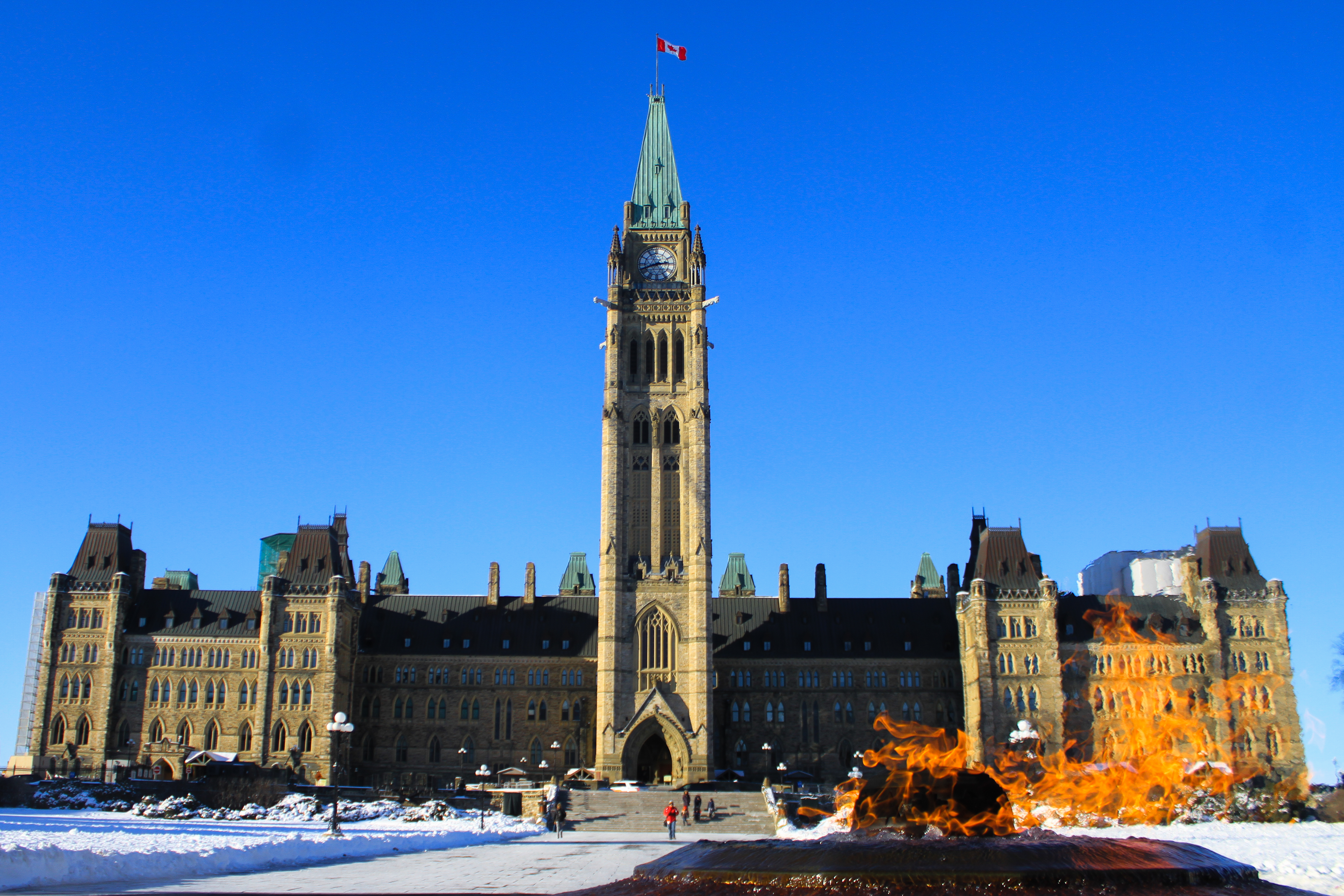
I’ll let you in on a little secret: Justin Trudeau is still a drama teacher. Now, he’s just a drama teacher that turned out to be bad at politics. He seemed perfect at first, I will admit that. The promises to the middle class, the legal weed, the environmental protectionism, and that hair, all very sexy indeed. But nearly two years after these promises, where do we find ourselves? I’m not an expert on the topic but I would say we’re right where we started… adjacent. So, in this article I’ll be exploring Trudeau’s four biggest election promises, what they were, where they went, and where they are. And, just because I think it would be fun, I’ll rate them on a scale of one to five, one representing a monumental crash and burn, five representing a well delivered promise. To keep me honest, I’ll rate them based on promise broken versus promise delivered considering that where you stand on key issues can dictate how you feel about them.
Promise #1: Syrian Refugees
JT promised that he would bring in 25,000 Syrian refugees by year end 2015. Well, what can we say about this one, it did happen, it just happened two months later than it was supposed to. With 54% of Canadians either moderately or strongly opposing the initial promise it seems clear that this was not a priority for most voters. The only reason that it makes this list is because it was one of the best publicized. Due to the lack of support from the public and the late marks incurred for missing a deadline, I’ll grant him a three out of five on this one.
Promise #2: End First-Past-The-Post
Next comes electoral reform, perhaps the most difficult endeavour a new government could undertake. At the beginning, it seemed that the PM was quite passionate about changing the way we elect our government, saying that he believed “fundamentally that we can do better”. This was a situation unlike the refugee issue, there was no late delivery. In February it was announced that the Liberal government simply would no longer pursue electoral reform at all. The letter to the Minister of Democratic Institutions Karina Gould read “A clear preference for a new electoral system, let alone a consensus, has not emerged… Changing the electoral system will not be in your mandate”. This was not a determination made without consulting the people, the government consulted 360,000 Canadians online and by telephone to ask their thoughts on electoral reform. The report on what they said, which I’ll gladly leave at the end of this article, is 111 pages long and assaults the reader with statistics. I won’t share my interpretation but it’s sufficient to say the questions posed to those who completed the survey were very general. How the Liberals handled the road to electoral reform was a complete embarrassment at best, one out of five, no questions asked.
Promise #3: Legal Weed
The Liberal promise of legal weed is, in my opinion, one of the main reasons they were elected. At the very least we can agree that it won them some of the millennial vote. I would hate to quote myself but last semester I wrote on the topic in an article titled “This Bud’s For You” in which I stated that legal marijuana is a great idea but not for any of the reasons the Liberal party cited. I still stand by that statement. Further to this, the plan to legalize marijuana has been lined up conveniently around the time of the next federal election which is not likely a coincidence. The legal purchasing age, the points of sale and the penalties for driving under the influence of marijuana are still up in the air as it stands right now. In my home province of Ontario, many believe the Wynne Liberals are botching the point of sale issue. With no clear intention to allow the free market to develop the industry, my province intends to sell it through provincially regulated stores, the same idea as liquor stores. While I will say that it would be nice to pick up a six pack and a joint on a Saturday afternoon I also believe that in this case a large opportunity has been missed. Although the promise will be delivered, much has been left up to the provinces to figure out, and for that a four out of five is the result.
Promise #4: Short Term/Modest Deficits
This promise simply didn’t turn out. The Liberal government has been a cash furnace from which few things have emerged. I don’t think that anyone really believed this and the promise was absolutely blown out of the water far sooner than even I expected. This promise needs no explanation, it just didn’t happen. One out of five.
What’s to say about this one folks. I’m disappointed. After the fogginess of my election night drinking wore off, I was willing to give Trudeau a shot. I was very much optimistic about what his performance would be and honestly I’ve found it poor at best. Agree with me? Great. Pissed off about this article? Even better.
1) The notion that “White Privilege” is offensive and racist towards White People.
Racism, cultural appropriation, and discrimination have been a hot-button issue throughout history. With the rise of social media platforms, along with the recent election of Donald Trump, there is a plethora of conversation online (and in print) about the hateful rhetoric that seems to be plaguing today’s society. Unfortunately, when people feel that their privilege is being threatened, they enter an automatic defense mode. It is often presented in such a manner where the defendant makes claims of innocence, justifying their feelings of discomfort by exclaiming that they are not guilty of racism, and that if their race is being questioned, that they are automatically being discriminated against. White privilege is not racist; it is not offensive in any way. It is a method of explaining the favorable treatment that white people often receive. There are no systems of oppression designed against white people. Thinking that reverse racism exists is what perpetuates the notion of white privilege further into the foundations of our society. It is a mechanism that is used to validate the comfortable position white people hold in society. Validating your own comfortable position by attacking a marginalized group (by saying white privilege is offensive, racist etc.) is a subtle way of invalidating and shutting down any group who’s LIVED EXPERIENCE has ever been one of systemic oppression. In extension, these feelings can often be described as “white fragility,” a state in which minimum amounts of racial stress becomes intolerable, triggering outward displays of emotion, such as anger, and behaviours such as argumentation. Yeah, this definitely could have been left behind in 2016.
2) That any Indigenous culture should just “get over” colonization.
Really? This one amazes me every time I hear it. Let us take a brief moment to recall Canadian History because we are not innocent in the ways or racism and cultural oppression. Residential schools were opened in conjunction with the Catholic and Protestant Churches and the government. Their aim was to remove any form of Indigenous culture from Indigenous children by forcefully removing them from their homes, placing them in schools where they would be taught Western values. As such, a cultural genocide was committed. Often, when hearing the word “genocide,” events such as the Holocaust, Bosnian, and Rwandan genocides. That is because Canada has attempted to repress its history. The horrors of the Residential schools did not end until 1996. Yes, most of us were living when the last school shut its doors. During their time in the Residential schools, Indigenous children were beaten, sexually assaulted, and mentally abused by their instructors. Often, these traumas were difficult to cope with. A stigma surrounds Indigenous peoples in Canada. Many people chose to believe that status cards, funding, government aid, and the Truth and Reconciliation Committee should all be abolished. They question why we should continue to apologize, and why we should continue to work towards mending our relationship with Indigenous peoples. What does it take to get over something like this? How could you possibly put a numerical value on an apology, how can you, a white person, get to dictate the appropriate measures for reconciliation after a cultural genocide has been committed? When you say these things, you act as though you assume the role of the oppressed, you may think you understand their oppression, but you simply do not. I know I do not understand, I never could. However, it is important to listen, to engage in conversation, and to be respectful of what you cannot understand. Please read the above statement about white privilege and then rethink your questions and sweeping generalizations about Indigenous peoples and Indigenous culture.
3) “She was asking for it”- REALLY?
For God sakes. How is this type of conversation STILL taking place? Did we not learn after Jian Ghomeshi and Brock Allen-Turner? I simply do not understand. The legal process further victimizes rape victims. Belittlement and slut-shaming occur in the courtroom in order to find loopholes in the victim’s statement. By asking her, “did you say no?” you are questioning her pain and her experience. By asking her, “how much did you drink?” you are assuming that all drunk women are ‘asking for it’, by asking her “what were you wearing” or “how many men have you slept with in the past”, you are slut-shaming her. Although there are false reports of rape, the treatment of victims in the courtroom is inexcusable. This is the reason that rape and sexual assault are so underreported. This process favours the accused, often bringing into play irrelevant aspects of his character, his achievements, and what he strives for in life. However, this does not take into account aspects of the victim’s character, her (or his) achievements in life, and how what she/he had strived for may feel as though it has become so out of reach. It’s simple, folks. If you can’t say no, you can’t say yes. There is no in-between; there is no grey area. There is yes, and there is no. Stop blaming the victim. Stop validating your need for supremacy. Stop questioning the pain of others, instead, start regarding it.
4) Feelings of self-doubt, as brought on by Instagram and other forms of Social Media.
I am guilty of this. Most people are guilty of this. It is so easy to feel self-doubt, and it is so easy to think that your value decreases based on the perceived notion of “perfection” in the others who you see on social media. In the last 10 years, we have “networking” apps explode. The original purpose of these apps was to stay in touch with your friends, to be able to connect with people you haven’t seen in a long time and to keep others updated on what is going on in your own life. However, it feels as though there has been a shift in the dynamic, a change in the way we behave on the Internet. Often, all we see is the picture. We believe that everybody’s lives are perfect and full of happiness based on how they display themselves on social media. Getting the “perfect picture” and pairing it with a “fire” caption that will get you over 300 likes is often a goal of most people. I know I am not innocent. There have been multiple occasions where I have found myself thinking, “if I went to the gym more maybe I would look like her and then I would be as happy as she appears.” I know this is wrong. After a conversation with one of my roommates, I found out that she was feeling the same way. She talked to me about how miserable looking at Instagram makes her. It caused her to question her own happiness by constantly comparing it to other girls’ social media pages. So, she slowly began to stop looking as much. As did I. I’ll leave this point here: everybody has their issues, but we have been conditioned to try and keep our problems to yourself. A picture is just that: a picture. You see what the poster wants you to see, just remember that your self-worth should not be determined by a like or how the world views your Instagram page.
5) Islamophobia.
Islam is a religion of peace. Often, people do not believe this when it is brought up in conversation. The first time I heard this was in my 11th grade world religion class. Our teacher told us that Islam was the closest religion to Christianity. She was right. It is not Islam you are afraid of, it is the “otherness.” The sense that you see something different, and that you are uncomfortable within a realm of your own privilege is what sets you off. This rhetoric gained prominence after 9/11. We were scared of them. They were scared of us. Although I am not an expert in Islamic studies, I know many men and women from the Arab world who identify as Muslims, and I can honestly say that they are much nicer than many other people I know. If we remove the concept of the “other,” perhaps we will all be able to see each other as we are: human.
It was the evening of Friday, November 13th, 2015 and I was walking home with some friends from a movie. We were excited because we were on the way home to book our first trip together to Paris! We would leave in just two weeks. Then it started! Endless Facebook messages of panic, international phone calls filled with worry, and then frantic knocking on my apartment door: there had been several terrorist attacks in Paris! Everyone was hysterical! What do we do? My first reaction was to notify my family and friends that I was safe. My parents’ reaction was for me to be on the first flight back home to Canada, but I told them that I wanted to stay and I ensured them that should the situation become more severe, I would decide to come home.
In the days that followed, my friends and I were obviously a bit cautious, but we never felt afraid of our Muslim friends and community members. After the attacks there were ceremonies to commemorate the lives lost and to also show the continued respect of Islam. We did, however, try to get full refunds for our trip to Paris, but that was unsuccessful. After much debate and contemplation we ventured to Paris. Our families were not happy with this decision, but we had a professor who gave us a lecture that we should not be afraid of these terrorists, because then they win. We cannot put our lives on hold for them.
We were excited and nervous all at the same time. There was security everywhere in Paris. We had to get our bags and coats checked throughout the whole trip. I had never experienced anything like it before. It was nothing compared to airport security; from shopping centers to grocery stores and restaurants, it was unavoidable. Although the high security was there to ensure safety, it did make us all feel anxious and aware that there was just a huge attack here; however, amidst the high security and the heavy air, we never felt unsafe and we never heard utters of xenophobia. The weekend trip to Paris ended up being a lot of fun and we created lasting memories.
Now let me put this story into some context of why I was in France.
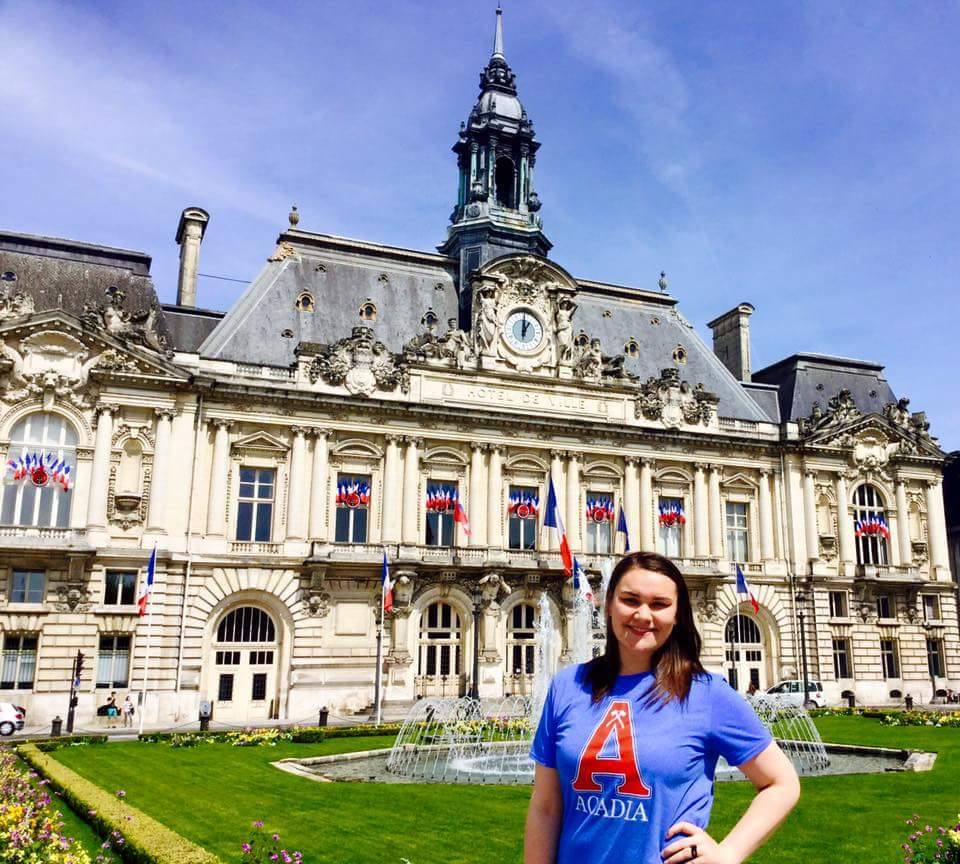
In late 2015 and the majority of 2016, I was fortunate to spend my third year of university on exchange through Acadia studying at l’Univeristé François-Rabelais, which is located in the lovely city of Tours, France. The city is situated about an hour south of Paris by high-speed train. It has a population of approximately 150,000, situated in the Loire Valley, which is filled with enchanting chateaux’s, luxurious biking paths, and supple vineyards.
Exchange students have the opportunity of taking certain courses which are catered to learning about French culture. One of the courses I took was about French society, and a major topic we discussed was about France’s religious system. We learned about France’s laicity system (laïcité in French) which involves the separation of church from state. There is no religious instruction at school or any religious symbols in educational and governmental spaces. France’s laic society involves not showing any large religious symbols in the public, but rather keeping them for religious establishments and homes. It also supports religious freedom, meaning that citizens have the right to practice the religion they wish.
From my perspective of living in France for one year, I found that the French are a very accepting and respectful society to all religions. There is a harmonic mosaic of multiculturalism in the country. As I previously wrote, despite the horrible attacks in Paris there was a band of support for Muslims.
This example made me think of the current political climate in the United States of America, which is trying to scare everyone from Muslims, especially with the President’s short-lived travel ban on seven predominantly Islamic countries. This rhetoric is obviously not healthy and not one that promotes peace and security, rather the reverse.
There is an extreme conservative party in France, which is led by Marine Le Pen, a supporter of the current establishment in the U.S. and whose rhetoric influenced the culprit of the recent mass shooting in a Quebec City mosque on Sunday, January 29th, 2017.
My exchange taught me that it is possible for all people, regardless of their religious beliefs, to get along and work in harmony. We must all respect one and others beliefs, as long as they encourage love and peace for all.
There are extremists in every religion. Not just in Islam. Imagine basing the recent attack in Quebec City as a case for stating that all Christians are extremists and must be stopped. That would be absurd. Yes, there is definitely a problem with religious extremists, but religion can also bring a lot of good. By preventing people who are seeking asylum into a safe country there is nothing being accomplished, but allowing the extremists to win by making us scared of them and letting them control our daily lives and media reports.
My experience on exchange taught me a lot about the world. I was exposed to more multiculturalism than at home and I grew from this. The only way to grow is to surround yourself with people who are not like you. A well-rounded person is not scared or afraid of differences, but embraces diversity and the wealth that it brings. Travelling and discovering more about this world is truly a passion of mine that I will follow for the rest of my life. I encourage every person to travel as much as they can, and to not allow fear-mongering leaders to deter you from doing so.
The biggest lesson I learned on exchange is that although the world is filled with so many differences, the common factor is that at the core human beings start out all being good people. We are all born with an innocent mind, but it is our surroundings and teachings that may change this goodness.
Shortly after the Paris attacks the numbers had been confirmed that 120 people were killed and there were 369 people injured. The world mourned for these people and Paris. It truly was a global affair. Despite this horrific event, the world goes round. Everyone eventually went back to their routines and slowly, but surely we began to stop thinking about the attacks on a daily basis. Living through a terrorist attack is an unforgettable event, but it will not change my perspective on the Islam religion. Those were terrorists and not Muslims.
Overall, I am truly grateful to have had the experience of being on exchange and I highly recommend it to all students. You will be so happy you did so! It is definitely the highlight of my undergraduate experience. I look forward to more adventures in France someday soon, perhaps to further my studies, because one year was simply not enough for me!
In recent months, politics has become a buzzword. Some people relish in discussing politics, while others are deeply opposed. From classrooms to coffee shops, it has become increasingly rare to stay away from the subject. Even celebrities, such as Rihanna and JK Rowling, are turning to social media sites such as Twitter, Instagram, and Facebook to express their views. It’s not too difficult to notice a pattern emerging in the comments section of these sites: while many people support their political commentary, there is also great and often antagonistic resistance to it.
On January 28th, in response to President Trump’s executive order of the so-called Muslim ban, Rihanna exclaimed on Twitter: “Disgusted! The news is devastating! America is being ruined right before our eyes! What an immoral pig you have to be to implement such BS!!” Earning 150,000 retweets and nearly 400,000 likes, it was clear that she expressed an opinion that resonated with many. However, fellow singer Azealia Banks thought differently about Rihanna’s comment, responded (on what are now deleted posts): “As far as [R]ihanna (who isn’t a citizen, and can’t vote) and all the rest of the celebrities who are using their influence to stir the public, you lot really REALLY need to shut up and sit down…. Stop chastising the president. It’s stupid and pathetic to watch… Hoping the president fails is like getting on an airplane and hoping the pilot crashes.”
In a similar way, JK Rowling was also told to “shut up and sit down.” Commenting on the Muslim ban and the experiences of those being detained at American airports, she posted on Twitter: “When I worked for Amnesty International in the 80s, these were the kind of stories told by political prisoners in dictatorships.” In response, an individual known as Mr. America on Twitter responded: “You’re a grown ass woman whose entire career is based on stories about a nerd who turns people into frogs. Stay out of politics.”
“Shut up and sit down.” “Stay out of politics.” Do celebrities like Rihanna and JK Rowling warrant such responses because the realm of politics isn’t necessarily their expertise? If you’re a singer or an author, does that automatically make your political opinions and engagement moot? Isn’t Azealia Banks, a fellow singer, being hypocritical in her response due to it’s political nature? Telling people to “stop chastising the president” is political commentary. Should she practice what she preaches? What makes “Mr. America” qualified to tell a person to stay out of politics? What makes his opinion any more valid?
Taking the high road, Rihanna posted an image on Instagram with the caption: “the face you make when you an immigrant. #stayawayfromourchickens”. Comments telling people to remain silent only promote ignorance and shallow discussion. Now, more than ever, individuals should engage in open discussion to hold those in power accountable and to understand different points of view. JK Rowling says it best: “In – Free – Countries – Anyone – Can – Talk – About – Politics.”
This article should come with a trigger warning. Beheadings, stoning, lashings, and everything else that comes with living in a Muslim majority country, where do these things come from? Under Islam and Sharia law countless people suffer at the hands of hard-line Islamist regimes. These things promoted by Islam are wrong. I am not saying that I hold the belief that Islam is wrong, but many do, and I thought it was about time somebody started talking about it. Those who practice Islam constitute the second largest religion in the world with most Muslims living in North Africa and the Middle East.
There are an estimated 1.6 billion Muslims world wide. The problem with Islam seems not to be that the religion itself is violent it is Sharia law, a law system based on the Quran, that is most harmful. Under Sharia law smoking, drinking, pre-marital sex, extra-marital sex, renouncing Islam, theft, accusations of crime with out witnesses, homosexuality and murder are illegal. The punishments for committing these “crimes” under Sharia law include but are not limited to: Beheading, crucifixion, stoning, amputation of the hands or feet, and flogging. What is perhaps most surprising is how easy it is to commit an offence that would result in beheading, almost any of the crimes under Sharia could carry with them a sentence of beheading. And perhaps my least favourite aspect of Sharia is that these punishments are to be carried out in public. You may be asking yourself how much support the Sharia legal system has amongst Muslims. The answer is a lot. Forty-two percent of Russian Muslims think that Sharia should be the law in Russia. Malaysia, Thailand and, Indonesia have support that ranges from seventy-two to eighty-six percent.
Some may say that the opinions in these countries are extreme however forty-five percent of American Muslims think that homosexuality should be discouraged by society. In Muslim majority countries, the state itself has often adopted the principles of Hudud, which are the punishments for transgressions against Sharia. Countries in which Sharia law is the predominant legal system are widespread, ranging from Saudi Arabia to Mauritania. It has been said that most countries prefer other forms of punishment rather than those prescribed by Sharia however, on December 12th of this year, Global News published an article that described the punishment for a Saudi woman who posted a picture of herself wearing a dress on Instagram for her crimes she was sentenced to imprisonment and lashings. What is most disturbing about the article is that many men tweeted that the punishment should be much worse and that she “would be lucky if all she got was a beheading”.
Beheadings as a method of executions are quite common in the kingdom of Saudi Arabia with one hundred fifty-seven people having been beheaded in the country in 2015 this is the highest number of beheadings in nearly two decades. sixty-three of those beheadings were for non-lethal offences. In Afghanistan that number is at more than four hundred individuals that are currently under sentence of death. This is compared to 28 people who were put to death by lethal injection in the United States in 2015. Before you judge my writing too harshly I would ask you to consider the ramifications of Sharia law on life here in Wolfville. Let’s use the average Saturday night out as an example. You’re getting ready to head to the Vil and you decide to stop by your friends for a couple drinks before the bar, you head out and end up taking some fine young man or woman home with you. You wake up the next morning expecting to nurse your hangover, when instead there is an angry mob outside your home enraged that you were intoxicated and had pre-marital sex.
These people are prepared to behead you, and the person you took home. You are then dragged to the steps of University Hall where your head is then removed, likely hacked off at the neck, from your body as hundreds of on-lookers relishes in your final moments on this planet because you had a couple drinks. This is the reality for many in Muslim majority countries. It seems to me that there is a great deal of fear in academia and in western news agencies to blame this barbarity on Islam. This should not be the case at all. These types of situations and punishments are a direct result of Islam and the legal system that it carries with it. I would challenge anyone to name a religion that sees these things as crimes and would suggest the same punishments for it. Or perhaps another religion that issues fatwas which are spontaneous religious decrees. Christianity? No. Judaism? No. Catholicism? No. I understand that marriage, divorce, exchange of property and many other legal actions are the result of thousands of years of evolution of the Judeo-Christian system. Christianity does generally frown upon homosexuality however no large sect of Christianity is suggesting that we kill anyone over it. Catholicism has historically been the poster child for intolerance in modern day religion however under Pope Francis the Catholic church has become far more progressive than anyone ever thought possible. Pope Francis was quick to come to the defence of the Islamic faith saying that to associate it with violence is wrong and that many religious groups have sects of violent people.
While this is true it seems as though the principles and decrees of Sharia under Islam directly result in backwards thinking and violence against women. Let me be perfectly clear about this, I do not blame Muslims or the entire religion of Islam for the suffering experienced under Sharia. Rather, I would blame hard-line Muslim extremists in Muslim majority countries. Does the religion of Islam promote Sharia law? Absolutely it does. Can we as a society say that there are parts of many religions that do not belong in mainstream society? Certainly we can. But there is no sect of any religion that I know of that treats women, members of the LGBTQ community, and many others in the way that Islam does. You may call me wrong but the numbers on this issue don’t lie. Sharia has no place in modern society.
Sitting down at the dinner table with my family I faced an awkward conversation. It started with griping about the state of the world: America, Europe, crisis after pandemic after crash. It was a depressing start to a conversation, to say the least. The picture that was painted was one resembling the worst of the first Mad Max film, or the beginnings of Roland Emmerich’s 2012: undesirable and unnecessary.
After some thinking, I chimed into the conversation. Yes, I wasn’t going to lie, things did look bad. There were a lot of things that were beyond the scope of positivity. But after the dinner was over I stopped and asked my parents: why did they think things were so bad? Their answers were different in their wording but the general message was the same: things were changing and they were changing in a direction they didn’t like.
It’s undeniable that the world is changing. Former reality TV star Donald Trump is now President of the United States, the UK is (trying to begin the process of) leaving the European Union, Syria is falling back under the control of Bashar Al-Assad, and the Islamic State is branching out around the world, with attacks occurring everywhere from Christmas markets in Berlin to bazaars in Turkey and malls in the United States. It’s a different world, and it’s one that doesn’t have the prettiest face. By a lot of metrics, the world is sliding back into a reality eerily reminiscent of the 1930s, with fascism, racism, and neo-Nazism on the rise and tensions erupting around the world. This all came to the boiling point in 2016, a year we’re all very glad is over.
Denying that the world is facing a challenging new reality is arrogant and irresponsible. To say that everything is going to be fine and dandy is dangerously naïve. But it doesn’t warrant being pessimistic about the future.
2016 will be a year that will be long analyzed by historians of the future. We lost countless stars, from David Bowie to Prince and Carrie Fisher, we saw the worst of humanity in Aleppo, and we saw hate take precedence over love through xenophobia and racism. Needless to say, it was a year that will live in infamy.
But it doesn’t warrant despair. In the face of adversity, the worst thing one can do is curl up in a ball and refuse to believe that anything they do can change things. Even the littlest of things, from throwing your coffee cup in the recycling or telling somebody they look good today, makes a difference. It may be small and but it is not insignificant. Maya Angelou once said “people will forget what you did, but people will never forget how you made them feel”. In the face of an uncertain future it makes all the difference to be there for one another.
As much as those around us may want to pessimistic about 2016, there were just as many reasons to be optimistic. The Colombian government signed an agreement with the FARC, ending a decades long conflict that had killed thousands. Tiger numbers around the world were on the rise for the first time in 100 years. A solar powered airplane flew across the Pacific Ocean. World hunger has reached its lowest point in 25 years. People pouring buckets of ice over their heads raised enough money to help isolate the gene that causes the disease. When you look back over the bigger events, last year wasn’t so bad.
It’s impressive how far we’ve come in the past year. The Paris Agreement has been signed, and even though there are plenty of climate change skeptics and outright deniers in high office, the ball has begun rolling towards a greener future. We’ve seen compassion in Canada, with our own Prime Minister personally greeting refugees fleeing war and utter devastation. Love him or hate him, it takes someone with genuine character to take ownership of an issue and face the fruits of their labour head-on. Even here at Acadia, our first year population has grown by 25%. New blood and new minds are being welcomed into Wolfville, a stark contrast from the previous year’s intake.
I have hope for 2017. There are elections coming up around the world where candidates are basing their campaigns on an ‘us vs. them’ message, fearmongering and hatemongering. But while there are those candidates, there are just as many promoting what makes democracy worth fighting for: peace, compassion, tolerance, justice, and love. The fight for a free and fair society isn’t an easy or bloodless one. Relationships are ruined, reputations are soured, and feelings are hurt. But if you truly believe in something worth fighting for, stand up for it.
There will always be headlines that strike fear into our hearts. There will always be those who preach hate and practice malice. There will always be those who believe that the impossible is exactly that- impossible. And yet there will always be those tiny instances of human compassion that amount to something greater. There will always be those who preach love and practice tolerance. There will always be those who believe that the impossible is exactly the opposite- possible.
Let’s not despair for 2017. Let’s go out and make it a good one.
Hey! I’m Oliver Jacob and I am a first year student from Arnprior, Ontario studying a Bachelor of Arts with Double Major in Political Science and French. I have been heavily involved in student leadership and volunteer work within my home community including sitting on the Ministers Student Advisory Council in 2013-2014. I have been heavily involved with Free The Children raising awareness for poverty and child labour in developing countries while teaching Canadian students that they are the leaders of today not tomorrow. This is what drew me to contribute to my local and global communities but more than that, I want to make a difference in your lives. I am committed to do everything that I can to create an environment here at Acadia where all students can achieve excellence in anything they put their minds to by creating a safe learning environment that promotes diversity and leadership.
Dena Williams
Hey Acadia! For those who don’t know me, I’m Dena! My hopes in running for Equity Officer is to help create an environment where anyone can feel free to be themselves. Attending a school where you’re truly embraced by the student and staff body is crucial to our individuality and builds a foundation for the diversity we have on campus. I’ve had many experiences at Acadia which have affected me as a underrepresented minority on campus, although positive and negative these experiences have led me to want a position where I can emphasize the need for change and be part of the process. I love this school, and to have the opportunity to make it better would be an honor! I am more than ready to sit at the table and present the true vibrancy of Acadia in the SRC! Thank you for this opportunity!
Colin Mitchell
Think different.
Two words uttered by Apple in 1997. Think different.
It meant to think beyond the bounds of the possible. We live in a world where we’re told the only way forward is coding or numbers.
I disagree. The arts permeate every aspect of our lives, and as Arts Senator I’ll make sure they retain the same importance at Acadia.
For nearly 150 years the arts have had an incomparable impact on Acadia. As a Senator I’ll ensure that the Faculty of Arts is fairly and equitably represented, with no program left behind. From English to Drama, Politics to Sociology, every program matters.
This school’s diversity is a strength, not a weakness.
On the Senate I’ll work tirelessly to ensure that the Arts stay strong, today and tomorrow.
So let’s think different. From September 29-30th, vote Colin Mitchell for Arts Senator.
Chantalle Byron
My name is Chantalle Byron. I’m in my 4th year majoring in Biology and Chemistry. I’m from Antigua, in the Caribbean. I am capable to serve as your equity officer due to my experience on my high school’s council and serving as the Public Relations Officer for my college’s Rotary Club. Also, I belong to a few of the underrepresented groups that contribute to Acadia’s diversity.
As Equity Officer, I intend to keep an open mind and an open door to the concerns of any student. I will coordinate my efforts with organizations on campus, already working towards equal representation. I aim to help smaller clubs develop into successful, influential organizations like Acadia Pride or the Women’s Centre. The importance of knowing support is available cannot be overstated. I will take the concerns of the entire student body seriously to ensure that everyone has the best possible Acadia U experience!
Max Janes
My name is Max Janes and I am running for SRC Council. I have a wealth of experiencing in working with others, and know how to get things done. Your ASU constitution is designed to ensure that you as a student have your rights respected, and the SRC council is the governing body elected by students that takes the time to read and be aware of constitutional infringements and the like. If elected, I will put the needs of the students first, ensuring that there are resources available when needed, and that students of all identities and backgrounds will have their voices heard. Every student deserves to have a voice, and I will listen to every voice willing to speak.
Tessa Janes
Formally the head of Acadia Pride and now the head of the Women’s Centre after two years as an ASU Internal Organization coordinator, I’m well versed in the intricacies of the student government; specifically how to actually get things done instead of just creating groups and committees to talk about it. The SRC is the group that really controls what goes on. Elected by, and responsible directly to, the student body it’s the SRC that votes on everything from budgets to off-campus affairs, and I really want to be a part of that and make some serious changes. Too often there are students who run your student government like a friends club, not really having your interests in mind or really understanding their role. In government I’m going to make sure those union dues you pay go a lot further (because right now if you’re not angry about things, you should be).
Josie Cross
Hi, my name is Josie Cross. I am a second year student studying Psychology. I am running to be a Councillor because I feel it is great way to get involved with the school. As a second year student, and after volunteering with the Acadia Student Union, I now have a better understanding of how the student council works. My goal as councillor would be to make sure all students have a voice no matter their year of study. Everyone deserves an equal chance to share their opinion whether they’re involved with the school or not. Another thing I would do is make sure there were more events held on and off campus to allow students to interact more with each other and the university. Thank you, and vote for Josie! 🙂
Carter Bobbie
My name is Carter Bobbie and I am a 4th year politics student running to be an ASU councilor. Getting involved in the ASU community is something I have always wanted and believe this opportunity is a fantastic way to contribute and show change. I am an enthusiastic, hardworking student that will step up to the plate and hit that home run when we need it. I will put forward only the best and dedicate myself in listening too the student body’s concerns regarding matters within Acadia because that is what the student body deserves. I continually push myself to achieve the best and will work day and night to get the job done. Acadia has given me so much and I would be thrilled to give something back. I believe I would best represent as well as promote the student body and would relish the opportunity to become a student councilor.
Brandon Giacchetta
Hi, my name is Brandon Giacchetta, and I’m currently a fifth year student studying business. The reason I’m running in this election is because Acadia has given so much to me, that I feel I should try my best to give back to Acadia. My main goal is to make sure every student at Acadia, will have their voice heard on any issue they believe is important. Student equability will be a large focus of my campaign, and if elected it will be the focal point of my role. No student should ever have to feel like their opinion doesn’t matter, and I’m going to make sure they know it does.
Vote For Brandon!
Calum McCracken
Hello my fellow Acadia peers! My name is Calum McCracken and I am a fourth year political science student, with a minor in legal studies. Moreover, I am running for the vacant Student Councillor position alongside my colleague, and fellow political science student Carter Bobbie! I am committed to fulfilling the duties of said office, and will strive to represent the entirety of the student body. Further, I will remain receptive and considerate to the diverse pallet of issues and interests that populate our Acadia community. As a political science student whom studies contemporary, cultural, and administrative issues on an intellectual level, I believe I can offer a unique input on matters pertaining to the sociopolitical makeup of the Acadia community. Over my three-year career at Acadia University I have gained insight both inside and outside the classroom, and hope to be given an opportunity to let my actions reflect this, if given the opportunity to hold the office of Student Councillor.
Michael Rumsby
My name is Michael Rumsby and I’m from Cole Harbour, Nova Scotia. I’m also a second year Engineering student as well as President of Cutten House. The reason I took on a leadership role in Cutten was so that I could make a difference in the lives of students here at Acadia. I’m looking for an opportunity to be in a position where I can reach a much larger portion of students. My hope is to become a councillor so that I can get input during office hours from a wider range of students so that we can make Acadia as great a school as possible for all students. We can’t solve any issues if they are not discussed and I would like to be the person you can talk to, to make a difference at our beautiful school.
Ryan Myers
Hello all, my name is Ryan Myers and I am a fourth year music major running for Equity Officer for the ASU! Being a thoroughly involved student on campus and with the Wolfville community, I have had the pleasure to meet a wide spectrum of individuals over my first three years at Acadia. As a member and strong supporter of the LGBTQ+ community, I feel that all of our contrasting differences complement one another to make our campus truly prosper. In this way, I believe that equal opportunity for all students is a necessity for the well-being of our student body. I hope to be a friendly face that any student will feel comfortable approaching with questions, concerns, or even just to chat! On September 29th and 30th, I graciously ask you to vote Ryan Myers for Equity Officer!
Alyssa Hall
Hello, my name is Alyssa Hall and I’d like to represent you as a council member in the Acadia Student Union. I am currently a second year business student here at Acadia and couldn’t be happier about it. Originally from Quispamsis NB, I’ve been blessed to move from one beautiful valley to another. I pride myself on my open-mindedness and will always be happy to take suggestions and ideas to better your experience with the Acadia community. My focus if elected will be ensuring that the student body at large is heard. In addition to my regular office hours, I am always open to talking with student at other times when requested. I believe school needs to be a balance between academics and extra-curricular, while always taking care of your physical and mental wellbeing. Thank you for your consideration and I encourage you to vote for the candidate you best believe will represent your voice.
Julianna Mutch
Hello Acadia, I’m Julianna Mutch and I’m a fourth year Politics and French double major from Moncton, NB who would love to serve you all again as a Councillor on the Students’ Representative Council. During my time at Acadia I have been involved with S.M.I.L.E., student ambassador tours, and as a Councillor for two years. During my two terms as Councillor I was able to meet many amazing Acadia students and help inform them on what’s going on with the Students’ Representative Council, as well as putting on programs which involved promoting positive mental health and to bring awareness to the SRC, the ASU’s Internal Organizations and the Town of Wolfville. If re-elected I would like to focus on issues pertaining to consent and to further strengthen Acadia’s relations with the Town of Wolfville. It would be an honour and a pleasure to serve you all. Please VOTE, VOTE, VOTE!
With all the salacious news stories covering the United States’ elections, it is easy to forget that the Minister of Finance, Bill Morneau, has presented his first federal budget – the first of the new Liberal mandate. A federal budget is a complicated piece of governmental policy, but is an effective way for governing parties to translate their ideology into public policy. Each budget is hundreds of pages long, and covers numerous issues. I will glance over the most prominent points of this budget for students, but more important than those individual pieces is the politics behind it all.
In their press release, The Canadian Alliance of Student Associations (CASA) highlighted the positives and negatives of the Liberal budget as it pertains to student issues. On the positive side, the Liberals have increased the maximum Canada Student Grant amount for low and middle-income families by 50%, increased the Repayment Assistance Plan income threshold to $25,000, and increased work integrating learning opportunities for greater employment outcomes. However, according to CASA, the budget fails to address the increasing financial need of graduate students, and while it does invest $8.4 billion for Indigenous peoples, the budget does not explicitly remove the 2% cap on annual increases to the Post-Secondary Student Support Program for First Nations students.
What is really troublesome with the Federal Budget is the deficit that the Liberals are projecting. As everyone knows, the Liberals broke the mould during the federal elections, when they promised a $10 billion deficit for the next three years instead of pledging to balance the budget as every other political party had pledged to do. The deficit was pitched as a means of stimulating the economy with targeted spending on things like green and social infrastructure, and the Liberals added an additional promise of returning to balanced budgets by the end of their mandate. Voters overwhelmingly accepted their pitch, as a Liberal majority government was projected after all of Atlantic Canada went red. The Liberal’s infrastructure spending came through, however the promise for a modest deficit did not.
Instead of a $10 billion deficit, the Liberals are projecting a $29.4 billion deficit for 2016-17. Additionally, while the Liberals had promised to return to a balanced budget by the end of their mandate, they are now projecting a $14.3 billion deficit for 2020-21, with no stated plan to return to a balanced budget. The budget has been praised by some for being the most progressive federal budget ever seen, and many have recognized that the projected deficit of $29.4 billion is a consequence of the Liberals efforts to keep their many progressive campaign promises, after they were given the lack-lustre books by the outgoing Conservatives.
However, during the campaign, then-Prime Minister Stephen Harper openly mocked Trudeau’s promise to run three modest deficits, and former Conservative Finance Minister, Joe Oliver, recently said the most difficult yet important skill in drafting a budget is the ability to set priorities. The Liberal deficit could be seen as an inability to set clear priorities and be fiscally responsible. Whether a $29.4 billion deficit is still a modest, or even a necessary one, the inability to set more clear priorities and stick to the promised $10 billion deficit allows the Tories to paint the Liberals as reckless and irresponsible spenders. With their overwhelming majority in Parliament, the budget will pass without issue. The only actual opposition will be rhetoric, since neither the NDP nor the Conservatives have the numbers to vote it down. What the budget needs, though, is follow-through. If the deficits are manageable, and help grow the economy, the Liberals win. However, if the deficits continue to grow and add to the national debt throughout the Liberal mandate, then a reactionary wave of new conservatism may rise as a result.
I would like to reject the notion that the only political decisions that affect students are PSE related. The economy affects us all, and students are not immune to its ups and downs. Before we are students, we are Canadians, and we should care about the political decisions that are being made, not just decisions about education. Student issues are important, but students should be politically literate on all issues so we may have a more responsive political system. I would argue that it is beholden of us all to have some sort of opinion on the Liberal deficit – positive or negative – because federal spending affects everyone in one way or another.
There’s a political comic strip from the 80s called Bloom County. My parents used to have a collection of these strips which I used to read in elementary school, not understanding them at all. In one subplot, Donald Trump fell off a boat and went into a coma, and the doctors transplanted his brain into the body of a demented, humanoid cat that had once run for president. I liked this part of the comic because I knew who Trump was: you could see his name on his towers as you drove into Manhattan, which I occasionally did. He was prolific. I never watched The Apprentice, but I knew about his hair and his ability to be an asshole. The entrepreneurs in my family read his biography and embraced a “you gotta respect the guy” attitude. He was a celebrity force to be reckoned with.
Given what Trump is up to at the moment, that comic seems like a scrambled prophesy, and I honestly don’t think I’d be surprised if his brain eventually ended up in a cat. It’s hard, at this point, to say anything original or poignant about his campaign to become president of a major world power. There is no joke to be made that’s more extreme than the alarming, farcical idea of him become the POTUS, so we can all just sit back in shock and wonder how seriously we should be taking him, or, rather, how seriously we should be taking the contingency that supports him. In the same way that Republicans were threatening to flee to Canada after Obama was elected for a second term (ha), my Democrat friends are now tweeting about claiming refugee status in Canada if Trump gets elected, and though none of that has or will realistically happen, it’s reflective of a calm panic over what people feel to be a high-stakes situation. I guess many Canadians felt that same nervousness when it came time to try to kick out Harper. Some of my relatives who live the American Midwest and whose communities have no practical use for leftist policy (or so they feel), genuinely believe that life under the Great Dictator Obama is horrible – the same hell liberals fear living under Trump. It’s all somewhat relative.
So there are the questions of “what should we be worried about?” and then “what should we do about it?” Both of these queries we can only answer tentatively. One can look at Trump and see narcissistic, fascist tendencies in everything he does and make comparisons to Nazism and mock him and dismiss him and so on. It’s almost certain he won’t win the Republican nomination, so we needn’t really be worried about that (knock on the wood), but we can take seriously the fact that he has a following cheering on his racist, sexist, viciously false rhetoric and discrediting all media that calls him out on it. What we should respond to – rather than the antics of Trump – is the fact that our political conditions have allowed for Trump to be Trump.
Jeb Bush, also vying for the Republican nomination, was recently asked whether, given the opportunity, he would go back in time and kill newborn Hitler. “Hell yeah!” he replied, enthusiastically imagining time travel and the murder of a mustached infant. One would think that the right-wing Bible-devotee would not publically endorse King Herod-esque problem solving methods. Biblically, killing a lot of babies was not an effective way of stopping the will of God; in the same sense, preemptively getting rid of Hitler would not have rid the world of his brand of evil, and pressuring Donald Trump into giving up would not change the minds of his masses of supporters. Practically speaking, you cannot kill dangerous ideas with guns. Philosophically speaking, perhaps, we should strive to not even make the attempt, as those ideas live insides the heads of people.
As there is no simple route to getting rid of ideas we don’t like – or their figureheads – we must beg patience of ourselves and constantly reevaluate. In asking ourselves “how do we fix the Trump situation?” we also ask “how do we, as a society, progress in the direction that is best for us?” That is the question. We’re armed with some traditional methods – education, democracy, free expression – with which to go about problem-solving. As our frustration/desire to spit on Trump grows, we must remember that he isn’t really the problem. The best we can do is breathe, not get angry, not be afraid, and speak intelligently to each other (and listen in turn). There is no point in cynical resignation. And you, Canadians: when the media cruelly bombards you with images of Trump’s sinister face and disturbing toupee, take comfort in remembering that your Head of State’s hair is really, really good. That’s got to count for something.
In the past few weeks, several pundits, politicians, and Facebook activists have taken it upon themselves to stress the importance of having either a gender-balanced cabinet, or from the opposite argument, a cabinet based solely on meritocracy. This type of debate bothers me psychologically. I think it’s absolutely wonderful that a gender-equal cabinet exists, but truthfully, I’m not sure that the issue warrants the level of attention it is getting. I will explain this at the end, but first, let me explain where I think both sides of this whole argument collapse.
Firstly, I am in no way opposed to any sort of equality in government, whether it’s of gender, of culture, or of religion. In a representative democracy, the elected cabinet should be just that: representative. Therefore, an equal number of women and men serving makes complete sense. Some writers, like Andrew Coyne of the National Post, say it steals away the positions from more qualified people; that the people given the job should be the best people for the job. But in this particular case, the people appointed are the best people for the job. They won their seat in a fair federal election. They come from a diverse set of backgrounds; they are scientists, CEOs, and doctors. There is no need to question the merit of those elected, and to assume that meritocracy and parity cannot be reconciled as one is absurd.
That being said, if one MP were to slip-up and say, incur thousands of dollars in limousine expenses and over-priced orange juice and then bill it to taxpayers (here’s looking at you, Bev Oda), then will the fact that they are under-represented in Parliament protect them? Voices like Tasha Kheiriddin of the National Post, speak out against the “fawning” of parity, and claim that Trudeau’s appointment should not make him immune to criticism as a leader and politician. Agreed. On the other hand, prejudice is a very real thing. If one member makes a mistake, then the public vilifies the entire subculture to which that MP belongs, using them as a scapegoat for their own problems (though anyone willing to make such generalisations is perhaps an idiot). If you don’t believe me, just take look at any history book. What protects these individuals from unjust attacks on their character if the public is intolerant of their culture, gender, orientation, and race? If these biases do exist, then the bigger question becomes: should equality be forced? Should we impose quotas on gender and race in our cabinet?
Yes and no. Meritocracy in its purest form does not exist. Favouritism exists. Pierre Trudeau’s first cabinet was composed entirely of old, white men. It’s difficult to believe all were appointed on merit alone. Meritocracy only works when the playing field is level. Currently, it is not. Typically, certain groups have more privilege and resources granted to them in their lifetimes that allow them to gain the title “merited” in the eyes of the public. A part of that comes from race and gender, and another from economic background. So cheating a little bit can help rectify that imbalance, creating role models for future would-be cabinet ministers. However, the pressure to create wholly equal cabinets every term might put undue stress on the leader: what if this quota forces them to place an MP in a position they feel would be better suited by another? What if one term we have 16 females and 14 males, and the next, 16 males and 14 females? At some point, we must consider it sufficient to be governed by a cabinet that represents the best of both worlds: diverse representation coupled with merit and experience. But consider other forms of disproportion in our cabinet: Afro-Canadians are not at all present. Is this a big problem? I guess it depends on whether you value diversity of opinion and experience over pure ability and talent, if you had to choose between one or the other.
While Trudeau’s “It’s 2015” quote was a fantastic one-liner (almost on par with Pierre’s “just watch me”), I don’t believe it does justice to the issue. Instead of just saying “I have appointed the best people for the job, regardless of gender of religion,” calling attention to the fact that his cabinet is gender-equal has for some, already tainted those individuals coming from a non-privileged background. People are fickle – they will look for any reason to cast doubt on others’ competence. It is this editor’s opinion that one of the greatest aspects of Canada is its diversity (even though we don’t always treat each group the same). It’s important that our nation is one that has equal parts male and female in important roles deciding the fate of our nation. We still have a long way to go though, and I think that moving forward, we should strive to be a state such that the notion of gender parity in Parliament is, in fact, a complete non-issue. We shouldn’t have to celebrate the fact that we have gender equality in our country, because in many ways, it should just be. I know, I know – easier said than done.
On Friday night Festival Theatre was filled with eager listeners patiently waiting for Bob Rae to deliver his lecture as a part of Acadia University’s H.T Reid Lecture series. Dr. Geoffrey Whitehall described the H.T Reid Lecture as a part of the “academic culture” here at Acadia meant to publically address the political and historical issues of the Commonwealth. In our opinion (coming from a history student and a political sciences student, respectively) it is safe to say that given Bob Rae’s long political and legal career he is more than qualified to speak about “What’s Happened to Politics.”
Bob Rae has enjoyed a successful political career filled with surprising wins, devastating losses, and major personal growth; recently appointed cabinet minister Scott Brison introduced him as “the most talented and effective politician I’ve ever worked with”. Like any politician, Bob Rae knows what it is to be loved one minute and hated another, to feel the cold breeze as the winds of public opinion shift. We knew about Bob Rae and his career, so we figured we knew what we were going to get going from his lecture; your standard older white male politician spouting political babble and partisan nonsense, while discussing problems to which they have no solutions. However, this is not what he delivered during his lecture. What we witnessed, was a man in his sixties command a room of over 400 people with no notes in his hands, making the audience feel like he was talking to each and every single person there. He didn’t hide behind a lectern or distance himself from the crowd; he spoke sincerely and candidly about issues of substance (a rare thing for a politician). What we saw was a man who had a glimmer in his eye and a hope for a better Canada. We witnessed a man who held the crowd in his pocket, a man who jokingly asked them to hold their applause because he wasn’t used to such a warm reception (anyone who has raised his name in Ontario would know why). He was funny and serious, and even in his attempt to remain bipartisan still managed to crack a few Harper jokes.
Mr. Rae or Bob as he prefers to be called (because Mr. Rae is my Father) discussed issues such as proportional representation, the trend of missing and murdered indigenous women of Canada, and the commodification of politics. While that is all good, there was not much talk about the environment or the youth vote. There was no pandering here.
Bob did not bring up these issues himself; however, when asked about each of them at separate times he expressed very similar thought provoking answers. Bob explained that yes, governments can try and pass legislation and bills in order to help the environment, but the last time he supported a platform like that the backlash experienced was intense. Bob continued to explain that all politicians swim in the same pool, and that that pool forms public opinion. The bills and the agendas that are set out are formatted around what the public sphere wants, not necessarily what is needed. When I asked Bob, “In a world where the youth are used to getting information instantaneously at any hour of the day, and in stereotypically some sort of entertaining way, how do we get the youth interested in something they perceive as equally as dull as watching paint dry?” Bob was very clear and said, that, “Us politicians telling the youth to go out and vote means nothing, they have to be willing to determine what agenda they want to pursue themselves.” He continued and explained that in his younger years the youth made their voices heard, demanding that the government follow the agenda that they wanted. Bob explained that the political agenda is dominated by issues regarding healthcare and pensions because that is what they majority of voters care about. He told us that the youth vote as it is simply isn’t strong enough to attract real political attention, and until youth become a politically engaged and relevant voting base, our issues simply won’t be addressed. The agenda of the youth must be like a fire, it must be ignited first and start off small, then once it catches oxygen there is no way of telling how far it will spread.
It is up to us, the youth, to make ourselves relevant and to make our voices heard. The first thing that the youth need to decide is whether or not there is a cause that speaks to them, that they refuse to be ignored about. This will be difficult in our time. Individuality has been idolized and forced down our throats. This ideology of individualization has forced what once used to be a collective into nothing but small insignificant beings. Not only have we been taught that being an individual is key in life, we have also been taught to be afraid, not to think for ourselves, not to stand up to the government, and to accept what is being handed to us by the state. We have been conditioned to believe that competition is everything, that we need to be our best selves; the most marketable version possible. But, if there is one thing we know, it is that we have the ability to come together as a collective and make change. We have the ability to come together, like generations of youth have done before us. What causes will we champion? What kind of society will we work towards? It is completely up to us; however, it must be an issue that we are willing to take on ourselves.
During his lecture, Bob recalled a time when politics was different. When “question period” meant just that, real questions with real answers. When campaigns were run on the pressing issues of the day, and not a back and forth of negativity. A time when politics wasn’t theatre, when every line wasn’t scripted and campaign slogans weren’t repeated in every debate. The first question Bob was asked after his lecture was if he had noticed a positive improvement in politics over the past thirty years. He couldn’t think of an answer. Bob said what we were all thinking, that the level of political discourse has fallen dramatically; it’s negative, critical, and personal. I asked Bob “What’s it going to take? How do we make politics matter, how do we raise the level of discourse?” His answer was simple: passion.
So we hereby challenge our Acadia peers and ask them, “What are you passionate about? What will be our agenda? Are we willing to come together and take a stand, to make a difference?” Apathy is not boring, it is bullshit. We are thankfully living in a stable state, going to school at a university which encourages expression and collectives: so why are we not using that to our advantage? Why are we content to accept society for how it is, and not pushing it towards what it could be? Our voices matter Acadia, your voice matters. So what will we raise them for?
My name is Suzanne Gray and I am running for the position of President for the Acadia Students’ Union.
A little bit about myself: I am a 4th year business student with a major in French. I am from Hubley, NS but call beautiful Wolfville my home. During my Acadia experience I have been heavily involved with the ASU and held various leadership positions. I know the ASU inside out and I love working for students!
A little bit about my platform: It consists of action items that will benefit students in the short and long term.
Develop Sexual Health initiatives, similar to the work I have done with alcohol harm reduction, alongside Student Services
Work with the Office of the Chair to improve succession planning
“Clean up” internal governance and ensure that the constitution is current and responsive to any challenge that may arise
Work towards making the ASU Students’ Centre completely accessible and work with the University for accessibility in all campus buildings
Bring the Axe Lounge renovation project to referendum so you, the students, can provide direction
Create a long-term agreement with the Associated Alumni of Acadia University which will benefit us as students and future alumni
With my passion and experience, I believe I can effectively manage the Executive Leadership Team to serve the students to the best of their ability. Let’s finish 2015/2016 off strong!
On November 12 & 13 vote Suzanne Gray as your President. Experience you can count on!”
Vice-President Communications Candidates
Bethany Dickey
Hi everyone! My name is Bethany Dickey and I’m in my fourth year at Acadia studying business. I’ve been extremely involved in the Acadia community since I started school here, and for my last year I’d love to be your Vice President of Communications. I want to make sure that everyone is always up to date and has all the correct information on ASU events, without overloading you with information! I have a lot of experience with communications; I was the Co-President of Enactus Acadia for two years which required me to act with all of our VP’s, Project Managers and stay in constant contact with all members. I was also the President of the Acadia Children’s Wish Society and I am on the Board of Directors for the Acadia Entrepreneurship Centre. As a business student, I feel very qualified to professionally interact with the town and maintain good relations, and oversee the operations of clubs within the ASU. I pride myself on my organizational skills and time management abilities and know I could do a great job balancing all the roles of VP Communications.
In all aspects of my life I’ve utilized communication skills to the fullest; I’ve travelled to 19 countries over the past 3 years learning new languages. If you have any questions about my experience or my platform, don’t hesitate to reach out via email or social media! I’d love to chat about anything from Acadia to travelling!
Ted Higa
This lovely photo recollects memories of my time as a Resident Assistant in Cutten House during 2014/15 academic years. “How are you an RA?” people would truthfully joke. With an avid and outgoing social life, mixed with a crammed baseball schedule, balancing academics, all while providing the largest residents on campus with the support of an RA. Even I sometimes wonder how I was an RA!
It was a challenge, a challenge that involved sacrifices, critical thinking and lots of communication.
Utilizing leadership skills acquired through team experience with the Acadia Axemen, time management obtained through the business program and my extroverted personality to my strengths, I was able to connect with 300+ students in our building that was listed as the 9th best residencies in Canadian schooling by the Huffington Post.
Throwing a Taco dinner for 60 residents, jumping straight into my second duty round without a break because I spent the whole two hours conversing with residents, and guiding new and returning residents in a safer and smarter direction for campus living. It’s truly an amazing experience, one that I would recommended to anyone who wants to progress their maturity and responsibility throughout their time in university.
I learned a valuable lesson in my year as an RA- communication is key. We are a unique school, with diverse opinions. Communication isn’t just talking- it’slistening.
My name is Ted Higa, I am running for VP Communication and, I am on your side.
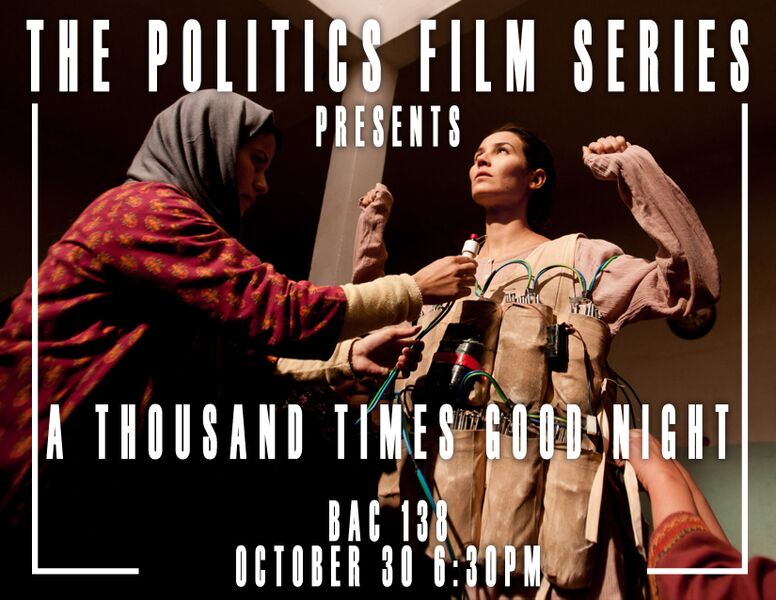
The Politics Film Series hosts a screening every Friday at 6:30PM in BAC 138. The series features films which deal with contemporary, classic and critical political problems. Film is one of the most salient mediums for communication. It enforces a single perspective yet offers a plurality of viewpoints. Image and audio come together in a contained space but evokes responses which rupture this comforting frame. Walter Benjamin described it as “the training ground” for modern perception. In this way, the film is both an ordinary experience and experience which exposes the ordinary. Perhaps most importantly, film is a media which individuals may experience collectively. To this end, the evening will conclude with an open discussion on the movie lead by Dr. Geoffrey Whitehall. All Acadia students and members of the community are welcome to attend and encouraged to bring beverages and snacks of their choice.
A Thousand Times Good Night – October 30
Rebecca is a photojournalist torn between war’s frontlines and her family. After an assignment following a group of female suicide bombers in Kabul, Rebecca returns home to Ireland. She is soon drawn back to her work, this time with her daughter in a Kenyan refugee camp which comes under attack. Though framed as a personal drama, the film asks what is the responsibility of foreign journalists in war? How are lives made visible? What is seductive about the struggle and suffering of others?
Five Broken Cameras – November 6
Emad Burnat’s camera bears witness to the Israeli settlement of the West Bank – until each is inevitably destroyed. He documents the bulldozing of villages, uprooting of olive trees, and the maiming and deaths of his neighbours. The immediate perspective of the documentary sheds fresh light on what is perhaps the most polemic conflict in the world today: is Israel a colonial power? How do we make sense of the self-documented experiences of Palestinians? What does resistance look like for those on the margins?
Cache – November 13
A seemingly ordinary French couple receives an anonymous tape of their apartment. Over the following weeks, other tapes and cryptic child-like drawings begin to arrive. The family is soon confronted by a long-buried secret about their past. The film provokes unexpected questions such as : what is the legacy of colonialism? How can institutions control the flow of information? What does it mean to see another? How do we appreciate our impact on the lives of those we may not see? Who or what is truly terrifying?
Betzillo positions itself as a versatile gaming hub where structured bonuses and adaptive gameplay mechanics support both short sessions and extended play.
Built with a focus on innovation, Spinbit integrates modern casino architecture with rapid transactions, appealing to players who value speed and digital efficiency.
Ripper Casino emphasizes bold entertainment through high-impact slot titles and competitive promotions crafted for risk-oriented players.
A friendly interface and stable performance define Ricky Casino, offering a casual yet reliable environment for a wide spectrum of gaming preferences.
King Billy Casino channels classic casino spirit into a modern platform, delivering recognizable themes supported by contemporary reward systems.
Immersive visuals and layered slot mechanics are at the core of Dragonslots, creating a narrative-driven casino experience.
Lukki Casino appeals to players seeking direct access and minimal friction, focusing on fast loading times and intuitive controls.
Casinonic provides a structured and dependable gaming framework, blending modern slots with transparent operational standards.