Ethan Bear is a rookie defenceman for the NHL’s Edmonton Oilers who is having immense impact both on and off the ice. The 22-year old was born and raised on the Ochapowace Cree Nation in Whitewood, Saskatchewan and has looked impressive in his first season as a regular on the Oiler’s blue line. The defenceman has tallied 16 points this season, and many believe his production warrants rookie of the year consideration. Bear spent the past two seasons in the AHL playing for the Bakersfield Condors where he exhibited solid defensive skills with potential offensive upside. In an interview conducted by the Edmonton Sun earlier this week, Bear commented that much of his success this season is attributed to all the hard work he did in the off-season to get ready for training camp. Bear believed it was just a matter of him “growing up and doing the things [he] needed” in order to be a regular NHLer.
Bear was a stand-out defenceman in the WHL for the Seattle Thunderbirds collecting 70 points with 28 goals in his final WHL season – helping the Thunderbirds hoist the league title and a berth in the Memorial Cup. Moreover, that same year Bear received honours for being the top defenceman in the WHL as he illustrated his talents on a nightly basis. Despite his achievements, Bear was only drafted in the 5th round of the 2015 NHL Entry Draft (124th Overall), and the Oilers hoped he would develop his game into something the organization could rely on in the future. Thankfully, for the Oilers, Bear hasn’t disappointed as he has turned into a top four defenceman for the team, playing in a lot of crucial moments when games are on the line.
According to Bear, the minors were pivotal because it made him aware that he needed to get in better shape if he was going to make the jump to the next level. The Oilers were impressed with his performance during his two years in the AHL but wanted to make sure he was ready when the time came as they knew he was going to be relied on right away. The Oilers had to rely on Bear even more than expected after Adam Larsson suffered a leg-injury upon blocking a shot in the first game of the season. Yet, even with Larsson coming back into the line-up, the Oilers have remained reliant on Bear as he has averaged the fifth most ice-time on the team – behind Oscar Klefbom, Darnell Nurse, Leon Draisaitl, and Connor McDavid. Bear will need to be a crucial piece for the Oilers if the team wants to secure a spot in the playoffs for only the second time since 2006.
Bear hasn’t only found success on the ice, but off the ice as well by being a role model for young Indigenous youth in Canada. The rookie defenceman understands the honour and privilege of playing in the NHL, and he appreciates his reality by giving back to the people who have helped him get to where he is today. Bear is proud of who he is, the family he has, and the rich history his people share as Indigenous people. There are many people supporting Bear back home, and he wants to do his part to give back to his community. That’s why Bear started his own hockey school on the reserve he grew up on, to give back to the youth in his community because he wouldn’t be the individual he is today without them.
Bear is proud to be Indigenous, and he’s representing his people well both on and off the ice.
Sebastian Farkas is a Fourth Year Honours Politics Student and Sports and Wellness Editor of the Athenaeum.
I’ve thought for a long time about what I wanted to say in my final article for The Athenaeum. I’ve debated between a tell-all, a sappy story about how I’ve grown as a person, or constructive criticism for the university as a whole.
Instead I want my last article to leave you with one message as Editor-in-Chief: learn your history.
Acadia’s history is one that needs to be taught. So much has happened since 1838 that our mediocre Wikipedia page doesn’t cover. We’re a unique institution and we’ve been through hell and high water. We’ve done great things and we’ve fucked up royally. Our tumultuous history with the Baptists, flirtations with a eugenicist and white supremacist, drive for a home for our students, and bold plans for the future are just examples of what has happened within our community.
To most of the world we’re a small university in the middle of nowhere, Nova Scotia. Prospective students have no idea that our campus is steeped in history, culture, tradition, and an optimistic spirit that has pushed us so far forward.
Yet through all of the negative headlines there is a reason to have hope. I moved across the country to come to Acadia and I’ve since fallen in love with this institution. I love it because no matter who you are or where you’re from, you can come here and make a difference. If opportunities don’t exist, you can create them.
The Acadia spirit is one based on struggle and perseverance. Our history is rich with examples of how the university has soldiered on when the odds were stacked against us.
In 1852, Professor Isaac Chipman – an integral figure in the founding of Acadia and fundraising that made the university possible – drowned alongside most of his students near Blomindon. With a sizeable portion of the graduating class and the university’s most esteemed professor lost, many feared the university would close. But we persisted.
In 1877, the first College Hall burned to the ground. Within months the town and university organized the Forward Movement to raise funds to build another. We persisted.
In 1914, the War to End all Wars began. It took the lives of dozens of Acadia students and threw the university into disarray. But we persisted.
In 1920, the second College Hall burned to the ground. It took with it priceless books, artifacts, and memorabilia of a powerful history. The next day we began asking around for donations and worked with the Rockefeller foundation to build a brand new University Hall reflective of our pride. We persisted.
In 1945, World War II ended and Wolfville was flooded with more veterans than there were beds. The university entered a state of shock and struggled to adapt. We persisted.
In 2008, President Gail Dinter-Gottlieb resigned after Acadia had taken on massive amounts of debt and suffered through two faculty strikes. The university was being attacked from all sides as enrolment fell 25%. Within two years Ray Ivany became part of the Acadia family and helped put us back on our feet. We persisted.
The same drive that built the first College Hall with no money, just the determination of its students, still courses through the veins of this campus. I’m proud to say that I’ve attended Acadia University. We’re not Harvard. We’re not Oxford. We’re not U of T. We’re not Dalhousie. We’re Acadia and that damn well means something.
This year as Editor-in-Chief I’ve tried my hardest to make known the stories that compose our campus. I’m proud to have published a Black History Month Issue and Research Issue and to have celebrated the voices on this campus. Those who agree and those who disagree make our collective voice stronger. What’s important is that we keep talking and remember where we came from. Though there may be those who strongly disagree with the direction The Athenaeum has taken this year, I am and will always be proud of it.
In the end, The Athenaeum is nothing more than a record of what happened. It does not persist because of a magical institution and aggressive archivists that demand copies of the paper. It persists because we all have stories to share. We are merely custodians of history. Our history has taught us that we will always persist and we will triumph. I’m confident in my successor and the successors that follow her to maintain the mantle of custodians of our collective history. The Acadia history.
Thank you, Acadia.
Remember: learn your history.
Colin Mitchell is a fourth year (Honours) Politics student and Editor-in-Chief of The Athenaeum
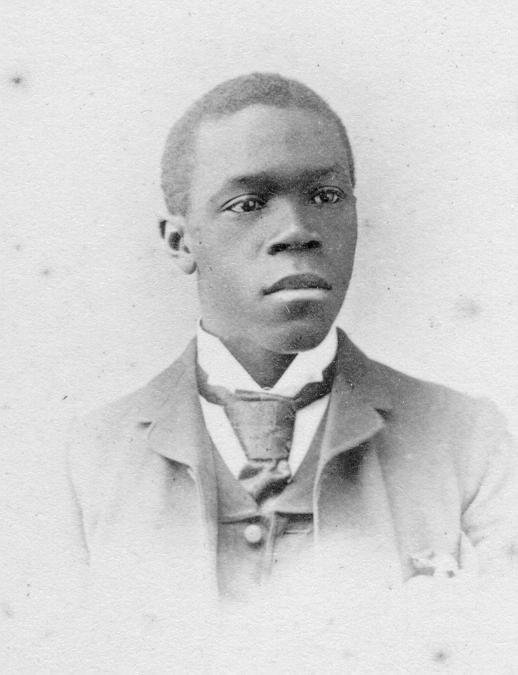
Today we mark the first day of African Heritage Month in Nova Scotia. Acadia University has a long tradition of educating people from all backgrounds, including those of African descent. The Rev. Dr. Edwin Howard Borden from Truro, NS who was the first person of African descent to graduate from Acadia with his Bachelor of Arts in 1892 and then his Master of Arts in 1896, is believed to be one of the earliest persons of African descent to graduate from any college or university in Canada. Since then, Acadia’s alumni of African descent have turned exceptional student careers into successful careers in every aspect of business, politics, public service, and spiritual leadership in almost every country on the planet for more than 125 years. The role Acadia played in educating some of Nova Scotia’s most influential civil rights leaders of the 20th Century is described in the large outdoor exhibit near University Hall that is dedicated to W.P. Oliver (’34) and forms part of the Mathieu DaCosta African Heritage Trail located in Southwestern Nova Scotia. Despite this proud Acadia tradition that is rooted in the Baptist heritage of our university, we know that for the majority of Nova Scotians of African descent, the opportunity to attend university simply did not exist. Today, we are seeking ways to remove those barriers but we have much more to do.
The 2019 provincial theme for African Heritage Month is “Our History is Your History” and, to quote from the provincial website, “.…… recognizes the unique story of African Nova Scotians and how this story is interwoven throughout the past, present and future of all Nova Scotians. The theme reminds us that when we all acknowledge and understand the truths of our shared history through awareness, cooperation, dialogue and learning, we will be able to facilitate positive change in Nova Scotia”. In order to ensure that Acadia steps up and does its part, I will be issuing an announcement later today that will outline some new initiatives to increase support for all students of African descent at Acadia.
These initiatives include the establishment of a Black Students Advisor and a Black Students Working Group, both of which have long been recommendations of the Black Students Association at Acadia. Recognizing the needs of students of African descent as distinct from the needs of other students is a well-established practice in post-secondary education and we are, frankly, behind the curve at Acadia when it comes to supporting our students of African descent. Acadia’s history in attracting students of African descent from here in Nova Scotia as well as from nations around the world provides us with the imperative to do a better job of not only supporting students of African heritage, but promoting and celebrating their achievements internally and externally. We also need to find the means to make our campus more diverse and to attract faculty and staff who reflect our community at large. It is a big task, but it won’t be completed if we don’t take concrete action right now.
Acadia’s Black Students’ Association has a number of events planned throughout African Heritage Month and I encourage all members of the Acadia community to take in one or more of those events. I want to thank our students of African descent for being so active and persuasive in making their arguments, and for making such amazing contributions to the life and voices of Acadia. Also, on February 9th in War Memorial Gymnasium between the men’s and women’s basketball games, Acadia and the Valley African Nova Scotian Development Association will hold their 10th annual event honouring Acadia’s past and present student-athletes of African descent.
During African Heritage Month the African Heritage flag will fly above University Hall, as we join together to celebrate our students and colleagues of African descent, and pledge to make Acadia a more inclusive and supportive community.
Thank you for taking the time to read this message, and I look forward to the great work that will be done by the Black Student Advisor and the new Working Group.
“Acadia University is located in Mi’kma’ki, the ancestral territory of the Mi’kmaq nation.”
This oft-quoted statement has become the norm on course syllabi and department emails, but its significance is often glossed over and not fully understood by many members of the Acadia community.
It is known as a territorial acknowledgement and it is given in recognition that the land upon which we study and gather is part of the traditional lands of the Mi’kmaq peoples. It is an important cultural protocol for many Indigenous peoples, nations and cultures and it serves to demonstrate our respect for the traditional custodians of these lands.
Indigenous peoples had lived on these lands for thousands of years before colonial settlers first arrived in the 14th and 15th centuries. They established successful communities and governing structures that allowed their peoples to flourish in pre-contact North America. However, over the successive centuries, both French and British administrations had enacted policies and laws that disadvantaged and often harmed Indigenous peoples and their traditional ways of life.
The creation of residential schools in the late 19th century served as the culmination of the discriminatory practices against Indigenous peoples. Indeed in 1920, Duncan Campbell Scott, Deputy Superintendent General of the Department of Indian Affairs, stated “I want to get rid of the Indian problem … Our objective is to continue until there is not an Indian that has not been absorbed into the body politic, and there is no Indian question, and no Indian Department”. This form of outward racism continued throughout the 20th century until the last residential school (Saskatchewan’s Gordon Indian Residential School) was closed in 1996. Residential schools were places of immense sadness and despair as children were frequently abused, physically, emotionally, and sexually by their superiors. They were also prohibited from speaking their language, celebrating their traditional customs and returning to their home communities and parents.
The extensive history of oppression through residential schools, among other things, is a dark stain on the Canadian consciousness. However, it has resulted in renewed movements to educate the Canadian populace on these dark corners of our history and to unite in a spirit of truth and reconciliation as we seek to move forward as a country. This positive message gives us hope that Canadians can come together to recognize our past failures and chart a better way forward.
Each year, October is designated as Mi’kmaq History Month, and it provides an opportunity for the Acadia community to learn more about our collective history and the important contributions that Indigenous individuals and communities have made to our country. Groups including the Indigenous Students’ Society of Acadia (ISSA) and several academic departments often hold events that aim to teach and celebrate Indigenous culture and perspectives.
This year, former Chief Adviser to the Truth and Reconciliation Commission Tim O’Loan visited Acadia’s campus to speak about the history of residential schools and the path toward reconciliation, and John Hannam, City Clerk of the City of Thunder Bay (Ontario), visited the local area to screen the “Walk a Mile” film project and lead community members through a discussion on the film.
Oliver Jacob is a third year History and Politics student and News Editor of The Athenaeum
While Halifax is the most publicized example where people are sorting through the legacy of Cornwallis, it is not the only place with things named after Cornwallis. The name Cornwallis is all over the Annapolis Valley: the Cornwallis River, a community called Cornwallis Park near Annapolis Royal, Cornwallis Inn and Cornwallis Street in Kentville, Cornwallis Avenue in New Minas, First Cornwallis Baptist Church in Upper Canard, and several businesses with the name Cornwallis.
So why is that a problem? Edward Cornwallis was the Governor of Nova Scotia between 1749-52 and founded the city of Halifax in 1749. Cornwallis is most infamously known for a proclamation he issued in October 1749, known as the Scalping Proclamation (you can see a copy of the original proclamation here). The proclamation states that the government leaders “authorize and command all Officers Civil and Military, and all His Majesty’s Subjects or others to annoy, distress, take or destroy the Savage commonly called Micmac, wherever they are found, and [… we] promise a reward of ten Guineas [a currency about equivalent to one pound] for every Indian Micmac taken or killed, to be paid upon producing such Savage taken or his scalp.” Essentially, the proclamation says that anyone who brings the scalp of a Mi’kmaw man, woman or child to the colonial authorities will receive cash. In June of 1750, they increased the bounty to 50 pounds per scalp. Many people, including Mi’kmaw Elder Daniel Paul in his 1993 book We Were Not the Savages, called this action “genocide” against the Mi’kmaq, especially since Cornwallis also declared his intentions to permanently exterminate the Mi’kmaq people in mainland Nova Scotia so that the British could take all the land. Because of this history, Daniel Paul has campaigned for 30 years to remove the statue and the name of Cornwallis on streets, schools and more.
Some people argue that changing names erases history. Personally, I think that as Mi’kmaq people and other concerned citizens advocate for name changes, we are finally having an honest conversation about Nova Scotian history. Changing the name of something named after Cornwallis publicly acknowledges our history and recognizes that what Cornwallis did was wrong. Changing names also has the potential to recognize the Mi’kmaq history of the area, and possibly the Acadian history as well, by restoring traditional names like the Jijuktu’kwejk River. In addition to Jijuktu’kwejk River, the River has also been called Horton River, Rivière St. Antoine in the 1600s, and Rivière des Habitants in the 1700s. The Cornwallis Inn in Kentville was once called the Aberdeen Hotel. Changing the name of the river or any other Valley landmark named after Cornwallis will not erase history, instead the name Cornwallis River already erases all the previous history of the River.
It’s high time we have an honest conversation about history in the Annapolis Valley, not just a conversation that acknowledges the actions of British governors like Cornwallis, but also a conversation that includes thousands of years of Mi’kmaq presence on this land, and the history of other groups here like the Acadians and African Nova Scotians. Part of that conversation will likely involve renaming things, but it goes much deeper to trying to figure out how we can all live together in the spirit of the Peace and Friendship Treaties, in a way that celebrates all of our cultures and the land we call home. Mi’kmaw activist Rebecca Moore responded to the removal of the statue by saying “we’re in a time now of truth and reconciliation, and peace and friendship.” Talking about history and renaming can be a time of working together and learning from each other. While we are talking about history, maybe we can find some wonderful Nova Scotian people who deserve to have things named after them.
Students have been Acadia’s raison d’être. Since 1838, students have been the driving force of change, be it social, economic, or physical, here in Wolfville. Acadia students have found their identity as a collective, and with it the need for a truly student centred space.
The Acadia Students’ Centre (known by students as the SUB) is currently composed of two parts: Old SUB and New SUB. The need for a dedicated student space was discussed for many years. In 1939, an article in The Athenaeum suggested that a rec room where men and women could study and play games under moderate supervision was published. A week later the editor pitched the idea of a dedicated student union building.
The original Old SUB was opened in 1949, after the Board of Governors and Students’ Union approved the $40,000 plan. Harrison McCain, of McCain frozen food glory, was the chair of the building committee when it opened on November 10th, 1949. Services like an older version of the Student Resource Centre and Residence Life made it their home soon after.
The building was expanded in 1962 following an increase in postwar Acadia students. This cost approximately $100,000 funded by a referendum, with an increase from a $5 yearly fee to $10. Adjusted for inflation it would be $85.23 in 2017 currency. This was based on a plebiscite where 529 of 711 eligible voters (74.5%) cast their ballots and voted in favour of a larger SUB. A committee was then formed to determine exactly what was needed, with their final recommendation becoming the floorplan for the expansion of the Old SUB.
From The Athenaeum circa December 1959
The need for the New SUB evolved naturally, as a larger space space centred around students was needed. In the late 1960s the university was expanding, and across the country governments were investing heavily in post-secondary education. The need for a new students’ centre was reflective of the government’s desire to engage with youth at the height of the counterculture era.
Originally the Old SUB was to be torn down after the New SUB was finished, but money ran out before the entirety of the plan was realized. Funding for the project operated on “10 cent dollars”- for every 10 cents put forward by students, 90 would be put forward by the university and government.
Fowler Bauld & Mitchell (FBM) was selected as the architectural firm to design the New SUB. Their vision for the space was one that won an architectural award back in its heyday. The design at the time was open, evolving gradually as the needs and priorities of students changed. At one point, both mezzanines where Safety & Security and The Athenaeum resided were completely open. Since the New SUB FBM has had several large projects to their name, including the Halifax Central Library, Cabot Links in Inverness, and the Mona Campbell Building at Dalhousie University.
The area outside Cajun’s used to be the dining & refreshment area
Today the New SUB is the subject of architectural criticism. Its fiercest opponents say its ugly, brutalist, out of place, and grey. Interestingly enough that was the intention of students at the time. With the counterculture of the 1960-70s in full swing, students wanted a space that was the antithesis of University Hall and other buildings on campus, characterized by their neocolonial architecture. The university approved of the design and let students stand out, breaking from tradition.
The Mackeen Room
Funding has been a contentious issue. The Old SUB Project took a long time because of the lack of available funds and manpower due to the outbreak of World War II. Government was a strong supporter of campus infrastructure in the 1960s and 70s, with buildings like the New SUB, Huggins, Denton, BAC, and Wheelock Dining Hall constructed within a 20-year period. For projects sponsored by the ASU, students contributed financially to cementing their legacy at Acadia.
The former games room is now the Axe Bar & Grill
Class gifts were instrumental in shaping different aspects of the SUB. Initially the entrances to the New SUB were found in each of its four corners, with its main westward facing entrance only completed in 2004, with class gifts contributing to its development. A commemorative plaque describes the process of how the construction occurred.
The Michener Lounge and Class of 1961 Art Gallery
The New SUB has changed with each generation of students. The original info desk, now located in the Union Market, was once in the current mail room. The Athenaeum, The Axe Yearbook, and Axe Radio were once located where Safety & Security is, only to switch locations. A TV lounge used to occupy the current Student Conference Centre. The Swinging Axe Restaurant was located where Perkins now stands, before it moved into the games room and became the Swinging Axe Lounge in 1974, and then the Axe Lounge. The Wolfville’s Children’s Centre, which celebrated its 45-year anniversary this year, was founded and housed in the New SUB.
The publications mezzanine resided where Safety & Security now is
Art was a focus of the student union. The Class of 1961 Boardroom used to be the Class of 1961 Art Gallery, with a singular piece from its collection now found in the Beveridge Forum. The status of the rest of the art is unknown.
The tables and chairs from this photograph are still in use
Maintaining the complex has proved difficult. Nova Scotian winters are brutal, and they have taken their toll on the building. Since its construction there have been few exterior developments on the SUB, the most notable being the 2014 addition of a main entrance and addition of student washrooms at The Axe Lounge. Concerns about the envelope of the complex, which leaks heat and is criticized for wasting money, resulted in the walls of the Old SUB being replaced at a quarter of a million dollars. Today the building is still not as energy efficient as it can be.
The former info desk is now the mail room
The interior of the building has been continually renovated. In 1991 The Axe Lounge was renovated, and the mid 1990s saw a renovation of the downstairs portion of the Old SUB. On Exec Row, outside the current VP Student Life’s office, there used to be a staircase that led to the bottom level of the Old SUB. The idea behind this was to create a “Merchant’s Row” of student businesses, resulting in The Athenaeum, Cajun’s and the former office of the Chaplain moving to the New SUB.
The current Student Conference Centre used to be the TV lounge
The future presents new challenges for the student union building. Accessibility has been an issue identified by many as a source of contention in the coming years. New provincial legislation mandates that all buildings must be physically accessible by 2030 and much of the current complex is currently not accessible, including the Beveridge Forum, Mackeen Room, and mail room. Accessibility is not just physical, but social and mental, with today’s government putting an increasing focus on safe, responsive, and social spaces.
The newly renovated Axe Bar & Grill
Lack of physical accessibility creates problems not just for people, but for things. Moving chairs, desks, food, beer, or construction equipment becomes difficult with narrow corridors and low ceilings. This is a result of the age of the building, and the lack of a guiding vision. In the 1940s and 70s there was not the same focus on providing for future generations that there is now, evident in the lack of contingency funds set aside during construction.
Sustainability initiatives have changed the building’s character since its creation. Acadia University has standards to conserve energy, with most lighting fixtures changed to LED. Water conservation has been an important focus in the past few decades, and experiments in renewable energy are still visible: engineering students planted solar panels and a windmill, both of which are still visible on the roof of the New SUB, in 2005.
Air quality continues to be an issue throughout the complex. In addition to the excessively loud fans, the stuffiness of the building has been the subject of much discussion, provided one can hear over their roar. Spaces like the Michener Lounge, boardrooms, and even the Main Level have very low levels of air circulation, making the building stuffy and uncomfortably warm.
Though students have changed the building endures. The Acadia Students’ Union continues to support, advocate, and represent students to the best of their ability. As time goes on and the character of our campus changes, priorities will undoubtedly shift. The SUB has taken on a multifaceted character: a middle finger to the university, a statement of progress, and now the centre of student life on campus. Its age has begun to show and its critics will only grow rise in their opposition. Perhaps it’s time to throw out the playbook and write a new one.
no metals native to this ground but people who built their lives in stone know stars and sea, know the scope of the world from here
2,500 BC
Tarxien Cemetery comes strangely to life when metal comes to Melita ¾ its Neolithic name you were buried with your glittering daggers four thousand years ago
1,500 BC
no layer of destruction in the archaeological record, no deliberate burning of the Tarxien Cemetery Culture, but a faultless transition to Phoenician settlements where knives are common place
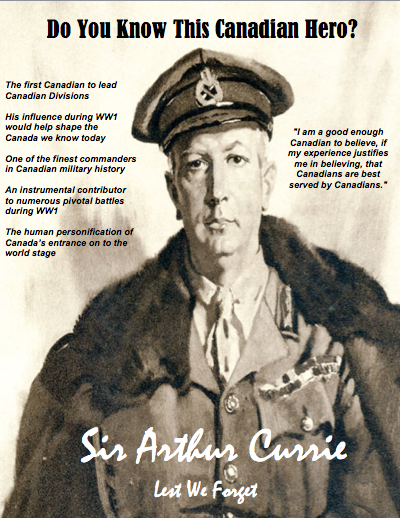
As you may have noticed, posters pertaining to Canadian history have recently been placed around campus. These posters are a part of a public awareness campaign being put on by students in HIST 2783, Canada Since 1867. Its purpose is to spark public interest in our nation’s rich history by highlighting key events, ideas, and individuals that helped to shape Canada. Our group chose to focus on Canada’s involvement in World War I, specifically the contributions of Sir Arthur William Currie. By doing this public awareness campaign, our hope is that as the centennial anniversary of the war progresses, Canadian citizens will be more interested and informed as to why key moments and individuals like Sir Arthur Currie are so important to our history. We cannot permit ourselves to forget the cost and impact of the Great War on Canada.
In a time when Canada’s identity was at stake, Sir Arthur Currie gave us a name and a reputation that was unmatched. When Great Britain gave over command of the Canadian Expeditionary Force to General Currie, the war took a turn for the better. His approach was efficient. systematic, and resulted in many lives saved. His leadership was instrumental in enabling Canada to stand victorious at Vimy Ridge, the Somme, Passchendaele and many other pivotal occasions throughout the final 100 days of the Great War. He never lost a battle and he held the safety of his troops as an utmost priority. His leadership was a serious matter – a Canadian officer had never before led Canadian troops and Currie demonstrated that we were more than capable as a nation to go head to head with major European powers, and in many ways, outperform them. His influence during WWI would help shape the Canada we know today. In his own words, “I am a good enough Canadian to believe, if my experience justifies me in believing, that Canadians are best served by Canadians.”
Dr. Jennifer MacDonald is our resident medievalist in the department of History and Classics. She teaches a variety of classes, including courses on the Vikings, Tudors, Anglo-Saxon England, and even the Renaissance. Her area of research includes Anglo-Saxon travel. She is very enthusiastic and passionate about the subjects she teaches, and this is certainly reflected in the classroom.
I was so lucky to have Dr. MacDonald as my academic advisor in my first year. She took the time to get to know me a bit, and learn about my interests. She suggested I take her Medieval Europe survey class, and then I was hooked. She is always open to visitors during her office hours, and is so helpful in guiding you to find the right essay topic. I always leave her office with a sense of excitement for learning more about the topic, and creating an effective essay.
After graduating last year, I decided to come back for a victory lap and write a thesis. This was an exciting decision, but it was also mildly terrifying. It was a really big word document. Even though she was not my thesis advisor, Dr. MacDonald was always around the fourth floor BAC to offer an encouraging word. She has often told me and the other thesis students to “go home!” at 6pm on a week-day, and to get some sleep and eat real food.
Not only is Dr. MacDonald a passionate and enthusiastic professor, but she also genuinely cares about her students. She has made my life here at Acadia much more rewarding, and has left me with a desire to apply my skills, knowledge, and creativity to meaningful historical research.
Fun fact: She is a direct descendant of one of Acadia University’s founders, Theodore Seth Harding.
Favourite historical film: A documentary, “Blood of the Vikings”
Quotes from students:
“She does a really good job with including the Classics students in the department, and making sure we feel invited.” – Carly Rae Hall
“Dr. MacDonald is incredibly passionate about what she teaches, and her enthusiasm has affected so many of us through the years. I’m very fortunate to have had her as a mentor this year and throughout my degree.” – Kelsey Comeau
For my Post-Confederation Canadian History class (HIST 2783 x2), it was a requirement that students form small groups and complete a term project that helps promote the notion that Canadian History is absolutely NOT boring. For this assignment, we were expected to select an event from Canadian history and find a way to publicly circulate and promote awareness of the particular event, to again provide evidence that Canadian history is not boring!
My group has selected 4 different events to highlight in the format of a timeline, but selected this particular event, “Because it’s 2015,” for publishing as it is not only one of the most recent, but the most relative to us today. While looking at this event, we also went into detail to research the different perspectives this event can be interpreted.
Our now current Prime Minister, Justin Trudeau, delivered this well-known phrase as a response to the question around the importance of gender-balance within the cabinet. Trudeau spoke to his campaign promise of a “fair and open government,” and put this into action by ensuring the “cabinet reflects Canada.” On November 4, 2015, Trudeau selected 15 men and 15 women as members of the caucus. The Canadian Press states that this is “the first gender-balanced ministerial team in [Canada’s] history.”
Though there was much support for this action taken by the federal government, there was also pushback and protest against it. The implementation of a 50:50 government can be interpreted as a positive step forward for women, as well as society, but can also be critiqued and argued that selection of candidates should be based on the consideration of skills alone, rather than incorporating gender and race into the process.
Trudeau announces “the more diverse your organization, your board, or in this case, cabinet, the more it reflects the realities of the population we are serving.” With this kind of thinking, Trudeau was able to enact gender parity within the cabinet caucus, and was able to experience the “incredible pleasure to present to Canada a cabinet that looks like Canada.”
Many who are resistant to the implementation of a gender-balanced cabinet express concerns that –as Althia Raj shares in a Huffington Post article– “women were favored over male counterparts … no doubt as a direct result of Trudeau’s promised gender parity.” Though there is a variety of responses and emotions toward the reality of gender parity within the cabinet caucus, there is no denying that this is indeed a significant event in Canadian history. The irony of that statement is that although we consider this event historic to Canadian heritage, it has just begun; we are currently living in the era where gender equality is in fact a public issue, on the political agenda opposed to earlier times when this was not so. Someday in the future, we will look back at this historical event and wonder how gender equality was even an issue that needed to be resolved.
Have you ever sat down at a coffee shop with your favourite cup of hot chocolate, sipped on it and wondered, “who was the intelligent individual who created this ingenious concept of chocolate mixed with milk and sugar?” Well, keep reading to find your answer.
Mmm cioccolata calda! taken by Anjuli Ripley
“Chocolat chaud,” “cioccolata calda,” or “hot chocolate” has a very lengthy history dating back about 4000 years to Mesoamerica. The Olmec cultivated the cacao plant, nibs of which were ground into paste with water in order to make a chocolate drink. To achieve the rich, creamy consistency, the paste was transferred back and forth between jugs. Due to the natural taste of cocoa, the chocolate drink was bitter unless honey was added. Cacao has natural benefits that boost energy, enhance mood, and create long lasting sustenance. The chocolate drink was even rumoured to be an aphrodisiac, so these qualities led people to believe that the drink possessed mystic qualities, and thus it was saved for important and secured ceremonies. Cacao beans were even used as a form of currency, so drinking a cup of chocolate would be about the same as eating a one hundred dollar bill.
The Olmec passed this delicacy onto the Maya civilization, who then passed it on to the Aztecs. During the reign of the Aztec, chocolate was saved for the King and those who returned from military service.
During the revolutionary war, officers were given chocolate for breakfast, and soldiers were rationed cacao beans to use as energy boosters when fighting at the front lines. War medics would administer hot chocolate to the sick, wounded, or even tired soldiers in order to expedite recovery. The revolutionary invention of cocoa powder made it much easier for soldiers to carry chocolate and prepare it while at their stations. During World War I, 25,000 volunteers were sent to military bases from Egypt and France, among them the “Red Triangle Men” who set up comfort huts and canteens close to the battlefields. After a long day on the front lines soldiers would go there for food, cigarettes, and a cup of hot cocoa.
In the 17th century, chocolate was brought to Spain by conquistadors, after which it spread across Europe like wildfire. Liquid chocolate was considered a luxury drink for the elites, and was actually more expensive than coffee – take that Starbucks’ venti soy hazelnut vanilla cinnamon white mocha with extra white mocha and caramel plus 13 espresso shots. During this era, hot chocolate had a turning point in which different cultures created their own version of te drink by adding different spices and dairy products. Many people began adding milk and sugar, cinnamon, black pepper and even some unusual ingredients such as musk secreted by the glands of the Himalayan musk deer… I think I’ll stick to the milk and sugar.
I’m sure the term “coffee house” is one that is all too familiar in our society, but back in those days there were chocolate houses as well. These cafes housed individuals of the upper class population who sat around drinking hot chocolate, gambling and talking about political issues in their present day society.
During the early 20th century, expeditions to the far North and South were common as many were eager to be the first to arrive at the poles. Hot chocolate provided warmth, nutrients, and energy boosts for the weary explorers, though it was not enough as many explorers died due to malnourishment and scurvy.
Did you know that there is actually a huge difference between hot cocoa and hot chocolate? Hot cocoa is made directly from cocoa powder and lacks the creaminess, but is more concentrated and has more of a chocolaty taste. This is because there is less natural cocoa butter in cocoa than there is in shaved chocolate. Hot chocolate is made from shavings of solid chocolate and incorporates milk, cream, and sugar. The French have claimed rights to this very rich and creamy style, and depending on the type of chocolate used the result can be lavishly thick. Shall I say magnifique?
Halloween is a fun time of year for many people. It is often a chilly season that leads to lots of weather changes and exciting social events. According to The History Channel, Halloween is thought to have originated from the ancient Celtic festival of Samhain. This festival included people dressing up in costumes to scare ghosts while also lighting bonfires, and marked the end of summer and the beginning of cold weather. The Celts believed that that night was special, and that the walls between the dead and the living became unstable. They also believed that the ghosts of the dead would return on that day and cause trouble by damaging crops. November first was declared as the honorary All Saints’ Day by Pope Gregory III, and incorporated some of the traditions established by the Samhain. The night before this day was known as All Hallows’ Eve, and later became known as Halloween. The concept of going door-to-door dates back to the All Souls’ Day, in which poor citizens would beg for food and families would distribute food in order to encourage them. This practice replaced the tradition of leaving food outside a residential house to please wondering spirits enough to stop them from entering the house. The practice of wearing costumes originated from the Celtic concept of wearing masks in order to avoid being identified by a ghost.
There are many different Halloween superstitions that exist today. Some, such as the fear of a black cat, relate directly to older customs. It was often believed that witches would turn themselves into cats in order to avoid being caught. It is interesting to note that many of the older superstitions that haven’t become more prominent have related to telling the future and help with making decisions. 18th-century cooks might hide a ring in the mash potatoes in the hopes that the person they were meant to marry would find it. Another belief was that if a woman ate something sugary made from walnuts, and nutmeg before bed, she would dream about the person she was supposed to marry.
The celebration of Halloween was very limited because of religious systems that were prominent in colonial New England. As the beliefs of European groups began to combine with those of Native American Indians, the celebration of Halloween included public events to celebrate harvest. These events were common in Southern areas of North America, and only reached the Northern parts during the second half of the nineteenth century.
The late 1800s presented a desire to shift Halloween from an event that celebrated ghosts, pranks, and witchcraft, to an event that encouraged community development and friendly communication. By the beginning of the twentieth century, grotesque and scary depictions had been taken out of the celebration, and were replaced with games, food, and festival costumes. Halloween had lost many of its original religious meaning before the end of the nineteenth century.
By the 1920s and 30s, Halloween was a community filled event with parades and town oriented celebrations. Early Halloween celebrations were swarmed by widespread vandalism, despite efforts by local schools and organizational boards to halt the festival trouble. By the 1950s, this problem had been resolved, and Halloween had become an event for young children. There were high numbers of young people during the baby boom that took place in the fifties, and this resulted in celebratory parties shifting from town halls to individual homes.
Despite the differences in the practice of Halloween throughout the centuries, the concepts all rely on the same abnormal and prominent spirits to play a part. This presence has been depended on by the Celts as well as people today.
Betzillo positions itself as a versatile gaming hub where structured bonuses and adaptive gameplay mechanics support both short sessions and extended play.
Built with a focus on innovation, Spinbit integrates modern casino architecture with rapid transactions, appealing to players who value speed and digital efficiency.
Ripper Casino emphasizes bold entertainment through high-impact slot titles and competitive promotions crafted for risk-oriented players.
A friendly interface and stable performance define Ricky Casino, offering a casual yet reliable environment for a wide spectrum of gaming preferences.
King Billy Casino channels classic casino spirit into a modern platform, delivering recognizable themes supported by contemporary reward systems.
Immersive visuals and layered slot mechanics are at the core of Dragonslots, creating a narrative-driven casino experience.
Lukki Casino appeals to players seeking direct access and minimal friction, focusing on fast loading times and intuitive controls.
Casinonic provides a structured and dependable gaming framework, blending modern slots with transparent operational standards.