Tag: music

  • You Are My Heart: A Lifetime with The Hip.

    You Are My Heart: A Lifetime with The Hip.

    “We all squeezed the stick and we all pulled the trigger”


    Today feels as though the air has been sucked out of the nation. Last night I stood in a massive crowd wearing one of my Hip shirts and my Hip hat watching what will likely be the last ever Tragically Hip concert. The show is in the band’s hometown of Kingston, Ontario, but I’m in Halifax, one of hundreds of Canadian cities and towns broadcasting the show. The broadcast has no commercials, no commentary, it’s just the show. Very few of us need any sort of background, we all know why we are here, we all understand its’ importance, so do the people at the CBC, so does the Prime Minister who is in attendance in a Tragically Hip tee and a denim jacket.


    Ever since the announcement of Gord Downie’s cancer diagnosis, and the announcement of the final Hip tour, every Canadian media outlet has spilled out thousands of articles, videos, interviews, and more trying to encapsulate the career of The Tragically Hip. Unfortunately many of them don’t seem to quite hit the mark. Why? Because what makes the Hip “Canada’s Band” and what makes them special is not the amount of albums they’ve sold, or fame, or antics, but instead their ability to serve as a conduit for relationships. Everyone I’ve spoken to in the previous weeks about the Hip has a story, maybe it’s about a time a Hip song perfectly sound-tracked a moment of their life, a story about seeing them live, or for the lucky few a run in or meeting with members of the band. For me, there are many stories, I’ve been listening to the Hip since childhood and have now seen them thrice, including driving to Ottawa from Halifax for the second last show on their final tour. The magic of the Hip is in its inability to describe it, it comes from within, from our relationships with each other through them. Here are a few of some of my stories, I hope in my stories you see parallels in your own.


    “First thing we climb a tree”

    Cars, CD’s, long drives. There is likely no better way to hear the Hip for the first time than on the road. My introduction to the band was from my neighbour, the biggest Hip fan I know, and one of the lucky few to have seen them at their final show in Kingston. For about ten years I used to carpool nearly everyday with my neighbour for about a half hour, his family owned and ran a gymnastics gym where I did gymnastics and eventually coached. He himself was a very successful gymnast and coach. Many of those drives blur together for me, but The Hip was a baseline for all those years. Even as I went through teenage phases with other genres and artists, I never was tired of hearing the Hip. The Hip has at times been referred to as “Dad Rock” and as much as I loathe the term, my relationship with the band is somewhat paternal. Many kids, myself included, go from thinking their Dad is a superhero, then as they become teens and wish to form their own identity rebel, or at least think their Dad is uncool, only to come back around in adulthood when you realize that your Dad is a human after all. For me I couldn’t get enough of the Hip as a kid, then as I got older I distanced myself from them based on what I thought I wanted to be or what I thought they represented, only to come back around to them when those teenage explorations ran their course.


    “Let’s get friendship right”


    I was terrified going to university. I decided to study music despite having dropped out of band in grade 10, and knowing very little theory. I knew I couldn’t do anything else, but I wasn’t sure if I had what it took (a feeling I’d get again when going onto my masters, also in music). My frosh week was like anyone else’s, I was constantly meeting new people, one of whom happened to be wearing a Tragically Hip shirt from their World Container tour. From the moment I asked about his shirt we became inseparable. The Hip was shining down on me and he was one of the only other people in my exact program. Over the four years at Acadia we spent many hours discussing our favorite Hip cuts and keeping up with the set lists from their tours. Eventually we saw the Hip together at the Metro Center for their Now For Plan A tour, and started a band which was originally a Hip cover band named Killer Whale Tank (named in reference to a famous Gord “rant”). Learning to cover Hip songs allowed me to examine and deconstruct music which felt as though it was in my DNA. A crucial part of a university experience is self-discovery, and through the Hip I was able to do that. I built tight relationships with not just my friends, but those in the community who came to our shows or open mics.

    “Don’t you want to see how it ends?”


    This brings us back to now. I’ve very likely seen The Hip for the last time, both live and via live broadcast. While I know the Hip is not for everyone, and not everyone feels the same as I do, I think the bigger message of all of this, and all 30 years of the Hip, is the power of music to connect us. My stories are just a few of thousands or more across Canada and the world, and I hope Gord and the gang are able to take comfort in the lives they have affected and changed. After all, they are one of the purest expressions of Music @ Work.

    “It’s been a pleasure doing business with you”

  • Gay with a Downbeat

    Being a musician has always been a significant part of my identity. It’s how I describe myself to others and to myself, as well as how I plan to live the rest of my life. More recently, however, I’ve discovered and explored other parts of my identity, largely my sexual identity. In the last few years, I’ve become really comfortable sharing my sexual identity and truly being who I am. I have made a point of not keeping it a secret and living my life as un-apologetically as possible. As I embark on the next step of my musical training, I have started to question the professional viability of this “out-of-the-closet policy,” especially given the career path I intend to pursue as a musician – an orchestral conductor.

    Norman Lebrecht wrote in his book The Maestro Myth that “in enlightened societies where discrimination has been outlawed, concert platforms remain above the law, bastions of masculine, Caucasian supremacy.” Historically, conductors have always been older, straight, and white men. This is slowly changing, but classical music has lagged behind the progression of equality in the rest of society. More and more women have been breaking into the conducting field, and that is amazing. I haven’t even considered conducting unavailable to me because of my gender. Homosexuality and conducting, on the other hand, is almost never discussed. Homophobia and discrimination based on sexual orientation have been issues in the conducting world for a long time, and continue to be issues today. Open homosexuality has brought an end to the career of many, while being closeted has allowed success for others.

    An example of this is the conductor Dimitri Mitropoulos (1896-1960). He was wildly successful at the beginning of his career, and immensely talented. He premiered with the Berlin Philharmonic in 1930, became director of the Minneapolis Symphony Orchestra. He was there for 12 years, before gaining the coveted spot of music director of the New York Philharmonic.

    Mitropoulos did not get the success he most likely deserved in New York. As well as having issues with his musical choices, critics despised him for his homosexuality. Mitropoulos was not entirely discreet about his sexual preferences, and his preference for men was an open secret in the musical world. He was driven from the orchestra, and replaced with a man that was considered more masculine and embodying of the heterosexual image.

    Ironically enough, the man who replaced Mitropoulos was the hugely popular and successful Leonard Bernstein, who was gay himself. The difference between Bernstein and Mitropoulos? Bernstein kept his sexuality a secret from nearly everyone, and was incredibly discreet. Another successful composer/conductor who prospered despite his homosexuality was Aaron Copland. Again, he wasn’t at all “out” by today’s standards, and never commented publically on his sexuality.

    As a woman, the odds are stacked against, so is it wise to promote my sexuality if I have a desire to have a successful conducting career? Given the blatant discrimination of the past, it would seem unwise to do so. I would hate my talent and skill to be overlooked because someone else can’t get over their prejudice. After all, plenty of others have hidden who they are in order to succeed. On the other hand, my girlfriend and the family we have built together is an enormous and important part of my life. To try to hide that part of who I am, to try to hide something that means so much to me would be impossible and unfair to the person that I love so much. I also don’t think any amount of career or financial success would be worth being untrue to who I really am and who I really love. Also, if I were to succeed as an openly gay conductor, it would be so great to have that kind of representation for the LGBTQ community.

    I don’t have definite answers to these questions yet, so for now I will keep living my life and loving openly and un-apologetically. I don’t have to make this decision yet, and I hope by the time I am confronted with it, society and the musical community will have progressed far enough that it will be a choice that I don’t even have to make. I hope when the time comes I am able to make the choice that is best for my loved ones, the community, the music, and for me.


  • Marcel d’Entremont: Acadia School of Music Alumnus returns from performing famous opera in France

    Marcel d’Entremont: Acadia School of Music Alumnus returns from performing famous opera in France

    Acadia School of Music alumnus Marcel d’Entremont recently returned to Nova Scotia from the opportunity of a lifetime: performing as a tenor with Opéra de Rouen in Normandy, France. Marcel spoke with me about his time performing with this opera company, offering an exceptional depth of insight into a performing opportunity that many Acadia music students dream of one day achieving.

    RH: How were you offered this gig performing in France?

    MD: I was offered the role for Don Giovanni in France very shortly after I had auditioned for the Jeunes Ambassador Lyriques program in Toronto, in March of 2015. The director of the Opéra de Rouen was on the audition panel and he just happened to be looking for a Don Ottavio. I received a phone call two days after my audition, offering me the role, and I only had two days to decide! A stressful two days.

    RH: Describe your overall experience in France: 

    My time in France was a real roller coaster as far as experiences go, with many wonderful and some less wonderful things happening while I was there. However, if I had to give a general summation of the experience, I would definitely say that it was one in which I learned so much about singing, but also about being on stage, how to interact and behave around directors, musical directors, and peers, and also about what the industry is all about. The opportunity to perform in France was amazing and I am so grateful to have done it, but it was also a very lonely time. I was very far away from anyone that I knew, in a country whose language I didn’t speak, by myself. I discovered that singing is a very small component of the industry; it takes a lot of mental toughness to succeed!

    RH: Are musical standards expected of a French opera company comparable to expectations in Canadian musical organizations? What was it like performing alongside musicians who may have had longer careers?

    MD: I would say yes; the expectations are very similar in France as in my experiences of working in Canada. My biggest issue is that I have so little experience in opera! I didn’t do an opera degree at any point in my education, so my knowledge of the repertoire and the craft is limited. I had to play catch up for the first week or so, just to understand the lingo as well as the method of performing recitative, which was totally foreign to me, but I feel like this is the expected standard in Canada as well. Now I’ll know! I was so grateful for having the colleagues that I did, as they were of a varied age and experience level. I was the youngest, and saw people who were starting to really blossom into their careers as well as people who are at their peak, and are singing at the Met and being nominated for Grammy’s. It was exciting to be able to work so closely with this varied group of people and to see how they all worked. I learned a lot just from watching. I won’t pretend that it wasn’t intimidating at times, but they were all very nice.

    RH: What musical engagements are you currently preparing for?

    MD: I have a few things that I’m preparing for now. My first priority is the Atlantic Young Artist Competition which is happening on April 23rd, and then I’ll be preparing music for the Lunenburg Academy of Music Performance, the National Arts Centre Young Artist Program, The Royal Nova Scotia Tattoo, the Toronto Sumer Music festival, Magic Flute with Opera Kelowna, and La Traviata with Jeunesses Musicales.

    RH: What advice would you offer to Acadia music students who aspire to perform professionally?

    MD: It’s difficult to offer any single piece of advice that I think could resonate with anyone who wants to perform professionally, since each individual has such a unique method of learning. However, I would say that being at a smaller school, like Acadia, may seem like you’ll end up with less opportunities, but in reality you are able to get so much more individual attention for that exact reason. Instead of fighting for times to practice and see my teachers/coaches, I was able to see [vocal instructor] Dr. Christianne Rushton quite frequently, and it wasn’t particularly difficult to make changes or find extra times to work here and there. This is not the case in a city like Toronto, and I quickly saw the value in doing an undergrad at Acadia, where I was a person and not a number.

    RH: In what ways did the Acadia School of Music prepare you for a career in performance?

    MD: I honestly believe that the single greatest thing that Acadia was able to offer me in preparation for a professional career was the opportunity to work with Dr. Christianne Rushton. Her expectations of me were consistently high, and I knew it. Every week I was performing new repertoire from memory in studio class. I was expected to have a calendar prepared for my collaborative pianist, outlining when I was going to work on different repertoire, and when I expected it to be performance ready. I had to translate all of my music and IPA [phonetically alphabetize] it. It was demanding work, and more work than I’d ever had to do. But through all of this, I never felt as though she was being aggressive and instead always felt supported and encouraged. I wanted to do more, and to be better, because I didn’t want to let myself, or Christianne, down. There were times when I hadn’t prepared as well as I should have, and by the end of my lesson, without ever having to yell or tell me directly, I was aware that she knew. Yet, I didn’t feel discouraged or belittled. She left me feeling like I wanted to go make this right instead of giving up, and she continues to inspire and teach me now!

    Aside from Dr. Rushton, I was also able to work closely with Dr. Heather Price, whom I still collaborate with, and she was an equally influential force in my life, though in a different way, as she was not my voice teacher. She also continues to inspire me; in the way that she lives her life, and in the way that she uses music as a tool for healing and bettering. Two amazing ladies who shaped my life in different ways!

    RH: Do you have any final words, thoughts, or ruminations on the role of music and the performing arts in society in general?

    MD: There are so many ways that music makes for a better society. It brings joy, brings people together, inspires, and induces emotion. There are so many ways that we can share this with other people and a career in performance doesn’t necessarily equate to being successful in creating these emotions and experiences for others. Find a method that works for you and allows you to impact other people in a positive way. Sitting at the piano in a senior citizen’s home can be as impactful as singing at the Met. Don’t let what others are doing with their music discourage or dissuade you from following your own path. Try to find joy in what you are doing; making music is a lovely way to be able to make a living!

  • The New Zayn

    The New Zayn

    I haven’t been the biggest fan of One Direction. I always felt that their music was a bit juvenile for me, but I do appreciate them as musicians. For those who don’t know One Direction – they are a British boy band that have gained major popularity by singing pop music that is catered to women. Some of their famous hits include “Best Song Ever,” “Steal My Girl,” “Story of My Life,” and “What Makes You Beautiful.” When the band started in 2010, there were five members: Harry Styles, Liam Payne, Louis Tomlinson, Niall Horan, and Zayn Malik, but as of last year there are down to four.

    Zayn Malik left the band on his own terms saying that he wanted to create his own music for a more mature audience. He made a point to say that the music that One Direction creates is for children, not adults. With Malik leaving so drastically, a lot of the band was left shocked and questioned why he made this decision. I even questioned it and I wasn’t a One Direction fan. A few weeks after Zayn left One Direction, he stated that he will be releasing his own album very soon. Early this year Zayn dropped Mind of Mine, its first single entitled “Pillow Talk.”

    At first I was skeptical about “Pillow Talk,” but after listening to it a few times, it really grew on me. Malik’s new sound is completely different than One Direction’s sound. His new music is sexy, slow, and soulful. It is very similar to some of the great R&B artists like Usher, Chris Brown, and August Alsina. “Pillow Talk” may be mature because of its lyrics, but the music behind the vocals also has a different sound than One Direction. I love that his music is more expressive of his vocal talent than when he had to share the spotlight with One Direction.

    My favorite song in Malik’s new album is “It’s You.” This track is a declaration of the one he loved and lost (some say that it’s about his ex-fiancé Perrie Edwards from Little Mix). The music video has an old Hollywood feel and the actress even looks like Edwards. The music video tells a story of how he had the one he loved in sight, but at the end of the music video it shows how she left without him. “It’s You” is his second single and it opens up what might have happened to him and Edwards.

    In conclusion, I love Zayn Malik’s new music. He has really grown up and found his sound. His music is versatile and can be heard anywhere. You can listen to his songs while you study, hang with friends, or when you’re on a date. Malik’s music makes me feel sexy and want to slow dance. I am no music expert, but as an artist he has revolutionized music. How often does an ex-band member succeed in music while his old band is still together? Before I go, I dare you to listen to Malik’s new music.

  • Fuck Tha’ Police’ and Despicable Females: NWA’s Rap as Protest Music

    Fuck Tha’ Police’ and Despicable Females: NWA’s Rap as Protest Music

    My honours thesis is focusing on the ways in which rap group NWA’s lyrics have affected Black American women. NWA’s music functioned as protest music against violent white supremacy in the form of police brutality, while simultaneously reinforcing dangerous stereotypes of African American women, stereotypes which were created during slavery. While their lyrics depicting women are most certainly misogynistic, the lyrics are not born of an innate sexism and hatred of women, but of the institutional oppression, discrimination, and violence that those rappers and all Black American men were subject to. The thesis is divided into four chapters, of which I’ll give a brief overview.

    Chapter One, “No Justice, No Peace,” examines the social, political, economic, and cultural climate from which NWA emerged in South Central Los Angeles in the mid-late 1980’s. Much of this chapter is dedicated to the effects of police brutality, drawing from first-hand accounts of African-American residents who lived in South Central (mostly the communities of Watts and Compton). I focus on the song “Fuck Tha’ Police” and its usage as a protest song against the extreme oppression and discrimination that extremely high rates of African American teenagers, young men, and men were subjected to.

    Chapter Two, “Multidimensional Oppression,” explains the concept of intersectional feminism (coined by race and feminist scholar Kimberle Crenshaw) and why it is necessary when analyzing rap music lyrics. I then explain various stereotypes and controlling images that were created during slavery as a means of oppressing African American women and reinforcing white supremacy, capitalism, and patriarchy. These controlling images include the Mammy, the Sapphire, the Jezebel, the Angry Black Women, the Black Matriarch, and the Welfare Mother/Welfare Queen (I draw largely from Patricia Hill Collins research in this section). I explain how society has reinforced, and continues to reinforce, these controlling images through various mediums of popular culture; I also explain the very real, lived effects of these images, such as higher rates of domestic violence towards Black American women.

    Chapter Three, “Despicable Females,” provides an analysis of seven NWA songs that utilize the controlling images of Black American women that were presented in Chapter Two. Based off of MC Ren’s description of the women they rap about as “despicable females” (in a 2015 Rolling Stone magazine interview), I coin the concept of the “despicable female trope,” an umbrella term for any and all stereotypes of Black American women. The despicable female trope is utilized in NWA’s music to excuse, justify, and even warrant sexualized violence, assault, and murder of Black women by Black men in NWA’s lyrics. For example, when the lyrics describe the central woman of the song as a “ho” or a “bitch” (directly drawing from stereotypes of Black American women), that woman is consistently violently punished through assault, rape, or murder. I conclude in this chapter that, while the usage of the despicable female trope is most certainly misogynistic and has the potential to have real-life damaging effects on the lives of Black women, these songs still function as a form of protest music against oppression. The rappers, as Black men, faced extreme levels of violence in their daily lives; through the medium of rap music, they were able to reclaim both false and real control of their lives by subjugating a group of people who had even less power than them.

    The fourth chapter, “Musical Hardness and Masculinity,” examines how the “hardness” of the musical content is both created and reinforced by Black masculinity. I draw from popular music musicologist Adam Krims’ work explaining the concept of musical hardness (layering and sampling techniques, distorted bass lines, quality of voice, etc.) in various songs which center around topics of gun violence, fights among gang members, and other themes that tend towards masculinity. (I have yet to finish this chapter which is why the explanation of it isn’t as lengthy!)

    What I’ve learned throughout the process of writing this thesis is to really understand my own privilege and how that inevitably affects the way in which I write this thesis. As a white, educated woman, I cannot speak to the struggles of Black American men or women. Bell Hooks writes that in order to work towards unity, understanding, and compassion, we must employ the mindset not of speaking for those who are oppressed, but with those who are oppressed. In a current social climate which necessitates movements such as #BlackLivesMatter, this guidance has extremely relevant meaning. Moving towards understanding why NWA rapped about Black American women the way that they did can help us understand how to dismantle those social and cultural institutions which maintain the subjugation of historically oppressed groups.

  • Examining the Success of Led Zeppelin

    Examining the Success of Led Zeppelin

    As a musicology student in the School of Music, I’m writing a thesis on Led Zeppelin and their music. I decided to research this band after seeing just how successful they were:

    • They rank second to the Beatles in terms of overall record sales.
    • Their fourth album is one of the highest selling albums in history.
    • Just five years into their career, their 1973 tour shattered records across the United States for concert attendance and gross earnings.
    • At one concert during this tour, the band played to a crowd of almost 60,000 fans (which surpassed the Beatles’ record for the largest audience) and earned approximately $310,000 (one of the largest sums at that point in rock history).

    Yet, while this massive commercial success was happening, the band often received poor reviews from music journalists and critics. Upon further research, I discovered the loyalty and intensity of Led Zeppelin’s fans. There are many online forums and discussion boards where fans, both old and new, continue to discuss their connection to the band as well as the band members, album artwork, their favourite albums and concerts, etc. While reading responses from these fans, it’s clear that Led Zeppelin and their music had a huge effect on many. They use words like “spiritual,” “epic,” and “magical” to describe the band, the music, and live shows.

    The commercial success, the poor critical reviews, and fans’ deep connection painted an interesting yet contradictory image of the band. These conflicting realities sparked an interest for me. Considering the reviews were so poor, why were so many fans purchasing these albums and what was drawing thousands of people to their concerts? And what led these fans to develop such a profound connection to the band?

    My thesis is aiming to provide some answers to these questions. First, I examined Led Zeppelin’s artistic persona. In other words, what were the main identifiable characteristics of the band? By analyzing some of their “epic” tracks (“Stairway to Heaven” and “Achilles Last Stand”), I determined that their persona has three main qualities: transformative, powerful, and mysterious. The transformative quality reveals itself through the music. As you listen to these songs, the music consistently changes and morphs into something new; the musical components of these tracks continuously undergo development, variation, and transformation. The mysterious and powerful elements of Led Zeppelin’s persona are identified by the band’s use of intertextual figures. Led Zeppelin references a variety of symbols both musically and lyrically, including elements of Western art music and symbols and characters of ancient Greece. What is important about these symbols is their present significance; all are perceived as powerful and mysterious in the modern world. Therefore, in referencing and repurposing these symbols, Led Zeppelin becomes powerful and mysterious by associating and identifying themselves with these symbols.
    After determining the transformative, powerful, and mysterious aspects of their persona, I then looked into how Led Zeppelin presented this persona. By examining their albums and live concerts, it becomes clear that ritual is inherent in these experiences. Elements of transformational improvisation, power and prestige, and mysterious imagery appear ritualistically in both the live shows, like Jimmy Page’s “bow solo,” and in their recorded albums (Led Zeppelin IV for instance). Considering the qualities of Led Zeppelin’s persona and the ritualistic elements of their concerts and albums, I discussed the experience created by these presentations of their music and how they could be interpreted as spiritual. Many fans express a profound connection to the band that are similar to the resulting sentiments of a spiritual experience. Therefore, the elements of their persona and the band’s participation in ritual allow for Led Zeppelin to create powerful, mystical, and transformative experiences.

  • Tik Tok on The Cock

    Tik Tok on The Cock

    Beloved pop artist Kesha has been garnering a lot of attention recently in the media as her charges against famed music producer Dr. Luke finally came to head last Friday. The 28 year old singer-songwriter filed a lawsuit against Dr. Luke in October of 2014, which aimed to sever her contract with Dr. Luke and his business subsidiaries on the basis that he had physically, emotionally and sexually abused her over the course of their professional relationship. The judge however, ruled that Kesha’s contract was binding and that she would have to deliver on the six albums she owed Sony before she could be legally freed. Social media then exploded after this ruling with thousands of fans tweeting “#FreeKesha” and celebrities as well took up the cry, although those who chose to speak out were exclusively female. Which begs the question another female artist once proposed, where have all the good men gone?

    In case you’ve been living under a rock, or have managed to somehow abstain from social media in 2016, Kesha’s trial has produced significant controversy. A victim comes forth after nearly a decade of mental and physical abuse, and she is greeted with hostility and disbelief. She is punished by the public for not catching her abuser in the act instead of the abuser being punished for the actual abuse. Those who choose to give Kesha their love and support throughout this ordeal have been exclusively female, with their male counterparts remaining deafeningly silent. And from the ruling last Friday, it has been determined that it is more important to respect a man’s investment than a person’s freedom and well-being. Many are aghast that she has had to endure ten years of emotional, physical and sexual abuse and celebrate her for finally speaking out about it. Others however, are, to be put charitably, less congratulatory.

    Talk show host and perpetuator of ignorant opinions Wendy Williams did a segment in which Kesha’s traumatizing ordeal was introduced as a “juicy Hollywood scoop!” According to Wendy, the judge’s ruling was fair because “if everybody complained because somebody allegedly sexually abused them, contracts would be broken all the time” and that Kesha was no “spring chicken” and thus should have known better. Because we all know that older and wiser people are never raped or taken advantage of. Apparently “Men are so stupid, that if you’re sexually abusing us, it’s so easy to catch you.” Thank God Wendy informed us of this, just think of how many potential victims she saved from being sexually assaulted! Wendy goes on to say that if Kesha really had been abused, then she should have come forth a lot sooner. It’s not like Dr. Luke has been consistently weeding away her self-esteem and worth since she was 18 years old, or that he is a well-known music producer who has worked with artists like Katy Perry, Britney Spears and Miley Cryus, and thus exerts considerable influence in the music industry. To top that all off, Kesha claims that after the rapes (as there were two that took place at separate times), Dr. Luke threatened not only her career, but her life and her family’s life as well should she ever speak out. Unfortunately, Kesha didn’t have Wendy’s insightful advice at the time and had to suffer in silence for ten years.

    Thankfully, Wendy is not the only voice on the scene but what is disturbing is that the only voices have been predominantly female. Artists like Lady Gaga, Lorde, Halsey and Lily Allen have been lighting social media on fire with their supportive and encouraging tweets to Kesha. However, feminist icon and popstar Taylor Swift was mysteriously silent on the issue until enough people chose to point out her lack of a stance. Many stated that feminism only mattered to Taylor Swift when an award was being presented and after enough heckling, Taylor Swift donated $250 000 to Kesha to help with her legal fees. While calling Taylor Swift out on her silence is good, why has no one thrown the same shade on male artists like Ed Sheeran or Sam Smith?  With the exception of Troye Sivan, Tyler Oakley, Brad Walsh, Perfume Genius, and Jack Antonoff, male celebrities have been unsurprisingly silent on the issue.

    This is not unusual, as it is unfortunately common for men in the public eye to remain as voiceless as the victims of these heinous crimes, but why do we shame Taylor Swift for not speaking up when her male counterparts rarely, if ever, do? Many female artists who gave support to Kesha did so in an evasive, noncommittal manner such as Kelly Clarkson tweeting “If I don’t have anything nice to say…” and Iggy Azalea writing, “I’m not accusing anyone of anything but…” These women understand that the music industry is controlled by men, and their careers are determined by these men so speaking out can understandably be very difficult. However, as a male artist, one obviously has the upper hand in that the power structure of the industry is created by and for men. Yet none but a small few have stepped forward to show their stance on Kesha’s case and to a wider scale, on sexual assault cases. This silence cannot be tolerated in this day and age, and it’s an outrage that men in the music industry don’t feel obligated or pressured like women do to show support on issues like sexual assault. They are in a position to help and promote a real difference yet prefer to sit on the sidelines, which only goes to strengthen the misconceived ideas that sexual assault and violence against women is singularly a woman’s issue. By maintaining this silence, they not only damage Kesha’s case but those of all men and women who undergo this abuse and feel like reporting it is futile, that they don’t deserve a voice, and even if they did, who would hear them?

    It’s time to break the silence. It’s time for everyone to recognize that what has happened to Kesha (and many others) is not okay and should not be tolerated in society. It’s frightening that still today people choose to remain silent in light of abhorrent crimes rather than get involved and possibly make a difference. It’s not okay that only female artists have been pressured to give a statement on sexual abuse, but men in the industry are allowed to remain mute and impassive. Change can only be successful if everyone helps out and the time has come for everyone to lend a hand.


  • Apple Scruffs: The Best of the Beatles’ solo years

    The Beatles seem to be as popular as ever. While I am not about to call any part of their catalogue underrated, I believe that under the weight of the group’s output, the solo releases of Lennon, McCartney, Harrison and Starr tend to be overlooked. After the 1960s were over, each of these musicians continued to explore new sonic avenues on their own, free of the others’ judgement. This resulted in a wild variety of music, from the fantastic to the terrible. In the early 1970s, all four Beatles had carte blanche to release whatever kind of records they felt like. So they did. Here are the best ones.


    1. Imagine by John Lennon, 1971

    The title track is so overplayed, it’s easy to go into this album expecting a lot of socially conscious balladeering. However it’s one of Lennon’s most comfortably diverse solo records, and the production is phenomenal. Producer Phil Spector adds some surprisingly delicate touches to make each song sparkle in its own unique way. The soft songs (“How?”, “Oh My Love”, and the title track) are lush and intimate, while the rock tunes (“It’s So Hard”, “How Do You Sleep?”) hit hard with the help of brass and strings. Every song on this album is charming and unique. “Oh Yoko!” is a bouncy pop tune that feels almost pastoral with its quaint acoustic guitars and piano. “Gimme Some Truth”, an off-kilter political rant, explodes with classic satirical Lennon fury. Some killer guitar work here, and the best vocal performance on the album. And then there’s my two favourite tracks on the album: “I Don’t Wanna Be A Soldier” and “Jealous Guy”. “I Don’t Wanna…” absolutely drips with reverb, with piano and drums bouncing around what sounds like a cathedral. The unpredictable syncopation of Lennon’s voice adds a lot to this ferocious groove. To me this track sounds like Spiritualized or even Primal Scream, predicting a 90s alternative sound by a few decades. “Jealous Guy” is one of my favourite Lennon songs of all time, and from the opening notes, the airy piano and strings take me to another place. The lyrics are confessional without getting too preachy, and are just as universally resonant as the title track. If you want to hear Lennon exercise his songwriting abilities in a variety of styles, check this album out.

    Listen to “Jealous Guy” and “I Don’t Wanna Be a Soldier”

    If you like this, try: Nilsson Schmilsson by Harry Nilsson, 1971; Goon by Tobias Jesso Jr., 2015.


    1. Ram by Paul and Linda McCartney, 1971

                 Paul took the Beatles’ breakup very hard, but he had the excitement of a new wife and family to fall back on. His debut album McCartney was more of a sequence of loose ideas, probably recorded just to prove to himself that he could defy his own perfectionism. With Ram, the feel is still very loose and domestic, but Abbey Road-esque ambitions start to sneak into play, particularly on the closing track “The Back Seat of My Car” and the mini-opus hit “Uncle Albert/Admiral Halsey”. Similar to Imagine, this album boasts excellence in multiple styles. Mischievously silly rock tunes with nonsensical lyrics (“3 Legs”, “Monkberry Moon Delight”, “Smile Away”, “Eat at Home”) capture McCartney’s musicianship at its most relaxed and intuitive. Then there are more carefully constructed tracks which propel you through musical worlds and atmospheres (all of them whimsical of course). “Heart of the Country” and “Too Many People” are pop standouts, as well as the lush “Dear Boy” and haunting “Ram On”, which bookends the album as a cohesive whole. This album faced harsh criticism in its day for its domestic whimsy (primarily Beatles fans being intolerant of Linda’s presence), but Ram has been thankfully reconsidered in the last decade. Many modern critics hail it as a forerunner of indie rock, and I couldn’t agree more. While many Beatles records take the listener away on a fantasy voyage, Ram celebrates the beauty of staying at home with your loved ones and not giving a damn.

    Listen to “Uncle Albert/Admiral Halsey” and “Dear Boy”

    If you like this, try: Yankee Hotel Foxtrot by Wilco, 2002; The Soft Bulletin by The Flaming Lips, 1999.


    1. All Things Must Pass by George Harrison, 1970

                 George Harrison was a late bloomer as a singer-songwriter. Also there’s the fact that he was still very young when the Beatles took off and he had Lennon-McCartney to contend with. By the time of Abbey Road‘s release in 1969, he was fully emerging as his own artist, and had outgrown the Beatles’ dynamic. All Things Must Pass is the culmination of years of Harrison material spilling out in one go – and it’s all good. This album dives into genres such as country and gospel, and has a lot of highly religious lyrics – all characteristics that I don’t usually go for, but in this context they work perfectly. This album is well known for producer Phil Spector’s ‘wall-of-sound’, but the tracks on here are actually very diverse. Firstly we have the radio hits, “My Sweet Lord” and “What is Life”. “My Sweet Lord” is such a simple idea, but its careful pacing and colourful production make it uplifting and exciting. Then we have what I like to call the “big church songs”: “Isn’t It a Pity”, “Beware of Darkness”, “Hear Me Lord”, and the title track. These tunes are all incredibly dense with instruments, laidback, and anthemic – traits that could easily render a song too bombastic or pretentious. Yet in this case they all sounds beautiful and sincere – these are excellent songs at their core. My personal favourites on All Things Must Pass are actually the smaller, quirkier tunes that I find really fun and hooky. The album opener “I’d Have You Anytime” is so cool and mysterious with changing time signatures and unusual chords, but manages to sound very accessible, thanks to that trademark slide guitar. “Run of the Mill” and “Apple Scruffs” are little chugging acoustic tunes that totally steal my heart away. “Wah-Wah” is an absolute monster of a song (and quite a feat of engineering) that you have to hear to believe. This album is long and heavy, but is paced beautifully that it’s impossible to get tired listening. All Things Must Pass stands huge and mysterious like an ancient temple, holding sounds and feelings that many artists are still chasing.

    Listen to “Run of the Mill” and “Isn’t it a Pity”

    If you like this, try: Fleet Foxes by Fleet Foxes, 2008; Music from Big Pink by The Band, 1968; Blood on the Tracks by Bob Dylan, 1975.


    1. Band on the Run by Paul McCartney and Wings, 1973

                 Band on the Run is Paul McCartney’s attempt at creating a Beatles album all by himself. And does he ever come close. This album has everything you can find on Sgt. Pepper or Abbey Road – adventure, humour, edginess, accessibility, unpredictability, high concepts, and an epic climax. Personally I like to think of this as Abbey Road part 2, except without the other Beatles of course. I feel like McCartney uses so much of that album’s formula to create what he sees as the ‘perfect album’. And by his standards, it is perfect. If you like any of his music, you’ll like all of this album.

     The title track and “Jet” are twin pinnacles of 70s pop glory, simply put. The former is a mini-suite that becomes as natural of a singalong as anything McCartney wrote for the Beatles, while the latter is driving glam rocker with a hint of reggae. “Bluebird” and “Mamunia” are acoustic pieces with unbelievable McCartney melodies. “Let Me Roll It”, “Mrs. Vandebilt, “No Words” and “Helen Wheels” are a collection of rockers one step up from those on Ram, still a lot of fun but much more refined and fleshed out. My favourites on the album are the two last tracks, “Picasso’s Last Words” and “1985”. In “Picasso”, McCartney takes his time with an elegant song and then throws in little reprises of previous tunes – which would have sounded corny if they all weren’t such great songs. Finally with “1985” he delivers perhaps the most remarkable song, and vocal performance, of his career. The climax of this piece is genuinely terrifying, with a clarinet and synthesizer swooping around in front of a rock band and orchestra. Apart from his work with the Beatles, Band on the Run is McCartney’s defining statement as an artist.

    Also – his vocal work on this album is mind-blowing. Check it out.

    Listen to “Bluebird”and “1985”

    If you like this, try: What’s Going On by Marvin Gaye, 1971; Sheet Music by 10CC, 1974.


    1. John Lennon/Plastic Ono Band by John Lennon, 1970

                 Unlike McCartney’s attempts at recreating the Beatles’ sound on his own, Lennon’s first several solo records set out to defy his ex-band’s legacy. This album’s production is as stripped down as possible, with only a few close friends playing as his band: Klaus Voormann (who had designed the Revolver cover) and Ringo Starr. Lennon had been undergoing primal scream therapy at the time, and was on a quest of self-analysis and introspection. Because of this, all of the songs concern his life and the problems therein. The tracks on this album can be mostly put into one of two categories: soft-edged and thoughtful (“Hold On”, “Working Class Hero”, “Love”, “Look At Me”, “God”, “My Mummy’s Dead”) or hard-edged and aggressive (“Mother”, “I Found Out”, “Remember”, “Well Well Well”). Only the track “Isolation” bridges these two sides in one track. My interpretation of these two categories is that they represent the dual nature of Lennon’s personality as he explores the full range of his emotions. As you’d expect, all of this makes for a very intense and jarring listening experience – but also captivating and incredibly human.

    The album’s pacing works as a chronological tale of Lennon’s life as well, with him singing about his parents in the opening “Mother” and then culminating in his maturing and denouncing everything around him but himself in the epic “God”. The album then comes full circle with the brief closer “My Mummy’s Dead”, reinforcing just who is the most important figure in Lennon’s life and art. Few pop/rock albums have provided this dramatic of a personal study as John Lennon/Plastic Ono Band. On a lighter note, the music is great. My favourites are two of the smallest tunes, “Hold On” and “Look At Me”, both of which feel as though Lennon had just stepped into a room and casually started picking away at a guitar. For anyone who is interested in his music, this album is essential listening.

    Listen to “Isolation” and “I Found Out”

    If you like this, try: After the Gold Rush by Neil Young, 1970; Nevermind by Nirvana, 1991; In the Aeroplane over the Sea by Neutral Milk Hotel, 1998.

  • So Help Me God / Swish / Waves / Untitled: The West Side Story

    There often comes an awakening during the damned humdrummery of human existence that jolts us out of this precondition (at least for a little while). For me it will be when Kanye West’s new album — tentatively titled “Waves” — drops. I’ve written an article in the past in defense of Kanye West, and I would like to add another notch to the proverbial bedpost. West has been teasing this album for a few months now, dropping non CDQ clips, live performances, and even music videos of songs that had a slight possibility of being in the album. I was enthralled by two in particular: “Real Friends” and “No More Parties In L.A.”

    Real Friends

    There’s something very Kafka-esque about this song. Perhaps it’s about the inability to escape the vicissitudes of fame and its ability to engulf everyone around you, turning them into adversaries. The song is eerily reminiscent of the painting “A Bigger Splash” by David Hockney. It’s a looking glass into Kanye’s past. Seemingly static, yet tinted with murky undertones. However, the song still manages to be “present.” There’s a vivid phantasm that Kanye manages to construct with the beat. One of a late-capitalist nouveau riche L.A love story; parties littered with drugs, humidity enveloping every inch of a body lying by the pool, and a drive down the city as the tires skid weightlessly. All these — I feel — are tenuously held together by a transient string. This song is the string.

    No More Parties In L.A.

    The song starts off sounding like a mix of Gospel music and Funk. Not all of it is eschewed as Kendrick Lamar steps up to the microphone (although a darker, funk driven beat is favored). Lamar spits an extraordinary verse as per usual, but surprisingly Kanye manages to outshine him. Lyrically, Kanye delves into the polarity between poverty and wealth, exhibiting a more lucid flow than the Kanye we’re used to. As those of you who’ve taken the time to listen to his past work probably know, he’s pretty mediocre in terms of lyricism and technical ability. But in this song, he holds up a veneer of impressive technical prowess.

    Time will tell whether this album turns out to be one of Kanye West’s best works or sub-par overtly iconoclastic preachy trite. I say this only because Kanye is at a point in his life he’s never been before: he’s happy. In the waning paradisal years of his life, he has managed to find the woman of his dreams and has had two children that he (probably) loves as much as he loves himself. It’s the archetypal success story, and at this point the curtains drop and the credits roll. Although I would like to say with temerity that this album will be another phenomenal description of the intricacies of fame and capitalism — I have to waiver on the slight possibility that contentment may have led to complacency.

  • Oh! You Pretty Thing: Bowie at his Best

    Since his recent and untimely death, there has been some debate within the music community about the merits of David Bowie’s musicianship. Many people argue that he was inept as an instrumentalist, and that his efforts as a guitarist and pianist were feeble to the point that he was required to hire superior musicians such as Mick Ronson and Rick Wakeman. Some even critique his vocal style, or the simplicity of his songwriting.
    I argue that Bowie was an incredibly formidable musician, but of a unique nature: his musicianship lies in his ability for being culturally attuned and responsive through several decades. Bowie’s many personas and fashions were so trend-setting because he had his ear to the ground. He was incredibly daring and unafraid to go out on a limb with new people, a new place, or new ideas. His collaborators’ careers were often propelled by working with him, as in the case of Brian Eno and Iggy Pop. It takes an extremely skilled ear to sound fresh and relevant after many decades in the business. Bowie’s networking abilities and relentless productivity made him just as adequate of a musician as any virtuosic instrumentalist.

    David Bowie’s discography has something in it for everyone. 60’s psychedelia, 70’s glam, American soul, ambient and electronica, 80’s dance pop, 90’s alternative, and beyond… since the late 60’s there has been few genres in the Western pop world that Bowie has not tried his hand at. Here are my personal top five albums in his canon. While they represent my individual taste, I believe they are all examples of Bowie at his objective best. If you are a newcomer to Bowie’s music I recommend starting here!


    1. “Heroes”, 1977

    Recorded in West Berlin during a period in which Bowie was recovering from his hedonistic rock ‘n’ roll lifestyle in America, this album is atmospheric and moody. The dark and peculiar atmosphere owes everything to two notable collaborators, Brian Eno and Robert Fripp. Eno was originally a member of glam- and art-rock outfit Roxy Music in the early 70’s, and soon departed to make solo records, on which he experimented extensively with keyboard synthesizers and production technology. Upon Bowie’s move to Germany, Eno was enlisted to produce his next set of records, resulting in a highly successful collaboration. Eno gives this album a variety of electronic and synthetic textures, particularly on the second side in which his ambient soundscapes dominate Bowie’s compositions to create a suite of contemplative instrumentals.

    Robert Fripp was the lead guitarist for the notorious prog-rock ensemble King Crimson, but by the mid-70’s he was looking for new sounds and projects as well. Eno called him in to lay down some guitar tracks, and in only one day Fripp smothered “Heroes” with his signature style. You can hear Fripp’s work most prominently on the title track, in which in synth-sounding guitar lead provides the repetitive two-note hook. Along with the beautiful second side, the title track and ‘Sons of the Silent Age’ are my favourite tracks on here, with Bowie giving his all into the microphone and supported by a wall of sound created by his collaborators.

    Listen to “Heroes” and “Sons of the Silent Age”

    If you like this, try: Another Green World by Brian Eno, 1975; Discipline by King Crimson, 1981.


    1. Aladdin Sane, 1973

                 This album was Bowie’s first as an established superstar, released after the breakthrough success of Ziggy Stardust and the Spiders from Mars. Similar in tone to Ziggy, this album distinguishes itself by featuring more American influence. Several tracks boast more of a traditional U.S. rock ‘n’ roll style, such as “Watch That Man”, “Cracked Actor”, and in particular “Panic in Detroit”, which features a classic Bo Diddley beat. Bowie’s raucous cover of The Rolling Stones’ hit “Let’s Spend the Night Together” adds to the greasy hard rock feel.

    In a wonderfully sharp contrast to this, pianist Mike Garson gives this album a distinctive flair with his virtuosic playing. On the title track, Garson lets loose with a truly deranged piano solo that leaves the realm of rock ‘n’ roll into the avant-garde. It’s a breathtaking moment that signals Bowie’s departure into new sonic territories. My favourites include the title track, the retro number “Drive-In Saturday”, and of course the hit single “The Jean Genie”.

    Listen to “Panic in Detroit” and “Aladdin Sane”

     If you like this, try: Sticky Fingers by The Rolling Stones, 1971; Roxy Music by Roxy Music, 1972.


    1. Hunky Dory, 1971

                 I like to think of this as Bowie’s ‘singer-songwriter’ album. Compared to most of his other releases, the instrumentation is much more sparse and exposed, letting his voice and songwriting carry the tunes along. Bowie’s voice is at its most youthful and idiosyncratic here, and he really establishes his sound and style, both sonically and lyrically. The album launches off to a rocket start with a triad of hit songs: “Changes”, “Oh! You Pretty Things”, and “Life On Mars?”. However it is the second side that boasts my favourites, “Andy Warhol” and “Queen Bitch”. The lyrics are sharp and critical of the fading optimism of the 1960’s and its biggest icons. If you prefer more cinematic, dramatic songs (as opposed to atmospheric jams), this may be the Bowie album for you. This album is also notable for featuring pianist Rick Wakeman, well-known for his years with the band Yes as well as his own ambitious prog-rock solo projects. Wakeman gives Bowie’s tunes a gentle flourish and his laidback elegance on the keys matches the vocal style. On a personal note, the slapback echo effect on the “Life on Mars?” drums is about as good as that early 70’s analog sound gets.

    Listen to “Life on Mars?” and “Queen Bitch”

     If you like this, try: Ram by Paul and Linda McCartney, 1971; Elton John by Elton John, 1970.


    1. Low, 1977

                 The first of the Bowie-Eno collaborations, this is probably the most experimental of Bowie’s catalog, at least until the release of 2016’s Blackstar. Like Heroes, the album consists of two parts. The first half contains a set of quirky pop songs, amplified by thick, processed drums and electronics galore. “Sound and Vision” shines as a standout here, with a killer vocal performance and an unforgettable hook. “Always Crashing in the Same Car” features some beautiful chord progressions and makes great use of the strange production as well. Things take a turn for the stranger on side 2, which features four lengthy tracks of primarily electronic instrumentation (with the exception of “Weeping Wall”). Aside from “Sound and Vision”, my favourites on the album are “Warszawa” and “Subterraneans”, both of which are simply gorgeous Eno soundscapes punctuated by some Bowie vocals at unexpected moments. To me, these tracks represent the height of the artistic achievement within the Bowie-Eno collaboration. It is important to note that now in the 21st century, electronic composers and ambient music are very commonplace, but at the time of this album’s release, these tracks were truly groundbreaking and very futuristic.

    Listen to “Sound and Vision” and “Warszawa”

     If you like this, try: Symphony No. 1 “Low” by Philip Glass, 1992; Before and After Science by Brian Eno, 1977


    1. The Rise and Fall of Ziggy Stardust and the Spiders from Mars, 1972

                 This is where it all comes together. Bowie made himself a superstar by playing the role of the ultimate superstar: Ziggy Stardust. If the plot of the concept album and the iconography make little sense to you, don’t worry. It’s not about that, it’s about the music, the fashion, the style, and the message of being yourself. But most importantly it’s about the music. The songs on this album are as diverse as they are consistently excellent, which is a very rare feat for any artist. The big hits, “Starman” and “Suffragette City”, are still catchy and exciting after endless listens. The deeper cuts are hardley worse though: “Soul Love”, “Moonage Daydream”, and “Lady Stardust” especially shine as equal candidates for potential hit singles. Bowie’s band is on point every beat of the way, and guitarist Mick Ronson delivers searing riff after riff. Ronson’s contribution to this album certainly equals Bowie’s, as his guitar riffs define each song. My favourite Bowie song of all time, “Ziggy Stardust”, is propelled by Ronson’s guitar and Bowie’s humorous and irresistible vocals to create a song that will last several lifetimes. This album has no weak moments – listen to it today.

    Listen to “Ziggy Stardust” and “Moonage Daydream”

     If you like this, try: Transformer by Lou Reed, 1972; Electric Warrior by T. Rex, 1971; Imagine by John Lennon, 1971.

  • Gamelan: Student and Faculty Perspectives

    India Gailey-

    I first consciously listened to gamelan music in the fall of my first year at Acadia when Dr. Jeff Hennessy played some snippets for our Music and Society class. Soon after, I attended the Gamelan Ensemble concert and found it pretty overwhelming. The ringing overtones were flying around the auditorium and my ears and vibrating through my body. It was really entertaining to watch the different kinds of calmly wielded mallets dance like red eyes through dark space, and to watch Ken’s hair bouncing along as he manipulated the tempo on kendang (hand drums). I was slightly uncomfortable, yet relaxed and intrigued.

    I’m now a member of the Gamelan Ensemble, and the way I hear gamelan music has completely changed. The slightly-off intonation that used to sound harsh is now just a natural part of the gamelan sound-world. The music can be repetitive, and rarely has an arc or climax in the same way that Western music does; it is usually a consistent contrapuntal texture with different sections that vary in density, tempo, or the prominence of certain instruments. I can tune into a particular aspect based on how I’m feeling, maybe focusing on a rowdy peking (soprano keyboard) line, or a woodsy gambang accompaniment (xylophone type of instrument), or listen to the entire texture as a whole. I think I hear the music in larger waves now.

    Playing gamelan requires a special kind of concentration, a kind that I’m not so used to. The keyboard instruments often play a super fast interlocking line, and if one person falls off (usually me) it’s really hard to get back on track! Even the simpler parts can be difficult because it is easy to space out. But that’s the beauty of playing music; it’s a constant reminder to be present. And I do like hitting things to make interesting sounds, so I’m working on getting better at it.

    Ken Shorley-

    “What is gamelan?” The word gamelan (GAH-muh-lahn) is a broad term that is used to describe a type of percussion orchestra from Indonesia, particularly from the islands of Java and Bali. Most gamelan ensembles are made up of hand-crafted bronze and wooden instruments, and usually include a combination of the following: large suspended gongs, sets of tuned gong-chimes, metallophones, xylophones, bamboo flutes, cymbals, and double-headed hand drums. Written records of gamelan activity in Java date back to the Hindu-Buddhist courts of the 12th century, although it is believed to have roots in even more ancient musical traditions.

    Today, the gamelan continues to play an important role in the cultural life of Indonesia. There are many different types of gamelan music, each appropriate to a particular event or occasion. Gamelan is heard at wedding celebrations, birth rituals, funerals, festivals, and “latihan” (casual listening sessions in private homes), as well as providing accompaniment to dance and shadow puppet performances. Contemporary musicians (both in Indonesia and elsewhere) have also been enjoying the exploration of “fusion” styles that combine gamelan with pop, rock, jazz, hip-hop, avant-garde, and electronic music.

    The gamelan that has been in residence at the Acadia School of Music since 2008 is a Sundanese (West Javanese) Gamelan Degung. Compared with other gamelan, ours is almost an “apartment-sized” ensemble, which requires only eight people to perform. The Acadia Gamelan Ensemble performs a wide variety of beautiful and exciting music, both traditional and contemporary, and has been proud to premiere new works by Canadian and Indonesian composers, including those written by our mentor and teacher Ade Suparman from Bandung, West Java.

    There are opportunities for Acadia students from all faculties to hear and play gamelan, including a very special summer gamelan course in June 2016 with visiting instructor, the multi-instrumentalist/composer Ade Suparman. If you would like more info about Gamelan at Acadia, please visit: http://kenshorley.com/acadiagamelan.

  • The Sylvia Platters: Make Glad The Day

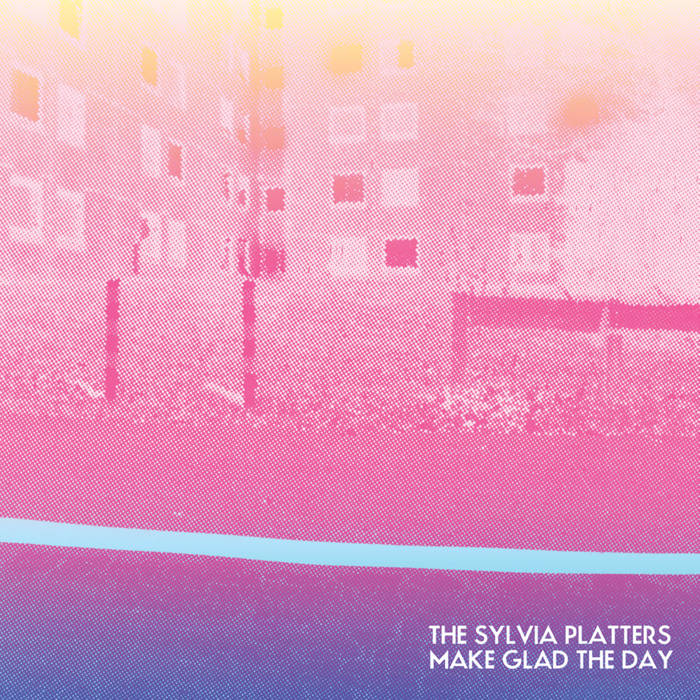
    The Sylvia Platters: Make Glad The Day

    The Sylvia Platters are a power pop trio from Vancouver, British Columbia. Self-described as a “a power pop band inspired by the brevity of Guided by Voices, the loud-quiet dynamics of Mikal Cronin, and the punk playfulness of The Replacements,” they have recently released an album titled Make Glad The Day, and before I start off with the review, I would like to apologize for my lack of knowledge of the nuances and intricacies of power pop.

    The press manifesto describes the album as a way “to turn life’s string of ephemeral moments, jobs, ideas, and relationships into something meaningful.” I really do get what they are going for here. There’s an offsetting – yet endearing – je ne sais quoi. Amalgamating – so beautifully – the jarring disconnect of an urban life, and life’s inanity. In essence, it’s a love letter: a letter so abrasive and standoffish, that it becomes so blatantly apparent that it is merely a theodicy for a city. This is where I really get the album: it is equal parts meaningless drudgery, and equal parts a chokehold on vacuous happiness that is slowly coming loose. Because no matter how tightly it is held onto, it manages to become a completely different entity. All of this is packaged into a compact, half-hour runtime spanning fourteen tracks. Sonically, it hits like a wall of sound, incorporating elements of punk, shoegaze, and glam rock. The medium is concerted with the message. Do not mistake the rhythmic power pop sound as an undercut of the true message of the album. It bobs on vicious vitriolic vindication.

    My praise is not to say that it doesn’t have its imperfections. Sometimes the songs meld into one. While I can hear the influences of Cronin and the Replacements in the songs (especially in drum heavy sections), the variance between the songs tends to be low. While the songs do hit like a wall of sound, it is difficult to differentiate between the walls. They’re all painted the same way. In a way it becomes referential to itself, a triptych of the same salient walls of sound. It’s influences crack around the edge. Leaving the album desperately clamoring to find a voice of it’s own – an entirely new one that effectively communicates a melancholic topic without leaving it a lumbering mess of heyday referentialism. The Sylvia Platters have yet to hit that spot, but it is excusable for their debut.

    Prima facie, this album was a wholly enjoyable ride. It’s laden with some eerily relatable emotions, and the lyrical content is of a caliber that is extremely deserving of the 21st century schizoid man. A pigeon lost between granite graveyards, and bills, and work. Yet the album strives to not be bleak; it’s fun, and it’s fast. I do have some problems with differentiating between the band and their influences. But in due time I do expect them to find incredible footing, and a unique voice that laments with apparent glee.

    My Rating: 7.5/10

    Listen to Make Glad The Day

  • Das Racist: In Search of Backpack Rap

    Das Racist: In Search of Backpack Rap

    It’s been a couple of years since the New York based rap collective Das Racist disbanded. The pain still lingers – every time I’m scrolling through my iTunes library and the name pops up, an iota of my being dies. Before I get into a psychoanalytical examination of feelings, and their relation to my being, I must explain why Das Racist holds a special place in rap culture, and in the cold, cavernous depths of my heart.

    To understand the charm, we must deconstruct the mythos. Simply put: there hasn’t been anything else like Das Racist. They synthesized lyrical content that was offsetting and apocryphal, layered with puns on racism, capitalism, television, fast food, and a plethora of other jabs at the inane bullshit that pervaded life in a Western Culture.

    “Backyards, kittens, puppies, 401k’s, libels, yuppies

     Yeeah, I’m talkin’ bout wine drinkers

     Bald-head men, Klux Klan swine-thinkers

    What motivates you? Let’s go around the room

    ‘I wanna own a boat one day’”

    At first it may seem like some nonsense that a word generator might spit out. But a deeper reading shows an incredible amount of consciousness about the inherent practices of predatory capitalism. Painting the vision of an attainable affable lifestyle, and yet the cards are tilted to the favour of these “bald-head men.” Does capitalism layer life with mirages of ostentatious things like boats? Most definitely! But the canvas this utopian vision is painted upon is one of intrinsic inanity: “Backyards, kittens, puppies, 401k’s, libels, yuppies”

    And this is the most important lesson I’ve learnt from listening to Das Racist. The system is not in our favor. It is probable that there is no greater meaning to life, or a higher calling to success. But on the bright side of life, the youthful experience is drenched with plurality. We don’t have to sit down and take it; life is just as much about eating Sour Patch Kids as it is about fighting the establishment (or whatever the pseudo-socialistic new age hippie bongo banging analogy is). If we do come to terms with this: the plurality becomes entrenched in our being. This is the spirit that Das Racist so viciously tried to embody.

    While we’re on the topic of plurality, it is important to address the ethnic backgrounds of the comprising members. They were two brown guys – a product of post 9/11 New York; lamentation paved the way to an eerily accurate view of a virulently racist quasi-society that arose after the towers fell. It’s just two brown guys, alluding to the rampant racial divisionism with surgical precision. They don’t come from a viewpoint of courage or hatred. They are revelers of the divide, tirelessly working to build a bridge across it. I find it conflicting, and I like it that way. Das Racist is relevant to me for this very reason: they refuse to be boxed or categorized into a niche. They did not latch on to a new counterculture to stay relevant; instead they are merely zooted brown weirdos playing hopscotch on the grey area between humor and tragedy.

  • Instrument Gender Bias

    Instrument Gender Bias

    Why are certain instruments associated with certain genders? Why do women tend to play instruments that are higher in range, softer in dynamic, and more elegant to hold? Why are most rock drummers male?

    The intersection of music and sexuality is evident throughout much of Western history. Western cultures have historically assigned certain musical roles to a specific gender. These historical specifications play themselves out in all genres of music today.

    Prior to the 20th century, the space of public performance was limited to men. Women, in the 19th century, were permitted to perform publicly only as vocalists; even then, this was deemed suspect because of 19th-century connotations that women who sang in public were essentially prostitutes.

    Throughout the 19th and early 20th century, women learned to play specific instruments in primarily the domestic sphere. Learning an instrument gave a woman a commodity value for marriage; it was seen to increase her desirability. Ironically, this desirable quality could be performed only at home and rarely in public. Acceptable instruments for women were typically of the plucked string variety: lute, harp, guitar, and keyboard. These instruments did not distort the body in “unfeminine” ways, as scholars of that time were happy to point out. They also did not require an accompanist; the instruments could be played in isolation. Women were viewed as ornamental and decorative; playing an instrument (in the home and before marriage only) enhanced this ornamental quality.

    Though these instruments were the standard for women, some female instrumentalists began breaking ground as cellists when it was first introduced. As in fashion at the time, they had to play side-saddle (both legs on one side of the instrument) to avoid any sexual connotations. Male cellists, however, were not required to play side-saddle.

    Women began playing violin even though it was deemed the instrument of the devil. It was believed that the “weaker sex” would not naturally be strong enough to deal with “stronger” instruments like the violin; women were not meant to be aggressive or strong. Instruments that require aggression and strength (a misconception, but hey it’s the 19th century we’re dealing with) were appropriate only for men: timpani, upright bass, and brass.

    These women who broke ground by performing instruments societally deemed for men paved the way for a generation of women to continue performing on these instruments. A new normal was effectively created, but the instruments women most typically played have become solidified. When looking at major Canadian orchestras, there are disproportionate gaps in specific instrument categories: brass, winds, percussion, keyboard, and bass. Approximately 85% of professional orchestral brass players in Canadian orchestras are male. Over 80% of flute players are female. 75% of upright bass players are male. 95% of percussionists and timpanists are male. Over 80% of harp and keyboard players are female.

    Gendered instrument bias crosses over into popular music, as well. Though I didn’t gather similar data for popular music, one only has to listen to and watch videos of popular musicians and bands to see similarities between the two and their treatment of gender and instruments.

    School band programs are not exempt from gender socialization. In a study conducted between 1978 and 2007, children consistently chose instruments that coincided with traditional instrument gender bias. Girls chose instruments like flute, clarinet, and violin. Boys chose instruments like drums, trombone, and trumpet. The results are unsurprising. Of course there will be and definitely are anomalies; this article is stating the averages and the generalizations.

    The tragedy of instrument gender bias is summarized perfectly by Leopold Stokowski: “Sacrificing accomplishment to tradition.” Not only is this tragedy applicable to women, but to men. The limitations imposed by gender bias restrict opportunities and reinforce social expectations for everyone; in the field of music, both men and women find themselves falling into predefined roles that have existed for centuries.

    *Information presented in this article was gathered by a major research project conducted by the author of the article.

  • Pope Francis On The Road To A Grammy?

    Pope Francis On The Road To A Grammy?

    VATICAN CITY – After years of decrying Rock and Roll music as “satanic,” “Pagan trash,” and “not that good since Hendrix died,” the Catholic Church seems to have taken a softer stance towards the burgeoning Rock and Roll industry. In the official party manifesto, the Church stated “After taking a good hard look at the current socio-economic landscape: we realized that the best way to appeal to the thirty-forty year old market is by embracing Rock music.” This preceded t
    he recent announcement made by the Pope stating intentions to release a Progressive Rock album. “After endlessly listening to Pink Floyd and Led Zeppelin in my Mother’s basement, I have concluded that today’s music is utter shite.”

    The album drops on the fourth quarter of 2015, coinciding with the release of the Church’s new fragrance line Papal. The album is going to incorporate traditional Catholic hymns in Portuguese, Spanish, and English, and also a guitar section spearheaded by former Slayer member Jeff Hanneman. The lyrical content revolves around topics such as environmentalism, love, hope, and how shitty of a city Cleveland is (it’s utter trash). There have also been rumors of a Kanye West feature on this album – which seems weird at first (even fictional, maybe). It could make a tenable plot for a movie: West, a mythic figure that claims to communicate with God, collaborates with the Pope.

    This is not to say that the project has not had its fair share of detractors; critic Anthony Fantano went as far as to say “He [Pope Francis] is too derivative of his earlier work,” and “I feel that Church music was better in 1060 A.D. The content does not seem to be evolving and it’s always about the same thing: calling Russian protestants garbage.” Other critics have decided to reserve their opinions until the album is actually out. The Pope has encouraged people to look at it as a whole work of art, akin to the likes of the Mona Lisa, or the Sistine Chapel, or any Oasis album. “There’s three things I hope to be: godly, loving, and a fucking monster on the mic,” the Pope posted on his MySpace. Pope Francis stated that in addition to releasing a Progressive Rock Album, he also intends to emulate the lifestyle of a rock star – by turning eighty and whining constantly about the state of modern day music. “When I look at the Pope now, I feel that I can relate much more; we have similar opinions on the utter trash that is modern-day music,” said Thomas Jones, a twelve year old from Wyoming. Not only does this album manage to corner the 30-40 year old market, but also a market of teenagers who’s life has the sole purpose of commenting on YouTube music videos.

Betzillo positions itself as a versatile gaming hub where structured bonuses and adaptive gameplay mechanics support both short sessions and extended play.

Built with a focus on innovation, Spinbit integrates modern casino architecture with rapid transactions, appealing to players who value speed and digital efficiency.

Ripper Casino emphasizes bold entertainment through high-impact slot titles and competitive promotions crafted for risk-oriented players.

A friendly interface and stable performance define Ricky Casino, offering a casual yet reliable environment for a wide spectrum of gaming preferences.

King Billy Casino channels classic casino spirit into a modern platform, delivering recognizable themes supported by contemporary reward systems.

Immersive visuals and layered slot mechanics are at the core of Dragonslots, creating a narrative-driven casino experience.

Lukki Casino appeals to players seeking direct access and minimal friction, focusing on fast loading times and intuitive controls.

Casinonic provides a structured and dependable gaming framework, blending modern slots with transparent operational standards.