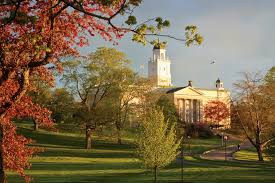
Tag: Acadia University

  • Student Life Impacting Community of Wolfville

    Student Life Impacting Community of Wolfville

    As Acadia students continue to settle into the “new normal” at university, so do the residents of Wolfville as the students return to school… and to parties. The usual back-to-school parties this year are affecting residents of Wolfville, perhaps more than any previous years, due to new COVID-19 regulations, which are drawing students to gatherings off-campus. However, this raises more concerns than that of noise complaints. 

    In recent weeks, multiple students have been charged with liquor act tickets and parking tickets along with the noise bylaw tickets. However, the most concerning threat to the community is the large parties that are taking place during this global pandemic. Students hosting large parties are being fined under the Emergency Management Act, because they are not respecting the COVID-19 regulations that state that when social distancing is possible, people can gather in groups up to 50, and where it is not, in groups up to 10. 

    On the other hand, the majority of the Acadia students are taking the virus seriously and responsibly. A handful of students acting out should not affect the general opinion of students, of which the majority are active volunteers in the community and respectful neighbours. Brendan MacNeil, president of the Acadia Students Union, said in an interview with CBC that he, “thinks it’s unfair to the degree that students have been ubiquitously convicted of all being, you know, disrespectful and unconcerned and apathetic community members. I believe that there are only a very small minority of students that that would apply to”. However, everyone must be responsible for holding others accountable for their actions and the effects they have on not only the residents of Wolfville but the overall reputation of the student body and Acadia University as a whole. 

    In an effort to further educate students on the severity of the virus, the current mayor of Wolfville, Jeff Cantwell, addressed the matter in a very personable way during the month of September. He approached off-campus students by going door-to-door and having a reverent as well as dutiful conversation with them at their doorstep. While reactions varied, most students were impressed with the way that the mayor addressed the matter, Cantwell says in an interview with CBC. 

    Cantwell is approaching the end of his term, and the election for a new mayor is amongst us. Unfortunately, information has silently surfaced which suggests a dialogue about a disturbing way to end student partying antics. A very credible source, who wishes to remain anonymous for privacy reasons, has agreed to share a partial quote from a citizen of Wolfville who openly supports Wendy Donovan, a candidate for mayor in the election.

    “Perhaps, we could plant borders of barberry bushes along the borders of residential properties that students use as thoroughfares”, said the supporter. 

    Barberry plants (scientific name: Berberis or Berberis vulgaris) are not only an invasive species, but they also have a significant tick presence, may cause diarrhea and vomiting if ingested, as well as having spiky thorns that can irritate skin and cause inflammation (Schmidt, Richard J. Ph.D., Botanical Dermatology Database.). Barberry plants are toxic to humans and invasive, yet one of Wendy Donovan’s supporters has suggested planting bundles of them in Wolfville, fully aware that students will more than likely be walking through them. 

    While it is incredibly important for students to be respectful neighbours and be aware of their parties and choices they make that affect the community, students trust that their leaders will also be protecting them. Cantwell succeeded in this when he had respectful and open conversations face to face with students about the impact of their party. The majority of students are responsible for parties, social-distancing, noise and property, however, there is still improvement needed among the few students who occasionally take it too far. This can be accomplished with the help of residents, the town, and Acadia staff and students – not by planting poisonous plants around Wolfville.
     

  • TA Payment Nightmare

    TA Payment Nightmare

    Prior to Christmas Break third-year student Helen Allen arrived at a weekly Students’ Representative Council (SRC) meeting with a story of her personal experiences with Acadia University withholding her Teaching Assistant (TA) payments. Allen shared how her TA payments were applied to her student account rather than given to her with no notice or warning. Acadia Students’ Union (ASU) President Kyle Vandertoorn got Allen in touch with the ASU lawyer for her to explore her case further. 

    While Allen came to the meeting originally in fear that her TA payment for the fall 2019 semester would be withheld once again, her story generated intrigue. On December 3rd, 2019, The Athenaeum sat down with Allen to listen and share her story with the community.

    To start the interview Allen gave a timeline of events. Allen was awarded a TA position with the Biology Department in September 2018. Along with this position came a contract that Allen signs stating she will receive a lump sum of around $540 at the end of each term worked. 

    “I have gone back through everything and nowhere is it mentioned, including Acadia Central, pages on on-campus work, bi-weekly payroll or the registrar’s offices, penalties for how you get paid if you haven’t paid your tuition” Allen stated.

    Based on the contract she signed, Allen had no reason to believe her payment would be withheld if she had outstanding fees, due to student loans, on her student account. Moving to November 2018, Allen is hired at the Acadia Box Office where she works three six-hour shifts by November 29th, seven days after the November 22nd payroll date when Allen was also expecting to receive her TA payment. Expecting a larger sum, she is surprised to receive $38.34 and emails her manager Brenda Bigelow to inquire about the mysterious payroll deposit.

    Bigelow replies promptly to Allen explaining that the $38.34 was from the November 4-17 pay period. She does not know why it is half of the amount nor does she know why Allen received the payments late. Bigelow goes on in the email to say, “the next pay period will be from November 18-December 1 2018 and pay date will be December 13th”.

    As of December 3rd, 2019, Allen has yet to receive money from her other shifts worked.

    While dealing with her part-time job, Allen does not receive her TA payment when many of her fellow TA’s have. Annoyed and frustrated, she goes to Matthew Buston in bi-weekly payroll who informs Allen that he has been told not to release her payments as her student account has not been cleared yet. Coming from that conversation, Allen realizes she will not receive her money until her student loans come in and clear the amount owed. Allen decides she will pay the money owed out of pocket and expects to $540 to show after clearing her account.

    A week later, the money appears in her account and after another week on December 14th 2018, Allen receives a cheque; however, she is still quite confused about why the money is being sent to her account when she signed a contract stating she will receive a lump-sum direct deposit.

    In January the same contract is signed for Allen’s TA position and she quits the Box Office. Flash forward to April 3rd, 2019 and Allen receives an email confirming her student loans would be coming through shortly. As her loans are on her way, Allen fully expects that her TA payment would arrive on time, but again it does not seem to appear. Allen’s student account is now cleared, and she wants the money that she is expecting.

    On April 5th Allen, in search of her cheque, is directed towards the Biology department, Business Department, upstairs University Hall, Student Accounts and Bi-weekly payroll. By the time Allen gets to Bi-weekly payroll she is frustrated and said she caused “quite the scene”. 

    Finally, Allen is told she can pick up a cheque next week. Although this was good to hear Allen stated: “what did I do wrong? Why am I being denied my money? Why can’t I have it right now?”.

    Allen returns to Student Accounts and waits for Moira Crowell, the manager, to see her. Crowell tells Allen she was warned that Allen was coming. Upon Allen complaining that this money would be going towards her rent and food for the week, Crowell offers an expedited cheque to be picked up on Monday instead of Friday.

    At 4:30pm the same day, Allen gets an email from Crowell apologizing for not being able to get the cheque to Allen sooner. In the email, Crowell stated, “If you are in need of funds for food this weekend, I can arrange to put some money on your axe cash account that you can then use at the meal hall.  The charge for the axe cash would be placed against your account and you can make payment for it at a later date. Would this help?”.

    In Allen’s mind, this offer was not her money, it was another debt she would have to pay off in the future. Allen responds to Crowell with a scolding email which opened as such:

    “I am an independent student, I don’t have a VISA with my mother’s name on it, and my family doesn’t send me a weekly allowance; But, I am not starving, Moira. I was merely frustrated with the sheer incompetency I was forced to deal with today.

    I have monthly rent, life insurance payments, a phone bill, vet expenses (for my service dog), and credit card payments to make. All of which I am in charge of. This doesn’t include groceries, tuition, or books, or expenses which may come up throughout the month.

    Not a single person today was understanding of the fact that I would have perhaps relied on this payment, which I signed a contract for, where I would work a full semester in return for an in-full deposit at the end of term”.

    Allen expressed in our interview that she was merely confused about how responsible adults can be present in their offices and yet everyone she talked to that handled the money could do nothing. Someone somewhere decided what would happen to Allen’s paycheck and nobody thought it was a reasonable idea to give Allen notice. Even the professor who Allen TA’s for insisted she reached out to Student Accounts as it was unfair she had not received payments when her peers had.

    In response to Allen’s email, Crowell attempted to minimize the damage and placed $100 to Allen’s axe cash account that the university will cover the cost of.

    It was a nice gesture, Allen explained but she believes that the University was attempting to minimize the issue at hand instead of realizing that they had a clear systematic issue. 

    “I guess I should be happy, but I don’t know, there is still a bigger issue here” Helen stated.

    On April 9th, Allen went to James Sanford, Executive Director at Student Services. She updated Sanford on the events of the past year and reports that Sanford appeared to want to help her. After the meeting, Allen never heard from Sanford again.

    Allen explained that it was as if nobody cared. The University acted as a business instead of an institution in the situation ignoring Allen and whether she paid her living expenses. As long as her student account was paid off, the people Allen visited did not seem to care how long it took until she received her cheque.

    “Make sure that you pay the students that you employ, based on the method we agreed on”, Allen said bringing the conversation back to her contract.

    A student who signs a document saying this is how you will get paid and when with no fine print should be honoured Allen believes. If the University is planning on applying the payment to your student account based on what that student owes the school, then Allen says the University should give notice to their students that this may occur.

    “The information should be easy to find and given to all students” Allen noted.

    Allen emphasized how the whole inconvenience would not matter as much if the University had treated her kindly and given her proper notice of what could happen to her payment ahead of time.

    Helen Allen’s story is not one looking for sympathy but instead looking to provide awareness to the student community at Acadia. Her case is not an exclusive one, Allen shared other cases in our interview. Sharing a story can only help students and the University of Acadia in the future, and that is what Allen and The Athenaeum hope to accomplish.

  • An Open Letter to the Incoming SRC

    An Open Letter to the Incoming SRC

    An Open Letter to the Incoming SRC.

    This open letter is meant to bring forward our concerns, suggestions, and foster collaboration. It will address our views on student democracy, leadership and journalism.

    Democracy

    By definition, any student union or government is required to serve and represent students.  Representatives are here for students of the ASU. These students, from presidents to councillors, are here to serve everyone at to the best of their collective ability.  These students are members of the union in the same way that each and every student who pays student fees is. Elected members have a duty to consider more than just their own opinions on issues when determining the interest of the union as a whole.  This is where problems arise.

    The best unions must embrace democracy to its fullest. This means laws and practices that adhere to democratic principles of fair and free elections, ethical governance and always promoting students’ democratic rights. These should be the top priorities of any union.

    It is no great secret that we, Kyle Thompson-Clement, Chris Vanderburgh, and Josée Léger, strongly believe that the ASU has systematically weakened students’ rights. It was brought to our attention that students can no longer impeach ASU representatives nor bring forward referendum by petition. Adding these restrictions means students with enough support from other union members currently have no guarantee that they could remove a representative from their position or submit a question for a referendum.

    To incoming ASU representatives, understand that the 10+ people sitting around the table are not the union. The union is each and every student and it is your job to serve these students. If members of your union, non-elected members and those around the table alike, show support for an idea like a bus pass or impeachment and referendum rights, it is your job to find out how to make that work for the union.

    It is your job to contextualize your positions and solicit feedback, both positive and negative. Again, we remind those who are elected that it is your job to promote everyone’s right to fair and just governance. This year we feel the union has failed to do so.

    Leadership

    Often the term leadership is connected to elected members of the ASU. We would strongly agree that every one of the students elected to the ASU as representatives is in some form a leader. Part of this leadership entails educating students on what being a member of a union means, and what they are supposed to be privy to as paying members. As leaders, we urge, nay beg, all representatives of the ASU to lead by example.

    Check your colleagues. Do not be afraid to speak out against any authority on the ASU. If an elected member is fearful of speaking out, it is clear the union is flawed.

    Do the hard work. Protect student rights. Explain from the day they are accepted to Acadia University that their representatives are there to protect everyone’s rights.

    The following message is just for the incoming Executive. The Executive sets the tone for how union members will be governed. If you lead by example the whole elected representative body is stronger. Please, for every union member, eliminate with the strongest sense, any thoughts or feelings of thinking you know better than students.  

    Please keep communication open to anything you do that will have an impact on the student body. Transparency is key to educating a union on matters that affect them. If students show enough support or vote favourably on a referendum question to see something actioned it is your job, especially as the executive, to make that happen.

    Secondly, we get it. We understand that all union members are not always informed enough to make decisions on their union’s future. However, as a governing body, it is also your duty to educate students and present the most whole thought out plan for how to achieve a particular goal. This means putting in the work to find the most effective way of implementing these changes regardless of personal bias.

    It is up to every union member to decide whether they agree or disagree on substantial changes. Leadership means constantly putting effort in by presenting all the options with the most detail and clarity. This will allow the union at large to fully consider decisions and show the rest of the representatives that the union is more than just the individuals who sit in the council room. A more engaged approach to union governance will boost election participation and promote a more active union.  

    Journalism

    Incoming ASU representatives need to understand the importance of journalism. In every modern society, journalism plays a critical role in being the check and balance of power, corruption, and ethical governance. The Athenaeum is here to educate students on all social issues. Sometimes, our job is to foster a conversation on the governance of our union.

    Any attempt to undermine the duty we have as journalists is a threat to governance and pushes us towards an authoritarian government. We know it sounds overwhelming, but we exist to bring forward any issues within the union.

    We’re not looking to ruin the reputation of the ASU. We love our school and we love our newspaper. However, it is our job to stand up and be watchdogs for policy changes or events within the ASU that represent significant changes to how students are governed. Articles that shed light on messy issues may not always make your job easier. Certainly not. That’s not why we are there.

    Instead of trying to silence voices of dissent, representatives themselves must use the same medium we do to convince students otherwise. Journalism, especially pieces that shed light on policy issues, represent an opportunity to think critically about the decision being made in the council room. Please, embrace what journalism represents: checks, balances, freedom of speech, freedom of the press and a means to educate the very union you represent.

    Throughout our time at Acadia we have learned a lot about the inner workings of politics. We can confidently tell you that your representatives work towards making the lives of its union members lives better.

    However, to the incoming ASU representatives, please advocate for students’ rights. Put the students first and actively work hard by setting petty grievances and personal bias aside. Work towards giving students the most democratic and sound governance we all deserve. Lead by example. This means setting a tone that students rights are of the highest importance, exploring all options, and educating other union representatives on why democracy is essential for the union.

    Finally, attacks on student journalism can and should be met with hostility and dissent. It can be a bitter pill to swallow but it does not change our job as student journalists. We will continue to do the hard and sometimes confrontational work of exposing incidents that run counter to students’ best interests. Again, this opposition through The Athenaeum can be embraced as an opportunity to reflect on representatives’ choices and standard governance practices.

    The Athenaeum is willing to meet regularly with the ASU in hopes to actively work out future tensions. The Athenaeum and the ASU are here to work for the students.

    Let’s not lose sight of that.

    Sincerely,

    Josée Léger

    Kyle Thompson-Clement

    Chris Vanderburgh

  • Editor-in-Chief: One Last Request

    Editor-in-Chief: One Last Request

    I’ve thought for a long time about what I wanted to say in my final article for The Athenaeum. I’ve debated between a tell-all, a sappy story about how I’ve grown as a person, or constructive criticism for the university as a whole.

    Instead I want my last article to leave you with one message as Editor-in-Chief: learn your history.

    Acadia’s history is one that needs to be taught. So much has happened since 1838 that our mediocre Wikipedia page doesn’t cover. We’re a unique institution and we’ve been through hell and high water. We’ve done great things and we’ve fucked up royally. Our tumultuous history with the Baptists, flirtations with a eugenicist and white supremacist, drive for a home for our students, and bold plans for the future are just examples of what has happened within our community.

    To most of the world we’re a small university in the middle of nowhere, Nova Scotia. Prospective students have no idea that our campus is steeped in history, culture, tradition, and an optimistic spirit that has pushed us so far forward.

    Acadia has been behind the times. We were not the first university in the British Empire to grant a woman a degree. We were not the first university in Canada to have African-Canadians graduate. We did not have a female president until 2003. We have very few professors of colour and only just hired indigenous and black student advisors. We have accrued debt over the years and are struggling to pay it off while avoiding tuition increases.

    Yet through all of the negative headlines there is a reason to have hope. I moved across the country to come to Acadia and I’ve since fallen in love with this institution. I love it because no matter who you are or where you’re from, you can come here and make a difference. If opportunities don’t exist, you can create them.

    The Acadia spirit is one based on struggle and perseverance. Our history is rich with examples of how the university has soldiered on when the odds were stacked against us.

    In 1852, Professor Isaac Chipman – an integral figure in the founding of Acadia and fundraising that made the university possible – drowned alongside most of his students near Blomindon. With a sizeable portion of the graduating class and the university’s most esteemed professor lost, many feared the university would close. But we persisted.

    In 1877, the first College Hall burned to the ground. Within months the town and university organized the Forward Movement to raise funds to build another. We persisted.

    In 1914, the War to End all Wars began. It took the lives of dozens of Acadia students and threw the university into disarray. But we persisted.

    In 1920, the second College Hall burned to the ground. It took with it priceless books, artifacts, and memorabilia of a powerful history. The next day we began asking around for donations and worked with the Rockefeller foundation to build a brand new University Hall reflective of our pride. We persisted.

    In 1945, World War II ended and Wolfville was flooded with more veterans than there were beds. The university entered a state of shock and struggled to adapt. We persisted.

    In 2008, President Gail Dinter-Gottlieb resigned after Acadia had taken on massive amounts of debt and suffered through two faculty strikes. The university was being attacked from all sides as enrolment fell 25%. Within two years Ray Ivany became part of the Acadia family and helped put us back on our feet. We persisted.

    The same drive that built the first College Hall with no money, just the determination of its students, still courses through the veins of this campus. I’m proud to say that I’ve attended Acadia University. We’re not Harvard. We’re not Oxford. We’re not U of T. We’re not Dalhousie. We’re Acadia and that damn well means something.

    This year as Editor-in-Chief I’ve tried my hardest to make known the stories that compose our campus. I’m proud to have published a Black History Month Issue and Research Issue and to have celebrated the voices on this campus. Those who agree and those who disagree make our collective voice stronger. What’s important is that we keep talking and remember where we came from. Though there may be those who strongly disagree with the direction The Athenaeum has taken this year, I am and will always be proud of it.

    In the end, The Athenaeum is nothing more than a record of what happened. It does not persist because of a magical institution and aggressive archivists that demand copies of the paper. It persists because we all have stories to share. We are merely custodians of history. Our history has taught us that we will always persist and we will triumph. I’m confident in my successor and the successors that follow her to maintain the mantle of custodians of our collective history. The Acadia history.

    Thank you, Acadia.

    Remember: learn your history.

    Colin Mitchell is a fourth year (Honours) Politics student and Editor-in-Chief of The Athenaeum

  • I believe in Acadia. You should too.

    I believe in Acadia. You should too.

    Three years ago, I wrote an article explaining why I had faith in Nova Scotia. I wrote about how the province inspired creativity and how the potential to build a future in this province is here while the immediate opportunities may not be. I wrote about how universities can be the key to our future, with the opportunities for growth and expansion right in front of us.

    With graduation just around the corner I want to reflect on why my faith in Acadia University has never been stronger.

    I came to Acadia from across the country knowing next to nothing about it. I learned about the history of this university, from the struggle to the prosperity that makes our history unique.

    The story of Acadia University is peppered in equal parts by stories of struggle and progress. We are pioneers by birth, by circumstance and by necessity. Through those struggles we have formed a stronger conception of who we are and where we’re going.

    Acadia has come out stronger time and time again. Having sat on the Board of Governors and on the University Senate I know that change can be slow. It can be mind-numbing and frustrating, and more often than not the results aren’t seen for years. But that doesn’t mean change is impossible.

    The reality is the demands of the 21st century will constantly require us to adapt to changing circumstances. An Acadia education is valuable because it teaches us how to think. This sets us apart from students who graduate from monolithic institutions as a faceless number in a class of hundreds. We have the ability to think for ourselves and to think outside of the box.

    I believe in Acadia because we’re imagining what comes next. The Campaign for Acadia gives us an opportunity to improve the lives of students who will shape this university for the next decade and beyond. Everything from expanding scholarships to hiring the best faculty to reimagining our campus is possible in this endeavour. I’ve put my money where my mouth is and personally donated $100 to this campaign because I fundamentally believe in the potential of this institution.

    But I believe in Acadia for more than the flashy posters and inflated clichés. I believe in Acadia because it’s nurtured students and faculty who care about one another. It gives us the platform to launch our careers in the wider world and make a real difference. It gives us the ability to make a name for ourselves by pursuing what we love.

    I started Humans of Acadia three years ago because I wanted to capture what makes this town special. We all have unique stories to tell and by sharing them we’ve connected past, present, and future students of this university. Taking pictures and telling the stories of the people who make our community extraordinary has been an absolute privilege.

    I’ve had the opportunity to hear from hundreds of people about what makes this town special. From international students who moved thousands of kilometres from home to Wolfville residents who have lived in Nova Scotia their whole lives, this community has made an imprint on my heart. Every story I’ve captured has taught me that the Acadia community looks out for one another. We’re not afraid to pick each other up when we fall down.

    This isn’t to say Acadia is perfect. Far from it. There’s still tremendous progress that needs to be made. We need to break down financial barriers that keep top talent from attending our institution. We need to lead the process of indigeneity and we need to create an institution that welcomes students of colour and doesn’t relegate them to second-class students. We need to build an accessible campus so that every student has the same ability to obtain an Acadia education. We need to admit our failures as an institution and build on them instead of sweeping them under the rug.  

    We’re on the right track. The growth of the Black Students’ Association over the past two years has shown that when students mobilize, we can make a real difference. Discussions on racial, gender, and social issues that should have happened years ago are finally coming to the forefront. Curriculum changes are incorporating more contemporary issues into our syllabi and getting us to ask hard questions. We’re reaching out to the world and building partnerships from the Maple League to Japan to cement our niche in the post-secondary ecosystem.

    There will always be naysayers. Change isn’t always popular, nor fun or easy. But it is necessary. Acadia will continue to be a crucial part of Canada and an even more important player in an increasingly connected world. We’re currently taking steps in the right direction, with student and faculty movements shaping where we go as a university. My four years at Acadia have taught me that this university is more than the degree you get at Convocation− it’s about the people you meet and the stories you make.

    Ultimately the students make Acadia possible. Together we’ve been able to achieve great things, and it’s with unwavering optimism in the Acadia spirit that I look forward to the next generation.  We’ve proven that we can be better. All of the necessary tools for growth and expansion are in front of us and the roadmap is there.

    I believe in Acadia.

    You should too.

  • Oh, The Places You’ve Been and The Places You’ll Go

    Oh, The Places You’ve Been and The Places You’ll Go

    With move-in day approaching I began to feel nervous.
    More than 1,400 miles from home and what was the purpose?
    I was starting my degree and my young adult life
    And Acadia embodied a future that was bright.
    When I went for my Frosh pack, I met my future best friend.
    I met so many people, on who I learned to depend.
    I became acquainted with the rotation of food in meal hall.
    I also learned to watch out and not feed the seagulls.
    My second year I returned, tan, wise and keen.
    I was no longer a Frosh and I’d avoided the freshman fifteen.
    I got to know my professors and enjoyed my classes.
    I studied, I went out and I even got glasses.
    An apartment off campus was where I lived my third year.
    Where I met my boyfriend, learned to cook and bonded with peers.
    I went to hockey games, started yoga and continued disliking the weather.
    I had found where I belonged; I felt it could only get better.
    As my final year began, I was anxious and ready.
    I was an old pro at school, but as an adult felt unsteady.
    The year went by in slow motion, but also too fast
    I was home at Acadia, but I knew it could not always last.
    As I crossed the stage in U-Hall, the past four years flashed before my eyes.
    I saw everything between my first day as a frosh and that moment and I quietly said my goodbyes.
    I said goodbye to the place that had made me so nervous four years ago,
    The place that had shaped me, that had helped me to grow.
    However long you have been at Acadia, you know what I mean.
    It is a place that gives back, which in life is not always foreseen.
    Future alumni, the end of your time at Acadia is not a plateau,
    Oh, the place you have been and the places you’ll go.

  • A Message to Graduating Students and Students Who are Struggling

    You’re already rushed this morning. No time to eat breakfast and you’re throwing clothes on your cold body as you check the weather for today. More snow, more cold. Great…

    You already don’t feel like going to class you are also running a tad bit late, it wouldn’t hurt to miss this one. Right?

    How many of you end up in a situation similar to this? Or maybe, my friend is in class and can pass on the notes. If you’re anything like me, you might sometimes fall victim to the anxiety filled, crippling fear that is unexplained. Well, you could explain it but don’t always know why and don’t know how to tell others.

    It’s easy to get trapped in a cyclical motion during University. Go to class, study, drink, repeat, and, if you’re feeling really ambitious, you might add volunteer opportunities or even a gym routine. If you fall off the wagon or find yourself in a rut, it can be very challenging to find the motivation to feel normal again.

    Over my time at University, I have experienced the ups and downs, have been through the highs and low, and sometimes I get stuck in the lows. This is not uncommon and many people struggle in University dealing with the pressure of finding their identity. You are still going through a time in which your brain is growing and changing, so cut yourself some slack. Also, remind yourself that this could be situational and it is normal to have bad days. There were two periods during University that I went through an exceptionally hard time. Unfortunately, the most recent was before second semester of my last year.

    I was on track to graduate with a degree in Kinesiology. I attended classes and was a regular at events and well known throughout my program. I was also involved in a host of other activities that made me known throughout campus and the community. I was always very reserved and kept the majority of my struggles to myself. By doing so, no one could help me when I was failing two required courses…in my last year…in my last semester.

    What could I do?

    As you now know, I was a fourth year Kinesiology student last year who unfortunately failed two required courses which halted my graduation. After getting over the initial shock, regret and shame, a new emotion took it’s place and I was offered incredible perspective.  A question immediately popped into my mind: “what now”? It continued to plague me and I had to change my attitude towards it because this is something that is probably going through your mind as you think about the future. That being said, this question will continue to show up as you are constantly reassessing and changing in accordance to life. So what now? What can you expect from this article? Well, I’ve written it in a letter format of inspiration…I hope.

    I never thought I would be in this position. I was on track to graduate in my four years but sometimes life happens. For some reason, I didn’t take any graduation pictures, get a ring or do any of the typical things graduating students did. What I did do however, was apply to graduate and I was ready for that day in May. It was the end of April when I officially found out I wouldn’t be graduating, although in my heart, I knew this would be the case earlier. I didn’t let on how I was struggling to anyone. I never talked about it and just kept on pretending that I was on the right track. Humour is a good way to distract people from the truth. This is a deflecting method that can help allow people to relate to your situation but it is always better to be honest with yourself and those around you. I didn’t tell my professors and I sometimes felt like I was doing everything right, I hired a tutor and would try and go to class. But I wouldn’t be able to finish my school work or stay on top of what I had already started.  Heck, my parents were so sure I was graduating that they already got me a computer as a graduation gift! Whoops.

    And to make matters worse, I had no idea what I was going to do next. The different options would pop in my head and I would veraciously change my career path every day. I was super passionate about each one until another one came along. To be honest, most of my future plans didn’t have a lot to do with my undergrad degree of Kinesiology. For those of you who have yet to know what you want to “be”. Here is a list of possible occupations I have considered over my four years.

    • Teacher
    • Coach
    • Professor
    • Neuroscientist/Psychologist
    • Lawyer
    • Social worker
    • Politician
    • Minister
    • Occupational Therapist
    • Addictions Counsellor
    • Forces
    • Sport management
    • Stripper (just kidding)
    • Business/entrepreneurship
    • Peace Corps
    • Massage therapist
    • Chiropractor

    And last but not least,

    • Mayor of Wolfville (I’m not kidding, I legitimately considered this and even wrote my acceptance speech).

    Going through all the possibilities is a important thing to do. That being said, the way we view jobs is typically as a lifelong career…that is not always the case. It wasn’t until my fourth year that I truly felt as if I was coming into my own. I started to become more confident with who I was as a person and what I stood for. I felt accomplished with my skills and that gave me this incredible feeling that I will be ok. When you realize this, a lot of pressure and stress comes off your shoulders. There is no point worrying too much about the future. Everyone has a different path and no matter how roundabout it may be, you will get to where you want to go, even if you don’t know that yet. My confidence in my skill set, and by skill set I don’t necessarily mean my ability to name all the muscles in the body or the force it will take a high jumper to get over blah blah blah biomechanics. Some of you will excel in these areas and that is awesome! I, however, always had an affinity for people and trying to connect and build relationships with them. In my third year, I had the opportunity to travel abroad. I went to Scotland and I learned so much from that experience. I value things like that so much because I find it is in those times of uncertainty and adventure where we have the most growth. I am also speaking subjectively. Everyone will have a different experience and values different things. That is what makes us unique and wonderful. But, there we can always learn from others and what I have to say will hopefully resonate with some of you. These experiences I will always be grateful for because it gave me this new found confidence in my future. I felt secure. I knew that I would be successful no matter what I did.

    That being said, you might find it ironic that I am writing about success, when I failed and did not graduate successfully last year. Success is not defined by failure, rather, it is defined by the ability to grow from failure.

    It is hard to look at perceived failures and turn them into positives. Perspective is difficult to come by but can be a skill that is nurtured with practice. I’m terribly indecisive, as you might have been able to tell by the list of possible professions, and this is something that causes me a lot of grief. By changing my perspective on decision-making, I have been able to make more confident decisions as well as deal with the repercussion. Over these past years, I have learned many lessons in perspective that have always left me stronger and wiser for it. I gained perspective when I blew out my knee and needed major reconstructive surgery- costing me a year of rugby. I felt like I would never be able to look at that moment and benefit from it. Now, I can look on that day and I feel proud I endured the pain and lengthy rehab. I can get overwhelmed just by thinking of the progress I’ve made. I never thought I’d be able to move like this again. I gained more perspective when I travelled to Scotland, learning to be more independent and find pride in thing other than my athletic ability. And, I gained perspective when I failed my first course. Failing courses is not abnormal. In fact, I always looked to my older sister as the epitome of intelligence. Anything Annie did or accomplish, was the gold standard in my mind. It turns out, she failed two classes in her first two years but managed to graduate in four, with honours and is working towards her masters now. Unfortunately, I failed my courses in my last year, last semester and they were required. Little bit of advice, if you have to fail a class, try and make sure it’s not one of your core classes.

    If you ever find yourself in the situation I was, don’t panic. Ask for help immediately. You can’t wait for others to notice you’re struggling. Take matters into your own hands. Be proactive. Schedule check-ups with your professors so they know you’re on the right track- and follow through with those meetings. It’s never too late to turn it around. If you put in the effort and time, you will be able to succeed. Do your work. That being said, if all else finds. Don’t wallow in self-pity or think degrading thoughts. Instead, find that perspective. What have you learned? What can you improve on? What do you know for the next time? Whatever you are dealing with, you can overcome. If you are worried about finances, parents, grades, anything…there is always a way you can manage. Humans are made to be adaptable and if you are willing to be open, you can adapt to any situation or environment to help you succeed. Just as I did when I went back to rugby 18 months after surgery, and couldn’t believe how far I came, that same feeling will hit me when I walk down the stage at graduation. Another lesson, I took from my knee, was that it may not be the way it was, but this is my new normal.

    Adaptable humans are meant to change and be changed. Growth, success, failure, perspective, adversity and a whole host of other adjectives are the nature of change. Find your “new normal” with every opportunity. Appreciate what you have and what you are in control of.

    I want to leave you with a list of things of what I have learned at Acadia. This is all life skills that I value. Education is so much more than material, you are learning about yourself and the world around you. Never stop learning. I would sometimes think about how I wish I knew or understood this stuff sooner. I am a kinetic learning and have to do things a couple times to really let it sit in. My mom hates it, she has to tell me something five times before I really listen to her right advice. I hate that she’s usually always right.

    So you may be wondering what I’m doing next. The answer to my “what now”? Well, that remains to be seen. I’m keeping my options open and will take any opportunity that comes my way. I’ve applied for my BEd as well as sports management. I’m also looking into other programs in colleges and will even take a full time job if one’s offered. There is no rush. My father, who I think is the wisest man I’ve ever meant, would always tell me when I got stressed: “Micheala, life is not a sprint. It’s a marathon and regardless of the race and who chooses which event, everyone reaches the finish line”.

    I love to be inspired and motivated. I love hearing people’s personal stories about overcoming adversity or achieving their dreams. I also benefit from advice. I have done a lot of reflection over my years, and I have always been told I’m an “old soul” which i interpret as wise, so listen up! Here is a collection of things I would recommend.

    • People are way more forgiving than you think/give them credit.
    • It’s never too late, too early, or the wrong time to ask for help.
    • Don’t be embarrassed or scared to share some of the things that make you feel vulnerable. Everyone is flawed, it is our perceived imperfections that make us a perfect.
    • Be grateful and take the time to say thank you especially if you REALLY mean it (a hand written note goes a long way).
    • A little kindness never hurts.
    • The people around you, especially at Acadia are here to help you succeed and they actually care about you. Take advantage of the resources offered and ask if there is something that can be done to help you out. It’s not selfish to ask.
    • It’s better to be late than not showing up at all. Punctuality is a sign of respect. It shows maturity, that you’re professional, dependable and the list goes on. That being said, sometimes things happen that make you late. How many of you are running late for class and either get too embarrassed to walk in late or figure you can get notes from a friend and don’t even bother. Don’t do that. Suck it up, most people won’t care because it is your education at risk and for those who do mind, you get called out and life moves on.
    • Own your mistakes. Reassess and see what you can do differently.
    • Ask for feedback, self-reflect and continue to keep asking questions.
    • Be proud of failure because it means you’re trying.

    Thank you for reading (if you made it this far, congrats!) and for being open to what I have to say. I love meeting new people, sharing stories and talking. If I could ever offer anyone help, it would be a privilege for me to help you sort through anything!

    Thank you again and please don’t stress. I wish you all the best in the future, I already know you’ll do great things, just because you will be an Acadia alumni. See you at graduation (and if I don’t, I’ll see you doing great things in the future).

    All my best,

    Michaela

    Email: [email protected]


  • Small Pond Syndrome

    Small Pond Syndrome

    Why did you come to Acadia? I’m sure for multiple little reasons: the beautiful campus, the regional reputation, athletics, location, scholarships, or you’re just a big fan of mud sliding. Whatever you’re into man.

    But it’s just that, it’s the little reason. I argue that being a small institution is one of our greatest assets not just inside the classroom but outside as well. Outside the classroom, meaning socially playing nice with the other kids on the playground, fosters an awareness for mutual respect.

    My interactions outside of the classroom have led me to collect this extremely sophisticated and completely scientifically based analysis of our small school population before attending Acadia. Broadly speaking students usually fit around three points on the continuum on the confidence scale regarding making friends going into this university.

    The first being you were a big deal in high school, came here with your buddies, and felt like you need to add one or two more people to the roster of your sick childhood squad. Acadia can offer you this convenient reality. Or, you may know people from playing local sports, or attended the same high school, but you are by no means close with anyone and are eager to meet lots of new faces. Finally, of course there is a population of students who don’t know a soul and making friends seems like a massive undertaking. This may be because you’re an international student, out of province, or you just like to keep to yourself.

    Whatever your perspective is, Acadia can be a fresh start for you, and can act as an equalizer. The first few weeks of your first year can be very hard and this shouldn’t be glossed over yet, you will find it’s much harder to isolate yourself then you may think. I am getting acquainted with new friends already this year and I am going into the second month of my third year. Due to the small size, students can become more intimate with more people because you are frequently being put into situations with the same population of people. It’s a wonderful attribute of Acadia no matter where you began on the social continuum.

    My roommate once chatted with someone at Shopper’s Drugmart standing in front of the chip aisle because she felt familiar enough with him. She always saw him at the library in the past and this was enough of a reason to critique chips together. They were both very perplexed at which chips make the best storm chips, which is the best PC brand chip flavor, and the classic conundrum of regular versus wavy cut chips etc. Classic chip struggles.  Just seeing the chip guy enough before said chip-run created a basis for a friendly conversation. I truly believe that Acadia/Wolfville are on the short-list of university towns where that is socially acceptable.

    What we should remember is that although a friendly place, Acadia is a small pond. No no.  More like one of those fancy infinity pools that look off onto the ocean that really only exist on MTV’s “Cribs”, Oprah’s house, and affordable resorts. It has this small, rigidly defined population. Yet, it has a full vista view which alludes to opportunity commonly known as “the real world” and referred to as “adulthood”.

    What about all the people I have successfully or unsuccessfully hit on? How often will I see them at this friendly, small school? You will see them what seems like everywhere (especially when you stink of Subway in the lib in between classes).

    Here is a fun and simple equation you can do in your head: think of all the people you have either professed your love to, made out with, danced with at the vil and/or axe, stared too long at the library at, directed their naked butt to your bathroom, had full blown your-mum-and-dad-know-what-I-look-like-in-real-life relationships with, gone to coffee with, had a deep heart to heart after class with, or had an inexplicable crush on. Whatever experience you have or have not had. Then divide that by 6.46 km2. After you divide those awkward times by space (the square kilometers of Wolfville) you have your very own unique and customized answer! You are now a certified love physicist! Congrats.

    Now, what do you do with that number? Be nice to each and everyone one of them no matter what the result of the situation is. You could be coworkers, neighbors, have all the same classes, or just like eating breakfast at the same time every day if you eat at Wheelock.

    Laugh at their jokes, always say hi, and give them that follow back on insta. I can’t say that I always live by my own advice but I try my best. Shit, right when I was writing this I just avoided eye contact with someone while sitting in the BAC café I KID YOU NOT. Do what I say not what I do! You never know what may come of the situation. Inclusion is always the answer.  This of course also includes other acquaintances or individuals who you have not made a fool yourself of on a romantic level with.  It means be nice and remember everyone’s name that you have learned.

    It may seem as though this town may seem suffocating at times. But what is really happening when you run into people is that you are reminded that each of them have feelings which you should respect.  No man is an island and everyone loves to be remembered. The small population is truly a good exercise in pushing yourself to treat others with respect. This lesson learned outside of class is one that is invaluable for the future and is served on a warm platter to us from yours truly, Acadia University. Right, so remember when you are heading to the swim-up bar in the infinity pool at Oprah’s house, give a polite hello and nod to all that are in there with you over these four+ years.

  • Opening Letter from the Science Editor

    Welcome to new and returning Acadia students! The school year is already in full swing and as your semesters get busy, we hope that you will look out for online and print issues of The Athenaeum as your student-run source of news about what is happening on campus and in the greater Wolfville community. It is bound to be an especially exciting year for the sciences at Acadia as the $22.25 million investment in renovations for Huggins Science Hall and Elliot Hall comes to fruition. This funding, provided by the Government of Canada, Province of Nova Scotia and private donors, will serve to modernize our science facilities for research and teaching use alike while improving their environmental sustainability. 

    Despite the construction in some of our science buildings, research at Acadia is still going strong as Acadia researchers begin the year with $1.8 million in NSERC (Natural Sciences and Engineering Research Council of Canada) funding. This funding will go towards research in the Physics, Mathematics and Statistics, Earth and Environmental Science, Computer Science, Biology and Geology departments. Of particular interest, will be the development of the Acadia Quarantine Behavioural Bioassay Facility to expand Dr. Kirk Hillier’s work on insect responses to odorants. 

    This year, we are hoping to have wide-ranging articles from all of the scientific departments at Acadia, particularly showcasing the research that happens right here on our campus. We hope to have articles about the work Acadia scientific clubs and societies, graduate students and professors do to enrich our campus and greater scientific community. We also hope to have contributions from students about their own experiences doing research abroad, through co-op or other external opportunities so as to help other students gain perspective about the opportunities they may wish to pursue. New submissions and ideas are always welcomed and can be emailed to [email protected]. We hope to hear from you and to be your source of news about the vibrant scientific community here at Acadia! 

    Sources:  

    http://www2.acadiau.ca/home/news-reader-page/canada-and-nova-scotia-invest-in-infrastructure-at-acadia-university-5806.html 

    https://www2.acadiau.ca/home/news-reader-page/acadia-researchers-receive-1-8-million-in-nserc-funding.html 

    https://www2.acadiau.ca/home/news-reader-page/acadia-researchers-receive-cfis-john-r-evans-leader-funds.html 

  • Biology Graduate Marc Hetu on His Research Experience at Acadia

    Biology Graduate Marc Hetu on His Research Experience at Acadia

    A 2014 graduate from Acadia’s biology department, Marc Hetu now works in Acadia professor Dr. Sherri McFarland’s chemistry lab. He really enjoys his work there which focuses on the exciting field of light activated anti-cancer drugs. The field, called photodynamic therapy (PDT) attempts to find cancer treatment drugs, called photosensitizers (PS), that are non-toxic in the dark so that they can be administered under normal conditions that won’t harm the rest of the body but can kill cancer under specific conditions. This is a priority because the major issue with current cancer treatments, such as chemo and radiation therapy, is that they are a source of constant toxicity throughout the body, harming both cancerous and healthy cells. The key characteristic of light activated anti-cancer drugs is that they are relatively non-toxic in the dark but once you shine a certain wavelength of light on them, their anti-cancer activity is activated. This would allow for targeted treatment to specific areas of the body that need it by simply shining light on the affected parts. By leaving healthy parts of the body in the dark, they remain unaffected.

    There are a few molecular mechanisms by which this can be done with the most well documented being singlet oxygen generation. The PS, in the presence of light, activates oxygen in the cells to transition from a triplet state to a singlet state. Oxygen in its singlet state  is highly cytotoxic, destroying all cancer cells in the near vicinity. However, this singlet oxygen mechanism has limitations. For example, solid tumours tend to have central hypoxic regions (low oxygen) , which means that the singlet oxygen PDT mechanism cannot work if there is no oxygen.

    He credits this incredible opportunity to work in Dr. McFarland’s lab to the transferable job-specific skills he gained as a research topics student starting in 2012. He found that the two research topics courses he took not only opened the door for him to work in the lab he continued to work in as a graduate, but also gave him the opportunity to transfer what he’d learned in class to independent work in the lab. He describes research topics courses as a way for students to get over the significant hurdle they face where most entry-level research jobs in the sciences require several years of lab experience just to get started. These courses also provide students with a sample of what a researcher’s life is like, leading Marc to his most surprising find: the pure workload of doing research. Much time is devoted to making hypotheses, testing them, and attempting to learn something from the results, whether they support the hypothesis or disprove it. In addition, a lot of time is spent mastering experimental skills and trying things that may not work the first time. Then every meticulously planned out and executed experiment is often run in triplicate with controls and, depending on the experiment can lead to hours of work of analysing data.

    A research topics course also provides students with the opportunity to get to know their professors outside the classroom so as to learn more about their research and interests. This gives students the chance to see if a career in research appeals to them before they continue onto graduate school. And so, Marc finds he can’t speak highly enough about the incredible opportunity to do a research topics course at Acadia and hopes other students will feel encouraged to do so.

    The only significant drawback he experienced in his research career at Acadia was that since it is a smaller institution, it can be harder to get research funding than it would be for researchers at a larger institution. Funding agencies (and donors) tend to give their money to larger institutions despite the many excellent researchers at universities like Acadia, and Marc has at times felt like this has limited his ability to grow professionally. Overall though, his experience as a researcher at Acadia has been very positive and he continues to be inspired by the work he does in Dr. McFarland’s lab where he does the initial screening for the light activated antimicrobial drugs project. Some of the compounds that performed well in initial biological testing in this lab have even been licensed to a company in Ontario and are going through human clinical trials. While this is exciting, he warns that a career in research rarely comes with the many eureka moments depicted in media, and that patience is a necessity for a career in research. Some of the best discoveries often come from the “grind” of daily tasks. The hours can be long and the work at times seems redundant, but the satisfaction and personal validation that comes when an experiment finally works out makes the work worthwhile.

  • Acadia Pride Hosts Ace Space Meeting

    On Thursday, March 2rd, Acadia Pride hosted it’s biweekly “Ace Space” meeting for anyone that identifies on the asexual or aromantic spectrum. An asexual person is someone that doesn’t experience sexual attraction or associations, but may have an interest in sex. An aromantic person is someone who doesn’t experience romantic attraction. The event was put on to allow people who identify on the asexual or aromantic spectrum to have an open space to discuss ace and aro issues without the worry of being shut down or de-legitimized. This sort of problem can occur both within and outside the LGBT+ community quite often. People dismiss asexuality or aromanticism as being prude or, “just waiting.” Acadia Pride is working hard to make it easier for asexual and aromantic people to find each other, and to have a cohesive network to socialize within. The meetings happen on the first and third Thursday of each month from 5:00-6:00 pm in the Peer Support Centre on the West Mezzanine of the ASU. To learn more, check out Acadia PRIDE on Facebook.

  • The Maple League

    The Maple League

    Selecting a university is never easy. By the time Grade 12 rolls around, students are surrounded with applications, viewbooks, and guides pressuring them to choose the flashiest institution. It’s a game that’s gone on for decades, and the big names like McGill, Queen’s and UBC have consistently won. But there are new challengers in the ring.

    The former U4 League, now known as the Maple League, has proven to be a viable alternative. Composed of four schools – Acadia, Mount Allison, St. FX, and Bishop’s – the Maple League is challenging larger schools sucking young minds out of the Maritimes and providing an education focused on hands on research, intensive participation, and student engagement.

    Creating this association among small, primarily undergraduate schools is two-fold. First, it’s a brilliant marketing play. When these schools go into high schools to persuade students to apply, they present more than one choice for small schools in Atlantic Canada. They present four schools that are similar on the surface, being small town liberal arts schools, while offering incredible breadth and depth. This kind of marketing demonstrates to the rest of Canada that we present a different kind of education. Our model, which focuses on liberal arts and sciences, is mostly non-existent within Canada but plentiful in the United States. With recent political turmoil down south and the relatively inexpensive Canadian dollar, it is also an attempt to push into other markets and expand our business pool.

    Secondly, they offer incredible opportunities to collaborate. Collaboration with other schools in the Maple League takes many forms. Little things, like Axe Radio sharing their programs with other schools in the Maple League, or big things, like working together on research projects are the hallmarks of the Maple League. Recently there was a talk given by former Prime Minister of Canada Paul Martin at St. FX and it was livestreamed to other Maple League schools. This past fall, Mount Allison made it possible to offer Greek courses to students at Bishop’s University in Lennoxville, Quebec. Here at Acadia a course on Genocide and Justice is being taught via livestream to other institutions within the Maple League. In order to make a successful team, one has to figure out how to work together. The Maple League was only established a few years ago (originally named the U4), and we’re still looking for our footing that will set us apart from all others.

    Many think of the Ivy League as a similar institution. In reality, the Ivy League is just the name for an athletic conference that happens to encompass some of the wealthiest schools in the United States. Of course there’s an elitist, arrogant, and upper class connotation to the phrase ‘Ivy League.’ Looking beyond the social aspects that these schools share, their ability to collaborate through projects similar to what Axe Radio is doing is incredibly important. Cooperation through competition is what is necessary, especially in today’s day and age.

    The Maple League offers something that many larger universities across Canada and the United States can’t: intimacy. The ability to sit in a class of 30 people and have your professor know your name is a privilege that students at McGill or the University of Toronto would gladly pay more (or less) for. I was once haphazardly talking to my parents during the break, both of whom are UBC graduates, about their days in undergrad. I mentioned how almost all of my professors knew my name and noticed if I wasn’t in class. Their facial expressions verged on pure amazement. When they were pursuing their education, they didn’t have that kind of intimacy. The most similar experience they could get was sitting at the front of the lecture hall of 500-1000 students, hoping that they would be able to raise their hand or ask the professor a fleeting question after the class ended.

    The value in small institutions is priceless. Compared to larger schools where lecture halls are hundreds if not thousands of students, the student to faculty ratio at these schools is around 15:1. Having professors who know your name, who know you as a student, and who know you well enough to write reference letters is infinitely more valuable than going to a university with a big name but little personal connection. Small schools like the ones in the Maple League have consistently come in the top ten of Maclean’s primarily undergraduate university rankings, and maintain incredibly high student satisfaction and retention rates. That certainly speaks to the fact that there’s a reason to stay at these schools.

    Some may say that these small schools haven’t produced the same calibre of alumni that bigger schools like Queen’s, Western, or Dalhousie have. Well, let’s take a look at that. Mount Allison has more Rhodes scholars per capita than any other university in Canada. Acadia has had members of the Irving family, as well as Alex Maclean and Charles Huggins (who won a Nobel Prize) pass through its doors. Bishop’s has housed several CFL players during their undergraduate careers, and St FX has educated former Prime Minister Brian Mulroney and several Maritime Premiers. If that isn’t enough alumni who have achieved greatness to persuade you to attend, who says you can’t?

    At the launch of the Maple League, President Ray Ivany laid out some of the benefits of an education at any of this institutions: “In the upper-year courses at our schools, you are essentially a graduate student in your ability to do independent research,” he said. This strikes a chord with many students across the country, as an undergraduate degree is becoming more common and grad schools harder to get into. Having the opportunity to essentially be a grad student in your final years of undergrad prepares one to be that much more ready for the workforce, which is becoming increasingly more competitive every year.

    There is a lot of promise for the Maple League. In addition to adding revenue to the four universities, it also brings students from across the continent to these institutions. Students from Bermuda, British Columbia, California, Nigeria, Scotland, and countless more places are crucial to these institutions. Not only are they exposed to the beautiful towns of Wolfville, Sackville, Antigonish, and Lennoxville, but they also begin to develop an attachment to their province. Outmigration deprives Nova Scotia of nearly $1.2 billion every year. Why? Simply, in the past, we haven’t had many students. With a multilateral approach facilitated by the Maple League we have the ability to draw students to these parts of Canada so they can fall in love and give back.

    There will obviously be ups and downs in the Maple League’s progress. Each institution will play a crucial role in attracting students to invigorate the respective town, but working together through the Maple League will make it that much easier. Regardless of the university, Acadia, Mount Allison, St. FX, and Bishop’s all have so much to offer. They deliver on the promise of a solid liberal arts education and they provide the intimacy that so many larger schools lack. But if there’s one thing they do best, it’s that they ensure students aren’t just numbers. Students are the central focus of the institutions. They’re the poets, the scientists, the artists, the athletes, the singers, the mathematicians, the leaders, the writers, the activists, and the scholars that form the bedrock of each school. They are the future. The least these universities can do is help them make the best of it.

    Colin Mitchell is a fourth year (Honours) Politics student and Editor-in-Chief of The Athenaeum

  • Acadia Researcher Finding a Way to Make Nova Scotia Roads Safer for People and Animals Alike

    Those familiar with Nova Scotia’s seemingly endless stretches of highway are likely accustomed to the sight of roadkill. But now, Acadia Master’s candidate Stephanie White is researching a way to make our roads safer for both the animals that cross them and the drivers who want to avoid hitting them.

    Wildlife fencing and wildlife underpasses/overpasses are common sights in many European countries and along the West Coast of Canada and the United States, where the frequency of large mammal crossings make them a more pressing safety precaution than in other parts of the world. In Atlantic Canada, the vast majority of wildlife road crossing preventative technologies are found in New Brunswick due to the high number of moose and deer in the region.

    Nova Scotia, however, may also benefit from the addition of such safety measures, as to date, there are only two known underpasses in the entire province designed for wild animals to cross highways safely. There are other underpasses scattered throughout the province, but they see regular ATV usage which makes them not much more wildlife-friendly than the highways they intersect. The other two wildlife underpasses, which have a metal bar to prevent their use by ATVs, are located at the Cobequid Pass and in Antigonish. Before Stephanie White’s research, neither had been studied to determine what animals used them and whether it would be worthwhile for more to be built.

    The government-funded project started in May 2015 with thirty-four trail cameras set up around the Antigonish underpass, which was situated at a highway undergoing construction. This underpass contained both an aqueous and terrestrial component and was designed for small to medium sized animals. A total of 300 000 photos were taken and analyzed. Variables such as the addition of wildlife fencing around the underpass and the usefulness of an atrium to allow light into the underpass were measured. While the study is still ongoing and the huge quantities of trail camera pictures are still being analyzed, promising findings are emerging.

    These findings conclude that the terrestrial component is most often used by hares and porcupines, but since the addition of wildlife fencing on the side of the highway, an average of one black bear a week has been observed crossing the underpass. The aquatic component sees animals such as musk rats, wild minks, beavers and families of ducks crossing it. The findings of ducklings using the underpass have especially exciting implications for road accident prevention as many drivers are tempted to stop or swerve when they see a trail of ducklings following their mother across a highway.

    While this project is still ongoing, it indicates so far that investment in wildlife fencing and wildlife underpass construction could reduce the number of small and medium sized animals crossing Nova Scotia’s highways. This could significantly improve the safety of Nova Scotia’s animals and drivers along the many kilometers of highway running the length of the province.

  • Annual Physics Holiday Gathering

    On November 28th 2016, Acadia Physics students and faculty came together for the annual Physics Holiday Gathering at the University Club. The evening of holiday fun included a wonderful feast where the professors served the students. Prior to the gathering, every participant bought a gift under $15, wrapped the gift, and brought it to the supper. After the supper was finished, each ‘Yankee-Swap’ participant picked a number from a hat. This continued until all gifts had been unwrapped and/or traded. Gifts included fun things such as Acadia University apparel, candy, and a Schrodinger’s Cat thought experiment flask.

  • WISE Acadia Celebrates Diversity in Computer Science

    On Tuesday, October 18th, WISE (Women in Science and Engineering) Acadia presented a collection of poster presentations bringing together a variety of researchers from across campus. Each poster represented a unique way to look at how technology can be applied to different fields. In addition, the event included a talk by Dr. Anne Condon titled, “It All Computes: Celebrating Diversity in Computing”.  The event took place in Fountain Commons, and brought together women from all scientific disciplines to address women in Computer Science. Each poster brought a good topic to the conversation, and the event overall encouraged female scientists to continue pursuing their degree of choice.

    Some of the projects featured in the event include:

    Girls and Gaming: Influencing Young Women to Join Computer Science (Hayly Thackeray)

    The purpose of this thesis was to create a curriculum for girls in Grades 7 and 8 that teaches them the basics of Computer Science through creativity in video game design. The creative and fun game aspect will spark an interest in this age group, influencing their decision on participating in the Computer Science field. The Girls Get WISE Techxpedition was held on August 18th, 2016 with the help of WISE Acadia, WISE Atlantic, the Anita Borg Institute, Open Acadia, and the Jodrey School of Computer Science. The girls learned to create their own video game in Scratch and try out some Lego robotics. 25% of the girls that attended the program said they wouldn’t have considered becoming a Computer Scientist before the event, but are now. In addition, 75% of the girls said they would continue to program after the event, 20% said they weren’t sure if they would continue to program, and 92% of the girls said they enjoyed the event overall.

    New Radial (Jon Saklofske, Marc Muschler, Ian Brunton and the INKE Research Team)

    New Radial is a data visualization environment that offers an alternative digital workspace for visualizing images and text. It encourages users to contribute to ongoing academic dialogue via connections and operates as a middle ground between large datasets and a close reading environment. Radials are circular arrangements of related nodes that play a central role in a user’s exploration, collection, curation and connection of database objects for humanities-based scholarship. They allow users to work within a middle ground between large datasets and a close reading environment, providing an alternative scale of interpretation within a digitized framework.

    Monitoring Mammal Movement Through Terrestrial and Aquatic Passageways in Antigonish, Nova Scotia Using Remote Camera Sensing (Stephanie White, Randy Milton, Trevor Avery)

    Nova Scotia is gradually expanding its major 100-series highways in response to safety concerns. Highway twinning along a stretch of the Trans-Canada Highway intersects with an ecologically sensitive watershed, disconnecting wildlife movement in the area. To mitigate highway impact, wildlife terrestrial and aquatic passageways were installed along with 4 km of fencing and four one-way control gates. Passageways are >50 m long, and the terrestrial passageway has a central atrium. These passageways are the first to be studied in Nova Scotia, as well as the only to integrate both fencing and an atrium into the design. The highway is set to open late fall 2016, providing an opportunity to study wildlife movements before construction, during construction, and after installation. The scope of this 4-year project covers monitoring the movement of mammals through the passageways using remote camera sensing with a focus on medium-sized mammals (i.e. smaller than deer). Quantifying activity through images will be used to identify drivers of wildlife movement within the passageways. Factors under consideration include fencing, light intensity, moon phase, temperature and weather conditions. Select factors are manipulated to identify which may have a greater effect, including altering light levels by covering the atrium for extended periods connected to moon phases. Findings will be used as a baseline for future passageway design in Nova Scotia.

    Escaping Local Minima with Symbols (Ahmed Galila)

    This concept was inspired by how the brain processes sensory input. Inputs are propagated through the network one layer at a time. Each layer learns a certain representation of the input data. Each representation is more abstract than the layer below. This allows deep architectures to provide better generalization. The goal behind training deep architectures is to reduce the error in the model’s output as much as feasibly possible. Deep architectures have complex error functions with many local minima. Deep models tend to be trapped in these local minima.

    In addition, the event included topics such as: Rethinking Time Course Data: Growth Curve Analysis in Spoken Word Recognition Research (Alexander Sproul, Randy Lyn Newman), Data Mining and Machine Learning at the Acadia Institute for Data Analytics (Danny Silver), and Unsupervised Multi-modal Learning (Mohammed Shameer Iqbal)

    “I really liked the poster session because it gave people the chance to talk to people and ask questions, instead of going to a lecture.” – Acadia Computer Science major

    The poster session was followed by a talk given by Dr. Anne Condon (a professor of Computer Science at U British Colombia). Her enlightening portion of the event discussed the difference between male and female enrollment in the area of Computer Science, and suggested some ways to combat this problem. Her discussion pulled together the importance of having programs such as WISE, and made the event even more exciting.

    “If you get the chance, she’s [Dr. Condon] really nice to talk to, and she’s really smart. She really loves what she does, which I think is amazing because I’m struggling myself to figure out what I actually want to do with my Computer Science Degree… She has found her niche and she loves it. I went to her talk earlier, and it’s incredible how much she loves what she does. She’s really amazing, and I like that a lot.” – Hayly Thackeray


Betzillo positions itself as a versatile gaming hub where structured bonuses and adaptive gameplay mechanics support both short sessions and extended play.

Built with a focus on innovation, Spinbit integrates modern casino architecture with rapid transactions, appealing to players who value speed and digital efficiency.

Ripper Casino emphasizes bold entertainment through high-impact slot titles and competitive promotions crafted for risk-oriented players.

A friendly interface and stable performance define Ricky Casino, offering a casual yet reliable environment for a wide spectrum of gaming preferences.

King Billy Casino channels classic casino spirit into a modern platform, delivering recognizable themes supported by contemporary reward systems.

Immersive visuals and layered slot mechanics are at the core of Dragonslots, creating a narrative-driven casino experience.

Lukki Casino appeals to players seeking direct access and minimal friction, focusing on fast loading times and intuitive controls.

Casinonic provides a structured and dependable gaming framework, blending modern slots with transparent operational standards.