Tag: art

  • Mona Lisa and The Starry Night: Why Famous Paintings are Famous

    Mona Lisa and The Starry Night: Why Famous Paintings are Famous

    If you’re anything like me – meaning not at all creative or knowledgeable about visual art – you’ve probably only ever heard of a handful of painters in your lifetime (that is, unless you got caught for doing something in high school and your punishment was taking an art history course). Pablo Picasso, Vincent van Gogh, and Leonardo da Vinci are most likely the three who come to mind when you think of famous painters, and I wonder how many of their paintings you would actually be able to name or even recognize. Personally, The Starry Night and Mona Lisa are the only two that stand out to me. Admittedly, I thought The Scream was also painted by van Gogh until I Googled it, so I know even less than I thought I did (if you’re curious now like I was, Edvard Munch painted The Scream). I’ve often wondered why these artists are so famous. Chances are, unless you’re reading this and you’re an art critique or connoisseur, you might’ve also wondered why these artists are so well-known for their works.


    Mona Lisa

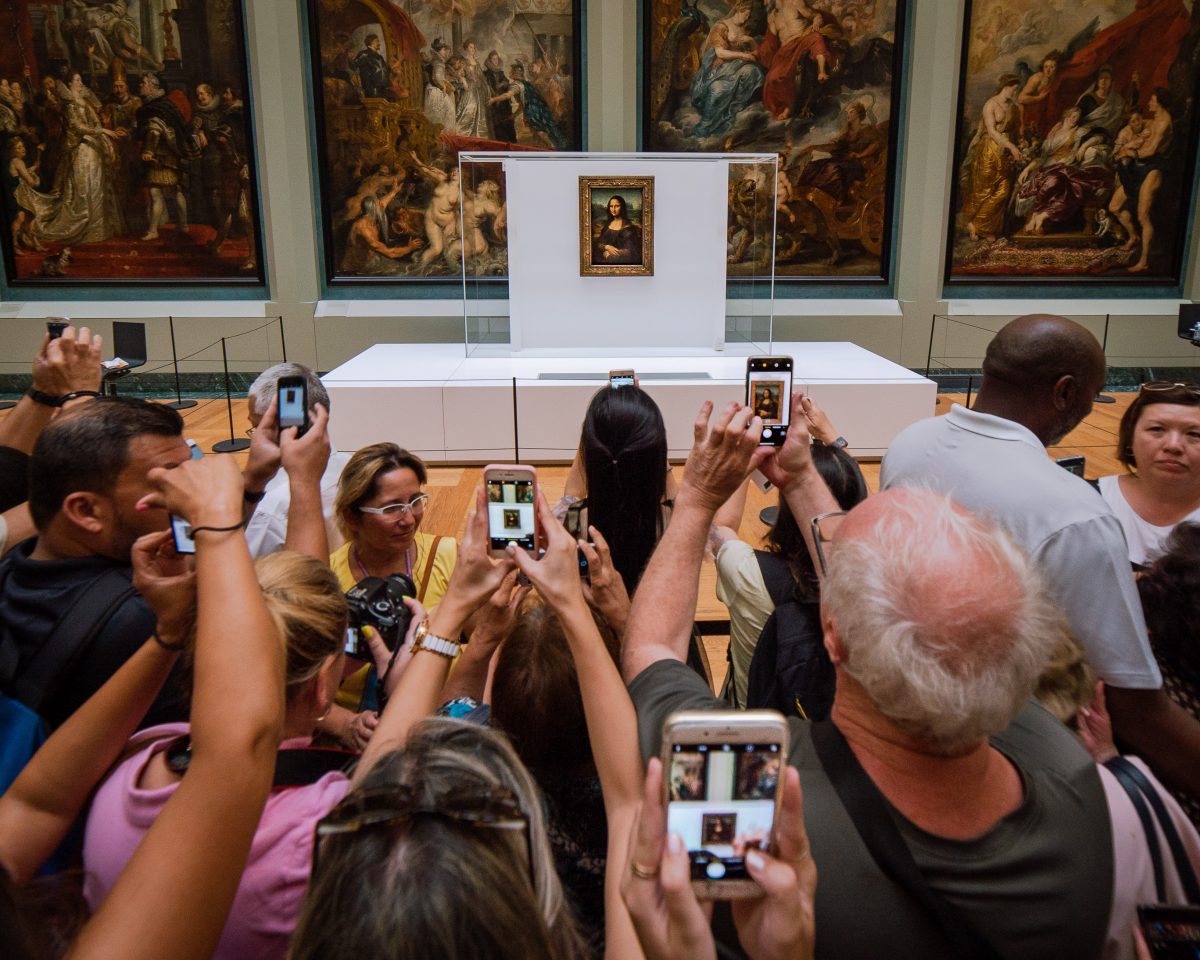
    Of all the world’s paintings, Leonardo da Vinci’s Mona Lisa sits at an impressive ranking of third most-stolen painting ever. This vertical portrait reveals a dark-haired woman looking at the viewer, often described as the most talked-about painting in the whole world. Initially titled La Gioconda in Italian, the title’s original meaning loosely translates to “the happy one”. The painting, created in the 16th century, is assumed to be valued at around $850 million. The Louvre Museum hosts the painting in Paris, displayed behind bullet-proof glass. So why is it so popular?

    Many critics argue that there’s no real reason for the seemingly simple painting’s fame. Seeing as the woman depicted is a very ordinary woman with little other details surrounding her, you and I are probably not the only ones who have wondered at the artwork’s value and admiration. Some comments regarding the actual skill of da Vinci include his obvious understanding and representation of the woman’s skull behind her skin, his talent with shadows and gradations, and his ability to depict the image without the use of lines or borders. Another reason for the admiration and praise given to da Vinci for this painting is because of Mona Lisa’s smile. While looking at her mouth directly, a smile is very faintly visible. However, because of his skills with shadow-work, da Vinci was able to give the appearance of a smile when viewers look into the woman’s eyes.

    Overall, controversies regarding the inspiration for the female subject of the painting as well as the ultimate significance of the painting are all but rare. Some wonder at the reason behind the woman’s smile, while others focus on whether or not hidden symbols exist within the painting. It’s clear that da Vinci was a skilled artist, and it’s widely agreed that the striking simplicity that confuses onlookers upon further analysis is one of the most interesting components of the painting. While Mona Lisa appears ordinary, looking at her for any period of time is bound to raise questions and interest. This is exactly why da Vinci’s painting has become so appreciated.


    Los usuarios de Perú suelen buscar futbol libre pe para acceder a los partidos locales e internacionales.

    The Starry Night

    Vincent van Gogh’s landscape painting has been a grand piece of home décor, inspiration for parody paintings, and a source of intrigue since it was created in the 19th century, a much more recent composition than Mona Lisa. And if you’ve ever taken an art history class or learned anything about The Starry Night, you probably know that it was van Gogh’s only painting that was ever sold. The image shows a starry sky at nighttime (obviously) with a village set within the landscape. 

    If you look at van Gogh’s painting, it might seem glaringly evident why it has become so popular. The contrasting colours, the twisting brush strokes, and the strong attention to detail all enhance the picture, enticing viewers. But many critics have suggested that the painting offers more than just a beautiful image, as most great paintings do. While the gloomy colours and elements of nighttime initially inspire sadness and perhaps even fear, there are also suggestions of hope throughout the painting. The dark and sleepy town is contrasted with bright stars, which many viewers interpret as a hopeful sign. 

    For years, people have tried to recreate the painting. If you want to see the real painting, though, it’s currently in The Museum of Modern Art in New York City. And if you’re interested in seeing it online and discovering more about it, The Art Assignment’s video outlining the painting’s details is fascinating. Click on the following link to watch the video:

    https://www.youtube.com/watch?v=oz908BHg55Y&feature=emb_title.
  • Sunday Sketches: Doppelgänger

    Sunday Sketches: Doppelgänger


    Jordan Mahaney is an aspiring graphic designer and artist, currently finishing her biology degree at Acadia University.

  • Sunday Sketches: New Year Energy

    Sunday Sketches: New Year Energy


    Jordan Mahaney is an aspiring graphic designer and artist, currently finishing her biology degree at Acadia University.

  • Acadia University Art Gallery’s current exhibition,   “Emptying Landscapes: An Altered Place”

    Acadia University Art Gallery’s current exhibition, “Emptying Landscapes: An Altered Place”

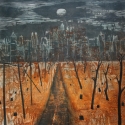
    (Photo) Bob Hainstock, New Landscapes #170401, (The Rural-Urban Divide), Mixed Media on Rust Collagraph Print. Copyright: Bob Hainstock. Not to be copied without artist’s permission.

    The exhibition, “Emptying Landscapes: An Altered Place”, presents work by Nova Scotia artist Bob Hainstock. The artist explores shifting rural landscapes that have been subjected to human, environmental and social alterations. First seeing Hainstock’s work, the viewer may be struck by the aesthetic treatment of the landscape, or of the visible mark-making inherent in the printmaking process. Underlying the work, however, is the way in which landscape is an important social site in which we impose our associations, history, and cultural values on the land. The images of abandoned villages, decaying barns, the scorched earth from mining and lumber speak simultaneously to the wreckage of human intervention and the aesthetic found in decay. Each work in the exhibition has its own importance and symbolism yet relates to the others around it. The work depicted here, for example, strongly represents the urban/rural divide; the land once used and now destroyed vs the land now inhabited and altered.  

     If you are interested in learning more about the current exhibition, visit the gallery from Tuesday-Sunday 12-4pm and Wednesdays 12-7pm. We look forward to seeing you!  

     Website: www.gallery.acadiau.ca  

    Email: [email protected] 

    Phone: 902-585-1373 

     The Acadia University Art Gallery would like to invite all students to participate in a gallery quiz and contest! The quiz can be found on our website under “Outreach”, on our Facebook page, or on the Athenaeum’s website! Answer the questions correctly and drop off or email ([email protected])  the answers to the art gallery by November 25th to be entered into a draw for a $20 Joe’s Food Emporium gift card!  

  • The Acadia Art Gallery: Interview

    The Acadia Art Gallery: Interview

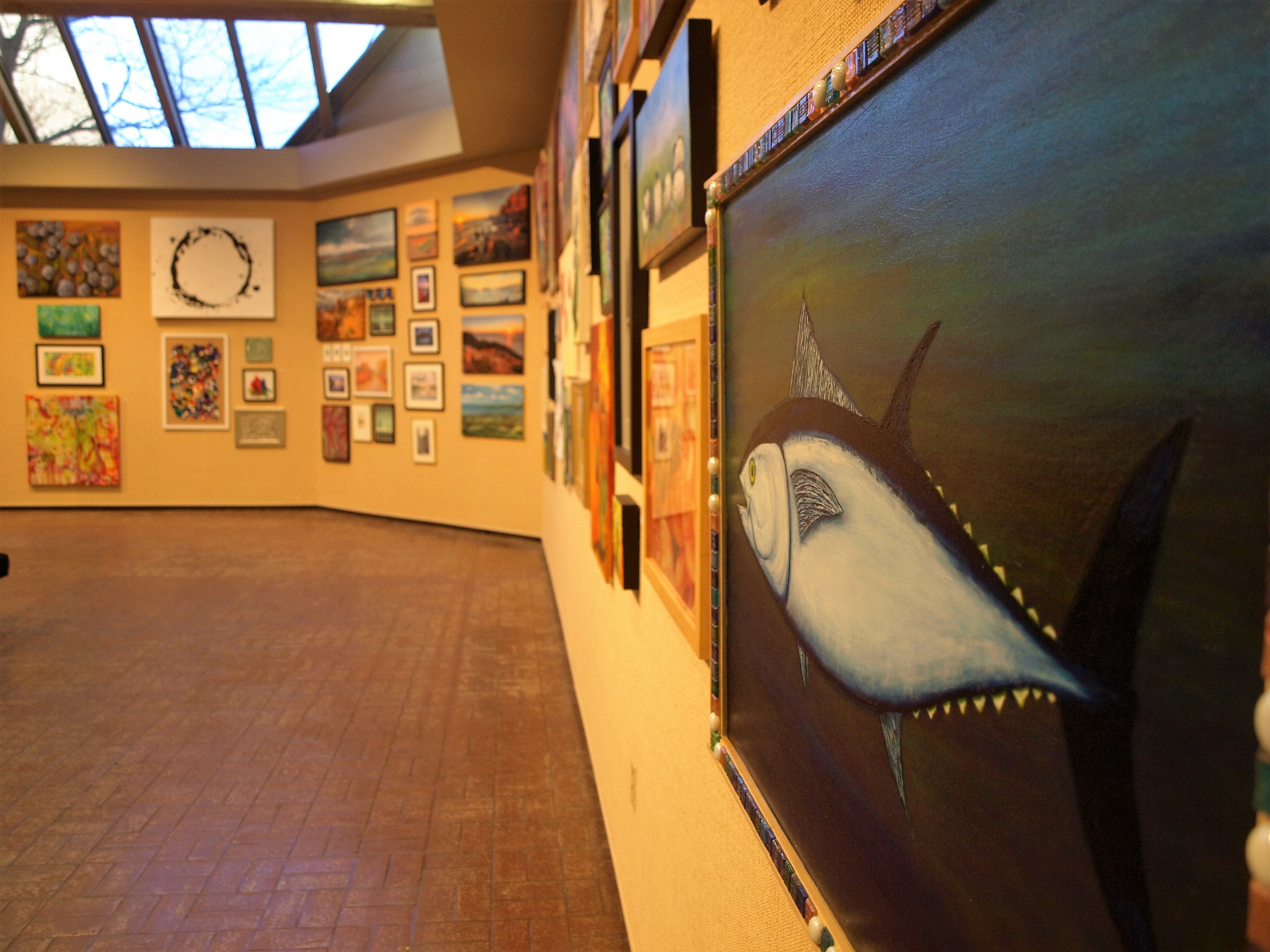
    The Acadia Art Gallery opened in 1978, providing both students and public alike the opportunity to indulge in their artistic side. I recently had the opportunity to interview Hunter Gillis, who works for the gallery, and asked him a few questions about his role, the new exhibit currently on display and more.

    Q: What can you tell us about the new exhibit?

    A: This is the 26th time that the Acadia University Art Gallery has opened itself to submissions from Acadia students, alumni, faculty and members of our community. The Annual Acadia Art Exhibition is an important event that celebrates creativity in our community. It provides a public forum to explore both the work of new and established artists. The exhibit contains a wide range of artwork that not only allows visitors to view works from the community, but also the creative talent and expression that the members of our community possess.

    Q: What is your role at the gallery?

    A: I typically have two main tasks. I act as a liaison between the gallery and the public. I answer any questions that people have on the exhibit and ensure that the gallery is well kept and that the essential tasks for the day to day operations are complete when I leave. I also focus on social media, which entails Twitter, Instagram and other social media accounts that the gallery has.

    Q: What is your favourite thing about working at the gallery?

    A: Getting a chance to meet members of the community. I would consider myself to be a people person and I enjoy hearing someone’s perspective of the work on display or their own personal stories.

    Q: Why do you think art is important?

    A: I think art is an important part of our development as humans and an essential element of empowering the hearts of people. Artists can strengthen the will of the people and inspire them to act through revolutionary ideas and powerful imagery. Artists have the unique power of being able to move people to action, thus signifying their cultural and political contribution and importance.

    Q: Do you wish more students would get more involved with the arts? How would you achieve this?

    A: Yes, but finding an answer on how to achieve this is a difficult task. I think part of the issue is how neoliberalism has affected the university. Universities as we know them today promote STEM fields over liberal arts, and encourages instructors to teach students for future employment, rather than toward broad and informed citizenship. I am not entirely sure exactly how we can rectify the situation we find ourselves in.

    Q: When is the gallery open?

    A: We are closed on Monday and Tuesday, open Wednesday: 12-7pm and Thursday to Sunday: 12-4pm.

    Q: What is your favourite piece/exhibit so far?

    A: It’s hard to pick just one piece, I have a few that I love, but my favourite is by the artist Gus Rhodes, titled “The Creative Impulse, for $35 an hour, Imitating the Idea of a Zen Master, to make a pretty picture, to try and make some money, to pay a couple of bills,” (and yes that’s the name of the piece). It is number 88 in the exhibit.

  • Social Etiquette and the “Dating Dilemma”


    Here is an awkward social situation that I’ve personally encountered multiple times in the course of my adult dating career here at Acadia. I call this the ‘Dating Dilemma.’


    This is the scenario: A nice boy from class approaches me somewhere on campus, and asks me if I would like to “hang out sometime,” or maybe more specifically to “grab coffee,” and then requests a phone number exchange. This act seems innocent enough; even courageous if we consider the ease with which technology has virtually eliminated the inherent social pressure of such interactions – and yet this person has opted to kick it ‘old school’ and risk the possible face-to-face rejection: a bold move indeed, good sir. That is, assuming this is a dating proposition.


    Let’s say I am in fact a heterosexual female. Let’s say I’m currently committed to a monogamous relationship. Let’s also say that the year is 2017 and remarkably, despite being a cisgender female, I have somehow managed to amass an impressive array of platonic friendships with humans from every degree of the gender spectrum, cisgender males included.


    While I hesitate to admit that antiquated social convention would dictate that yes: this interaction is obviously a dating proposition, I also happen to be what my Victorian foremothers termed, a “New Woman.” I drink, I flirt, I wear blue jeans, I carve out my own career path through higher education in the hopes of one day becoming a financially independent adult, and most importantly, I keep company with multiple single adult men with whom I share absolutely no expectation of sex. It’s all very scandalous, I know.


    This is the dilemma: While I beg you pardon my sarcasm, the point that I’m trying to get across here is that I don’t want to assume he’s asking me out if all he implied is that we’re “grabbing coffee” or “hanging out.” I want to assume that if he had intended to proposition me for a potential relationship, he would have made that clear in his opening statement. So this is the awkward part; the ball is in now in my court, and I have two real life examples for the possible directions in which this conversation could go, based solely on assumption.


    Example #1: I assume his intentions are purely plutonic, and while the thought briefly crosses my mind that I should probably mention my boyfriend somewhere in this conversation, the New Woman in me says “No, I refuse to believe that the only possible scenario in which a man would ask me to hang out is because he finds me sexually appealing. To assume such a thing would be vain and also a little depressing, if I’m being honest here. Therefore I will proceed under the assumption that this male person simply wants to connect minds, not bodies, and establish a meaningful friendship.” With that, I fork over my number, and we make plans to “hang out.” Long story short, somewhere down the line, he sheepishly admits that these ‘hangouts’ have been ‘dates’ all along, and tries to advance the relationship into that territory. Suddenly, I’m the bad guy here for having failed in my obligation to announce my relationship status to every stranger I encounter in the run of a day. This person now believes that some dark magic has taken place in which I’ve purposely concealed such information for my own malicious purposes. They are hurt, they feel betrayed, and they may even resort to some ego-saving tactic such as calling me a slut for leading them on.


    Example #2: I begrudgingly follow that antiquated social convention I mentioned earlier, and immediately announce the existence of my boyfriend. I do this because nice boy from class is male, and I am female, and therefore it is my civic responsibility is to assume that by “hang out” he actually meant “make out,” and by “grab coffee” he actually meant “grab each other’s butts,” because that’s obviously the only context in which I could possibly spend time with a member of the opposite sex. This action on my part is guaranteed to yield a variety of awkward results depending on his initial intentions (which are still unbeknownst to me; I merely took a guess and went for it.) If he actually was asking me out, he may now feel embarrassed and attempt to save face by pretending he was just asking for friendship all along – making me feel presumptive and vain – and as part of this he may even still take my number but will likely never use it. On the flip side, perhaps he really was just asking for friendship, but now believes I’m enslaved to some control-freak “Jabba the Hutt” boyfriend who doesn’t allow me to hang out with other males, and decides to steer clear lest he be identified as competition and subsequently targeted. At best, he simply accepts this information with dignity and tells me to have a nice life.


    The solution to this ‘dating dilemma’ is simple, virtually pain-free, and guaranteed to save everyone involved from having to assume the position of ‘the bad guy’ at any point during the interaction. This applies to all gender and sexual orientations; and I’ll be the first to admit, I’ve been guilty of this myself on occasion. All it takes is a little social etiquette. Here it is: clarify your communication. When asking someone out on a date, don’t hide behind vague statements like “hang out” or “watch Netflix.” You’ve come this far, so dare to sprinkle a little honesty into your question to avoid confusion. For example, slip the term ‘date’ in there so they understand your intentions and can respond more accurately. This will not only aid you in achieving desired results (and/or avoiding disastrous ones,) but it’s also simply a polite thing to do – you’re not leaving any implications hanging in the air, and therefore you’re not putting the other party in an awkward situation in which they have to make a judgment call on how best to respond. To clarify my point, here’s how these two situations would play out in a perfect world, free of those dreaded antiquated (and frankly, sexist) social conventions:


    Example #1: A nice boy from class approaches me somewhere on campus and asks me if I would like to “hang out sometime,” and then requests a phone number exchange. Since “hanging out” is understood to be a platonic activity, I am free to agree or disagree regardless of my relationship status – or either of our gender identities – because both of those pieces of information are irrelevant in this social situation. We make plans to “hang out,” and have a great time in which nobody’s feelings get stepped on, because we’ve both understood the context of this relationship from the beginning. Hey, maybe I’ll even introduce him to my boyfriend and then we can all be friends.


    Example #2: A nice boy from class approaches me somewhere on campus and asks me if I would like to “go on a date sometime,” and then requests a phone number exchange. I am either single, in which case I am free to agree or disagree at my leisure, or I’m not single, but I understand the context of this proposition and am therefore free to disagree with or without explanation. At no point during the conversation am I obligated to awkwardly insert my relationship status ‘incase it’s relevant,’ because it’s not.


    In summary, the awkward ‘Dating Dilemma’ is easily avoided with a little social etiquette in which intentions are clear, nobody is put on the spot, romances blossom (once you find someone who agrees to go on that hot date with you, that is) and the magic of friendship prevails without any unforeseen expectations based on age-old assumptions about gender roles. Hallelujah!

  • Are Cars Art?

    Are Cars Art?


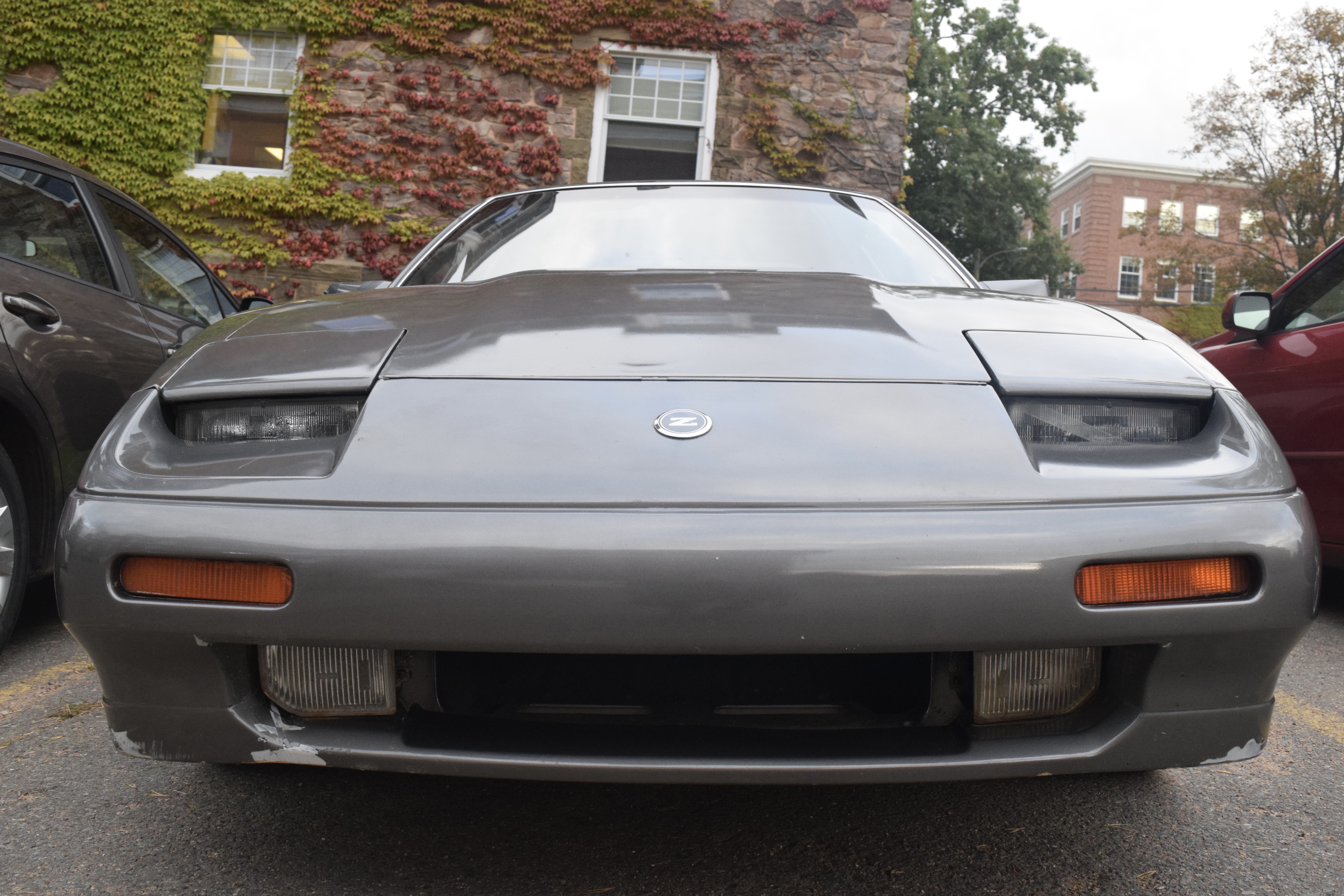
    When you think of movies for car guys, you think of the Fast and Furious series, Smokey and the Bandit, some direct-to-T.V. thing about Steve McQueen. As you think of those movies, you also judge the people they represent. You think about straight-piped Honda Civics, sticker-bombing a minivan, the horsepower wars, your dad explaining in his hand-wavey dad-logic way why traction control is actually a hazard. To someone who doesn’t understand cars or who isn’t involved in the culture of them. These movies depict the reasons why people love cars, their need for speed, for nostalgia, for being free and in control. These are the reasons people like cars. But they aren’t the heart and soul of car culture.

    The heart and soul of car culture has been accurately recorded exactly once. The occasion was August 1976, when in the early morning hours Claude Lelouch drove a Mercedes 450SEL 6.9 around Paris with a hard-mounted camera on the hood. This footage was paired with the song of Lelouch’s Ferrari 275GTB. There was no closed course, no permissions. He simply told his girlfriend to meet him at the Sacré Coeur and filmed the drive there. Everyone who enjoys cars wants this experience. Red lights don’t matter here, traffic is a minor concern. People who like cars crackle at the excitement of a yellow light they can make – some even accelerate dangerously, chasing the thrill so completely captured in the eight-minute drive recorded on 1000 feet of 35mm film.

    Cars are an extension of your personality and ego. The drive, the speed, the pedestrians who run across the street as they realize you aren’t slowing down, the sound – good God, the sound. It represents you running high. Yes, that barista totally checked you out. Yes, you told your boss you wanted a raise and were just CC’d on an email from the guy above him. Its better than you’d expected, better even than you’d hoped. Yes, you weren’t the problem in the relationship and you are ready to move on. When you drive a car in such a way that you are the only limiting factor, it is exactly like realizing your ego is justified, you are above the crowd.

    C’était un rendez-vous. It was a date.

    The date being referred to certainly is not with the blonde woman embraced at the end of the drive. The date is with you, your car, your city. A date with success, with being the most important person in the room – while being outside. It is a date free of doubts. A honeymoon with your decisions in life. It is someone way out of your league pulling you close to whisper “oh yes, you’ve made the right decisions, look at this car, this city, look at me. We exist for you, because you matter.” The engine purrs like this hypothetical idealized person. It wants you and only you. You deserve this pleasure. Downshift. Yes, you’ve felt that sound. Your first real kiss, when she puts her tongue in your mouth. That’s the sound. If that feeling had a sound it comes from downshifting a Ferrari 275GTB. The complaints screaming from the tires bring you back there. You know where.


  • Choices

    Get ready get set it’s time to go
    fighting a battle but only you know
    Constantly watching never stopping
    Desperately wanting A new way out
    No reason to stay they all went away
    no one will pray or hear you shout
    The one that’s inside never dies
    It will take over don’t close your eyes
    Fighting through all the deceit and lies
    Its finally time to cut loose those ties
    Just keep on walking bring your demise
    For all around it is no surprise
    Look around as nobody tries
    to help you out the outer you cries
    Grab the knife start the fire
    maybe get wood for the pyre
    Everything everyday falls upon you
    You try to handle don’t know what to do
    and before your voice breaks through
    You let the rope snap your neck in two
    But here is the thing life did not end
    Tell me why that is my dearest friend.
    Could it be that the world has won?
    Is this a sign your time is not done?
    Look around you what do you see,
    Family and friends in agony,
    Your mother crying on what you would be,
    Your father grieving down on one knee,
    Your brother or sister clinging tightly
    To the bed where you lie formally.
    Why do I bother to tell you these facts
    Look at how much your loved ones react!
    You are young and have a reason to live
    The world might take much more than it gives
    but know that your life is not a pawn
    not just an item sprawled out on the lawn
    Everyone matters
    Everyone should care.
    Think one more time
    and don’t just stare
    At that image in the mirror saying give in.
    Life is a gift and the line is too thin
    Put on a smile lift up that chin
    Don’t let the evil win
    You are as beautiful as the stars of the night,
    but now it’s time,
    You choose what’s right.
  • It Is Easy

    You can dwell
    Twisted in the dark, sinuous vines
    Of disappointment.
    It is easy
    To let them hold such
    Power over you.
    And it is hard
    To gain power over yourself.
    It is even harder
    To realize you always hold
    Power over yourself.
    It is easy
    To allow yourself to scream
    And cry
    And swear
    And say things you’ll
    Regret
    When you’re angry.
    And it is hard
    To smile instead.
    It is easy
    To succumb to the sharp talons
    Of sadness.
    It is easy to do
    Nothing.
    To sleep it off,
    Or to drink the hurt.
    And it is hard
    To see the world
    By yourself
    When you feel desolate.
    It is hard to
    Appreciate
    Silence.
    But you can.
    And if it were easy
    Everyone would do it.
  • Waking Up

    I do not want to be so hollow,
    with a gaping hole between
    my lungs;
    I want to be the sun.
    I want to be the depths
    of the ocean,
    with the light of the sky shimmering
    through a rippling surface,
    or the leaves,
    hanging on to the trees
    for dear life
    when Summer is as good as over,
    and eventually knowing it
    s my time
    to Fall, come October.
    I want to be the entire month of
    January, wrapped warm
    and snug in a blanket of snow,
    and new beginnings.
    I want to grow
    back from the rain
    on a Sunday,
    like the daisies
    on the side of the highway,
    and in fields,
    to run barefoot
    like the 7-year-old
    that lives in my heart.
    I want the wind
    to take me away,
    like a good-bye kiss blown
    into a pocket, and kept safe.
    I want to feel freedom
    in every breath I take,
    and be the fire
    that burns my doubts
    and my sadness
    into ashes.
    I want to climb
    over the fear
    that I have built into mountains,
    and shoot like a bullet
    through misery.
    I want the Universe
    to pour itself inside of me
    However, it seems,
    I am nothing more
    than a tiny stream
    reaching for the sea.
  • …art?

    The Twilight Series vs. Kody Crowell

    Stupid question, but what is art? I mean, okay, the Mona Lisa, we can agree that is art, yeah, cool. Art is also music and movies and stuff, so then it also includes The Weeknd, Zootopia, and Justin Bieber’s new hairstyle. Wait what, so Bieb’s dreads are art? Why not? Do you follow any hairdressers on Instagram and admire all of the excellent scalps they sculpt? So do you think of that as art? If we plastered a collection of Instas around an art gallery, would you consider them art then? But, nothing has really changed! Man, what is this shit.


    So there is basically just a thing (whether it be a canvas meticulously treated with various substances, a complex arrangement of frequencies blaring out of ten dollar earbuds, or Ryan Reynold’s clenched buttocks) and an observer of the thing (that’s you). The thing can be interpreted by many different observers who have different opinions on said thing. Art to one person may not even be considered art by another (maybe Andy prefers Zayn’s butt). So then, the “art” of it all can’t be objectively within the thing, or else we’d all just agree, right?


    So is the art in us? Fuck, what does that even mean? Well, we don’t just sit and think about nothing and say to ourselves, “What great art, woooooow.” So it isn’t within us exactly (although our imagination could be pretty cool yeah? But I guess that is just based on things we see so that doesn’t count as just us either). So it must be between us and the thing – the relationship between our brains and the stimulus we are letting stimulate us (consensually of course). When we interact with something, we are processing that information relative to everything we’ve experienced that day, and last week, and basically just our whole lives to an extent.


    Memories and experience change how we feel about new things – like if you threw up that one time you had beet salad, you are gonna remember that when you see beet medley on the menu. Similarly, when you see a piece of art like The Persistence of Memory by Salvador Dali (the one with the melting clocks), that affects you the way it do ‘cuz u kno clocks man and they don’t do that in my house. This is why we are so integrated with what we consume – we gravitate towards things we can recognize and relate to, and we make a web of connections between those things and there that’s art. Woo. Pretty subjective though. Odds are I’m wrong. Who knows.


    This is related to why we do have certain standards and objective measurements of artistic craft etc. etc. etc. etc. etc. Certain complex relationships that some refined artist or author might build their work off of might only be caught by some higher-ups on the board of “cool good art council.” We can probably agree that yes, Hemingway is a better writer than Stephenie Meyer, but why? Ernest was a lot more earnest in fiddling with language and crafting particular relationships, and Steph was mainly thinking of how preteens like sparkly dudes. Hemingway got a Nobel Prize, Meyer got three movies and permeated all of North America with a Jacob vs. Edward debate. We think more highly of Hemingway, but talk more about Meyer. Is one more valuable than the other?


    Idk. ¯\_(ツ)_/¯


    (b4 u ask y is dat art? answer me dis – y is not art?)


  • All Art Made Equal: Television Can Be Good Too

    All Art Made Equal: Television Can Be Good Too

    Is all art equal?

    Consider the proposition: certain forms of art are superior to other forms of art. Consider Shakespeare, or Dickens, or James Joyce, whose crafts have all been well-proven against the tests of time. Then consider the current glamorized reality shows such as Keeping Up with the Kardashians. Can we objectively state that one is better than the other? The truth of this argument is not obvious. Most people would say that one is clearly better than the other, and certainly worth more. The argument is then generalised: “read a book instead, all television rots your brain,” or “art ain’t like it used to be.” They will apply this same logic to music or painting.

    It’s a bothersome argument. I’ll admit that as a science major, the technical domain of art is a bit mysterious to me, but it is still possible to appreciate the emotion and effort that the artist pours into their work. And if one type of art really is to be called inferior, then let us first establish a criterion for determining what art is. For now, we will go with the simple definition: art is a craft requiring human imagination and creativity. We can refine this to be a craft with the purpose of conveying a specific emotional, intellectual or ideological stimulation. It doesn’t need to be, though. The meaning can be interpreted by the audience. If we follow this definition, then inferior art is one that fails to meet this criteria, lacking in imagination and creativity.

    How can we measure this? The common argument made is that television is a “lesser” art medium than literature and reading a book is a more noble pursuit of artistic inspiration than watching TV. I’ll admit that reading a book is a more engaging activity for your brain than watching television. Of that there is no doubt. But when did the purpose of art become solely engaging your brain? There are television shows with more depth, soul and thought put into them than some novels I’ve read. Is watching an artistic masterpiece or a potently realistic political-social commentary on TV less engaging than reading Fifty Shades of Grey? These questions are left for the reader to answer. This editor will only give his opinion: hold no judgement towards art based solely on its medium of delivery. Receive it with an open mind, in any form it comes to you. Only then can you truly appreciate the message it brings.

    Here are some of my favourite television shows, in no strict order:

    1. Deadwood: A master class in drama and language. It’s like Shakespeare set in the Wild West. The characters are so incredibly vibrant that you wish you sort of led a life like they do. You won’t really understand it until you watch it twice, but you will quickly realise that the characters you root for are more or less all terrible people. It’s HBO too, so that gives it some brownie points.

    2. The Wire: A lot of TV aficionados will cite this as the greatest show ever. It’s hard to disagree. It is often touted for its stark realism, however, it tends to escape this later in the series. However, the characters themselves maintain this quality until the very end, making them and their struggles very relatable. So relatable, in fact, that for a few months after finishing the show you will constantly find yourself comparing you situation to a similar one undertaken by character X in season Y.

    3. Hannibal: Recently ended. And it ended perfectly. I’m often not a fan of shows that act as prequels or sequels to major blockbuster films. Smallville, Gotham, and all that glitter never appealed to me. But Hannibal is more than that. It’s a moving canvas. It really does go for that “every frame a painting” label. The show plays on jokes and references from the movie in a smart way, albeit with grace and subtlety. And Mads Mikkelson’s performance as the cannibalistic psychiatrist will forever change how you think about cannibalistic psychiatrists.

    4. Fargo: You’re lucky, because this one is still on TV, airing on FX. It’s hard for me to express exactly what makes this show so special. Like Hannibal, it also acts as a direct continuation of the Coen Brothers’ iconic movie. One thing that makes this show so special is its perfect balance between dark, twisted humour; dark, twisted violence and dark, twisted nihilism. I think it secretly acts as a philosophy course in the guise of a Minnesotan crime thriller.

    5. Rick and Morty: This is an animated one, and recent too. Coming from Adult Swim, you know that the show’s humour takes many forms. In some ways, it is similar to shows like Family Guy, where immature humour hides the deep, subtle humour underneath. It also has the humour that is so powerful that after laughing you have to step back and seriously evaluate some things about your life.

  • ‘Art is…’ The 25th Annual Acadia Art Exhibition

    ‘Art is…’ The 25th Annual Acadia Art Exhibition

    Art gallery - Mahmoud Istanbouli (2)

    Cards that read “Art is…” line the entrance of the Acadia University Art Gallery, with answers scrawled in colourful markers. The answers on these cards range from bold statements like “my life” to carefully drawn images, all created with the hope of defining exactly what “art” means. The beauty of art is that it means something entirely different to each person. Whether it be an expression of emotion, a pursuit of technical aesthetic perfection, or a statement on society, art is an outlet and a passion shared by many. The question of what art truly is has no definite answer, and perhaps this is what makes art so intriguing and captivating.

    The 25th Annual Acadia Art Exhibition, which runs until February 26, 2016 offers a quiet answer to what “art is” through its stunning collection of art pieces. The exhibition, composed of sculptures, paintings, mixed media works, and more, becomes a work of art in itself: a collective statement of inclusion and belonging. As a response to what “art is,” the gallery offers the answer “community” through the diversity of the works on display.

    For the past 25 years the gallery has opened itself to submissions from Acadia students, alumni, faculty, and community members. The wide range of art displayed allows visitors to view not only the talents of those living around them, but also allows artists to express their thoughts in a public forum. A strong community is built by fostering a sense of safety to share ideas, and as a result you come to better understand the people within your community.

    250 visitors attended the opening of the gallery, which clearly indicates that the exhibit invokes a strong sense of community. People of many ages and backgrounds attended the opening and were able to meet the artists to discuss their works. The sense of community displayed at the opening continues to be seen, as community members from every walk take time to visit the gallery and provide their own answers to what “art is.”

    The sense of community created by the exhibition is striking and beautiful. It not only shows the strength of the local community, but also art’s power of bringing people together. Art allows people to connect to each other on a deeper level, in a way they may not have without the medium. The beauty of the Acadia Art Exhibition is that it provides a space for the community to connect through these works and to each other. Museums and galleries are important centres for connection to not only objects and works of art, but to the broader world and to others. The Acadia University Art Gallery is certainly an example of such a centre.

    To participate and provide your response on what “Art is…” visit the Acadia University Art Gallery in the Beveridge Arts Centre (10 Highland Ave.), open Tuesday to Sunday 12:00-4:00pm.

  • Letter to the Editor: How to Beautify Acadia

    Letter to the Editor: How to Beautify Acadia

    To the Editor,

    Public art.

    Two words that are thrown around but never really thought about. You may be asking what relevance this has. You’re not wrong in doing so. After all, this article is titled “How to Beautify Acadia”, and don’t we already have an incredible campus? Of course we do. However I’m concerned with the future. I want to make my future at Acadia better. And I see that future through the addition of public art.

    Let me explain. Our campus is stunning. There’s no denying it. Acadia is a brilliant school that succeeds at two of the big A’s: academics and athletics. But there’s a third A that’s missing: arts. What of the arts? Sure, we have dancers that show up at the Festival Theatre every so often, and speakers that discuss creative engagement, and they are incredible. But let’s look solely at our institution and what we create. In terms of artistic programs and incentives, we’re not brilliant.

    What I propose is simple: an annual investment in public art. In Quebec, the provincial government mandates that 1% of every school’s budget must be dedicated towards public art. If we were to adopt a similar doctrine here at Acadia, I see a campus in a beautiful town flourishing with creative spirit. And let’s be honest, can anybody think of a more clichéd hipster town in all of Canada than Wolfville?

    Every day I walk past a concrete wall and a metal fence holding a hill up. Both are bland, boring and useless at the moment, but let’s look at it from an artistic perspective. What could be done here? Potentially a graffiti mural on the blank concrete, or lovelocks chained to the fence. Think of the outside of Huggins 10. Why not a giant mural depicting the achievements that science has brought here in Canada? Or among the numerous grass patches: why not statues designed by students, alumni or local artists? Or outside the biology building and behind Patterson: why not a fountain? Not only would it create beautiful spaces to congregate, but it would draw people from near and far who want to see these pieces.

    Think of glorious summer and fall days where there’s a beautiful breeze and all you want to do is stay outside. How great would it be if you could lie in a hammock and just relax in the sun? Or on a swing suspended under one of the majestic trees in the Harriet Irving gardens. Those are cheap and easy options to engage with the environment around us in a sustainable and enjoyable way.
    The real kicker would be the BAC. I’m not alone in saying it’s not a pretty building. The outside is fine. The inside is a grotesque example of utilitarian 1970’s pragmatism in architecture. Picture this: covering the walls there could be paintings, photographs, poems spanning floor to ceiling. Paintings and photos that make you stop and stare in wonder, and poems that really make you not only stop and read, but question and feel. Wouldn’t that make for a better place to take a walk through? Better yet, wouldn’t that make you want to go to the BAC for another reason other than class? This would allow artists, students, alumni or those in the community at large to contribute to the character of the university and make it their own.
    It may seem like a dumb idea to some. Why throw money at things that look pretty when it could be spent on other things? Simple. By enhancing the character of our university through public art, it would attract a whole swath of people, from professors to prospective students, who might not have otherwise considered Acadia. This would ultimately result in money flowing back into the university as people enrolled in the school, stayed in the hotels, ate at the restaurants, came for lectures, etc. After all, Acadia has suffered the worst of Nova Scotia schools in terms of enrollment, down nearly 2% this year alone.
    To reinvigorate interest in Maritime schools like Acadia, we need to look to options that are hiding in plain sight. Art is the easiest answer. You’re beginning to get it. It’s not just about looking pretty. It’s about enhancing the character of an institution, beautifying it and providing an outlet for creative expression. An outlet that isn’t limited to the privileged few, but an outlet that can include the community at large.

    I know there will undoubtedly be people who wholeheartedly disagree with me. Yes, public art may not be the answer to all of our problems. But I’m thinking about where I live. I’m thinking about Acadia, and I love Acadia. I want to make this campus beautiful, and I think public art installations will do just that. We’ll engage students, alumni and members of the community to make our campus even more beautiful. We’ll attract students, professors and guests who may not have thought that Wolfville was where they wanted to be. The rate of return will be substantial in the long run. Before we know it, Acadia will be known nationally (if not internationally) for its academics, athletics, and arts.

  • The REDress Project

    The REDress Project

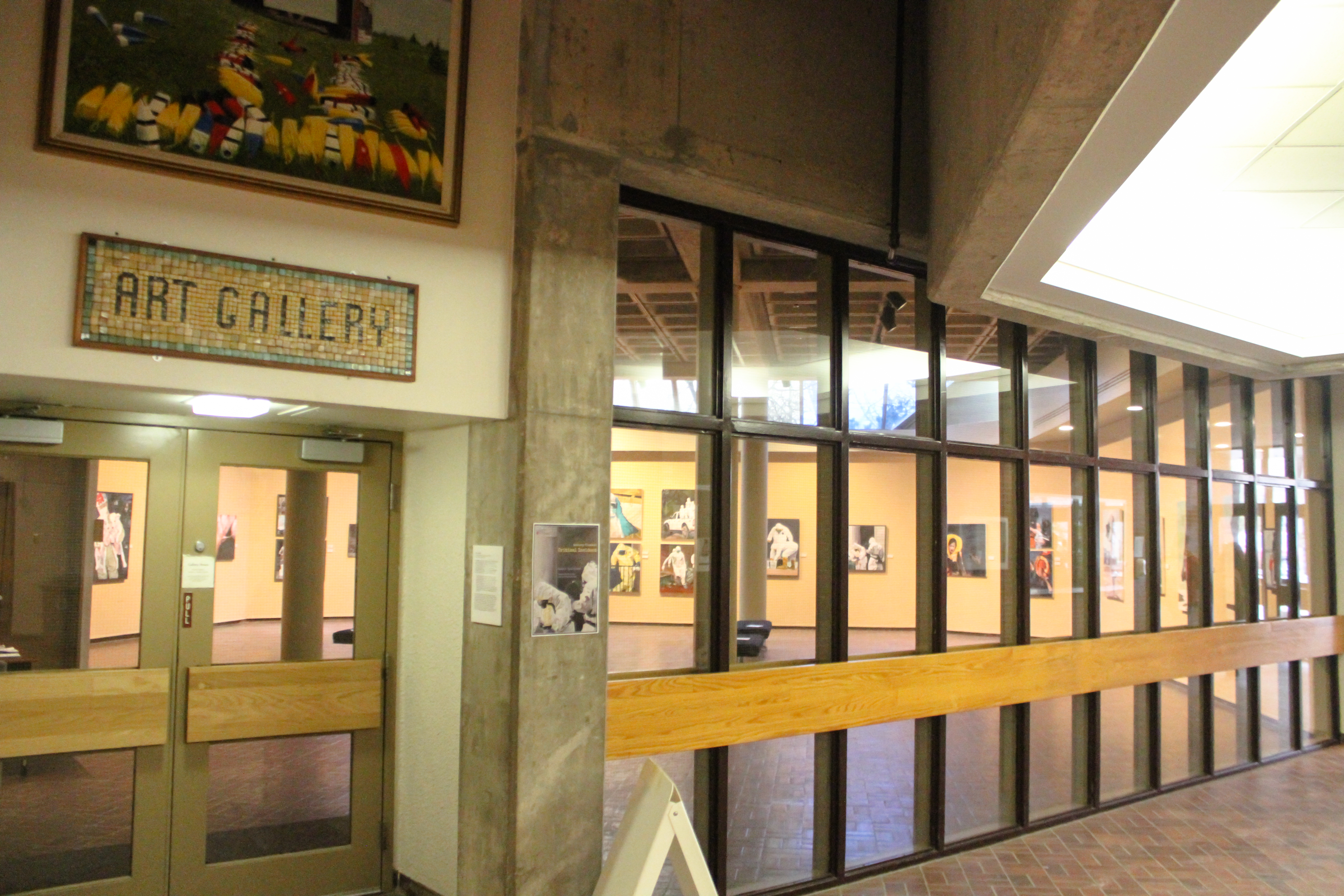
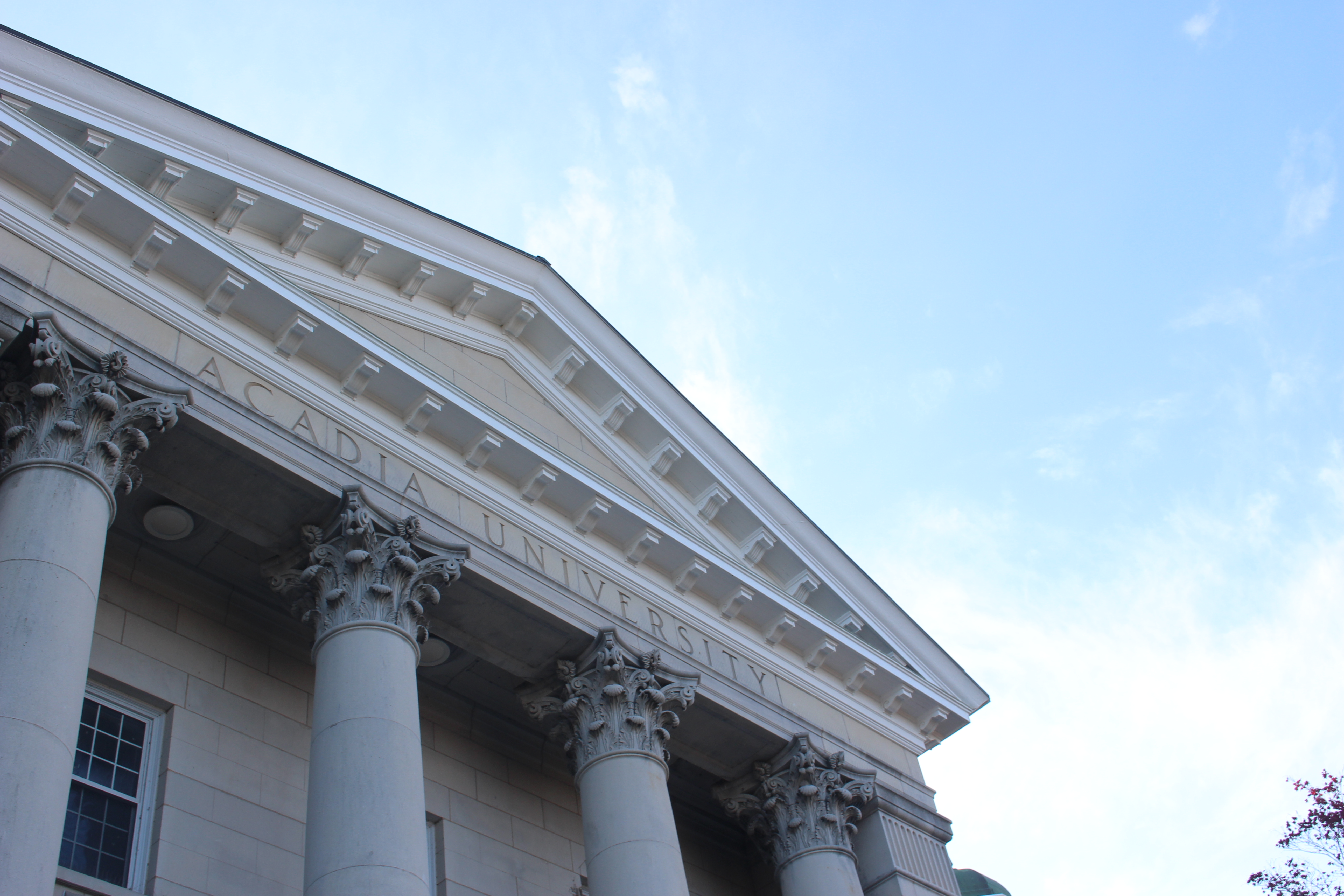
    Did you know that Acadia University has an Art Gallery in the Beveridge Arts Center (BAC)? If you have not yet heard of the gallery or if you have not been there, I fully encourage you to visit and take advantage of its exhibitions and programming.

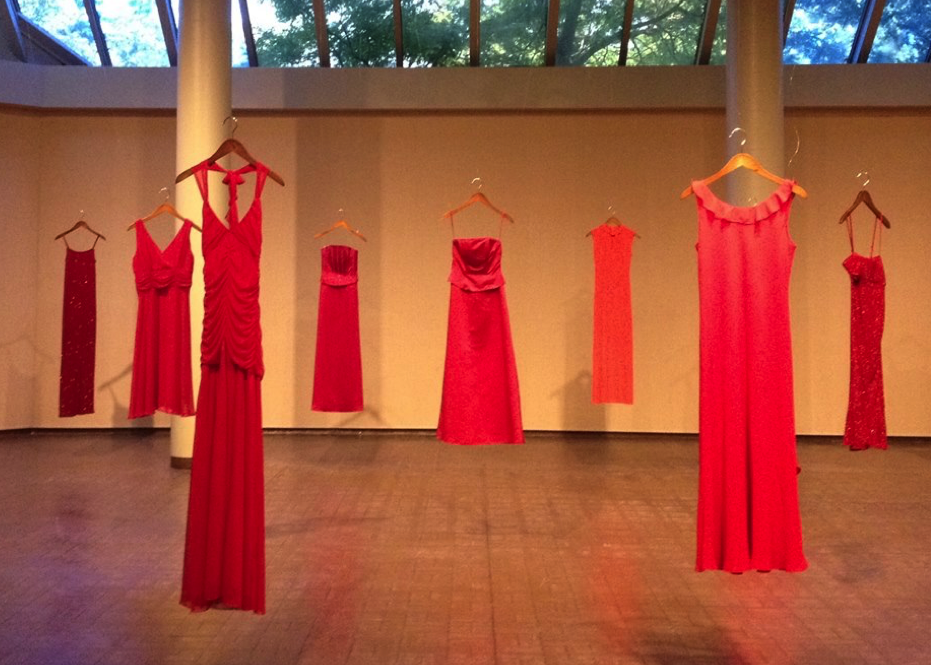
    Currently on display is The REDress Project by First Nations Artist Jaime Black. This captivating exhibit is aimed at bringing awareness to the issue of missing and murdered Aboriginal women in Canada. Jaime Black started this exhibit in Winnipeg and has since travelled throughout West and Central Canada, making appearances at a number of universities. This is, however, the first time REDress Project has made its way out east, now on display at the Acadia University Art Gallery until November 29th.

    As artist Jaime Black describes, “Through my ongoing installation, The REDress Project, I have placed the absence of the body as central to the work. This work involves empty red dresses installed ‘floating’ in public space as a spectral reminder of the hundreds of murdered or disappeared Aboriginal women across Canada. This installation piece attempts to situate the Indigenous female body as a contested entity and the specific target of colonial violence while reclaiming space for Indigenous female bodies.”

    Not only are red dresses hung in the gallery space, but there are also dresses located outside the BAC, hanging in the trees. Many students and visitors who have walked passed the Art Gallery are pulled in by the eeriness and emptiness that the dresses convey, while others are drawn simply by curiosity of the dresses themselves. One visitor described her experience in the exhibit as “a sad dance” as she walked around the dresses. The REDress Project can be overwhelming, as it deals with a very difficult topic, but it allows the viewer to contemplate the issue in an encouraging environment.

    Though many visitors have commented on the effectiveness of the red dresses that hang outside the BAC on the trees, it seems that a few others did not feel the same. Within only a few days of the exhibit being up, two dresses have been stolen from the trees and another was torn apart. This has been very sad, not just because of the destruction of the work, but the fact that the dresses symbolize missing/murdered women’s bodies. We encourage anyone who knows anything about the disappearance to bring information to the Acadia University Art Gallery. If you are in possession of one of these dresses, we ask that you bring it to the Gallery (no questions asked). These dresses were collected by the artist Jaime Black to help the public explore the issue of missing and murdered Aboriginal women, and as students of Acadia University we must do our best to make sure this issue/exhibit is respected.

    I would personally like to thank the anonymous donation of three new red dresses, which hung on the trees outside the BAC. This act of kindness was greatly appreciated, as it lifted both the spirits of those working in the Art Gallery and those involved in this exhibition.

    If you have not taken a look at the exhibit The REDress Project yet, I encourage you to come and enjoy! The Acadia University Art Gallery is open from Tuesday – Sunday 12-4pm (till 7pm on Thursdays).

Betzillo positions itself as a versatile gaming hub where structured bonuses and adaptive gameplay mechanics support both short sessions and extended play.

Built with a focus on innovation, Spinbit integrates modern casino architecture with rapid transactions, appealing to players who value speed and digital efficiency.

Ripper Casino emphasizes bold entertainment through high-impact slot titles and competitive promotions crafted for risk-oriented players.

A friendly interface and stable performance define Ricky Casino, offering a casual yet reliable environment for a wide spectrum of gaming preferences.

King Billy Casino channels classic casino spirit into a modern platform, delivering recognizable themes supported by contemporary reward systems.

Immersive visuals and layered slot mechanics are at the core of Dragonslots, creating a narrative-driven casino experience.

Lukki Casino appeals to players seeking direct access and minimal friction, focusing on fast loading times and intuitive controls.

Casinonic provides a structured and dependable gaming framework, blending modern slots with transparent operational standards.