Tag: environment

  • Film Review: There’s Something In The Water

    Film Review: There’s Something In The Water


    In 2019, Elliot Page directed and starred in his own Nova Scotia-focused documentary There’s Something in the Water. The documentary is on Netflix and has seen a lot of success since its debut. After Elliot Page’s big break on Trailer Park Boys and following success through Juno and other films like Inception, he realized that he was passionate about the environmental racism going on in his home province, Nova Scotia, and decided to direct a film on the topic.

    Environmental racism has been happening in Canada for decades. When Indigenous and black communities repetitively end up near landfills and other harmful environmental hazards, there’s no question that it’s not simply coincidence. These communities often lack a voice, especially to the government, allowing the racism to continue without being noticed or acknowledged. The idea of environmental racism, as Page’s documentary suggests, is able to survive because it happens slowly, over generations, often making the connection between harmful side effects and racism difficult to see. According to one speaker in the documentary, “It’s also about the government’s slow response to these issues. What we know is that where you live has bearing on your wellbeing”. The film works to expose these issues, and does a great job of explaining concepts and highlighting the upsetting extent of the racism in Nova Scotia.

    There’s Something in the Water focuses on issues like Northern Pulp and Boat Harbour in Pictou County. Louise, one of the women being interviewed by Page, points out the shocking number of cases of cancer in her mostly-black community, a direct result of a waste dump nearby. The documentary explains that if you map out Nova Scotia’s BIPOC communities and Nova Scotia’s landfills, you’ll see a horrifying correlation. It also shows the many discouraging ways that the Nova Scotian government has failed to keep its promises to marginalized communities and to fix their errors. It exposes the direct link between environmental racism and its harmful effects. Through all of this, Page’s documentary shows Nova Scotian viewers how environmental racism has been affecting our province for decades. 

    Overall, the film was extremely eye-opening. It was embarrassing to be reminded of my own ignorance concerning the issue and helpful to then learn more about it. The people in the movie felt very real, as opposed to actors, yet important enough to pay attention to. They made me forget that all of these issues are happening right in my own backyard, and once I remembered, I was once again shocked and horrified that these things could happen so easily and simply go unnoticed. Surprising but important situations were brought to light through the film, like how in 2017, a Shelburne councillor blatantly told residents to “stop playing the racism card”.

    I loved There’s Something in the Water. Elliot Page’s ability to make the environmental racism that’s been happening around me seem so realistic, and yet still unsettling enough to make me want to make a difference was incredible. His explanations of the issues were clear and eye-opening, and genuinely encouraged me to start fighting for change. I would recommend this film to anyone, and already have to several people. Overall, I’d rate it 8/10. If it were slightly longer, I’d give it 10/10, because I enjoyed it so much. 

  • Lake Ontario

    Lake Ontario

    There were two, there were once three
    oceans which adjoined the shores of Lake Ontario.
    Our pasts:
    they drank its fresh water and swam together,
    they (they) they.
    
    Lake Ontario,
    two lived on its northern border.
    Where the winters once bit off innocent ankles, where
    we threw the sticks into suspension.
    
    Men will love you: Lake Erie or Lake Superior,
    Lake Michigan, Lake Someone.
    They will love you and you will love them.
    Men will love you, after we laughed.
    After we walked on floating trees, 
    broke up super-still water.
    
    [ Three oceans: you're a Physics professor,
    and you find time to read novels. Your kids have deftly
    learned to feed the cats. You once saw me on a 
    train and I was doing laundry and you thought I was
    sexy. ]
    
    Yours
    was the first face that I saw.
    Yours
    was a freezing open window
    
    Of course, 
    there will be Monday mornings and car trips in the backseat
    and endless Novembers in the Zoo, where little Martin
    tries not to bite at his fingers.
    
    Lake Ontario,
    she lived under your arms. And she lived around your twisting coasts. 
    She breathed the night air and pinkyswore; she loved you like I loved you. 
    She was crying into the endless nocturne, she sung down the windows and whistled. 
    She plays the game where you pretend to be a kid again when noone is watching,
    
    And she (she), she didn't cry with the lowest rains. She stands under a radio tower and yells. 
    She kisses you the night she should have and nothing else has ever happened. 

  • Reduce Your Meat Consumption – Our Planet Will Thank You!

    Reduce Your Meat Consumption – Our Planet Will Thank You!

    While vegetarianism, veganism, pescatarianism, and other meatless diets have always existed, there seems to have been an increasing amount of people choosing to leave meat or meat substitutes out of their diets within the last couple of decades. Between the mid 90s and today, the number of restaurants that identify as vegetarian has risen from around 50 to over 950. This shift towards lower levels of meat consumption seems to be emerging for many different reasons, including religious choices, environmental reasons, health benefits, preference in taste, animal safety and protection, and many other reasons. Despite the wide range of motives for eating less meat, it’s impossible to say whether or not the popularity of the choice will be a lasting one.

    However, whatever someone’s choice for not eating meat, the environmental benefits of removing meat from your diet are undeniable. To be clear, the environmental impacts of eating less meat overall are also indisputable. The water required to produce a single pound of beef is equivalent to taking over 100 showers. That means that reducing your beef intake could substantially impact the environment, saving a multitude of water. Further, the land required to raise animals for consumption has quickly led to issues for our planet, including deforestation due to the space requirements, climate change through high levels of carbon emissions, and the harmful effects on other wildlife through pesticides required for production. There’s no doubt that eating a meatless diet isn’t possible for everyone. And by no means is it recommended that everyone go vegan tomorrow. But even an attempt at reducing the amount of meat you eat can make a huge difference on the environment, your wallet, and your health.


    Some easy ways to reduce your meat consumption include the following:

    • Find out what meat substitutes you like

    Tofu, eggs, legumes, and other protein substitutes can be great ways to remain healthy and fuel your body even while avoiding meat. There are so many recipes and cookbooks that can provide ideas for meatless snacks or meals while still making delicious and healthy food.

    • Remove one type of meat from your diet at a time

    If you don’t feel prepared to completely say goodbye to meat, maybe try eating less fish, or less chicken, or less red meat in general. If you can go a while without eating it, remove another. Another option if you’re struggling for ideas for meatless meals is to only order foods at restaurants that don’t have meat in them, since they’re coming up with the ideas for you!

    • Try meatless Mondays

    Avoiding meat for one day per week is a great place to start reducing your meat consumption. Try taking an entire day to make vegetarian (or vegan) meals only. And who knows, you may even discover some new recipes that you love, or start looking forward to your Mondays!

    • Buy less meat

    This one might sound simple, but without the temptation of meat sitting in your fridge or freezer, you’ll naturally eat less meat. Around 20% of meat ends up being thrown out or wasted anyway, so buying less meat will not only make an impact on the planet, but will also save you some cash and reduce food waste.

    • Don’t be afraid to try ‘fake’ meat

    Trying to make a big dietary change and cook everything yourself can be extremely overwhelming. Learning to rely on pre-cooked substitutes for your favourite meals that include meat can be really helpful. Veggie burgers, veggie sausages, veggie dogs, and plenty of other mock meats are easily accessible and prepared, while tasting very similar to their real meat counterparts.


    For some people, even these options are not plausible and saying goodbye to meat seems impossible. If you still choose to include meat in your diet, perhaps you’re making eco-friendly decisions in other areas of your life, and there is no doubt that every little difference counts. But even if everyone chose to eat one less meat-including meal per month, the impacts would be astronomical. So whether you want to try ordering a veggie burger the next time you go to a restaurant, or you completely remove meat and meat substitutes from your diet, or don’t make any changes to your diet at all, I urge you to be more conscious of the effects of your food choices.

  • Consumption Culture & Why It’s an Issue

    Consumption Culture & Why It’s an Issue

    Recently, a lot of businesses and organizations have received backlash for not being ethically conscious with their products. Issues within clothing companies especially are being brought to consumers’ attention, since clothing stores so often manufacture unethically sourced products. This impacts the people who are making those products, the environment, and our wallets through fast fashion. People are left feeling as though there is no right answer, since sustainable brands are often extremely expensive, whereas shopping second-hand sometimes feels greedy since items in those stores are all that some people can afford.

    With quarantine came people spending a lot more time at home, which led to higher levels of online shopping. The environmental impacts of online shopping are higher than in-person, due to the carbon dioxide emissions caused by flying the products, the large amount of packaging that shipping products requires, and the fact that more online purchases means more first-time consumption, rather than reusing old products or clothing. Other times when online shopping is at its peak are Black Friday and the Christmas season. It’s important to be aware not only of the environmental impacts of your shopping habits, but also where those products are coming from. Fast fashion – clothing that is made cheaply and for short-term use – is often produced by underpaid workers in poor working conditions. This allows the clothing to be cheaper for us to purchase, making it difficult to boycott, especially if we are left unaware of its source.

    If the facts that consumption culture is bad for the environment and so often produced unethically weren’t enough to convince you that there is an issue within the fashion industry, fast fashion is also bad for the wallet. We’re constantly seeing messages saying “Buy me!”, making us think that we need the newest iPhone, winter coat, or beauty product. This culture of being perceived as outdated when your possessions are outdated is difficult to reject, but incredibly wasteful and costly.

    So, what is the right answer?

    One solution that’s been suggested to help ourselves and our world – since both the planet and our bank accounts take a hit when we overspend – is buying clothes or products second-hand. This also has an enormous impact on unethically sourced products, since less demand means less workers producing them in poor conditions. Buying second-hand might look different for everyone, but some examples include thrift shopping, trading with friends, or purchasing from any kind of second-hand store. These options give you a variety of things to buy at a discounted price – clothes, shoes, jewelry, furniture, home décor, books, knick-knacks and toys, and pretty much anything else you can think of to trade.

    Some experts have suggested that a possible answer to these issues is having government mandated regulations about the sourcing of clothes and other products. Similar to the food industry, businesses would have to explicitly state where and how their products were made. If it’s within your budget, buying clothes or products from brands that you appreciate as sustainable companies is also a great idea. It’s important to do your own research, but there are many ethical brands out there. Some popular choices include Patagonia, Levi’s, TenTree, and many others.

    In all honesty, I’m not sure if there is one right answer. I do think, though, that every little difference counts. So, whether you occasionally shop at your local thrift store for new sweaters trade books with your neighbour, or make an Instagram account to sell old clothes, find a way to help stop consumption culture and fast fashion. You might just find you like the products better, and that you and your bank account are happier, too!

  • The Kingston Sand Barrens Need Your Help: A Letter from the students of ESST 3003

    The Kingston Sand Barrens Need Your Help: A Letter from the students of ESST 3003

    Dear Readers,

    We are a group of students from Acadia university currently conducting research on the Kingston Sand Barrens, the intent of this article is to hopefully raise awareness for the sand barrens.  Specifically, we aim to stress the multiple benefits of the barrens, and the ways in which they are currently being endangered. 

    The Kingston Sand Barrens is an endangered ecosystem. Sand barrens are often perceived to have little to no intrinsic value, and as a result they are often destroyed for more “productive” uses including building airports, sand mining, construction of houses, establishing graveyards, and more. It’s estimated that roughly 97% of the original sand barrens have been lost due to fire suppression, agricultural development, sand quarrying, and invasion of non-native species. Also, due to human activities such as ATV driving, the remaining ecosystems are being disrupted, plant cover is getting damaged, and there is a reduction of biodiversity. This leaves the barrens susceptible to sand erosion, as the sand is no longer bound in place by vegetation. The blowing sand not only becomes a nuisance to drivers on the adjacent highways, but it also causes damage to the agricultural sector and home gardeners alike. The traveling sand (when blowing onto fields and home gardens) makes the soil less productive and subsequently increases the need for fertilizers. This further exacerbates the issue that the soil in the historically sand barren areas is not very fertile to begin with, as it is mostly composed of sand. This increases the need for chemical fertilizers even further, which leads to issues like chemical run-offs, eutrophication , and water pollution. By protecting the sand barrens, we can also preserve the whole ecosystem. One of the main services it provides is a natural water filter which purifies the water and minimizes the risk of water pollution. 


    If you’re interested in learning more about the sand barrens make sure to visit our website: www.sandbarrensns.ca. Here you’ll find more information on the species found in the barrens, ways in which they’re being endangered, and ways that you can help.

  • Research Feature: Victoria Taylor

    Research Feature: Victoria Taylor

    Marine ecosystems are difficult areas to investigate due to their vast ranges, but as a result of technological advancements, our understanding of ocean life including understudied marine microbial diversity is constantly improving. Marine fungi contribute to nutrient cycling as they are major decomposers of organic matter in coastal and marine environments. They reproduce and grow on woody and herbaceous substrates containing chemically recalcitrant lignin and cellulose. Lignicolous marine fungi produce enzymes such as cellulases, laccases, xylanases and peroxidases which decompose woody material.

    Some species possessing these enzymes can also degrade complex hydrocarbons, making them of interest for bioremediation of environmental contaminants. Considering 40% of the world’s oil travels by water during the production process, exposing marine and coastal environments to accidental spills, marine fungi have been of particular interest in recent years for their potential use in the bioremediation of crude oil spills in marine ecosystems.

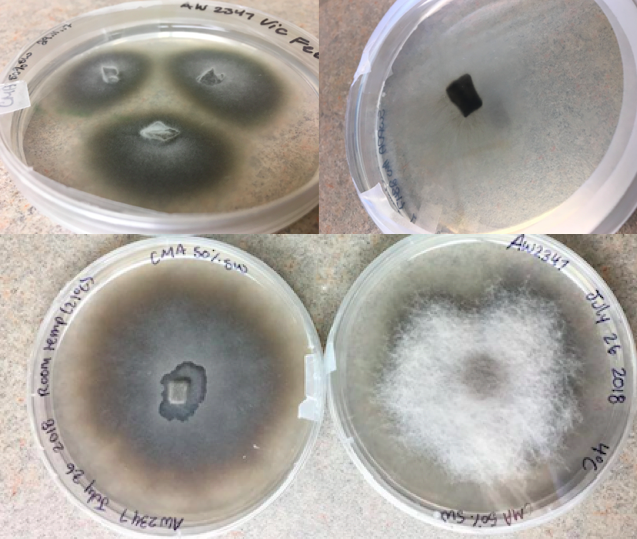
    In 2017, the Walker lab at Acadia University isolated a new species of Lulworthia, an obligate marine ascomycete fungus, from recently exposed intertidal wood from Apple River, Nova Scotia. There are currently 13 accepted species of fungi in the genus Lulworthia worldwide. Seemingly the largest genus of the marine ascomycetes, these fungi are often recorded as “Lulworthia sp.” as they frequently cannot be distinguished using long-established morphological techniques. Lulworthia atlantica, a closely related species isolated from submerged wood on the North coast of Portugal, was described in 2017. Using the same methodology, I genetically characterized a new species from the Bay of Fundy using rDNA as well as macro- and micromorphology. Phylogenetic trees were constructed for 3 rDNA gene regions, providing genetic evidence that it is a new species of marine fungus, provisionally named Lulworthia fundyense. The fungus grew faster at warmer temperatures, but sexual spores were not observed in culture, nor in wood block incubations at 4°C or 21°C. Asexual spores were observed and measured after 7-8 months, and I am currently describing this new species. Obligate marine fungi are understudied organisms and many do not sporulate in laboratory settings or only after prolonged incubation periods.

    This lack of knowledge on conditions that induce ascomata (fruiting body) production has greatly hindered experimental studies. Previous studies have shown that perithecia formation in Lulworthia sp. generally occurs after 100 to 200 days on submerged wood in environments where water temperatures are below 5°C. As sexual reproduction of L. nom. prov. fundyense was not observed after more than 300 days in our study, this fungus was either not grown in adequate sporulation conditions, or it is slower growing than previously discovered marine species.

    To acquire further knowledge on marine fungi, the development of new culturing techniques is required to induce sporulation to better understand novel species. This new fungus is now being tested for its ability to degrade crude oil. If L. fundyense is able to eliminate crude oil residues in the ocean, and we can optimize its growth, this could be an important environmental advancement in oil spill remediation and oceanic health.

    The issue of hydrocarbon contamination is significant as an estimated 3.5 million tonnes of petroleum hydrocarbons are introduced into marine ecosystems each year, negatively affecting the invertebrates, birds, mammals, and plants that inhabit these areas. This project emphasized the ecological importance of fungi and the need for further research on these organisms within each of Nova Scotia’s coasts, to identify biotechnological potential and develop new strategies to reduce marine pollution.

  • Blomidon Naturalists Society Seeks New Members, Contributions to Newsletter

    Blomidon Naturalists Society Seeks New Members, Contributions to Newsletter

    The Blomidon Naturalists Society is a field naturalists club based in Wolfville, but its interests and activities span most of the eastern Annapolis Valley. Active since 1974, the club meets monthly at the Beveridge Arts Centre at Acadia. Every meeting features a speaker – our speakers have included research scientists, Acadia students, local naturalists, and artists with topics ranging from wildlife photography, to tidal power, to botanical illustration to Sable Island horses. The club also has the occasional field trip, which could mean a hike to Cape Split, mushroom walks in the Kentville Ravine, annual seasonal bird counts, and last year a wind farm tour.

    The Blomidon Naturalists Society is deeply connected to Acadia – many current and former professors and university staff are members, as are many alumni (present company included). The Society supports Acadia students in the natural sciences through an annual scholarship award.

    We publish a quarterly newsletter which accepts submissions from members and the public. Non-fiction articles on topics of interest to naturalists, poetry, photographs, and drawings are accepted.

    The Society has also published several books (which are regularly offered for sale at local bookstores and from the Society itself) on local natural history, including Within the View of Blomidon by the late Acadia Biology professor, Dr. Merritt Gibson; A Natural History of Kings County; and Birds of Kings County. The Society also produces an annual natural history calendar which includes daily tide times, current and past historical events, and beautiful photographs taken by local photographers. Photographic submissions to the calendar are welcome.

    The Society always welcomes new members, and membership is open to any interested person. All of our events/field trips, most of which are free, and meetings are open to the public.

    For more information about meeting and event schedules, please see blomidonnaturalists.ca or check our Facebook page, To submit an article, photograph, etc. for the newsletter or calendar, please contact Shelley Porter (newsletter editor) at [email protected]

    Shelley Porter is an Acadia alumnus (BScHon. ‘87, MSc. ‘97) and current editor of the Blomidon Naturalists Society newsletter

  • Acadia Designated Fair Trade Campus

    Acadia Designated Fair Trade Campus

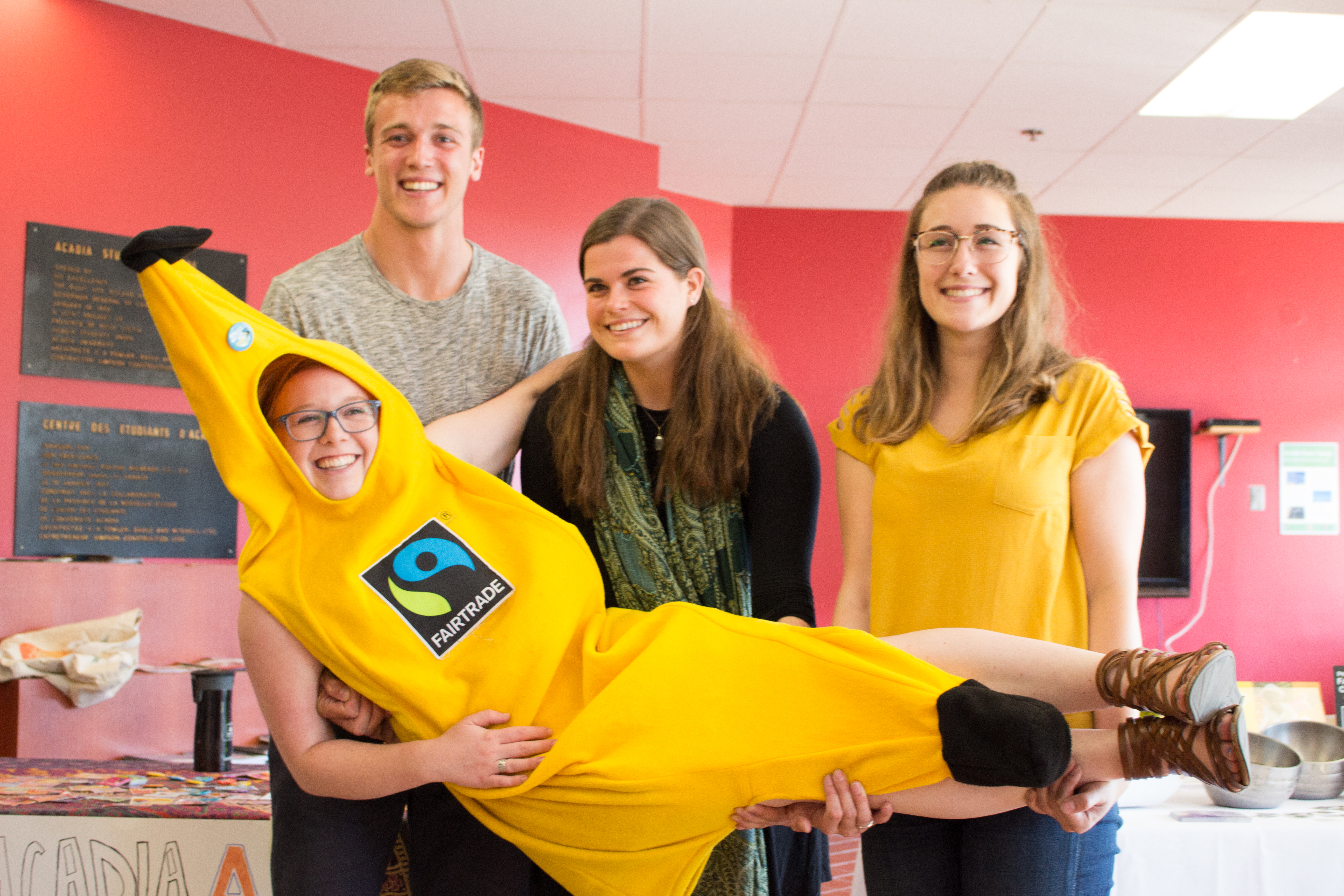
    Acadia has achieved its designation as a Fair Trade Campus. The announcement came from ASU President Grace HB and Acadia President Dr. Peter Ricketts on September 25th in the ASU Students’ Centre.

    “Students are engaging in ethical discussions as part of their education and the Fair Trade program instills the values we learn in the classroom” Grace said. “Paying people fairly for the work they provide is something students support.”

    Acadia is the first school in the Maritimes to attain a Fair Trade designation. Fair trade means that farmers are paid fair prices, have decent working conditions, and business is conducted on fair terms, unlike many multinational corporations.

    To earn this certification all coffee, three teas, and one chocolate that are Fair Trade certified must be available for consumption at retail outlets across campus. The range of products available will expand as time goes on, with a committee being established to oversee the program.

    Last year Just Us! worked with Acadia to develop a fair trade coffee and held an open design competition for the blend’s logo. Hacha Java the winner, submitted by fourth year kinesiology student Quentin Hovarth.

    ASU Sustainability Officer George Philp was overwhelmingly positive about the news. “Becoming a Fair Trade campus means that Acadia and the ASU’s product offerings reflect their visions to foster a more sustainable and socially responsible campus community”. More importantly, Philp notes that “in the long-term it sets a precedent that really big ideas and initiatives can succeed at Acadia. The success of this project proves that a small group of Acadia students, who care a whole lot about something, can make a massive difference in our community.”

    Acadia now joins UBC, McGill, the University of Western Ontario, and 25 other campuses as part of the fair trade movement. UBC Vancouver was the first campus in Canada to go fair trade in 2011.

    Fair trade products will now be offered at various outlets on campus, including the ASU Students’ Centre, BAC, and Huggins.

  • Witnessing the Transformation of the Mi’kmaq Living Resources: The Colonization of the Minas Basin

    Witnessing the Transformation of the Mi’kmaq Living Resources: The Colonization of the Minas Basin

    This essay is a summary of the presentation held by local Fisherman and Ecosystem Holder, Darren Porter, who was invited in January by the Acadia Department of Sociology to give a public presentation under the same title.

    We all remember when Stephen Harper, on behalf of the Canadian people, apologized in parliament to the indigenous people of Canada for the actions and control exercised over First Nation people which lead to the destruction of indigenous life, culture and families. Harper further apologized on behalf of all Canadians for the assumption that aboriginal cultures and spiritual beliefs were inferior and unequal. I remember how good and redeemed we all felt when those words were pronounced right in the parliamentary chamber and were televised across Canada. But now that the healing ceremony is over and the dues are done with an official apology, business can go on as usual. This business being nothing less than 1000 square meters of in-stream tidal power turbines in the Minas Basin Passage. If you really care about apologies for having assumed that aboriginal cultures and beliefs are inferior, then you must question this colossal project being placed right into the heart of Mi’kmaq sacred lands.

    The Bay of Fundy (Minas Basin) is not only a significant location for Glooscap, the central figure in the Mi’kmaq creation story but also the site of many other important Mi’kmaq sacred legends like the creation of Glooscap’s Beaver Dam. In other words, the Bay of Fundy including the Minas Basin and Blomidon are the most sacred sites with regard to Mi’kmaq faith and heritage. The sinking of in-stream tidal turbines which will eventually span over 1000 square meters in the Minas Basin Passage would be equivalent to the conversion of Mount Tabor by Nazareth (a revered Christian holy site known as the Holy Mount of Transfiguration) into a green wind farm with 50-meter-tall wind turbines spinning all day and night to produce electricity for export. The Bay of Fundy Glooscap creation legends are to the Mi’kmaq equal to what the testaments in the Bible are to Christians. Preserved from as far back as 3500 years of oral tradition, the Glooscap Beaver Dam creation legend, for example, has been scientifically confirmed and is accurate in location and geological events just as the legend describes. Yet, while no one would ever dream of turning Mount Tabor into a “green” wind turbine farm because the wind blows there, the Minas Basin Passage in the Bay of Fundy is not subject to the same protection because it happens not to be a Christian holy site but only a sacred site for the Mi’kmaq. But it does not end here.

    Grinding Nemo

    We already have one example of a ‘green energy’ tidal project that was to “save the planet” but instead killed off a whole strain of a fish species and diminished others to the point of no return in the Annapolis River. The Annapolis River Striped Bass is now extinct due to the Annapolis Tidal Power Project and there is no other way to say this but the Annapolis River Striped Bass was destroyed in the name of “green” energy production using tidal power. The extinction of this fish was not foreseen by any government experts and scientists who pushed the project ahead. What is even more concerning is that no lesson has been learned from it either. The Annapolis Tidal Power station should have been shut down and dismantled immediately when it was clear that it would cause fish extinction, but instead an entire genetic strain of fish was sacrificed on the altar of “green” energy.

    In the light of these facts, it is time to redefine what “green” really means. Now another one of those “green” energy tidal project is going ahead in the Minas Basin Passage in the very same fashion as was done in the Annapolis River which once was teeming with fish but no more. But this time, not only fish species in the Bay of Fundy could be affected, but the entire livelihood of the Mi’kmaq and local fishermen. Should it happen again that fish are going extinct and/or disoriented by the churning of the turbine blades as with the Annapolis River Tidal Power project, the results would be catastrophic. This is why local fishermen and the Mi’kmaq are asking for input and a voice in this matter.

    The main argument voiced in favor of this project is that the Minas Basin Passage is so large that even a square kilometer of turbines will not affect any fish or marine life. This argument is like saying there will be no collisions on the roads since there is so much space all around them and no cars can collide. The fact is that fish follow or let themselves be carried by underwater currents, especially in the Minas Basin Passage where the currents are very strong. This means that fish are moving along corridors created by underwater flows just like people follow roads instead of driving across fields just because the space is there. The fish in the Minas Basin follow such underwater corridors created by currents when they move from the Bay of Fundy into the Basin via the Minas Basin Passage. The problem is that in order to gain maximum efficiency, instream turbines are stationed right there where the currents are the strongest and, hence, end up in the pathway where fish travels. There can be no question that the fish will be battered around by the blades of the turbines which are actually designed to speed up the water currents around them by pulling everything towards them and along with it everything that happens to be in the water.

    The fishermen know the routes the fish take but the tidal power experts and bureaucrats do not. They also do not know that you cannot conduct research on lobster in the Minas Basin in the middle of February as it was seriously proposed because there is hardly any lobster there at that time of the year. This is like doing research on the growth of blueberries in February which would undoubtedly lead to the expert conclusion that blueberries are not present and cannot be affected by any human activity. This outcome could then be published in a government report with glossy colored paper to highlight the results. It would be funny if it were not so perilous because those glossy government reports have the power to destroy lives.

    All the Minas Basin fishermen want is that honest and unbiased research be conducted on the effects on marine life in the presence of in-stream turbines before they are stationed for good and on a massive scale. All they want is transparency in the process and that their concerns are being considered. All they want is a proper system to monitor marine life and fish kill in and around the turbines. Ecosystems are so fragile and good intentions on the part of those who wish to develop “green”’ energy will not compensate for lost and destroyed species, as we have seen with the Annapolis River Striped Bass. Good intentions will not compensate for the disastrous effect on the livelihood of the Mi’kmaq and fishermen should it all go wrong. The stakes are too high to gamble in the name of a “green” project. Nova Scotia does not need the turbines, but it needs a healthy fishery.

    On the topic of green energy: just because energy production does not use fossil fuels or reduces the use of fossil fuels does not make it automatically “green” or environmentally friendly. The best example are those energy efficient lightbulbs that use less energy to give off the same amount of light but contain the highly toxic mercury to the extent that poison control must be called in to decontaminate the premises should the lightbulb break and the toxic mercury be released. These “green” lightbulbs can also not go into the “green” recycling bin but must be decontaminated first which in the end turns out not to be so energy efficient after all. But they are sold to the unsuspecting public as “green” or environmentally friendly because they use fewer fossil fuels.

    In other words, just because energy production uses less fossil fuel or renewable energy does not automatically mean there are not dire consequences to the environment. However, we are seemingly willing to march blindly forward under the banner of “green” renewable in-stream tidal energy production without ever having established a baseline to monitor fish kill or other hazardous effects to the Minas Basin ecosystem due to the spinning turbine blades that can hack up fish like machetes, due to pressure changes in the water that can make fish heads explode, due to electromagnetic fields and noise pollution that can cause disorientation in fish. Supreme Court Justice Jamie Campbell made the following statement regarding the installation of the tidal turbines: “when dealing with the environment of the Bay of Fundy, there is no room for error.” If there is no room for error, why then is there no monitoring done regarding the effects on marine life due to the tidal turbines in the Minas Basin Passage? How can we protect the environment without any safeguards to make sure marine life and the ecosystem in the Bay of Fundy are not destroyed due to the in-stream tidal turbines? It seems that all is needed to exempt any environmental monitoring for the protection of ecosystems is to add the label “renewable” and or “green” and everything goes and with that maybe the entire fishery in the Bay of Fundy.

    Find more information at: redsky-blacksea.com

  • Have Hope for 2017

    Sitting down at the dinner table with my family I faced an awkward conversation. It started with griping about the state of the world: America, Europe, crisis after pandemic after crash. It was a depressing start to a conversation, to say the least. The picture that was painted was one resembling the worst of the first Mad Max film, or the beginnings of Roland Emmerich’s 2012: undesirable and unnecessary.

    After some thinking, I chimed into the conversation. Yes, I wasn’t going to lie, things did look bad. There were a lot of things that were beyond the scope of positivity. But after the dinner was over I stopped and asked my parents: why did they think things were so bad? Their answers were different in their wording but the general message was the same: things were changing and they were changing in a direction they didn’t like.

    It’s undeniable that the world is changing. Former reality TV star Donald Trump is now President of the United States, the UK is (trying to begin the process of) leaving the European Union, Syria is falling back under the control of Bashar Al-Assad, and the Islamic State is branching out around the world, with attacks occurring everywhere from Christmas markets in Berlin to bazaars in Turkey and malls in the United States. It’s a different world, and it’s one that doesn’t have the prettiest face. By a lot of metrics, the world is sliding back into a reality eerily reminiscent of the 1930s, with fascism, racism, and neo-Nazism on the rise and tensions erupting around the world. This all came to the boiling point in 2016, a year we’re all very glad is over.

    Denying that the world is facing a challenging new reality is arrogant and irresponsible. To say that everything is going to be fine and dandy is dangerously naïve. But it doesn’t warrant being pessimistic about the future.

    2016 will be a year that will be long analyzed by historians of the future. We lost countless stars, from David Bowie to Prince and Carrie Fisher, we saw the worst of humanity in Aleppo, and we saw hate take precedence over love through xenophobia and racism. Needless to say, it was a year that will live in infamy.

    But it doesn’t warrant despair. In the face of adversity, the worst thing one can do is curl up in a ball and refuse to believe that anything they do can change things. Even the littlest of things, from throwing your coffee cup in the recycling or telling somebody they look good today, makes a difference. It may be small and but it is not insignificant. Maya Angelou once said “people will forget what you did, but people will never forget how you made them feel”. In the face of an uncertain future it makes all the difference to be there for one another.

    As much as those around us may want to pessimistic about 2016, there were just as many reasons to be optimistic. The Colombian government signed an agreement with the FARC, ending a decades long conflict that had killed thousands. Tiger numbers around the world were on the rise for the first time in 100 years. A solar powered airplane flew across the Pacific Ocean. World hunger has reached its lowest point in 25 years. People pouring buckets of ice over their heads raised enough money to help isolate the gene that causes the disease. When you look back over the bigger events, last year wasn’t so bad.

    It’s impressive how far we’ve come in the past year. The Paris Agreement has been signed, and even though there are plenty of climate change skeptics and outright deniers in high office, the ball has begun rolling towards a greener future. We’ve seen compassion in Canada, with our own Prime Minister personally greeting refugees fleeing war and utter devastation. Love him or hate him, it takes someone with genuine character to take ownership of an issue and face the fruits of their labour head-on. Even here at Acadia, our first year population has grown by 25%. New blood and new minds are being welcomed into Wolfville, a stark contrast from the previous year’s intake.

    I have hope for 2017. There are elections coming up around the world where candidates are basing their campaigns on an ‘us vs. them’ message, fearmongering and hatemongering. But while there are those candidates, there are just as many promoting what makes democracy worth fighting for: peace, compassion, tolerance, justice, and love. The fight for a free and fair society isn’t an easy or bloodless one. Relationships are ruined, reputations are soured, and feelings are hurt. But if you truly believe in something worth fighting for, stand up for it.

    There will always be headlines that strike fear into our hearts. There will always be those who preach hate and practice malice. There will always be those who believe that the impossible is exactly that- impossible. And yet there will always be those tiny instances of human compassion that amount to something greater. There will always be those who preach love and practice tolerance. There will always be those who believe that the impossible is exactly the opposite- possible.

    Let’s not despair for 2017. Let’s go out and make it a good one.

  • Reefspiracy

    In a satirical article in Outside Magazine entitled, “Obituary: Great Barrier Reef (25 Million BC-2016),” Rowan Jacobsen describes the tragic death of the Great Barrier Reef, the world’s largest coral structure. Rich in marine life, and stretching for more than 2,600km along the Eastern Coast of Australia, many were shocked upon reading of the Reef’s alleged death. The article has gone viral, reaching more than 1.42 Million shares since its release on October 11, 2016. For an Obituary, it is quite entertaining, and serves to inform readers about many of the distinct historical and marine qualities of the Reef — but has one main issue: it is scientifically false.


    Upon going viral, Jacobson’s article has sparked massive controversy in the scientific community through its claim that “climate change and ocean acidification have killed off one of the most spectacular features on the planet.” According to a multitude of sources the reef is, however, still living—with preliminary findings from Australia’s Great Barrier Reef Marine Park Authority revealing, “22 percent of coral on the reef has died due to the worst mass bleaching event on record. But […] more than three quarters of the corals are still alive, in various states of health — and in dire need of being protected.” As of yet, no scientist or scientific organization has pronounced the Great Barrier Reef to be dead, and the initial article in Outside Magazine does not offer any supporting scientific evidence to back up its claims.


    Despite their outcry, the Great Barrier Reef is, scientists admit, in a state of crisis — with a report from the ARC Centre of Excellence for Coral Reef Studies revealing that the reef is at great risk of extinction, with 93% of the reef affected by bleaching (which happens when it is submerged in too warm water for too long). This viral article could be the last thing that the reef needs, as it dismisses all of the ways in which human effort can still try to save the reef by painting it as too far-gone. This type of exaggeration of the state of the Reef conveys a situation of less hope, rather than trying to mobilize the public to take actions to try and reverse the damage.


    Claims such as those by Outside Magazine have further implications — for the Australian economy: The Great Barrier Reef generated an estimated $5.7 billion for the Australian economy as of 2011-2012, and created 69,000 jobs, all of which could be severely impacted by the viral claims of the Reef’s death.


    Aside from the false claims present in the Obituary, Jacobsen does raise an interesting point surrounding the incentive by the Australian Government to paint the Reef as in better condition than reality depicts — detailing the Australian government coercion of the United Nations, wherein they successfully got them  “to remove a chapter about the reef from a report on the impact of climate change on World Heritage site,” which was justified by the Department of the Environment of Australia as due to concerns over lost revenue in tourism. By all accounts, it may be in the Australian government’s (and economy’s) best interest to minimize the public’s knowledge of the Reef’s state.


    While some see Jacobsen’s viral article as ignorant and discouraging to any efforts to save the reef, some look at this hyperbolic obituary as the very wake-up call that the world has been awaiting. Professor John Pandolfi from the ARC Centre at the University of Queensland states that, “It is critically important now to bolster the resilience of the reef, and to maximize its natural capacity to recover.” The reef is, by all accounts, dying — but it is not dead. So, is it a Reefspiracy? See for yourself: The original article published by Outside Magazine can be found at: https://www.outsideonline.com/2112086/obituary-great-barrier-reef-25-million-bc-2016


  • Human Trash

    On September 19, 2016, activist Rob Greenfield ceased throwing his garbage out— in the traditional sense, anyways. Rob has decided to wear all of the garbage that he produces over a 30 day period in order to make a point about over-consumption. This project, aptly named “Trash Me,” is right on-brand for Greenfield, who has made it his mission to inspire a healthier earth by using attention-grabbing tactics. Walking around New York City wearing every piece of garbage he creates should do just that.


    Greenfield told news outlet TakePart that he “wanted to come up with a visual way to get people thinking about how much trash they create,” and so, with clear plastic bags strapped to his person, Rob has been continuing with his every-day life in New York City (albeit a bit slower due to his “baggage”), while simultaneously raising awareness about the impact of garbage and material waste on our environment. In order to remain accurate, Rob will not be turning down any trash that is offered to him — not flyers, not plastic bags, nothing.


    Inspired by the shocking figures by the US Environmental Protection Agency, which state that each person in the US produces about 2.1 kg of solid waste every day, Rob is resolved to eat, shop, and consume “just like the average American person” throughout the duration of this project by producing approximately that amount (2.1 kg) of waste each day. Trash Me is a reaction (which, some may say is an extreme one), to the convenience of our waste-disposal systems in North America. Greenfield is attempting to take the convenience of “out of sight, out of mind” that comes with garbage disposal and put it right back into people’s line of vision — attempting to create individual accountability for the severe environmental degradation that is occurring thanks to our waste.


    Using the production and disposal of a bag of potato chips as an example, Greenfield highlights the deep implications that our wasteful habits have on the environment, noting that: “that bag might last for five minutes of eating—five minutes of enjoyment. But the thing about it is, to get that plastic packaging to you, that meant that there had to be mining of virgin materials from the Earth. That had to be shipped around the world, created in a manufacturing center—all of that taking fossil fuels, electricity, and emitting greenhouse gases and pollution. Then, once you eat the chips, the packaging goes to either the landfill or the ocean. To get it to the landfill, garbage trucks need to drive around using fossil fuels [and] once it gets to the landfill, its life isn’t over. It’s going to live for about 500 years. Or possibly eternity.”


    Rob has, of course, run into obstacles throughout his project— including the smell, the societal reaction, and the actual weight of the trash. Despite his knowledge on the figures of how much waste we create, Greenfield states that he too was shocked at the sheer amount of trash that that 2.1 kg manifests into, not realizing “how quickly it would add up just doing normal things.”


    While it’s easy to look at the extreme statistics on waste of our neighbours to the South, it is important to recognize that the amount of waste created by Canadians is directly comparable to that of Americans. According to 2011 figures by Environment Canada, Canada produces approximately 30 million tonnes of municipal solid waste each year, amounting to 1.8 kg (or 4 pounds) created each day per person. Comparing this to America’s 2.1 kg (or 4.62 pounds) per person, Canadians can hardly take the moral high-ground.


    While it may not be in vogue to wear garbage, thanks to Rob Greenfield, we now know what it looks like. Further updates on Trash Me (projected to last until October 19, 2016) can be found at http://robgreenfield.tv/trashme/.

  • A Call for rEVOLUTION

    A Call for rEVOLUTION

    Human beings (Homo sapiens) are a relatively young species compared to others on the planet. Some species of crocodiles and sharks have been around for millions of years remaining relatively unchanged from an evolutionary perspective, while primitive Homo sapiens appeared in Africa only 195,000 years ago just to provide some context of scale. However in the short time humans have been walking the Earth we have accomplished many wonders and made huge leaps towards advancing ourselves as a species. We have harnessed the power of fire, domesticated plants and animals, built complex machines such as the printing press and the automobile, discovered electricity, landed on the moon, created an instantaneous global communication and information system (or more commonly known as the internet), and we have even unlocked the secrets of molecular science including mapping our own genome. We are studying objects out in space that have never been seen before but we can measure and calculate them. We have come quite a long way from that original primitive ape who dared to leave the safety of the trees in order to find scarce food on the African plains so long ago. Indeed it seems we sprang into action as a species and ushered in a new age of global human dominance. We invented better and faster ways to benefit ourselves and support our growing population, but in doing so we lost touch with the ancient knowledge our ancestors possessed about living in harmony with the land. The knowledge that if we do not respect the environment in which we live and do not preserve and protect it, then it will degrade and resources will become scarcer due to our actions. However, for our African ancestors and essentially every generation that has followed, until the last few hundred years, this was not as big of a problem because it was always an option to simply pick up their things and move to a new pristine location to start over again. The problem for us that has arisen within the last few hundred years is that we have become a global species and are beginning to fill more and more remote locations of the Earth, the result of this being that we are running out of places to move to start over again in a new untouched location. So would it not make more sense for us humans to live in balance with the land we rely on to survive?  From a survival perspective this behaviour seems necessary for any global species, or else they will soon find themselves extinct. Sadly, sustainable practices are still seen as something that can be debated, or factored into an equation instead of a consistent truth by which we all must live by. To some this idea of sustainability seems evident but for others some convincing is needed. Perhaps by understanding what challenges and difficulties future generations will encounter, this will help to paint a clearer image of what must be done and why a revolution of the human spirit is needed now more than ever.

    The millennial generation, the next generation to inherit the responsibility of taking care of the planet, faces the greatest challenges ever encountered by humankind. The collective advancement of humanity since our species arrival has led to our current predicament. Modern environmental destruction, biodiversity loss, social and political unrest, and wealth inequality are all issues that have been building up and unfolding for generations but now seem to plague our everyday lives. It is the responsibility of a generation to recognize the faults of their elders and correct them for the present, and to do so in a way that does not compromise future generations to come. That is the basis of a sustainable generation.

    In recent history the advancement of the human race has been exponentially increasing towards a future that is not only unstable environmentally, but socially and politically as well. Our air, water and soils are more polluted than ever, species all around the globe are disappearing, the wealth gap between the poor and the rich is getting larger and larger, prisons and war are considered business opportunities, and democratic political systems are more of a bidding war for the mega-rich than a platform for the people to elect the best suited leader with new and innovative ideas.  It is only recently that the idea has been suggested that this trend may not be in our best interest. But as the signs become clearer and clearer about how constant growth is affecting the natural world and the balance between nations, many people are realizing the drastic harms a society based on limitless growth can have on their host which is finite.

    I truly believe that in the not so distant future the human race will be in one of two scenarios. In the first I see that we continue to indulge upon our desires and lead with ignorance and impulsiveness. I see that we fail to recognize the significance of our effects and stop them from getting worse, and because of this, parents would need to explain to their children that it was partially due to their inaction that led to the current state of the planet. We would need to apologize to them for the failure of our generation and ourselves to preserve a world fit for them to live and thrive in. Now I must ask the question, can you imagine having the same conversation with your children? Telling them that they cannot go fishing because there are no fish to catch, that they cannot go for a walk in the woods because they are all cut down, that they must wear a mask to breathe or that they cannot drink from a mountain stream because it is polluted. It seems unthinkable for most, yet billions of people may have to have this conversation as this becomes their reality.

    The second alternative for humanity is a much more positive one, and that is having the privilege to explain to younger generations that it was in part due to your actions that the world was saved from a dangerous and uncertain future. You could explain how you were a part of one of the most exciting moments in human history and that it was because of one revolution that the outlook for the future of the entire human race and even the planet shifted. This seems to be a time that will test the true resilience of humanity and see if we can manage to put our differences aside and unite as a planet and as the human race.

    The time has come to no longer overlook the effects our actions have on the planet but rather to embrace this knowledge and make informed decisions about what kind of changes we need to consider and what kind of future we want for ourselves and generations to come. This needs to be a serious discussion in today’s mainstream society. As of right now we do not currently possess the ability or option to leave planet Earth and inhabit another planet so Earth is all we have to call home. Therefore, contentment with ignorance in the face of knowledge is never justified, no matter what your allegiance. Where ignorance over-looks, knowledge sees all, where ignorance denies, knowledge accepts, and where ignorance forgets, knowledge remembers. Knowledge is a double edged sword that has the power to do great evils, but also to free anyone who embraces its power with reason and responsibility.

    Ahead of us we have the greatest opportunity any person could ever hope to be living through. We are currently witnessing one of the greatest moments in human history and don’t even realize it! Generations from now will talk about these years being the turning point in our existence, the generation that saved us.  An example of human triumph on a scale never seen before, our indomitable spirit that always finds the correct course even amidst the darkest times. The climax of global unity, dawning a new age to a promising and prosperous future, leaving our past behind us as history but never forgetting the lessons learned. We must take responsibility for our actions and take the necessary steps to correct them, a sure sign of maturity for us as a species. A billion whispers are easy to ignore, but one unanimous cry for change can never be over-looked. Now is the time to decide what kind of world we will pass on to future generations, now is the time for change, now is the time for revolution.

  • Water Protection in Canada: Examining the Reactive Nature of Environmental Protection Legislation

    My thesis is on the reactive nature of environmental protection legislation in Canada. Specifically examining how water protection only occurs after a human health tragedy.

    There are only a handful of topics that most Canadians can agree on. These topics give Canada recognition around the world, as well as connect Canadians across the country. One of these topics is a love of the outdoors. Canadians dominate winter sport, relish the warm summers and take time to get out and stay outside. The environment is home to the sports, activities and wildlife that make people proud to be Canadian. After all it is the second largest country in the world and is credited for having a disproportionate amount of the world’s fresh water resources. If the Canadian public loves the environment so much why is there so little legislation protecting it?

    Canadians are lucky in regards to freshwater, as there is an abundance of fresh easily accessible water – or is there? Canada is frequently cited as the country with the largest volume of fresh water in the world, yet it actually only has approximately 6% of the global annual supply of renewable water (Bakker, 2006). Despite this, Canadians themselves believe that they are water rich. As such, Canadians are one of the biggest water consumers per capita worldwide (Bakker, 2006).
    Since Canadians use so much water in their daily lives, they care about protecting this resource. In 2004, 97% of Canadians agreed that a national water strategy is needed and that water is a basic human right (Bakker, 2006). Although this is something Canadian citizens feel passionate about, this is not reflected in Canadian legislation. Canada does not have a national drinking water strategy. At a federal level, there is a Canadian Drinking Water Quality Guideline outlining the acceptable drinking water practices, but it is non-binding and therefore not enforceable.

    The 2014-15 Report on Plans and Priorities gives detail to the budget and human resources of many of the different programs operated under the Ministry of the Environment. This plan outlines the cuts to twenty positions and a reduction in budget from $91 196 857 to $88 013 012 over two years in water specific programs alone (Environment and Climate Change Canada, 2014). On a federal level, Canada as a whole does not have comprehensive protection of water and water resources. With a reduced human and financial capacity this will likely get worse as water programs at the federal level cannot continue to operate at the same ability nor can they expand.
    Water protection can be achieved through provincial legislation but that means only a fraction of water in Canada gets protected. Water knows no boundaries, meaning that water has the ability to flow without discrimination. If the Northwest Territories had the best, most effective and enforced water legislation, they still would not control the condition of the water that flows into their territorial jurisdiction from Alberta, British Columbia and Saskatchewan.

    If the public has demonstrated their want for increased water protection but nothing has been done, what is the motivation for creating environmental protection legislation specifically in regards to water? The answer is a human health tragedy. When a human health tragedy occurs and drinking water is the source of ill health, policy is created to prevent repetition of human health problems. The two case studies I have selected and explained in chapters three and four illustrate this very phenomenon. After human health was put in jeopardy and public drinking water was found to be contaminated, an array of environmental legislation was created to ensure the safety of drinking water and the health of the consumers.

    My second chapter gives background information on the Canadian federal system and the divisions of power with regards to the environment. It also talks about the disconnect between human health and the environment, how they are valued, treated, and protected. This chapter also explains exactly who is responsible for providing safe drinking water.

    Chapter three zooms in on the first case study, Walkerton Ontario. It looks at what happened in 2000 and why. As a result of the drinking water contamination, Justice O’Connor preformed an inquiry where recommendations were made to improve the condition of drinking water in Walkerton and throughout the province.

    Chapter four is the second case study, focusing on North Battleford Saskatchewan. Again an inquiry was launched and Justice Laing made recommendations for the improvement of water quality in North Battleford and Saskatchewan as a whole.

    Recommendations in both cases will be further explored to understand what changes have actually been made to improve drinking water quality in Walkerton, North Battleford and their respective provinces.

    Finally the conclusion will look at what all of this means. It will analyse the data presented in the previous chapters and bring it all together. Answering what do these case studies demonstrate, what is the point of the research, what happens next, and what steps Canada needs to take to improve its drinking water quality.

  • Tidal Series: Can Tidal Energy Make Nova Scotia Green?

    Tidal Series: Can Tidal Energy Make Nova Scotia Green?

    Briefly describe your background as it pertains to the study of tidal energy.

    I am a professor in the Department of Mathematics and Statistics who uses mathematical models and numerical simulations to do research in physical oceanography and fluid dynamics. For the past eight years, I’ve led a team of Acadia students and research assistants that have researched the potential of tidal energy in the Bay of Fundy. Working in collaboration with other universities, several Nova Scotia businesses, and the Nova Scotian and Canadian governments, our team has calculated the size of the resource and determined the best possible locations for turbines. And along the way, we’ve also learned an incredible amount about the tides of the Bay of Fundy.

    What is the practical resource of tidal power in the Bay of Fundy?

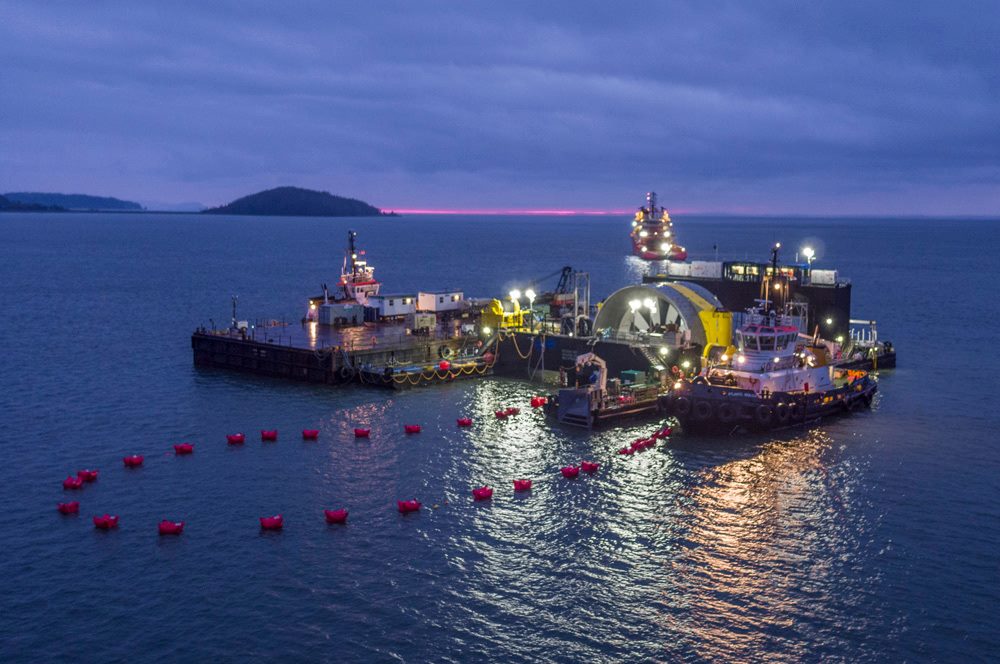
    Most of you are familiar with the incredible tides of the Bay of Fundy: the highest in the world, with a tidal range reaching 17 metres in the Minas Basin, and somewhere between 100 and 160 billion tonnes of water flowing in and out of the bay with each tide. The flow through Minas Passage during a strong flood tide exceeds the flow of all the rivers in the world combined, with the water’s speed exceeding 5 m/s. There must be a ridiculous amount of energy in these tides and tidal currents!

    In reality, the energy we can extract is actually rather modest. The potential energy in raising the water of

    Cape Split with Minas Passage in the background. The turbines are set to be installed in the passage near Parrsboro. Photo taken by Dr. Richard Karsten.
    Cape Split with Minas Passage in the background. The turbines are set to be installed in the passage near Parrsboro. Photo taken by Dr. Richard Karsten.

    Minas Basin by 15 metres is very large (1015 J) but this process takes place over 6 hours and we can only generate power from a difference in water depth–so, at best, we can only take advantage of half of the tidal range. All of this reduces the average power we could theoretically generate from the Minas Basin tides to roughly 10,000 MW. That’s less than half the generation capacity of the world’s largest hydroelectric dam, the Three Gorges Dam in China. Despite having water flow greater than all the rivers in the world, the power potential is that of just one hydro dam (but it would be very large!). It is also four times the size of the current electricity-generating capacity of Nova Scotia, so it is still an important amount for our local energy concerns.

    The potential that exists within the Bay of Fundy tides has been recognized for at least a century, with a recent focus on tidal turbines, which act much like wind turbines – using fast-flowing currents to turn turbines that generate electricity. We have calculated that such turbines could in theory extract 7500 MW from the fast-flowing currents of Minas Passage, which is close to the theoretical limit. More importantly, we found that 2500 MW of power could be extracted from the flow while reducing the height of the tides by only 5%. These numbers were very important to me – they meant that the research was worth continuing and that tidal turbines placed in Minas Passage had the potential of meeting Nova Scotia’s electricity needs. But, they also meant that tidal energy wasn’t a global or national energy solution and (unfortunately) there would be no Nobel Prize.

    The hard work still remains. How can we change these theoretical calculations into electricity? Renewable energy has an unfortunate history of promising large amounts of power, but producing much less. The province of Nova Scotia has set a goal of deploying tidal turbines with an installed capacity of 300 MW, both a modest and an ambitious goal. This will require the deployment of approximately 150 turbines in Minas Passage – a considerable challenge, since only a handful of turbines have been deployed throughout the world. And, given that the turbines will have a capacity factor of maybe 50%, they will produce less than 10% of Nova Scotia’s electricity needs. By our calculations, 150 turbines would have only a small impact on the tides, roughly reducing the high tide in Wolfville harbour by 5 cm. But we are still a long way from getting there.

    It’s also worth noting that tidal energy isn’t just about large, commercial-scale projects. In fact, most of our research has been in collaboration with small Nova Scotia businesses, in particular Fundy Tidal Inc. (FTI), a community-owned company that is trying to bring tidal energy to Digby Neck. FTI’s goal is also to keep the benefits of developing tidal energy in the local communities, something that I support so strongly that I became a shareholder in FTI.

    Should Nova Scotia pursue tidal energy as an energy source?

    In short: yes. But we still need to do a considerable amount of work to determine if we can do this in an efficient, economical and environmentally friendly manner. On what scale should tidal energy be developed? We don’t know yet, but if we are going to reduce our use of fossil fuels, say by using electric cars, we need to substantially increase our sources of renewable electricity. And there is only one form of renewable energy in Nova Scotia that is among the world’s best opportunities, where we can be a world leader in its development. Could tidal energy bring both types of green to Nova Scotia? We have to at least try.

    For more information on tidal energy efforts at Acadia, visit http://tidalenergy.acadiau.ca/.


Betzillo positions itself as a versatile gaming hub where structured bonuses and adaptive gameplay mechanics support both short sessions and extended play.

Built with a focus on innovation, Spinbit integrates modern casino architecture with rapid transactions, appealing to players who value speed and digital efficiency.

Ripper Casino emphasizes bold entertainment through high-impact slot titles and competitive promotions crafted for risk-oriented players.

A friendly interface and stable performance define Ricky Casino, offering a casual yet reliable environment for a wide spectrum of gaming preferences.

King Billy Casino channels classic casino spirit into a modern platform, delivering recognizable themes supported by contemporary reward systems.

Immersive visuals and layered slot mechanics are at the core of Dragonslots, creating a narrative-driven casino experience.

Lukki Casino appeals to players seeking direct access and minimal friction, focusing on fast loading times and intuitive controls.

Casinonic provides a structured and dependable gaming framework, blending modern slots with transparent operational standards.