
Tag: nova scotia

  • How much longer do we have to wait for a Meningitis B Vaccine?

    Meningitis B has been on the mind of many Nova Scotians recently. There have been several outbreaks in universities across the province, which have led to the unfortunate fatalities of three different students: 19-year-old Kai Matthews at Acadia, 18-year-old Maria Gaynor at Dalhousie, and a confirmed case at Saint Mary’s University which led to death, but there has been no confirmation of that student’s identity. Despite these tragedies, meningitis B is still not covered by Nova Scotia’s public vaccination program. Why is meningitis B not considered a problem by Nova Scotia Public Health? Vaccines are available, but their price is $300, which is too much for most students already struggling with the cost-of-living crisis.

    The vaccinations that public school students receive in grade 7 cover multiple forms of meningitis, but not meningitis B. What makes university students especially at risk is the fact that a lot of students live very close to each other in dorms. In cities like Halifax, students have been priced out of the housing market, forcing them onto dorm spaces. These students’ needs should not be ignored, especially after the incredible sacrifices students have made during the COVID-19 pandemic. Our health needs deserve attention, especially when members of our community are dying. This crisis needs to be addressed by the Nova Scotia government. Meningitis B acts quickly; Kai Matthew passed away only 30 hours after first contracting a fever. It is also preventable with a vaccine. Why does Public Health still refuse to allow students full access to that vaccination? This crisis is urgent and they should not deny or downplay its severity.

    After the death of Maria Gaynor, Nova Scotia Public Health failed to notify students living, sleeping, and eating nearby of the dangerous illness. The school not only failed to promptly notify students of Maria’s death, but they also completely failed to notify students of a meningitis case being investigated on the third floor of their dorm. This put even more students at risk. If Maria and her friends had known about the case, Maria’s sudden illness would have been a major red flag. Maria could have possibly gotten help if Nova Scotia Public Health had notified the Dalhousie public that meningitis was inside the dorm and had taken appropriate steps to look after those affected.

    To Nova Scotia Public Health, please stop offering condolences and include meningitis B on the list of publicly funded vaccines. For more information concerning meningitis B in Nova Scotia, visit https://bforkai.com/

  • Film Review: There’s Something In The Water

    Film Review: There’s Something In The Water


    In 2019, Elliot Page directed and starred in his own Nova Scotia-focused documentary There’s Something in the Water. The documentary is on Netflix and has seen a lot of success since its debut. After Elliot Page’s big break on Trailer Park Boys and following success through Juno and other films like Inception, he realized that he was passionate about the environmental racism going on in his home province, Nova Scotia, and decided to direct a film on the topic.

    Environmental racism has been happening in Canada for decades. When Indigenous and black communities repetitively end up near landfills and other harmful environmental hazards, there’s no question that it’s not simply coincidence. These communities often lack a voice, especially to the government, allowing the racism to continue without being noticed or acknowledged. The idea of environmental racism, as Page’s documentary suggests, is able to survive because it happens slowly, over generations, often making the connection between harmful side effects and racism difficult to see. According to one speaker in the documentary, “It’s also about the government’s slow response to these issues. What we know is that where you live has bearing on your wellbeing”. The film works to expose these issues, and does a great job of explaining concepts and highlighting the upsetting extent of the racism in Nova Scotia.

    There’s Something in the Water focuses on issues like Northern Pulp and Boat Harbour in Pictou County. Louise, one of the women being interviewed by Page, points out the shocking number of cases of cancer in her mostly-black community, a direct result of a waste dump nearby. The documentary explains that if you map out Nova Scotia’s BIPOC communities and Nova Scotia’s landfills, you’ll see a horrifying correlation. It also shows the many discouraging ways that the Nova Scotian government has failed to keep its promises to marginalized communities and to fix their errors. It exposes the direct link between environmental racism and its harmful effects. Through all of this, Page’s documentary shows Nova Scotian viewers how environmental racism has been affecting our province for decades. 

    Overall, the film was extremely eye-opening. It was embarrassing to be reminded of my own ignorance concerning the issue and helpful to then learn more about it. The people in the movie felt very real, as opposed to actors, yet important enough to pay attention to. They made me forget that all of these issues are happening right in my own backyard, and once I remembered, I was once again shocked and horrified that these things could happen so easily and simply go unnoticed. Surprising but important situations were brought to light through the film, like how in 2017, a Shelburne councillor blatantly told residents to “stop playing the racism card”.

    I loved There’s Something in the Water. Elliot Page’s ability to make the environmental racism that’s been happening around me seem so realistic, and yet still unsettling enough to make me want to make a difference was incredible. His explanations of the issues were clear and eye-opening, and genuinely encouraged me to start fighting for change. I would recommend this film to anyone, and already have to several people. Overall, I’d rate it 8/10. If it were slightly longer, I’d give it 10/10, because I enjoyed it so much. 

  • House the Homeless

    House the Homeless

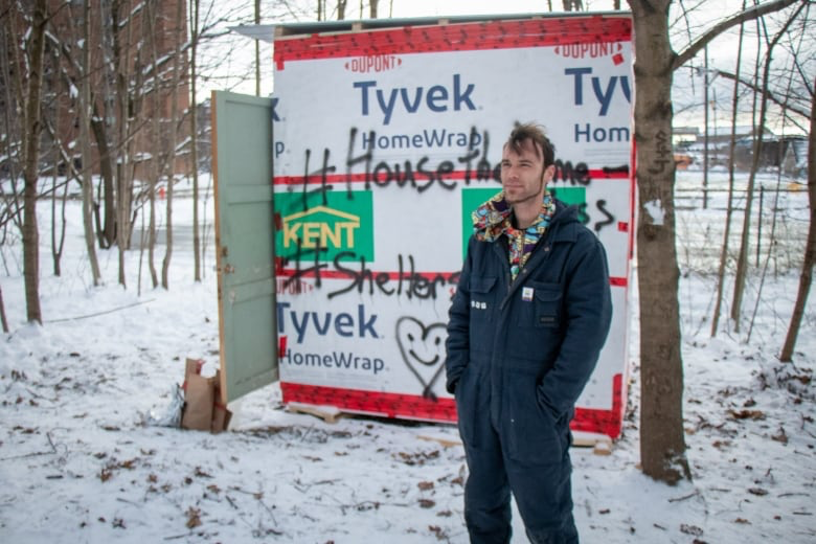
    Shelters for homeless people have begun popping up on municipal property in January 2021. In response to the shelters, Halifax Regional Municipality (HRM) has recently announced that the removal of occupied shelters appearing in Dartmouth and surrounding areas will not occur, and made clear that removal will take place only if a shelter is vacant. However, there is a great deal of controversy surrounding the arrival of the huts, because some argue that there is no license to allow people to build without permission on municipal property. On the other hand, HRM spokesperson, Maggie-Jane Spray stated, “the municipality takes an empathy-based human rights approach to homeless encampments that recognizes the human dignity of people experiencing homelessness,” in an interview with CBC, which was published on January 25th. While it is ethical to not take action in removing huts that are some people’s only form of shelter, the issue has raised concerns about the housing situation in Halifax and shines a light on a much larger social problem, not only in Nova Scotia but across Canada. 

    Recent news has delivered the devastating story of Raphaël André, 51, who died on Sunday, January 17th, just feet away from Open Door shelter in Montreal which was forced to close by health officials due to a Covid-19 outbreak. Advocates for the homeless claim André froze to death in a portable toilet next to a center he had stayed at just the night before. The traumatic event has impacted the entire country, each province riddled with its own population of homeless people. Therefore, shelters appearing in the HRM area have been photographed accompanied by the trending hashtag “House the Homeless,” addressing a dangerous problem in Canada that needs urgent attention from the government. 

    The huts have consisted mostly of a steel roof and house wrap, providing some protection from the rain and the harsh winter weather. The huts provide a safer place for people who are homeless to store their belongings and take shelter, especially during the colder winter months. It has been determined that the huts are being built by a group referred to as Halifax Mutual Aid, and their anonymity makes it nearly impossible for HRM to reach out to them regarding the controversy surrounding the issue. 

    While building small makeshift shelters may offer a temporary “solution”, homelessness in Canada is far from being resolved. Amid the controversy and debate concerning the prohibition of the building of unauthorized structures on municipal land, many have responded that it is the best place to build because the city should be held responsible for housing the homeless. While HRM has a no-eviction policy if someone is living in the space, it also does not have the authority to provide housing – that is the duty of the province. Sam Austin, Councillor for Dartmouth center, where some of the shelters have popped up, says that the province of Nova Scotia should build more supportive housing to get people off the streets, and in the meantime, provide help for those suffering from addictions and mental health issues.

    While the municipality reiterates that they will not evict residents of the shelters until their needs are met, it seems to have become clear that the need for housing should be prioritized, especially in the coldest months of the year and during a global pandemic. Shelters are not the answer. House the Homeless.

    Housing Nova Scotia (Head Office) – 

    Maritime Centre – 1505 Barrington Street
    14th Fl. (North)
    Halifax, NS B3J 3K5


    Housing Nova Scotia (Western Region) –

    101 Magee Drive
    Box 1000, Middleton, NS B0S 1P0


    Housing Nova Scotia (Central Region) – 

    3770 Kempt Road
    Halifax, NS B3J 3E4
    P.O. Box 2462

  • Acadia Competes in Inaugural Nova Scotia University/College Golf Championships

    Acadia Competes in Inaugural Nova Scotia University/College Golf Championships

    Dartmouth, N.S. – On Saturday, September. 28th Acadia University competed in the inaugural Nova Scotia Golf Association University/College Golf Championships at Brightwood Golf & Country Club, in Dartmouth, Nova Scotia. The event format was 18 holes of stroke-play with the top four of five scores counting on each team. There was a total of 38 competitors in the event, with teams from Cape Breton University, Dalhousie University, Saint Francis Xavier University, and Saint Mary’s University all competing for the chance to be crowned champions.

    Acadia’s Men’s Team consisted of 5 players: Sebastian Farkas, Andrew Mackinnon, Zach Moore, Sam Quackenbush, and Cameron Waugh. In addition, Nathan Comeau was also representing Acadia as an individual participant. The women’s team consisted of one member, Courtney Cruikshank, who was the lucky competitor to hit the inaugural tee-shot in the event.

    It was a windy day that Saturday, but Acadia played well despite the conditions. On the men’s side, Sam Quackenbush was the low competitor for Acadia as he fired a solid round of 75 (+7) and finished in a tie for 6th place. Cameron Waugh was the second lowest player as he shot 76 (+8), and Andrew Mackinnon rounded out the top three as he posted a 78 (+10). Sebastian Farkas, Zach Moore, and individual contestant Nathan Comeau struggled to find their games on the Donald Ross layout. On the women’s side, Courtney Cruikshank represented Acadia admirably as she was only one of two women to compete in the event.

    As the sun set and the final putt was holed on the 18th green, Cape Breton University took home the Championship as they posted a collective score of +33 to defeat Saint Mary’s University by three strokes. Dalhousie University finished in third, followed by STFX University placing fourth, and Acadia settling for fifth. Individually, Cape Breton University’s Kevin George claimed the Men’s individual crown as he posted an excellent round of 70 (+2) to finish two clear of second. Sydney Erb of Dalhousie University won the Women’s title as she posted a solid round of 86 (+18).

    As mentioned, this was the first ever University/College golf event to take place in Nova Scotia and was a big step in getting national recognition for the sport in the province. There are many talented men and women golfers in post-secondary in this province and it was excellent to see them show of their skills throughout the competition.

    Acadia has never had a competitive golf program in its entire history, and by competing in this event Acadia will look to build its program for those interested in developing their games.

  • The role of genetics in understanding the Nova Scotia Blanding’s Turtles

    The role of genetics in understanding the Nova Scotia Blanding’s Turtles

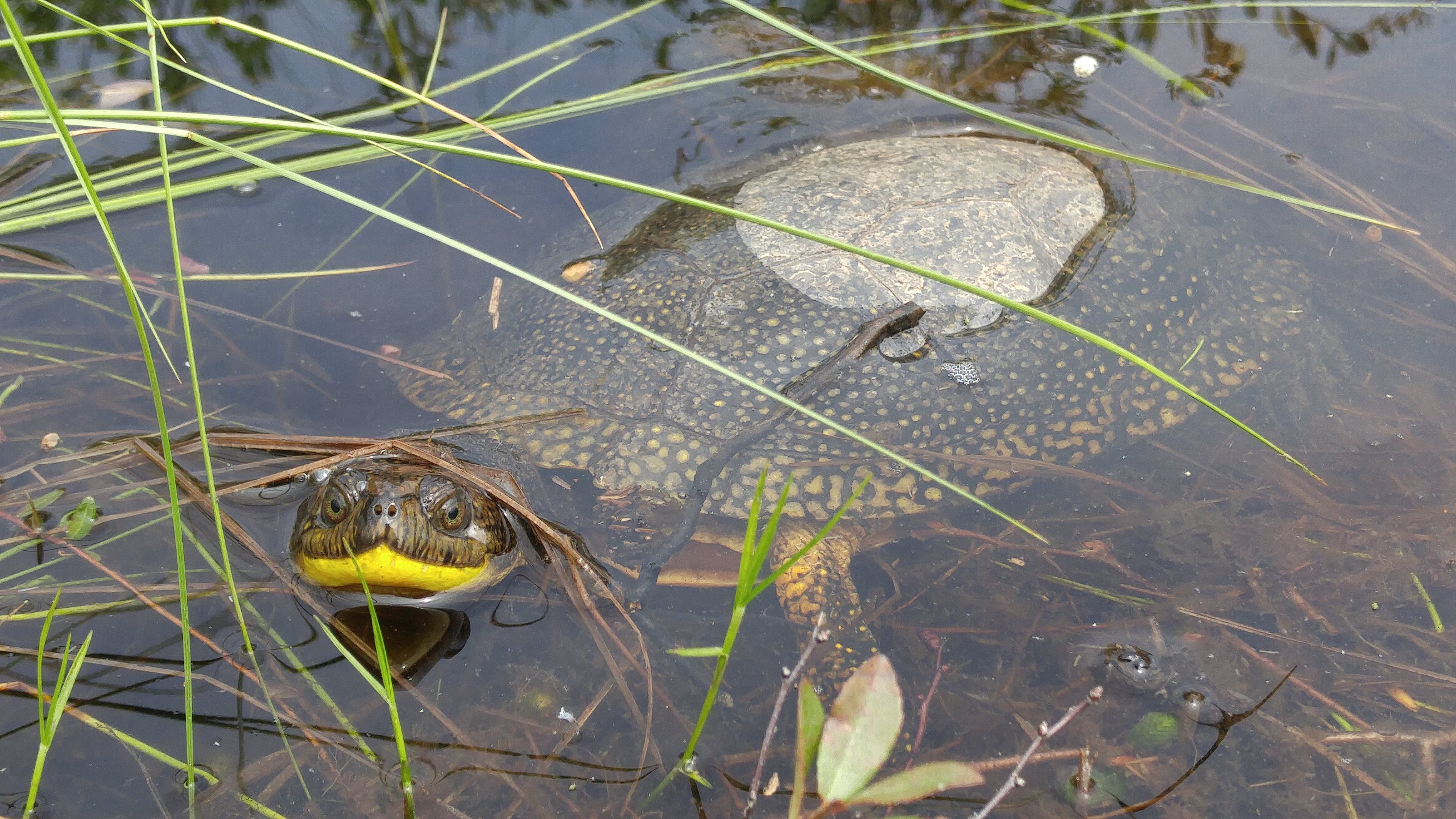
    Blanding’s Turtle is an endangered species and one of the four turtle species in Nova Scotia. There were three previously known populations of Blanding’s Turtles in the southern region of Nova Scotia.  The populations of Kejimkujik National Park and Historic Site, McGowan Lake, and Pleasant River contribute less than 250 mature individuals. A new group of Blanding’s Turtle was discovered in the Lower Medway and since its discovery in 2016 over 60 new individuals have been identified. This group is a welcome sign of Blanding’s Turtle resilience in Nova Scotia however their presence requires further investigation.

    As the landscape is continually altered for harvest, land development and roadways, turtles lose precious habitat. Losing habitat can be more than just a loss of living space but can also affect migration, nesting locations and opportunities to mate. Areas between group of turtles with proper habitat and waterways allow turtles safe passage with lower risk of dangerous encounters. Without habitat to facilitate movement between groups of individuals, it can be difficult to find food sources, areas to nest or encounter mates. If group numbers are low, inbreeding increases and can cause negative genetic effects due to a lack of genetic recombination. Overall this can lead to lower fitness, lower resistance to disease and a reduced capacity to respond to environmental changes. Considering that it takes a Blanding’s Turtle 20 years to reach sexual maturity this could result in a significant reduction in the breeding population.

    Analyzing DNA samples will allow us to explore the genetic structure of this new group of Blanding’s Turtles. This data will be compared to previous data collected from the other three populations of Blanding’s Turtle in Nova Scotia. Determining if this new group of turtles is a distinct population or an isolated extension of another population will allow us to build recovery plans at a scale that matches that of the species. This would mean dedicating the appropriate amount of effort and funding towards this group based on its size and need in relationship to the other populations. It is important to understand where to allocate funding and efforts for recovery actions to maximize benefits for the species overall.

    For this project, DNA will be isolated from blood samples we collect in the field. A process called Polymerase Chain Reaction (PCR) will allow us to amplify minute amounts of DNA for genetic analyses. The procedure involves an initial lysis step which releases the nucleic acids from the cell, that are then separated from the rest of the cellular material which is eventually discarded leaving the DNA behind.

    Using known sections of DNA called primers, PCR replicates DNA and makes millions of copies of these target sequences. These DNA ‘fingerprints’ can be analyzed for allele frequencies and subsequently compared to genetic profiles of other Blanding’s Turtles from Nova Scotia. Essentially, the process explores differences in the DNA at the same site (loci) on the DNA strand of different individuals. These differences can illustrate how closely related the individuals or populations may be at the genetic level.

    Allele frequency data not only informs on the genetic relatedness of the turtles but explores several other genetic factors, such as; inbreeding, migration, parentage, etc. With this information we can understand the physical and genetic factors that may impede development of this group of turtles. Understanding these issues is the first step towards overcoming them. With effort and time, these Blanding’s Turtles’ communities should be stable and not under a constant threat of extinction. It is the goal of every conservationist to see an endangered species thrive again and it is my goal to see the Blanding’s Turtles smiling faces for many years to come and long after I am gone.

    Carter Feltham is a candidate for a Master of Science in Biology and supervised by Dr. Russell Easy and Dr. Steve Mockford

  • Official Lichen of Nova Scotia Announced

    Official Lichen of Nova Scotia Announced

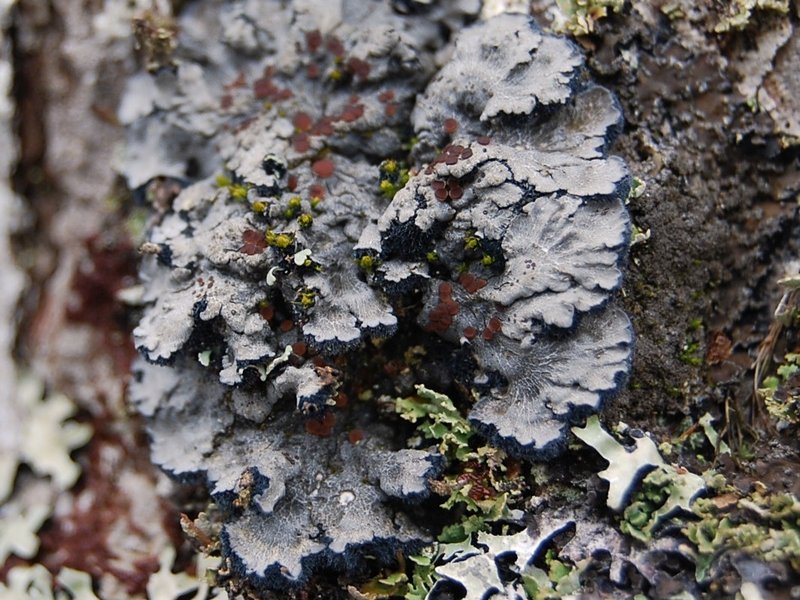
    As of January 30th 2019, the Blue Felt Lichen (Pectina Plumba) has been declared the official provincial lichen of Nova Scotia! A poll was held by LichenNS that was met with 565 responses, resulting in a win for the Blue Felt Lichen.

    Lichen is a symbiosis of alga or cyanobacteria (blue-green algae), called a photobiont, and a fungus, or mycobiont, that results in a structure that appears to be a single organism. Although lichen is not a well-known organism, it is extremely abundant in Nova Scotia. It is estimated that there are approximately 1000 species of lichen in the province, which is more than all species of mammals, fish, amphibians and reptiles of Nova Scotia combined.

    The Blue Felt Lichen is the only species of its genus present in North America, and most of the population is found in Nova Scotia with over 425 recorded sites containing the lichen. If you want to try and find some Blue Felt Lichen, it would be best to find a humid low-lying area with mature red maples, swamps, fresh waterways, or in upland hardwood stands close to the coastline. The lichen is commonly found on trees such as mature sugar maples, ash, yellow birch, poplar or eastern cedar.

    Each province will be choosing their official provincial lichen and submit their choices to the Museum of Nature in Ottawa. The ultimate goal of this project is to combine research about each types of lichen into one paper, which will be published.


    Sources:

    https://www.anbg.gov.au/lichen/what-is-lichen.html

    http://nsforestnotes.ca/2019/01/30/the-beautiful-blue-felt-lichen-pectenia-plumbea-is-nova-scotias-new-provincial-lichen/

    https://www.lichensns.com/


  • Mi’kma’ki, Indigenous Peoples and Our Collective History

    Mi’kma’ki, Indigenous Peoples and Our Collective History

    “Acadia University is located in Mi’kma’ki, the ancestral territory of the Mi’kmaq nation.”

    This oft-quoted statement has become the norm on course syllabi and department emails, but its significance is often glossed over and not fully understood by many members of the Acadia community.

    It is known as a territorial acknowledgement and it is given in recognition that the land upon which we study and gather is part of the traditional lands of the Mi’kmaq peoples. It is an important cultural protocol for many Indigenous peoples, nations and cultures and it serves to demonstrate our respect for the traditional custodians of these lands.

    Indigenous peoples had lived on these lands for thousands of years before colonial settlers first arrived in the 14th and 15th centuries. They established successful communities and governing structures that allowed their peoples to flourish in pre-contact North America. However, over the successive centuries, both French and British administrations had enacted policies and laws that disadvantaged and often harmed Indigenous peoples and their traditional ways of life.

    The creation of residential schools in the late 19th century served as the culmination of the discriminatory practices against Indigenous peoples. Indeed in 1920, Duncan Campbell Scott, Deputy Superintendent General of the Department of Indian Affairs, stated “I want to get rid of the Indian problem … Our objective is to continue until there is not an Indian that has not been absorbed into the body politic, and there is no Indian question, and no Indian Department”. This form of outward racism continued throughout the 20th century until the last residential school (Saskatchewan’s Gordon Indian Residential School) was closed in 1996. Residential schools were places of immense sadness and despair as children were frequently abused, physically, emotionally, and sexually by their superiors. They were also prohibited from speaking their language, celebrating their traditional customs and returning to their home communities and parents.

    The extensive history of oppression through residential schools, among other things, is a dark stain on the Canadian consciousness. However, it has resulted in renewed movements to educate the Canadian populace on these dark corners of our history and to unite in a spirit of truth and reconciliation as we seek to move forward as a country. This positive message gives us hope that Canadians can come together to recognize our past failures and chart a better way forward.

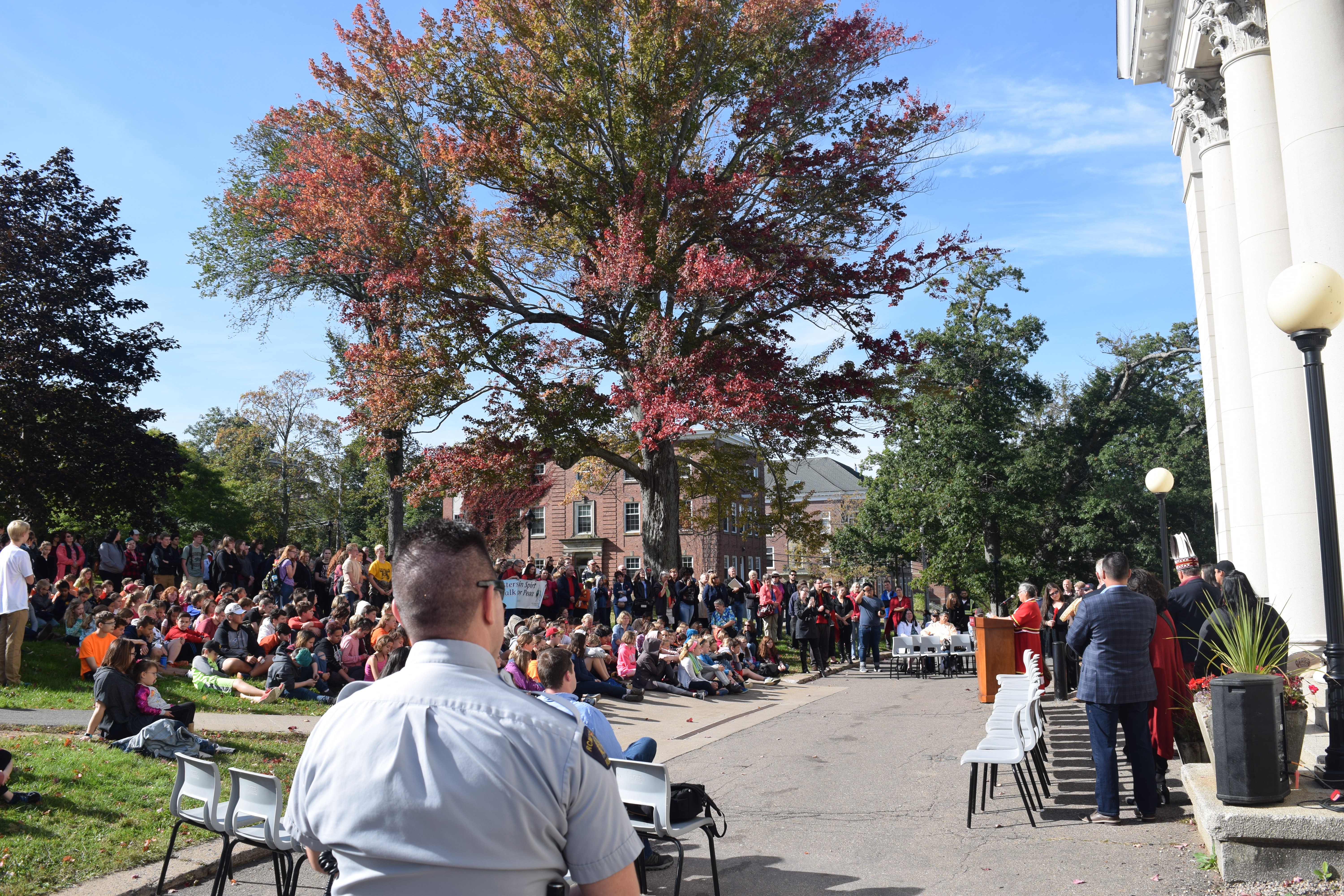
    Each year, October is designated as Mi’kmaq History Month, and it provides an opportunity for the Acadia community to learn more about our collective history and the important contributions that Indigenous individuals and communities have made to our country. Groups including the Indigenous Students’ Society of Acadia (ISSA) and several academic departments often hold events that aim to teach and celebrate Indigenous culture and perspectives.

    This year, former Chief Adviser to the Truth and Reconciliation Commission Tim O’Loan visited Acadia’s campus to speak about the history of residential schools and the path toward reconciliation, and John Hannam, City Clerk of the City of Thunder Bay (Ontario), visited the local area to screen the “Walk a Mile” film project and lead community members through a discussion on the film.

    Oliver Jacob is a third year History and Politics student and News Editor of The Athenaeum

  • Reflections on Race and Privilege

    Reflections on Race and Privilege

    I am a person of many privileges. I was born and raised in Nova Scotia to loving parents who provided me with all of my needs and some of my wants. Most people in my circle looked like me. Growing up, we never needed to consider issues of class or race, and I never experienced what it felt like to be judged because of some attribute that I could not control. I am white. That is a fact. By extension this means I experienced my world as somebody who fit into it; who knew that I belonged and had a place.

    And yet in spite of (or perhaps because of?) my upbringing I have cared deeply about equal treatment for people of all races, ethnicities, sexual orientations and belief systems. I read widely the works of champions of social justice such as “Letter from a Birmingham Jail” by Martin Luther King Jr. and “I Write What I Like” by South African anti-apartheid activist Steve Biko. I intentionally sought out relationships with people who were different from me.

    As a first-year student at Acadia, I saw a table in the cafeteria occupied by students from the Caribbean. They looked like they were having fun; you could hear their laughter ripple across meal hall. How I wanted to be part of them! After watching them for 3 days, I decided during lunch to pick up my tray and plunk myself down at the middle of their table. It was either going to go well, or very badly. Crossing a line, even the ones unspoken of, can be risky. It can feel uncomfortable. Even scary.  My gamble paid off, and I established friendships with people I met at that table which extend to this day, more than 20 years later. At that table I learned to get comfortable talking about race. I learned to listen. I learned to relate, to connect. I learned to be comfortable being the only one in the group who looked like me.

    When I talk about privilege, I’m now aware of the privileges I enjoy because of my race, my class, my nationality. However, it is living cross-culturally for more than 20 years and sharing my most intimate life experiences with people from across the African diaspora, that has been my greatest privilege.

    After graduating from Acadia University, I moved to South Africa. Within two years of my graduation, I married my soulmate, a young man of Zulu origin. We danced down the aisle to the voices of his elders singing a song that told of the exploits of his ancestors. Their pride in their history, their culture, was palpable.  Two years after that, we started our family. We adopted two children in the same week. Bijou was originally from the Democratic Republic of Congo, and was 15 years of age when she came to live with us. She was not related to us by blood, but we loved her as if she were. Nhlanhla was my husband’s youngest brother. He was 7 years of age when we adopted him, after the passing of their mother. He was obsessed with housework and spoke no English. He was this little boy with a big smile and mischievous twinkly eyes and a mop. Over the next 6 years we added two more biological children to the mix and our family was complete.

    Our first days as a family were challenging ones. In addition to the challenges of having 3 different home languages in our household, poor educational foundations for both adopted children, grief and childhood trauma, we were living in South Africa as a mixed family. South Africa, that beautiful, conflicted nation that has utterly captured my heart. We experienced the beauty of South Africans as they embraced us, and the ugliness of racism as others rejected us. We knew that racism could be both overt and covert, and we had felt its sting. But we were determined to overcome it with our love and our story.

    We did not leave South Africa for the reasons that people usually leave. We didn’t run away from the crime, or the corruption, though these are of concern to us. We were not seeking better economic opportunities in a developed nation. We came to Canada simply to be closer to my Canadian parents. And we wanted to give Nhlanhla the chance to hold a high school diploma, something that was not a possibility for him in South Africa.

    We knew that racism existed in every society. I have friends who are African Nova Scotians and I was aware of the challenges still faced by these communities in our province. Some thought we were making a mistake by not moving into a historically African-Nova Scotian community. However, we had found the perfect house in Pictou, NS, and wanted to live where we chose. We were under no illusions, but we did expect that after the civil rights gains of the past 60 years, after the courageous battles fought by people of colour here in Nova Scotia and across the country, that racism would be hiding underground. We expected it to be concealed. We did not expect it to impact our family as it did.

    On September 19th at approximately 3:30 pm, our now 21-year-old son Nhlanhla was shot in the back with a high velocity nail gun by a co-worker on the construction site where he worked here in Pictou County. The 3.5 inch nail punctured his lung. After he was shot, when he was lying on the ground screaming, the same co-worker pulled the nail from his back, creating a slow leak from his lungs to the cavity next to his chest wall. His boss then drove him home to the rural community where he now lives. By the time he received medical attention, 1.5 hours had passed. With each breath, the cavity next to his chest wall was filling up with air, and his lung was proportionally collapsing. The doctor said by the time the chest tube was inserted to release the air, his lung was 25% collapsed. He would be in hospital for 4 days.

    He had started that job 3 weeks prior to this incident, and for the entire time of his employment was subjected to race-based bullying by the same co-worker who shot him. It has been widely reported in the media that he was called a nickname by the crew that rhymes with the “n-word”. His co-workers refused to try to pronounce his real name, or even use the shortened version that he commonly goes by, which is “N.H.” The same co-worker stapled his jacket to the stairwell, and the other guys on the crew laughed about it. My son alleges that the shooter threw nails at him while he was working, hit the steel toe of his boot with a hammer, and numerous times threated to puncture his hand with the staple gun. But perhaps the most overt example of racism prior to being shot was when this same co-worker made a joke (and I use that term loosely) about every white person deserving to own a black person.

    Did he tell us this was going on? No. Did he report it to his boss? No. He told himself perhaps it was some kind of initiation; that if he kept his head down and kept working, it would pass. The guy would get tired of bullying him. Or he’d find a new victim. He thought that if he caused trouble for a more senior person on the crew, then as a new employee he could lose his job. He thought that because his boss had laughed about his jacket being stapled to the stairwell, because he had witnessed at least some of the bullying behaviour and laughed about it, that his boss would not act in his interest. So, he said nothing. He just waited for it to pass. But it didn’t pass. This decision nearly cost him his life.

    The blatant, in-your-face kind of racism my son endured is something we did not expect. The fact that we could have lost him in this violent act has rocked us to our core. To think that there are people in our communities who hate to such an extent that they can injure or even kill someone you love, here in Nova Scotia in 2018, is a painful realization and one that surprises us. What has been almost as surprising and painful is the total lack of empathy that we have received from my son’s former employer. However, what has warmed our hearts and carried us is the outpouring of love and support that we have received from people in our community, our province, across the country and because of the nature of our family, from around the world. We know that this act is not reflective of who we are as Nova Scotians and Canadians.

    Still, there are lessons to be learned. And since I can only speak for myself, here is what I personally am taking away from this experience. To my children, and to all young people of colour, I will say this. Please stop putting your heads down and getting on with it. Nobody deserves the kind of treatment my son received. It will not get better on its own. It will only get better if we make it better together. And to make it better, we as parents and allies, we as your community need to know what you’re going through. Find someone safe to talk to, and talk. Get advice if you need to. Plan your next move if you can. But don’t keep silent. You do not have to give racist individuals a probation period within which to abuse you before you react and respond. You are worth more than this.

    To people who look like me, to other white Nova Scotians and Canadians who are intent on stamping out racism and all forms of discrimination in our schools, our work places, or churches and communities, I humbly offer the following advice.

    1. Listen. Be a safe person for people of colour, and indeed all those experiencing marginalization and oppression, to talk to. In the context of relationships, learn about their lives. When they say they are experiencing discrimination, hear them. I mean, really hear them. Too many times as white people we don’t even let a person finish telling their story before we get defensive. “Oh no, that person was just being a jerk. It’s not necessarily racism.” And my favourite: “Why does everything have to be about race?” Black people have been black for their whole lives. They know their own experiences, and they are not telling you their story because they are holding you personally responsible for the actions of all white people. They might be looking for someone to help carry the burden, to show some empathy. Be that person.
    2. Do no harm. This one is simple. Don’t be that person who tells racist jokes, who mimics the accents of non-native English speakers, who puts out into the world discriminatory statements against one or another group of people. Let no such words cross your lips.
    3. Do not tolerate discrimination of any kind in your circle. I remember hearing a story about Maya Angelou hosting a dinner party for some of her closest friends. At this party, someone made a derogatory remark about members of the LGBTQ+ community. She overheard the remark, stopped her conversation, commanded the attention of her guests and politely asked that person to leave her home. We have to stop allowing people in our lives, our family members, colleagues, and friends to say and do things that discriminate against others. It will be awkward. It will be uncomfortable. You might not be able to ask Grandma or Uncle Frank to leave your home, but you can firmly assert that such sentiments are not welcome in your home or in your presence.

    I wonder how the story might have turned out had someone on Nhlanhla’s crew said to the Accused, “Hey, why don’t you leave the kid alone?” What if they’d come up to Nhlanhla and said, “You know man, you don’t have to accept this kind of treatment. Let’s do something about it together.” What if someone had shown him some compassion or solidarity? Or even in the aftermath, some empathy? It would feel different for us.

    It is in our power to undertake small but important actions that can stamp out racism and discrimination. And for this reason, we have hope. I leave you with a quote from Martin Luther King Jr., who said, “Power without love is reckless and abusive, and love without power is sentimental and anaemic. Power at its best is love implementing the demands of justice, and justice at its best is power correcting everything that stands against love.”

    Stacey Dlamini is a graduate of Acadia University’s Class of 2000

  • Opinion: What Tim Houston’s PC Leadership win means for Nova Scotians

    Opinion: What Tim Houston’s PC Leadership win means for Nova Scotians

    Photo credit to Sam Foran of Foran Photography

    This weekend, history was made in Nova Scotia.

    Tim Houston, MLA for Pictou East, accountant and entrepreneur by trade, husband of the amazing Carol Houston and father of the down to earth Paget and Zachary, became the leader of the Progressive Conservative Party of Nova Scotia this weekend on the first ballot, something everyone thought was impossible.

    Now many Nova Scotians are asking “Who is Tim Houston?” and “What does this win mean for Nova Scotia?” And I’m here to answer these questions for you as someone who’s involved with the PC Party.

    Who is Tim Houston?

    Tim Houston is one of the hardest working people I’ve ever met. He’s relentless in a good way. He stands up for what’s right and works for the people in his constituency unlike any politician I’ve ever seen. He’s a businessman, a family-oriented person, he’s forward thinking, and he’s a true Nova Scotian. He listens to people, he listens to their ideas, and he works to form those ideas in a way that will benefit our province. He’s a true born leader and he’s approachable. If you haven’t had the pleasure of meeting him yet, I would strongly suggest you try to.

    What does this win mean for Nova Scotia?

    Tim Houston becoming the leader of the PC Party means one thing- in just two and a half years he’ll be the Premier of our beautiful province. People are noticing that the Nova Scotia Liberal Party is a sinking ship. They’ve made broken promise after broken promise, and just barely held on to their majority last election. Only time will tell just how much support they’ll lose in the next election, but one thing is for certain, they won’t be forming government next time.

    Tim put forward ideas during this leadership race that he has full intent of implementing once Premier, ideas that will attract voters on all sides of the political spectrum and that will ultimately win the election. Some of these ideas include:

    • No provincial taxes for ages 25 and under.
    • Establishing a new chronic illness treatment prevention program: Once Premier he’ll focus $100 million on an in-home treatment model for patients with chronic illnesses.
    • Spending smarter on healthcare: Tim focused on chronic conditions because five percent of Nova Scotians consume 70% of our health care dollars due to chronic conditions.
    • Creating a new Ministry of Mental Health and Addictions.
    • Designing a brand-new Economic Development Strategy.
    • Bringing back the film tax credit in Nova Scotia.
    • Fighting against the federal Liberal imposed carbon tax.
    • Investing in infrastructure by making smart decisions as opposed to political decisions.
    • Allow alcohol made in Atlantic Canada to cross borders freely.

    These are just a few of his many great ideas, if you’d like to learn more about Tim’s ideas, visit https://www.timhouston.ca/ideas

    What Tim’s win means for us is that in two years we’ll have a Premier that listens, who has forward thinking ideas, and who fights for what’s best for the people he represents. There’s often this invisible barrier between politicians and the general population, but with Tim that barrier doesn’t exist. He’s not just a politician. He’s a regular guy who ran for office and worked hard.

    My experience with the PC leadership race

    It’s no secret that I supported Elizabeth Smith-McCrossin for leadership. Her ideas, her energy, and her leadership experience attracted me to her highly qualified team, but me supporting her as my #1 choice not once changed my friendship with and support for Tim. Tim and I have been friends for quite some time now; he’s been a mentor, a role model, and has been supportive of me for years. I’m so proud of his hard work and dedication and I’ve always been proud to know him. Whenever he was in town, I was always there supporting him no matter what side I was on. After the first ballot results were announced, I knew what everyone else knew. Tim was about to become the leader of the PC Party. I respect the democratic process of this leadership race and believe fully in order to be successful we need to be a unified party. I support Tim 100%.

    I want to take a moment to recognize Tim’s team and family. They all worked so hard and this wouldn’t have been possible without them.

    This is an exciting time for the PC Party of Nova Scotia. If you’d like to get involved or learn more you can contact me or get involved with your local PC Association- you won’t regret joining our tory family.

    Hannah Dawson-Murphy is a fourth year Politics student and is now a Candidate for the Conservative Party of Canada nomination in West Nova.

  • Road Trip Around Nova Scotia (with my cat)

    Road Trip Around Nova Scotia (with my cat)

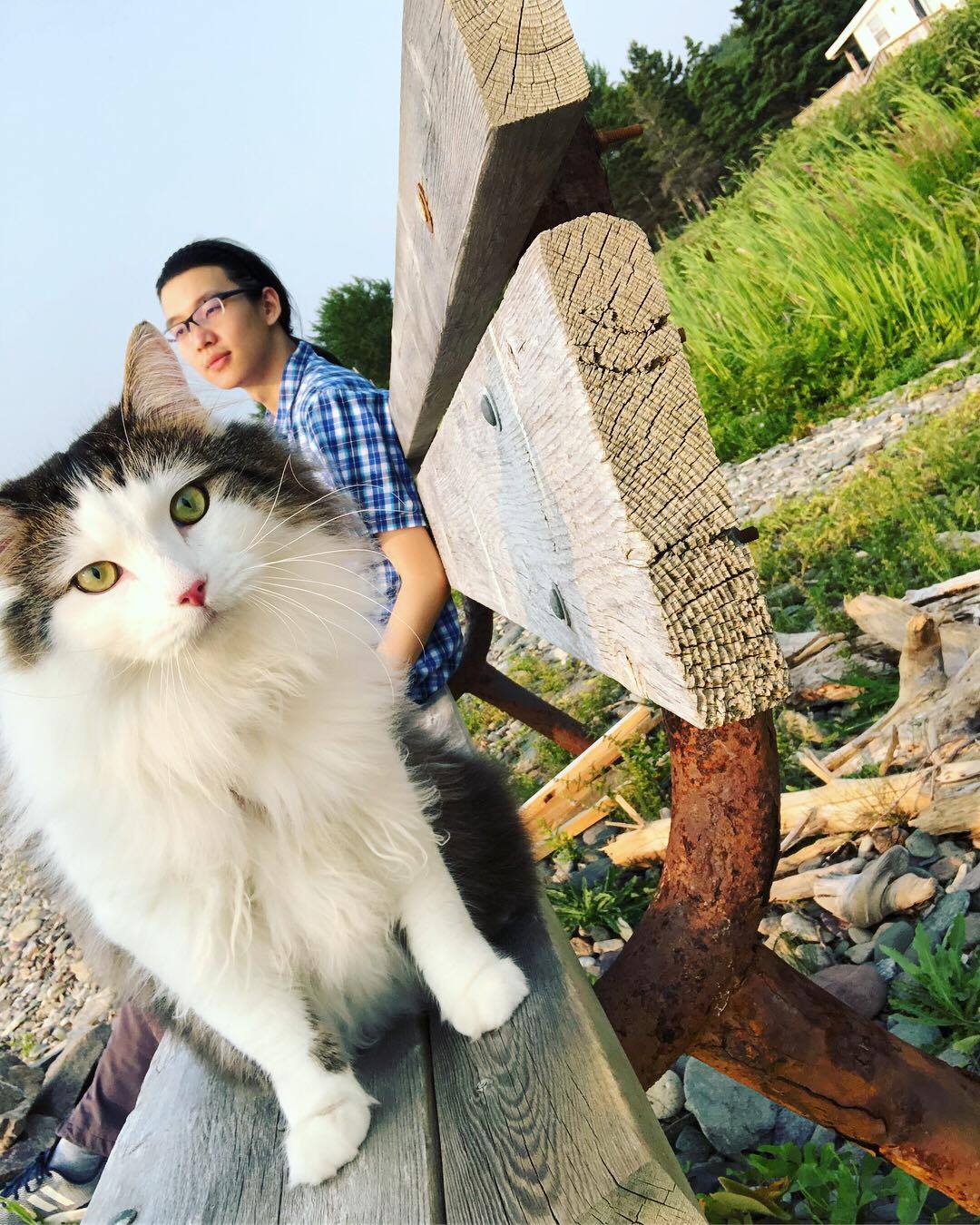
    At the end of this past summer, I went on a 10-day road trip around Nova Scotia with my boyfriend and our cat. We visited Sydney in Cape Breton, Antigonish, and Lunenburg. How did we end up going on a road trip? Well, we wanted to travel but we also didn’t want to leave our cat at home alone, so a road trip seemed perfect for us. It’s flexible, convenient, and cost-effective. We thought it would be cool to have a road trip around Nova Scotia, the place we’ve called home for four years now but haven’t had the chance to really look around.

    Little tip for you: if you are planning on going on a road trip, packing light is key. Being the overly cautious person that I am, I made a long list of things that were needed for the road trip. Food, blankets, emergency kits, clothes, makeup, and miscellaneous things got stuffed into two or three duffle bags, which in turn were stuffed into our car with our cat’s carrier and his litter box. This made it difficult to find things for one, but also forced us to make at least two trips to get all the things we needed into our hotel room.

    I thought that bringing our cat was going to be the biggest challenge on the trip. For one, I thought it would be hard to find pet-friendly hotels, but actually it wasn’t as difficult as I had imagined. The three hotels that we stayed at were all pet-friendly and very accommodating to our needs. I was also worried our cat wouldn’t adjust to the sudden change of environment. Surprisingly, he did very well. He seemed to adapt to different hotels very quickly, usually he would be completely fine with the new environment by the next day. When we went out, we left him in the hotel room with the “Do Not Disturb” sign on. However, we occasionally took him out to parks and beaches (he had his leash on). He was very curious about the outside world, and it seems he enjoyed the trip as much as we did!

    We spent the most time in Lunenburg, which has become my favourite place in Nova Scotia. I was first drawn to Lunenburg by its views. I saw an online picture of the colourful harbour and thought: “Okay, maybe that’s only one part of the town, the ‘pretty’ part that photographers usually capture, but will the rest of the town really be that beautiful?” I was blown away by how developed Lunenburg is as a travel destination. The town is truly beautiful, with colourful houses, sea creature signs, delicious seafood restaurants that make you want to go back for more (I had the best seafood stew in Lunenburg), and gift shops that will fulfill your every need for souvenirs.

    Lunenburg has the power to calm you, whether it’s eating lobster from a balcony overlooking the ocean in the rain or wandering into a gallery and getting invited by the owner to have tea (true stories). We even extended our stay because my boyfriend wanted to go out on a deep-sea fishing trip – I was the only person on the boat that got sea sick and threw up, but it made for a very memorable trip). I am so happy that I discovered Lunenburg, a hidden gem in Nova Scotia. I will definitely go back again and again, and even bring my family there when they come visit.

    This road trip has made me realize that it is possible to bring our cat with us when we travel – it’s unusual, but it is possible. This has opened up a lot more opportunities for future travels. More importantly, it grew my appreciation for Nova Scotia. I count myself very lucky to have the opportunity to live and study in such a safe and beautiful place. That out of all the places in the world I ended up in Nova Scotia makes me feel truly feel blessed.

    Chuhan Xiao is a fourth year BA Psychology student

  • Opinion: I believe in Nova Scotia. You should too.

    Opinion: I believe in Nova Scotia. You should too.

    This article was published in Issue 79.1 of The Athenaeum.

    Several months ago, I met a guy. Initially, I didn’t think it was worth my time to talk to him, but at the insistence of a good friend I sat down and chatted with this guy about his work. For the past year he had dedicated much of his life to We are NS, a Facebook and Instagram page he had started to showcase what Nova Scotia was really about. When we talked he spoke with such passion and ferocity that he could have been there for hours.

    But it was one sentence that truly grabbed me. He told me how “the landscape of Nova Scotia inspired creativity”.

    That got me thinking.

    As one of the founding provinces of Confederation, Nova Scotia has always played a smaller but important role in Canada. From a mighty shipbuilding and fishing economy to booming natural resources, Nova Scotia has had a front row seat to the changing demands of the global market. The ups and downs of the global economy are as unpredictable as the weather, but their effects can be equally destructive. Atlantic Canada has been hit particularly hard by the latest series of slumps and outmigration is at an all-time high, depriving the province of $1.2 billion annually, but this is not a cause for despair.

    This is a wakeup call. Like Madonna or David Bowie, this province has the opportunity to reinvent itself in a big way.

    Let me first profess that I am by no means an economics expert nor a native Nova Scotian. The latter aside, I have fallen in love with this province. It’s impossible for me not to smile when I walk through Wolfville in the fall and see the beautiful colours, or hike Cape Split and feel the cool wind, or sip on a glass of Luckett wine as the sun sets in front of me. I can’t get enough of this province because it exudes beauty.

    Currently the province is between a rock and a hard place. Outmigration deprives the province of nearly 1300 people between the age of 20-29 every year. Why? Most of you know the answer. They don’t see a reason to stay.

    According to an article in The Chronicle Herald “eliminating net migration over the past 10 years could have generated over half a billion dollars in additional provincial revenue”. Even recent university graduates could have contributed over a billion dollars to the provincial economy, had they chosen to stay.

    The opportunities are here. There is more than ample room to expand our horizons and bring Nova Scotia to North American and global prominence. In today’s world we cannot content ourselves with being a small hideaway on the Atlantic. We have to assert ourselves and push to new heights with new ways of thinking.

    I turn now to California. The Golden State is considered the gem of the American economy, with a GDP the size of Spain. Needless to say it’s a big state. The higher education institutions of the region, specifically Stanford University, pushed the state to the cusp of an economic boom in the mid 1970s.

    Frederick Terman, son of distinguished psychologist Lewis Terman, saw how at MIT the faculty actively researched and maintained contact with industry through constant interaction and putting students in corporations through co-ops or internships. He brought these ideas to Stanford while serving as Dean of the university from 1955-1965 and helped sow the seeds for the birth of Silicon Valley.

    It was this contact between universities, corporations, and government that allowed for the prospering of Silicon Valley. Each recognized the importance of one another in achieving its ultimate ends. Universities wanted more money to do things with, so they invested by putting students in corporations through co-ops and internships. Corporations wanted more workers and to churn more profits, so they brought in more and more students to solidify their workforce. The government wanted to grow its economy and achieve a higher standard of living, so it invested more into universities to enroll students. The cycle comes full circle.

    Nova Scotia is the province best suited for this to happen. The release of the Ivany Report in 2014 provided the impetus for change. The province has 10 universities and NSCC, which has 13 campuses, all for a population of less than a million people.  That only reinforces how ripe for growth our province is.

    We’re already going in the right direction. Universities across the province are building off their strengths. Acadia has the Centre for Rural Innovation, the Atlantic Wine Institute, the Tidal Energy Institute, and the Institute for Data Analytics, in addition to Launchbox, providing funds for student-entrepreneurs. Dalhousie is responsible for 98% of all industry sponsored research in the province, working with companies like BlueLight Analytics and Atlantic Motor Labs to strengthen its ties to marine biology and ocean science sectors. Cape Breton University has the Uhma Institute of Technology (UIT) Startup Immersion Program, which teaches students for six months regarding successful entrepreneurship in order to bolster the business climate of the island.

    It’s clear that the time for change is upon us. Change isn’t always popular, nor fun or easy. But it is necessary. This province will continue to be a crucial part of Canada and an even more important player in an increasingly globalized world.

    We’re currently taking steps in the right direction, with grassroot startups making their debut across the province. East Coast Lifestyle serves as the paradigm in the quest for Nova Scotian entrepreneurs. We’ve proven that we can do it. All of the necessary tools for growth and expansion are in front of us and the roadmap is there.

    I believe in Nova Scotia.

    You should too.

  • Jobless in a Jobless Town

    As the second semester quickly gets under way, my mind wanders to the thoughts of a warm and sunny Wolfville. While I am certainly enjoying my time here at Acadia, a looming concern presses down on my shoulders. Looking to the future, I have been trying to plan out my summer here. I have a sublet apartment all ready and signed for, a summer reading list that I can’t wait to start, but one major thing is amiss: I can’t find a job here in the Town of Wolfville.

    This isn’t a reflection on my capabilities or past work experience, or a lack of trying. If I may toot my own horn, I think I’m a qualified candidate for any job. What concerns me is the lack of job opportunities here in this small town. I have visited local businesses and dropped off resumes and I have visited Job Bank and Indeed almost daily. I suppose, of course, that the lack of employment makes sense. Wolfville is a small town, and when the students leave at the end of the academic year, Wolfville only gets smaller. Demand just isn’t there for small businesses to hire, and I understand that.

    So I am forced to look elsewhere, to New Minas and even Kentville for summer employment. This, in itself, poses more problems than solutions. The public buses are notoriously late, so I would hate to rely on them as a mode of transportation. In addition, my status as a student makes it far more difficult for me to obtain a job because of the fear that I may quit as soon as the new academic year starts. So, here I am in quite a pickle.

    It makes me wonder if my predicament is my fault. But then I think of the grander scheme of things. Nova Scotia’s economy isn’t exactly in its tip-top form. Politicians and economists are worried about a brain drain, and from my point of view, I can completely understand why. With the limited opportunities, I have seriously considered going home to find work. I am holding out on the hope that a job opening will present itself, but I must admit that I am feeling really down on my luck.

    I’m not an economics major, but that hasn’t stopped me from thinking about what Nova Scotia can do. How can Nova Scotia create more jobs? How can Wolfville create more jobs? I feel as though Wolfville is overlooking a prime opportunity for growth and expansion. There is literally a source of new and ready individuals to join the work force, but Wolfville hasn’t taken advantage of that. So instead, freshly capped graduates seek employment elsewhere and eventually settle down elsewhere, leaving Nova Scotia as a whole with a faltering economy and stagnant population growth.

    In the mean time, I am jobless in a jobless town.

  • Acadia Researcher Finding a Way to Make Nova Scotia Roads Safer for People and Animals Alike

    Those familiar with Nova Scotia’s seemingly endless stretches of highway are likely accustomed to the sight of roadkill. But now, Acadia Master’s candidate Stephanie White is researching a way to make our roads safer for both the animals that cross them and the drivers who want to avoid hitting them.

    Wildlife fencing and wildlife underpasses/overpasses are common sights in many European countries and along the West Coast of Canada and the United States, where the frequency of large mammal crossings make them a more pressing safety precaution than in other parts of the world. In Atlantic Canada, the vast majority of wildlife road crossing preventative technologies are found in New Brunswick due to the high number of moose and deer in the region.

    Nova Scotia, however, may also benefit from the addition of such safety measures, as to date, there are only two known underpasses in the entire province designed for wild animals to cross highways safely. There are other underpasses scattered throughout the province, but they see regular ATV usage which makes them not much more wildlife-friendly than the highways they intersect. The other two wildlife underpasses, which have a metal bar to prevent their use by ATVs, are located at the Cobequid Pass and in Antigonish. Before Stephanie White’s research, neither had been studied to determine what animals used them and whether it would be worthwhile for more to be built.

    The government-funded project started in May 2015 with thirty-four trail cameras set up around the Antigonish underpass, which was situated at a highway undergoing construction. This underpass contained both an aqueous and terrestrial component and was designed for small to medium sized animals. A total of 300 000 photos were taken and analyzed. Variables such as the addition of wildlife fencing around the underpass and the usefulness of an atrium to allow light into the underpass were measured. While the study is still ongoing and the huge quantities of trail camera pictures are still being analyzed, promising findings are emerging.

    These findings conclude that the terrestrial component is most often used by hares and porcupines, but since the addition of wildlife fencing on the side of the highway, an average of one black bear a week has been observed crossing the underpass. The aquatic component sees animals such as musk rats, wild minks, beavers and families of ducks crossing it. The findings of ducklings using the underpass have especially exciting implications for road accident prevention as many drivers are tempted to stop or swerve when they see a trail of ducklings following their mother across a highway.

    While this project is still ongoing, it indicates so far that investment in wildlife fencing and wildlife underpass construction could reduce the number of small and medium sized animals crossing Nova Scotia’s highways. This could significantly improve the safety of Nova Scotia’s animals and drivers along the many kilometers of highway running the length of the province.

  • Tidal Series: Can Tidal Energy Make Nova Scotia Green?

    Tidal Series: Can Tidal Energy Make Nova Scotia Green?

    Briefly describe your background as it pertains to the study of tidal energy.

    I am a professor in the Department of Mathematics and Statistics who uses mathematical models and numerical simulations to do research in physical oceanography and fluid dynamics. For the past eight years, I’ve led a team of Acadia students and research assistants that have researched the potential of tidal energy in the Bay of Fundy. Working in collaboration with other universities, several Nova Scotia businesses, and the Nova Scotian and Canadian governments, our team has calculated the size of the resource and determined the best possible locations for turbines. And along the way, we’ve also learned an incredible amount about the tides of the Bay of Fundy.

    What is the practical resource of tidal power in the Bay of Fundy?

    Most of you are familiar with the incredible tides of the Bay of Fundy: the highest in the world, with a tidal range reaching 17 metres in the Minas Basin, and somewhere between 100 and 160 billion tonnes of water flowing in and out of the bay with each tide. The flow through Minas Passage during a strong flood tide exceeds the flow of all the rivers in the world combined, with the water’s speed exceeding 5 m/s. There must be a ridiculous amount of energy in these tides and tidal currents!

    In reality, the energy we can extract is actually rather modest. The potential energy in raising the water of

    Cape Split with Minas Passage in the background. The turbines are set to be installed in the passage near Parrsboro. Photo taken by Dr. Richard Karsten.
    Cape Split with Minas Passage in the background. The turbines are set to be installed in the passage near Parrsboro. Photo taken by Dr. Richard Karsten.

    Minas Basin by 15 metres is very large (1015 J) but this process takes place over 6 hours and we can only generate power from a difference in water depth–so, at best, we can only take advantage of half of the tidal range. All of this reduces the average power we could theoretically generate from the Minas Basin tides to roughly 10,000 MW. That’s less than half the generation capacity of the world’s largest hydroelectric dam, the Three Gorges Dam in China. Despite having water flow greater than all the rivers in the world, the power potential is that of just one hydro dam (but it would be very large!). It is also four times the size of the current electricity-generating capacity of Nova Scotia, so it is still an important amount for our local energy concerns.

    The potential that exists within the Bay of Fundy tides has been recognized for at least a century, with a recent focus on tidal turbines, which act much like wind turbines – using fast-flowing currents to turn turbines that generate electricity. We have calculated that such turbines could in theory extract 7500 MW from the fast-flowing currents of Minas Passage, which is close to the theoretical limit. More importantly, we found that 2500 MW of power could be extracted from the flow while reducing the height of the tides by only 5%. These numbers were very important to me – they meant that the research was worth continuing and that tidal turbines placed in Minas Passage had the potential of meeting Nova Scotia’s electricity needs. But, they also meant that tidal energy wasn’t a global or national energy solution and (unfortunately) there would be no Nobel Prize.

    The hard work still remains. How can we change these theoretical calculations into electricity? Renewable energy has an unfortunate history of promising large amounts of power, but producing much less. The province of Nova Scotia has set a goal of deploying tidal turbines with an installed capacity of 300 MW, both a modest and an ambitious goal. This will require the deployment of approximately 150 turbines in Minas Passage – a considerable challenge, since only a handful of turbines have been deployed throughout the world. And, given that the turbines will have a capacity factor of maybe 50%, they will produce less than 10% of Nova Scotia’s electricity needs. By our calculations, 150 turbines would have only a small impact on the tides, roughly reducing the high tide in Wolfville harbour by 5 cm. But we are still a long way from getting there.

    It’s also worth noting that tidal energy isn’t just about large, commercial-scale projects. In fact, most of our research has been in collaboration with small Nova Scotia businesses, in particular Fundy Tidal Inc. (FTI), a community-owned company that is trying to bring tidal energy to Digby Neck. FTI’s goal is also to keep the benefits of developing tidal energy in the local communities, something that I support so strongly that I became a shareholder in FTI.

    Should Nova Scotia pursue tidal energy as an energy source?

    In short: yes. But we still need to do a considerable amount of work to determine if we can do this in an efficient, economical and environmentally friendly manner. On what scale should tidal energy be developed? We don’t know yet, but if we are going to reduce our use of fossil fuels, say by using electric cars, we need to substantially increase our sources of renewable electricity. And there is only one form of renewable energy in Nova Scotia that is among the world’s best opportunities, where we can be a world leader in its development. Could tidal energy bring both types of green to Nova Scotia? We have to at least try.

    For more information on tidal energy efforts at Acadia, visit http://tidalenergy.acadiau.ca/.


Betzillo positions itself as a versatile gaming hub where structured bonuses and adaptive gameplay mechanics support both short sessions and extended play.

Built with a focus on innovation, Spinbit integrates modern casino architecture with rapid transactions, appealing to players who value speed and digital efficiency.

Ripper Casino emphasizes bold entertainment through high-impact slot titles and competitive promotions crafted for risk-oriented players.

A friendly interface and stable performance define Ricky Casino, offering a casual yet reliable environment for a wide spectrum of gaming preferences.

King Billy Casino channels classic casino spirit into a modern platform, delivering recognizable themes supported by contemporary reward systems.

Immersive visuals and layered slot mechanics are at the core of Dragonslots, creating a narrative-driven casino experience.

Lukki Casino appeals to players seeking direct access and minimal friction, focusing on fast loading times and intuitive controls.

Casinonic provides a structured and dependable gaming framework, blending modern slots with transparent operational standards.