Tag: women

  • She Was Just Walking Home

    She Was Just Walking Home

    We have tried apps, tried keys, avoiding the bus and taking a taxi, phone calls, wearing flat shoes, panic button key chains, avoiding going out at night altogether, we have surrendered independence, tried running, tried screaming, tried to keep our head down, tried crossing the road, tried hiding in a crowd. Not one thing will change until the men that do it do.”

    anonymous


    Sarah Everard, a 33-year-old UK woman went missing on March 3rd, 2021, after walking home from a friend’s house. She was last seen at 9:30 PM when she was captured on a doorbell camera walking alone toward Tulse Hill.

    A week later, Everard’s body was found in woodland near Ashford, Kent. It is suspected she had been raped and murdered by 48-year-old police officer, Wayne Couzins.

    The tragedy hits home for women across the world. Vigils and protests are taking place, and on the rise is a social movement, “Not All Men”, and counter arguments addressing violence against women.

    When a woman hears news of another woman being abused – no matter where in the world she is – she thinks, “that easily could have been me.” It easily could have been a friend, a neighbour, a teacher, a family member. Women around the world run the risk of being raped and killed every day the second they leave their homes. Even when they are inside their houses, it runs through the back of their mind.

    This is why women walk with keys between their knuckles at night; this is why women check behind their cars and, in their backseats, and drive away before turning their GPS or their music on.

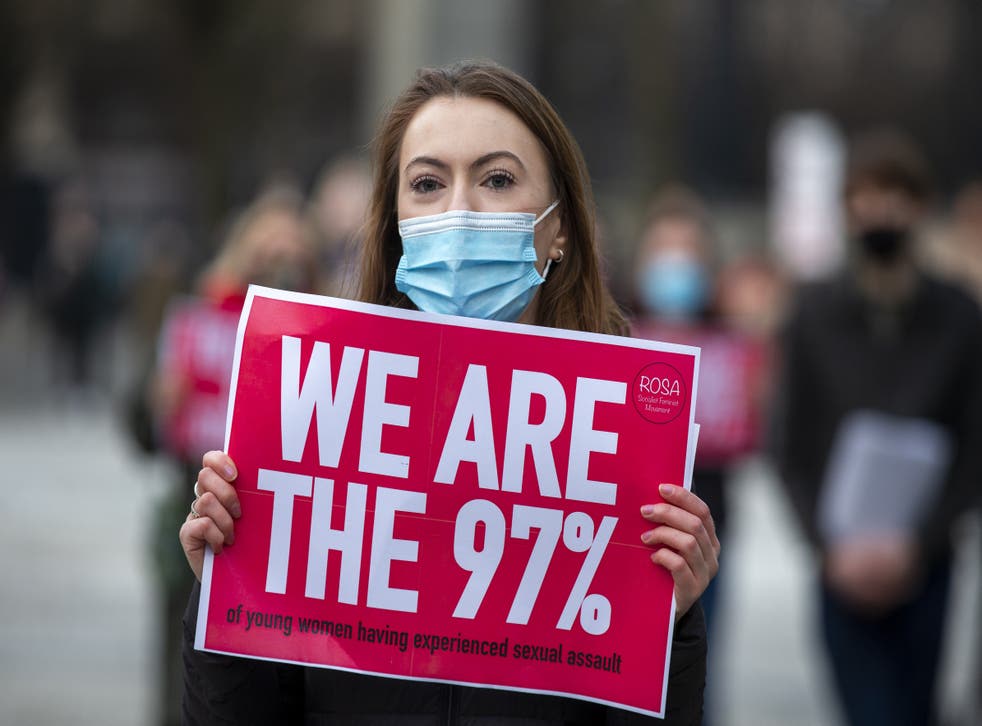
    In the UK, 97 per cent of women report being sexually harassed by men. It may not be “all men”, but it is enough men. It is enough men for females to fear all men. So, it may not be “all men”, but it is all women.

    However, it is not just men who rape and murder, domestic abusers, molesters, or men who take advantage of women. It is men who are “only joking”, men who grope, spike drinks and ignore the word, “no”. It is men who “rate” girls, it is victim blamers, unsolicited picture senders, stalkers and men who refuse to take any responsibility for their own or their friends actions. It is the men who dismiss women speaking up.

    It is men who stay silent.


    Not being “one of the bad guys”, is not good enough. Unless you are actively working to dismantle the patriarchy, you are part of the problem.

    You can be a loving husband, brother or friend to women, and you can still be part of the problem. Here is why; loving women is the basic minimum; nobody gets an award for treating men like they are human. When women love and respect men it is seen as their duty, but when men do the same, women are expected to be thankful.

    What a privilege it is for a man to not understand why his female friend asks him to walk her home at night. What a privilege it is to be able to park in a parking garage at night alone, or park far away from the entrance and not have to circle the parking lot waiting for a closer spot to open up. What a privilege it is to be paid what you deserve or more for your work. What a privilege it is to not be scared when being home alone. What a privilege it is to not worry about what you are wearing in case you are sexually assaulted, and people blame your clothes.

    It is always the clothes, it is always the amount of alcohol, it is always the amount of flirting and it is always the woman’s past or reputation. It is never the man.

    To all “good” men; check yourself. Check how you are talking to bad guys, why you tag along when they make offside comments to women. Check why you defend your friends and laugh when they make sexist jokes, rape jokes. Are you telling them it isn’t funny or are you provoking their behaviour? What are you doing when other men slut-shame women? Call yourself out, and then call out your family members and even your “buddies”. Surround yourself with people who recognize their own (male) privilege and entitlement and are diligently working to make the world a safer place for women to live.

    To all women with internalized misogyny; check yourself, too. Check what kind of treatment you accept from your male coworkers, friends and partners. Check how you idolize “good” men for doing the basic minimum. Check how you silence other women for speaking out and, especially, understand that an internalized misogynistic mindset has been ingrained in you by a society and institutions that actively oppress women. Do better, be better.

    Finally, let us all remember that feminism is only effective if it is intersectional. Speak out for impoverished women, disabled women, racialized women, transgender women and all marginalized groups of women. The real fight is against the system.


    Not only has Sarah Everard’s tragic death opened the doors to a whole conversation about gender violence, but it has been a wake-up call for most people.

    Not all men are sexually violent, but not all men choose to challenge misogyny, sexist jokes, stereotypes, objectification, victim-blaming, and patriarchal structures.

    It might not be “all men”, but it is enough men to make women afraid. It might not be “all men”, but it very well might be you.

  • Women and Their Woes: The Pain Gap

    Women and Their Woes: The Pain Gap

    Think back to your high school English class: your teacher has assigned the short-story “The Yellow Wallpaper” written by Charlotte Perkins Gilman. Most students either love English or hate it. If you were one of the students that hated English class, chances are you read the SparkNotes on the story and can’t remember a thing about it. If you can’t remember a thing about it or it just seemed like a weird story that didn’t make sense, that really is a shame. Even though the story was published in 1892, the themes still ring true today.

    The story focused on a woman who suffered from a very real and painful mental illness. Her husband forces her to be isolated within their country mansion and she is forbidden to write or read as a “cure” for her “nervous disorder”. The story is meant to be a critique on the male-dominant medical profession during that time. Although the plot is based on a true story, it is fictitious and also 128 years old. However, the problem of a patriarchal medical industry and the fatal dismissing of women’s mental and physical pain is a very real issue in 2020. 

    According to The Scientista Foundation, The Pain Gap can be described as “the bias against women as it pertains to the treatment of pain”. The concept was born from a study at Maryland University called “The Girl Who Cried Pain”. The study found that women were often misdiagnosed by healthcare professionals or that their pain was dismissed, and their medical needs were neglected. 

    Anecdotally, I can think of several women I have spoken to that have voiced their frustrations because a doctor did not take their descriptions of their pain or symptoms seriously. Endometriosis is a condition in which tissue grows on the outside of a woman’s uterus, instead of inside. The symptoms of this condition can be excruciatingly painful and may also affect fertility. On average, it takes a woman almost nine (9) years of doctor visits (and often several different doctors) to be properly diagnosed with this debilitating disease (https://pubmed.ncbi.nlm.nih.gov/32007945/). Some argue that The Pain Gap exists because male healthcare professionals; 1) do not have personal experience with women’s diseases, so they fail to properly diagnose it or 2) they have been socially conditioned to believe that women are overexaggerating their pain (especially menstrual pain) and it is likely all in their head.

    The Pain Gap does not affect all women equally. Black women are greatly affected by racial bias in pain assessment and healthcare. As ridiculous as it may sound, this issue is said to stem from the racist belief that Black folks can endure more pain. Because of eugenics and pseudoscience, there was a belief that there were distinct biological differences among White and Black people (for example, it was once thought to be scientific fact that Black people biologically had thicker skin than White people). These “old” racist beliefs have crossed over into systems that continuously prove to be dangerous to Black women and other women of colour. Black women are three to four times more likely to die from pregnancy complications than a White woman (https://www.thelancet.com/pdfs/journals/lancet/PIIS0140-6736(16)31470-2.pdf).These deaths are entirely preventable and are byproducts of systemic racism. In a heartbreaking video, an Indigenous woman named Joyce Echaquan can be heard crying in pain from her hospital bed in Quebec. Nurses can be overheard in the background dismissing Joyce’s pain, and uttering extremely offensive and racist things about her. Joyce died in the hospital that day and left behind her husband and seven children.

    Being in pain and not knowing what’s wrong is scary. It’s even scarier when no one will believe you. Thankfully, it would appear that med schools around the world are working on addressing the issue of The Pain Gap in their training programs. Make sure you listen to the women in your life, validate their pain and experiences, and believe them. It could be a matter of life and death. 

    Note: This article is part of our Fall 2020 Print Edition that focuses on Women Health and Sexuality. Look across campus for a paper copy of this edition!

  • Menopause

    Menopause

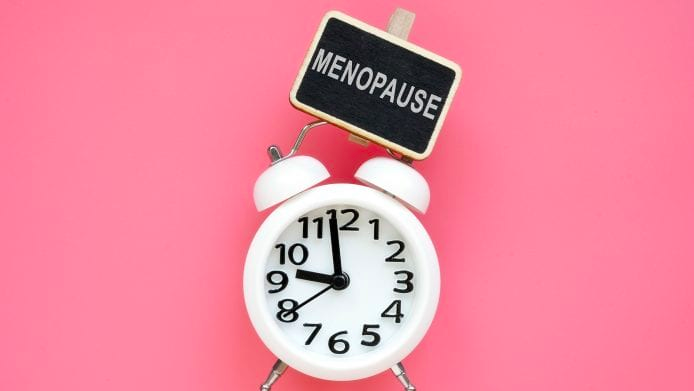
    There comes a time in every woman’s life where her ovaries stop the production of eggs and her estrogen and progesterone levels begin to decline. Over a period of time, monthly menstruation becomes less frequent, this period is referred to as perimenopause or the menopausal transition. Once a woman stops menstruating for one full year, it is then referred to as the postmenopausal period when they can no longer get pregnant.

    Breast Cancer is the most common female cancer worldwide. According to some studies, breast cancer will globally increase to over 2 million new cases per year by the year 2030. Additionally, it is the second most commonly diagnosed cancer in Indian women after cervical cancer.

    Menopause doesn’t cause cancer, but it increases the risk of getting it as the risk of getting cancer increases with age. Starting menopause after the age of 55 increases the risk of getting breast cancer, ovarian and endometrial cancer in a woman. The major reason for this is because she gets exposed to more estrogen as she doesn’t start menopause till the age of 55. During a menstrual cycle, estrogen stimulates the uterus and breast tissues, hence the more menstrual cycles a woman has, the longer the tissues are exposed to estrogen. 

    The reason why a woman is prone to get ovarian cancer can also be explained by that same age factor. The later she gets her menopause, the more ovulations she has had, which leads to increased risk of developing ovarian cancer.

     Menopausal transitions generally start occurring between age of 45-55 though some women can experience it sooner, and some later. It usually lasts about 7 years but, in some women, it can last up to 14 years. During this phase, her body’s production of the two major hormones made by the ovaries- estrogen and progesterone, vary greatly. Bones gradually become less dense which leads to women being more vulnerable to fractures. There are more changes that body undergoes during this period, such as fat cells change, body’s energy usage differs and women tend to gain weight more easily. 

    Menopause may also be triggered by a hysterectomy or surgical removal of ovaries that produce hormones. If a woman has surgery for removal of her ovaries or uterus and is not taking supplementary hormones, she would experience the menopause immediately.

     During this phase of a woman’s life, she is having more than one transition. Apart from the physical and biological ones, women have emotional transitions as well, for example, having to care for aging parents, or adapting for one’s child moving into adulthood, with which comes so many changes. 

    Some women also opt for hormone therapy which, if done at the postmenopausal period, increases the risk of breast and ovarian cancer. 

    Small lifestyle changes can make a huge difference in later stage and avoid the risk of chronic illnesses. Inculcating some healthy habits in daily lifestyle such as regular exercise, healthy diets, avoiding any sort of smoking, maintaining a healthy body weight etc. can help in reducing the risk of developing chronic illnesses and help lead a healthier life. 

    Note: This article is part of our Fall 2020 Print Edition that focuses on Women Health and Sexuality. Look across campus for a paper copy of this edition!

  • The Pitfalls of Sex Positivity

    The Pitfalls of Sex Positivity

    I should start off by saying that I think sex-positivity is a great movement: when it is done right. For those who haven’t heard the term before, it was coined in the 1990’s but has really taken off on social media in the last few years. It’s generally accepted to be “an attitude towards human sexuality that regards all consensual sexual activities as fundamentally healthy and pleasurable, encouraging sexual pleasure and experimentation” as defined by sex educator Allena Gabosch in “A Sex Positive Renaissance”. 

    For our generation, this primarily looks like people (mainly women) sharing information from sex educators to their Instagram stories and social media pages, dropping judgmental attitudes surrounding sex, and talking about sex like the normal part of life it is. Sex-positive people and spaces have become a safe place for others to discuss and ask questions about the weirder parts of sex. There’s the private side to the movement as well, where people feel more liberated about discussing their sexual wants and needs with partners. All of this is hopefully leading to more fulfilling and healthier sexual relationships, along with ideas about sex for many people. 

    But the sex-positivity movement isn’t perfect, far from it in fact. The rise of sex positivity, especially in the progressive circles many Acadia students would be familiar with, has led to two major groups being excluded: those who choose to abstain from sex and those who choose to do sex work. These groups are often still looked down upon by the very people who claim to be sex-positive. 

    There are countless reasons people may choose to remain abstinent: asexuality,  past trauma, not feeling ready or prepared for the experience, religious grounds, queer people not feeling represented by the typical ideas of sex, lack of opportunity, or simply deciding they’d rather not. The list goes on and on. Yet, even though all of these are valid choices there is still a rampant culture of shaming people who don’t have sex. Some have even taken to using the term “prude-shaming” for the social stigma experienced. Oddly enough, this concept was best explained in an article published by the dating app Tinder. It’s normal to throw the word “virgin” at someone as an insult, a term which is nothing more than an outdated idea but can still carry a lot of weight and shame for those it applies to. Despite the fact that there are plenty of people who don’t have sex, they are often made to feel as if there is something abnormal about them. This can do a lot of damage to someone. The effects can feel isolating or even push people into sexual activity before they’re ready, just so they can lose the label of “virgin” that they’ve been made to feel is wrong.

    On the opposite end of the scale, there are those who choose to do sex work. Sex work can be anything from exchanging sex acts for money, to porn, to selling nudes through social media, and beyond. These services are not only common but often in high demand. Yet despite the high usage of services such as these, even sex-positive people have a tendency to demonize anyone who chooses to make money through sex work. Especially when it comes to women (who let’s face it – will likely always be criticized more than men) people are outraged to see anyone commodifying sex. Many misguided sex-positive and feminist folks make arguments against sex-work. However, you may notice there’s a problem with this logic. Sex positivity means accepting consensual activity between adults, and that has to include activity that looks more like a business transaction. Just as someone may use their cooking skills to sell cakes, sex workers use their sexuality to provide for their customers. 

    Ownership over your own sexuality will look different for everyone. If we want to be truly sex-positive, it’s time to admit this means including the choice not to have sex and the choice to profit from sexuality. Continuing to stigmatize these options is doing nothing but keeping up the “slut or prude” narrative that sex-positivity is trying to erase. Though not everyone’s sexual choices will look the same, there should be no shaming or making fun of anyone for theirs. Sex-positivity includes education, so maybe it’s time we get educated on these choices. If your sex-positivity doesn’t make room for celibacy and sex-work then frankly, I’m not interested.

    Note: This article is part of our Fall 2020 Print Edition that focuses on Women Health and Sexuality. Look across campus for a paper copy of this edition!

  • The Reality of Being a Women in the Workplace

    The Reality of Being a Women in the Workplace

    For the past few years, there has been a push for more women in the workplace, especially in fields that are predominately male. While more female representation is needed in spaces dominated by men, the reality of being a woman in these workplaces is often ignored or disregarded. There have been famous women in the media, such as Lena Dunham or Gabrielle Union, who have come forward with personal experiences of sexual assault and harassment that they have endured while at work; however, harassment and assault are not only experienced in the entertainment industry. Women in Canada experience these hardships every single day.

    In a 2017 study from the Government of Canada titled “Harassment and sexual violence in the workplace”, it was found that 60% of respondents have experienced harassment in some form or another in the workplace. Around 30% of respondents had experienced sexual harassment, 21% experienced violence and 3% experienced sexual violence. In regard to sexual harassment and violence, 94% of respondents were women.

    After reaching out to female students at Acadia University, the commonality of crimes at workplaces against women can be further supported. Violence against women is in our backyard and can no longer be ignored. Thank you to the brave women who shared their stories with The Athenaeum and Acadia Community:

    “One time when complaining about pain in my knees to a co-worker, my manager yelled out, ‘Don’t worry, we know you get down to give blowjobs to everyone!’. Not only was this degrading, but the comment was shouted for all of my co-workers and any customers in the building to hear.” – Olivia Knowles (Biology Student)

    “The dress code at one workplace was fairly relaxed and we were allowed clothing that was considered to be more casual. I wore shorts to work one day and they ended up being slightly shorter than my apron which went past my knee. From the front, it looked like I was naked. When my manager noticed, I apologized because I did not realize that the apron went past my knees and he responded: ‘That’s okay, we will get more tips if you look like this’.” – Harper T. 

    “We had to do this interview in one of my classes. I was working with a male student to interview an older man for the class. The individual we were interviewing refused to make eye contact or direct his responses towards me, even when I was the one asking questions. It was like I wasn’t in the room. He then followed by stating that all of Windsor’s problems (which we were discussing in the interview) began when women started driving.” – Claire Leffler (CODE Student)

    “A co-worker once cornered me in the break room and tried to force himself on me. I was lucky enough to escape the situation, thanks to someone who was in the bathroom at the right time. It was my second week there.” – Jada F. (Chemistry Student)

    “I have had colleagues who would rub my back and whisper things in my ear while we talked. I never allowed my colleagues to enter my personal space or touch me. They behaved unprofessionally and made me feel weak.” – Eva Munez (Biology Student)

    “I am hoping to go into sports law, specifically for hockey. There is this union called the NHL players association where all registered agents and lawyers are usually affiliated. In this union, there is only one woman. When looking at specific companies within the union, all female employees are only at the secretarial level. These women go towards the companies’ statistics when looking at whether women are properly represented, yet only one individual at one company has equal standing to the men in these companies. While this story isn’t about violence, it shows how even though it is 2020, there is still changes to be made.” – Hunter Murchison- Doggart (Politcs Student) 

    Acadia University is much smaller than most universities in Canada, but still has students who have been harassed, objectified and demeaned in the workplace. Even if the students in this article are Acadia’s only students who have faced workplace harassment, it still doesn’t make any of this okay or anomalous. Bigger universities have more students and may have more stories of this kind. As we move outward, think about how many women in our country or worldwide might share in these workplace experiences. Yet, as a society we often forget about the reality of harassment in the workplace.

    Just because women don’t talk about their own instances does not mean they don’t experience them, not everyone is okay with sharing. Society has always taught women to stay silent, so for the most part that is what women do. Those who do speak out are often criticized in the media or called liars because the individuals they are accusing are often well known or in a position of power. 

    The #METOO movement that first gained traction in 2016 was essential for women who had been silenced. They finally felt supported and safe enough to share their personal stories. #METOO swept across borders uniting women of all nationalities. Eventually, the movement died down, as all movements eventually do. While the message of the movement still remains, so does the stigma surrounding speaking out. I’m sure #METOO will be re-ignited again years from now, but if people revert back to silence during this lull in momentum, nothing will be different years from now. 

    If these students’ stories tell you anything, it is to be alert to the situations taking place in your community. I challenge anyone reading this to ask your friends and family if they have been treated similarly. Chances are that someone will have a story to share, small or big. No matter the level or harassment, it is important to listen to community members who confide in you. Women need to stick together.

    This conversation is not limited to women. There are lessons for men here as well. If you are a man who behaves like the men in these stories, it is not okay. If you are a man who witnesses behavior that targets women, do not be a silent bystander. If you are a man who faces harassment or sexual violence in the workplace, you are not alone. 

    You can always be part of the movement for change. Keep the conversation going on social media, with your family and at school. Strive for a better world where women are well-represented and feel safe going to their jobs. Most importantly, support the women in your lives.

    Note: This article is part of our Fall 2020 Print Edition that focuses on Women Health and Sexuality. Look across campus for a paper copy of this edition!

  • Acadia Competes in Inaugural Nova Scotia University/College Golf Championships

    Acadia Competes in Inaugural Nova Scotia University/College Golf Championships

    Dartmouth, N.S. – On Saturday, September. 28th Acadia University competed in the inaugural Nova Scotia Golf Association University/College Golf Championships at Brightwood Golf & Country Club, in Dartmouth, Nova Scotia. The event format was 18 holes of stroke-play with the top four of five scores counting on each team. There was a total of 38 competitors in the event, with teams from Cape Breton University, Dalhousie University, Saint Francis Xavier University, and Saint Mary’s University all competing for the chance to be crowned champions.

    Acadia’s Men’s Team consisted of 5 players: Sebastian Farkas, Andrew Mackinnon, Zach Moore, Sam Quackenbush, and Cameron Waugh. In addition, Nathan Comeau was also representing Acadia as an individual participant. The women’s team consisted of one member, Courtney Cruikshank, who was the lucky competitor to hit the inaugural tee-shot in the event.

    It was a windy day that Saturday, but Acadia played well despite the conditions. On the men’s side, Sam Quackenbush was the low competitor for Acadia as he fired a solid round of 75 (+7) and finished in a tie for 6th place. Cameron Waugh was the second lowest player as he shot 76 (+8), and Andrew Mackinnon rounded out the top three as he posted a 78 (+10). Sebastian Farkas, Zach Moore, and individual contestant Nathan Comeau struggled to find their games on the Donald Ross layout. On the women’s side, Courtney Cruikshank represented Acadia admirably as she was only one of two women to compete in the event.

    As the sun set and the final putt was holed on the 18th green, Cape Breton University took home the Championship as they posted a collective score of +33 to defeat Saint Mary’s University by three strokes. Dalhousie University finished in third, followed by STFX University placing fourth, and Acadia settling for fifth. Individually, Cape Breton University’s Kevin George claimed the Men’s individual crown as he posted an excellent round of 70 (+2) to finish two clear of second. Sydney Erb of Dalhousie University won the Women’s title as she posted a solid round of 86 (+18).

    As mentioned, this was the first ever University/College golf event to take place in Nova Scotia and was a big step in getting national recognition for the sport in the province. There are many talented men and women golfers in post-secondary in this province and it was excellent to see them show of their skills throughout the competition.

    Acadia has never had a competitive golf program in its entire history, and by competing in this event Acadia will look to build its program for those interested in developing their games.

  • ASU Calls for Diversity on Board of Governors

    ASU Calls for Diversity on Board of Governors

    The ASU is calling for increased diversity on the Board of Governors (BOG), Acadia’s non-academic governing body. The Students’ Representative Council (SRC) passed a motion in principle on Tuesday January 30th supporting the ASU President to present a proposal to the Board regarding diversity at their latest meeting on Friday February 2nd.

    President Grace H-B said in a statement to The Athenaeum that “Diversity among the Board of Governors structure is vital to serving students to the best of its ability. The Board makes decisions that affect all students around campus. Acadia is stronger for it’s diversity and the Board of Governors will be too. Diversity and equity needs to be reflected at the Board of Governors and in all governance structures at Acadia.”

    The statement noted how the BOG is composed of 37 voting members, only 21.6% of whom are women with votes despite the fact that the campus is 58% female. Ethnic diversity around the table is described as “almost non-existent”.

    Lack of diversity is not due to a lack of unqualified women or minorities, the statement reads, but is “due to selection processes and underlying systemic process to determine who sits on the Board”.

    The motion proposed that the Governance & Executive Committees of the BOG prepare a report and recommendation on increasing equity and diversity. The ASU asked five commitments, including:

    1. Adoption of a diversity management policy by April 6th 2018
    2. Land acknowledgement of Mi’kma’ki at the beginning of every Board meeting
    3. Amending the composition of the BOG to include two indigenous voting members
    4. Ensuring a minimum of 50% of Governors identify as female by 2020/2021
    5. Ensuring a minimum of 60% of Governors identify as female, people with disabilities, indigenous peoples, or visible minorities by 2024/2025

    President H-B noted that although the province isn’t known for its diversity, “Nova Scotia does have a history with many groups that are not being represented at the Board of Governors. It would be hard to say that we’re ever going to be absolutely perfect in fair representation, but that doesn’t mean shouldn’t work as hard as possible to try to do better.

    Working towards a diverse Board is going to take work but it’s work that is so important in ensuring that we’re doing the best we can for students.”

    The ASU is looking to increase diversity within its own ranks, as the composition of the Students’ Representative Council is “lacking in people with disabilities, aboriginal peoples and visible minorities” according to President H-B. The Union is looking to incorporate more students-at-large on committees, spurring students into action within the Union itself.

    EDIT: An earlier version of this article stated the number of students identifying on campus as female was 69%. The correct number is 58%.

    Colin Mitchell is a 3rd year Politics (Honours) student from Vancouver, BC. He is also the News Editor of The Athenaeum and the ASU Student Board of Governors Representative. 

  • Things That Should Have Been Curbed in 2016

    Things That Should Have Been Curbed in 2016


    1) The notion that “White Privilege” is offensive and racist towards White People.

    Racism, cultural appropriation, and discrimination have been a hot-button issue throughout history. With the rise of social media platforms, along with the recent election of Donald Trump, there is a plethora of conversation online (and in print) about the hateful rhetoric that seems to be plaguing today’s society. Unfortunately, when people feel that their privilege is being threatened, they enter an automatic defense mode. It is often presented in such a manner where the defendant makes claims of innocence, justifying their feelings of discomfort by exclaiming that they are not guilty of racism, and that if their race is being questioned, that they are automatically being discriminated against. White privilege is not racist; it is not offensive in any way. It is a method of explaining the favorable treatment that white people often receive. There are no systems of oppression designed against white people. Thinking that reverse racism exists is what perpetuates the notion of white privilege further into the foundations of our society. It is a mechanism that is used to validate the comfortable position white people hold in society. Validating your own comfortable position by attacking a marginalized group (by saying white privilege is offensive, racist etc.) is a subtle way of invalidating and shutting down any group who’s LIVED EXPERIENCE has ever been one of systemic oppression. In extension, these feelings can often be described as “white fragility,” a state in which minimum amounts of racial stress becomes intolerable, triggering outward displays of emotion, such as anger, and behaviours such as argumentation. Yeah, this definitely could have been left behind in 2016.

    2) That any Indigenous culture should just “get over” colonization.

    Really? This one amazes me every time I hear it. Let us take a brief moment to recall Canadian History because we are not innocent in the ways or racism and cultural oppression. Residential schools were opened in conjunction with the Catholic and Protestant Churches and the government. Their aim was to remove any form of Indigenous culture from Indigenous children by forcefully removing them from their homes, placing them in schools where they would be taught Western values. As such, a cultural genocide was committed. Often, when hearing the word “genocide,” events such as the Holocaust, Bosnian, and Rwandan genocides. That is because Canada has attempted to repress its history. The horrors of the Residential schools did not end until 1996. Yes, most of us were living when the last school shut its doors. During their time in the Residential schools, Indigenous children were beaten, sexually assaulted, and mentally abused by their instructors. Often, these traumas were difficult to cope with. A stigma surrounds Indigenous peoples in Canada. Many people chose to believe that status cards, funding, government aid, and the Truth and Reconciliation Committee should all be abolished. They question why we should continue to apologize, and why we should continue to work towards mending our relationship with Indigenous peoples. What does it take to get over something like this? How could you possibly put a numerical value on an apology, how can you, a white person, get to dictate the appropriate measures for reconciliation after a cultural genocide has been committed? When you say these things, you act as though you assume the role of the oppressed, you may think you understand their oppression, but you simply do not. I know I do not understand, I never could. However, it is important to listen, to engage in conversation, and to be respectful of what you cannot understand. Please read the above statement about white privilege and then rethink your questions and sweeping generalizations about Indigenous peoples and Indigenous culture.

    3) “She was asking for it”- REALLY?

    For God sakes. How is this type of conversation STILL taking place? Did we not learn after Jian Ghomeshi and Brock Allen-Turner? I simply do not understand. The legal process further victimizes rape victims. Belittlement and slut-shaming occur in the courtroom in order to find loopholes in the victim’s statement. By asking her, “did you say no?” you are questioning her pain and her experience. By asking her, “how much did you drink?” you are assuming that all drunk women are ‘asking for it’, by asking her “what were you wearing” or “how many men have you slept with in the past”, you are slut-shaming her. Although there are false reports of rape, the treatment of victims in the courtroom is inexcusable. This is the reason that rape and sexual assault are so underreported. This process favours the accused, often bringing into play irrelevant aspects of his character, his achievements, and what he strives for in life. However, this does not take into account aspects of the victim’s character, her (or his) achievements in life, and how what she/he had strived for may feel as though it has become so out of reach. It’s simple, folks. If you can’t say no, you can’t say yes. There is no in-between; there is no grey area. There is yes, and there is no. Stop blaming the victim. Stop validating your need for supremacy. Stop questioning the pain of others, instead, start regarding it.

    4) Feelings of self-doubt, as brought on by Instagram and other forms of Social Media.

    I am guilty of this. Most people are guilty of this. It is so easy to feel self-doubt, and it is so easy to think that your value decreases based on the perceived notion of “perfection” in the others who you see on social media. In the last 10 years, we have “networking” apps explode. The original purpose of these apps was to stay in touch with your friends, to be able to connect with people you haven’t seen in a long time and to keep others updated on what is going on in your own life. However, it feels as though there has been a shift in the dynamic, a change in the way we behave on the Internet. Often, all we see is the picture. We believe that everybody’s lives are perfect and full of happiness based on how they display themselves on social media. Getting the “perfect picture” and pairing it with a “fire” caption that will get you over 300 likes is often a goal of most people. I know I am not innocent. There have been multiple occasions where I have found myself thinking, “if I went to the gym more maybe I would look like her and then I would be as happy as she appears.” I know this is wrong. After a conversation with one of my roommates, I found out that she was feeling the same way. She talked to me about how miserable looking at Instagram makes her. It caused her to question her own happiness by constantly comparing it to other girls’ social media pages. So, she slowly began to stop looking as much. As did I. I’ll leave this point here: everybody has their issues, but we have been conditioned to try and keep our problems to yourself. A picture is just that: a picture. You see what the poster wants you to see, just remember that your self-worth should not be determined by a like or how the world views your Instagram page.

    5) Islamophobia.

    Islam is a religion of peace. Often, people do not believe this when it is brought up in conversation. The first time I heard this was in my 11th grade world religion class. Our teacher told us that Islam was the closest religion to Christianity. She was right. It is not Islam you are afraid of, it is the “otherness.” The sense that you see something different, and that you are uncomfortable within a realm of your own privilege is what sets you off. This rhetoric gained prominence after 9/11. We were scared of them. They were scared of us. Although I am not an expert in Islamic studies, I know many men and women from the Arab world who identify as Muslims, and I can honestly say that they are much nicer than many other people I know. If we remove the concept of the “other,” perhaps we will all be able to see each other as we are: human.

  • Girls and Sex: An Overview of how Peggy Orenstein Navigates a Complicated Landscape

    Girls and Sex: An Overview of how Peggy Orenstein Navigates a Complicated Landscape

    Some of us grew up in semi-liberal or liberal households. Some of us grew up in conservative households. At one point or another, our parents would openly discuss the harms of drug and substance abuse, the negative consequences of consuming alcohol before 19 (or 18, in some cases), and why it is important to always follow the rules. As I continued to get older, I became more aware of the generation gap between my parents and I. This gap between mothers and daughters, and mothers and fathers has become even more evident as I see my parents’ friends struggling to make their way through the adolescent years of their teenage daughters. Even in the age of the “helicopter parent” there is a continued stigma and discomfort around the notion that their daughters have the potential to have a sex life. The same notion is not met with the same level of discomfort when their son’s sex lives are the topic of discussion.

    At this point, it is safe to say that blaming girls’ clothing for boys’ sexual drive is counterproductive. However, we must first look inward at the ways in which girls’ clothing is marketed in comparison to boys. Orenstein writes about the methods that are used to market girls’ clothing. It is evident that boys’ clothing isn’t centered on the idea that they should bare their bellies and wear short-shorts when they dress, so why is this marketing tactic targeting girls from a young age? If we dig deeper by using Orenstein’s study as a framework, we may be able to see a correlation of self-objectification. Orenstein offers a strong definition of self-objectification: the pressure on young women to reduce their worth to their bodies and to see those bodies as a collection of parts that exist for others’ pleasure; to continuously monitor their appearance; to perform rather than to feel sensually. Could the marketing tactics of young girls’ clothing be subconsciously objectifying them? Could it be leading them towards a road of lower self-esteem and doubt? Perhaps it is the lack of conversation surrounding female sexuality on behalf of the parents, who often perpetuate the stigma from a young age that it is okay to follow media and gender norms by going along with fashion trends that sexualize the female body, but having conversations about how to engage in sexual activity safely is out of the question.

    However, the stigma around young women’s dress is more likely to have damaging effects. It begins with the media normalizing how young girls are supposed to dress, what toys they are supposed to play with, and what shows they are supposed to be watching. By submitting to these cultural norms, their experience is shaped to fit a particular model. Parent’s discomfort with the teenage sex drive is actually more harmful for young girls’ self esteem, further creating a more difficult landscape for these girls to navigate.

    Orenstein conducted an interview with 71 young women. In this series of interviews, she asked questions about the girls views on sexual conduct, what they hoped to get out of their sexual encounters, and how the level of discomfort they felt when talking about these experiences with family or their peers. The results were alarming. The general consensus was that their friends became an audience to be sought after and maintained, that their engagement in the sexual experience was not for their own pleasure, but more so for the purpose of fulfilling their partner’s “needs” before their own, and so that they would have stories to share with their friends to not come off as “prudish.” Not only is this behavior harmful to girls’ self-worth, but it can also be related to mental health issues. Orenstein describes this phenomenon as “using your experience to create an image of yourself.” Essentially, the more experience you gain sexually (even if it is not for your own enjoyment), your social status will be higher.

    Let’s shift into a discussion about the negative consequences of social media. It is a game, and one that you need to play correctly in order to be “accepted” by your peers. Orenstein uses Sarah* as an example. She talks about a girl in her high school who continuously posted selfies. It was the general consensus that she either had no friends or was completely self-absorbed. It was never thought that, perhaps, this girl just enjoyed posting pictures of herself. The impacts of social media use have severe impacts on girls (and boys) well-being. Are selfies empowering or oppressive? Are they used to control girls and constrict them within a particular social norm, or are they a useful tool for expression and exclusion? When we are faced with these discussions there is rarely a strait and narrow path to follow, it perpetuates the ideology that there is a difficult landscape to navigate when it comes to teenage girls and sex.

    Why is it called a blow “job”? The expectations for women’s bodies just continue to perpetuate a pre-existing notion of the misogynistic roles they are expected to fill in society: subordinate. Just before the Bill Clinton scandal in the White House, a 1994 survey in America revealed that just over 50% of women had never performed fellatio on a partner. In 2014, these numbers have alarmingly increased. A story in the New York Times declared that sixth-graders were now more inclined to treat fellatio “like a handshake with the mouth.” Has this practice been normalized because of the ever-growing presence of social media? Or is this stemming from the need to form an image of oneself, one that favors the female’s role in sex because it is increasingly being viewed as “normal.”

    Sexually active teenage girls are often referred to as “sluts.” Sexually active teenage males are often referred to as “players.” It is extremely evident that this is a problem. Normalizing and gendering sexual behavior in teenagers is not only dangerous for their physical well-being, but also their mental well-being. Stigmatizing a normal practice (don’t turn your noses up, we are all human and puberty is a confusing, hormone-ridden, emotional roller coaster) to favor one gender over the other is not only wrong, but goes deeper to perpetuate gender roles in society as a whole. It targets women to be submissive, to be ashamed of their bodies and their desires, and calls them to question their characters for having a sex drive as a teenager. The media has sensationalized the idea of casual sex, yet targets and shames women who engage in this practice. The sexualized nature of the media not only encourages young women to call their self-worth to question, but it also perpetuates particular ideals about virginity, their role in the sexual landscape, and how they should go about the complex terrain of the “hookup culture.”

    I am not a mother. I have no experience with parenting and I do not know how to care for someone who is entirely dependent on me. I write this article as an opinion piece, based off of my own experiences and the study conducted by Peggy Orenstein. If I may suggest one thing, it is that we call to question preexisting norms about teenage girls. I suggest that we become more open to discussion with these young women, who will someday be the future. I call all parents to step outside of their comfort zones and talk openly about sex with their children, which is a conversation I never had with my own parents (comfortably). This is a difficult landscape to navigate, with a variety of different factors influencing behaviors, interactions, and personal decisions. Opening up the floor to a more inclusive, non-gendered conversation about sex is what we may need in order to help maintain teenage girls self-esteem, let them know their worth, and ensure that any decision they make regarding their bodies is just that, their own.

    For reference, please pick up a copy of Peggy Orenstein’s work.

    Peggy Orenstein, “Girls and Sex: Navigating a Complicated Landscape”, (New York: Harper-Collins, 2016): 1-236.

  • The Feminist Killjoy: Misconceptions

    My journey with feminism has been long and complicated and has most definitely evolved over the years. Looking back, it is abundantly clear that my parents raised me and my two sisters to be little feminists pretty much straight out of the womb. However, it took me quite some time to accept the label myself and to begin to engage with feminism as a political movement. That being said, self-identifying as a feminist is tricky. By this, I mean that along with accepting and embracing this label of feminist, or being a feminist, you are faced with the plethora of negative connotations that come with that label. I learned about the negative connotations behind the feminist label even before I truly began to understand the purpose and importance of feminism. The first time I was called a feminist was in a class discussion in high school when it was used as some kind of insult

    Somewhere, somehow along the way, being a feminist in people’s minds became synonymous with being a “man-hater”. This, I am telling you right now, is absolute complete and total bullshit. Now, I will gladly accept the label of an angry feminist because honestly, I am angry. A lot of the issues that the feminist movement is fighting against make me really fucking angry. Such issues range from my person (and ongoing) experience of being cat-called when I’m walking outside at night, to the fact that the current President of the United States was elected even though it was blatantly clear he has no concept of what sexual consent is and bragged openly about sexually assaulting women. Now, because those things make me really fucking angry, does that mean I hate men? No! Absolutely not.

    Here’s the thing, yeah those things make me angry but I also am educated enough on feminism to recognize that to direct my anger at individuals (read: individual men) for those actions is misguided. So, while I may in the moment yell obscenities at the guy cat-calling me from his car, I know that my anger is really with the systemic socialization of our society that teaches people that yelling at people while they’re walking alone at night is okay.

    The point of feminism is not to hate on men. Feminist scholar bell hooks said it best when she articulated the aim of feminism when she wrote that “feminism is a movement to end sexism, sexist exploitation, and oppression”. All of us in society have been socialized to accept sexist oppression, including men. Feminism is not an us vs. them battle, it is not women vs. men. It took me years to unlearn all the harmful sexist behaviors I had been taught my whole life, and I am still not there yet. There are ways I’m sure I myself still reproduce sexist oppression. Yet, through my understanding of feminism I have been able to grow as a human being and have learned how to treat other human beings better, both women and men. When you call feminism “man-hating”, you’re completely missing the point of feminism. You are reducing the sexist oppression that negatively affects everyone, regardless of gender identity – and the anger that comes with living under such a system – down to an individual level. To suggest that feminism is man-hating, it suggests that feminists are just angry, or that feminists simply do not like men. This ignores everything feminism is actually fighting against and instead just perpetuates the system of sexist oppression.

    At the end of the day, feminism is a movement that is working towards making the lives of others (and ourselves) better. Yes negative connotations and stereotypes of feminism unfortunately continue to exist. And yes, I will admit that these stereotypes initially made me hesitant to claim the label myself. However, once I realized that anybody who thinks me labelling myself as someone who cares about equality and the well-being of others makes me crazy is not somebody I want in my life, I got over it. So yes, hello, here I am, an angry (not man-hating) feminist. To anybody who knows me well, you’re already aware of this. To anybody who doesn’t – now you know.


  • Forty, Fertile, and Thriving

    Older moms are the new normal. Maritimer Meagan Campbell highlights recent Statistics Canada findings that claim that “for the first time in recorded Canadian history, mothers over 40 are officially having more kids than teens are.” While this may come as a shock to many, Demographers have allegedly been anticipating this trend since its gradual emergence in 1974.


    In the medical community, women who have children over the age of 40 have been dubbed “mothers of advanced maternal age,” and their pregnancies are often referred to as “geriatric.”  Many, including Elizabeth Gregory, a professor at the University of Houston, attribute this cultural and medical shift towards delayed motherhood to that of new technologies, wherein women can control their fertility in ways which they could not have before. Along with medical innovations increasing delayed parenthood, social factors too play an important role, as our society has become increasingly accepting of women’s choice to delay having children, or to choose not to have children at all.


    But not only are women choosing to have children later, it seems that teenagers have simultaneously been experiencing a decline in pregnancy rates. A Canadian research report called “Sexuality and U” attributes these trends in teen pregnancy to be reflective of “increasing levels of effective contraceptive use, greater access to reproductive health services, exposure to higher quality sexual health education, and/or a shifting of social norms in a direction that provides greater support for young women’s capacity to exercise reproductive choice.”


    It is important to note that while these trends of birth are reflective of a national trend, it must be taken into consideration the vast differences between the statistics seen nation-wide, and their application to areas in which we live. Based on research by the Sex Information and Education Council of Canada, in Nova Scotia (and in most of Atlantic Canada) we have seen teenage birth/abortion rates rising (by 15.1%) in the period of 2006-2010, whereas in other areas of the nation these rates have been declining considerably. So while in Canada teen pregnancy is in general on the decline, these statistics are not reflective of Nova Scotia or what you may have personally observed or experienced.


    In a perfect world, women could have it all, but in reality it often comes down to the choice between having children and establishing a career. While it is now possible for a number of Canadian women to become mothers of advanced maternal age, it cannot be ignored the extreme privilege associated with this phenomenon — as fertility treatments are highly costly, and not available to all. Pregnancies among women over the age of 40 are increasingly seen among women of higher socioeconomic status, who wait until establishing their careers before turning to motherhood, which is a luxury afforded to few.


  • INTERNATIONAL WOMEN’S DAY AT ACADIA

    INTERNATIONAL WOMEN’S DAY AT ACADIA

    International Women’s day took place at Acadia on Tuesday March 8th. This was a day where women were able to come together and acknowledge the contributions that the female gender has made and will continue to make on a social, political, and economic level. This day highlights the fact that female work is often overlooked. It also emphasizes the awareness issues that take place with regards to female issues. An important component of the international celebration is that it is international. Many women in different countries still face gender issues due to biased laws, and are more likely to be uneducated or unable to deal with the hardships of poverty and food insecurity as a direct result of their gender. This is why it’s important to celebrate the things that women do, and to continue to strive for more equality around the world.

    This is why it’s so great that Acadia has taken part in the celebration of women. The following is a brief description of the events that took place in Wolfville, and the effects that they have had on our town and campus.

    International Women’s day at Acadia focused on gender equality within the University student population. There was a large gathering on campus consisting of students, faculty, and town members. One topic that was addressed during this gathering was the use of social media platforms, such as Yik Yak and the infamous Tinder. This discussion lead to an exploration of the role social media plays in encouraging gender inequality on our campus. Groups focused on creating solutions which could make our campus safer for both male and female students, and providing faculty members with possible changes which could be made in order to improve this issue.

    The following day, one hundred attendees from across the country took part in Champion, which was a day-long seminar intended for women and girls to discuss the issues faced by females in sports. A variety of speakers took part in this event who work in sports related fields. Attendees listened to speakers talk about Global statistics and work in gender equality both in and out sport. Let’s take a second and do a brief history of women in sports, back during the Roman Empire. Every four years the Olympics took place, in which men participated in competitive sports while women weren’t allowed in the arena! Fast forward a couple thousand years to 1967 – Kathrine Switzer was the first official female runner in the Boston marathon. In protest of her attendance, a group of men circled, heckled, and tried to stop her from completing the race. Did you know that today 60 percent of marathon runners are men, while merely 40 percent are women?

    After initial Women’s Day presentations, attendees took part in a cafe style discussion and engaged with speakers. Individuals were able to interact with one another and visit booths to gather more information about the speakers and their roles in sports.

    Acadia is a great school to go to, but there are ways that we could add to the female empowerment that is already taking place. Some students believe that there are ample opportunities for Acadia and its students to effectively address sexism issues such as consent. As a whole, Acadia has done a great job with working towards female empowerment and addressing sexual consent, but we as a society still have a long road ahead of us in order to build a safer and better environment fo

  • Objectification (Synonyms for Woman)

    a chick

    a fox

    a rocket

    a bomb

    a thing

    that can fit inside your pocket

    breasts

    a chest

    a dog

    like hens

    if it offends

    then you’re wrong

    a cougar

    a cow

    a dime

    a dame

    so many names

    but just not mine

    she’s a doll

    roll call

    come get some tail

    such a whore

    but wait there’s more

    cause she’s a whale

    something sweet

    that you could eat

    or maybe hunt

    if she hates it

    and wants her name said?

    she’s a cunt

  • Fuck Tha’ Police’ and Despicable Females: NWA’s Rap as Protest Music

    Fuck Tha’ Police’ and Despicable Females: NWA’s Rap as Protest Music

    My honours thesis is focusing on the ways in which rap group NWA’s lyrics have affected Black American women. NWA’s music functioned as protest music against violent white supremacy in the form of police brutality, while simultaneously reinforcing dangerous stereotypes of African American women, stereotypes which were created during slavery. While their lyrics depicting women are most certainly misogynistic, the lyrics are not born of an innate sexism and hatred of women, but of the institutional oppression, discrimination, and violence that those rappers and all Black American men were subject to. The thesis is divided into four chapters, of which I’ll give a brief overview.

    Chapter One, “No Justice, No Peace,” examines the social, political, economic, and cultural climate from which NWA emerged in South Central Los Angeles in the mid-late 1980’s. Much of this chapter is dedicated to the effects of police brutality, drawing from first-hand accounts of African-American residents who lived in South Central (mostly the communities of Watts and Compton). I focus on the song “Fuck Tha’ Police” and its usage as a protest song against the extreme oppression and discrimination that extremely high rates of African American teenagers, young men, and men were subjected to.

    Chapter Two, “Multidimensional Oppression,” explains the concept of intersectional feminism (coined by race and feminist scholar Kimberle Crenshaw) and why it is necessary when analyzing rap music lyrics. I then explain various stereotypes and controlling images that were created during slavery as a means of oppressing African American women and reinforcing white supremacy, capitalism, and patriarchy. These controlling images include the Mammy, the Sapphire, the Jezebel, the Angry Black Women, the Black Matriarch, and the Welfare Mother/Welfare Queen (I draw largely from Patricia Hill Collins research in this section). I explain how society has reinforced, and continues to reinforce, these controlling images through various mediums of popular culture; I also explain the very real, lived effects of these images, such as higher rates of domestic violence towards Black American women.

    Chapter Three, “Despicable Females,” provides an analysis of seven NWA songs that utilize the controlling images of Black American women that were presented in Chapter Two. Based off of MC Ren’s description of the women they rap about as “despicable females” (in a 2015 Rolling Stone magazine interview), I coin the concept of the “despicable female trope,” an umbrella term for any and all stereotypes of Black American women. The despicable female trope is utilized in NWA’s music to excuse, justify, and even warrant sexualized violence, assault, and murder of Black women by Black men in NWA’s lyrics. For example, when the lyrics describe the central woman of the song as a “ho” or a “bitch” (directly drawing from stereotypes of Black American women), that woman is consistently violently punished through assault, rape, or murder. I conclude in this chapter that, while the usage of the despicable female trope is most certainly misogynistic and has the potential to have real-life damaging effects on the lives of Black women, these songs still function as a form of protest music against oppression. The rappers, as Black men, faced extreme levels of violence in their daily lives; through the medium of rap music, they were able to reclaim both false and real control of their lives by subjugating a group of people who had even less power than them.

    The fourth chapter, “Musical Hardness and Masculinity,” examines how the “hardness” of the musical content is both created and reinforced by Black masculinity. I draw from popular music musicologist Adam Krims’ work explaining the concept of musical hardness (layering and sampling techniques, distorted bass lines, quality of voice, etc.) in various songs which center around topics of gun violence, fights among gang members, and other themes that tend towards masculinity. (I have yet to finish this chapter which is why the explanation of it isn’t as lengthy!)

    What I’ve learned throughout the process of writing this thesis is to really understand my own privilege and how that inevitably affects the way in which I write this thesis. As a white, educated woman, I cannot speak to the struggles of Black American men or women. Bell Hooks writes that in order to work towards unity, understanding, and compassion, we must employ the mindset not of speaking for those who are oppressed, but with those who are oppressed. In a current social climate which necessitates movements such as #BlackLivesMatter, this guidance has extremely relevant meaning. Moving towards understanding why NWA rapped about Black American women the way that they did can help us understand how to dismantle those social and cultural institutions which maintain the subjugation of historically oppressed groups.

  • Instrument Gender Bias

    Instrument Gender Bias

    Why are certain instruments associated with certain genders? Why do women tend to play instruments that are higher in range, softer in dynamic, and more elegant to hold? Why are most rock drummers male?

    The intersection of music and sexuality is evident throughout much of Western history. Western cultures have historically assigned certain musical roles to a specific gender. These historical specifications play themselves out in all genres of music today.

    Prior to the 20th century, the space of public performance was limited to men. Women, in the 19th century, were permitted to perform publicly only as vocalists; even then, this was deemed suspect because of 19th-century connotations that women who sang in public were essentially prostitutes.

    Throughout the 19th and early 20th century, women learned to play specific instruments in primarily the domestic sphere. Learning an instrument gave a woman a commodity value for marriage; it was seen to increase her desirability. Ironically, this desirable quality could be performed only at home and rarely in public. Acceptable instruments for women were typically of the plucked string variety: lute, harp, guitar, and keyboard. These instruments did not distort the body in “unfeminine” ways, as scholars of that time were happy to point out. They also did not require an accompanist; the instruments could be played in isolation. Women were viewed as ornamental and decorative; playing an instrument (in the home and before marriage only) enhanced this ornamental quality.

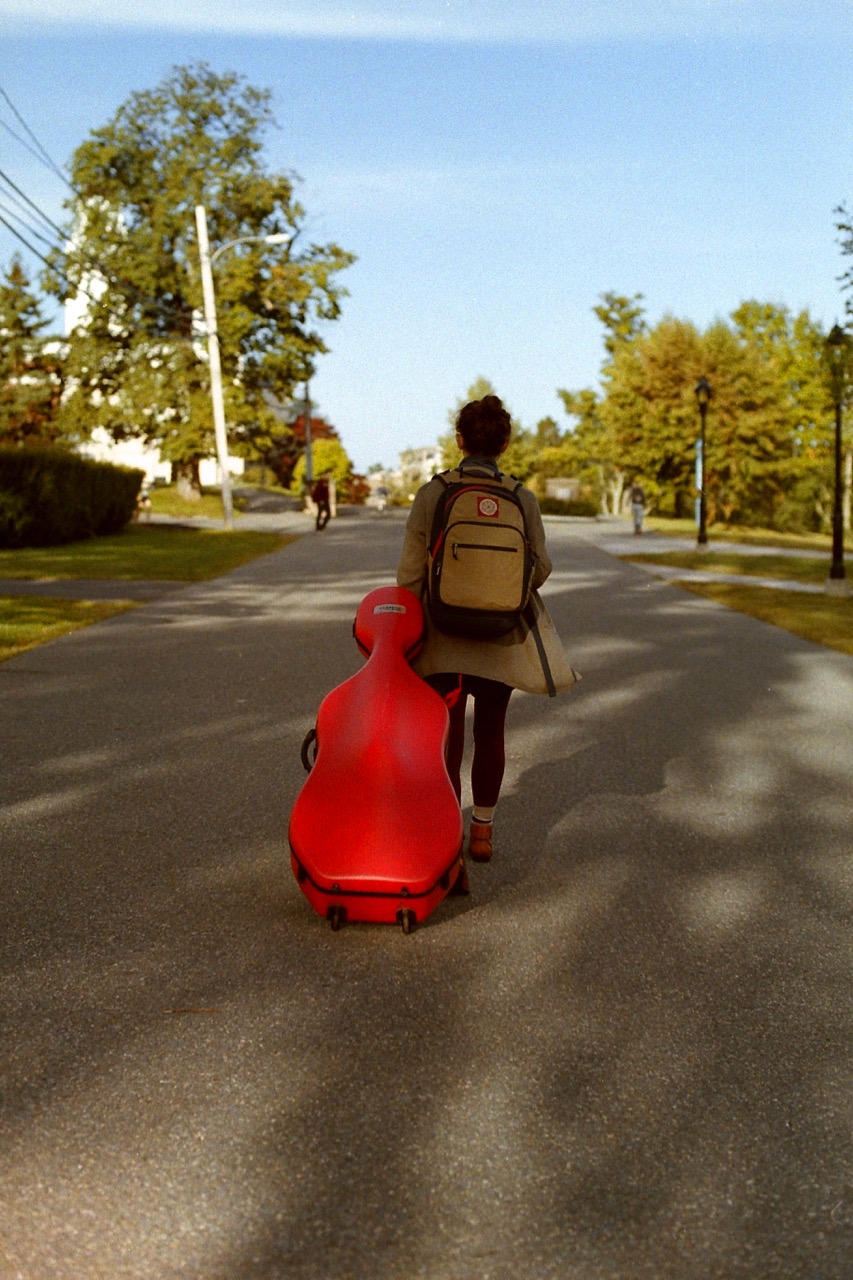
    Though these instruments were the standard for women, some female instrumentalists began breaking ground as cellists when it was first introduced. As in fashion at the time, they had to play side-saddle (both legs on one side of the instrument) to avoid any sexual connotations. Male cellists, however, were not required to play side-saddle.

    Women began playing violin even though it was deemed the instrument of the devil. It was believed that the “weaker sex” would not naturally be strong enough to deal with “stronger” instruments like the violin; women were not meant to be aggressive or strong. Instruments that require aggression and strength (a misconception, but hey it’s the 19th century we’re dealing with) were appropriate only for men: timpani, upright bass, and brass.

    These women who broke ground by performing instruments societally deemed for men paved the way for a generation of women to continue performing on these instruments. A new normal was effectively created, but the instruments women most typically played have become solidified. When looking at major Canadian orchestras, there are disproportionate gaps in specific instrument categories: brass, winds, percussion, keyboard, and bass. Approximately 85% of professional orchestral brass players in Canadian orchestras are male. Over 80% of flute players are female. 75% of upright bass players are male. 95% of percussionists and timpanists are male. Over 80% of harp and keyboard players are female.

    Gendered instrument bias crosses over into popular music, as well. Though I didn’t gather similar data for popular music, one only has to listen to and watch videos of popular musicians and bands to see similarities between the two and their treatment of gender and instruments.

    School band programs are not exempt from gender socialization. In a study conducted between 1978 and 2007, children consistently chose instruments that coincided with traditional instrument gender bias. Girls chose instruments like flute, clarinet, and violin. Boys chose instruments like drums, trombone, and trumpet. The results are unsurprising. Of course there will be and definitely are anomalies; this article is stating the averages and the generalizations.

    The tragedy of instrument gender bias is summarized perfectly by Leopold Stokowski: “Sacrificing accomplishment to tradition.” Not only is this tragedy applicable to women, but to men. The limitations imposed by gender bias restrict opportunities and reinforce social expectations for everyone; in the field of music, both men and women find themselves falling into predefined roles that have existed for centuries.

    *Information presented in this article was gathered by a major research project conducted by the author of the article.

Betzillo positions itself as a versatile gaming hub where structured bonuses and adaptive gameplay mechanics support both short sessions and extended play.

Built with a focus on innovation, Spinbit integrates modern casino architecture with rapid transactions, appealing to players who value speed and digital efficiency.

Ripper Casino emphasizes bold entertainment through high-impact slot titles and competitive promotions crafted for risk-oriented players.

A friendly interface and stable performance define Ricky Casino, offering a casual yet reliable environment for a wide spectrum of gaming preferences.

King Billy Casino channels classic casino spirit into a modern platform, delivering recognizable themes supported by contemporary reward systems.

Immersive visuals and layered slot mechanics are at the core of Dragonslots, creating a narrative-driven casino experience.

Lukki Casino appeals to players seeking direct access and minimal friction, focusing on fast loading times and intuitive controls.

Casinonic provides a structured and dependable gaming framework, blending modern slots with transparent operational standards.